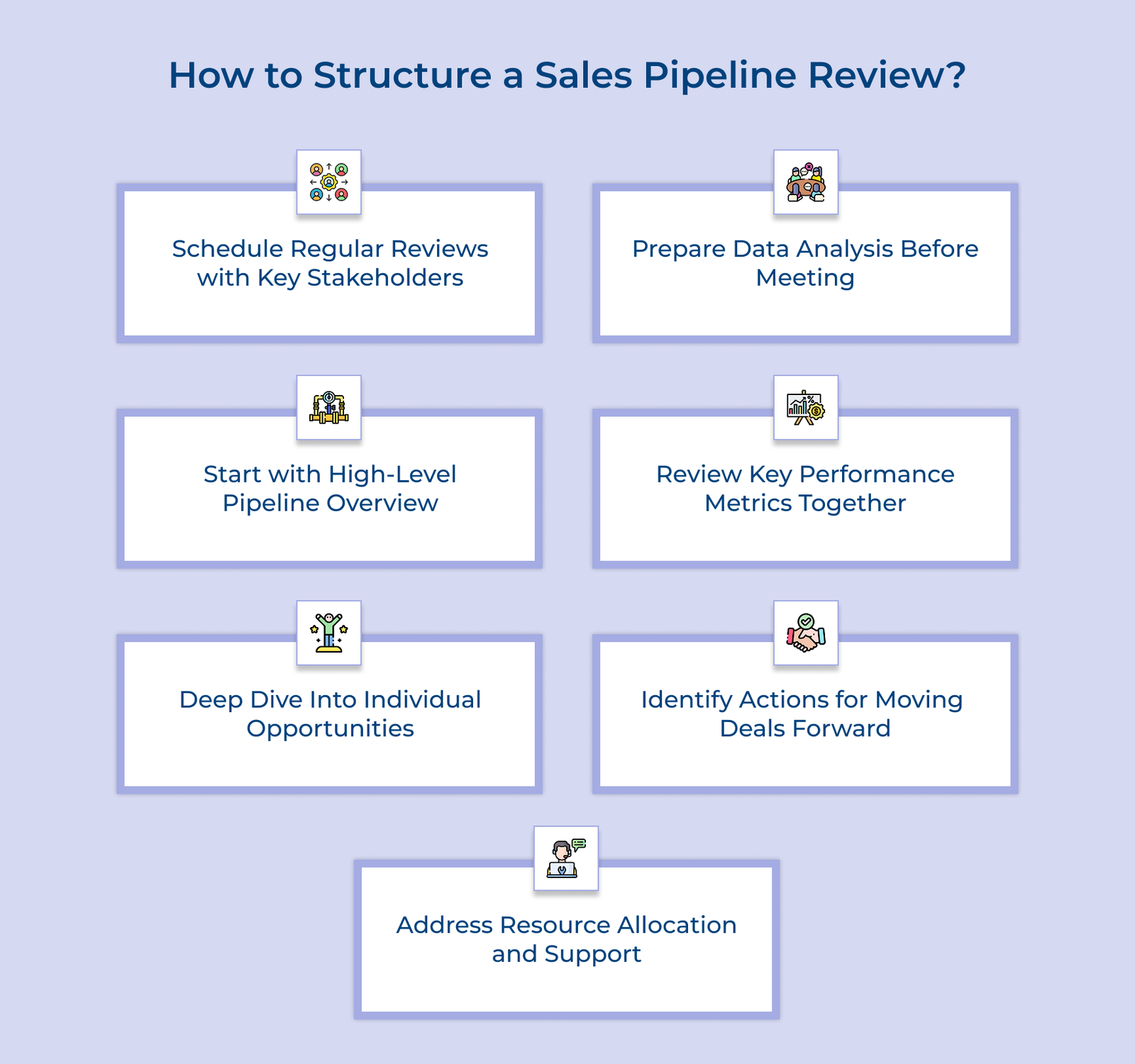
1. Schedule Regular Reviews with Key Stakeholders
Consistent pipeline reviews help keep everyone focused and aligned. The meetings give the team a chance to look at current deals, flag issues early and decide where to focus resources. Without them, teams risk losing track of important opportunities or missing signs that a deal is in trouble. The reviews work best when they’re part of a routine, not one-off check-ins. Pick a time that works for everyone involved and stick to it.
Picture this: every Tuesday at 10 AM, a software company gathers for its pipeline review. The sales director shares a short, focused agenda well in advance and by Monday night, everyone has updated their deals in the CRM. So when the meeting starts, it’s all about clear decisions, not digging through half-finished data or missed updates.
Pro tips:
- Choose a time that works for all key people and allows enough space between meetings for real progress to happen.
- Use a standard agenda that covers deal updates, roadblocks and next steps, with set time limits to keep things focused.
2. Prepare Data Analysis Before Meeting
Solid prep work is what makes pipeline reviews useful. Without it, meetings often turn into long status updates with no real decisions made. Teams can skip the basics and get straight to what matters by digging into sales data ahead of time. Preparation means pulling up-to-date reports, looking at patterns and flagging anything unusual.
Imagine a sales ops analyst tracking a weekly dashboard of pipeline health and conversion rates. She notices that deals are dragging between qualification and proposal, so she flags it. Instead of spending the meeting on routine updates, the team gets straight to solving what’s slowing things down.
Actionable tips:
- Use report templates that pull the same key metrics each time, which makes reviews easier to follow and track over time.
- Focus your prep on spotting slowdowns, unusual trends or stage imbalances so the team can address them quickly.
3. Start with High-Level Pipeline Overview
Start the pipeline review with a quick big-picture summary. It gives everyone a shared view of progress, problems, and priorities before diving into details. Without it, conversations often drift or miss what really matters. The overview should cover essentials like total pipeline value, deal distribution by stage, and comparisons to previous periods.
Imagine a regional sales director kicking off a meeting with the news that their Q2 pipeline is up 20% from Q1, driven mainly by enterprise leads. But they also note a slowdown in late-stage deals, sparking a discussion on what’s blocking closures and how the team can turn momentum into actual wins.
Best practices:
- Structure the overview from broad to specific: start with totals, then break down by stage or timeframe.
- Use simple visuals like charts, graphs or tables to highlight patterns and shifts quickly without needing lots of explanation.
4. Review Key Performance Metrics Together
Reviewing performance metrics as a team brings clarity and shared ownership. It goes beyond the numbers, helping everyone see what’s working, what isn’t, and what actions to take. Looking at the data together also highlights patterns and sparks honest discussions on how to improve.
The review should include a detailed analysis of win rates, sales cycle duration and opportunity values across different stages. Teams should look for patterns that indicate where deals might be getting stuck or moving unusually quickly. The analysis helps identify both best practices and potential bottlenecks in the sales process.
Key takeaways:
- Use benchmarks to compare current numbers to past results, targets and similar teams or industries.
- Keep the presentation format consistent so trends are easy to track and highlight both what’s working or what needs attention.
5. Deep Dive Into Individual Opportunities
The core of any good pipeline review is taking a closer look at specific deals, especially the ones that could make or break your numbers. The focused conversations help the team spot red flags, troubleshoot issues and figure out what’s needed to move things forward. It’s where strategy meets execution.
Focus on the largest value deals
Big deals need careful handling. The team should review exactly where the customer stands, what the competition is doing and if the solution truly fits the client’s needs. With more moving parts involved, it’s crucial to have the right people and resources ready to keep everything on track.
Examine stalled opportunities closely
If a deal is stuck, the team needs to understand why. Digging into the details can help spot recurring issues in the sales process and fix them before they affect other deals.
Review recently lost opportunities
Learning from lost deals provides valuable insights for improving future win rates. Teams should examine the entire sales process from initial engagement through final decision to understand what went wrong. The analysis helps identify patterns in lost deals that can inform changes to sales strategy and approach.
6. Identify Actions for Moving Deals Forward
The real value of a pipeline review comes from what happens after the meeting, not just during it. If there’s no follow-up or clear plan, even the best discussion won’t move the pipeline forward. It’s why turning insights into specific tasks, with clear owners and timelines, is essential.
Create specific next-step plans
Avoid vague next steps like “reach out again” or “stay in touch.” Instead, define exactly what needs to happen. Example: “Send updated pricing proposal by Thursday” or “Schedule product demo with client’s procurement team.” Clear tasks make it easier to follow up and harder for things to fall through the cracks.
Assign clear task ownership
Every action item needs a name next to it. There’s no confusion about who’s doing what. Assigning tasks based on role, expertise, or bandwidth keeps things manageable and makes it more likely things will get done.
Set a timeline for completion
Without a timeline, even good ideas lose momentum. Agree on deadlines that make sense given the client’s schedule and the team’s workload, but don’t let tasks drift without urgency. A clear due date keeps progress on track.
7. Address Resource Allocation and Support
Resource allocation during pipeline reviews ensures teams focus on the right deals without stretching themselves too thin. Identifying who’s needed, like the technical experts, senior leaders, or marketing support, gives each opportunity proper attention while keeping workloads manageable.
Teams need to weigh the demands of each deal against what’s realistically available. It means looking at technical complexity, figuring out where executive input could help move things forward and spotting chances where marketing might help make the case stronger.
Pro tips:
- Create a simple resource mapping tool that lays out which deals need what kind of support and whether there’s enough capacity to meet the needs.
- Establish clear criteria for when and how to engage specialized resources, ensuring efficient use of valuable organizational assets.
Examples of Sales Pipeline Review
Below are some major companies that have structured their sales pipeline reviews to maintain a competitive advantage and ensure consistent sales performance.
Amazon
Amazon’s pipeline review process is built around consistent data analysis and close monitoring of customer behavior. Teams hold daily micro-reviews focused on specific product categories as well as broader weekly reviews that cover conversion rates, shopping trends and inventory planning.
New product launches and seasonal shifts get special attention. The routine helps Amazon respond quickly to customer needs, reduce stockouts and make practical decisions about promotions, keeping their operations demand-driven.
Nike
Nike blends sales data with trend analysis in its pipeline reviews. Each week, cross-functional teams examine product performance alongside social media activity, competitor moves and cultural trends.
They place particular emphasis on tracking the success of new launches and seasonal collections. The approach helps Nike better predict demand and adjust production plans to meet it, keeping inventory balanced as well as launching products relevant to customer interest.
Uber
Uber’s pipeline reviews focus on the key parts of its business model: acquiring drivers, keeping riders engaged and growing in new markets. Every two weeks, teams analyze data on user conversion, regional performance and service types.
Uber also reviews how well supply matches demand and whether pricing strategies are working. The reviews help Uber stay flexible, adapting quickly to market changes, improving customer experience reliability and using resources more efficiently.
Puma
Puma holds monthly pipeline reviews that bring sales, marketing and production teams together. They look at how products are performing in different markets, how manufacturing timelines are aligning and how seasonal launches are progressing.
The setup allows Puma to match production with real demand, plan better around seasonal shifts and fine-tune product distribution across regions.
Challenges Teams Face During Sales Pipeline Reviews?
Let’s go through the key hurdles teams face during sales pipeline reviews and offer insights on how to turn the moments of potential frustration into goal-oriented discussions.