What is Customer Experience Optimization? 8 Actionable Tips
Discover how customer experience optimization (CXO) transforms interactions. Learn how to identify customer pain points and use data to personalize their journey.

Discover how customer experience optimization (CXO) transforms interactions. Learn how to identify customer pain points and use data to personalize their journey.
Delivering exceptional experiences has become a make-or-break factor for success. Customers have huge expectations and if businesses fail to meet those demands, they can switch to other options. After more than one bad experience, around 80% of consumers say they would rather do business with a competitor.
The solution lies in adopting a holistic customer experience optimization strategy. The difficulty lies in grasping the complex needs of various customer segments and executing strategies to meet those needs effectively. Optimizing processes and improving personalization can enable businesses to stay ahead of the competition. Let’s dive in to explore the latest trends and actionable solutions for enhancing the customer experience.
Customer experience optimization refers to the process of improving and enhancing the experience that a customer has with a brand or company. It includes delivering a seamless, uniform and personalized experience at every touchpoint. Optimizing customer experience aims to enhance customer satisfaction, loyalty and advocacy.
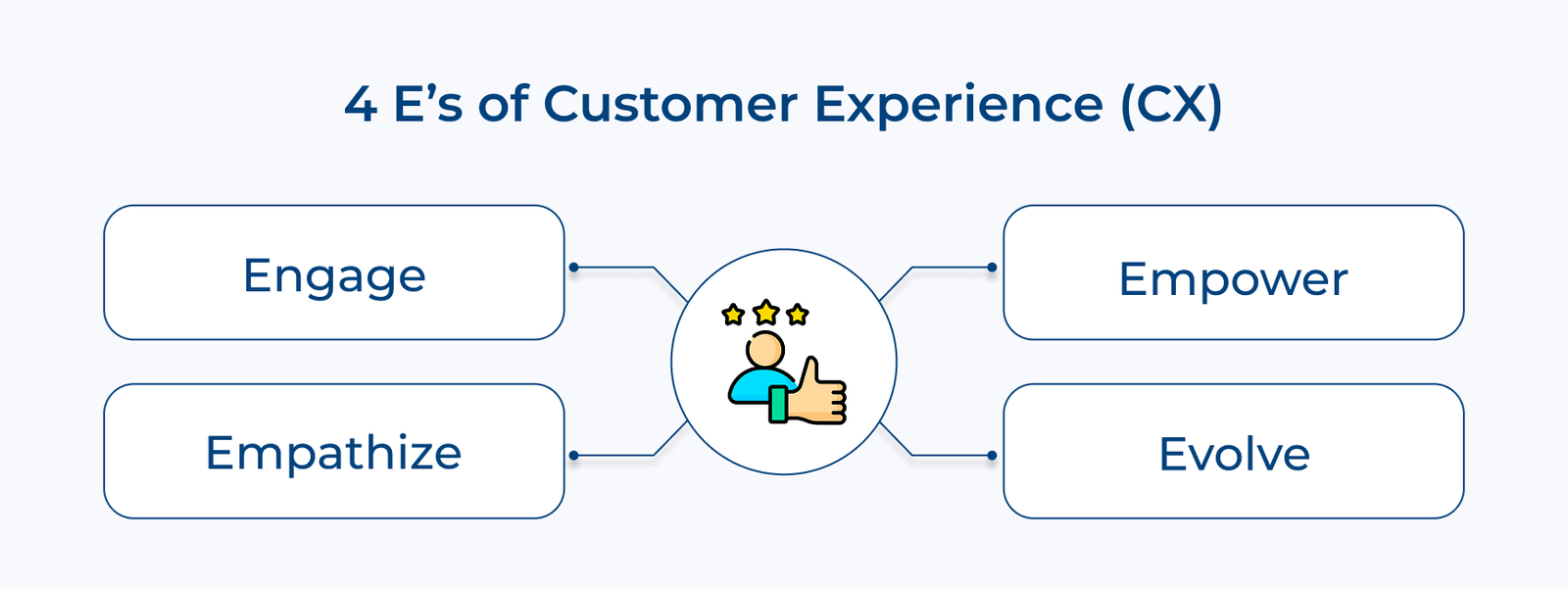
The 4 E’s of customer experience
Examining key statistics is crucial for grasping the importance of customer experience optimization and its influence on business performance. Leveraging the insights can help companies make informed decisions to enhance customer experience.
Discover how customer experience optimization can transform businesses across various industries.
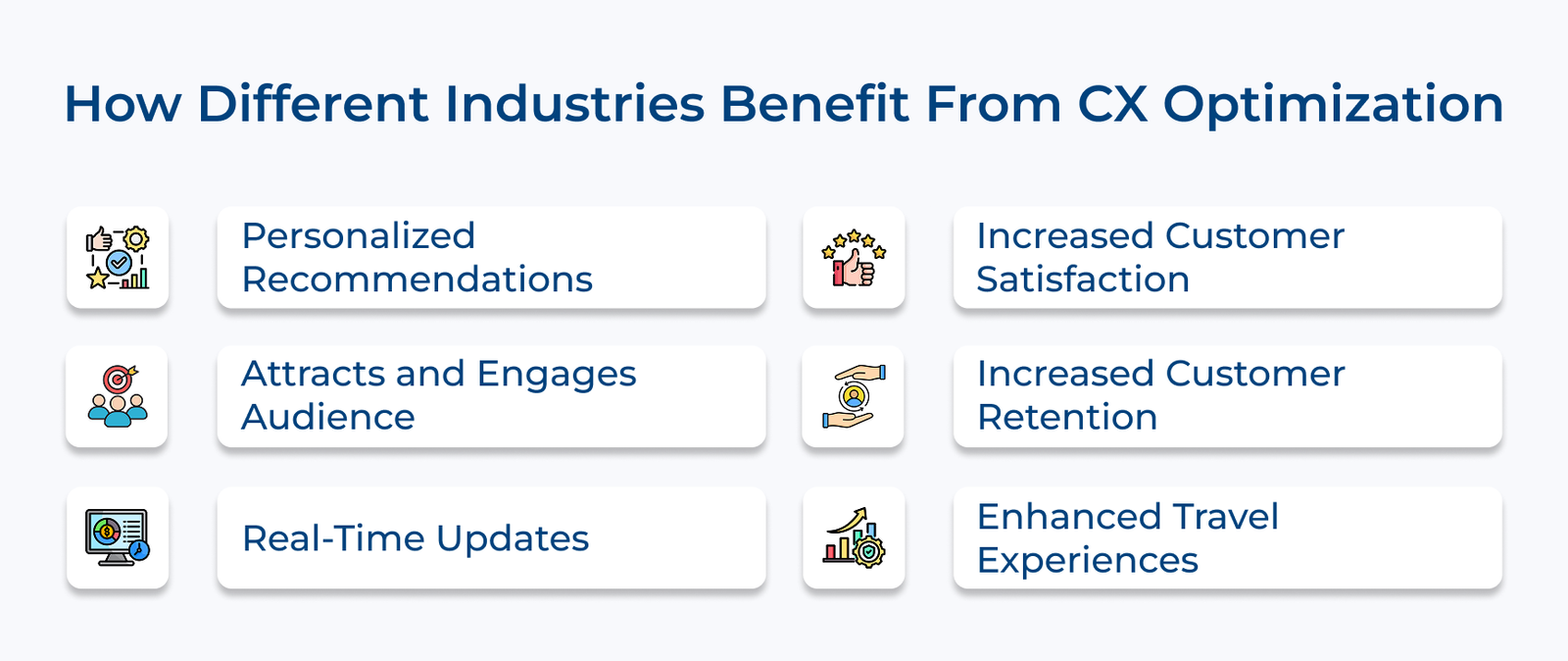
Optimizing customer experience is crucial for boosting sales in E-commerce and business-to-consumer (B2C) companies. Providing a seamless and user-friendly online shopping experience can help companies improve conversion rates. Tailored offers and attentive customer service are vital elements of an effective customer experience strategy.
CX optimization plays a crucial role in attracting and engaging audiences in media companies. Providing relevant content on multiple platforms can boost user engagement and improve customer retention for media companies. Examining customer data and preferences allows media companies to customize their content to more effectively address the needs of their audience. It results in higher levels of customer satisfaction and loyalty.
Optimizing customer experience is essential for creating memorable and seamless travel experiences for customers. Travel companies need to prioritize customer satisfaction at every stage of the customer journey. It should include booking flights and accommodations to planning excursions. Offering personalized recommendations, real-time updates and prompt customer service can help travel companies improve the travel experience.
Optimizing customer experience is essential for establishing strong and enduring relationships with clients in the business-to-business (B2B) sector. Providing exceptional customer service and customized solutions can help B2B companies differentiate themselves from competitors. B2B companies can provide value-added services by recognizing the specific needs of their clients.
Companies can create a customer experience that satisfies customers by understanding the pillars of customer experience optimization.
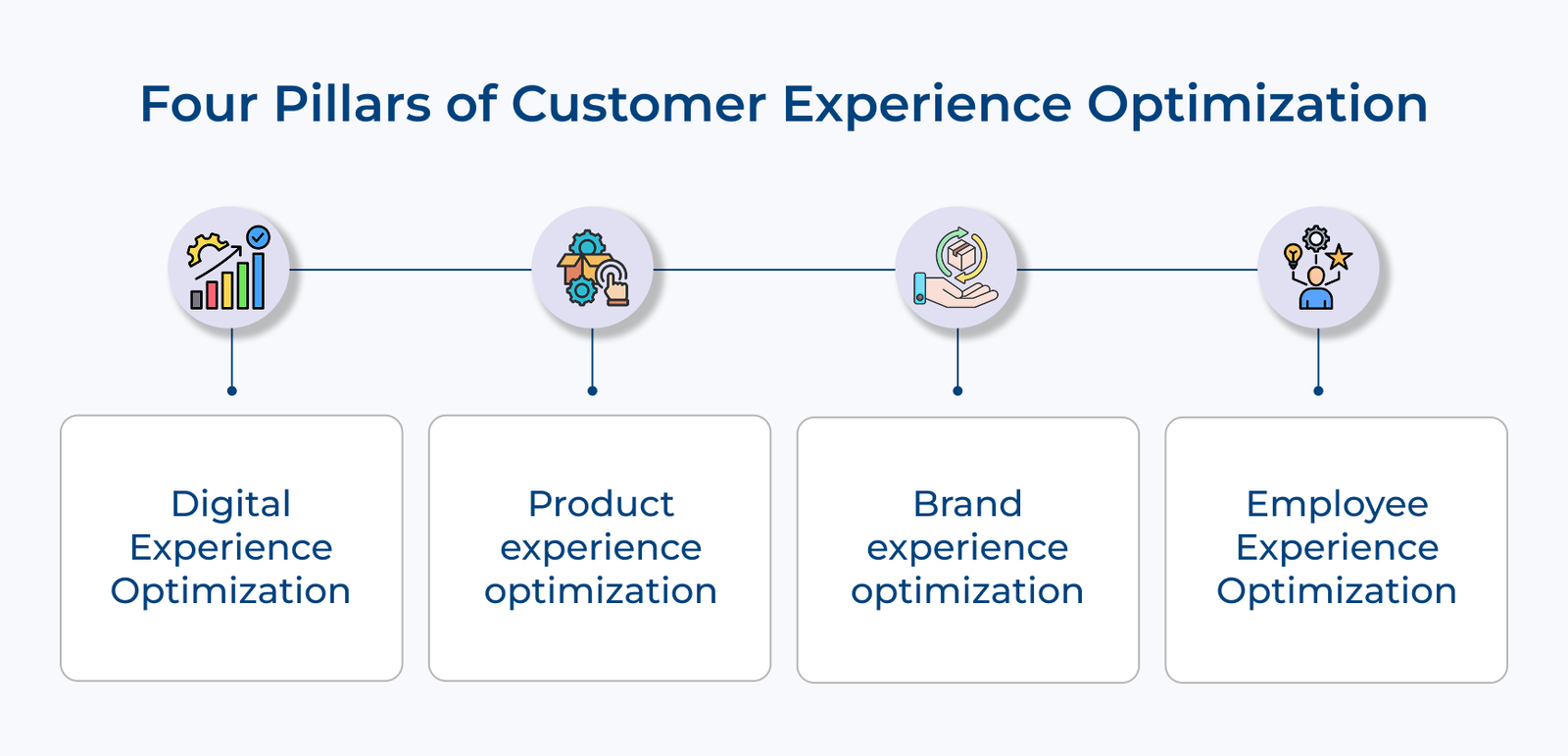
1. Digital Experience Optimization
Providing a seamless and user-friendly digital experience is crucial. Recall the last time you visited a website that was cumbersome, slow and difficult to navigate. Chances are, you didn’t stick around for too long, right? That’s why optimizing the digital experience is so important. 91% of consumers say they’re more likely to buy again after a great digital customer experience.
2. Product Experience Optimization
Your product or service is the core of your business, so optimizing that experience is key. Businesses must consistently collect customer feedback, analyze usage data and refine their offerings to provide an outstanding experience. Consider Apple, for example—they continually enhance and evolve their products by incorporating customer feedback. It is a big reason why they’ve cultivated such a loyal customer base.
3. Brand Experience Optimization
Your brand encompasses much more than just a logo, it includes the complete experience that customers connect with your company. Optimizing that brand experience means ensuring that every interaction with your brand, from marketing to customer service, aligns with your brand values. A company that does this well is Zappos. Their unique, customer-focused brand experience shines through in every aspect, from their unconventional marketing to their customer service.
4. Employee Experience Optimization
Often overlooked, but incredibly important – your employees are the face of your company. Enhancing their experience is essential for providing outstanding customer service. Companies need to invest in training, empowerment and creating a positive work culture for employees. A prime example is Costco – they’re known for treating their employees extremely well. It leads to highly engaged and motivated employees who provide excellent customer service.
Discover the eight essential steps to creating a truly exceptional customer experience and set your business apart.

Understanding the customer journey means charting every touchpoint a customer has with your brand, starting from initial awareness and continuing through post-purchase support. The holistic view offers valuable insights into the customer’s perspective.
Businesses can uncover and resolve any gaps or inefficiencies that may disrupt a smooth experience by thoroughly understanding the customer journey. The knowledge enables companies to streamline processes and anticipate customer needs.
How to implement:
The step involves gaining insights into the psychological, emotional and practical factors that drive a customer’s decision to purchase a particular product or service. Understanding customer motives can assist businesses in more effectively aligning their marketing, sales and customer strategies. It helps to meet the specific needs and expectations of their target audience. Some of the use cases are:
Pro tips:
The step includes generating creative ideas and strategies to improve the customer journey, from the first interaction to post-purchase support. Start by gathering insights from various sources, such as customer feedback, surveys, analytics data and industry trends. Inspire your team to think outside the box and question current assumptions.
Conduct customer journey mapping exercises to identify pain points and areas for improvement. One potential idea might be to introduce a virtual assistant or chatbot that offers 24/7 support and tailored recommendations. It could streamline the customer service process, reduce response times and enhance satisfaction.
Its importance:
Customers expect seamless and consistent interactions with brands, regardless of the channel they choose to engage with. Evaluating the customer experience across multiple channels such as websites, mobile apps, social media and physical stores can help businesses ensure a seamless experience.
A retailer could evaluate the online checkout process, mobile app usability and in-store pickup experience to pinpoint any friction points or inconsistencies. Streamlining the processes across channels can help customers enjoy a seamless shopping journey.
Best practices:
The step involves ensuring that customers receive a uniform experience across all touchpoints and channels. When customers are aware of what to expect, they feel more at ease and appreciated. The sense of familiarity can lead to increased customer satisfaction, loyalty and advocacy.
Consider a hotel chain that emphasizes consistency across its properties. Guests experience a seamless experience, from the check-in process to room amenities and loyalty programs. Consistency strengthens the brand’s commitment and instills a sense of comfort in customers.
Best practices:
Focusing on improving content is a crucial step in optimizing customer experience. Offering high-quality content can help you draw in and keep customers.
Enhancing content can involve refreshing website copy, crafting informative blog posts, refining product descriptions and producing engaging social media updates. The efforts help to educate, inform and entertain customers, leading to a positive experience with the brand.
Pro tips:
69% of companies rated personalizing the customer experience as a top priority. Customizing content for individual customers allows businesses to create a more personalized experience that connects with them on a deeper level. There are various ways to implement personalization to optimize customer experience, such as:
Personalization enhances the customer experience by making individuals feel valued and recognized. It allows businesses to deliver relevant content, recommendations and offers that are tailored to each customer’s preferences.
Best practices:
The step focuses on consistently collecting feedback from customers and leveraging those insights to enhance their experience. It’s like having a never-ending conversation with the people who matter most to your business.
Actively listening to your customers can help you gain a deep understanding of their needs, preferences and pain points. The feedback can help inform your decisions on improving your products, services and customer journey. It’s like having a secret weapon to stay ahead of the game.
Pro tips:
Let’s talk about the challenges that come with optimizing customer experience. It’s not always a walk in the park. Understanding the hurdles can help you tackle them head-on.
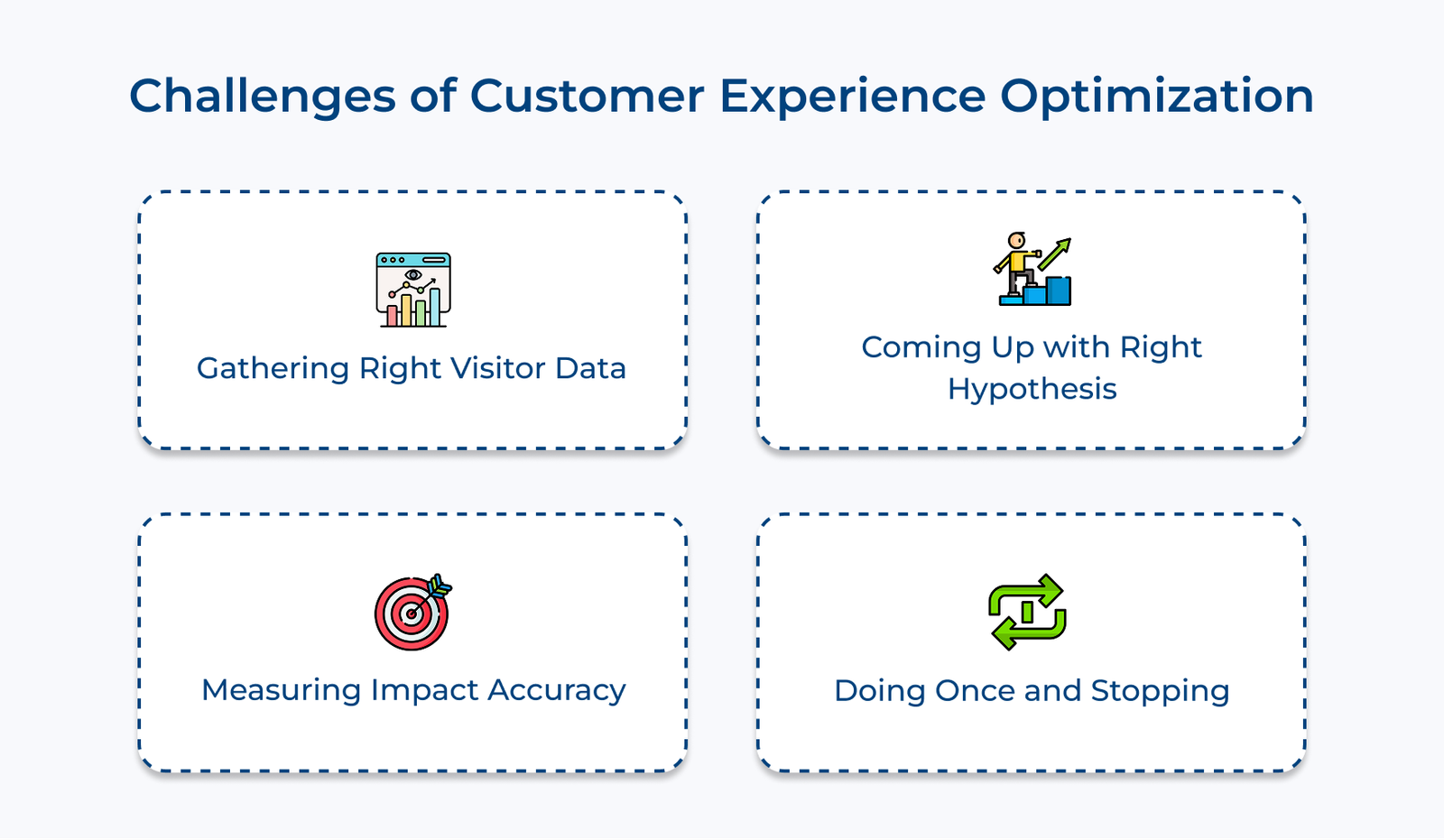
We’ve got the data dilemma. You know the saying, “data is the new oil”? Well, it’s true, but only if you’ve got the right kind. Gathering accurate visitor data is crucial for understanding their needs, preferences and pain points. Let’s face it: with all the privacy concerns and regulations, it feels like trying to solve a puzzle with missing pieces. You need to strike the right balance between respecting customer privacy and collecting enough data to make informed decisions.
Okay, so you’ve got the data, but now what? It is where the real brainstorming begins. You need to develop hypotheses on how to enhance the customer experience. But here’s the thing, it’s not as simple as throwing darts at a board. You should draw on your expertise and a deep understanding of your customers to create hypotheses that are likely to make a significant impact.
Let’s say you’ve implemented a shiny new feature or process to optimize the customer experience. Hooray! But wait, how do you know if it’s working? Accurately assessing the impact presents a significant challenge. You need to have the right metrics in place, track the right data and account for any external factors that might be influencing the results. It’s like attempting to strike a moving target in the dark—you must be precise and equipped with the proper tools.
Here’s the thing, optimizing customer experience is not a one-and-done kind of deal. It’s an ongoing process that requires continuous effort and iteration. The difficulty is in remaining dedicated and avoiding complacency after making initial adjustments. Customer needs and expectations are constantly evolving. You need to keep up with the pace. It’s similar to running a marathon—you can’t just stop after the first mile and expect to finish strong.
Dive in to discover the cutting-edge techniques shaping the future of CX and learn how your business can adapt to deliver an unmatched customer journey.

1. Customer Service Embedded in Company Culture
Gone are the days when customer service was a separate department. Top companies recognize that providing outstanding customer experiences demands a collective commitment across the entire organization. They are enhancing a culture where every employee, from frontline staff to executives, is empowered and encouraged to prioritize customer needs. A customer-centric mindset influences every facet of the business, guaranteeing a consistent experience for customers across all touchpoints.
2. Customer Experience Automation
Utilizing automation technologies has become essential for optimizing processes and improving efficiency in customer interactions. Chatbots, virtual assistants and self-service portals are being introduced to deliver immediate support. Companies can free up valuable human resources to focus on more complex issues by automating repetitive tasks and inquiries.
3. Personalization & Customer Data Protection
Companies have access to vast amounts of customer information. The crucial aspect is finding the right equilibrium between personalization and data security. Businesses are investing in advanced analytics and machine learning to gain deeper insights into customer preferences. It enables them to deliver highly personalized experiences. They are also emphasizing data privacy, allowing customers to have control over their personal information.
4. Emotionally Intelligent Customer Service Agents
While technology plays a significant role in customer optimization, the human touch remains irreplaceable. Companies are acknowledging the significance of emotional intelligence in their customer service representatives. Businesses can enhance deeper connections with customers by training agents to empathize, listen actively and respond with emotional intelligence.
As an experienced customer experience manager, I cannot emphasize enough the importance of continuously optimizing your customer experience strategies. Providing outstanding experiences is no longer merely a luxury, it’s essential for achieving business success. Embracing a customer-centric mindset can help you elevate your customer experience to new heights. Continuously gather feedback, examine customer behavior and adapt to their changing needs.
Enhancing customer experience is a continuous journey rather than a final goal. Stay flexible, be proactive and always strive for excellence. Consistently elevating your customer experience will help you build stronger relationships with customers. Harness the power of optimization and see your customer experience reach new heights.

Monitor key metrics such as customer satisfaction scores, retention rates and repeat purchase rates. Administering customer surveys and collecting feedback will yield valuable insights into how effective your strategies are. Track customer interactions and conversions to measure the impact of your initiatives on business performance.
Prioritizing cx optimization efforts involves analyzing customer feedback, identifying pain points and focusing on areas that will have the greatest impact on customer satisfaction. Making changes informed by data-driven insights and customer needs can help businesses provide a seamless experience for their customers.
Listen actively to customer feedback, analyze data from surveys and observe customer behavior. Take note of frequent complaints or frustrations and ask insightful questions to reveal the root causes. Understanding customer pain points can help businesses tailor their products and services to better meet customer needs.
Businesses should invest in training their employees on customer service skills, gather feedback, create a seamless omnichannel experience and adjust strategies based on customer behavior. Interacting with customers on social media and other platforms can enhance the customer experience.
A customer experience specialist is tasked with ensuring that customers enjoy a positive interaction with the company. They focus on building relationships with customers, addressing their concerns and improving satisfaction. The role includes analyzing customer feedback, implementing strategies to improve the customer experience and collaborating across departments to provide outstanding service.
Grow Customer Relationships and stronger team collaboration with our range of products across the Conversational Engagement Suite.
Omnichannel Customer Support & Help Desk Software
AI Enabled Business Messaging and Chatbot Software
Sales Engagement & CRM Software
Call Center Software & Virtual Phone System
Product Marketing & Experience Platform
Customer Experience & Feedback Management Software

 Customer Acquisition vs Retention: How to Choose the Right Strategy?
Scroll to top
Customer Acquisition vs Retention: How to Choose the Right Strategy?
Scroll to top