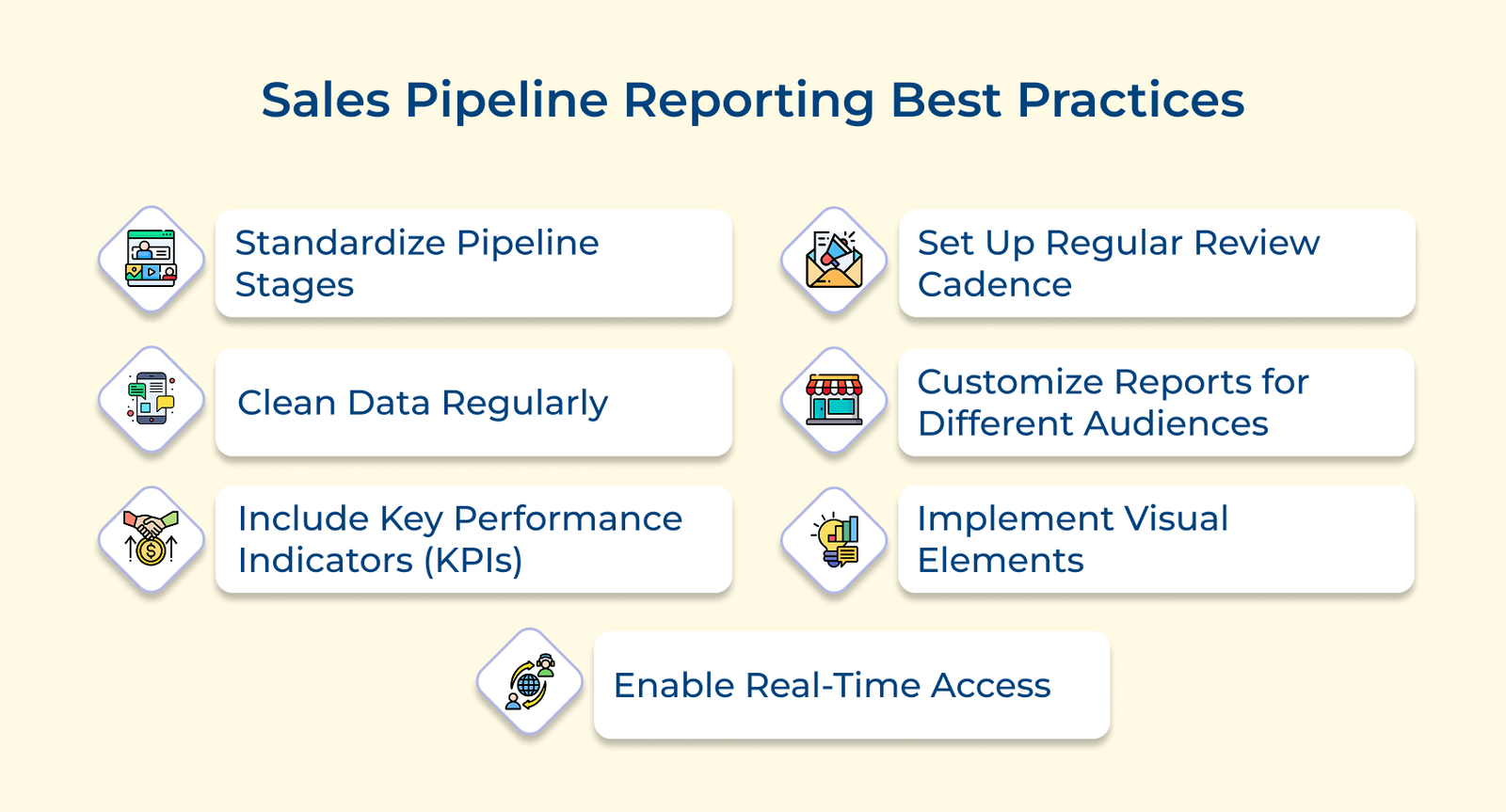
1. Standardize Pipeline Stages
Clear, consistent definitions for your sales pipeline stages are essential for creating a shared language across teams. Standardized stages with specific entry and exit criteria ensure data consistency, eliminate confusion and make reporting more reliable for forecasting. Think of it as a universal roadmap guiding every deal through your sales process.
2. Clean Data Regularly
Regular data cleaning is crucial for accurate sales pipeline reports. Stale opportunities and outdated information can skew forecasts. Make it a habit to consistently review and update your pipeline data. Implement a systematic approach where sales teams regularly update opportunity status, deal values and close dates. Automated alerts for opportunities that haven’t been updated within a set timeframe help maintain data integrity and ensure reliable reporting.
3. Include Key Performance Indicators (KPIs)
Your sales pipeline reporting should focus on KPIs that align with business goals, tracking progress and highlighting areas for improvement. Prioritize metrics that directly impact sales success and revenue growth. Choose KPIs that provide a full picture of performance, such as conversion rates, sales velocity and average deal size. The approach helps you assess both pipeline health and the effectiveness of your sales process.
4. Set Up Regular Review Cadence
Set a consistent schedule for reviewing your pipeline sales reports to spot trends, patterns and potential issues early. Regular reviews keep your team aligned with sales objectives and proactive in addressing concerns. Establish a structured review process involving key stakeholders to discuss pipeline health, tackle challenges and create action plans. The practice enhances accountability and drives ongoing improvement in your sales process.
5. Customize Reports for Different Audiences
Different stakeholders require varying levels of detail from your pipeline reports. Sales reps need in-depth opportunity data, while executives prefer high-level summaries and trends. Customize views to meet each group’s needs. Tailor your reports to support key decisions for each audience, ensuring they get relevant information without being overwhelmed. The approach makes your reports more actionable and valuable for everyone involved.
6. Implement Visual Elements
Visual data representations make pipeline reports more engaging and easier to understand. Use charts, graphs and dashboards to highlight key trends, helping stakeholders quickly grasp essential insights. Select the right visualizations for each metric, including sales funnel charts for conversion rates and trend lines for historical performance. Keep visuals clean, focused and intuitive to enhance understanding without overwhelming the viewer.
7. Enable Real-Time Access
Modern sales teams need real-time access to pipeline data. Implement tools that provide up-to-date information for all stakeholders, enabling timely decisions and quick responses to changes. Ensure your reporting system is accessible across devices and locations, with mobile access especially crucial for field teams. Real-time access keeps everyone informed and aligned on current sales activities.
Examples of Effective Sales Pipeline Reports
Check out the sales pipeline report examples to gain valuable insights into structure reports for effective sales tracking and decision-making.
Amazon
Amazon implemented a robust sales pipeline reporting system that focuses on marketplace sellers and direct retail partnerships. It tracks key metrics like seller acquisition rates, product category penetration and regional market expansion. The system enables Amazon to monitor both direct sales and third-party seller performance across various marketplaces.
The impact has been transformative, allowing Amazon to better manage its extensive network of sellers and partners. They can identify high-potential sellers early, provide targeted support and optimize marketplace growth with data-driven insights, all while maintaining quality standards.
Nike
Nike developed an advanced pipeline sales report system that tracks both wholesale accounts and direct-to-consumer sales channels. Key metrics include retail partner engagement, product line performance and seasonal booking patterns, with a focus on new product launches.
The approach has transformed Nike’s global sales operations, providing better visibility into the sales process. It allows them to anticipate market demands, align inventory with accurate forecasts, strengthen relationships with retail partners and streamline global product launches.
Puma
Puma developed a unified pipeline sales report system focused on their omnichannel retail strategy. The system tracks metrics such as retailer account health, e-commerce conversion and regional market penetration, integrating data from both traditional retail as well as direct-to-consumer channels.
The comprehensive reporting has boosted Puma’s market responsiveness and sales efficiency. They have optimized their distribution strategy, strengthened their competitive position and identified emerging market trends more effectively by analyzing opportunities across channels.
Adidas
Adidas developed a multi-tiered sales pipeline reporting system that covers both wholesale and direct-to-consumer channels. Key metrics include retailer engagement, seasonal product adoption and market penetration, with real-time data tracking for both e-commerce as well as retail partnerships.
The sophisticated system has revolutionized their market expansion and product launch strategies. Adidas improved inventory management, strengthened retailer relationships and gained better insights into market trends by analyzing sales opportunities across channels. Their data-driven approach also allows for optimized marketing investments based on pipeline performance.
Apple
Apple developed a sophisticated pipeline sales reporting system that covers retail stores, online sales and enterprise partnerships. It tracks key metrics like opportunity progression by store, product category performance and enterprise account engagement, with a focus on customer journey touchpoints across their ecosystem.
The approach has transformed Apple’s global sales operations, giving them deeper visibility into the sales process. It enables better coordination of product launches, optimized retail operations and stronger enterprise relationships, all while ensuring a consistent customer experience across channels.
Elevate Your Sales Strategy with the Sales Pipeline Report
A well-structured B2B sales pipeline report is essential for effective sales management, turning raw data into actionable insights that guide strategic decisions. Think of it as your sales team’s roadmap, steering efforts toward better outcomes. You gain full visibility into your sales process, from deal sizes to regional performance by implementing pipeline reporting.
The real power of pipeline reporting lies in driving continuous improvement. Regular analysis refines strategies, optimizes resources and strengthens customer relationships, helping your team turn data into exceptionable results.