8 Effective Ways to Use Customer Experience Maturity Model
The customer experience maturity model helps businesses assess their customer experience strategy. It identifies growth areas and implements improvements to enhance long-term success.

The customer experience maturity model helps businesses assess their customer experience strategy. It identifies growth areas and implements improvements to enhance long-term success.
More than 60% of customers expect companies to adapt to their changing needs and preferences. Modern businesses often fall short of meeting customer expectations, which are higher than ever. The result? A widening gap between what customers want and what companies deliver – leaving businesses exposed to competitors. Fixing it requires more than scattered improvements. It calls for a clear, structured approach to improving customer experience.
The customer experience maturity model offers that structure. It helps organizations evaluate where they stand, spot areas for improvement and move toward consistently delivering experiences that earn trust. Let’s dive in to understand more about the approach.
The customer experience maturity model refers to a strategic framework designed to help organizations assess and enhance their CX capabilities across various dimensions. It offers a clear pathway for progression, guiding businesses from basic service delivery to advanced CX management. Businesses can prioritize investments, align resources and develop targeted strategies by identifying gaps between current and desired CX capabilities..
The model serves as a benchmark, helping companies gauge their customer experience performance against industry standards and competitors. The clarity allows them to spot gaps, adopt proven practices, and make informed decisions to improve CX.
Key principles:
Let’s go through each stage of the CX maturity model to understand how organizations progress from basic customer service to delivering exceptional experiences that drive growth.
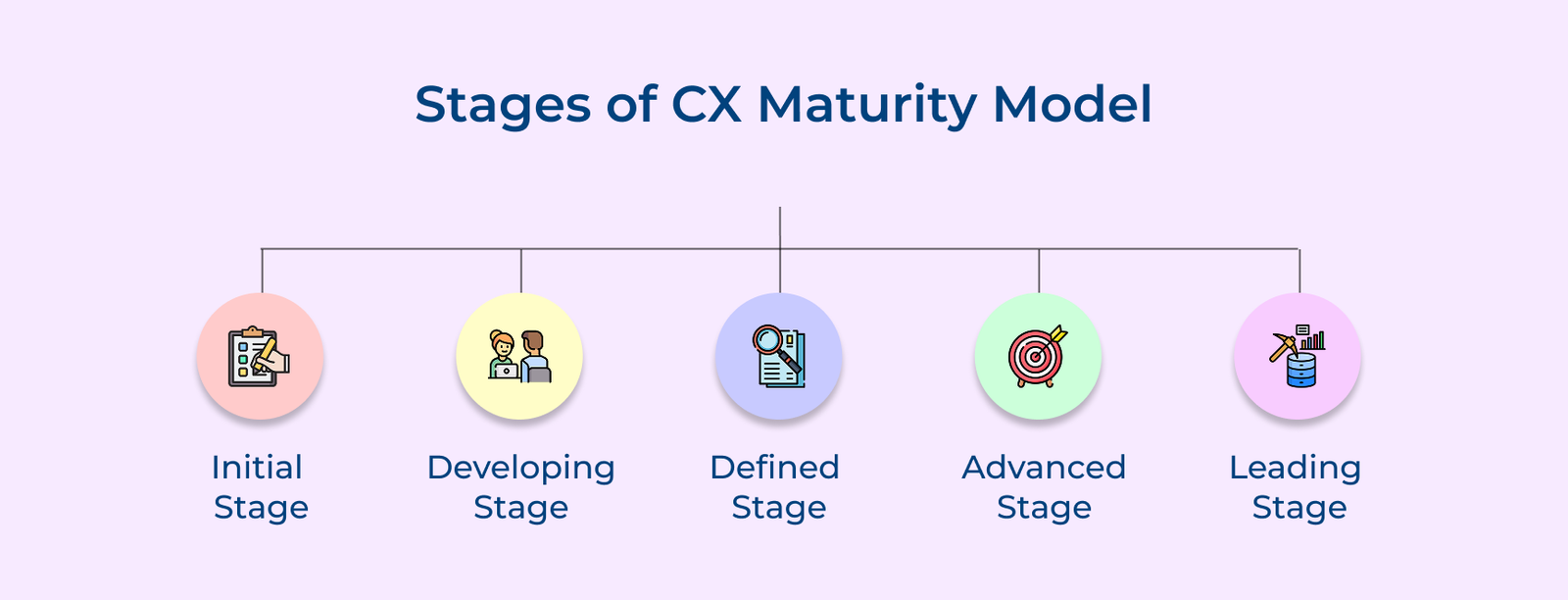
Businesses at the initial stage handle customer interactions reactively, with few formal processes in place. Feedback is collected sporadically and there’s only a basic understanding of customer needs. The phase highlights the need for structured CX initiatives.
Consider a small retail store that only addresses customer complaints as they come up, without tracking recurring issues or preventing them. There is no process to consistently meet customer expectations even if the staff is friendly.
Organizations shift from reactive to proactive CX management in the developing stage by implementing basic processes and regularly collecting customer feedback. They establish key metrics and allocate resources to support CX initiatives, recognizing the value of a more structured approach.
Take a mid-sized e-commerce company that introduces a post-purchase feedback survey and trains its support team on standard response protocols. They track basic metrics like response time and resolution rates to enhance customer interactions.
Companies now have established clear CX processes and consistent measurement systems across all touchpoints. They regularly analyze customer feedback and have dedicated teams focused on experience improvement, making CX a strategic priority.
Consider a telecommunications company with standardized protocols for handling customer interactions across multiple channels. They regularly conduct customer journey mapping and have the key performance indicators tied to experience metrics to drive continuous improvement.
Customer experience at the advanced stage is fully integrated into advanced measurement systems in place. Cross-functional teams work together seamlessly and technology enables personalized, multi-channel experiences. Mature CX capabilities now directly drive business outcomes, allowing organizations to predict customer needs and address issues proactively before they impact satisfaction.
Imagine a bank that uses AI to anticipate customer needs and personalize services. They have seamless integration between digital and physical channels with real-time feedback systems.
Organizations set industry standards with innovative CX practices at the leading stage. They leverage predictive capabilities to consistently deliver exceptional experiences that enhance strong emotional connections with customers. It represents the pinnacle of CX maturity, where experience management drives business strategy and creates sustainable competitive advantages through customer loyalty.
Consider Apple’s ecosystem where every interaction is carefully designed to delight customers. They consistently innovate in customer experience while maintaining high satisfaction levels across all touchpoints.
Following are the key benefits of the CX maturity model that make the framework invaluable for businesses aiming to deliver exceptional customer experiences.
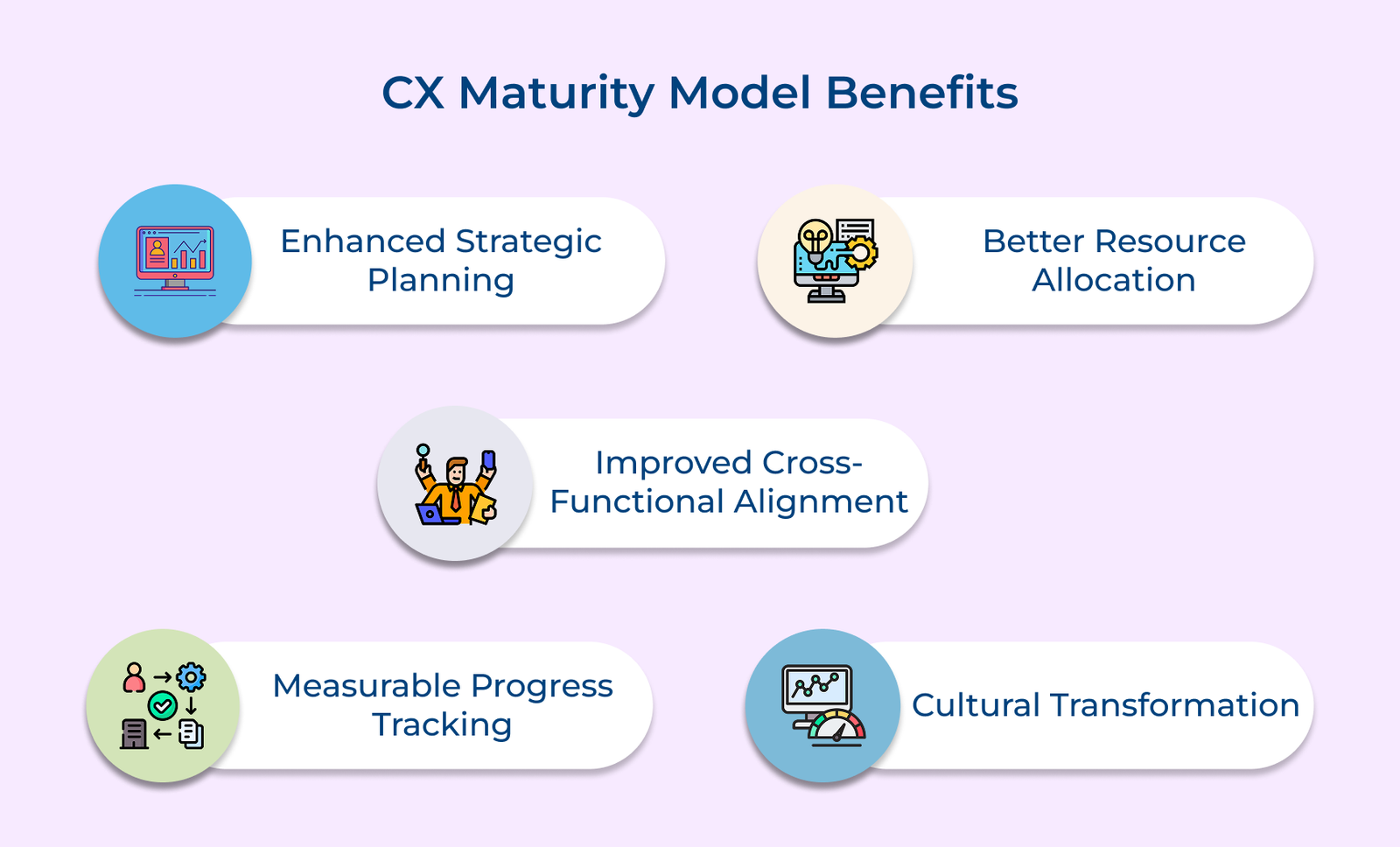
Enhanced Strategic Planning
Assessing your organization’s current CX maturity level allows for more focused strategic planning. You can develop targeted action plans to close gaps and prioritize initiatives that drive greater customer satisfaction by pinpointing areas for improvement.
Better Resource Allocation
The maturity model offers a clear framework for efficiently allocating resources across CX initiatives. You can make informed decisions on technology, training and process improvements by assessing your position in each CX dimension. The strategic approach helps you get the most out of your CX investments.
Improved Cross-functional Alignment
A CX maturity model enhances a shared understanding of customer experience goals across teams. Teams can better collaborate when they have a common framework for discussing and measuring CX progress. The alignment helps break down silos and ensures everyone works together to deliver consistent customer experiences.
Measurable Progress Tracking
The model offers clear criteria and benchmarks to track CX progress over time. You can showcase the impact of CX initiatives to stakeholders by measuring your organization’s maturity levels. The quantifiable approach helps justify continued investment in customer experience programs.
Cultural Transformation
The framework enhances a customer-centric culture across your organization. As teams advance through maturity levels, they gain a deeper understanding of customer needs, empowering employees to prioritize CX in their daily decisions and actions.
Below are the effective ways to implement the powerful tool in your business, unlocking the potential for deeper connections and increased customer loyalty.
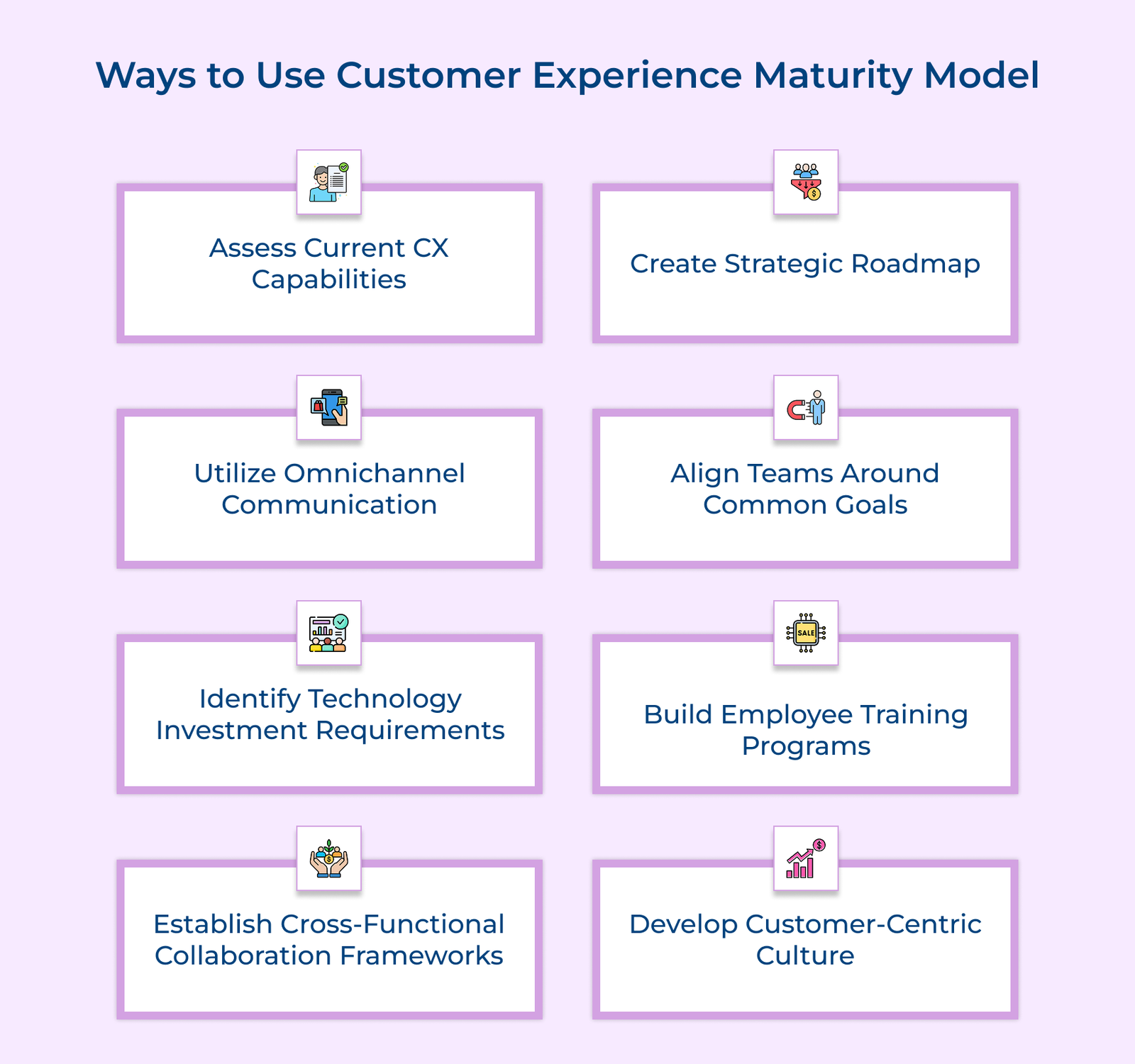
A systematic assessment of your current CX capabilities is key to successfully implementing a CX maturity model. The evaluation uncovers strengths and weaknesses in your customer experience delivery, ensuring improvements target core issues rather than being unfocused.
The assessment starts with thorough CX audits across all touchpoints, from customer service to digital interfaces, highlighting areas for growth as you progress through maturity levels. Customer journey mapping and benchmark comparisons offer deeper insights into your business stacks up against industry standards, ensuring your efforts align with customer expectations and market demands.
Best practices:
A strategic roadmap turns your customer experience maturity model assessment into actionable plans, guiding your organization through maturity levels with a systematic approach. It helps prioritize initiatives and allocate resources effectively, ensuring focused progress rather than scattered improvements.
Break down large goals into manageable phases with clear timelines and resource allocations tailored to your organization’s capabilities. It keeps momentum going while preventing overwhelm as you advance through the model. Set measurable objectives for each phase, aligned with your overall CX strategy and escalating maturity. Regular progress reviews ensure steady movement toward your goals.
Pro tips:
Omni-channel communication is key to advancing through the client experience maturity model. It ensures seamless interactions across all touchpoints, delivering a unified experience regardless of how customers engage with your business. A strong omni-channel strategy goes beyond basic multi-channel presence to create truly integrated experiences.
Data integration is the backbone of successful omni-channel communication. Your systems must share customer information seamlessly, allowing your team to maintain context and history as customers move between touchpoints which is an essential factor in CX maturity. You create a cohesive customer journey by maintaining consistent service standards and enabling smooth transitions across channels. The unified approach is crucial to your progress through the maturity model.
Actionable tips:
Team alignment is key to advancing through the customer experience maturity model. When all departments share common goals and metrics, your organization delivers more consistent customer experiences. The alignment prevents siloed efforts and accelerates progress through maturity levels.
Setting shared metrics ensures everyone is working toward the same objectives, helping teams understand how their work supports the overall CX strategy. Regular tracking and reporting keep everyone focused on advancing through the model together. Cross-functional meetings and unified reporting systems ensure CX improvements are coordinated across teams, driving higher maturity levels.
Best practices:
Technology is essential for progression through the customer experience maturity model. A well-planned infrastructure enables personalized, sophisticated customer experiences and ensures your CX capabilities can scale as you move through maturity levels. Start by assessing your current technology stack against your CX goals to identify gaps.
Choosing the right CX platforms and implementing them in phases ensures smooth integration. Your technology roadmap should align with your CX maturity goals, considering factors like team adoption and system integration. The phased approach maintains service continuity while upgrading your tech capabilities for advanced CX.
Best practices:
Employee training is key to advancing through the CX maturity model. Well-trained employees drive excellent customer experiences, with their understanding of CX principles directly influencing how fast your organization progresses. Targeted training develops the skills needed at each level to enhance customer interactions from frontline staff to management.
Ongoing learning and impact tracking ensure your training program evolves with your CX needs. Regular assessments help identify areas for improvement, keeping your team’s growth aligned with your organization’s maturity.
Pro tips:
Cross-functional collaboration is crucial as organizations move through the customer experience maturity model. When teams work seamlessly together, they deliver more cohesive customer experiences, breaking down silos that can hinder progress. Clear processes are essential for effective collaboration.
Shared responsibilities and collaboration tools help teams work efficiently. When departments are aligned with CX goals, they can better support each other’s efforts. Modern platforms make it easy to share insights and coordinate improvements as you progress.
Key takeaways:
A customer-centric culture is key to driving sustained progress through the client experience maturity model. When customers need to guide decisions at every level, organizations advance more quickly and maintain momentum.
Integrating customer feedback into decision-making is essential for driving change. Actively seeking and responding to feedback helps identify opportunities for improvement. Advocacy programs and service recognition initiatives reinforce customer-centricity, showing employees the impact of their work on customer satisfaction.
Best practices:
Let’s go through the challenges faced when implementing a CX maturity model, highlighting common obstacles organizations encounter and how they can overcome them.
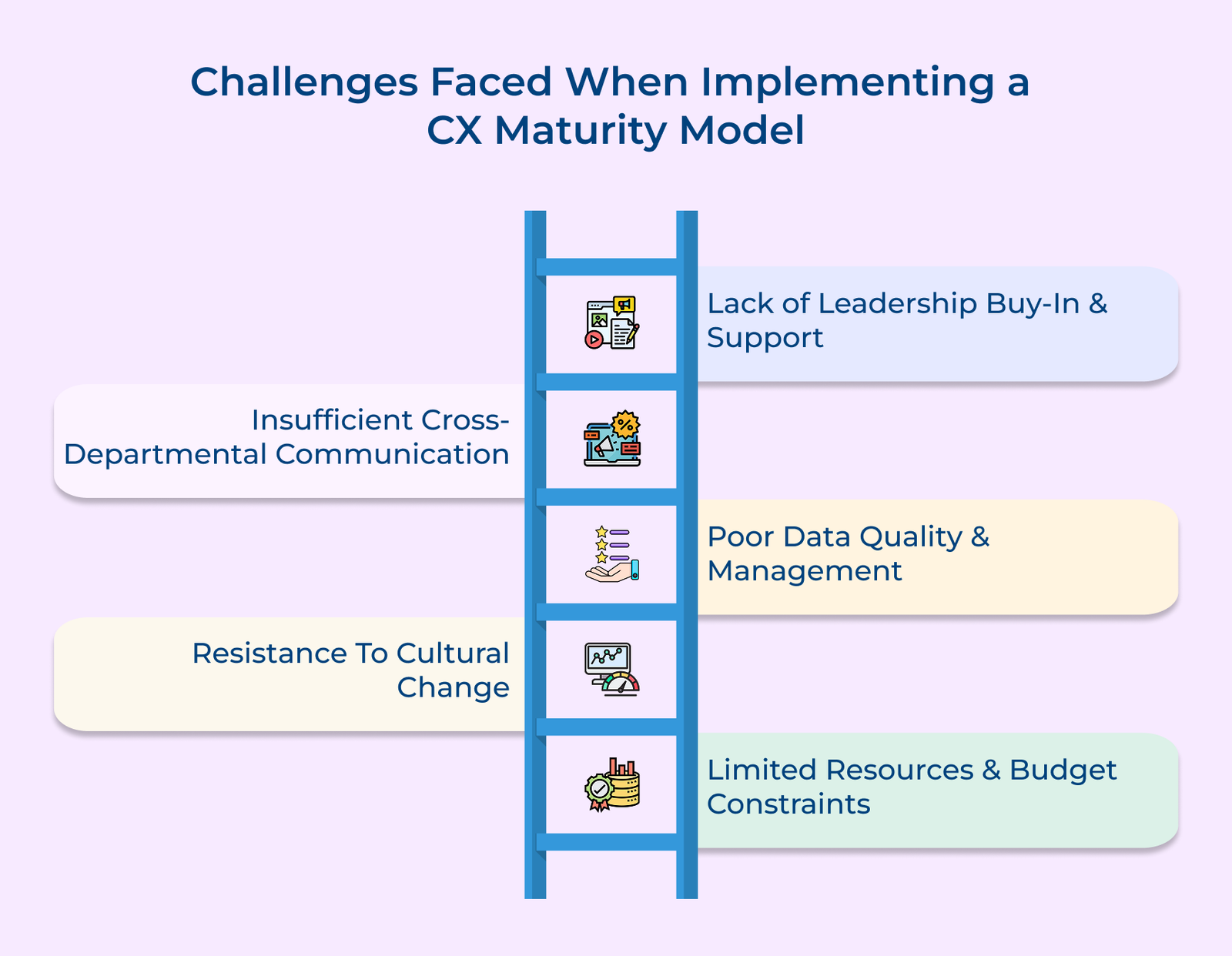
1. Lack of Leadership Buy-in and Support
Customer experience leaders may struggle to see the value in CX investments, often due to challenges in showing immediate ROI and competing resource priorities. Executives may view CX improvements as optional, not strategic.
2. Insufficient Cross-departmental Communication
Teams working in silos often lead to inconsistent customer experiences and hinder the implementation of unified CX strategies. Conflicting priorities and metrics between departments further complicate collaboration.
3. Poor Data Quality and Management
Companies struggle with gathering accurate, comprehensive customer data due to inconsistent collection methods and fragmented storage systems. It makes it hard to derive meaningful insights for CX improvements.
4. Resistance to Cultural Change
Employees may resist adopting new processes and mindsets needed for CX transformation. Deeply ingrained traditional ways of working can make it tough to shift toward a customer-centric approach.
5. Limited Resources and Budget Constraints
Organizations often face challenges in allocating enough resources for CX initiatives. Budget constraints can limit investments in technology, training programs and the hiring of expertise needed to implement the maturity model effectively.
Implementation ways:
The following are the essential tools that can help organizations progress through different maturity levels while delivering exceptional experiences.
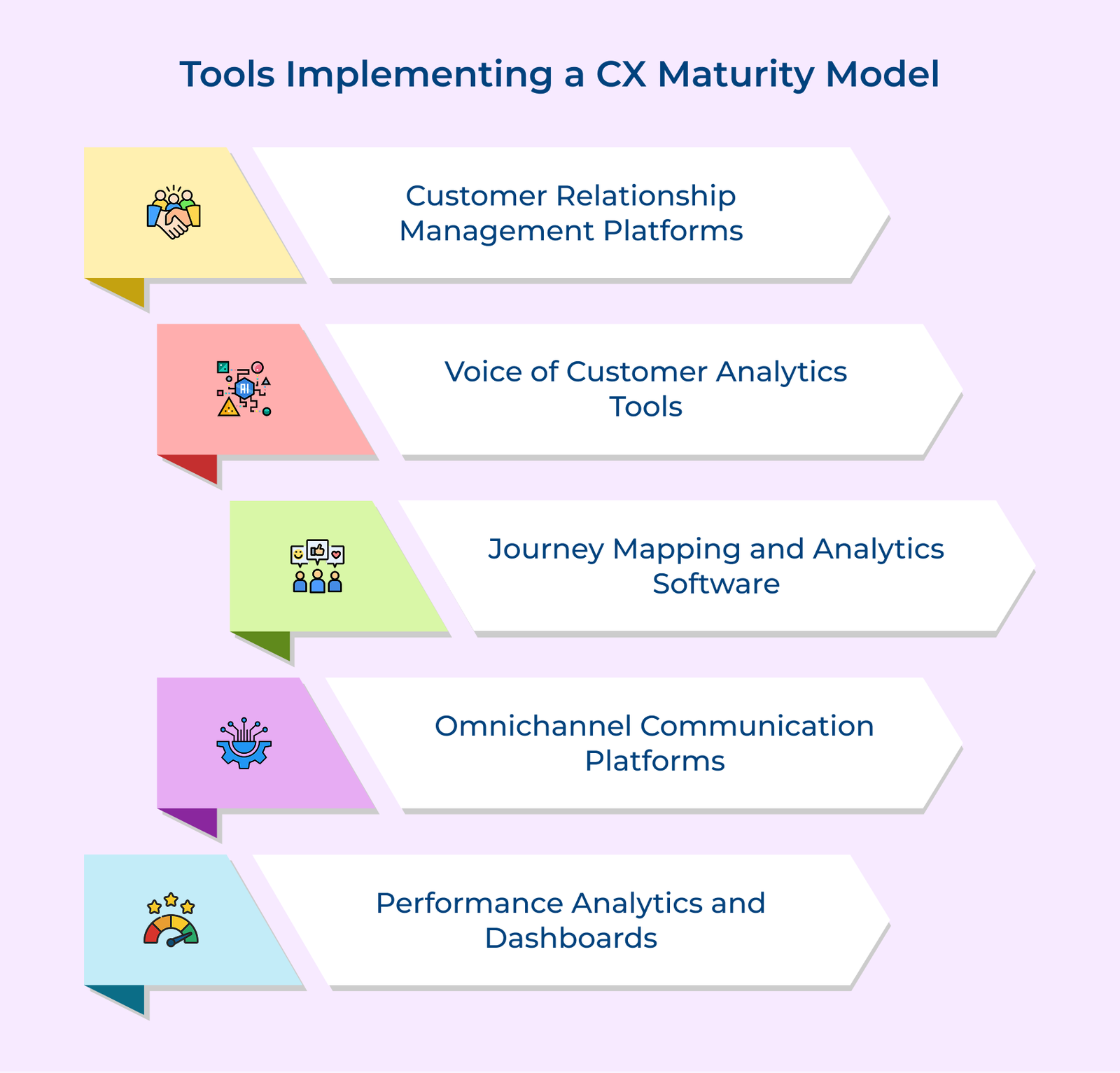
Modern CRM systems, like Salesforce and HubSpot, form the backbone of managing customer interactions across touchpoints. They track customer journeys and maintain detailed histories, empowering businesses to deliver personalized experiences that align with higher maturity levels.
VoC platforms like Qualtrics and Medallia analyze customer feedback across multiple channels, providing real-time insights into customer preferences. It enables businesses to make data-driven decisions that drive progress through maturity stages.
Tools like Smaply help organizations optimize customer journeys, pinpointing areas for improvement and tracking progress through maturity levels. Mapping the journeys enables businesses to identify where to enhance capabilities for seamless experiences.
Unified communication tools like Zendesk and Intercom provide consistent experiences across channels by integrating various communication platforms into one interface. The integration is crucial as organizations advance through higher CX maturity levels.
Advanced analytics platforms like Tableau and Power BI offer real-time visibility into CX metrics, tracking performance across various dimensions. The insights help organizations measure progress through maturity levels and pinpoint areas for improvement.
Let’s go through some leading brands that have successfully implemented customer experience maturity models to transform their businesses.
Amazon
Amazon has continuously refined its customer experience through a sophisticated maturity model approach, focusing on understanding customer behavior with advanced analytics. Amazon creates seamless shopping experiences and constantly tests new features based on customer feedback by integrating data from multiple touchpoints.
The methodical approach has reinforced Amazon’s leadership in e-commerce, driving increased customer loyalty and market share. Their ability to deliver personalized experiences consistently has set new benchmarks in online retail.
Disney
Disney’s customer experience maturity model shines through its “Magic Band” program and integrated park management. They create a unified system that enhances every interaction by tracking guest preferences from hotel check-ins to ride choices.
The commitment to CX maturity has boosted Disney’s brand reputation, driving higher guest satisfaction, more repeat visits and stronger emotional connections with the brand. Their ability to deliver personalized experiences consistently has set a new standard in the theme park industry.
Apple
Apple showcases advanced CX maturity with its integrated ecosystem, delivering seamless experiences across devices, services and retail locations. The Genius Bar exemplifies their mature approach to customer support, blending technical expertise with personalized service.
The sophisticated CX strategy has driven strong brand loyalty, with customers valuing consistency and quality across all touchpoints. It has allowed Apple to maintain premium pricing and cultivate a dedicated, loyal customer base.
Starbucks
Starbucks leverages a comprehensive CX maturity model, prioritizing personalization through its mobile app and rewards program. Their digital-first, human-centered approach remembers customer preferences, anticipates needs and rewards loyalty, all while maintaining the personal touch of their baristas.
Their mature approach to customer experience has built a powerful loyalty program, strengthening customer relationships through the blend of digital convenience and personal connection. It has resulted in increased visit frequency and higher customer lifetime value.
Ritz-Carlton
Ritz-Carlton exemplifies advanced CX maturity with its “Ladies and Gentlemen serving Ladies and Gentlemen” philosophy, empowering employees with the autonomy to resolve guest issues. Their approach combines sophisticated data collection on guest preferences with rigorous training programs.
The mature CX strategy has them as a benchmark in luxury hospitality, driving personalized experiences and strong customer loyalty. It has enabled them to maintain premium pricing and consistently high occupancy rates.
The customer experience maturity model is a transformative framework that helps organizations systematically improve every customer interaction. It guides businesses from basic service delivery to creating unforgettable experiences that drive loyalty by offering a structured approach to assessing and optimizing touchpoints.
As organizations advance through maturity levels, they develop more sophisticated capabilities to meet customer needs. The evolution goes beyond new technologies and processes – it’s about enhancing a customer-centric culture where every employee plays a role in delivering exceptional experiences. Achieving success with the model requires commitment, dedication and a willingness to continuously adapt based on customer feedback.
Key takeaways:

Assessment requires a systematic approach, using clear criteria across key CX dimensions. Begin by evaluating current capabilities in areas like data collection, customer feedback systems and employee training. Prioritize improvements based on customer impact, available resources and alignment with business goals, balancing quick wins with long-term strategic initiatives.
The model includes key components like customer understanding, technology infrastructure, process maturity and organizational culture. Each element plays a vital role in CX delivery, from data collection and analysis to team collaboration. It also incorporates governance structures, metrics and continuous improvement processes.
The maturity model acts as a strategic guide for making informed CX investment decisions. It helps identify capability gaps, evaluate solutions and chart the best course forward. Use it to assess initiative impacts and align decisions with your desired maturity level.
Implementation requires a mix of human, technological and financial resources. You’ll need dedicated team members, technology investments for data collection and a budget for training improvements. Factor in both initial costs and ongoing resources for maintenance.
Progression through maturity levels depends on factors like organizational size, current capabilities and commitment to change. Organizations on average spend 12-24 months at each level before advancing. The journey demands sustained effort, continuous assessment and regular strategy adjustments based on results.
Maintaining momentum requires clear communication, regular progress updates and visible wins. Keep teams motivated by celebrating successes, sharing customer feedback and showcasing the impact of improvements. Ongoing assessment and strategy adjustments ensure steady progress through maturity levels.
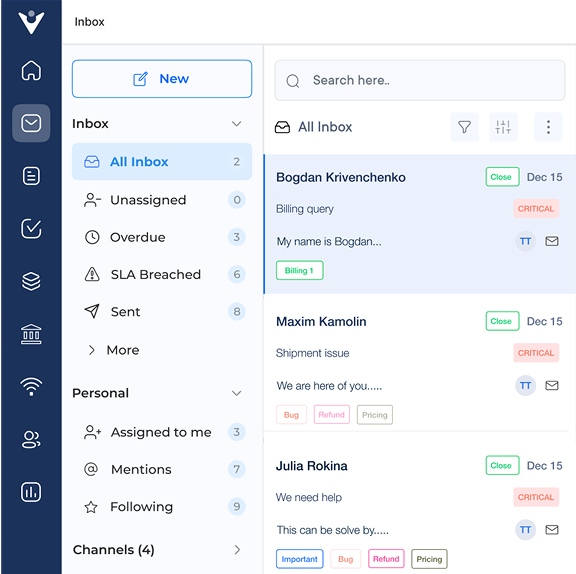
Grow Customer Relationships and stronger team collaboration with our range of products across the Conversational Engagement Suite.
Omnichannel Customer Support & Help Desk Software
AI Enabled Business Messaging and Chatbot Software
Sales Engagement & CRM Software
Call Center Software & Virtual Phone System
Product Marketing & Experience Platform
Customer Experience & Feedback Management Software

 7 Essential KPIs to Add to Customer Retention Dashboard
Scroll to top
7 Essential KPIs to Add to Customer Retention Dashboard
Scroll to top