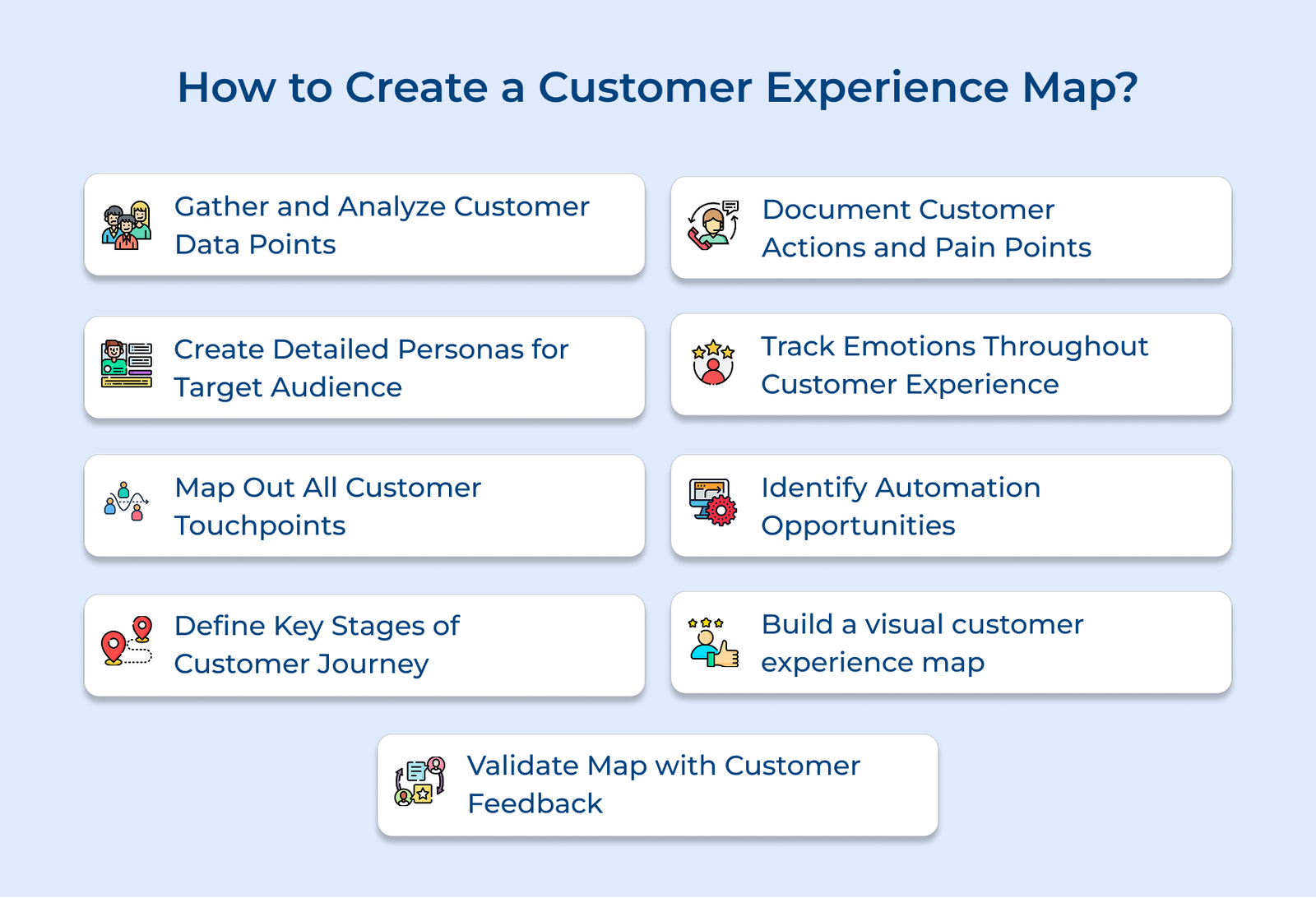
1. Create Detailed Personas for the Target Audience
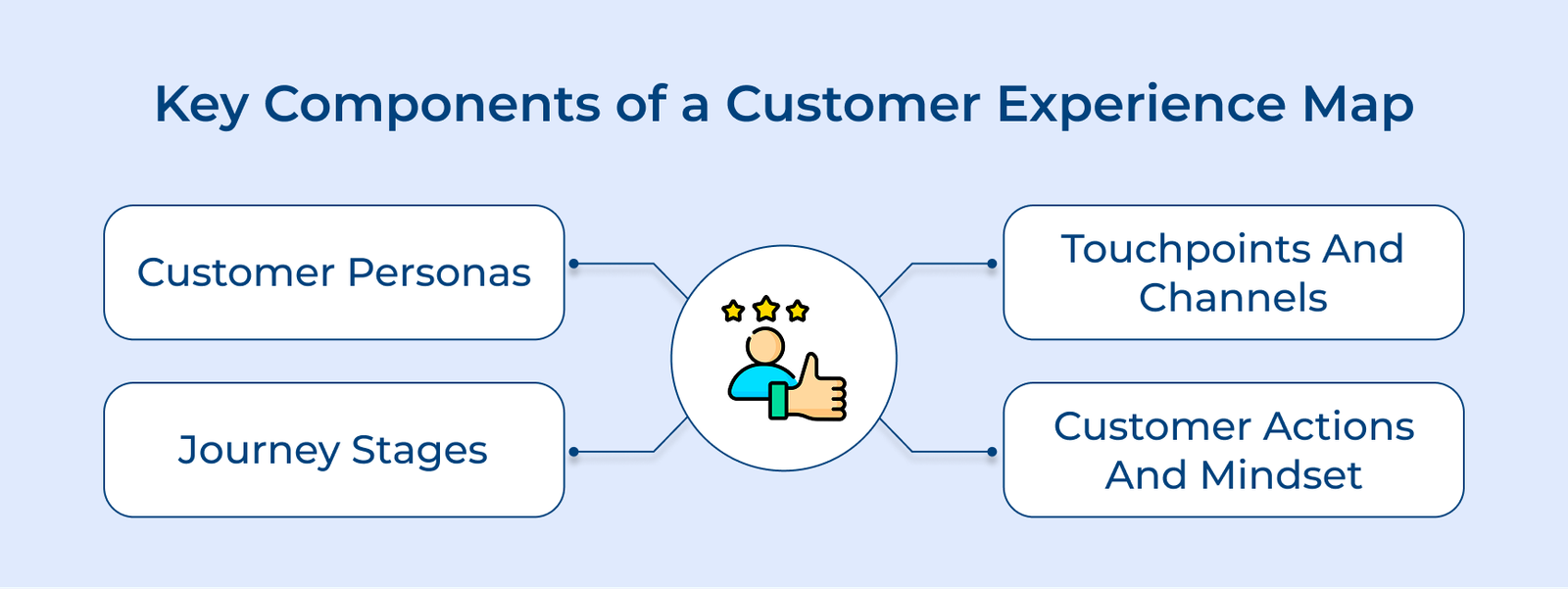
A strong customer experience map starts with understanding who you’re mapping it for. It means creating detailed, research-based customer personas—fictional profiles that reflect real customer traits and behaviors.
Start by gathering actual data through surveys, customer interviews and market analysis. The goal is to understand how your customers live, think and interact with your brand, not just who they are on paper.
Key categories:
- Demographic: Age, income, education, job type and family structure offer basic context.
- Psychographics: Values, interests, habits and attitudes shape how people make decisions.
- Behaviors: Look at how often customers buy, what they use and how loyal they are to your brand.
Once you’ve got the data, speak directly with customers. Interviews help you dig into real pain points, motivations and expectations – the stuff that starts alone can’t show you.
Pro tips:
- Aim for a refresh every six months to reflect how your customers and market are changing.
- Include negative personas to identify customer types that might not be ideal for the business.
2. Map Out All Customer Touchpoints
Matching touchpoints means tracing every interaction a customer has with your business, from first discovery to long after the purchase. It’s a simple but powerful way to see where your customer experience shines and where it falls short.
Touchpoints aren’t just about direct contact. They include everything from walking into your store to reading a review online. Knowing what the moments are helps you build a more consistent, connected experience.
- Start by listing all owned channels where direct interaction with customers occurs, like stores, websites and customer service platforms.
- Document paid channels that attract customers, such as advertising campaigns, social media promotions and affiliate partnerships.
- Map earned touchpoints where customers interact with brand content organically through reviews, testimonials and social media mentions.
- Incorporate partner touchpoints where customers interact through third-party vendors, distributors or service providers.
- Consider post-purchase touchpoints like product usage, maintenance services and loyalty programs.
3. Gather and Analyze Customer Experience Data
Start by collecting and analyzing data that reflects how people interact with your brand. It means going beyond assumptions and gathering real feedback from multiple sources. Each channel offers a different perspective, helping you understand customer behavior, preferences and frustrations.
Dig deeper by reviewing customer service interactions. Look into the past support tickets, chat logs and call histories as they can reveal friction points that customers face during their journey. Not only do the records highlight what’s going wrong, but they also show how problems are resolved and how long it takes.
Actionable tips:
- Set up automated tools to keep data collection current and your map up to date.
- Use a clear, consistent framework to analyze data, so comparisons across touchpoints stay accurate and actionable.
4. Define Key Stages of Customer Journey
Breaking down the customer journey into clear stages makes it easier to understand and improve how people interact with your brand. The structured approach helps you see where customers begin, how they make decisions and what drives their continued loyalty.
Key stages:
- Awareness stage: The customer realizes a need and starts looking for solutions, often through search engines, social media or recommendations.
- Consideration stage: They compare options, read reviews and weigh features, pricing or credibility to decide what fits best.
- Decision stage: After narrowing choices, the customer commits to a purchase based on their evaluation.
- Loyalty/advocacy stage: Satisfied customers become repeat buyers, engage with loyalty programs and potentially recommend the brand to others through reviews or word-of-mouth.
Understanding what prompts movement from one stage to the next helps identify moments that either build momentum or cause people to drop off. The “transition points” are where the most impact can be made.
Best practices:
- Define what specific customer actions signal a move from one stage to the next to guide timely, relevant engagement.
- Track success at each stage using simple, measurable goals–it reveals where improvements are needed most.
5. Document Customer Actions and Pain Points
Capturing what customers do and where they get stuck in their journey helps create a clearer picture of the experience from their point of view. Businesses can spot where things go smoothly and where they break down by documenting real actions.
Record Specific Customer Actions
List out what customers do at each stage: where they click, what they read, how they move from one step to the next and how long it takes. It helps uncover patterns in behavior and highlights areas where the process could be simpler or faster.
Note Experience Flow Obstacles
Look closely at where customers hit roadblocks, whether it’s slow service, hard-to-navigate pages or unclear next steps. The sticking points are often the reason people drop off. Pinpointing them early helps you fix small issues before they grow into major problems.
6. Track Emotions Throughout Customer Experience
Understanding how customers feel at each stage of their journey adds depth to the experience map. Emotions shape decisions, influence loyalty and often explain why people stay or walk away. When you track emotional reactions alongside actions, you get a clearer sense of what matters to your customers.
Monitor Satisfaction at Touchpoints
Use surveys, reviews or brief check-ins to measure how customers feel after major interactions. Look for signs of frustration, confusion or satisfaction. The emotional snapshots show where you’re doing well and where small changes could make a big difference.
Document Emotional Response Patterns
Don’t just track feelings, look for patterns. Noting the trends helps focus improvements where they’ll have the most impact on how customers remember and talk about your brand.
7. Identify Automation Opportunities for Enhancement
Spotting where automation can improve the customer journey starts with looking closely at how things work today. The goal isn’t to remove human connection—it’s to make routine tasks smoother so people get faster, more consistent service.
Evaluate Process Automation Potential
Start by identifying steps that are repeated often and don’t require much personal input, like appointment reminders, follow-up emails or order status updates. They are usually great candidates for automation and can free up time for more meaningful customer interactions.
Analyze Tasks for Improvement
Check for delays, mistakes or customer complaints in your current process. Use the data to figure out where automation could speed things up or reduce errors without making the experience feel robotic.
Consider Technology Integration Options
You don’t need to overhaul everything. Tools like chatbots for quick answers, self-service portals or smart forms can often be added without much disruption. Focus on using tech to support, not replace, real human help when it’s needed most.
8. Build a Visual Customer Experience Map
Turning customer journey insights into a visual format makes it easier for teams to spot problems, understand patterns and take informed action. A clear, well-organized map helps everyone quickly grasp how customers experience each step and where things can be improved.
Selecting Visualization Tools
Choose a visual tool that fits your needs. It can be a simple design platform or a more advanced mapping app, everything depends on the needs. Look for something that makes collaboration easy, lets you update the map regularly and keeps things visually clean.
Structure Information Architecture
Group related information like actions, feelings and challenges into consistent sections. Use color to show emotional tone (e.g., red for frustration, green for satisfaction) and simple icons for touchpoints like email, store visits or app usage. Add a key to explain visuals and test the map with others to make sure it’s easy to understand without extra explanation.
9. Validate Map with Customer Feedback
Validation ensures your customer experience mapping reflects what real customers go through, not just internal assumptions. You make it a more useful and trustworthy tool for improving your processes by checking the map against actual experiences.
Planning Validation Strategy
Outline how you’ll test the map with real customers. Include a mix of segments and decide how you’ll collect feedback. Make validation a regular step, not a one-time task.
Gather Direct Feedback
Conduct interviews, surveys and usability tests with actual customers to verify the map’s accuracy. Use both qualitative and quantitative methods to collect diverse perspectives.
Analyze Validation Results
Compare customer feedback to the current map, spot any gaps or mismatches and make updates accordingly.
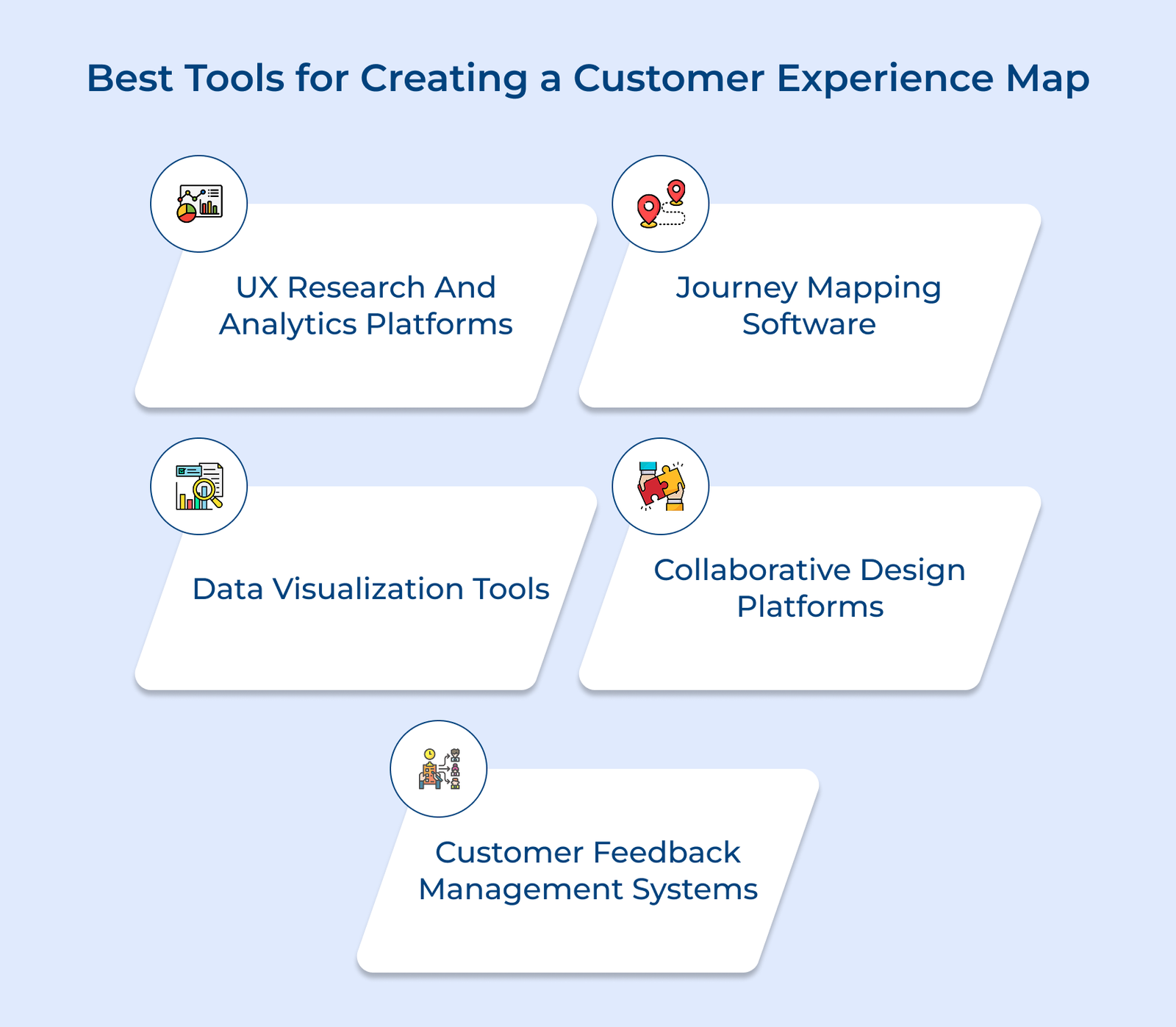
Best Tools for Creating a Customer Experience Map
Let’s go through the key technologies that can help generate comprehensive and insightful customer experience maps.