1. Primary Focus
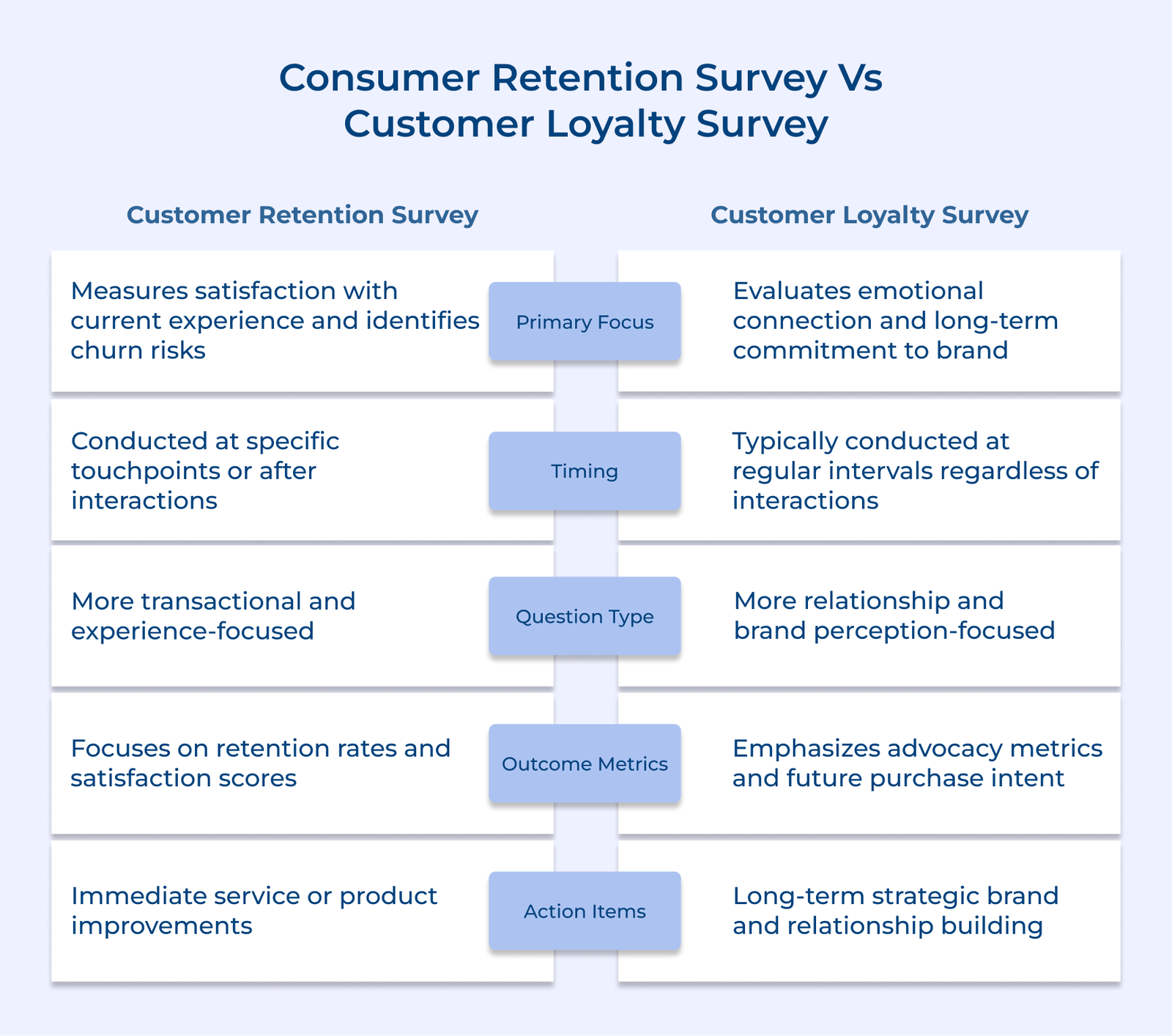
Retention surveys concentrate on understanding immediate satisfaction levels and identifying potential reasons why customers leave. Businesses address current loopholes and improve existing services to prevent customer churn.
Loyalty surveys dive deeper into the emotional connections customers have with the brand. It explores how users view the brand about competitors. Clients also assess their likelihood of maintaining a long-term relationship beyond individual transactions.
2. Timing
Retention surveys are typically triggered by specific events or interactions. They’re designed to capture feedback when experiences are fresh in customers’ minds. It allows for immediate corrective action if needed.
Loyalty surveys follow a more planned, periodic schedule. It’s conducted at regular intervals to track evolving customer sentiments and brand relationships.
3. Question Type
Retention surveys focus on the practical aspects of customer experience. Questions often address specific interactions, features or qualities to identify areas to improve.
Loyalty surveys explore aspects of brand relationships. Questions examine emotional connections, brand values alignment and overall perception. It helps them to understand what drives long-term customer commitment.
4. Outcome Metrics
Retention survey indicators focus on satisfaction scores, problem resolution rates and likelihood to continue using products. The measurements help predict and prevent immediate customer churn.
Loyalty survey parameters emphasize net promoter scores, recommendation rates and share of wallet. It helps understand customer lifetime value and potential for brand growth through increased engagement.
5. Action Items
Retention surveys generate action items focused on immediate improvements. Results often lead to quick fixes in delivery, features or customer support processes to address specific problems.
Loyalty surveys inform longer-term strategic decisions. Findings influence brand positioning, customer relationship programs and bigger business strategies. It aims at building lasting emotional connections with customers.
Examples of Customer Retention Surveys
Let’s see some examples of how leading brands have successfully implemented customer retention surveys to strengthen their customer relationships and drive business growth.
1. Amazon’s Post-Purchase Experience Surveys
Amazon sends targeted surveys after each purchase, focusing on delivery experience, product satisfaction and seller performance. A combination of these insights with AI-powered analytics helps identify patterns in customer behavior and potential pain points.
The survey-driven improvements have transformed their customer service approach. The continuous feedback loop has helped them enhance their delivery systems, refine recommendations and strengthen their seller quality standards.
2. Netflix’s Content Preference Surveys
Netflix conducts regular viewing experience surveys that explore content preferences, quality and user satisfaction. Mixing survey responses with viewing data helps to understand why subscribers stick or leave their service. Using the feedback, the brand shapes its content strategy.
The approach has revolutionized their content creation and recommendation systems. A deep understanding of viewer preferences has helped them develop more engaging original content. It has also created a more personalized streaming experience for each user.
3. Spotify’s Feature Usage Surveys
Spotify deploys in-app surveys to understand how users interact with features like playlists, podcasts and discovery tools. They focus on understanding which features drive regular engagement and which ones might need improvement.
The survey-driven development has enhanced user engagement significantly. Understanding feature usage patterns has helped them create more intuitive interfaces. The introduction of new features keeps users coming back to the platform regularly.
4. Starbucks’ Mobile App Experience Surveys
Starbucks regularly surveys mobile app users about their ordering experience, rewards satisfaction and store visit frequency. The feedback is used to refine their mobile experience and identify opportunities for enhancing their loyalty.
The insights have helped them create a smooth online-to-store experience. The app has evolved into a powerful retention tool that drives repeat visits and increases average customer spending.
5. Adobe’s Creative Cloud User Surveys
Adobe conducts detailed surveys about their software suite usage, focusing on feature adoption, workflow integration and creative professional needs. The feedback is used to prioritize updates and identify gaps in their creative tools ecosystem.
The survey-driven development approach has strengthened its position in the creative software market. Responding to user needs, they’ve maintained high renewal rates and expanded their user base through improved product offerings and better integration capabilities.
Understand Your Customers Like Never Before With Retention Survey
Consumer retention surveys serve as a powerful window into the minds of your clients, offering unique insights that go beyond basic satisfaction parameters. Carefully crafted questions help businesses uncover patterns, preferences and pain points that might otherwise remain hidden.
Understanding your customers through retention surveys enables active relationship management and genuine improvements. Instead of waiting for customers to raise concerns or leave, these surveys create opportunities for dialogue and strengthening connections. The data gained help shape everything from product development to customer service strategies.
Ultimately, retention surveys transform customer feedback into a strategic advantage. Systematically collecting and acting on customer insights helps businesses build stronger connections that lead to increased loyalty. In today’s competitive world, realizing customer needs and expectations becomes a crucial item for long-term success.