Improve Your NPS by Survey Design & Delivery
1. Time Surveys Right after Key Interactions
Timing your NPS surveys right can make all the difference in the quality of feedback you receive. When customers are asked shortly after a meaningful interaction like a purchase, a service call or an onboarding session, they’re more likely to respond with detailed, honest insights while the experience is still top of mind.
Set up automated survey triggers based on key touchpoints using your CRM. Whether it’s a checkout confirmation or a resolved support ticket, let the system do the timing for you. Avoid sending surveys during off-hours or weekends unless it aligns with the customer’s activity. A poorly timed message can feel intrusive and that’s not the impression you want to leave.
Pro tips:
- Make sure your emails land during reasonable hours by factoring in time zones and customer routines.
- Alternate between immediate and slightly delayed surveys to balance emotional reactions along with more thoughtful reactions.
2. Keep Surveys Short and Highly Focused
Keeping NPS surveys short and to the point is one of the simplest ways to boost completion rates. When customers are faced with long surveys, they’re more likely to abandon them or provide rushed answers. But when you respect their time and keep things brief, you’re more likely to get honest, thoughtful feedback that actually helps you improve.
The best approach is to stick to the core NPS question and follow it with 2-3 targeted questions that dig into the “why” behind the score. The follow-ups should focus on areas where you’re actively looking to make improvements. Every question should have a clear purpose and lead to insights you can act on.
Actionable tips:
- Put most questions at the top as the attention usually drops quickly, so ask what matters first.
- Pilot your survey with a small group to catch unclear questions or unnecessary extras before a full rollout.
3. Use a Multichannel Approach for Survey Distribution
Using a multichannel approach to distribute NPS surveys helps you meet customers where they already are. Some may prefer the convenience of a quick text, while others are more likely to respond via email or within your app. You avoid missing out on valuable feedback from people who might ignore a message sent through just one method by offering surveys through several channels.
Matching the right type of survey to the right channel is key. Keep in-app surveys short and use email when you need to provide more context or ask a few follow-up questions. Track how each channel performs so you can refine your strategy over time and make sure you’re getting both high-quality responses along a well-rounded view of your customer base.
Best practices:
- Alternate channels for each customer to reduce fatigue and find what works best for different segments.
- Coordinate timing to avoid sending multiple surveys through different channels at once, which can feel repetitive or annoying.
Improve NPS with Exceptional Customer Support
4. Implement Real-time Live Chat or Chatbot Support Systems
Real-time support systems play a key role in boosting your NPS by giving customers the help they need the moment they need it. Whether it’s through live chat or automated responses, timely assistance reduces frustration and shows customers that their time matters. Instant support builds trust and makes customers feel more secure in their decision to engage with your business.
Choose a chat platform that fits well with your current system. Train your team to communicate clearly through chat and design a chatbot to handle basic questions or common issues. A blend of human support and AI ensures that customers can get quick answers without feeling like they’re being passed off to a robot when the situation requires a personal touch.
Key takeaways:
- Review chat transcripts regularly to spot common issues that can be resolved more efficiently with automation.
- Allow smooth handoffs between chatbot and live agents so customers don’t have to re-explain their problems.
5. Create a Comprehensive Self-Service Knowledge Base
A self-service knowledge base gives customers the tools to solve problems on their own, reducing their reliance on support teams. Independence not only speeds up issue resolution but also boosts satisfaction, as people often prefer solving problems without waiting for help. When done well, a knowledge base becomes a reliable first stop for customers, easing pressure on your support channels and positively influencing your NPS.
Start by organizing answers to common questions and technical issues. Make the layout easy to navigate with clear categories, search functionality and straightforward language. Add screenshots, short videos or diagrams when needed and update the content regularly as products evolve. A well-maintained knowledge base shows customers that you’re proactive and attentive to their needs..
Pro tips:
- Add a feedback option on every article so readers can flag unclear or outdated content.
- Review internal search terms to identify missing or hard-to-find topics that need better coverage.
6. Establish SLA Response Time Standards
Service Level Agreement (SLA) response time standards help keep customer support consistent, timely and reliable. You manage customer expectations and show respect for their time by clearly defining how quickly your team should reply to different types of inquiries. The transparency builds trust and plays a major role in improving NPS, especially when customers feel acknowledged right away.
Start by assigning SLA tiers based on the urgency of issues and the importance of the customer segment. Urgent problems or high-value customers may need faster responses. Use your helpdesk system to monitor performance in real time and trigger alerts if any tickets are close to breaching SLA. Just as important, train your team to balance response speed with thoughtful, complete answers to avoid rushed or careless replies.
Actionable tips:
- Use friendly competitions to motivate support teams to consistently hit SLA goals without sacrificing quality.
- Plan smarter shift coverage during busy times so customers aren’t left waiting for a reply.
7. Focus on Omni-Channel Communication
Omnichannel communication ensures that customers have a smooth and consistent experience no matter how they choose to contact you, be it via email, live chat or social media. The approach reduces friction and confusion, which can have a direct, positive effect on your Net Promoter Score (NPS). When customers don’t have to repeat themselves or re-explain their issue across channels, they feel heard and taken care of.
Bring all your communication tools into one platform so your support team has access to full conversation history and context. Train your team to maintain the same tone, quality and level of care across every platform. Use templates as a foundation for consistency, but allow flexibility so responses feel personal, not robotic.
Actionable tips:
- Sit in on support conversations across different platforms to catch tone or content gaps before customers do.
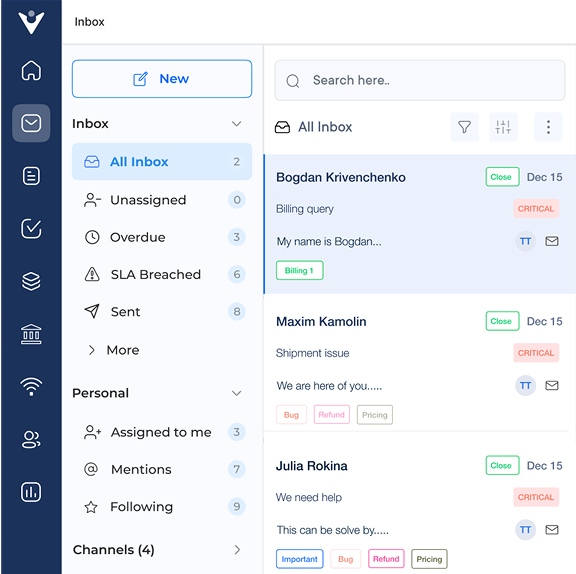
- Add visual cues (like color tags) to help agents quickly identify which channel a message came from and adjust accordingly.
Improve NPS Score with a Customer-Centric Culture
8. Share NPS Insights Across All Teams
Sharing NPS insights across your organization helps everyone see the bigger picture when it comes to customer satisfaction. When teams from support to product to marketing understand how their work directly affects the customer experience, they’re more likely to make thoughtful, customer-focused decisions. It turns NPS from just a number into something that drives real action across departments.
Set up a shared dashboard where all teams can access up-to-date NPS data and customer feedback. Use team meetings to regularly review patterns, share takeaways and discuss what can be improved. Give each department the space to set their own NPS-related goals, so accountability is shared and improvements feel like a collective win.
Key takeaways:
- Share real customer wins and quotes during team meetings to keep NPS improvements grounded in human stories.
- Send out a short monthly email with key NPS trends and a quick highlight of what’s working.
9. Reward Employees for Customer Satisfaction Gains
Typing employee rewards to customer satisfaction encourages teams to consistently put customers first. When people see a clear link between their day-to-day work and improvements in NPS, it creates a stronger sense of purpose. Recognition, be it big or small, shows employees that their efforts matter, especially when they turn tough situations into positive outcomes.
Build a simple, transparent reward system that highlights both individual achievements and team wins. Use NPS feedback to guide performance reviews and incentive programs. Whether it’s a shoutout in a team meeting or a quarterly bonus, make sure employees feel seen when they deliver great experiences. Share the wins company-wide to inspire others.
Best practices:
- Recognize employees who successfully turn negative feedback around with personal outreach or problem-solving.
- Blend quick wins (like thank-you notes or gift cards) with long-term rewards (such as promotions or team outings) to keep motivation going strong.
10. Develop Customer-focused Decision-Making Processes
Putting customers at the center of your decision-making process helps ensure that the business moves to support a better overall experience. The mindset helps you avoid changes that might unintentionally frustrate customers or hurt satisfaction levels. When teams regularly ask, “How will it impact the customer?” Before making a call, you build habits that lead to stronger relationships and higher NPS scores.
Create a simple review process for new projects that includes a customer impact checklist. Involve frontline teams and even customers themselves through feedback sessions or advisory boards. Bake customer input into planning from the start, not just after something goes live.
Best practices:
- Walk through real-life customer scenarios before rolling out new policies or products.
- Maintain a record of past decisions alongside changes in NPS to learn what worked and what didn’t.
Improve Your NPS Score with Analysis & Action
11. Track NPS Trends Across Customer Segments
Analyzing NPS trends with a strategic, segmented lens can reveal hidden patterns in customer satisfaction. Instead of viewing your score as a single number, break it down by factors like age, behavior or buying habits. It allows you to focus your efforts where they’ll have the most impact, whether that’s improving support for newer customers or fine-tuning experiences for high-value clients.
Use your analytics tools to group customers by meaningful traits such as purchase frequency, lifetime value or product usage. Monitor each segment’s NPS over time and set up alerts for sudden changes. The goal isn’t just to track scores but to understand the why behind them and take focused action that makes sense for each group.
Pro tips:
- Give segments creative, easy-to-remember nicknames to keep team conversations clear and lively.
- Dive into your data for usual links like time of purchase or support channel used that might be shaping NPS scores.
12. Map Customer Journey Pain Points
Journey mapping is a hands-on way to uncover the moments that shape a customer’s experience for better or worse. You can see where frustration builds and where things go right by tracking each step of their interaction with your business. The clarity helps you focus your efforts on fixing the rough patches that drag down NPS while strengthening the moments that drive loyalty.
Start by building a step-by-step visual of the entire customer journey, from the first visit to long-term engagement. Layer in actual NPS feedback to highlight where satisfaction drops or spikes. Validate your assumptions with customer interviews to ensure the map reflects reality, not just internal assumptions. The method gives you a clear path toward meaningful improvements.
Actionable tips:
- If you have a physical space, walk through it as a customer would like to better understand their experience.
- Use a heat map to track emotional highs and lows across the journey—it’s a great way to spot recurring pain points at a glance.
13. Implement Closed-Loop Feedback Systems
Closed-loop feedback systems turn customer input into action. When customers take the time to share thoughts, especially negative ones, they want to know someone’s listening. Following up on feedback not only resolves individual concerns but it also builds trust and encourages customers to keep engaging. When people see that their input leads to real changes, they feel heard and that’s often what makes the biggest difference in loyalty.
Build a simple, reliable system for handling feedback. Route it to the right teams, follow up with personalized responses and make sure someone is tracking what gets resolved. Don’t let feedback disappear into a void, as you must show your customers that what they say shapes your service. Then, monitor how the changes affect satisfaction levels and keep refining your process.
Key takeaways:
- Follow up with customers who shifted from low to high scores—they often offer great insight into what worked.
- Collect and share examples where acting on feedback led to improvements—use them in team meetings or onboarding.
Challenges Associated with Improving NPS
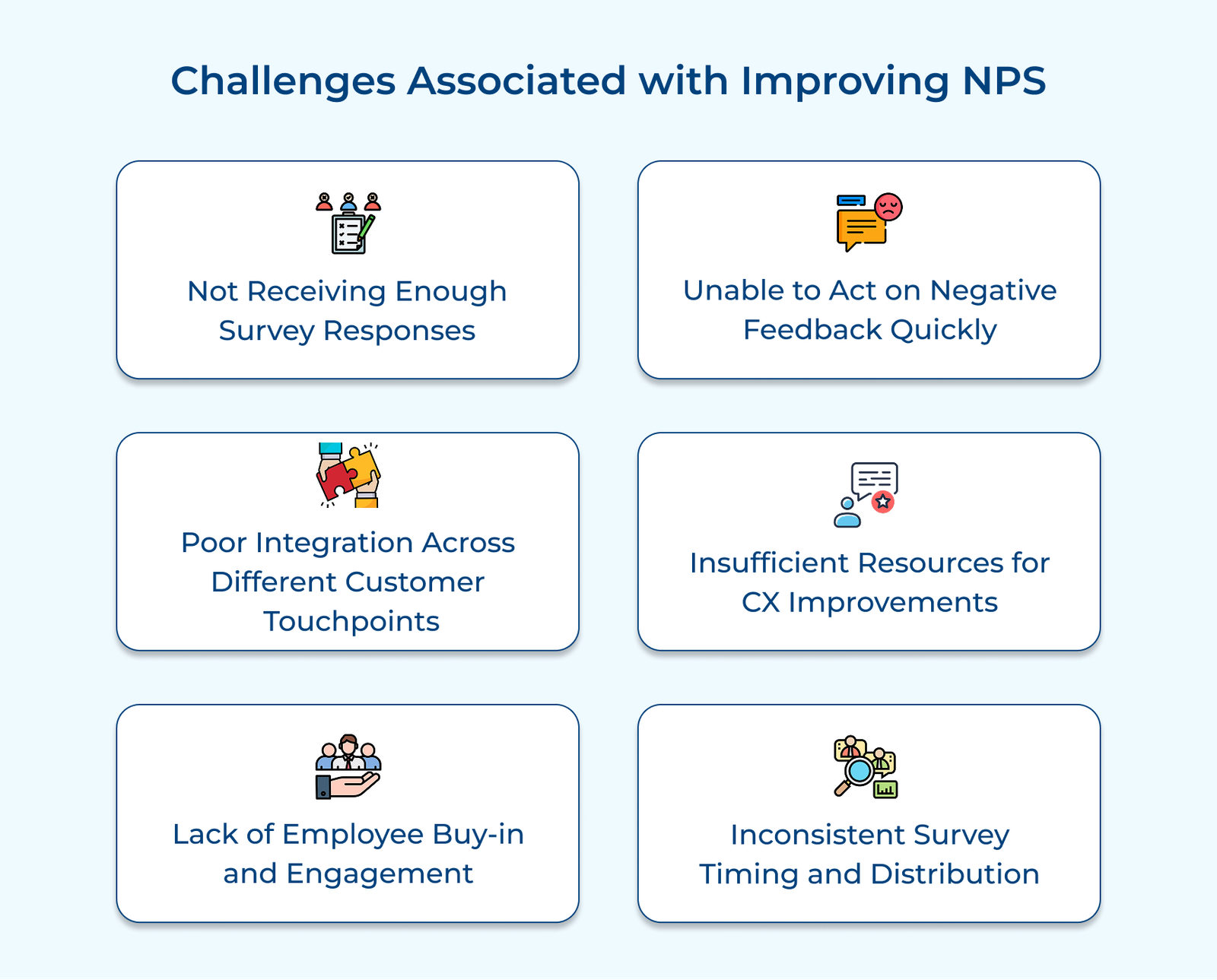
Let’s go through the common challenges that can make boosting customer satisfaction harder than it seems.