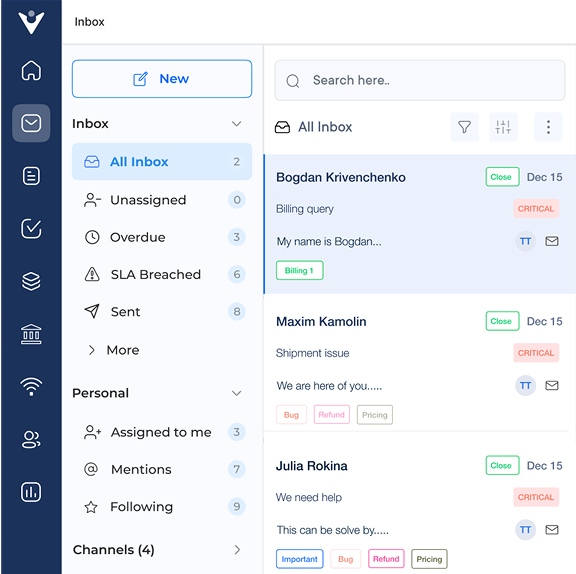
Salesmate is a CRM platform designed for small to mid-sized businesses that prioritizes simplicity and automation in lead tracking. Its unique strength lies in combining sales automation with built-in communication tools. It allows teams to manage their entire sales process from a single interface while maintaining customer interactions.
Key Features:
- Smart Contact Management dynamically organizes lead information and automatically enriches contact data. Social media profiles and company details help sales teams understand their prospects better.
- Email Integration enables teams to make calls and send emails directly from the CRM. Automatic logging of all communications eliminates the need to switch between multiple platforms.
- Pipeline Workflow Automation creates custom triggers that automatically move leads through different stages based on their actions and engagements. It reduces manual work and ensures consistent follow-up.
- Advanced Analytics Dashboard provides real-time insights into lead conversion rates, sales performance and team productivity. Through customizable reports and visual representations, the following is achieved.
HubSpot CRM
HubSpot CRM serves as a lead tracking platform that integrates marketing, sales and customer service functions. It’s designed for businesses of all sizes and offers both free and premium versions. It has been made accessible for startups while being scalable for larger organizations.
The platform offers email tracking, live chat integration, contact management and pipeline visualization. It also provides automated data capture, customizable dashboards and reporting capabilities. Its standout feature is the smooth mix between marketing and sales tools, creating a unified customer view.
Salesforce
Salesforce stands as an enterprise-level relationship management platform that provides lead tracking capabilities. It’s particularly suited for large organizations that need extensive customization options. It can handle complex sales processes across multiple teams and locations.
The software includes lead assignment rules, territory management and advanced workflow automation. At the same time it also includes custom reporting tools, mobile access, pipeline forecasting and third-party integrations. Its main advantage lies in its highly customizable nature and extensive ecosystem of apps.
Zoho CRM
Zoho CRM provides a user-friendly lead tracking solution that balances functionality with affordability. It’s particularly well-suited for small to medium-sized businesses looking for advanced features without the complexity of enterprise-level systems.
Notable features include email integration, social media tracking, workflow automation, territory management and predictive sales analytics. Along with some others like multichannel communication, tracking and customizable modules. Its strength lies in providing enterprise-level features at a more accessible price point.
Pipedrive
Pipedrive focuses on visual sales pipeline management with intuitive lead tracking capabilities. It’s designed specifically for sales teams that prefer a straightforward visual approach to managing their leads and deals through different stages of sales.
The platform offers visual pipeline management, activity tracking, goal-setting tools, customizable fields and automated data entry. Its unique value comes from its highly visual and intuitive interface that makes pipeline management efficient.
Real-Life Examples of Lead Tracking
Check out the examples showcasing how different companies leverage lead tracking to enhance customer experience, improve conversion rates and build stronger relationships with their customers.
Nike
Nike tracks leads through their membership program NikePlus, which monitors customer interactions across their online app and stores. The brand creates detailed profiles based on purchase history, workout data and product preferences. It allows them to understand customer behavior patterns and predict future needs.
The comprehensive lead tracking approach has revolutionized Nike’s customer engagement strategy. They’ve successfully created personalized shopping experiences, enhanced customer loyalty and improved their development process based on real data and preferences.
Amazon
Amazon employs sophisticated lead tracking through its browsing history, recommendation engine and wishlist features. It monitors every click, search, query and product view, creating detailed customer profiles. It helps predict purchasing behavior and identify opportunities.
A detailed tracking system has transformed Amazon’s ability to convert browsers into buyers. The curated recommendations and targeted campaigns have improved engagement and increased average orders.
Puma
Puma tracks leads through their multi-channel retail strategy, combining data from online browsing. social media engagement and in-store interactions. They use loyalty program data to create detailed customer segments. It tracks how different marketing campaigns influence purchase decisions.
The integrated approach to lead tracking has strengthened Puma’s market position. They’ve successfully enhanced their customer targeting, improved inventory management and created more effective marketing campaigns. It is all based on real customer behavior data.
Zappos
Zappos focuses on tracking customer service interactions, online behavior and return patterns to understand customer preferences. It monitors every interface from the initial site visit. Post-purchase feedback creates comprehensive customer profiles that inform their service approach.
Customer-centric lead tracking strategy has revolutionized their business model. They’ve maintained customer satisfaction levels, reduced returns and created accurate inventory forecasting based on customer preference data.
Stay Ahead of The Curve with Seamless Lead Tracking
The modern digital landscape demands clear visibility into how leads interact with your business across every touchpoint. Lead tracking offers that clarity as it shows what captures attention, where interest fades, and how buyers move toward a decision.
The real value lies in using this insight to act with purpose. Instead of guessing, you follow up with timing along with the context, improve what’s underperforming and focus efforts where they count most.
Key takeaways:
- Successful lead tracking requires a balance between automated systems and personalized human interactions. It helps to create meaningful customer connections that drive business growth.
- Companies must mix data from multiple touchpoints to build broad customer profiles that inform strategic decision-making and improve conversion rates.
- Regular analysis and adaptation of the strategies ensure businesses stay responsive to changing customer needs. They also need to see market dynamics while maintaining a competitive advantage.