How to Run Customer Journey Mapping Workshop? 8 Steps
A customer journey mapping workshop helps businesses visualize customer experiences, identify pain points and improve interactions. Learn the key steps to run an effective and insightful session.
A customer journey mapping workshop helps businesses visualize customer experiences, identify pain points and improve interactions. Learn the key steps to run an effective and insightful session.
Many companies miss the mark when it comes to understanding their customer experience from the customer’s point of view. What they believe they’re delivering often doesn’t match what customers go through. The disconnect here leads to friction, frustration and lost opportunities.
A customer journey mapping workshop helps close that gap. It brings teams together to examine real customer interactions and identify where things go right or wrong at each stage. Open discussion along with the hands-on exercises, helps the teams uncover blind spots and develop solutions grounded in real customer needs. But to get real value from these workshops, preparation is key!
Let us break down how to plan, run and troubleshoot a journey mapping session, so your insights don’t just stay on paper but lead to meaningful change.
A customer journey mapping workshop means bringing together key stakeholders to visualize and analyze the full experience customers have with a brand, product or service. The hands-on session helps teams step into the customer’s shoes, identifying interactions, emotions and pain points at every stage, from first awareness to long-term customer loyalty.
The workshop starts by gathering participants from departments, like customer service, marketing, product development and sales. Together, they define key customer personas and map out their experiences in a clear, chronological flow. Using physical or digital tools, teams document customer actions, thoughts and emotions, highlighting opportunities for improvement.
Key principles:
Let’s go through the key benefits of a customer journey mapping workshop to understand how it helps businesses create strategies for a more seamless and satisfying experience.
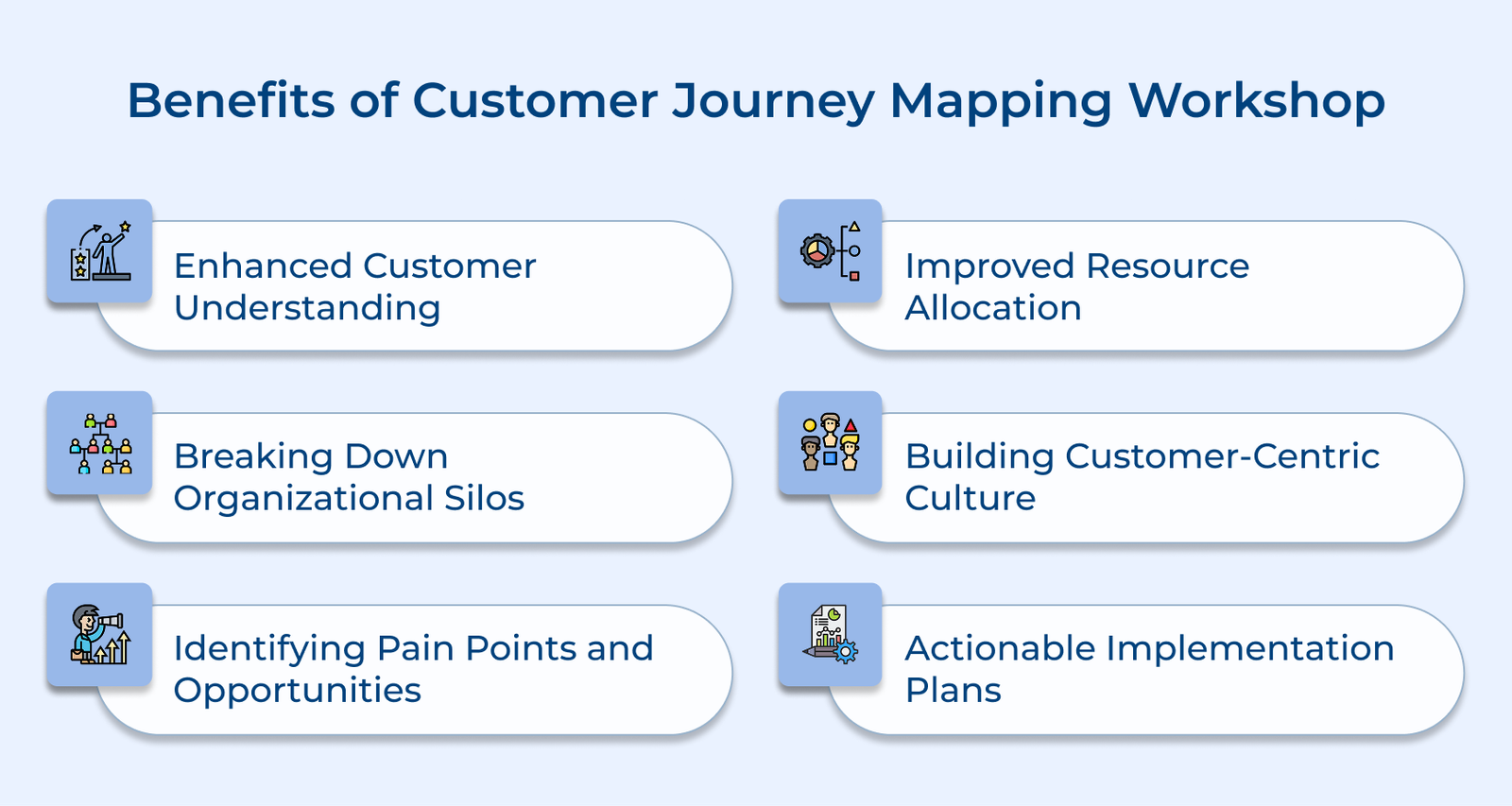
1. Enhanced Customer Understanding
A journey mapping workshop allows teams to step into the customer’s shoes, revealing real frustrations, emotions and decision-making moments that numbers alone can’t capture. The first hand perspective leads to smarter, more customer-focused improvements in products and services.
2. Breaking Down Organizational Silos
The workshops break down silos by bringing together teams that rarely collaborate. Marketing gains firsthand service insights, product developers see sales challenges and everyone aligns around a shared customer-focused vision, improving teamwork.
3. Identifying Pain Points and Opportunities
Teams uncover overlooked pain points and service gaps by mapping the entire customer journey. The visual process highlights mismatches between expectations and reality, helping businesses focus on improvements that truly enhance customer satisfaction.
4. Improved Resource Allocation
A clear view of the customer journey helps teams focus resources where they matter most. Businesses can prioritize investments that drive real impact and avoid unnecessary spending by identifying key touchpoints.
5. Building Customer-Centric Culture
Journey mapping workshops help teams see through the customer’s eyes, shifting focus from internal processes to real needs. The lasting mindset change enhances better decisions and stronger customer-focused solutions across the organization.
6. Actionable Implementation Plans
Journey mapping workshops turn insights into action. Teams walk away with clear, practical steps to improve customer experiences—ready to implement immediately and measure real impact.
Below are the eight essential steps to conducting an effective customer journey mapping workshop that will elevate your understanding of your customers.
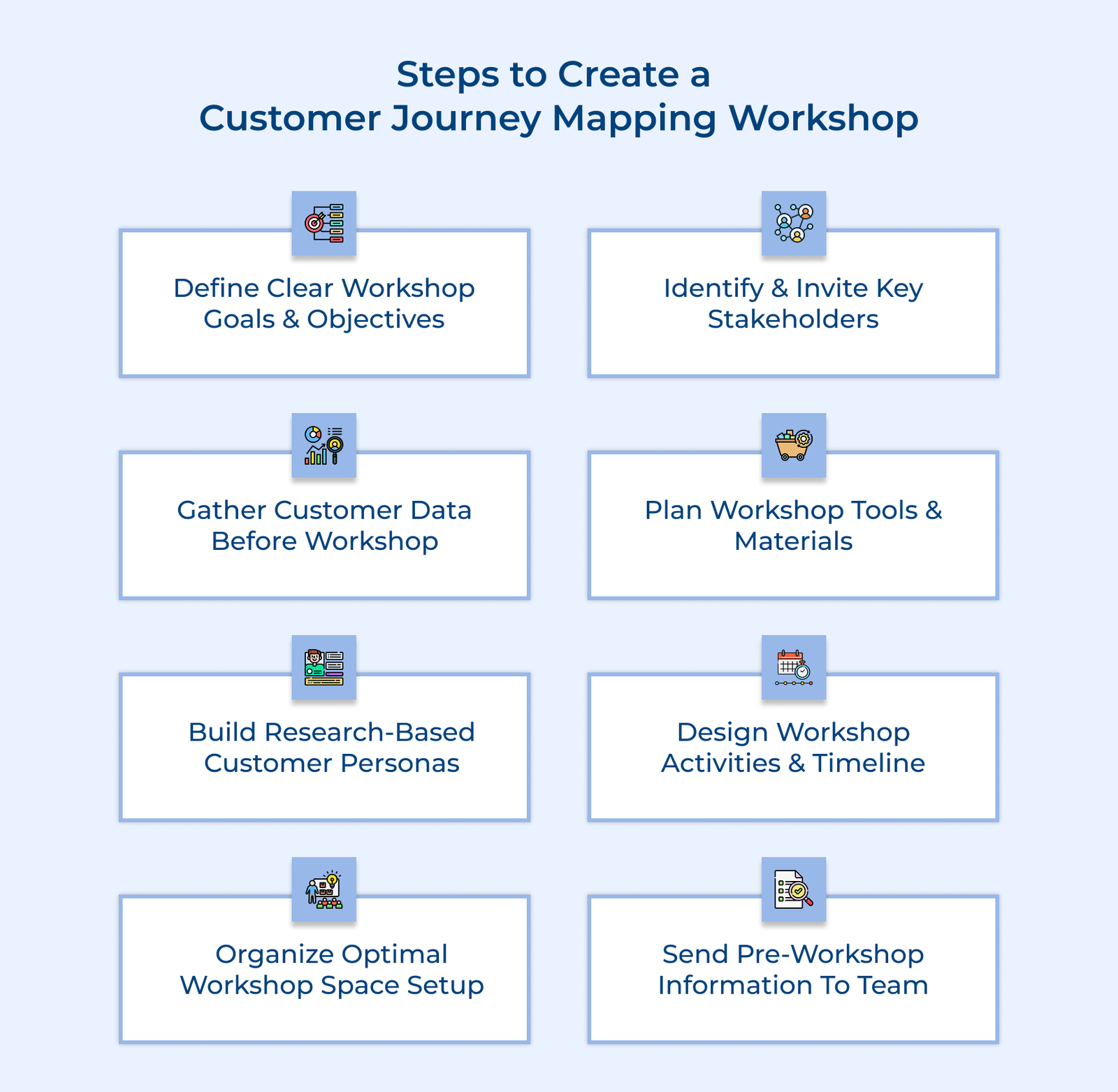
Setting clear goals for your journey mapping workshop ensures focus and meaningful results. Without defined objectives, discussions might become unfocused, leading to overlooked insights. Your goals act as a guiding framework, helping teams stay aligned and prioritize the most critical aspects of the customer journey.
Start by collaborating with key stakeholders to determine specific, measurable objectives such as identifying the top three pain points in customer onboarding or mapping the end-to-end experience for high-value customers. Concrete objectives make it easier to structure activities and ensure the workshop delivers actionable insights.
Pro tips:
Choosing the right participants is essential for gathering meaningful insights and driving real improvements. A diverse group ensures that every stage of the customer journey is accurately represented.
Customer-facing teams such as sales and support, bring firsthand knowledge of customer pain points, while product teams provide insights into how services are designed. Keeping the group size between 6-12 participants promotes rich discussion without becoming overwhelming. The goal is to enhance collaboration while making sure every voice is heard.
Actionable tips:
Gathering customer data before the workshop ensures discussions are grounded in reality rather than assumptions. When participants have access to real insights, they can focus on analyzing patterns and identifying meaningful improvements instead of guessing about customer experiences. Data-driven discussions lead to better decision-making and more effective solutions.
Start by compiling recent customer feedback, survey results and frontline staff observations. Look at analytics from key touchpoints, such as website interactions, support tickets and service call logs. Present the information in a structured format such as summary reports or key highlights, to help participants quickly grasp essential trends.
Best practices:
Having the right tools and materials ready ensures the workshop flows smoothly without unnecessary delays. Proper preparation minimizes distractions and allows participants to stay focused on mapping the customer journey. A mix of digital and physical tools caters to different collaboration styles, keeping everyone engaged.
Start with a checklist of essential items like sticky notes and markers for physical sessions or collaboration software for virtual workshops. Create structured templates to guide discussions and test all technology before the session starts.
Pro tips:
Customer personas help teams see customers as real people rather than just data points. The profiles provide a customer reference, ensuring that discussions and decisions stay focused on actual customer experiences instead of internal assumptions. Participants can design solutions that truly address customer needs by understanding motivations, frustrations and behaviors.
Start by analyzing customer feedback, support tickets and behavioral data to identify distinct customer types. Build detailed profiles that highlight goals, challenges and preferences, making it easy to bring personas to life. Sharing these in advance ensures participants arrive prepared to step into the customer’s shoes and make more meaningful contributions.
Key takeaways:
A well-paced workshop keeps participants engaged and ensures that every discussion contributes to meaningful insights. A structured timeline prevents rushed conclusions or wasted time on unfocused conversations. Teams can stay on track while maintaining a fresh perspective by gradually building from broad overviews to detailed journey mapping.
Break the workshop into key phases, such as introduction, data review, persona deep dive, mapping exercises and action planning. Alternate between solo reflection, small group discussions and full-team collaboration to keep energy levels balanced.
Pro tips:
The workshop environment plays a key role in keeping teams engaged and enhancing collaboration. A well-planned workshop helps participants think creatively, share insights freely and stay focused on the mapping process. The setup should support both deep individual reflection and dynamic group discussions, ensuring a balance between structured activities as well as open brainstorming.
Arrange seating to encourage interaction and movement, allowing participants to shift between discussions and mapping exercises smoothly. Use large wall areas or whiteboards to visualize ideas as they evolve in a physical space. Leverage interactive tools like digital whiteboards in virtual settings.
Actionable tips:
Preparing participants ahead of time ensures that valuable workshop hours are spent on meaningful discussions rather than orientation. When attendees understand the purpose, structure and expectations beforehand, they can dive straight into journey mapping with well-formed ideas.
Send a detailed agenda at least a week in advance, outlining the workshop structure, key activities and any pre-work assignments. Share relevant customer data and personas so participants can familiarize themselves with the material beforehand. Gentle reminder emails or messages leading up to the session help maintain engagement and ensure everyone arrives ready to contribute.
Key takeaways:
Check out the various activities that take place during the user journey mapping workshops, illuminating how they can lead to innovative approaches for enhancing customer satisfaction.
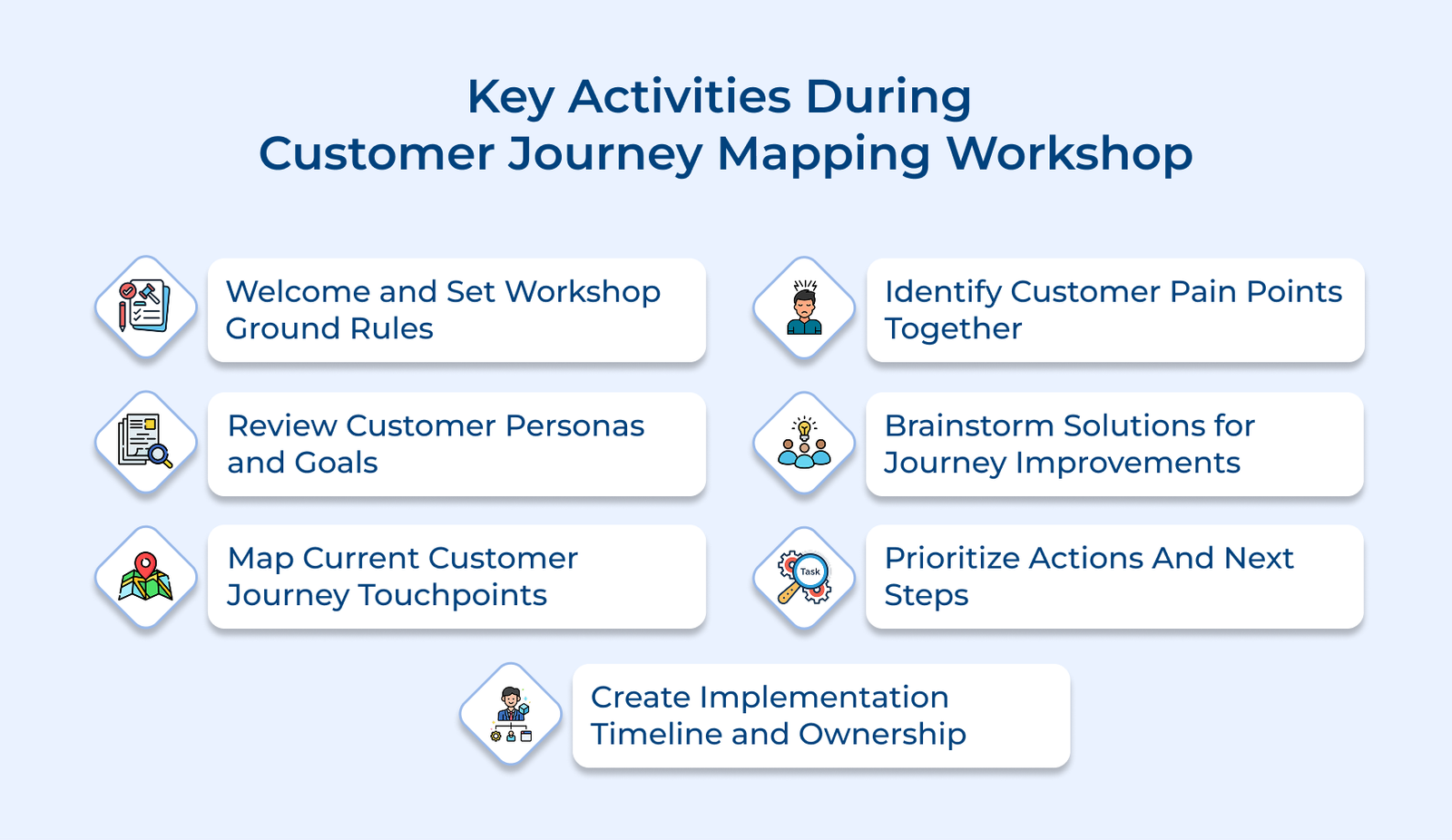
The welcome session lays the foundation for an open and collaborative workshop. Creating a comfortable environment encourages participants to share insights freely. The session begins with introductions, where each team member shares their role and experience with customer interactions. It helps highlight different perspectives and enhances connections across departments.
Next, the facilitator sets clear expectations for communication, emphasizing active listening and constructive discussion. The session wraps up with a review of workshop objectives, so everyone understands their goals.
Best practices:
The persona review phase ensures the workshop is rooted in real customer expectations rather than assumptions. Teams can make informed decisions throughout the journey mapping process by deeply understanding customer behaviors and needs.
The session starts with an in-depth look at detailed customer profiles, highlighting key behaviors, goals and challenges. The facilitator presents research-backed insights to validate each persona’s characteristics. Participants then discuss customer motivations and expectations, exploring how different personas interact with the product or service.
Pro tips:
Mapping customer touchpoints provides a clear, visual breakdown of every interaction customers have with your organization. The full-picture approach helps teams move beyond isolated touchpoints to see how each moment connects, revealing hidden patterns and key areas for improvement.
Teams document customer actions and emotional states at each stage. They consider what customers are trying to accomplish and how they feel during each interaction. The emotional mapping brings depth to the journey, highlighting critical moments that shape customer satisfaction.
Actionable tips:
Identifying pain points helps teams uncover the moments where customer experiences fall short, leading to frustration or drop-offs. Pinpointing the friction areas provides clear opportunities for meaningful improvements that directly impact customer satisfaction. The process starts with analyzing where customers struggle during their journey.
Next, participants explore gaps in service delivery and unexpected challenges customers face. They look beyond surface-level problems to understand what customers are trying to achieve and what’s preventing a smooth experience. The examination helps reveal the root causes of issues rather than just their symptoms.
Key takeaways:
The brainstorming phase turns pain point insights into practical solutions that improve the customer journey. The dedicated session encourages creative problem-solving, pushing teams beyond conventional fixes to explore a range of possibilities. Teams start by generating ideas for each identified pain point through structured brainstorming.
Next, the group evaluates ideas by assessing feasibility and impact. They consider resource requirements, including technology, team capabilities and budget constraints. The evaluation helps prioritize unrealistic solutions while identifying high-impact opportunities.
Best practices:
Prioritization ensures teams focus on improvements that offer the most value to both customers and the business. A structured approach prevents teams from spreading efforts too thin, keeping resources directed toward high-impact changes. The process begins with teams scoring each proposed solution based on customer impact and business value.
Teams assess feasibility by considering implementation complexity and resource needs. They identify quick wins for immediate results while planning for more significant long-term improvements. The balance keeps the momentum strong while working toward lasting change.
Actionable tips:
Check out the common risks faced by organizations during customer journey mapping workshops and offer strategies to navigate them.
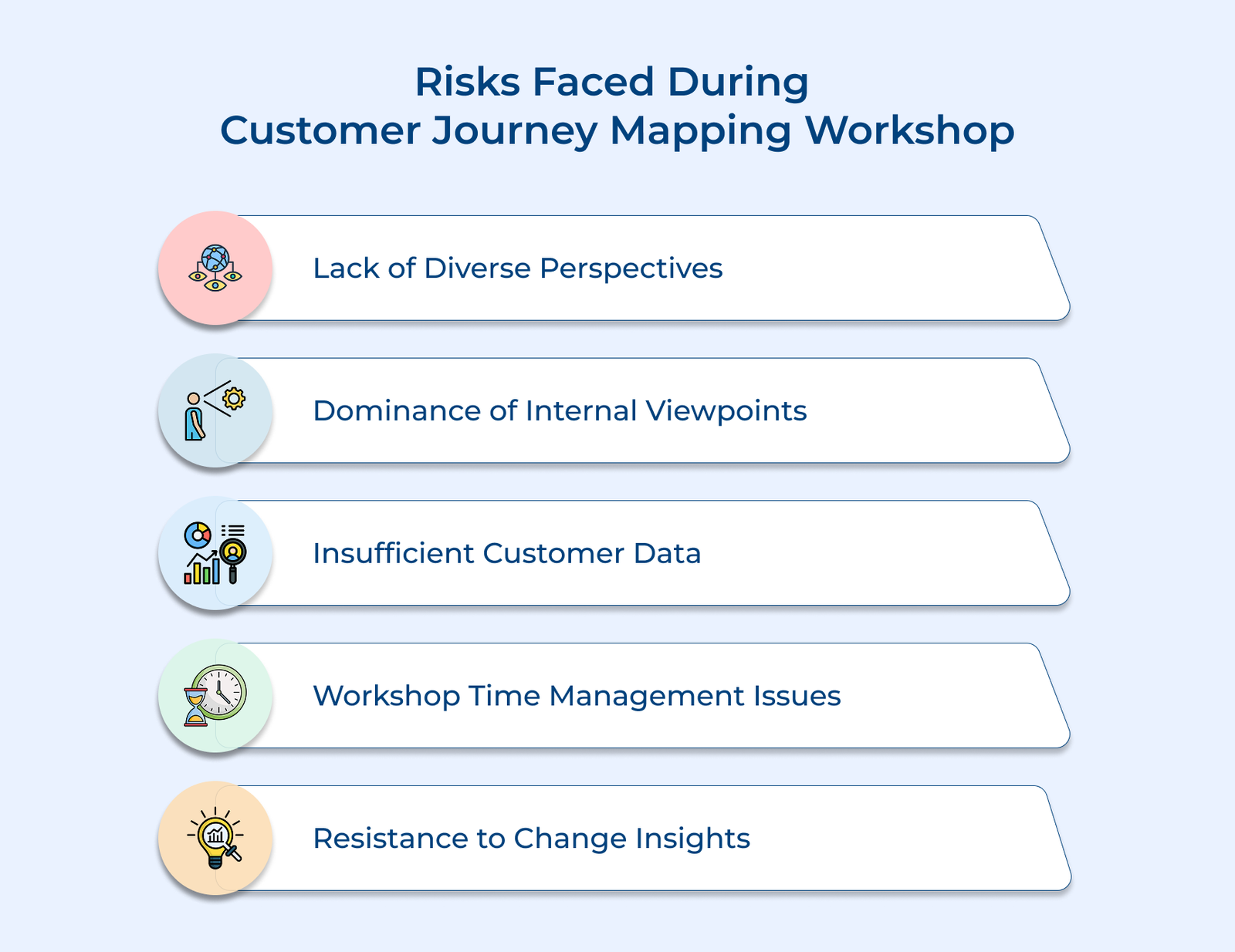
1. Lack of Diverse Perspectives
Workshops lose valuable insights when key departments aren’t represented. Without the right voices in the room, critical customer interactions can be overlooked, leading to an incomplete picture of the user experience. Some touchpoints may receive little attention simply because the people who understand them best aren’t there to share their knowledge.
2. Dominance of Internal Viewpoints
Teams often find it challenging to shift from an internal perspective to a customer-focused view. Discussions get stuck on company processes rather than the actual user experience, leading to a journey map that mirrors operations instead of real customer interactions. Without the shift, critical pain points and opportunities for improvement may be overlooked.
3. Insufficient Customer Data
Workshop discussions often lean on assumptions instead of real customer data. Teams base decisions on what they believe users want rather than verified feedback or behavior insights. The journey map risks being inaccurate and failing to reflect actual customer experiences without concrete evidence.
4. Workshop Time Management Issues
Poor time management causes discussions to drag, leaving key activities rushed or unfinished. Teams get stuck on details and critical steps like prioritization or implementation planning are skipped. As a result, the workshop ends without clear next steps.
5. Resistance to Change Insights
Some participants resist addressing major customer pain points, especially when solutions require significant changes. Teams may downplay issues to avoid scrutiny and internal politics can stifle honest discussions, preventing meaningful improvements.
Implementation steps:
Let’s go through some organizations that have implemented the workshops to drive meaningful improvements in their customer interactions.
1. Starbucks Coffee Company
Starbucks conducts in-depth, three-day journey mapping workshops that bring together baristas, store managers and corporate teams. The sessions explore both in-store and digital experiences, focusing on how customers navigate mobile ordering, in-person visits and loyalty program interactions. The goal is to uncover ways to make the transitions smoother and more enjoyable.
A key part of the workshop involves role-playing real customer scenarios—ordering through the app, picking up drinks in-store and interacting with rewards. Teams identify pain points and areas for improvement by stepping into the customer’s shoes. The hands-on approach has led to practical changes, such as streamlining mobile orders and adjusting store layouts to minimize wait times.
2. Amazon Prime Service
Amazon regularly conducts journey mapping workshops to refine key Prime services like same-day delivery and video streaming. The sessions bring together delivery partners, customer service teams and product managers to dissect the entire fulfillment process—from the moment an order is placed to its final delivery.
A core part of the workshop involves analyzing real customer feedback across various delivery scenarios. Teams identify pain points such as delays, tracking issues or communication gaps. They develop strategies to improve delivery accuracy and streamline updates for customers through collaborative problem-solving. The workshops have directly contributed to Amazon’s enhanced tracking systems and more transparent delivery notifications.
3. American Express Customer Care
American Express holds monthly journey mapping workshops tailored to specific customer segments, such as small business owners and premium cardholders. The sessions bring together experts from fraud detection, billing support and rewards management to examine the full cardmember experience from multiple perspectives.
A key focus is identifying critical touchpoints, especially during high-stress situations like dispute resolution or emergency card replacement. Teams map out emotional journeys, exploring how customers feel at each stage and pinpointing areas where support can be more seamless. The insights have driven improvements in Amex’s digital self-service tools and enhanced personalized support protocols.
4. Netflix Streaming Experience
Netflix conducts cross-functional journey mapping workshops that bring together content creators, technical teams and UX designers. The sessions dive deep into how viewers discover, select and engage with content across different devices as well as viewing situations, focusing on the decision-making process behind entertainment choices.
Teams analyze content discovery paths, study viewing behavior data and pinpoint moments where engagement drops. The workshops have shaped improvements in Netflix’s user interface and fine-tuned its content suggestion algorithms by exploring ways to refine recommendations.
5. Toyota Customer Service
Toyota brings together dealership staff, service technicians and customer support teams for journey mapping workshops that explore the full vehicle ownership experience—from the moment of purchase to ongoing maintenance. The sessions focus on strengthening long-term customer relationships by identifying key moments that shape satisfaction and loyalty.
Teams analyze the service appointment process, assess how maintenance updates are communicated and uncover opportunities for proactive customer support. The workshops have led to improvements in Toyota’s service scheduling system and maintenance communication strategies by addressing pain points.
An effective customer journey mapping workshop turns insights into concrete improvements, helping teams see the customer experience from every angle. The workshops create alignment and drive meaningful change by gathering diverse perspectives. Teams work through structured exercises to uncover deep insights and develop practical solutions instead of stopping at surface-level observations.
The real impact comes from bridging the gap between customer needs and execution. Through hands-on collaboration, thorough documentation and clear action plans, teams leave prepared to make real improvements. A well-structured workshop isn’t just a one-time exercise, but it lays the groundwork for continuous customer experience enhancement.
Key takeaways:

Keep workshops on track by setting clear checkpoints and measurable milestones. Begin by documenting the initial journey map and defining success criteria. Regular check-ins ensure teams complete key steps like persona development, identifying pain points and prioritizing solutions. Use a digital tracking system to monitor progress and capture new insights as they emerge. It keeps everyone aligned and ensures ideas don’t get lost between sessions.
Plan a new journey mapping workshop whenever major changes impact your business or customer behavior. It could be a product launch, market expansion or noticeable shifts in customer expectations. Schedule annual refresh sessions to update journey maps, validate past insights and integrate fresh customer feedback. Run focused workshops to dive deeper into specific experience challenges that need immediate attention.
Structure your journey map to reflect both the customer’s experience and the organization’s role at each stage for enterprise solutions. The horizontal axis should outline the customer’s journey step by step, from initial awareness to implementation and long-term support. The vertical axis can highlight key elements such as emotions, interaction channels or internal teams responsible at each stage.
Hold customer journey mapping workshops early in your customer experience initiatives—after collecting initial customer insights but before making major design decisions. Running them at this stage ensures discussions are grounded in real data while leaving room to shape meaningful improvements. The workshops are especially useful when developing new products, redesigning services or tackling key experience challenges.
Customer journey mapping workshops bring teams together to see the full customer experience, not just their roles. The sessions uncover hidden pain points and highlight real opportunities for improvement by breaking down silos as well as encouraging cross-functional collaboration. More than just a discussion, the workshops enhance active problem-solving and shared accountability. Teams leave with a deeper understanding of customer needs and a clear path to making meaningful changes that enhance the experience.
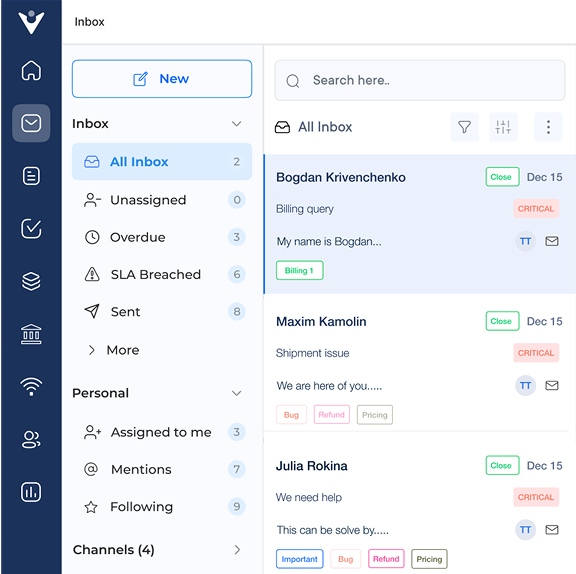
Grow Customer Relationships and stronger team collaboration with our range of products across the Conversational Engagement Suite.
Omnichannel Customer Support & Help Desk Software
AI Enabled Business Messaging and Chatbot Software
Sales Engagement & CRM Software
Call Center Software & Virtual Phone System
Product Marketing & Experience Platform
Customer Experience & Feedback Management Software

 What is Sales Workflow: Benefits, Structure & Process
Scroll to top
What is Sales Workflow: Benefits, Structure & Process
Scroll to top