CRM Statistics Guide: Benefits and Challenges (2026)
CRM statistics tell a bigger story than most people realize. They show what successful businesses are doing right, where others are falling behind and how small shifts can lead to big wins.
CRM statistics tell a bigger story than most people realize. They show what successful businesses are doing right, where others are falling behind and how small shifts can lead to big wins.
Managing customer relationships isn’t just helpful, it’s core to staying in business. But plenty of teams still deal with scattered data, mixed messages and missed follow-ups. The result? Lost sales and frustrated customers. That’s where CRM systems come in. They’re not magic, but they do the basics well: keep everything in one place, cut down on manual work and make it easier to actually follow through.
When used right, the impact shows up across the board – from faster sales cycles to better support. Let’s dive into the CRM statistics to understand how CRMs are being used, what’s working and where they actually make a difference. These numbers will help you connect the dots between CRM tools and real business results.
CRM statistics refer to a clear, data-driven view of how customer relationship management systems affect real business outcomes. The numbers help organizations see the tangible value of CRM tools, beyond the software itself and understand how they influence everything from revenue to customer relationships.
The real strength of the stats is in their ability to guide smart decisions. Data points offer more than just encouragement for businesses weighing a CRM investment. They provide a grounded basis for setting expectations and measuring results.
Key principles:
Let’s go through each of the compelling CRM statistics in detail, showing how they demonstrate the transformative power of CRM systems in modern business:
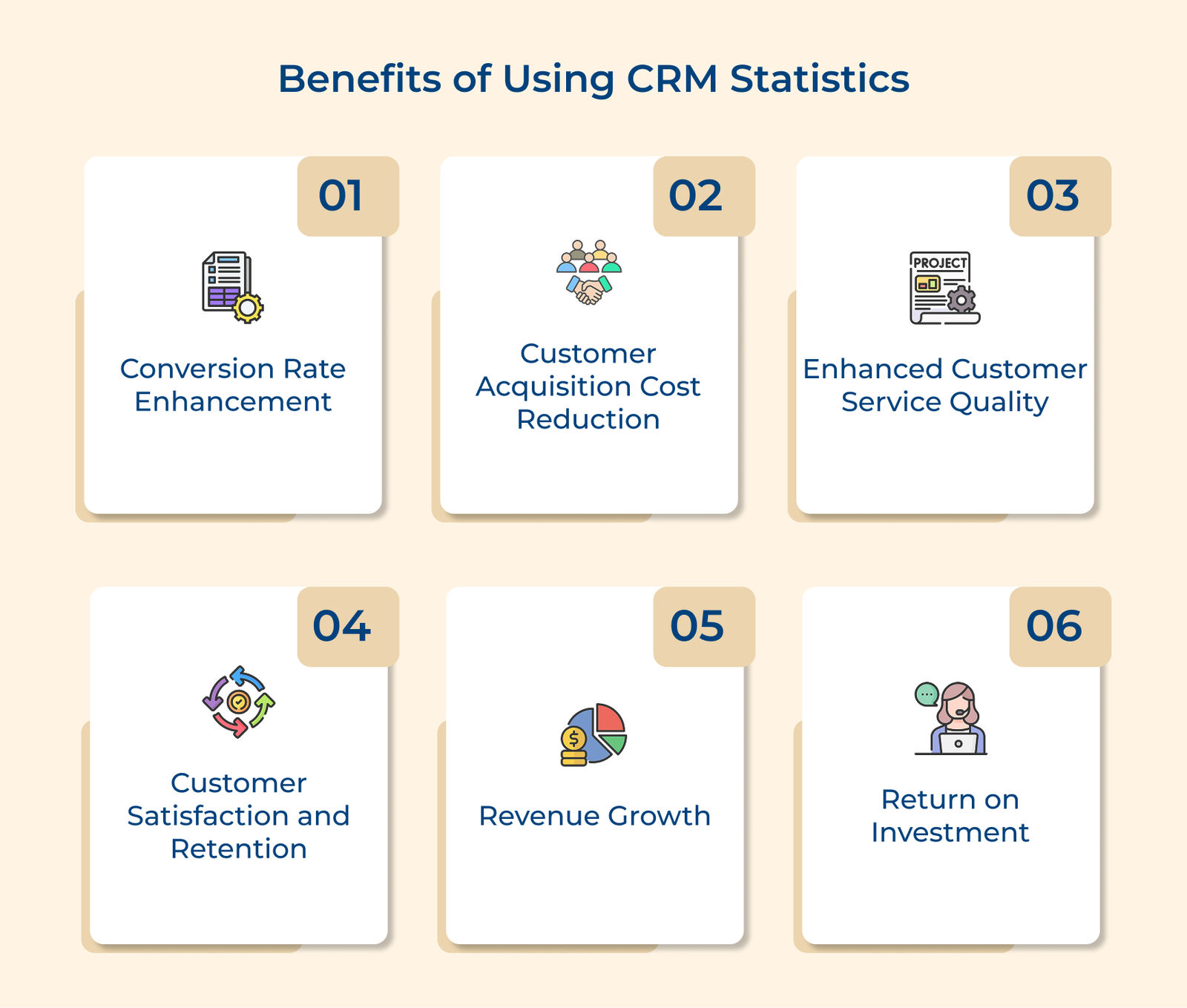
Conversion Rate Enhancement (250% Boost)
Companies that adopt CRM systems often see their conversion rates more than double. The jump comes from having better visibility into the sales funnel. The teams can track customer behavior, identify when and why people drop off and respond with relevant communication that encourages action.
Customer Acquisition Cost Reduction (80% of Businesses)
Four out of five businesses say CRM tools help reduce the cost of finding new customers. Marketing and sales teams waste less resources on leads that are unlikely to convert with organized data.
Enhanced Customer Service Quality (91% Improvement)
Most companies using CRM software report major improvements in how they serve customers. When support teams have access to customer data, past issues, preferences and purchases, they can resolve problems faster.
Customer Satisfaction and Retention (60% Improvement)
CRM systems help businesses build stronger relationships. Companies can anticipate needs, personalize communication and resolve issues before they escalate by tracking what customers care about. It’s a big reason why customer satisfaction and loyalty improve so dramatically.
Revenue Growth (250% in One Year)
Some businesses have seen their revenue more than double in just 12 to 18 months after using CRM effectively. The growth is usually tied to better lead follow-up, more consistent sales processes and increased opportunities for repeat business.
Return on Investment ($9 for Every $1)
Businesses, on average, see $9 in return for every $1 they spend on CRM. The value comes from working more efficiently, keeping more customers and making smarter decisions based on better data.
Check out the essential CRM statistics that every business leader should know to stay ahead of the curve and maximize their customer engagement efforts.
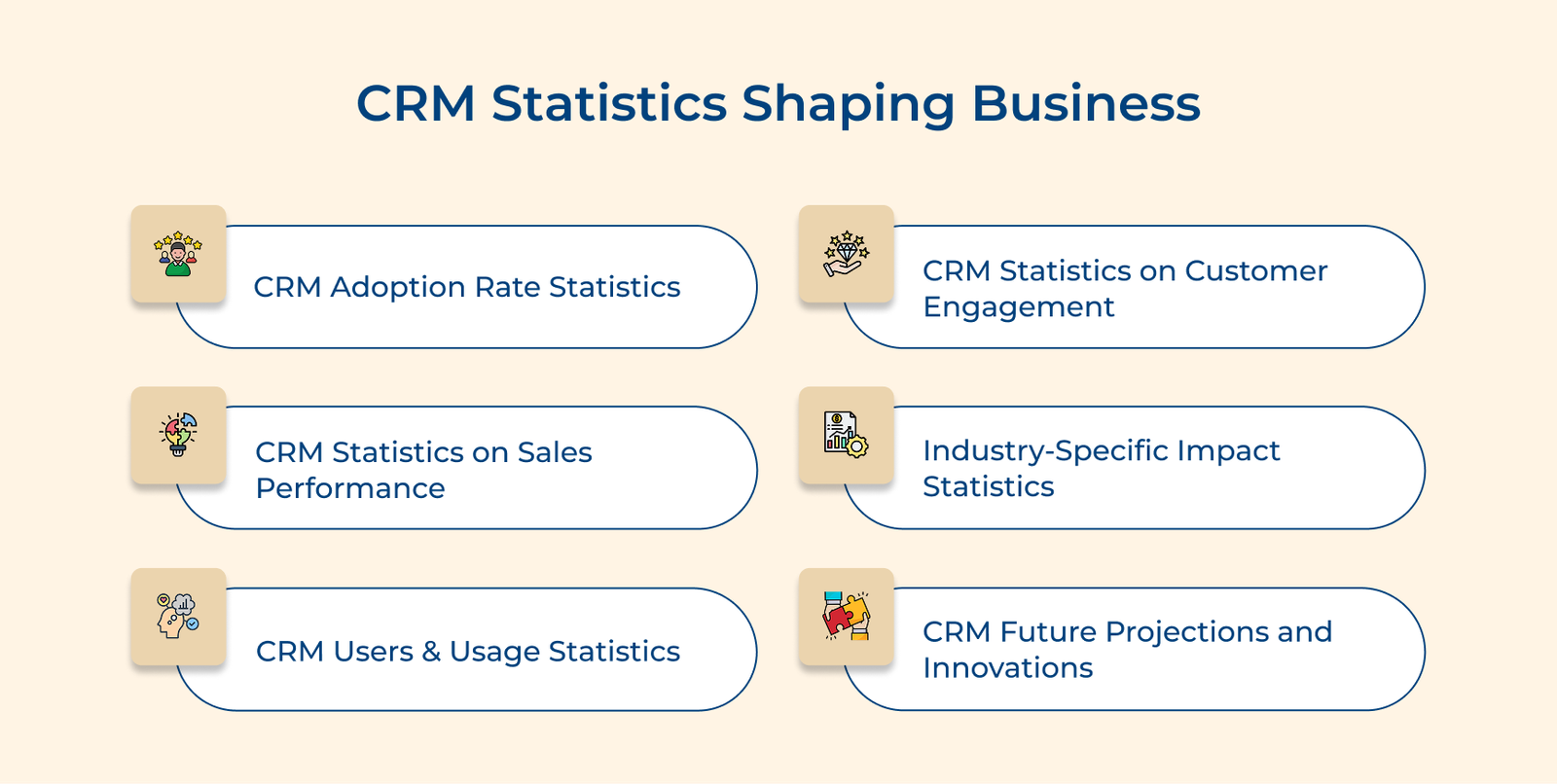
The CRM market is projected to grow by 19% annually through 2028, with the market reaching $139 billion
The CRM industry is growing fast, with projections showing a 19% annual increase, reaching $139 billion by 2028. The growth points to more than just market demand–it reflects a major shift in how businesses manage customer relationships. What was once considered a helpful tool is now viewed as essential infrastructure.
60% of businesses have already adopted CRM systems with generative AI.
A majority of companies, 60% have already integrated generative AI into their CRM systems. It isn’t just a tech upgrade; it shows that businesses are actively seeking more efficient ways to understand customer behavior, automate tasks and make smarter decisions based on patterns AI can detect.
SMBs are also growing, with 50% of companies with less than 50 employees adopting CRM
CRM adoption is no longer limited to large enterprises. Half of small businesses, those with fewer than 50 employees, are now using CRM tools. The trend shows that even lean teams see value in organized customer data, efficient sales processes and better follow-up.
Sales teams using CRM technology see a 30% increase in sales productivity
Sales teams using CRM tools report a 30% increase in sales productivity. The improvement comes from automating routine tasks like tracking leads, managing contacts and organizing follow-ups, so sales reps can spend more time closing deals instead of chasing paperwork.
34% of businesses find that CRM systems shorten their average sales cycle by 8 to 14 days
About 34% of businesses say CRM systems have shortened their sales cycle by 8 to 14 days. It’s a significant time saver, especially when speed matters for closing deals. Automated reminders, real-time data and better timing help sales teams avoid unnecessary delays. CRM tools also help reps spot when a deal is slowing down and why, so they can adjust their approach.
CRM technology improved 45% sales forecasting accuracy for SMBs
Small and medium-sized businesses using CRM systems have improved their sales forecasting accuracy by 45%. It’s a major upgrade from gut-feel estimates to data-informed planning. Better forecasts mean more control over inventory, budgets, staffing and strategy. The clarity helps reduce risk and supports smarter, more sustainable growth for SMBs.
91% of companies with 10 or more employees now use CRM software
91% of businesses with 10 or more employees use CRM software. It shows that CRM systems are no longer optional; they’ve become standard tools, much like email or accounting software. What’s notable is the wide range of industries and business models represented in the group, all finding value in managing customer data in a centralized, organized way.
45% of CRM usage is for contact management and automation
Nearly half of CRM users rely on their systems primarily for contact management and automation. It reflects a basic but critical need of keeping customer records accurate, up to date and easy to access. Automating tasks like follow-up emails and appointment reminders helps teams stay organized without spending hours on routine communication.
57% of CRM automation is dedicated to lead nurturing
A majority of CRM automation, 57%, is focused on lead nurturing. Instead of chasing prospects manually, businesses now use CRMs to guide potential customers through the buying process with well-timed messages, reminders and follow-ups. The approach keeps leads engaged without overloading sales teams.
59% of marketing and customer service teams use CRM
Almost 60% of marketing and customer service teams use CRM systems alongside sales. The shared access allows teams to work from the sales information, making customer interactions more consistent and coordinated. It also helps marketing tailor campaigns based on actual customer behavior and allows service reps to provide faster, more informed support.
49% of respondents say the time is saved by automating repetitive tasks
About half of CRM users say automation saves them significant time by handling repetitive tasks. But it’s not just about speed. Automation reduces errors and ensures processes run the same way every time. It frees up employees to focus on tasks that need judgment, creativity or personal attention.
CRM systems can improve customer service response times by up to 57%
CRM systems can cut customer service response times by more than half. It happens because support teams get instant access to customer histories, automated case routing and ready-to-use response templates.
Personalized email campaigns based on CRM data have a 40% higher click-through rate
When businesses use CRM data to tailor their emails, click-through rates jump by 40%. Instead of generic messages, customers receive content that reflects their interests, behavior and past interactions.
94% of customers are likely to make repeat purchases from the same source
Nearly all customers, 94% say they’re likely to make repeat purchases when they’ve had a good experience. CRM systems play a major role here by helping businesses track what customers like, follow up at the right time and stay consistent in how they communicate.
Healthcare providers using CRM systems report a 35% improvement in patient appointment scheduling efficiency
Healthcare providers using CRM systems report a 35% improvement in scheduling efficiency. The systems reduce missed appointments with automated reminders, smart calendar tools and easy rescheduling options. The improvement means shorter wait times for patients, fewer gaps in care and smoother day-to-day operations for clinics.
Financial services firms implementing CRM solutions experience a 28% increase in cross-selling success rates
CRM adoption in financial services has led to a 28% increase in cross-selling success. Advisors can recommend relevant products at the right time, like a mortgage offer after a savings milestone or insurance options after a life event by analyzing customer behavior and financial history. It’s not about selling more, it’s about offering the right solution based on data.
Educational institutions leveraging CRM platforms see a 42% improvement in student enrollment conversion rates
Educational institutions using CRM platforms see a 42% boost in student enrollment conversions. CRMs help schools track inquiries, personalize follow-ups and guide prospective students through the admissions process with timely, relevant communication. It results in better engagement, more completed applications and higher enrollment numbers.
Retail businesses using industry-specific CRM solutions report a 35% increase in repeat customer purchase frequency
Retail businesses using specialized CRM tools report a 35% increase in how often customers return to buy again. The systems track past purchases, shopping patterns and preferences to deliver personalized offers. Retailers can improve loyalty without relying on guesswork by anticipating when a customer is ready to buy again.
80% of CRM systems will integrate augmented reality features by 2026
CRM systems are set to move beyond data tracking into immersive customer experiences. Sales teams will offer virtual product demos, remote assistance and interactive training without any geographic limitations. The shift suggests AR will soon be a standard tool, not a luxury.
Predictive analytics in CRM platforms is expected to drive a 40% improvement in lead scoring accuracy by 2026
CRM systems powered by predictive analytics will better identify which leads are most likely to convert. The tools will make lead prioritization far more reliable by analyzing behavior, past interactions and engagement trends. As a result, sales teams can spend less time chasing dead ends and more time focusing on leads that actually matter.
Voice-activated CRM interfaces are projected to be adopted by 55% of sales teams worldwide by 2027
More than half of sales teams are expected to use voice-controlled CRM tools within the next few years. The system lets users update records, check schedules or pull up customer info without typing, ideal for sales reps on the go. The real benefit is better data quality. Voice input makes it easier to capture accurate, timely details right after a customer interaction.
The integration of blockchain technology in CRM systems is forecasted to reduce data security incidents by 70% by 2026
Blockchain’s potential to reduce data breaches in CRM systems is significant. Customer information becomes harder to alter or misuse with tamper-proof records and stronger data controls. It isn’t just a technical upgrade but a trust issue.
Check out the latest statistics surrounding CRM challenges, shedding light on the most pressing issues faced by modern companies and paving the way for more effective strategies.
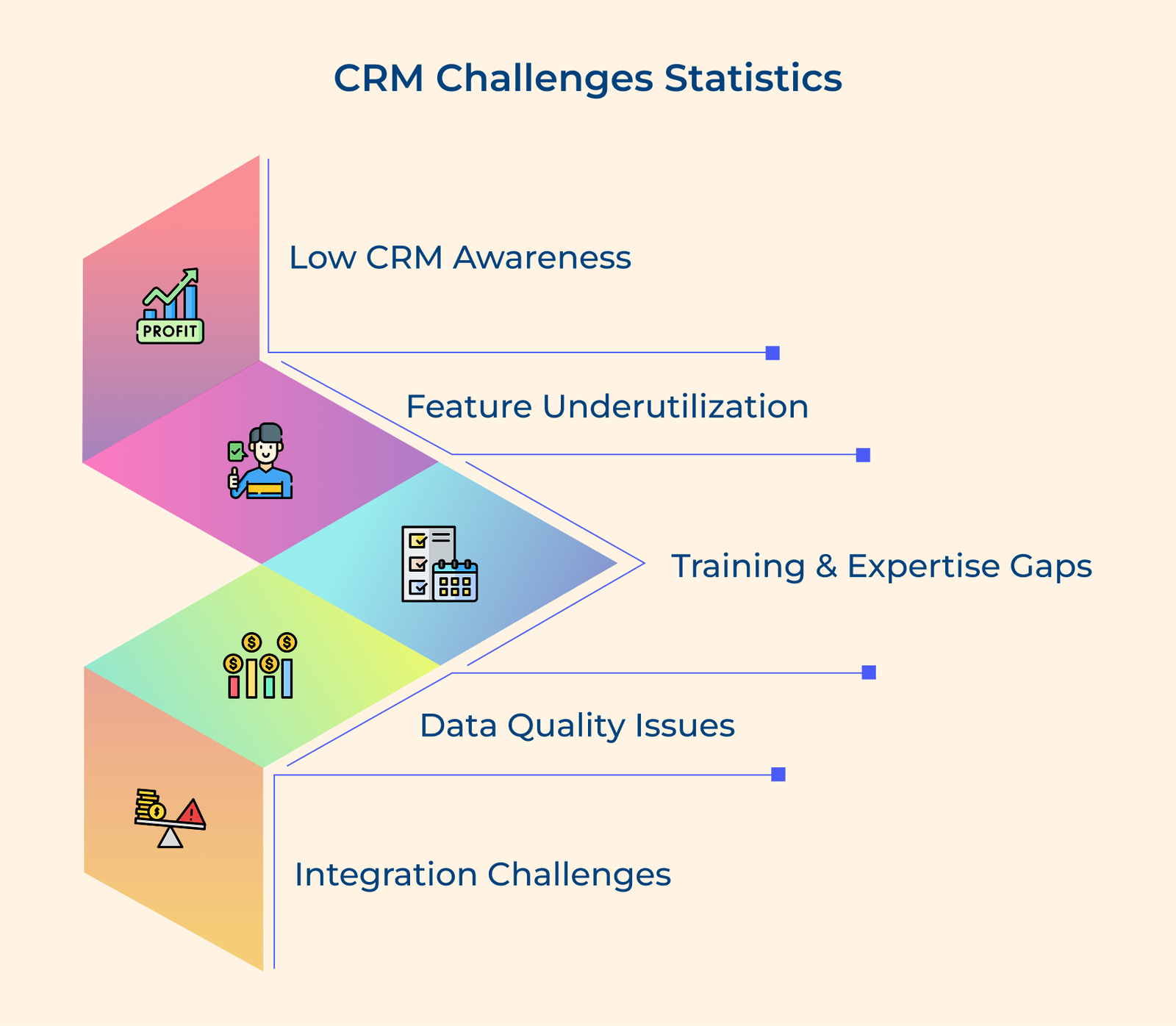
25% of sales professionals are still unsure about what CRM is
A quarter of sales professionals remain unclear about what CRM systems actually do. It reflects the common issue that too many CRM platforms are introduced with technical jargon and feature-heavy presentations that overlook the basics.
Companies need to start with the fundamentals. Start by showing how CRM helps with day-to-day sales tasks like follow-ups, lead tracking and scheduling. Onboarding should focus less on features and more on real-world use cases, with training tailored to the specific roles of the people using it.
43% of CRM users only use less than half the features of their CRM system
Many users stick to basic tools like contact storage and email logs while ignoring more powerful functions such as pipeline analytics or workflow automation. As a result, the system’s full value goes untapped.
The key is gradual rollout. Instead of overwhelming users upfront, introduce new features over time, tied to specific business needs. Highlight practical examples, let experienced users mentor others and run short spotlight sessions that show how advanced tools can simplify tasks.
42% of businesses cite a lack of training or CRM experts as the biggest barrier
A CRM system is only as useful as the people using it. Without proper training, even the best platform becomes a frustration point instead of a productivity tool.
Businesses should build internal support through designated CRM “go-to” staff or partner with consultants who can guide setup and adoption. Regular skill assessments and team-based learning help ensure everyone is equipped to use the system effectively over time.
35% of businesses struggle with CRM data quality and consistency issues
Inconsistent or outdated information leads to flawed insights and wasted time. When different teams enter data differently or not at all, it becomes harder to trust what’s in the system.
The solution involves implementing strict data entry rules, regular clean-up processes and tools that catch mistakes automatically. Dashboards that track data quality can also flag issues early before they cause bigger problems.
38% of companies report integration challenges with existing systems
When CRM software doesn’t connect well with email, finance or marketing systems, employees end up entering the same data multiple times or skipping it entirely. It slows things down and increases the chance of mistakes.
Choose CRMs with strong integration options and work with technical teams who can set up smooth connections. Middleware tools and APIs can bridge the gap, while regular testing ensures everything continues working as systems evolve.
Managing customer interactions has become more challenging and more critical than ever. As businesses grow, so does the complexity of keeping track of conversations, preferences, purchases and support histories. Without the right tools, important details fall through the cracks, leading to missed opportunities and strained relationships. That’s where customer relationship management (CRM) systems come in.
The numbers behind CRM adoption tell a clear story. Companies that use CRM systems consistently report better outcomes, from faster sales cycles to stronger customer loyalty. The statistics aren’t just encouraging; they reveal a shift in how modern businesses operate. CRM isn’t an optional add-on anymore; for many, it’s become a core part of how they work.

Recent research shows that 83% of businesses turn to CRM systems mainly to get their customer data in order and make it easier to access. The top priority for most companies isn’t flashy features, it’s having a single, reliable place to track conversations, store key details and quickly find the information they need. They want a system that cuts down on clutter, reduces time spent hunting for data and helps teams stay on the same page.
CRM systems can cut data entry time by 75%. It’s a major shift for sales teams who’ve long been bogged down by hours of manual input. Teams get back time they can spend actually talking to customers or closing deals with automation handling routine updates. It’s a practical fix to a common productivity drag and one that makes a noticeable difference in daily workflows.
CRM implementations succeed 72% of the time when success is measured by if the people actually use the system and whether it helps meet business goals. The number isn’t just about installing software, it reflects if the tool is genuinely useful day to day. Companies that train their teams well and make sure the system fits real business needs tend to see the most value.
Research shows that businesses using CRM systems see customer satisfaction jump by 45% within the first year. It isn’t just about faster service, it’s about knowing who your customers are, remembering their preferences and solving problems before they escalate. The result is simple: happier customers who are more likely to stick around.
Sales teams using CRM tools see a 34% boost in how quickly they move from first contact to closed deal. The improvement comes from having clear insight into each lead, timely reminders for follow-ups and a better understanding of what customers need. So the reps can spend less time guessing and more time selling.
Businesses see an average return of $8.71 for every dollar spent on a CRM system. The return reflects more than just higher sales—it includes stronger customer retention, smoother operations and better use of team time. Most companies recover their CRM investment in just over a year, showing that when used well, the systems more than justify their cost.

Grow Customer Relationships and stronger team collaboration with our range of products across the Conversational Engagement Suite.
Omnichannel Customer Support & Help Desk Software
AI Enabled Business Messaging and Chatbot Software
Sales Engagement & CRM Software
Call Center Software & Virtual Phone System
Product Marketing & Experience Platform
Customer Experience & Feedback Management Software

 How to Improve Retail Customer Experience? Tips for 2026
Scroll to top
How to Improve Retail Customer Experience? Tips for 2026
Scroll to top