How To Create an Effective Sales Funnel Report? 7 Key Steps
A sales funnel report helps you see where leads drop off and how well your team converts interest into revenue. It turns scattered activity into clear insight.
A sales funnel report helps you see where leads drop off and how well your team converts interest into revenue. It turns scattered activity into clear insight.
You’re losing deals somewhere in your sales process, but you can’t see where. Your team keeps pushing leads forward, yet revenue barely moves and no one can explain which stage is breaking down or slowing everything to a crawl.
A sales funnel report solves the frustration by showing you exactly where potential customers enter your pipeline and where they drop off. It turns confusing activity into clear visual data that reveals which stages convert well and which ones need immediate fixing. Businesses with a well-defined sales pipeline management process report 28% higher revenue growth compared to those without.
The guide covers what these reports are and how to build one that genuinely improves your results. You’ll learn how to spot bottlenecks, choose the right metrics and use your sales data to make decisions that raise your closing rates.
A sales funnel report refers to a visual and analytical tool that tracks how potential customers move through different stages of your buying process. It shows where people enter, where they fall off, and which stages slow deals down. You can spot bottlenecks, improve weak steps and raise your overall conversion rates with visibility.
A marketing funnel report measures early-stage interest. It focuses on how strangers become led by tracking actions like website visits, signups and content downloads.
A sales funnel report takes over once leads are qualified. It tracks conversations, demos, proposals and negotiations to show how well your team turns interest into actual customers.
Key objectives:
The following are the sales funnel report benefits that help you make smarter decisions and close more deals with less guesswork.
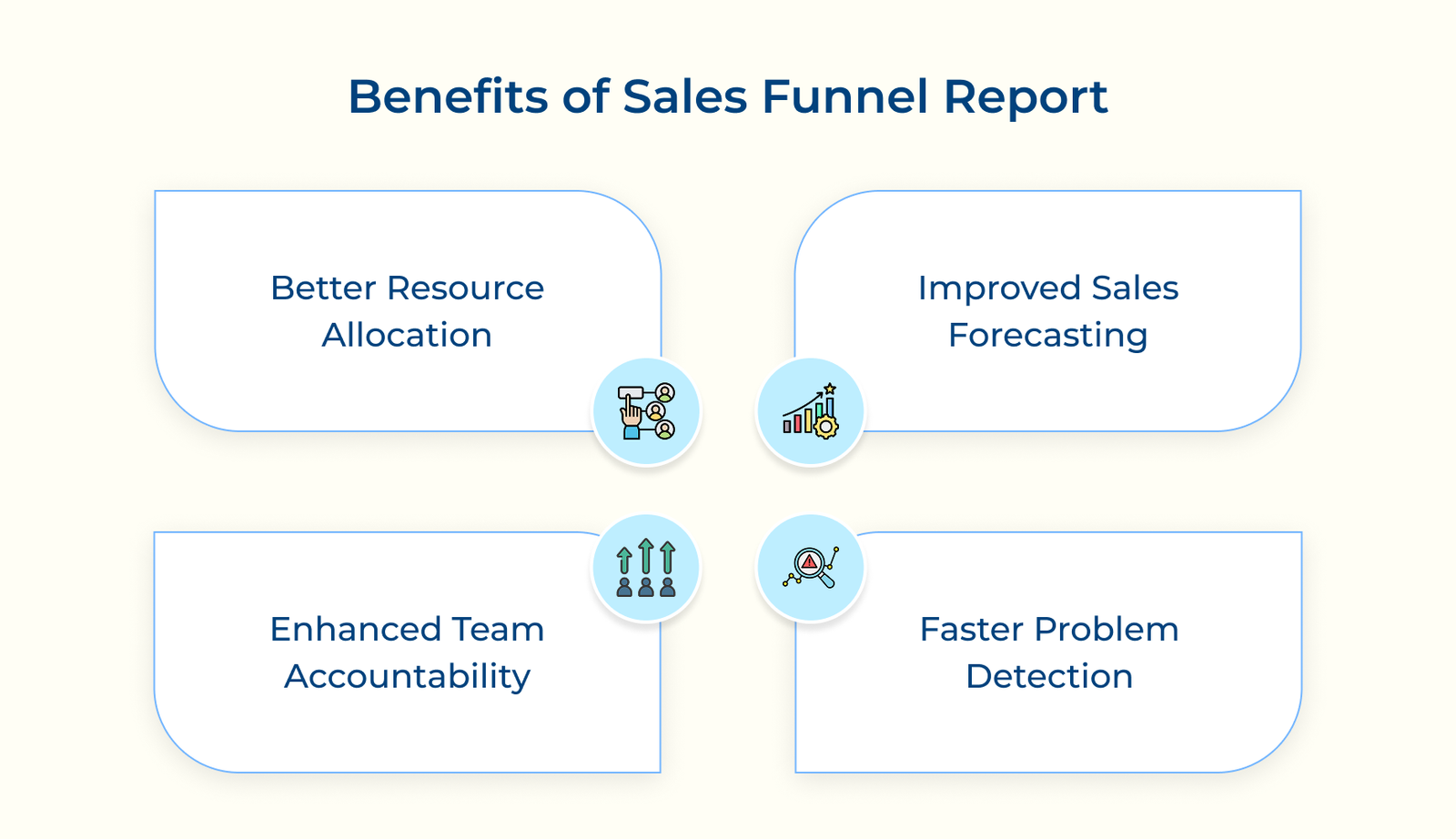
Better Resource Allocation
A funnel report shows exactly where prospects get stuck, helping you place your strongest sales reps where they’re needed most. It also helps you separate deals that need urgent attention from those that aren’t likely to close soon.
Improved Sales Forecasting
Your funnel report gives you real numbers instead of gut feelings when predicting future revenue. You can estimate future revenue by multiplying deal values at each stage by their past conversion rates, giving leaders clearer data for budgeting and hiring decisions.
Enhanced Team accountability
Everyone on your sales team knows their performance becomes visible through funnel metrics. The transparency encourages consistent follow-through and helps managers quickly identify who needs support or who’s performing at a high level.
Faster Problem Detection
The report highlights unusual changes in your funnel before they turn into major issues. If demo conversions suddenly dip or deals stall during contract review, you’ll notice early and can fix the root cause right away.
Check out the key bottlenecks your sales funnel report uncovers and learn how resolving them keeps your pipeline moving.
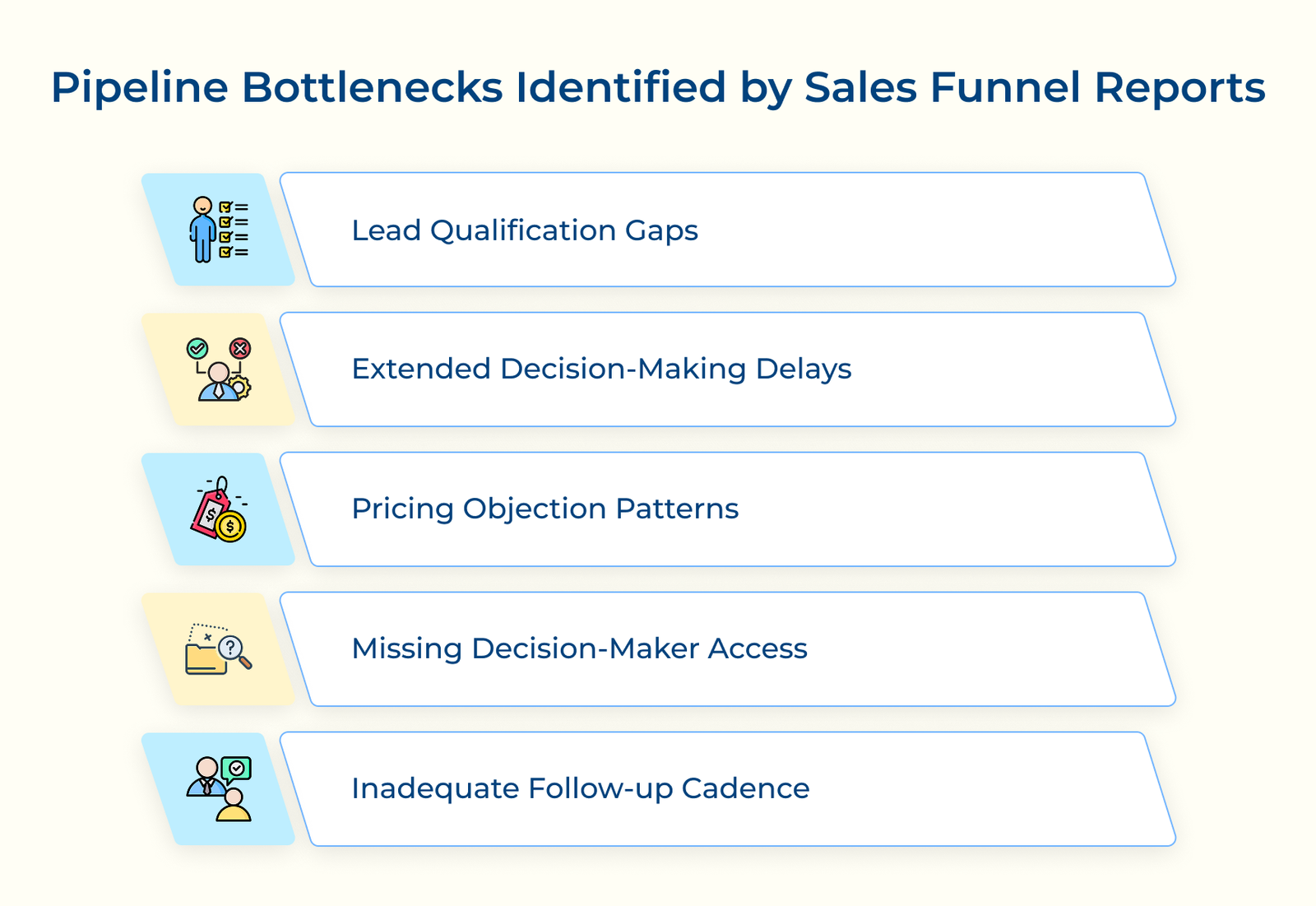
Lead Qualification Gaps
Your team loses hours on prospects who were never a good fit to begin with. The funnel report makes it obvious when weak leads slip through and pile up in later stages, where they eventually stall.
Extended Decision-making Delays
Some prospects linger in “maybe later” mode, requesting more details without moving forward. The report shows that when deals sit in the proposal stage far beyond your usual cycle, it signals a need for clearer next steps.
Pricing Objection Patterns
If prospects drop off right after seeing a quote, it often means they didn’t fully understand the value beforehand. Funnel data highlights the spikes in post-pricing exits so you can adjust earlier conversations.
Missing Decision-maker Access
Your reps talk to interested parties who lack actual buying authority and then deals stall when the real decision-makers finally enter conversations. The report shows unusual delays between demo completion and contract review stages.
Inadequate Follow-up Cadence
Deals go cold when communication becomes inconsistent. Funnel metrics show where follow-ups slow down or stop entirely, helping you spot opportunities that need more attention before they disappear.
Implementation steps:
Let’s go through the steps to build a clear, useful sales funnel report that helps your team understand exactly where opportunities move or get stuck.
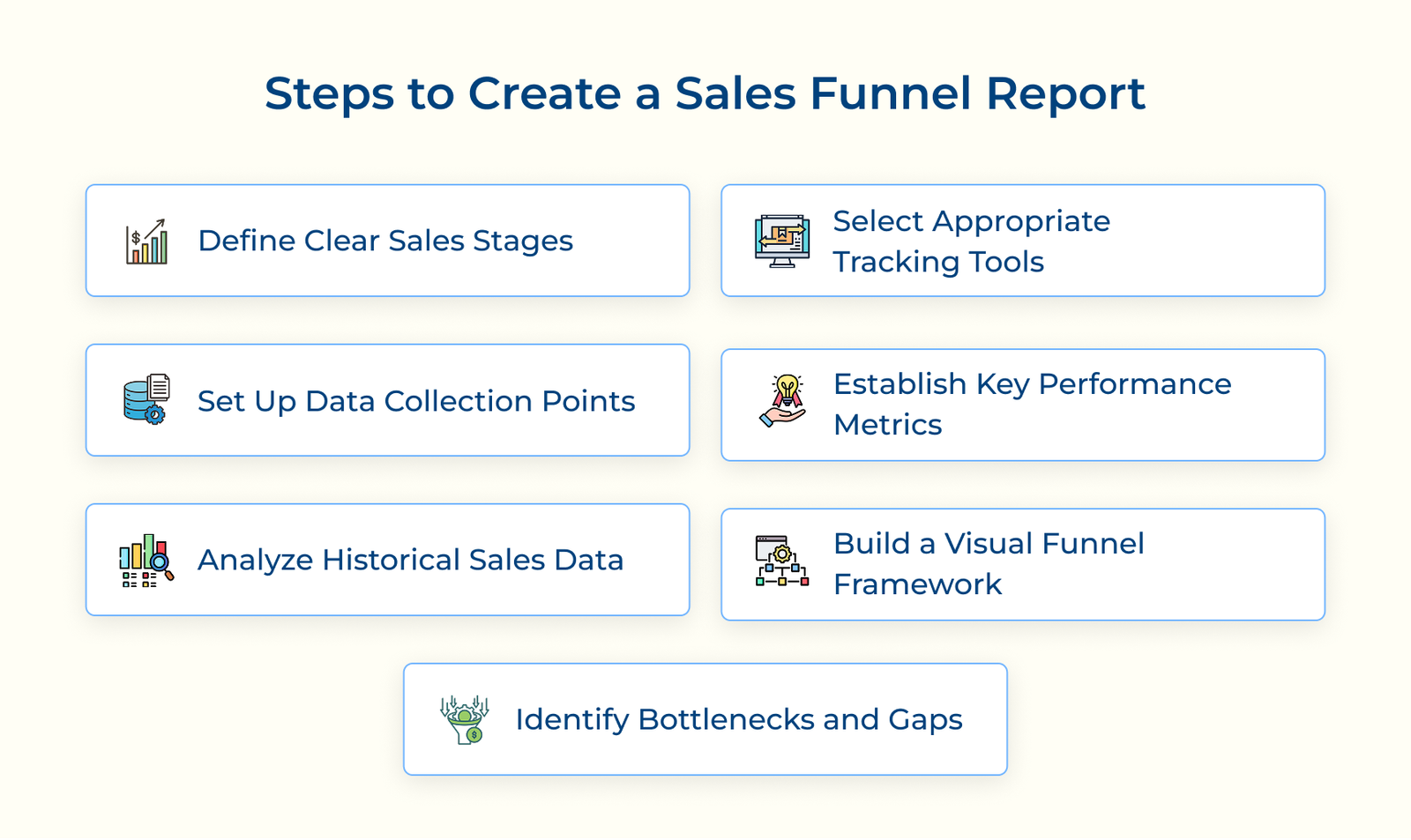
Start by mapping the exact steps a prospect takes from first contact to closing. Without clear stages, your sales funnel reporting becomes guesswork instead of a useful tool.
Key questions:
The questions force you to think beyond vague labels like “interested” or “considering” and instead create concrete milestones. When everyone knows what each stage means and who owns it, your funnel becomes easier to analyze. Gather your sales team and document their actual workflow rather than an idealized version. Watch how deals move through your pipeline and note the real moments where prospects move forward or get stuck.
Picking the right tracking tools is about finding software that captures every prospect interaction and turns it into useful, easy-to-read information. Without the right system, managing hundreds of leads in spreadsheets becomes chaotic and unreliable.
Key factors:
The best tracking tools feel almost invisible. When emails, meetings and call notes log themselves, your funnel data stays accurate without anyone having to babysit the system.
Key platforms:
Data collection points are the moments where your systems automatically record what a prospect does, so nothing relies on memory or manual updates. When the points are in place, you get a clean, accurate picture of how deals move through your funnel.
Set triggers for actions like filling out a form, joining a demo or opening a proposal. Each event logs a timestamp and interaction details in your CRM, making it easy to see how long prospects stay in each stage.
Pro tips:
Key performance metrics tell you what’s actually happening inside your funnel. Without them, you’re either drowning in random numbers or operating on guesses. The goal is to track only the data that helps you understand progress, spot problems or make decisions.
Key questions:
A common trap is measuring too many things just because they look impressive. Stick to the numbers that clearly show movement, blockages, or patterns.
Key metrics:
The metrics work together like diagnostic instruments that pinpoint if your problem lies in lead quality or sales process or pricing strategy. When you track all five, you can quickly isolate which part of your funnel needs immediate attention versus which parts are performing well.
Gathering historical sales data means looking at how your funnel has performed in the past so you can understand what “normal” actually looks like. Otherwise, you can’t tell if today’s conversion rates, deal sizes or timelines are signs of improvement or early warnings of trouble.
You use the historical data to calculate what “normal” looks like for your sales process across different stages and time periods. The past patterns become the benchmarks that help you spot when something changes in your funnel and if that change signals a problem or an opportunity.
Pro tips:
Building your visual funnel framework means turning raw numbers into charts that show how prospects move from one stage to the next. A visual layout matters because it reveals trends, blockages and drop-offs far faster than rows in a spreadsheet ever can.
Key approaches:
Let’s assume that your funnel shows one hundred leads entered at the brand awareness stage, but only forty-five reached the demo stage. That 55% drop-off shows whether your early qualification is working or if you’re losing good prospects too soon.
Analyzing bottlenecks means looking closely at your sales funnel data to pinpoint the exact stages where deals slow down or disappear. You need this analysis because knowing you’re missing revenue targets doesn’t help unless you pinpoint exactly which part of your sales process is broken.
How do you actually find these bottlenecks in your pipeline and why does this count as building your sales funnel report rather than just using it? The answer is simple: your sales funnel report isn’t truly complete until you’ve added context about what the numbers mean.
Key ways:
The real value of bottleneck analysis comes when you stop just spotting problems and start forming clear ideas about why they’re happening. Prospects might stall at the proposal stage due to unclear pricing value or deals may die in contract review because the terms feel too strict.
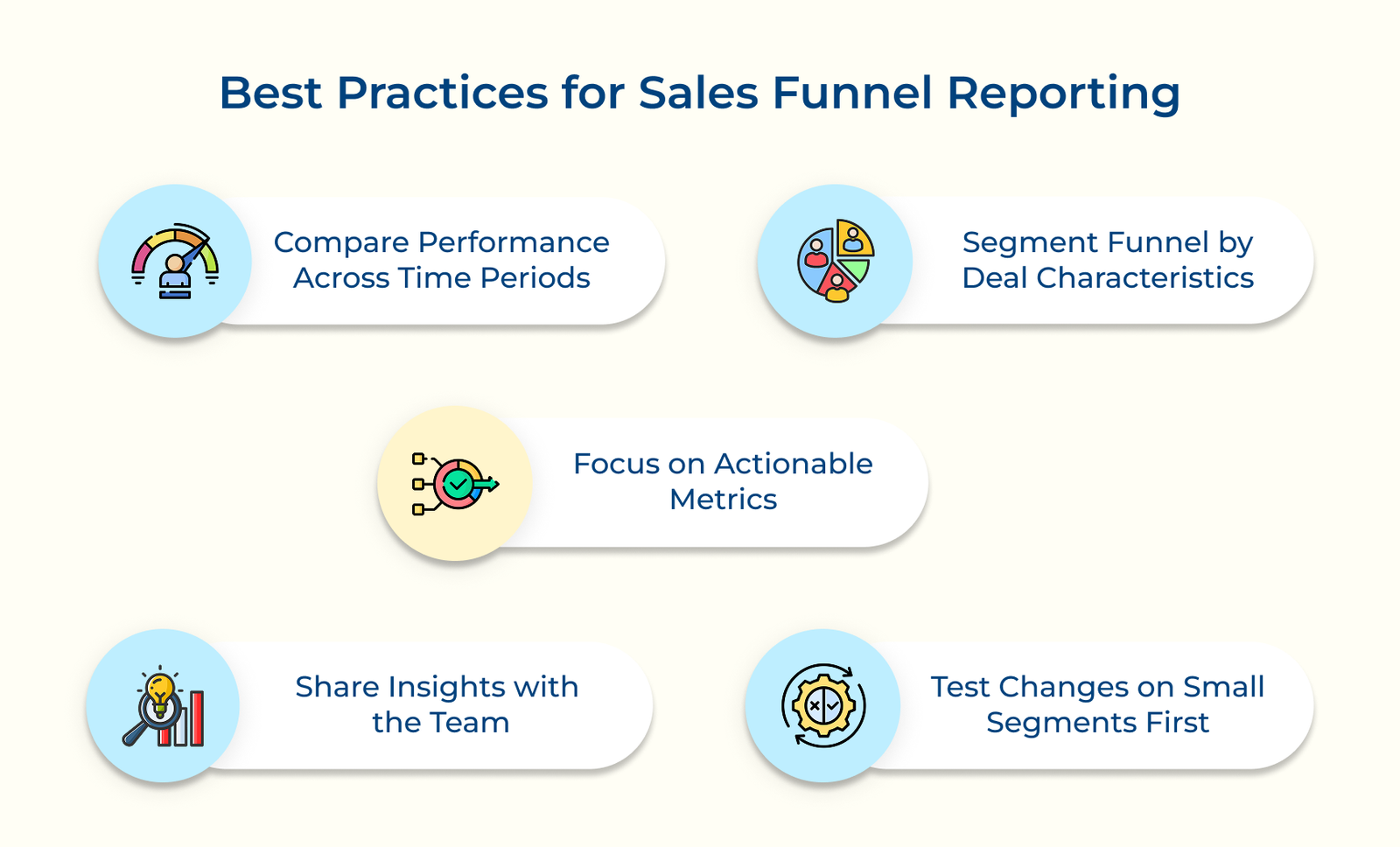
Below are the best practices to help you transform raw data into strategic decisions that improve closing rates.
The following are sales funnel report examples that show how different industries adapt funnel reporting to their specific needs.
A software company follows prospects from free-trial signup to paid conversion across five steps: trial activation, feature use, upgrade talks, contract review and payment. Their main metric is time-to-conversion because trials that don’t activate within three days almost never turn into paid users.
A real estate agency tracks buyers from first inquiry to closing through stages like listing viewing, property tours, offers, inspections, and final contracts. They pay close attention to lead sources since open-house visitors convert at nearly three times the rate of online form inquiries.
An online retailer monitors the customer path from browsing to purchase through page views, cart ads, checkout attempts, and completed orders. Their priority is understanding where carts are abandoned because even small fixes in checkout can add thousands of extra orders each month.
A dealership tracks shoppers from showroom entry to vehicle delivery through test drives, financing checks, car selection and paperwork. They compare performance by salesperson because conversion rates differ widely and top reps close deals about thirty percent faster than others.
A sales funnel report turns confusing pipeline data into clear answers about where your deals succeed or fail. You stop guessing and start making decisions based on what truly moves prospects forward with solid tracking.
The gap between teams that struggle and teams that consistently close often comes down to how well they react to their funnel. Build your funnel report using the steps above and you’ll quickly see which changes actually move the needle, so you can focus your resources where it counts most.

A marketing funnel covers the early stages where you turn strangers into interested leads through marketing efforts like content and outreach. The sales funnel starts once leads are qualified and tracks the steps, like demos or proposals, that turn great customer experience into signed contracts.
Most sales funnels include five steps: lead generation, qualification, presentation, negotiation and closing. Each step brings prospects closer to a final decision and shows where they might slow down or drop off.
A sales page is a single webpage designed to convince visitors to buy your product or book a call right now. A sales funnel is the multi-step path prospects follow from first awareness to final purchase, moving through touchpoints like emails, calls and demos over time.
Break your data into time periods and customer segments to see real patterns. Focus on stage-to-stage conversion rates, not just how big your pipeline looks. Most importantly, tie any improvements back to real revenue so you know the changes actually matter.
Review your sales funnel report weekly if you run a high-velocity sales process with short cycles or monthly if your deals take longer to close. Stay consistent with reviews so you can catch trends early and involve the whole sales team to understand what’s actually happening with prospects.

Grow Customer Relationships and stronger team collaboration with our range of products across the Conversational Engagement Suite.
Omnichannel Customer Support & Help Desk Software
AI Enabled Business Messaging and Chatbot Software
Sales Engagement & CRM Software
Call Center Software & Virtual Phone System
Product Marketing & Experience Platform
Customer Experience & Feedback Management Software

 What is Inbound Lead Generation? Types, Benefits & Tools
Scroll to top
What is Inbound Lead Generation? Types, Benefits & Tools
Scroll to top