What is a Sales Invoice? Types, Steps & Best Practices
The blog explains what is a sales invoice and why businesses use it. It explores how it helps track payments, record sales and maintain clear financial documentation for buyers.
The blog explains what is a sales invoice and why businesses use it. It explores how it helps track payments, record sales and maintain clear financial documentation for buyers.
A project has been completed or products have been delivered to a customer. The next step should be simple. Payment needs to be requested through an invoice. Many businesses, however, find themselves staring at a blank document, unsure about what details belong on it or how to present it in a way that customers treat as a serious financial document.
Over 80% of businesses surveyed have experienced late or overdue payments in the last six months. Delayed payments quickly turn into a bigger operational problem. When the sales invoices sit unopened in crowded inboxes for days or even weeks, cash flow slows down while teams spend valuable time sending reminders and tracking outstanding payments.
Clear and well-structured invoices change that situation entirely. A well-prepared invoice removes confusion, makes approval easier for finance teams and moves payments through internal systems much faster.
A sales invoice refers to a formal document that a seller sends to a buyer after completing a transaction. It serves as an official request for payment and provides a detailed record of what was sold. Think of it as a part of the sales receipt; it confirms the work you completed and tells the customer exactly what they owe.
After finishing a job or delivering goods, you create an invoice outlining the details and send it to your customer. They use it to process payments based on the terms you agreed on. The invoice also gives both sides a clean, traceable record of the business transaction.
Key elements:
The following are the key reasons why sales invoices matter in B2B. Let’s check them out in more detail.
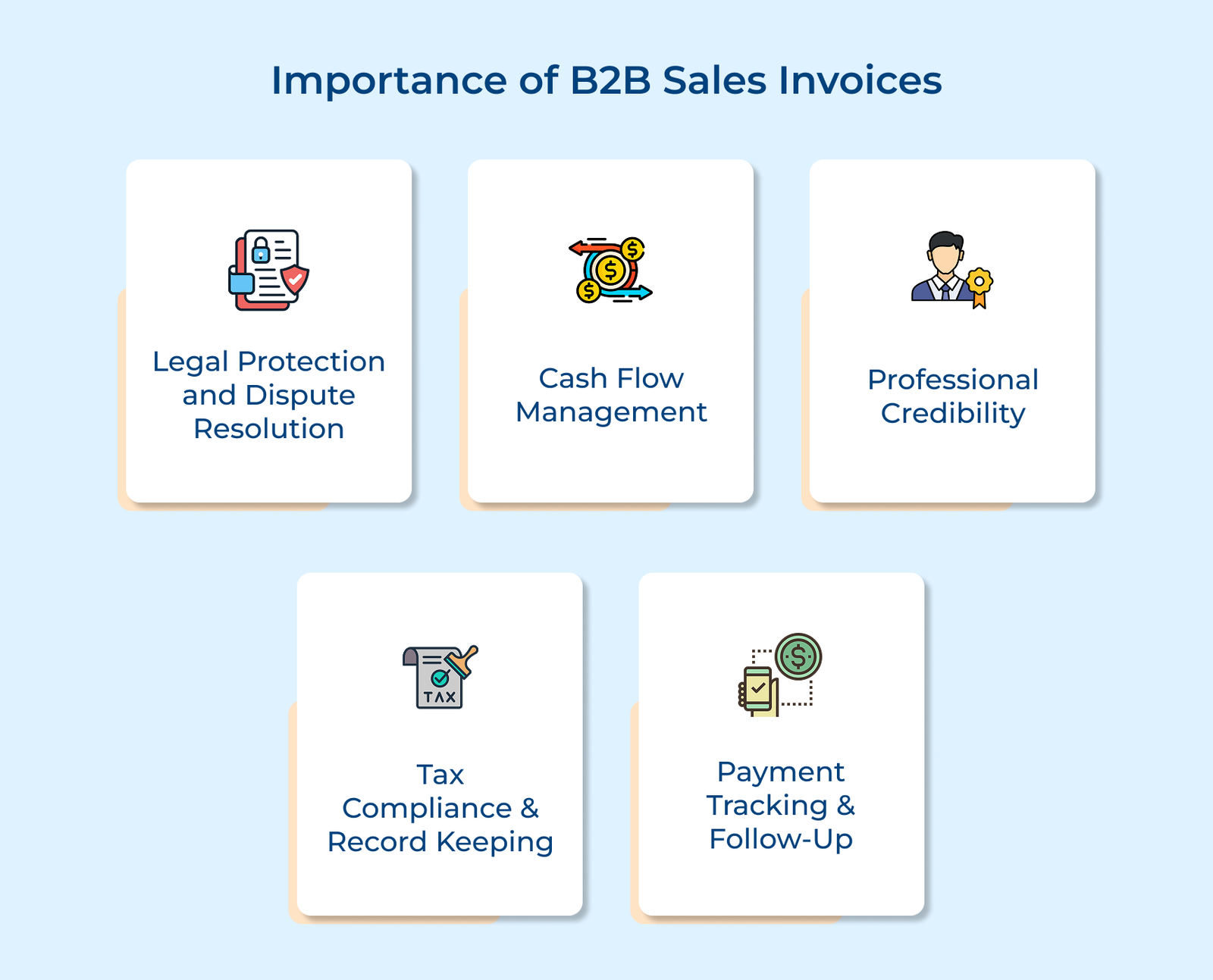
Legal Protection and Dispute Resolution
A sales invoice gives both sides a clear record of what was agreed. If a disagreement comes up later, the invoice serves as proof of the terms and helps resolve the issue quickly.
Cash Flow Management
Clear invoices make it easier to predict when money will come in. When payment terms and due dates are stated upfront, businesses can plan expenses as well as avoid cash shortages.
Professional Credibility
A clean, well-organized invoice shows clients you run your business carefully. It builds trust and makes customers more comfortable working with you again.
Tax Compliance and Record-keeping
Invoices become part of your financial history. They help during tax filing, support deductions and give auditors a clear record of your sales activity.
Payment Tracking and Follow-up
Unique invoice numbers help you track what’s paid and what’s still pending. It makes reminders easier and keeps your accounts receivable organized without guesswork.
Different business situations call for different invoice formats. Check out the variations that help you choose the right sales invoice for each transaction stage.
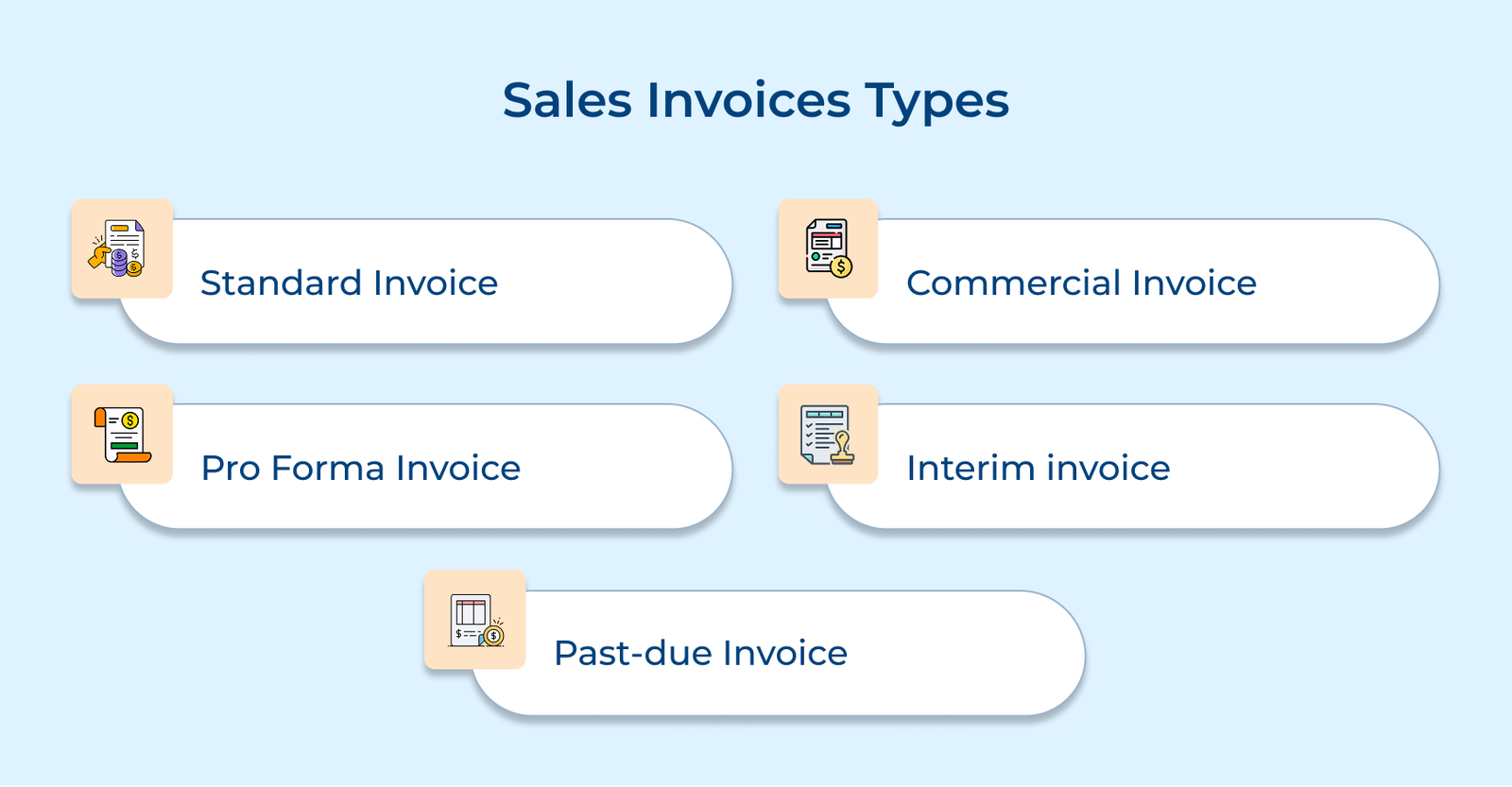
A standard invoice is your everyday workhorse document that gets sent after delivering goods or completing services. It lists quantities, prices and totals, giving customers everything they need to process the payment.
International shipments require this specialized document that customs officials use to calculate import duties and taxes. It includes detailed product descriptions and origin information so border officials can verify what’s being imported.
A pro forma invoice works like a detailed estimate issued before a sale is finalized. Buyers often use it to arrange financing or permits, since it outlines expected costs without creating a payment obligation yet.
Long-term projects get broken into payment milestones using these progressive billing documents. They charge for completed milestones instead of waiting until the end, helping businesses keep cash flow steady throughout the project.
When payment deadlines pass without settlement, the reminder document gets sent to customers with outstanding balances. It may include late fees based on the original terms and prompt the customer to settle the balance.
Check out eight simple steps to make your sales invoices super effective. Let’s dive in and streamline your invoicing process, making it as seamless as possible.
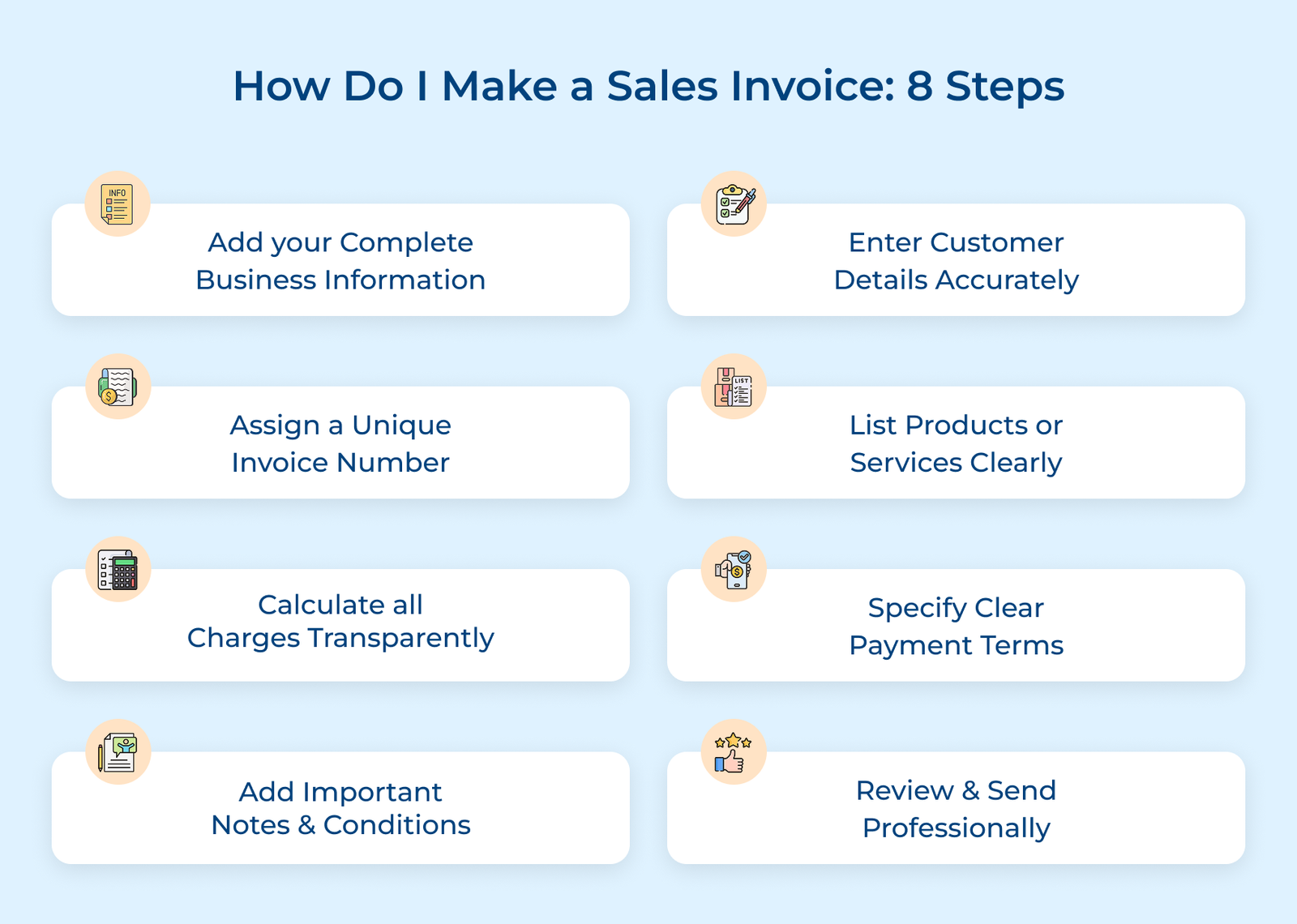
Your invoice should immediately show who’s requesting payment. When the details are missing or hard to find, customers may slow down processing or question the invoice’s authenticity.
Key details:
Place your logo and business information at the top of the invoice. It creates instant recognition and helps customers confirm they’re sending payment to the right place.
Accurate customer information ensures your invoice reaches the right person and gets processed without unnecessary delays. When details are incomplete or outdated, invoices can end up with the wrong department or get stuck in approval loops.
Key factors:
Once you have these details, enter the customer’s legal business name exactly as it appears on their records. Include both their billing address, where accounting operates and their shipping address if different to ensure proper internal routing.
A unique invoice number keeps your billing organized and easy to reference. Without it, payments get mixed up, duplicates slip through and resolving even simple questions becomes a hassle.
Key approaches:
Let’s assume that if your invoice number is 2026-10-045, your customer can immediately tell this is your 45th invoice from October 2026. When a customer asks about a past payment, a clear invoice number helps you both find the exact transaction immediately.
The section breaks down exactly what the customer is paying for and removes any ambiguity about the transaction. Clear itemization prevents disputes and helps customers confirm they received everything before approving payment.
Once you’ve identified what was sold, describe each line item with enough detail that someone unfamiliar with the order can understand it. Include quantities and unit prices separately so the customer can easily match your invoice to their purchase order or contract.
Best practices:
The section shows the complete financial breakdown and builds trust by revealing how you arrived at the total amount. Transparent calculations prevent disputes and help customers confirm charges match their agreement before paying.
Key factors:
Payment terms eliminate confusion about when money is due and how customers should send it. Clear terms protect your cash flow by setting expectations upfront and reducing the awkward conversations about overdue payments when customers claim they didn’t understand the deadline.
Set a Specific Due Date
Skip vague phrases like “due upon receipt.” Instead, use exact wording such as “Payment due October 15, 2026” or “Net 30 from invoice date.” Clear dates leave no room for mixed interpretations.
List Accepted Payment Methods
Tell customers if you accept bank transfers or credit cards or checks so they can process payment immediately. Include your bank details or payment link on the invoice so customers don’t have to search for it.
Include Late Fees or Early Discounts
If you charge interest on overdue payments or offer small discounts for early payment, state it plainly. The details set expectations and motivate customers to pay on time.
The section holds details that don’t fit elsewhere but still matter. The notes help avoid misunderstandings later, if they relate to warranties, delivery instructions or special arrangements made during the sale.
Key questions:
Use the section strategically by adding only genuinely useful information rather than cluttering the invoice with unnecessary text. Keep notes short and relevant so customers read them instead of skipping over long blocks of legal text.
The final check catches errors before they reach your customer and ensures the invoice arrives through appropriate channels with confirmation. A careful review prevents embarrassing errors and avoids delays from customers sending invoices back for fixes.
Review each invoice systematically by checking calculations twice and verifying that customer details match their official records exactly. Check for typos in amounts or dates and make sure payment instructions are clear before sending.
Best practices:
The following are the best practices to help you structure your invoicing process to encourage faster payment.
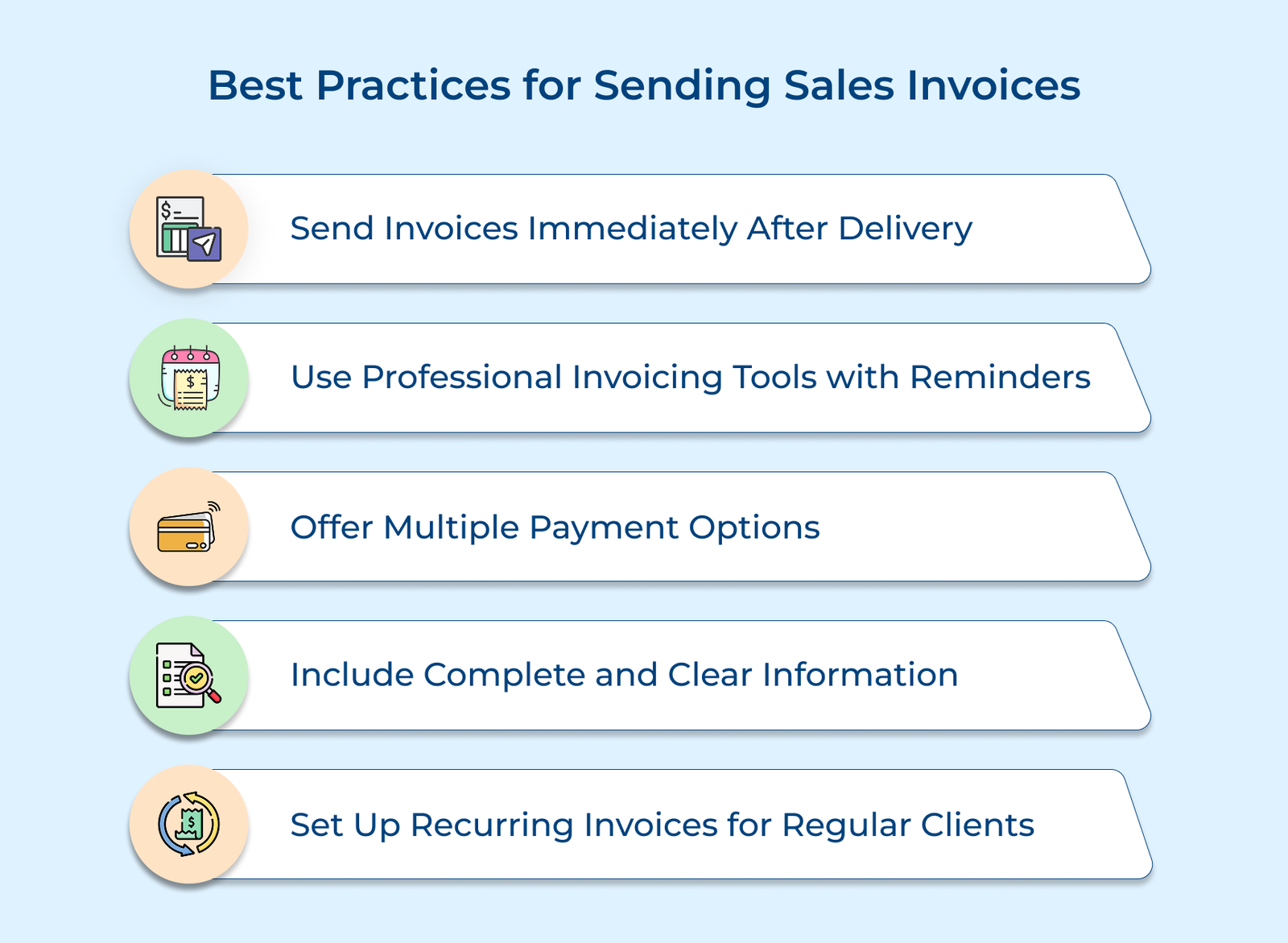
1. Send Invoices Immediately After Delivery
Send the invoice as soon as you finish the work or ship the product. When the transaction is still fresh, customers review and approve invoices faster. A few days’ delay can push your invoice into the next billing cycle, adding weeks to your payment timeline.
Key factors:
Speed matters because accounting departments often work in monthly cycles. An invoice sent on the 2nd of May gets paid within weeks, while one sent on the 29th often waits until the next month’s cycle.
2. Use Professional Invoice Software with Reminders
Manual invoicing invites errors, lost emails and missed follow-ups. Good invoicing software handles reminders, tracks unpaid bills and sends clean, consistent invoices every time.
Modern platforms integrate payment buttons directly into invoices and allow customers to pay with a single click. It removes friction because customers don’t need to log into their banking portal separately.
3. Offer Multiple Convenient Payment Options
If you only accept checks or bank transfers, you slow everything down. Different companies use different payment systems and giving them options helps you get paid sooner.
Different businesses have different preferences based on their accounting systems. A small business might prefer credit cards for simplicity, while large corporations might insist on ACH transfers that integrate with their systems automatically.
4. Include all Information Upfront
Nothing slows payment faster than missing tax identification numbers or unclear payment instructions. Every missing detail adds days because the invoice gets set aside while someone waits for your response during business hours.
Key details:
Complete invoices move through approval chains without stopping because reviewers can answer all questions by simply reading the document. It means your invoice doesn’t sit in pending folders while people track down missing information.
5. Set up Recurring Invoices for Regular Clients
Businesses with ongoing monthly services waste time recreating similar invoices when automation could handle the task. Recurring invoices go out on schedule without you remembering to create them.
Predictability helps both parties because customers can plan cash flow around known expenses while you enjoy reliable revenue without manual work. Payment becomes routine rather than a negotiation with each invoice.
6. Send Invoices to the Right Person
Even the best invoice won’t get processed if it lands in the wrong inbox. Many companies separate the person who orders the work from the person who handles payments.
Key takeaways:
Large organizations separate the people who order services from those who process payments. The project manager who loved your work might have zero payment authority, while the accounts payable specialist has never heard about your project.
Check out the sales invoice example below to see how all the key elements come together in a clear format that helps customers understand charges and pay without delays.
INVOICE
From:
– TechFlow Solutions Inc., 456 Innovation Drive, San Francisco, CA 94102
– Phone: (415) 555-0123 | Email: billing@techflow.com
– Tax ID: 98-7654321
To:
– Brightside Marketing LLC, 789 Commerce Street, Austin, TX 78701
– Attention: Sarah Johnson, Accounts Payable Manager
– Email: accounts@brightsidemarketing.com
Invoice details:
– Invoice Number: INV-2026-1047
– Invoice Date: October 29, 2026
– Due Date: November 28, 2026 (Net 30)
– Purchase Order: PO-2026-456
Items:
– Website Design and Development: 80 hours × $125/hour = $10,000
– Custom Contact Form Integration: 1 unit × $800 = $800
– SSL Certificate and Security Setup: 1 unit × $200 = $200
Calculations:
– Subtotal: $11,000
– Sales Tax (8.25%): $907.50
– Total Amount Due: $11,907.50
Payment terms: Payment due within 30 days. Late payments are subject to 1.5% monthly interest.
Payment methods: Bank transfer to Account #123456789, Routing #987654321 or pay online at techflow.com/pay
Notes: Thank you for your business! Warranty covers 90 days of bug fixes from the launch date.
The example shows how each component works together to create a complete picture of the transaction. The header immediately identifies both parties, while the invoice number and dates establish a clear timeline.
The itemized section shows what work was done and the clear calculations explain how you arrived at the final amount. Payment terms clarify when money is due and the notes section adds a professional touch while covering key warranty details.
Mastering sales invoices transforms your billing from a chaotic afterthought into a smooth, professional operation that gets you paid faster. Every element we’ve covered works together to create clear communication and trust with your customers.
Start by improving one small part of your process, like sending invoices the same day or tightening your payment terms. The simple steps add up, making your billing smoother, your cash flow steadier and your customer relationships stronger.

A sales order comes first. It confirms what the customer wants to buy and acts as your go-ahead to prepare the order. A sales invoice comes later. It shows what was actually delivered and asks the customer to pay for it. Think of the order as the plan and the invoice as the bill.
No, a sales invoice asks for payment. A receipt only gets issued after payment clears and serves as proof that money changed hands. While the invoices arrive first and ask for that money to be sent.
Sales invoices represent accounts receivable in your accounting system because they track money customers owe you but haven’t paid yet. Once the customer pays, that amount moves out of receivables and into your cash account.
Sales invoices and receipts serve opposite purposes in the transaction timeline. An invoice asks for payment before money arrives, while a receipt confirms that payment already happened. Think of the invoice as the request and the receipt as the thank-you note that follows successful payment.
Any business selling goods or services on credit rather than demanding immediate payment needs sales invoices. It includes freelancers, consultants, wholesalers, manufacturers or service providers who deliver first and get paid later under terms like net 30 or net 60
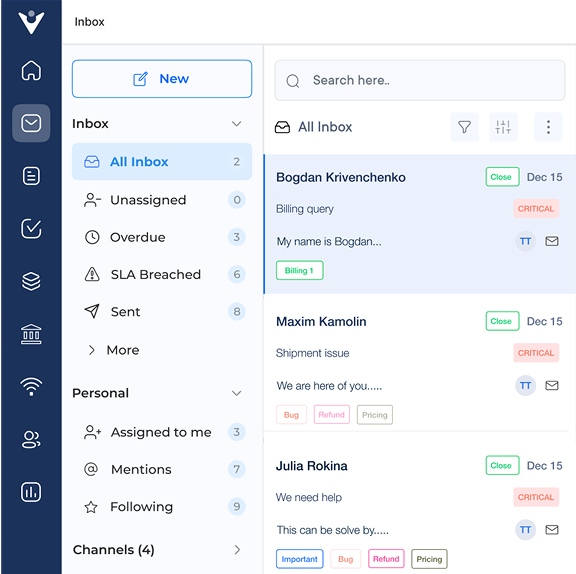
Grow Customer Relationships and stronger team collaboration with our range of products across the Conversational Engagement Suite.
Omnichannel Customer Support & Help Desk Software
AI Enabled Business Messaging and Chatbot Software
Sales Engagement & CRM Software
Call Center Software & Virtual Phone System
Product Marketing & Experience Platform
Customer Experience & Feedback Management Software
 What is a Sales Leaderboard? Benefits, Best Practices & Tools
Scroll to top
What is a Sales Leaderboard? Benefits, Best Practices & Tools
Scroll to top