How to Build Rapport Sales? Importance, Technique & Tips
Build rapport sales by creating trust through genuine conversations, active listening, and empathy. It helps prospects feel understood and more confident in choosing your solution.

Build rapport sales by creating trust through genuine conversations, active listening, and empathy. It helps prospects feel understood and more confident in choosing your solution.
Every sales conversation starts the same way – a good exchange, genuine interest and the quiet confidence that this one is going somewhere. Then the silence sets in, not because the prospect lost interest, but because life moved on for both of you and nobody picked the thread back up.
That moment of lost momentum is where more deals die than at any objection or pricing conversation.
The difference between a salesperson who closes consistently and one who keeps losing warm leads rarely comes down to skill. It comes down to whether people feel like they are talking to someone who actually knows them, remembers what they said and cares enough to follow through.
When the sales rep’s priority is to build rapport sales, their conversations feel like a continuation rather than a cold start and it makes the prospect feel like a person rather than a pipeline entry.
Building rapport sales refers to creating a real connection rooted in trust and understanding. The goal is to help prospects feel relaxed enough to talk honestly about what they need and what is holding them back. Strong rapport turns a sales call into a natural conversation where both sides feel respected and understood.
Rapport building works through active listening and finding common ground with your prospect. You pay attention to their communication style and mirror it naturally while showing authentic interest in their situation. The process creates psychological comfort that makes prospects more willing to share information and consider your solutions seriously.
Key objectives:
Let’s go through the importance of building rapport sales and see how trust-driven conversations not only improve engagement but increase win rates.
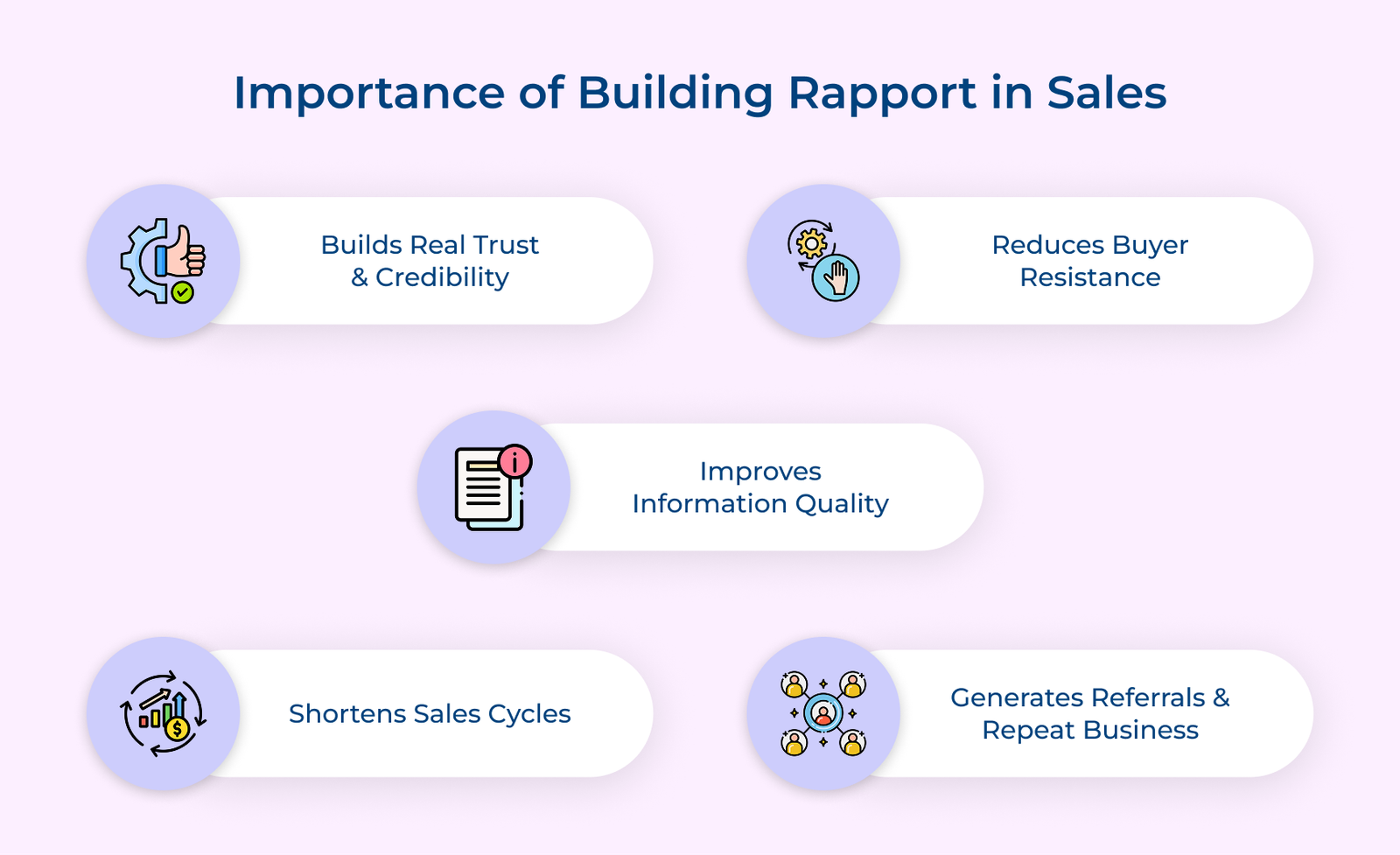
1. Builds Real Trust and Credibility
Genuine rapport helps prospects see you as someone who understands them, not just someone trying to sell. Trust grows when intentions feel honest, making your suggestions easier to accept.
2. Reduces Buyer Resistance
Strong rapport naturally lowers the emotional walls prospects put up when talking to salespeople. They stop viewing the conversation as adversarial and start seeing it as a collaborative effort to solve their problems together.
3. Improves Information Quality
Comfort leads to honesty. Prospects open up about budget limits, internal politics and real concerns when they trust you. Clear information helps you respond with solutions that actually fit instead of making assumptions that miss the mark.
4. Shortens Sales Cycles
When rapport exists, prospects don’t need as much time to evaluate if they can trust you with their business. The relationship foundation you’ve built accelerates their decision-making and reduces the back-and-forth typically required in sales.
5. Generates Referrals and Repeat Business
People buy from people they like and remember. A positive relationship does not end at the sale. Satisfied customers recommend you to others and return when they need help again because they trust the experience they had with you.
Check out the effective techniques that can help you build rapport and strengthen your sales approach.
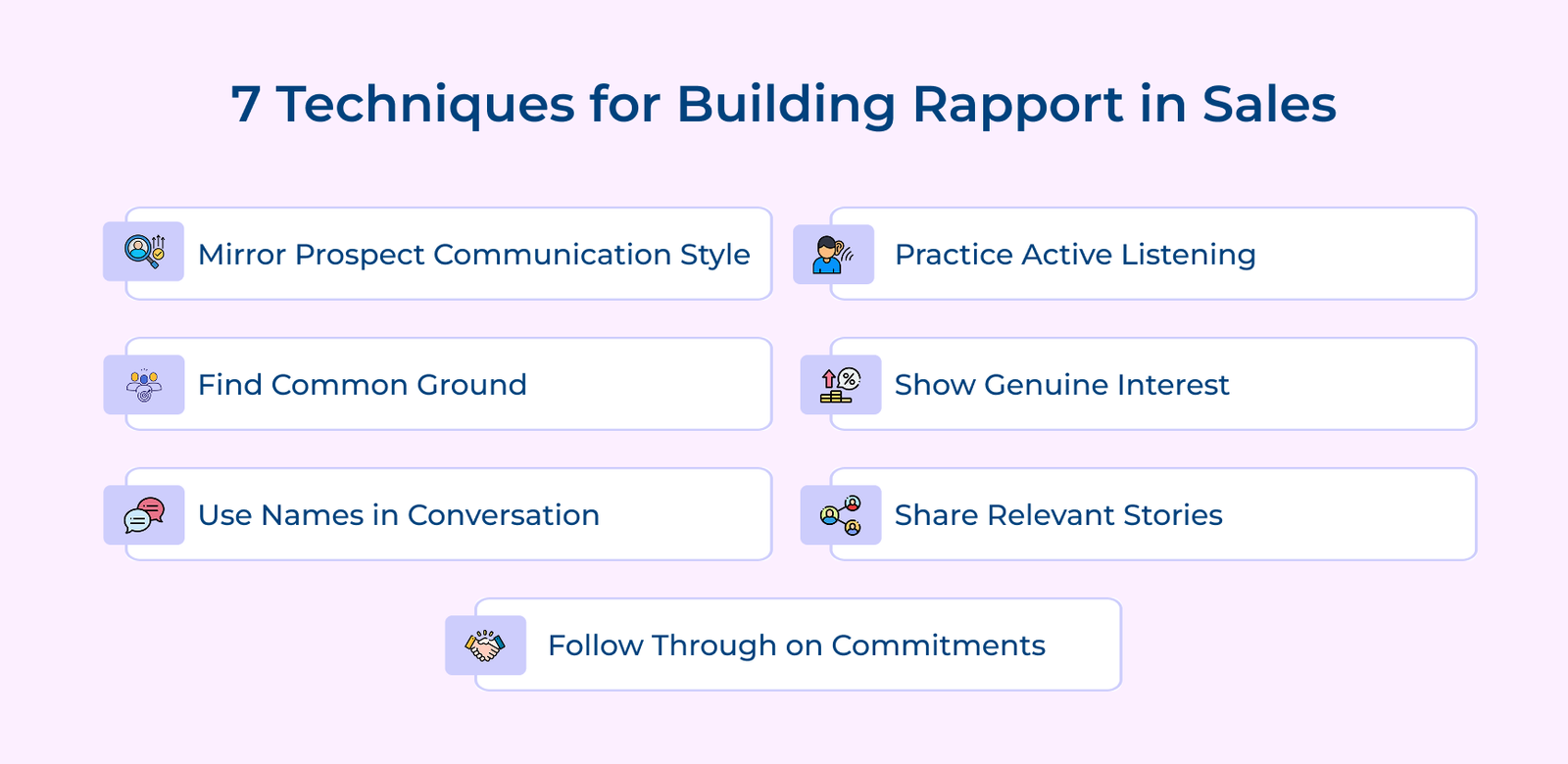
Building rapport sales starts with making prospects feel understood and comfortable. Mirroring their communication style creates an unconscious sense of familiarity that makes them more open to engaging with you genuinely.
Before you start mirroring, observe your prospect’s natural patterns without making assumptions based on stereotypes. Focus on what they actually do, not what you expect from someone in their position.
Pro tips:
Communication style also includes channel preference. Some people respond quickly to calls. Others prefer written messages they can review in their own time. Ignoring that preference creates friction.
Key ways:
When you consistently mirror and adapt to your prospect’s style, you eliminate communication barriers that slow down relationship building. They feel like you “get them” without consciously knowing why.
Active listening means giving your full attention instead of planning your next pitch. The technique builds rapport because people naturally trust those who make them feel heard and valued.
Active listening starts with asking thoughtful follow-up questions because they prove you’re paying attention to details. The questions dig deeper into what prospects share and show genuine curiosity about their perspective.
Key questions:
The questions help you uncover the real motivations and concerns behind surface-level responses. They also give prospects space to elaborate on what matters most to them rather than sticking to prepared talking points.
Once they’ve answered, paraphrase what you heard to confirm your understanding. The step prevents miscommunication and shows prospects you’re processing their words carefully. Try saying “So if I understand correctly, your main concern is…” and let them correct or confirm your interpretation.
As a final recommendation, avoid interrupting their thought process even when you’re excited to share a solution. Let them finish their complete idea before responding. When you cut someone off mid-sentence, you signal that your agenda matters more than their perspective.
Finding common ground means discovering mutual interests or experiences that create an instant connection beyond business. The technique is essential because shared interests transform you from a stranger into someone prospects can relate to on a human level.
You can use the technique by staying observant during conversations and looking for natural connection points. Notice what prospects mention about their hobbies or background and explore the areas authentically without forcing it.
Pro tips:
Genuine interest goes beyond closing a deal. It means caring about what is happening inside their business and what they are trying to achieve. People quickly sense when attention is real and when it is routine.
Key ways:
Using someone’s name in conversation means naturally incorporating it during dialogue rather than just at the beginning. It helps build rapport because hearing our own name triggers positive emotional responses and makes interactions feel more personal.
The key consideration is frequency and naturalness when using their name during conversation. Overusing it sounds manipulative, while never using it feels distant. Strike a balance where their name appears organically two or three times throughout the discussion.
Key phrases:
You can use the technique by incorporating their name when transitioning between topics or emphasizing important points. Insert it naturally when acknowledging their insights or asking clarifying questions, rather than forcing it into every sentence.
Best practices:
Sharing relevant stories means weaving in brief anecdotes that relate directly to your prospect’s situation. Without the technique, your conversations remain theoretical and prospects struggle to envision how you’ve actually helped others facing similar challenges.
Key scenarios:
Keep each story under two minutes and always connect them back to the prospect’s specific situation. End each story by asking how it relates to their circumstances rather than assuming the connection is obvious.
Trust is built in small moments. Doing what you said you would do, at the time you said you would do it, carries more weight than any persuasive conversation. One missed promise can undo a lot of progress.
Respond within the Promised Timeframes
When you commit to responding by a certain time, set a reminder to ensure you actually do it. Missing response deadlines signals that your word doesn’t mean much and that other priorities matter more than this prospect.
Deliver Exactly What you Agreed On
Send the precise documents or details you promised rather than sending something similar or partially complete. Prospects notice when you deliver less than agreed and it damages the trust you’ve worked to build.
Keep Them Updated on Progress
Proactively share status updates even when there’s no significant news to report yet. Regular communication prevents prospects from wondering if you’ve forgotten them and reinforces that you’re actively working on their behalf.
Below are the additional tips that will help you strengthen connections and maintain rapport throughout the entire sales process.
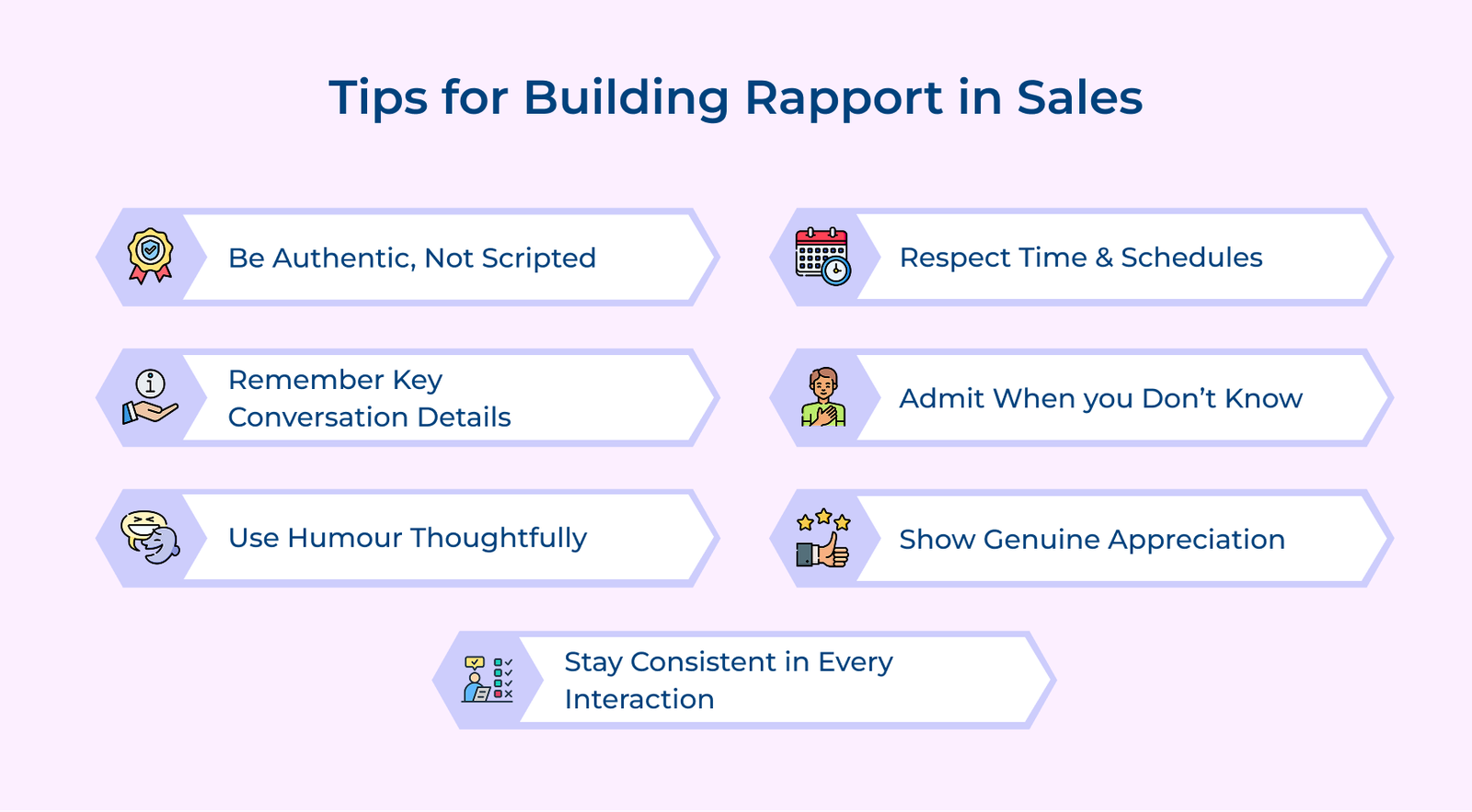
1. Be Authentic Rather Than Scripted
Prospects when someone is reading lines. Real conversations feel different. Listen closely, respond to what they actually say and speak in your own voice. Genuine interest is far more convincing than a polished script.
2. Respect Their Time
Always start meetings on time and end them when promised, even if the conversation is going well. When you value their schedule as much as your own, prospects see you as considerate rather than someone who only cares about closing deals.
3. Remember Past Details
Bring up something they mentioned earlier. It could be a project update or even a small personal note. It shows you were listening and that the relationship is continuous, not just a series of disconnected calls.
4. Admit When You Don’t Know Something
Say “I don’t know, but I’ll find out” instead of making up answers or deflecting their questions. Honesty builds more rapport than pretending to have all the answers because it shows you prioritize accuracy over appearing knowledgeable.
5. Use Humor Appropriately
A light comment can ease tension and make the exchange more enjoyable when it feels natural to the moment. Keep it respectful rather than at anyone’s expense and never force jokes if humor isn’t your natural style.
6. Show Clear Appreciation
Thank prospects specifically for sharing valuable information or taking the time to explain their processes to you. Genuine appreciation makes people feel valued and reinforces that the conversation was a worthwhile exchange rather than a one-sided pitch.
7. Stay Consistent Across All Interactions
Maintain the same tone or personality across calls, emails and meetings. Inconsistency creates confusion and distrust, while consistency reinforces that the person they’re getting to know is authentically you.
Building rapport sales transforms from transactional exchanges into meaningful relationships where prospects actually want to work with you. The techniques we’ve covered help you connect authentically and create the trust foundation that makes conversions natural rather than forced.
Use the techniques in your next conversation and notice the shift. People respond differently when they feel heard, respected and understood. Rapport takes patience and attention. Focus on understanding the person in front of you and the rest tends to follow naturally.

Rapport starts with listening closely and asking questions that show real interest. Mirror their communication style naturally and find common ground through shared experiences or interests. Following through on commitments consistently demonstrates reliability and reinforces trust throughout the relationship.
A strong rapport makes clients want to come back. The relationship feels comfortable and dependable. Clients are more open to new ideas and more patient when small issues come up. Interactions move beyond one-time transactions and become ongoing partnerships.
Trust is the cornerstone of rapport because prospects won’t share their real challenges or budget concerns without it. When trust exists, clients believe you have their best interests at heart rather than just wanting to close a deal. The openness accelerates decision-making and reduces the resistance typical in sales conversations.
Acknowledge their hesitation openly. Give them space to voice concerns without pushing back immediately. Share relevant examples and invite them to check facts on their own. Let them control the pace. Calm consistency often softens resistance.
Focus on your voice tone and pacing since body language isn’t visible during phone conversations. Use the prospect’s name more frequently than you would in person to maintain a personal connection throughout the call. Eliminate background noise and give them your complete attention just as you would during face-to-face meetings.

Grow Customer Relationships and stronger team collaboration with our range of products across the Conversational Engagement Suite.
Omnichannel Customer Support & Help Desk Software
AI Enabled Business Messaging and Chatbot Software
Sales Engagement & CRM Software
Call Center Software & Virtual Phone System
Product Marketing & Experience Platform
Customer Experience & Feedback Management Software

 How to Create a Customer Success Plan: 8 Key Steps
Scroll to top
How to Create a Customer Success Plan: 8 Key Steps
Scroll to top