B2B Customer Experience Guide: Stages, Strategies & Examples
The guide gives you a bird's-eye view on what, why and how of B2B customer experience. It discusses all the strategies and all the tools you’ll need to upgrade your CX.

The guide gives you a bird's-eye view on what, why and how of B2B customer experience. It discusses all the strategies and all the tools you’ll need to upgrade your CX.
B2B customer experience often misses the mark, no matter how much money is poured into it. When touchpoints don’t connect, messages clash and teams fail to coordinate, it builds frustration for the clients. Over time, that erodes trust, strains relationships and spreads negative feedback through industry circles. A better customer experience motivates B2B buyers to pay more, with 86% showing a willingness to do so.
Let’s dive into our guide that cuts through the noise with straightforward ways to fix those gaps. You’ll see how to build consistent interactions, get teams on the same page and strengthen client relationships that actually hold up over the long run.
B2B customer experience refers to the full journey a business customer has when working with another business. Unlike B2C, which focuses on individual shoppers, B2B CX involves complex relationships, multiple decision-makers and longer buying cycles.
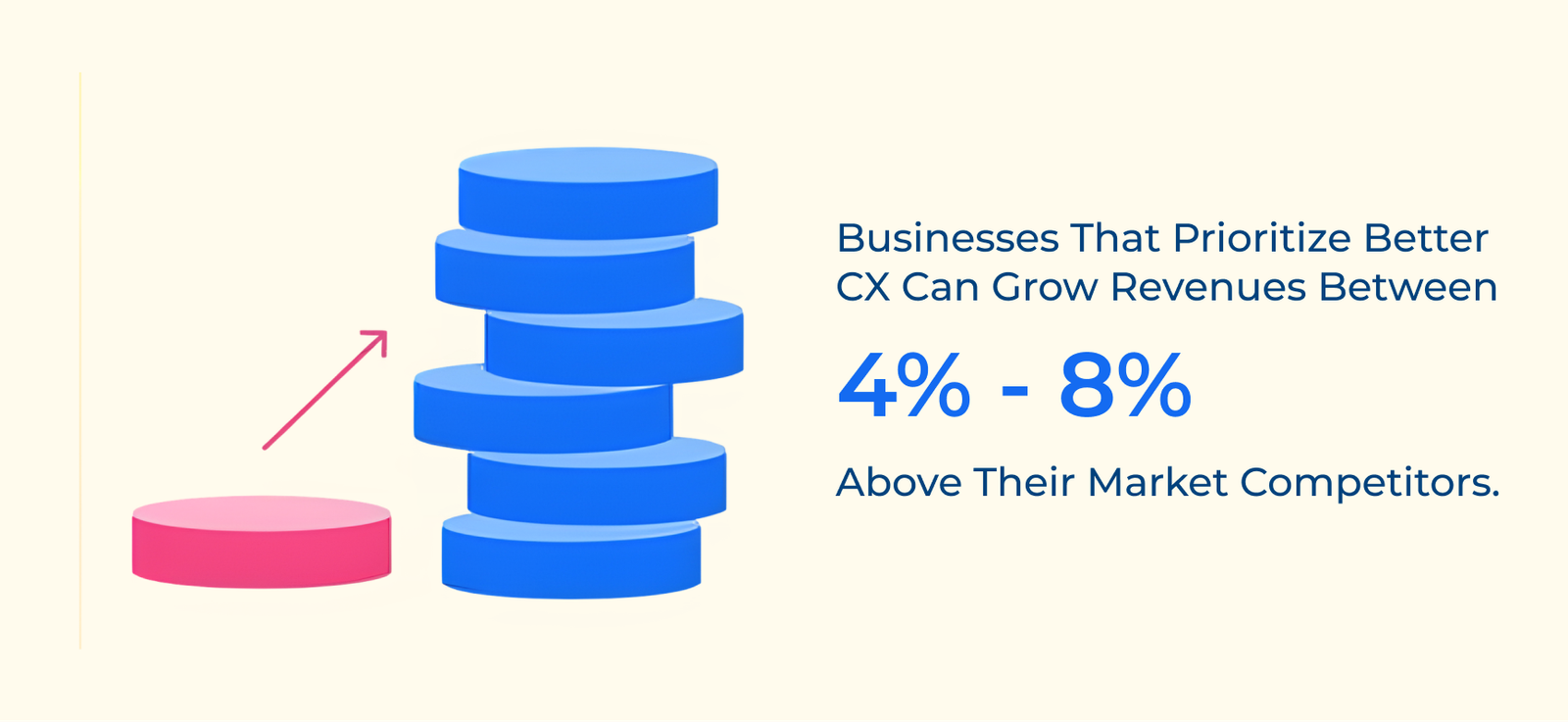
The B2B customer experience works through various touchpoints across the entire customer lifecycle. It begins with initial awareness, progresses through the sales process and continues through implementation, usage or ongoing support.
Key objectives:
Let’s go through the four key stages of B2B customer experience and highlight how mastering each phase can lead to stronger partnerships.
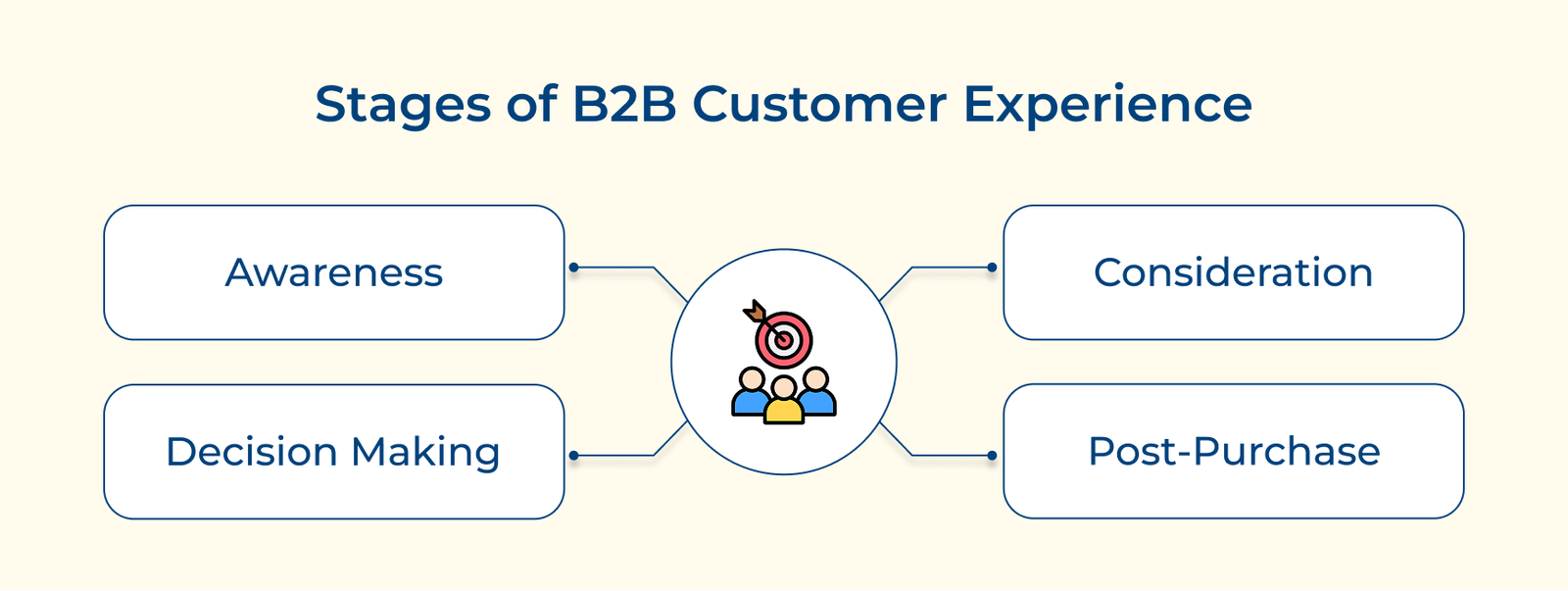
The first stage of the B2B customer experience is awareness. Businesses are introduced to your brand at the awareness stage and start to become aware of the products or services you offer. The goal is to make a strong impression and stand out from competitors.
Key components:
Awareness is the foundation for all later stages of the customer journey. It is why businesses need to build recognition before prospects move into active evaluation.
Once you are aware of your brand, potential customers begin comparing your offering with others. The aim here is to convince them that your products or services are the best fit for their needs.
Pro tips:
The decision-making stage is where customers make their final purchasing decision. It’s crucial to provide a seamless and convincing experience to secure their business. It may include having a well-designed & user-friendly website, providing clear pricing information and offering multiple payment options.
Key factors:
Here, buyers are not only weighing your product but also judging whether your business is a dependable long-term partner.
Many businesses make the mistake of neglecting the post-purchase stage, but it’s just as important as the previous stages. 90% of consumers say that the post-purchase experience is just as important as the quality of the products. The stage is all about maintaining customer satisfaction and ensuring their ongoing loyalty.
Actionable tips:
The following are seven best practices that can revolutionize your B2B customer experience, establishing a foundation for mutual growth and thriving business relationships.
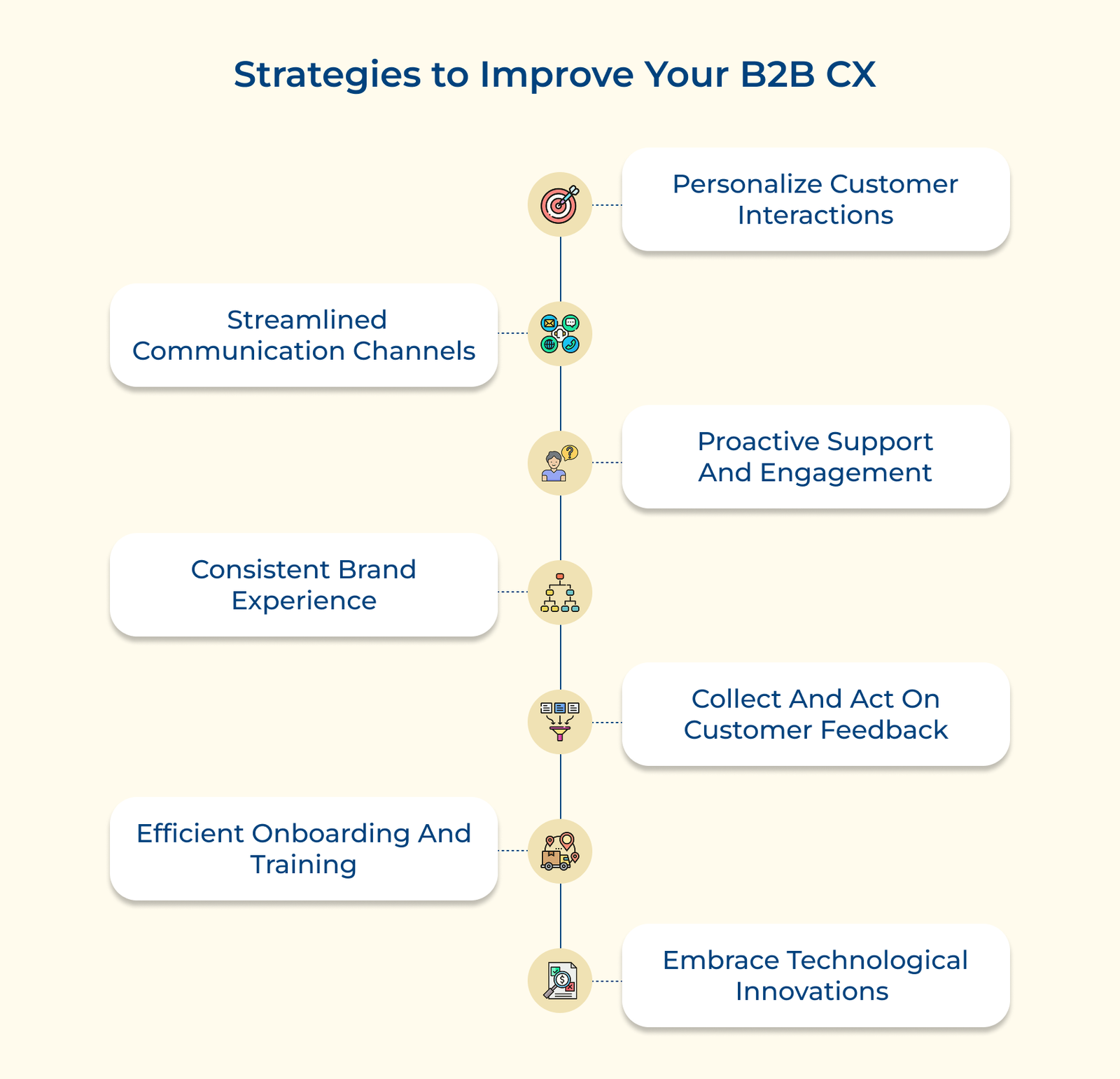
Personalization means adapting the experience to each customer’s needs. You can offer relevant recommendations, useful communications and solutions by recognizing their preferences. 72% of B2B customers expect a fully or mostly personalized shopping experience.
Let’s take the example of a software company. They can use a CRM system to track customer interactions and preferences. The data can then be leveraged to personalize communications and suggest relevant products or services.
Pro tips:
Customers should be able to reach your business easily through various channels such as email, phone chat or social media. A unified system helps provide quick, consistent responses and prevents frustration from scattered communication.
Actionable tips:
Proactive support means anticipating customer needs and addressing issues before they become problems. The approach reduces frustration, builds trust and shows customers you’re invested in their long-term success.
Best practices:
Let’s assume that if a software company sees a client nearing storage limits, it can reach out in advance with upgrade options and migration support. It will prevent downtime and reassure the customer that their needs are being watched closely.
A consistent brand experience means customers see the same messaging, visuals and service quality no matter how they interact with your business. The consistency builds recognition, strengthens trust and sets clear expectations at every stage of the relationship.
Key questions:
The questions help identify gaps between current practices and desired consistency standards, ensuring comprehensive preparation before launching any brand alignment initiatives. Think of it like conducting an orchestra, where every department needs the same sheet music. Create a brand guide and train every team member to deliver a unified voice across all customer interactions.
Listening to customers and making changes based on their input is one of the most effective ways to improve B2B customer experience. It shows that you take their needs seriously and are willing to adapt to serve them better.
Let’s assume that an e-commerce platform uses customer satisfaction surveys and feedback forms to gather insights. The detailed insights they will get will help them deliver better user experience and address pain points.
Key takeaways:
A strong onboarding process and practical training give customers the confidence and skills they need to use your product effectively. The goal is to make the learning curve as smooth as possible so customers can see value quickly.
Pro tips:
Adopting new technology can make customer interactions smoother, improve efficiency and create more relevant experiences. Modern B2B buyers expect practical digital tools that help them move faster and make better decisions.
Key innovations:
A manufacturing equipment company uses VR headsets to let prospects virtually operate machinery, experiencing functionality firsthand before making purchasing decisions. They start with small pilots that address key pain points, then scale successful tools while training staff thoroughly during the rollout.
Below are some of the best B2B customer experience examples that show how companies create lasting value through thoughtful interactions and support.
Change Healthcare, a leading healthcare technology company, turned at-risk accounts into some of its strongest performers. It carefully identifies pain points and addresses them with targeted solutions.
They rebuilt client trust through clear communication, proactive support and steady follow-up. The result was not just higher satisfaction but also renewed growth, showing how attentive customer care can transform struggling accounts into long-term partners.
Johnson Controls is a prime example of how prioritizing customer experience can drive growth in the B2B sector. They have successfully positioned themselves as a leader in the industry with a focus on creating innovative solutions for their customers.
Johnson Controls has built strong relationships and earned the trust of its customers by understanding its clients’ needs. Owing to which they have been able to deliver customized offerings effectively. Their commitment to exceptional customer service has not only resulted in repeat business but also generated positive word-of-mouth referrals.
Tetra Pak shows how technology and customer feedback can work together to improve B2B relationships. Their system quickly analyzes responses, pinpoints issues and guides improvements in their solutions.
The company not only keeps customers satisfied but also ensures it continues evolving based on real client needs. Their example highlights how acting on feedback promptly can build stronger partnerships and loyalty over time.
Check out the tools that can transform how businesses engage with their clients, streamline operations and build lasting relationships that drive sustainable growth.
Veemo functions as a comprehensive customer engagement suite that includes sales, marketing automation and support tools in one unified platform. The all-in-one solution eliminates data silos between departments. It enables B2B organizations to deliver consistent customer experiences while maintaining complete visibility across every stage of the customer lifecycle journey.
Key features:
Omni24 is a customer experience platform built for B2B organizations, combining live chat, chatbots and email management into a single interface. It enables consistent professional customer experiences across digital touchpoints.
Key features:
HubSpot Service Hub is a unified customer service platform that brings together ticketing, knowledge management and feedback collection. Support teams can resolve issues efficiently using live chat, automated workflows and a centralized help desk, ensuring consistent service across every customer interaction.
The following are the key B2B CX best practices to help you excel in the highly competitive industries:
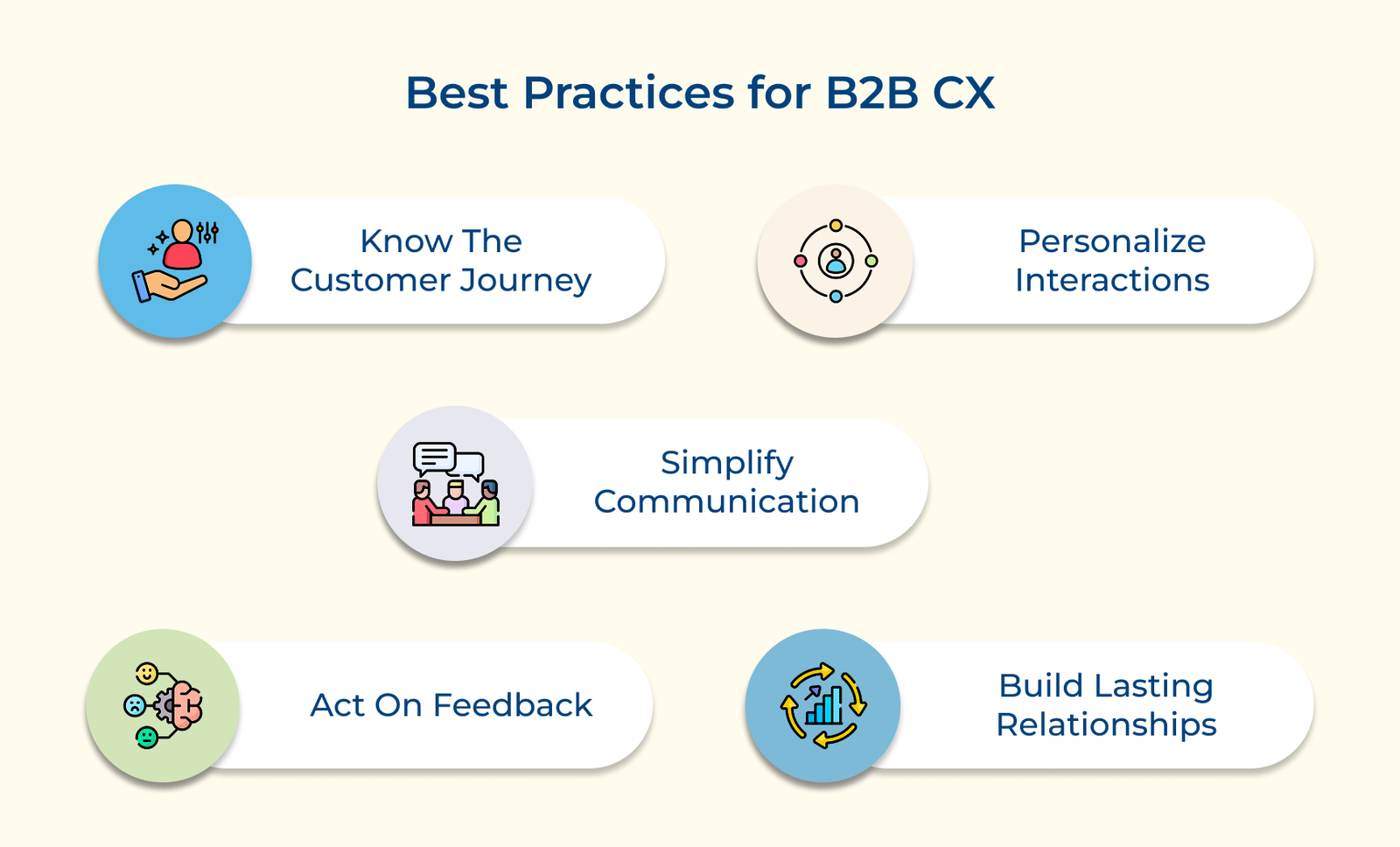
Map the entire customer journey, from first contact to post-purchase support. Identify each touchpoint and look for opportunities to make interactions more meaningful.
Tailor your communications to each customer’s specific challenges and goals. Show that you understand their needs and offer relevant solutions.
B2B interactions often involve multiple stakeholders. Use tools that centralize communication, enable real-time collaboration and reduce delays or miscommunication. It ensures everyone receives consistent information efficiently.
Collect customer feedback regularly and make improvements based on their input. Address concerns promptly to show that you value their perspective and are committed to partnership.
Focus on building relationships beyond the initial sale. Stay engaged, share updates, provide support and act as a trusted advisor to help customers achieve their business goals.
Below are the key B2B customer experience challenges that businesses face that can hinder client satisfaction and long-term relationships.
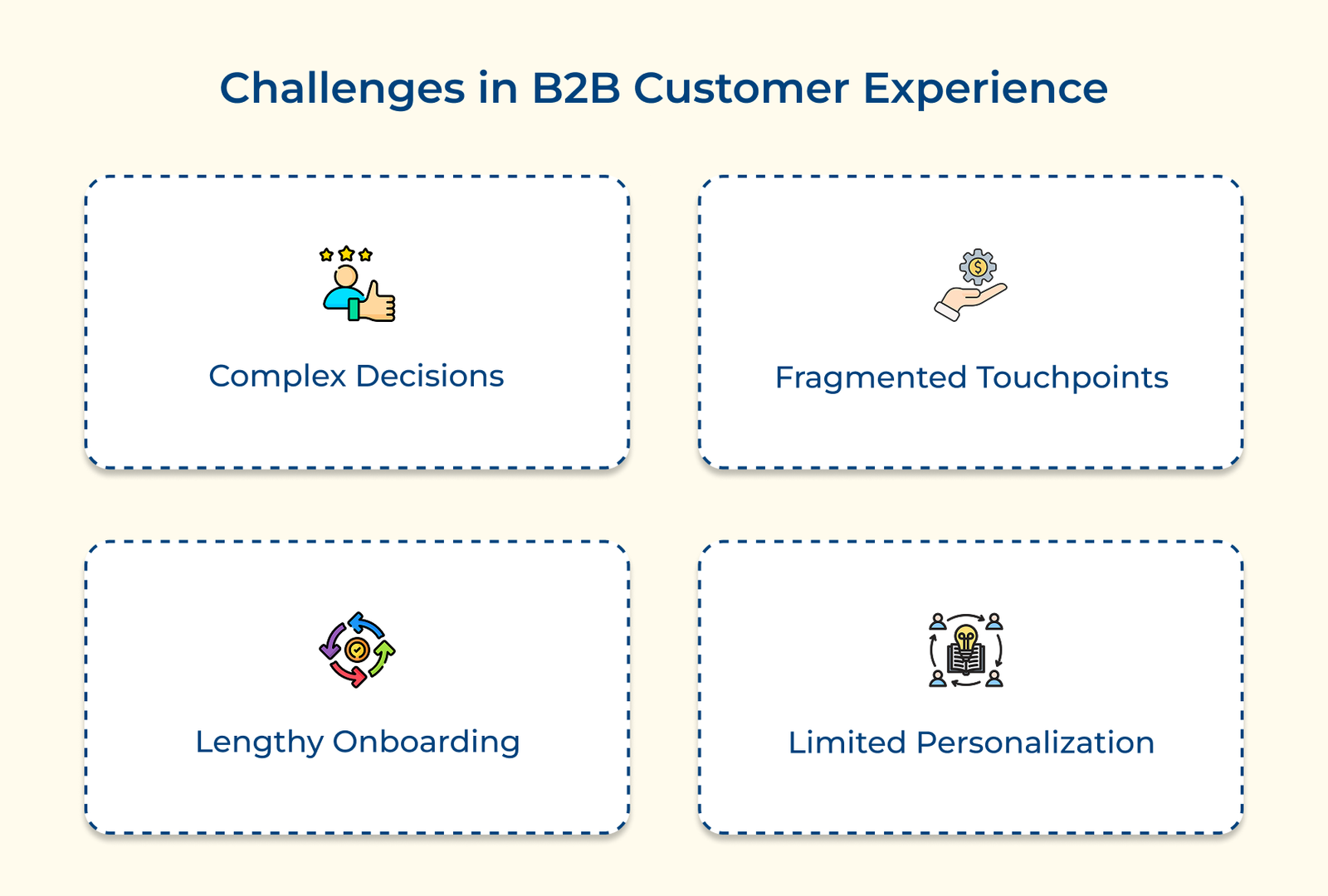
Complex Multi-Stakeholder Decisions
B2B purchases often involve multiple decision-makers, each with unique priorities. Coordinating expectations across long sales cycles can create communication gaps, slow decision-making and strain client relationships.
Fragmented Customer Touchpoints
Customers interact with sales, support and digital platforms. When these touchpoints aren’t connected, experiences become inconsistent, forcing clients to repeat information and navigate conflicting messages.
Lengthy Implementation and Onboarding
B2B solutions often require months of technical setup and staff training. Poor onboarding during the critical period can frustrate customers, delay value realization and increase the risk of churn.
Limited Personalization at Scale
Customers expect tailored experiences, but delivering them across large accounts is difficult. Companies often default to generic approaches, struggling to balance individual needs with operational efficiency.
Implementation steps to overcome the challenges:
B2B customer experience (CX) is a key driver of business growth. Companies can build strong relationships, enhance loyalty and encourage repeat business by understanding client needs as well as tailoring solutions accordingly.
Focusing on personalization, clear communication and proactive support helps businesses improve interactions at every stage of the customer journey. Prioritizing B2B CX ensures customers feel valued, strengthening long-term partnerships and business outcomes.

B2B customer experience involves multiple stakeholders, longer decision cycles and complex purchasing processes focused on business outcomes. B2C customer experience targets individual consumers with emotional appeals, immediate gratification and simpler transactions. B2B relationships emphasize partnership, customization and ongoing support throughout extended business lifecycles.
Engage B2B customers with content that addresses industry-specific challenges, personalized communication aligned with their business goals and consultative selling. Build trust by sharing expertise, providing actionable insights beyond your products and maintaining consistent touchpoints across all stakeholders.
The four B2B customer types include relationship-focused customers who prioritize long-term partnerships, price-conscious buyers who emphasize cost efficiency, innovation seekers who want cutting-edge solutions and Process-Oriented customers who value systematic approaches. Each type requires tailored engagement strategies that align with their specific decision-making preferences and organizational priorities.
Frequent pitfalls include treating all customers the same, misalignment between teams, neglecting post-purchase onboarding and focusing solely on product features instead of business outcomes. Many companies also underestimate the importance of ongoing relationship management and proactive communication.
Measure B2B customer experience success through net promoter score surveys, customer retention rates, expansion revenue from existing accounts and customer lifetime value metrics. Track engagement indicators like support ticket resolution times, onboarding completion rates and quarterly business review participation. The measurements provide comprehensive insights into relationship health and business impact.
Grow Customer Relationships and stronger team collaboration with our range of products across the Conversational Engagement Suite.
Omnichannel Customer Support & Help Desk Software
AI Enabled Business Messaging and Chatbot Software
Sales Engagement & CRM Software
Call Center Software & Virtual Phone System
Product Marketing & Experience Platform
Customer Experience & Feedback Management Software
 9 Proven Best Practices for Effective B2C Customer Service
Scroll to top
9 Proven Best Practices for Effective B2C Customer Service
Scroll to top