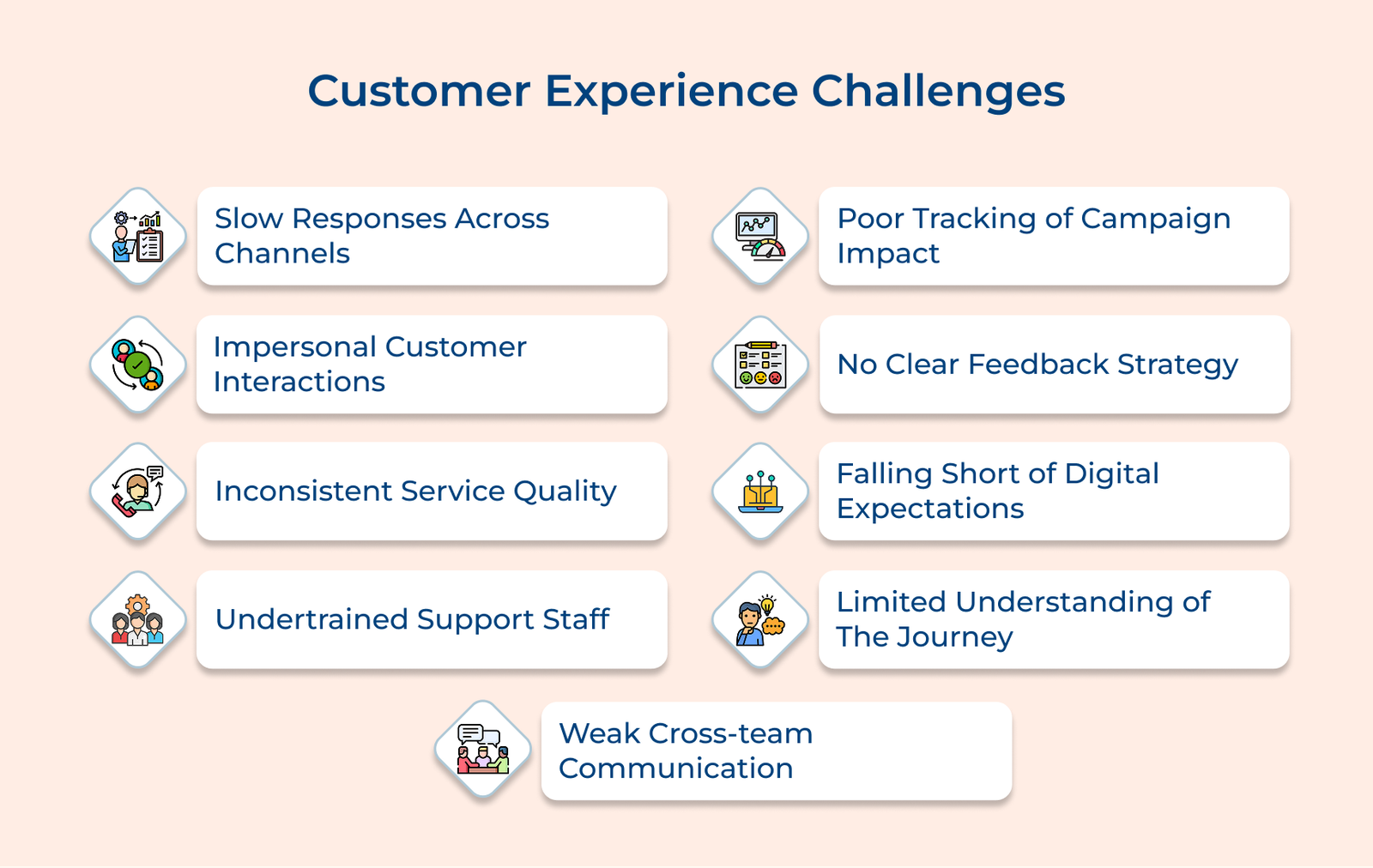
1. Poor Response Times Across Support Channels
Customers expect quick replies, no matter if they are reaching out through email, social media, phone or chat. Long waits frustrate people and can cause them to give up on your business altogether.
Ways to overcome:
Use a smarter queue
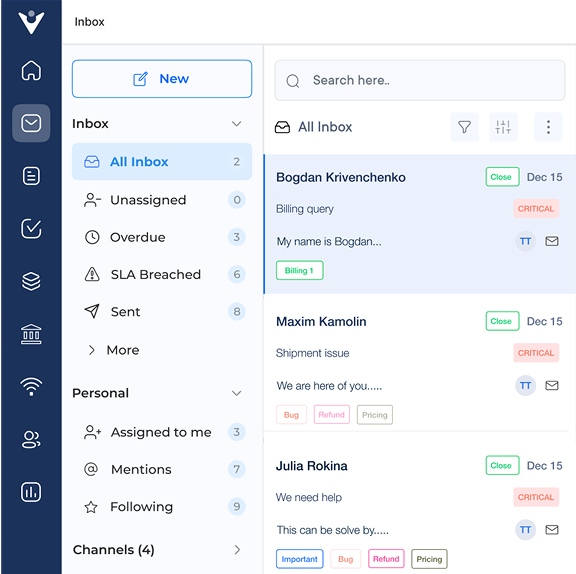
A good ticketing system should sort incoming messages by urgency and customer type, so your team knows what to tackle first. It also helps keep the workload balanced, so no one gets overwhelmed while others are idle.
Use AI-powered initial response tools
Set up chatbots or auto-responders that can reply immediately. Even a quick “We’ve got your message and we’re on it” reassures people that they’re not being ignored. Bots can also handle simple tasks or gather information, so your team is ready to solve the issue faster.
Create clear response time standards
Make sure your team knows how they’re expected to respond based on the type of request and the platform. Social media messages, for instance, should be answered within an hour, while emails get a 24-hour window. Make the expectations clear, then track performance and follow up when standards aren’t met.
2. Lack of Personalization in Customer Interactions
Customers notice when they’re treated like everyone else. Sending the same message to everyone or failing to remember past interactions can make people feel overlooked. Thoughtful personalization makes customers feel understood and valued. 78% of customers expect more personalization in interactions than ever before.
Pro tips:
Build real customer profiles
Go beyond names and emails. Track what customers buy, what questions they’ve asked and how they’ve interacted with your team. Use the information to shape your responses and offers. A well-informed team makes conversations more relevant and useful.
Develop personalized experience communication templates
Instead of starting from scratch every time, build message templates that can be adjusted with personal touches, like referencing a previous purchase or support request. Train your team to use them naturally, so messages feel human, not robotic.
Implement smart segmentation technology
Group customers by behavior, not just age or location. Look at what they buy, how often they visit or what channels they use. Then, tailor your emails, support or offers to what each group is likely to care about. It’s more effective than trying to please everyone at once.
3. Inconsistent Service Quality Between Touchpoints
Customers don’t think in terms of channels; they just want help. But when the quality of service changes depending on if they’re in a store, sending an email, or messaging on social media, it creates confusion and frustration. Inconsistent experiences make customers question your reliability and can damage their trust in your brand.
Imagine a customer who has a great experience in one of your stores, but when they reach out online, they’re met with delays or unclear answers. The disconnect can be enough to lose them. Starbucks faced the challenge and addressed it head-on. They made sure the mobile app experience felt just as smooth as ordering in-store.
Actionable tips:
- Set clear, shared service standards: Write down what “good service” looks like across every platform. Include things like response times, tone of voice and how to handle common situations.
- Use a shared customer information system: Give all customer-facing teams access to the same CRM or tracking system. If a customer contacts you by phone today and by email tomorrow, your team knows the full story and can pick up right where the last person left off.
- Audit your channels regularly: Don’t assume every part of your business is running smoothly, make sure to check. Use mystery shoppers, customer surveys, or quality reviews to spot gaps between online and offline experiences. Fix problems before they affect more customers.
4. Insufficient Training of Customer Service Staff
When customer-facing employees aren’t properly trained, it shows. They might give the wrong answers, take too long to solve issues or come across as unhelpful, even when they’re trying their best. It leads to frustrated customers, lower satisfaction and damage to your brand’s reputation.
Ways to overcome:
- Implement role-specific training programs: Create specific modules based on job roles. Ensure every team member understands both the technical aspects of their role and the soft skills needed for excellent customer service.
- Establish continuous learning systems: Set up monthly workshops or short refresher courses to keep your team updated on product launches, new tools and evolving customer expectations.
- Build a mentorship culture: Pair new hires with experienced employees for hands-on learning. The real-world guidance builds confidence faster and gives new team members a safe space to ask questions.
- Personalize training based on performance: Track individual performance and use the data to shape training. If someone struggles with response times or handling complaints, offer targeted coaching in those areas. Training should evolve as employees grow, not stay stuck in “one and done” mode.
5. Inability to Track Marketing Campaign Impact
One of the toughest challenges in customer experience is figuring out what effect your marketing campaigns have on customer behavior and satisfaction. Without the right tracking in place, it’s hard to tell what’s working and you risk spending resources on messages that miss the mark.
If you know which campaigns actually improve customer experience and which fall flat, you can adjust your messaging with precision. That clarity helps you engage people more effectively and get more value from every campaign.
Set up a solid analytics foundation
Use a unified system to track customer actions across all marketing channels and touchpoints. It gives you a full picture of how customers interact with your brand and which campaigns move the needle.
Create a multi-channel attribution framework
Marketing isn’t a one-and-done interaction. People see your brand in multiple places before they act. Use tools that let you trace customer behavior back to specific customer touchpoints, so you can see how your efforts combine to shape the full experience.
Track customer feedback in real time
Surveys, feedback forms and sentiment tracking tools help you understand how people feel about your campaigns. Combine it with behavioral data to see not just what they do, but why they do it.
6. No Clear Strategy for Customer Feedback
Many businesses struggle to improve customer experience simply because they don’t have a clear system for collecting and using feedback. Without it, you’re left guessing what your customers want or where things are going wrong. A solid feedback strategy helps you listen to your customers, spot issues early and make decisions that improve their overall experience.
Establish regular feedback collection channels
Make it easy for customers to share their thoughts through surveys and support follow-ups. Social media, review platforms or a simple feedback button on your website. The more input you get, the clearer the picture becomes.
Implement real-time analysis and response
Use tools that sort and highlight urgent issues as feedback comes in. It lets your team respond quickly and shows customers you’re willing to act.
Design an action-oriented feedback implementation process
Don’t let feedback pile up with no follow-through. Set up a process to review input regularly, spot trends and assign specific tasks to improve problem areas. Share results with your team so everyone’s aligned on what needs fixing and why it matters.
7. Failure to Meet Customer Digital Expectations
One of the toughest challenges in customer experiences is keeping up with digital demands. Customers expect fast, smooth and reliable experiences across every digital channel, from websites to social media. When your digital tools feel clunky or outdated, customers notice and they won’t wait around for you to catch up.
Implement modern digital infrastructure systems
Make sure your systems can handle the basics: fast load times, reliable uptime and real-time updates. Cloud-based platforms are often a good choice since they scale easily and support integration with new tools as your needs grow. If your backend can’t keep up, your customer experience will always lag.
Create omnichannel experience management tools
Use tools that give you a full view of your customer, no matter where they interact with your brand. No matter if someone starts on your website, switches to a mobile app or reaches out on social media, their experience should feel connected and consistent. Design interfaces that are easy to use across devices and make sure customer history carries over smoothly.
Build proactive digital support features
Don’t wait for customers to tell you something’s broken. Use automated tools like chatbots, predictive help prompts or issue-detection systems that can spot problems early and offer support right when it’s needed. These systems save time for your customers and your support team.
8. Weak Cross-Departmental Communication and Collaboration
When departments don’t work together, customers feel the disconnect. Marketing might promise one thing, customer service delivers another and product teams aren’t looped in at all. It results in a frustrating, inconsistent experience for the people you’re trying to serve.
Picture this: a retail site shows an item as available, but the warehouse system isn’t in sync. Customers place orders only to find out days later their purchase is delayed. Once the company switched to a shared inventory system and set up regular check-ins between teams, cancellations dropped by 60% and customers actually got what they ordered on time.
Key takeaways:
- Set up meetings where teams discuss feedback and work together on solutions. It prevents blind spots and helps everyone stay aligned.
- Use simple, shared metrics like customer satisfaction scores or resolution time. Hold regular check-ins where teams report on how their efforts are helping or hurting the overall customer experience.
- Create clear templates for sharing actionable insights from customer feedback, support cases or marketing performance. Store them in a central place where all teams can access them. It keeps everyone informed and reduces repeated mistakes.
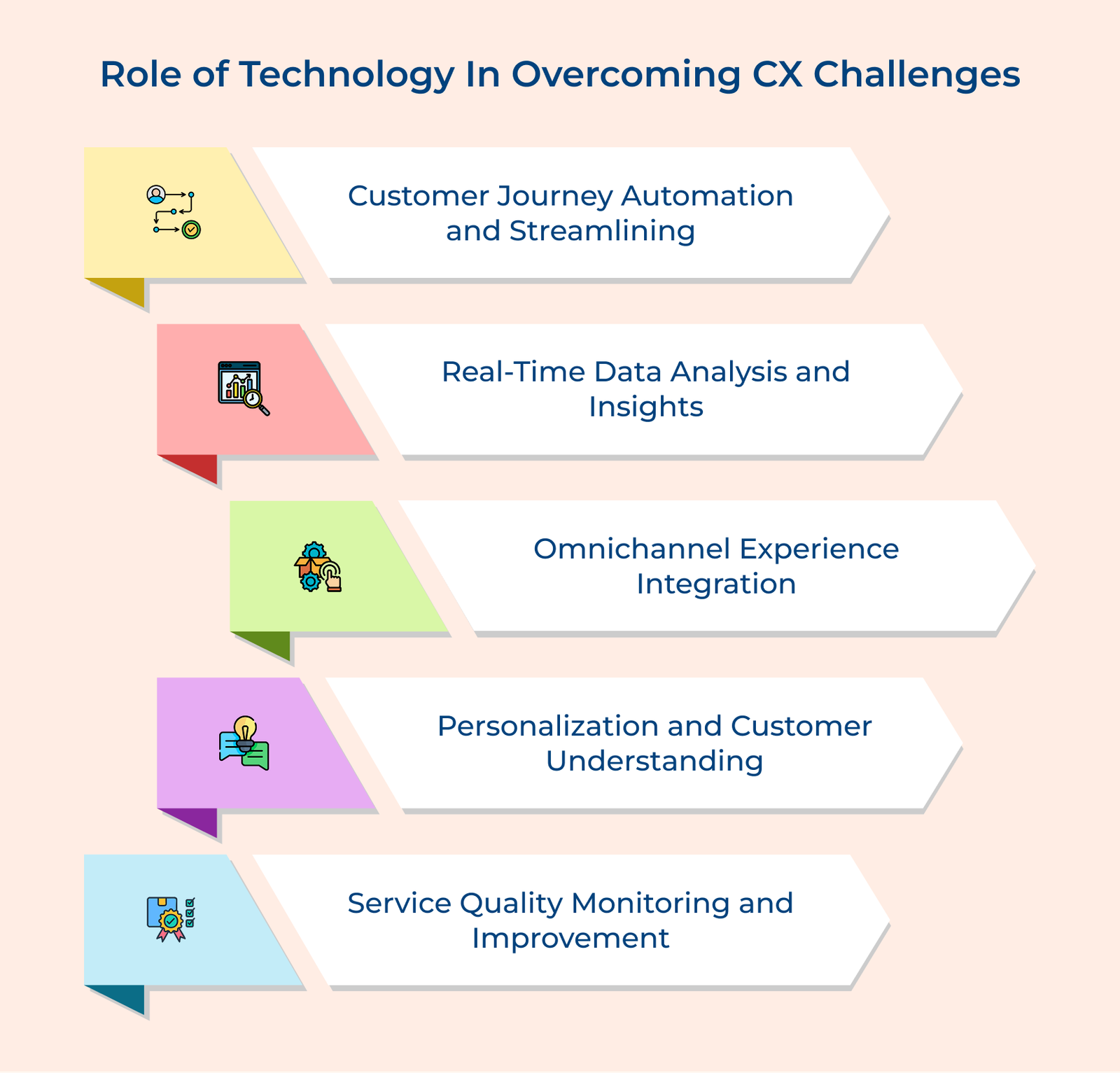
What Role Does Technology Play In Overcoming Customer Experience Challenges?
Here are the main ways technology improves customer experiences. Let’s look at them one by one.