How to Build an Effective/Powerful Customer Experience Framework
The success of a customer experience framework is dependent on a clear vision, robust strategy, carefully created solutions and a genuinely customer-centric point of view.

The success of a customer experience framework is dependent on a clear vision, robust strategy, carefully created solutions and a genuinely customer-centric point of view.
Companies across industries are realizing that the key to success lies not just in their products but in the way they engage and retain their customers. Companies are increasingly turning to the framework as an invaluable roadmap for creating and sustaining meaningful customer interactions. 70% of the buying experience is based on how the customer is treated.
Let us take a deeper look at the CX framework and why it is important to your business!
The customer experience framework refers to a strategic approach that enables businesses to create outstanding and consistent experiences that drive customer loyalty. It serves as a roadmap to guide businesses in creating meaningful interactions and building strong relationships with their customers.
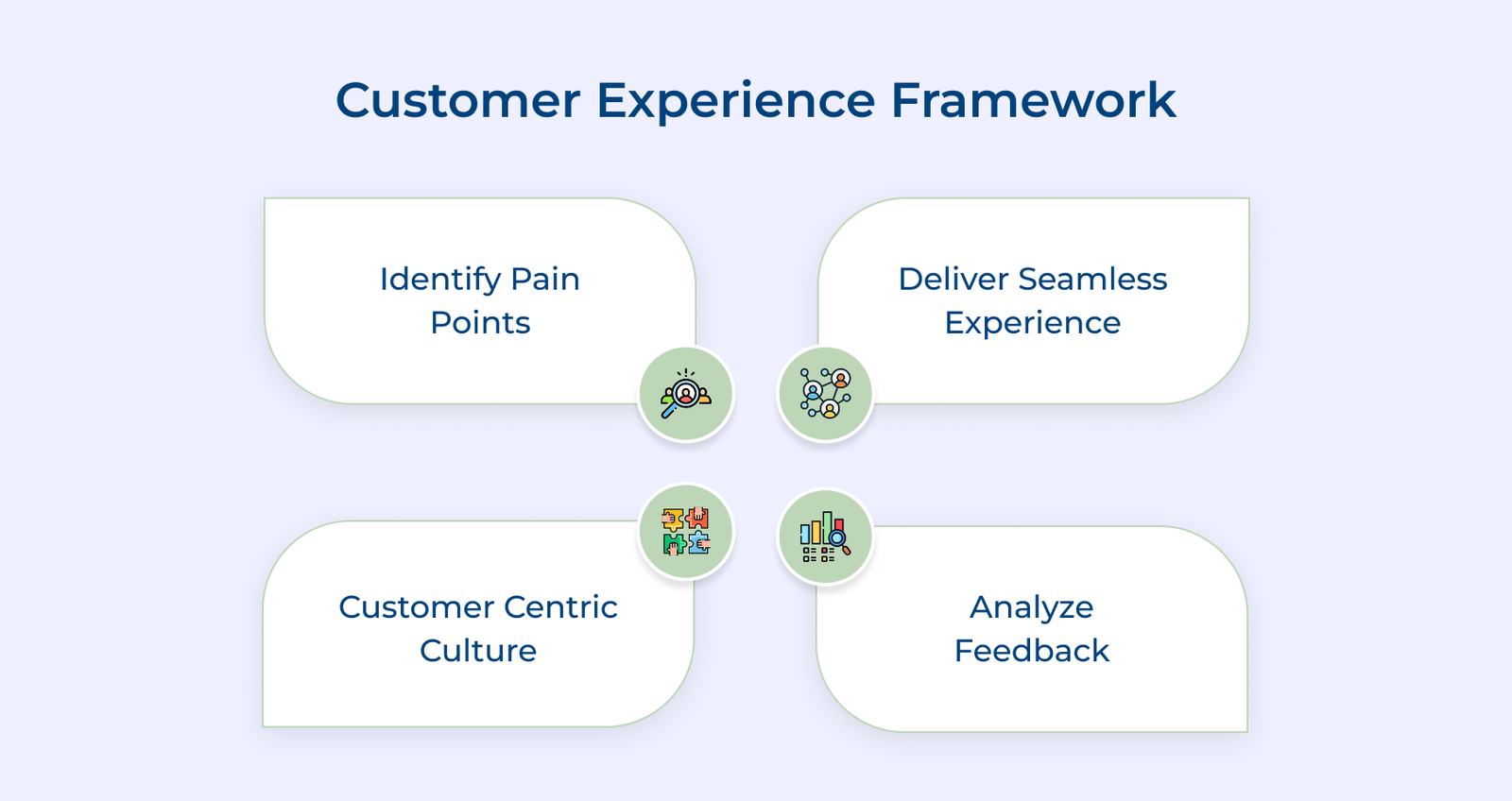
The customer experience (CX) sits at the intersection of all important business functions such as omnichannel interactions, brand value, product design, marketing and communication strategy. It is exactly the reason why a solid customer experience framework is essential.
Key objectives:
Check out the essential components of a successful CX framework that are important to transform your relationship with your customers.
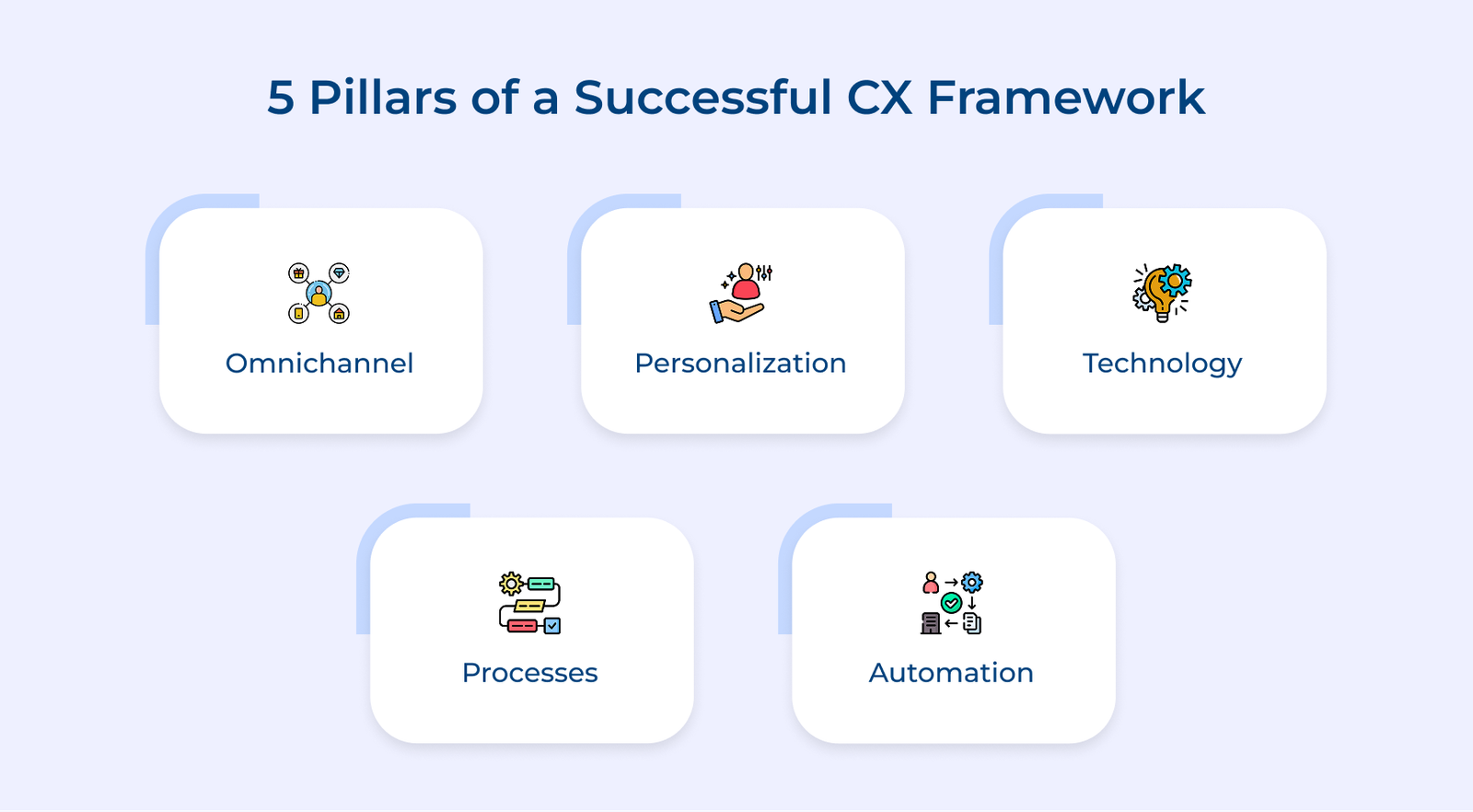
The customer journey is no longer restricted to a single touchpoint. The massive surge in customer demand for seamless experiences across various channels makes it necessary for the business to have an omnichannel strategy in place. It ensures the customers receive the same personalized experiences no matter where they interact with the brand. Nike has seen ecommerce sales surge to more than 30% of its overall business by focusing on omnichannel.
Every customer has unique expectations and needs. The use of customer personas, past interactions, and feedback can help tailor experiences to meet specific preferences. The more personalized a customer’s experience, the more likely they are to form a positive impression of the brand.
Technology can help meet customer expectations by providing self-service options, chatbots, customer feedback loops and other tools to streamline the customer experience. If the company has the right technology tools in place, it can easily keep up with changing customer expectations.
Incorporating streamlined processes to manage customer interactions is vital to delivering a pleasing customer experience. Doing so allows businesses to pinpoint areas of customer frustration and make necessary improvements. Mapping out the customer journey can also help optimize processes to deliver better outcomes.
Uncomplicated communication with both business-led and customer-led clients is the key to a good customer experience. Make sure to keep your focus on client-preferred communication channels, including website chat, social media and text messaging. 60% of customer service professionals give automated recommendations for the next best action
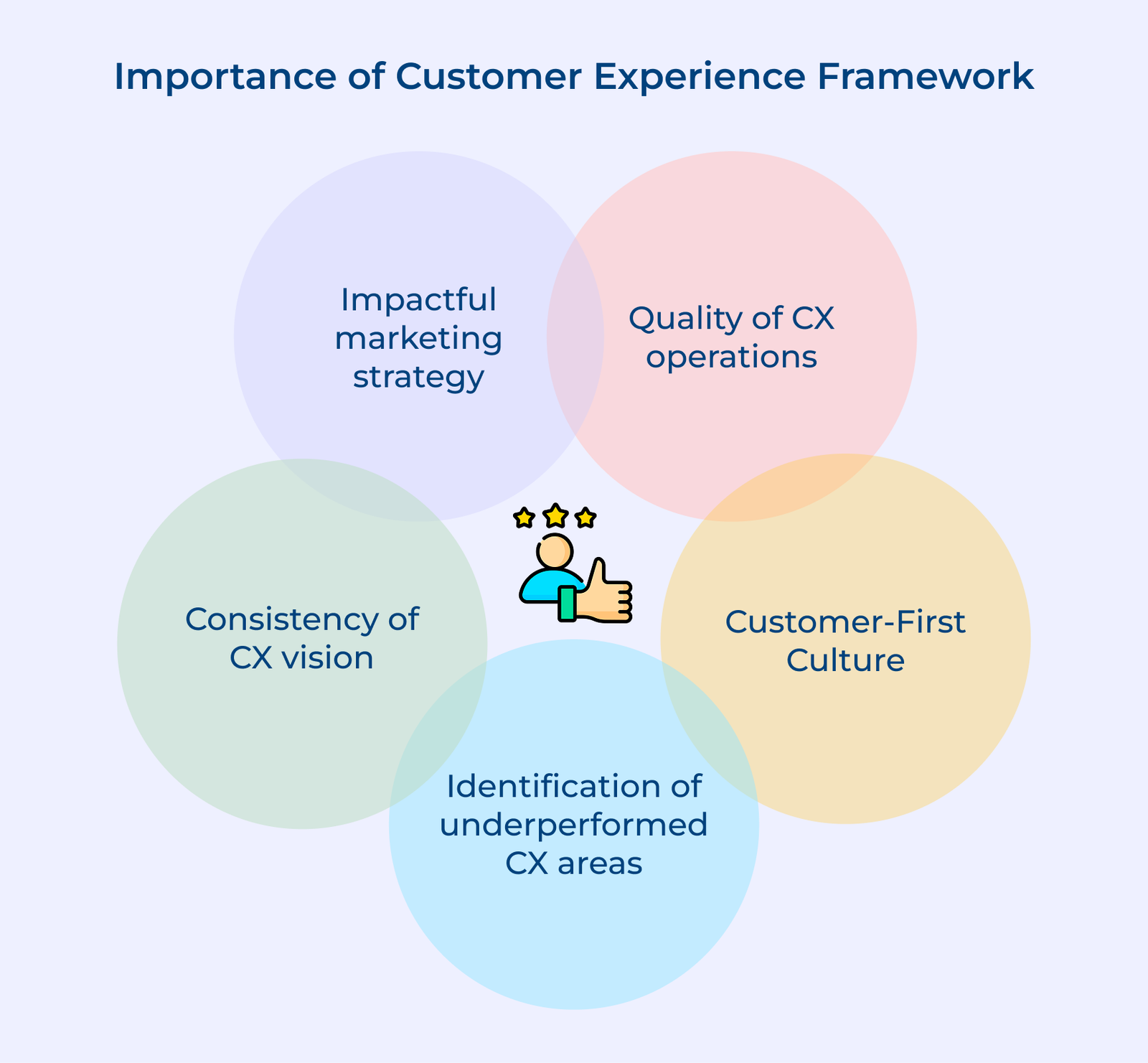
Let us understand why adopting a robust customer experience framework is essential for business success and how it can lead to stronger relationships with customers.
Explore how to build an effective customer experience framework, guiding you through essential steps that will elevate your brand and create lasting customer relationships.
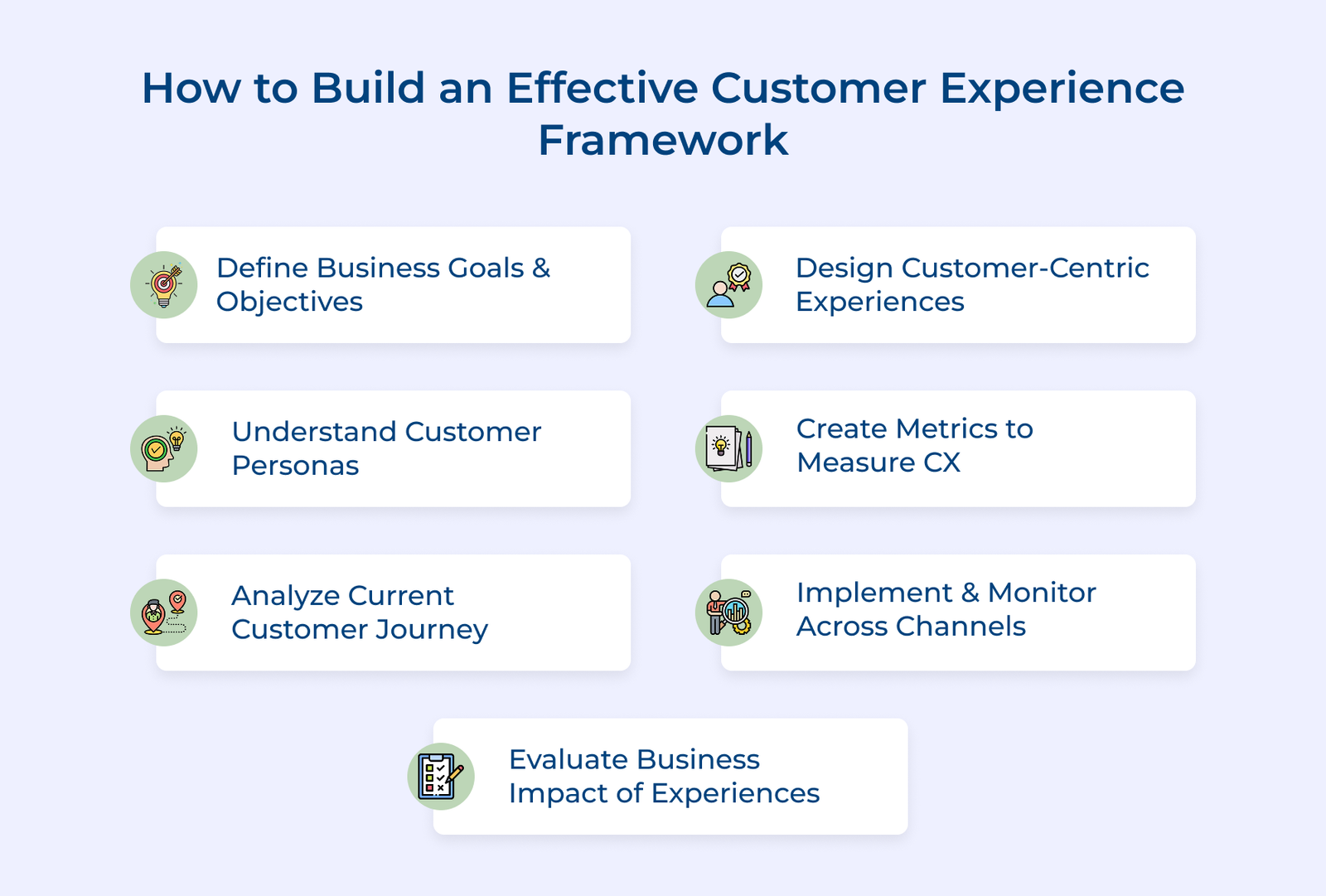
The first step in building a customer experience framework is to define your business goals and objectives. If a business doesn’t have a clear idea of what it wants to achieve, any effort that is put into creating memorable experiences will be futile.
Start by analyzing your business objectives – do you want to expand your customer base, launch new products and services, or increase your market share? It’s vital to think about how your customer experience program will help you achieve these goals.
Actionable Tips:
Creating customer personas involves segmenting your customer base and identifying their unique characteristics. The process involves collecting different types of information like demographics, purchasing behavior, interests, and preferences. It allows businesses to create buyer personas that accurately represent their customers’ needs and goals.
Companies must ensure they collect data from different sources. It includes information from customer relationship management platforms, website analytics, and insights from the customer support team. The sources can aid in the segmentation process and provide greater depth to the customer personas, leading to a better understanding of their needs.
Actionable Tips:
Analyzing your current customer journey is vital in identifying pain points that customers experience when interacting with your brand. The pain points can cause frustration and ultimately lead to a decrease in customer loyalty.
Identifying the pain points enables you to take action to address them. It helps to make customer relationships more positive.
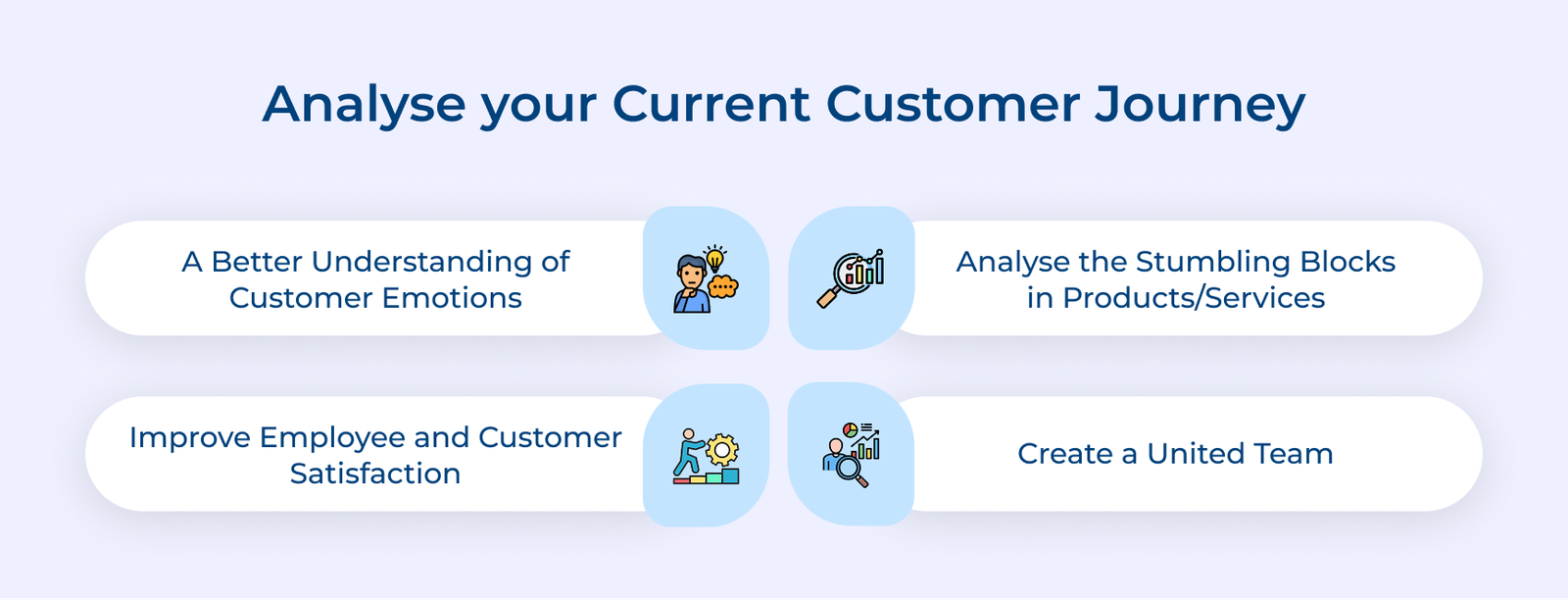
Analyzing the current customer journey is an opportunity to uncover areas for improvement. It helps you identify gaps in your customer experience where you may not be meeting your customers’ needs effectively. Recognizing the opportunities allows you to create new solutions that will strengthen your relationship with your customers.
Actionable Tips:
Start by brainstorming ideas with your team. Consider all the possible solutions that could address the pain points and improve the customer experience. During the process, it’s essential to keep the customer and business value in mind for each idea that is developed.
Once you have a list of ideas, prioritize them based on their potential impact on the customer experience and the business’s bottom line. Some ideas may have a significant impact on the customer experience but may not be feasible or profitable to implement. Others may have a lower impact on the customer experience but may be essential for the business’s success.
Actionable Tips:
Businesses can use various customer experience metrics to evaluate customer satisfaction. 89% of consumers come back to the business because of good customer experience. The metrics include the customer satisfaction score (CSAT), net promoter score (NPS), and customer effort score (CES). The CSAT measures how satisfied customers are with a specific interaction or experience, while the NPS measures how likely customers are to recommend a brand to others.
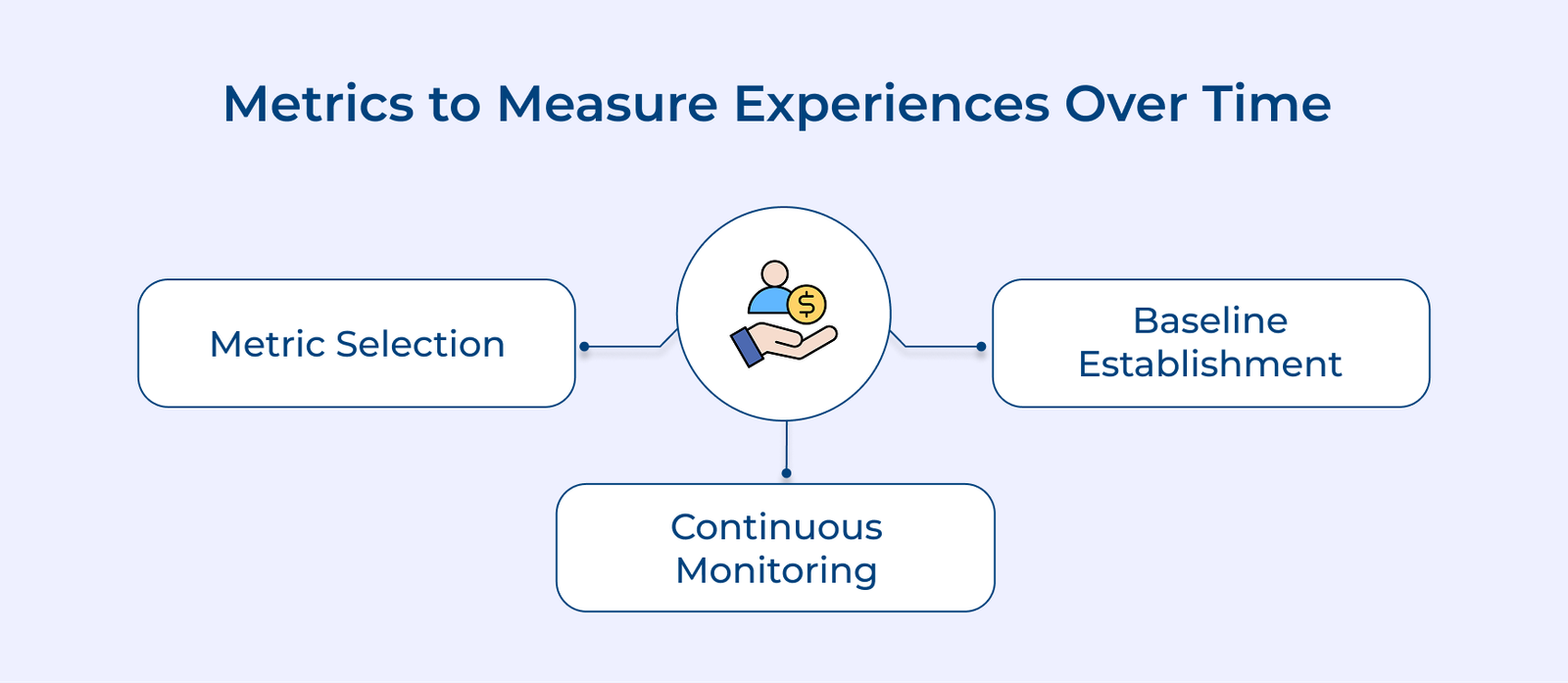
Once the appropriate metrics have been identified, it’s essential to establish a baseline for each metric. They will serve as a starting point for measuring progress. Tracking changes in each metric over time can help organizations identify trends and gain insights into customers.
Actionable Tips:
The next step is to have a clear understanding of the channels that will be used to interact with customers. Consider factors such as channel preference, usage and the customer journey map to ensure that each channel is optimized for the best customer experience.
Once the channels have been identified, it’s essential to create a plan for deploying the CX strategy across all the channels. The plan should include an implementation timeline and key performance indicators (KPIs) to measure the progress.
Actionable Tips:
Companies can truly understand the impact of the CX framework by assessing its impact on the company’s bottom line. It can be done by analyzing important business outcomes, such as revenue, customer retention, and the long-term value of each customer. The metrics are critical indicators of the success of a framework.
Assessing the impact of CX decisions on revenue, businesses can evaluate the effectiveness of their CX strategy in generating revenue. For instance, measuring revenue growth after implementing a new CX approach helps businesses to determine if the changes have been successful or not.
Actionable Tips:
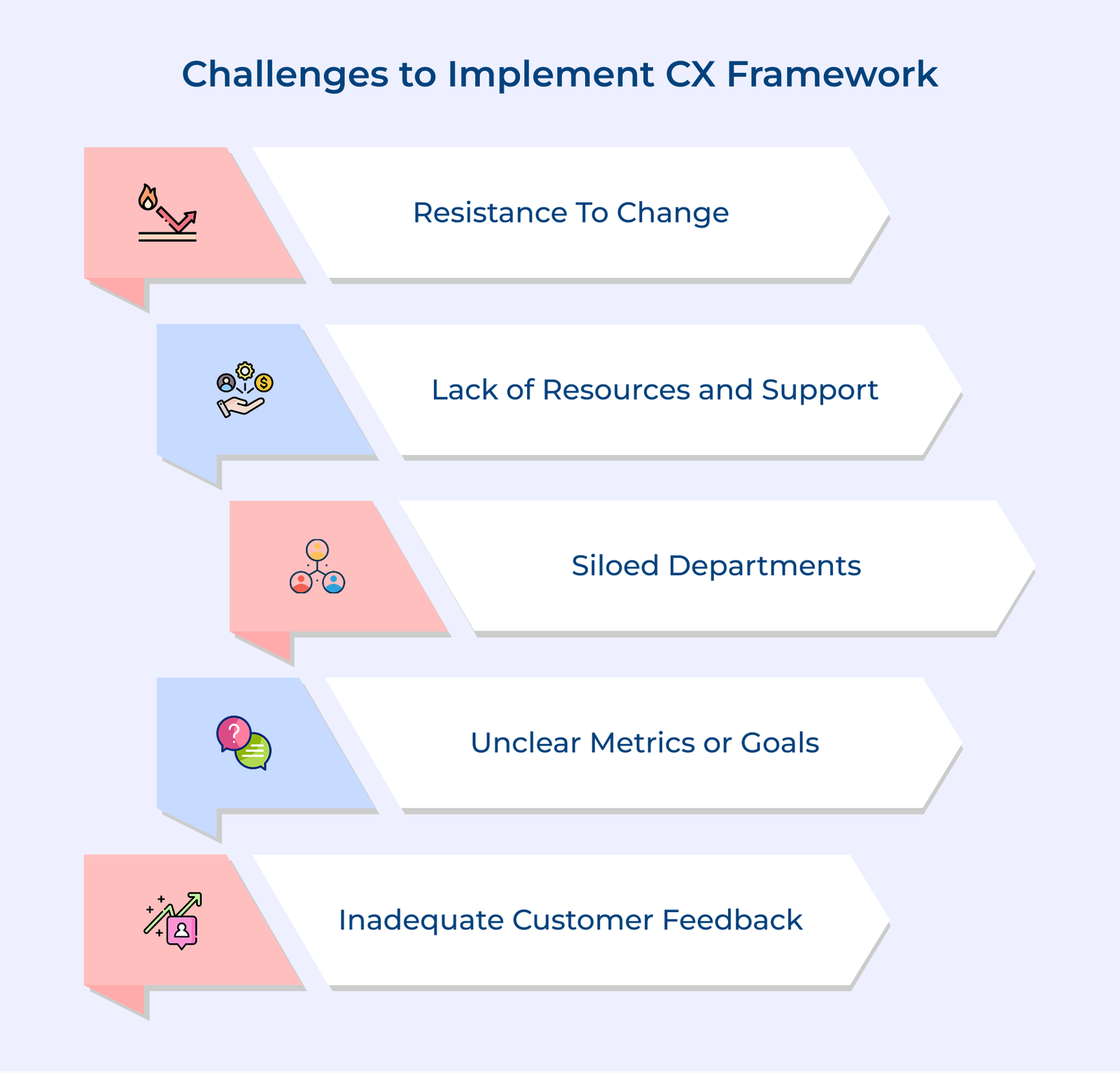
Below are the key challenges businesses face when aiming to implement an effective customer service framework and offer insights on how to navigate them successfully.
Let us go through the best practices that can elevate your customer service to new heights, promoting lasting connections with your audience.
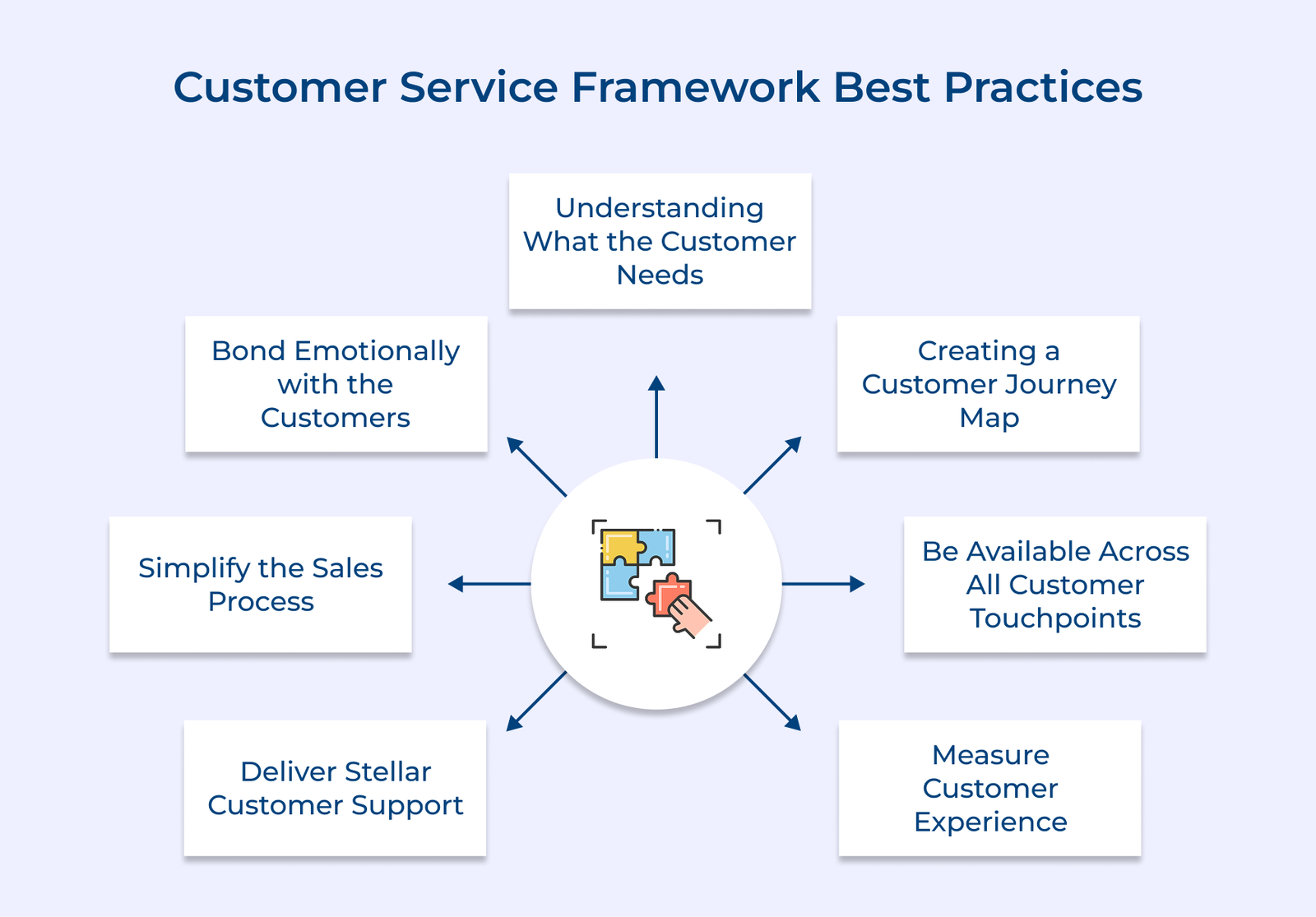
A great customer experience (CX) is the critical element for the client. The actual requirements of the clients are portrayed with the help of your understanding of the project. It might be possible that understanding clients’ requirements is evident, but most businesses don’t get that client satisfaction plays an essential role.
One of the key pillars to building a successful customer experience (CX) framework is appreciating both the general and explicit details of their workspace. Besides, client expectations might keep changing from day to day, and the expeditious business surroundings raise the bar.
The customer experience (CX) is a blend of all the activities that are involved in a customer’s circulation. Having that said, it differs from business to business too. Considering the B2B businesses, the gist consists of brand recognition, sales integration, and product experience.
Every interaction is relevant for the B2C companies. Be it online shopping in-store shopping, or ads on social media platforms. When CX comes into the picture everything is considered an essential strategy for leadership. Creating a customer journey map is crucial in delivering your CX approach.
Human tend to approach services that seem friendly and would help them with their requirements. Customer interaction is an important aspect of building a successful CX experience. 76% expect consistent interactions across departments.
Customers communicate with businesses across social media platforms, websites, emails and more. While consumers interact on different platforms, they expect the firms to remain consistent. Many reports suggest that businesses involved in the omnichannel experience have jumped from 20% to more than 80%.
There are a lot of businesses that ask for customer feedback but don’t consider it. For the most part, companies use embryonic statements such as “Thank you for your feedback!”. But this isn’t how it should be.
Capturing consumer feedback involves:
Capturing customer feedback is one of the most operative ways to enhance your customer’s products or services according to their preferences. It serves as a guide that helps companies collect, assess, and put the customer’s ideas into action.
Did you know that almost 63% of consumers are most likely to revisit the website that provides actual-time assistance? Statistics show that setback in response influences customer satisfaction scores and eventually jeopardize your business with outcomes .
An actual-time response is necessary for standard client service. Stellar customer support is a primary factor for customers deciding which business they want to be a part of. Make sure your live chat is available round the clock to provide ultimate support to the users. Companies also use platforms like Knowledge Base to empower customers to use self-service options.
Primarily for SaaS businesses and other firms, a sales team is extremely significant. There are high chances that you might face huge losses for not having good sales or even a sales team at all!
Companies must focus on building a highly qualified sales team. Discuss various strategies with the sales head to improve the existing customer experience framework. There are some questions that you need to ask your sales head about CX. Some of the crucial questions to consider are as follows.
You must have heard of the phrase, “It’s not what you say it. It’s how you say it”. Surprisingly, most of the loyal customers stay loyal due to an emotional bond created by the businesses.
One of the best examples is derived from Zappos. “When a customer was late on returning a pair of shoes due to her mother passing away. When Zappos found out what happened, they took care of the return shipping and had a courier pick up the shoes without cost. But, Zappos didn’t stop there. The next day, the customer arrived home with a bouquet having a note from the Zappos Customer Success team who sent their condolences.” Such steps help the consumer to believe in their companies.
Planning a compelling customer experience (CX) strategy is about more than just ensuring your customers receive the products and services they desire efficiently. Every firm should realize the importance of keeping their customers happy and satisfied.
When you deliver a compelling customer experience framework, it creates significant value for customers and businesses. The experience value allows firms to identify the customer value when they contact to decide how to augment it through personalized service to ensure maximum customer experience RoI. The customer experience (CX) framework explained can be used as a lens to escort CX transformation and establish an operational structure for ongoing customer experience management.

A Customer Experience Framework directly impacts business performance by focusing on improving customer satisfaction. When customers have a positive experience with a brand, they are more likely to become loyal advocates, refer others, and repeat their purchases. This can lead to higher customer lifetime value, increased revenue, and a competitive advantage in the market.
Implementing a Customer Experience Framework requires a systematic approach. It involves conducting customer research, defining customer personas, mapping customer journeys, identifying pain points, designing touchpoints and continuously collecting feedback to improve the experience. Organizations can also leverage technology and data analytics to gather insights .
A customer experience framework consists of various components such as customer research and insights, customer journey mapping, touchpoint design, employee engagement. Each component plays a crucial role in understanding and enhancing the customer experience.
Measuring and evaluating the effectiveness of a Customer Experience Framework can be done through various metrics such as Net Promoter Score (NPS), Customer Satisfaction (CSAT), Customer Effort Score (CES), and customer retention rates. Org anizations can use customer feedback surveys, social media monitoring, and sentiment analysis to gain insights into customer perceptions.
Yes, a CX Framework can be customized to suit the specific needs and characteristics of different industries. The fundamental principles of understanding customer needs, delivering value, and providing excellent service remain consistent. The implementation and focus areas may vary depending on the industry .
Grow Customer Relationships and stronger team collaboration with our range of products across the Conversational Engagement Suite.
Omnichannel Customer Support & Help Desk Software
AI Enabled Business Messaging and Chatbot Software
Sales Engagement & CRM Software
Call Center Software & Virtual Phone System
Product Marketing & Experience Platform
Customer Experience & Feedback Management Software

 5 Best Web Chat Tools Reviewed and Compared in 2026
Scroll to top
5 Best Web Chat Tools Reviewed and Compared in 2026
Scroll to top