What is Customer Perceived Value (CPV)? The Ultimate Guide
Customer perceived value explains how customers judge what they get versus what they give. The blog covers key drivers, practical ways to improve it and how it shapes buying decisions.

Customer perceived value explains how customers judge what they get versus what they give. The blog covers key drivers, practical ways to improve it and how it shapes buying decisions.
A customer walks away from your product toward a competitor’s inferior one and your entire team is left puzzling over what went wrong. It happens more often than most businesses expect. The cause rarely shows up in feature comparisons or satisfaction scores.
Customers decide what something is worth long before your sales team makes a case. That decision is built on perception, shaped by every interaction, signal and cue they encounter.
Research shows that 89% of companies will compete primarily on CX. Yet most measurement frameworks still focus on product quality and price rather than the customer-perceived value that users actually act on.
The guide breaks down how to understand, measure and shift the way customers perceive the value you deliver. So you can close the gap between what your product genuinely offers and what your audience believes it does.
Customer perceived value refers to the worth a customer assigns to your product based on what they gain versus what they spend. The judgment exists in the customer’s mind and is shaped more by perception than by actual cost or pricing strategy.
The value goes beyond the actual quality or features of your product because two customers can use the same product and walk away with completely different perceptions of its value.
What truly drives the perception is how well your product connects with what the customer was hoping to achieve. The gap between their expectation and their experience is where perceived value is either built or broken.
Key factors:
Let’s understand why customer perceived value matters for your business and how it shapes customer decisions.
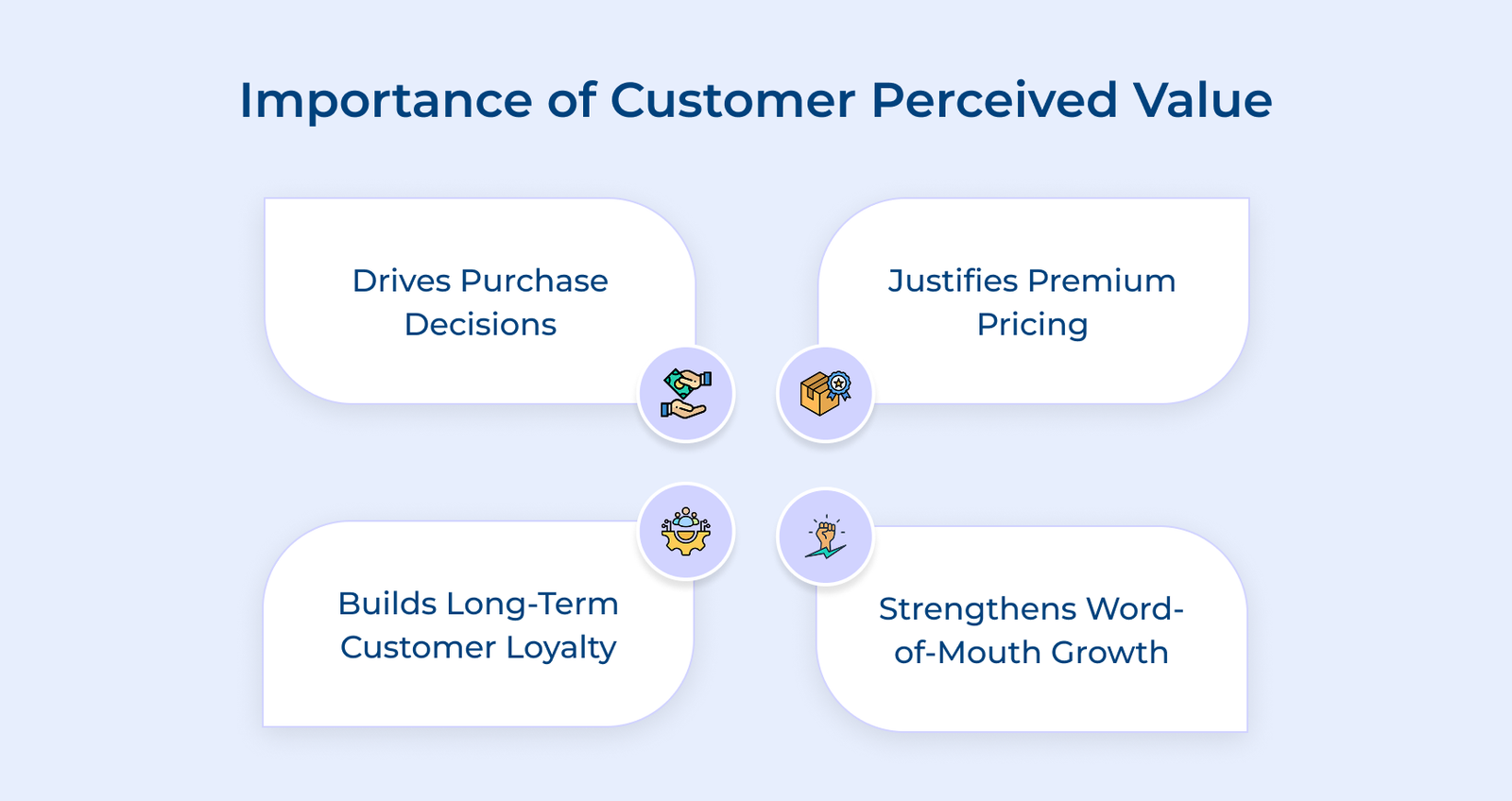
1. Drives Purchase Decisions
Customers act on what they believe a product will do for them. Strong customer perceived value makes the decision feel easy and clear, while weak perception leads to hesitation or drop-off.
2. Justifies Premium Pricing
Higher perceived value shifts attention away from price comparisons. Customers focus more on what they gain, making them comfortable paying more for the same category of product. It also reduces price sensitivity, making discounts less necessary to close a sale.
3. Builds Long-term Customer Loyalty
A customer who consistently feels they are getting more than what they paid for will rarely look for another option. Perceived value creates an emotional anchor that keeps customers coming back without needing constant discounts or promotions.
4. Strengthens Word-of-mouth Growth
Satisfied customers tend to share their experiences with others. Genuine recommendations carry more weight because they come from real use, not promotion. This kind of trust spreads faster and influences decisions more strongly than any paid effort.
Check out the two concepts, which are often used interchangeably, but they operate on completely different principles.
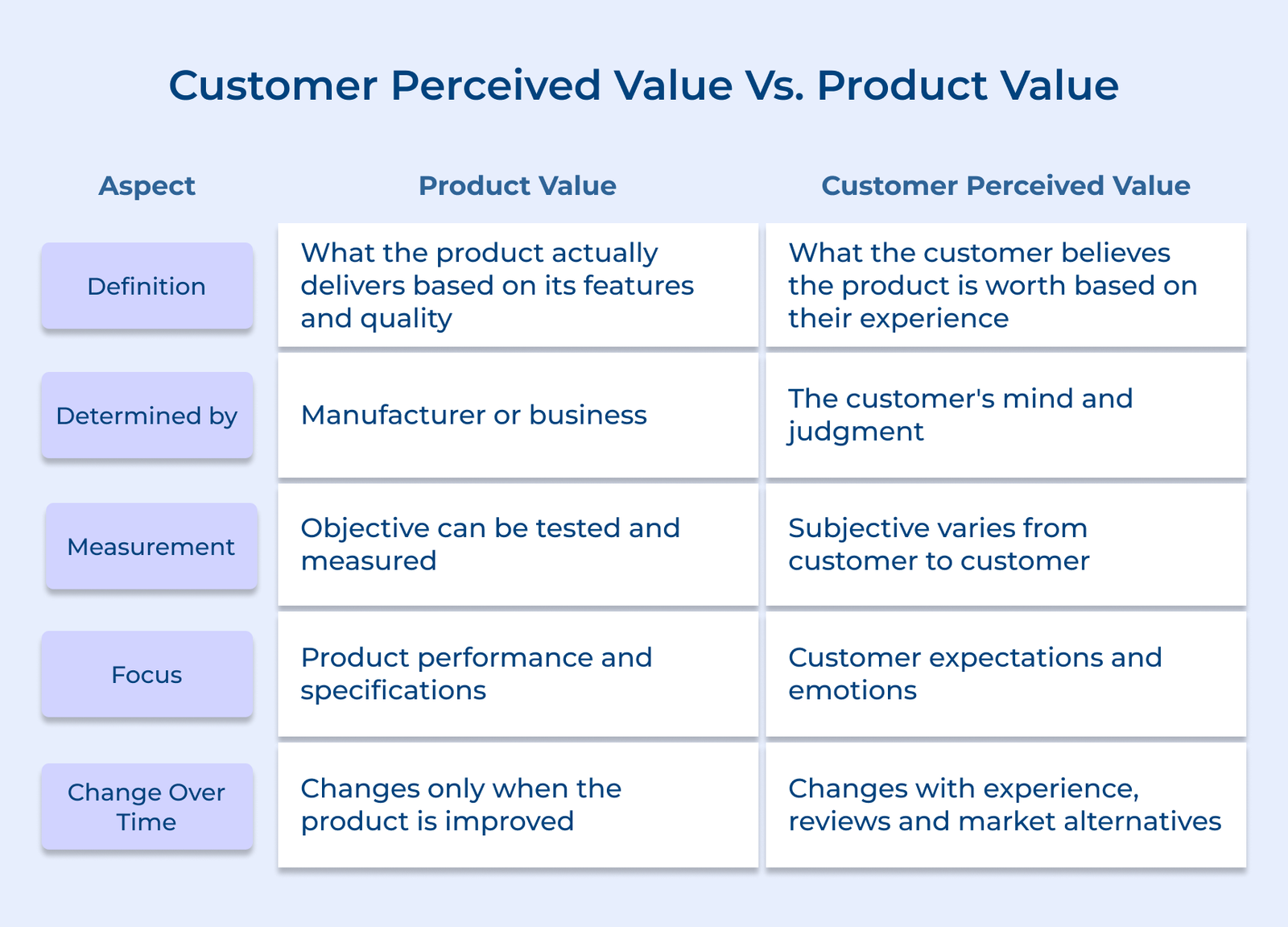
1. Definition
Product value comes from what the product actually delivers through its features and quality. It is created and controlled by the business from the start. The value also reflects the intended standard that the business aims to provide to every customer.
Customer perceived value exists in the customer’s mind and is shaped by their expectations as well as experiences. It depends on what they believe the product will do for them. The perception ultimately guides their decision to choose or reject your product.
2. Determined By
Product value is determined by the business team based on deliberate decisions around quality and features. The business holds full control over what goes into the product. It reflects the choices made during development and production.
Customer perceived value is owned completely by the customer and no business can directly dictate it. It is formed through personal judgment and the customer’s own interpretation of their experience.
3. Measurement
Product value can be objectively tested or verified through performance benchmarks and quality audits. It gives businesses a clear and consistent standard to measure against. It makes it easier to track improvements and maintain quality over time.
Perceived value is deeply subjective and shifts from one customer to another based on personal expectations. Two customers using the same product can arrive at completely different conclusions about its worth.
4. Change Over Time
Product value changes only when the product is upgraded or improved. The changes take time and are driven by deliberate decisions. It makes it relatively stable compared to how quickly perception can shift.
Customer perceived value can shift almost overnight based on a negative review or a stronger competitor entering the market. It is far more fragile and requires consistent effort to maintain or protect.
The following are the ways to calculate customer perceived value by understanding how customers weigh benefits against cost and how that balance influences their decision.
Key metrics:
Beyond the metrics, you can calculate customer perceived value directly using this formula:
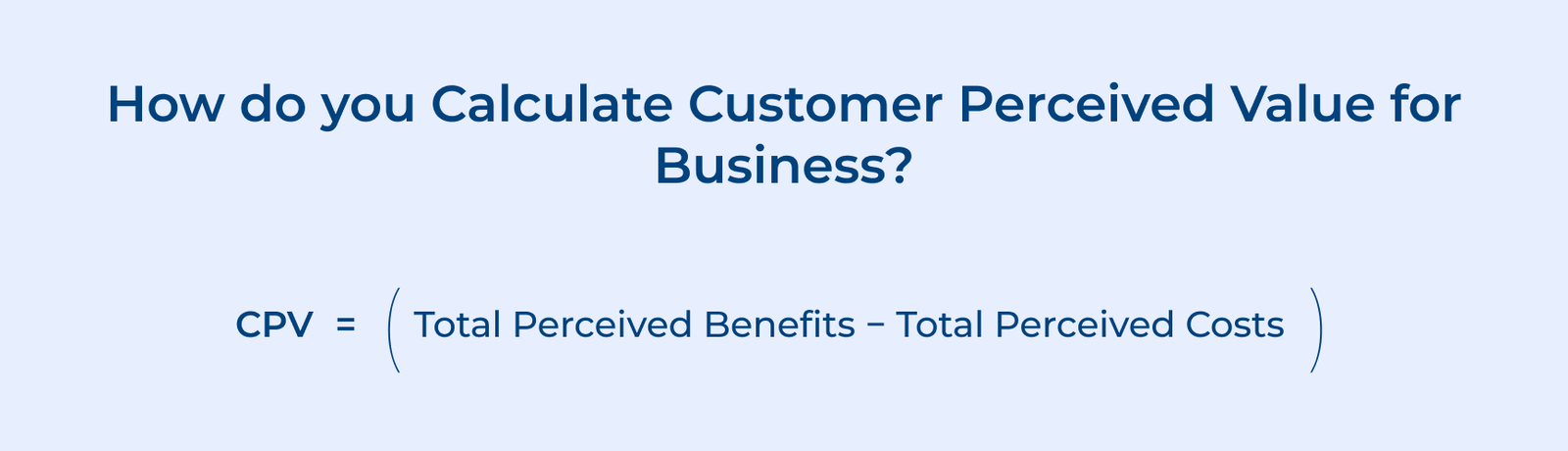
Key components:
Start with customer feedback to understand the benefits they believe they are getting. Then list every cost they associate with your product, including money, time and effort. Compare the two. When perceived benefits are higher than perceived costs, customers feel the value is worth it.
A SaaS project management tool wants to calculate its CPV.
Step 1: List Perceived Benefits
Step 2: List Perceived Costs
Step 3: Apply the Formula
CPV = 210 − 80 = 130
A customer perceived value score of 130 indicates that customers feel they are receiving significantly more value than what they are spending. It reflects a strong and healthy position for any SaaS business.
Let’s go through the steps of the implementation process to understand, measure and improve customer perceived value.
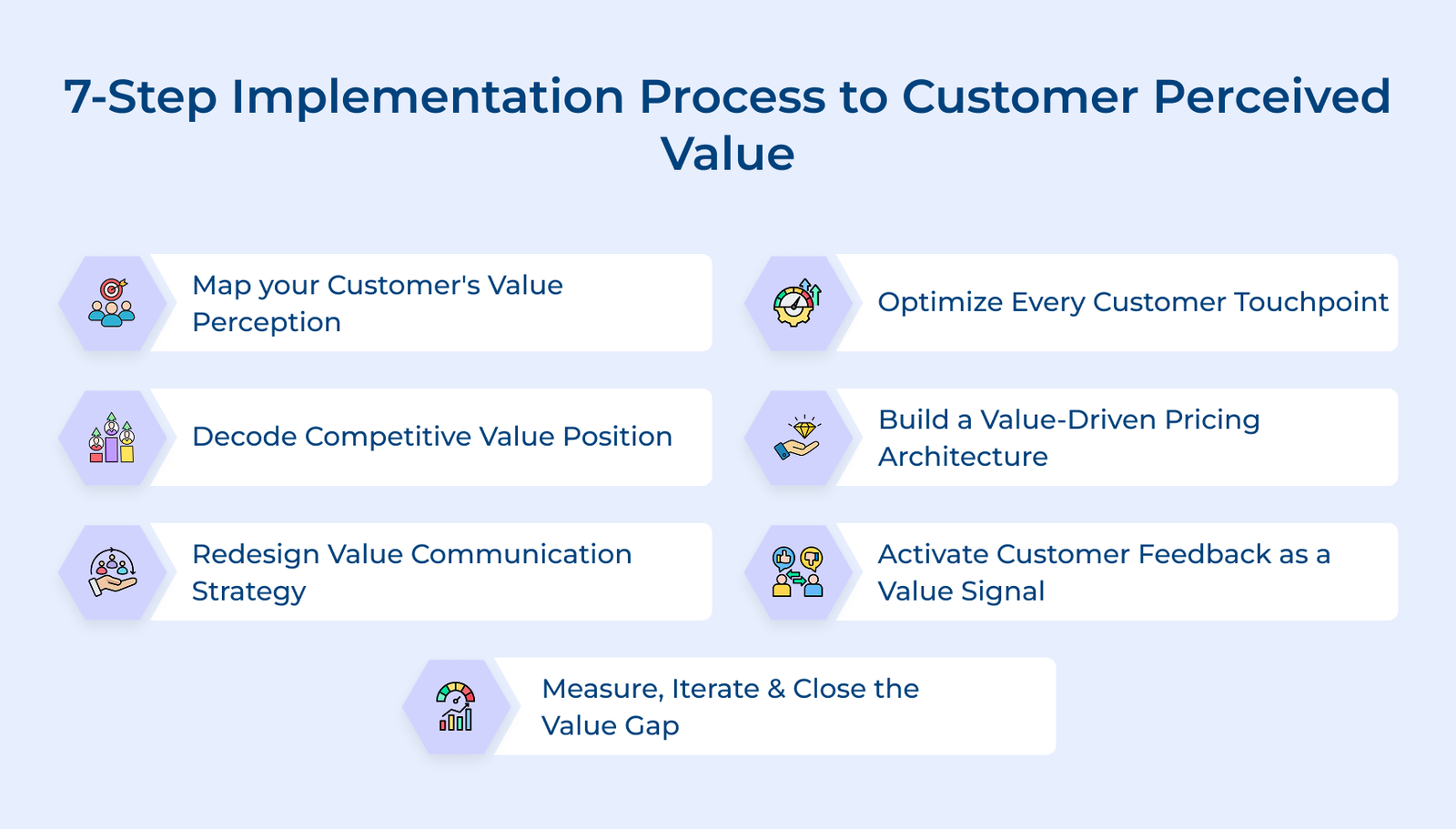
Most businesses assume they know what their customers value and the assumption is exactly where perceived value quietly breaks down. Mapping value perception means stepping entirely out of internal bias and seeing the world through your customer’s eyes.
Start by going straight to customers using interviews and behavioral data instead of relying on internal opinions. What customers say they value and what their actual behavior shows are often very different signals.
Pro tips:
The biggest challenge is that customers often struggle to articulate their true perception in surveys. Investing time here early prevents the costly mistake of building value around features that customers never truly cared about.
Understanding how your value compares to competitors separates reactive businesses from strategically positioned ones. Skipping the step means building perceived value without any market context.
Key ways:
Most businesses focus only on price or features, but true competitive value comes from the emotional and functional gaps competitors leave unfilled. The gap is where your strongest perceived value opportunity lives.
Pro tips:
Many businesses focus on what their product is rather than what it does for the customer. The approach quietly erodes perceived value at scale. Redesigning your value communication means shifting every message from feature-first language to outcome-first language that aligns with real customer priorities.
The most important factor is using the exact language customers use to describe their problems. Messaging that sounds like it came from a boardroom instead of a real customer conversation will never achieve its full perceived value.
Key changes:
Start with one key touchpoint. Pick your highest-traffic channel, be that your homepage, sales deck or onboarding email and rewrite just that one piece using outcome-first language pulled directly from customer interviews. Measure how that single change impacts engagement and conversion before rolling the approach across all other communication channels.
Every interaction a customer has either strengthens or quietly erodes their perception of value. Most businesses only fix the touchpoints that trigger visible complaints, but the ones that silently underdeliver are far more damaging because customers leave without explaining why.
Audit your pre-purchase experience for value gaps
The pre-purchase stage sets the tone for perceived value. Confusing websites, unclear sales processes or weak initial communication can create a negative perception before the customer even experiences the product.
Identify and remove high-friction drop-off points
Friction quietly kills the perceived value. Every extra step a customer must take reduces their belief that your product is worth the effort. Mapping the customer journey and spotting consistent drop-offs shows exactly where perceived value breaks down in real time.
Pricing is more than a number. It signals the value you believe your product delivers and how well you understand what customers perceive as worth. Misaligned pricing either makes your product feel undervalued or leaves customers feeling overcharged.
Align price tiers with perceived benefits so each level mirrors how different customer segments experience value in real life. Each tier should represent a meaningful jump in outcomes and not just a difference in feature count.
Key tiers:
Price anchoring can subtly guide perception, making your target tier feel like the most rational choice. Presenting a higher-priced option first reshapes what customers consider reasonable spending.
Key questions:
Remove any pricing structure that creates doubt. If customers must overthink which plan fits them, your pricing is already undermining perceived value before a single purchase decision. Clear, simple pricing lets customers immediately see the value in each option and makes the buying decision feel effortless.
Customer feedback is more than a satisfaction metric. It shows exactly where your customer perceived value is strong and where it is quietly slipping. Treating feedback as reactive keeps your CPV management one step behind.
The moment you start treating feedback as a proactive value intelligence system is when it becomes one of the most powerful inputs in your CPV process. It stops being a report card and starts becoming a real-time radar for perception shifts.
Key questions:
Measurement turns CPV implementation from a one-time effort into a compounding advantage that grows stronger with every customer interaction. A structured process keeps your customer perceived value strategy on track and effective over time.
Closing the value gap means continuously comparing what customers expected with what they actually experienced and using that difference as your main signal for improvement. Businesses that run the comparison regularly catch shifting expectations before they silently turn into churn.
Best practices:
Below are the key types of customer perceived value that shape how customers judge your product.
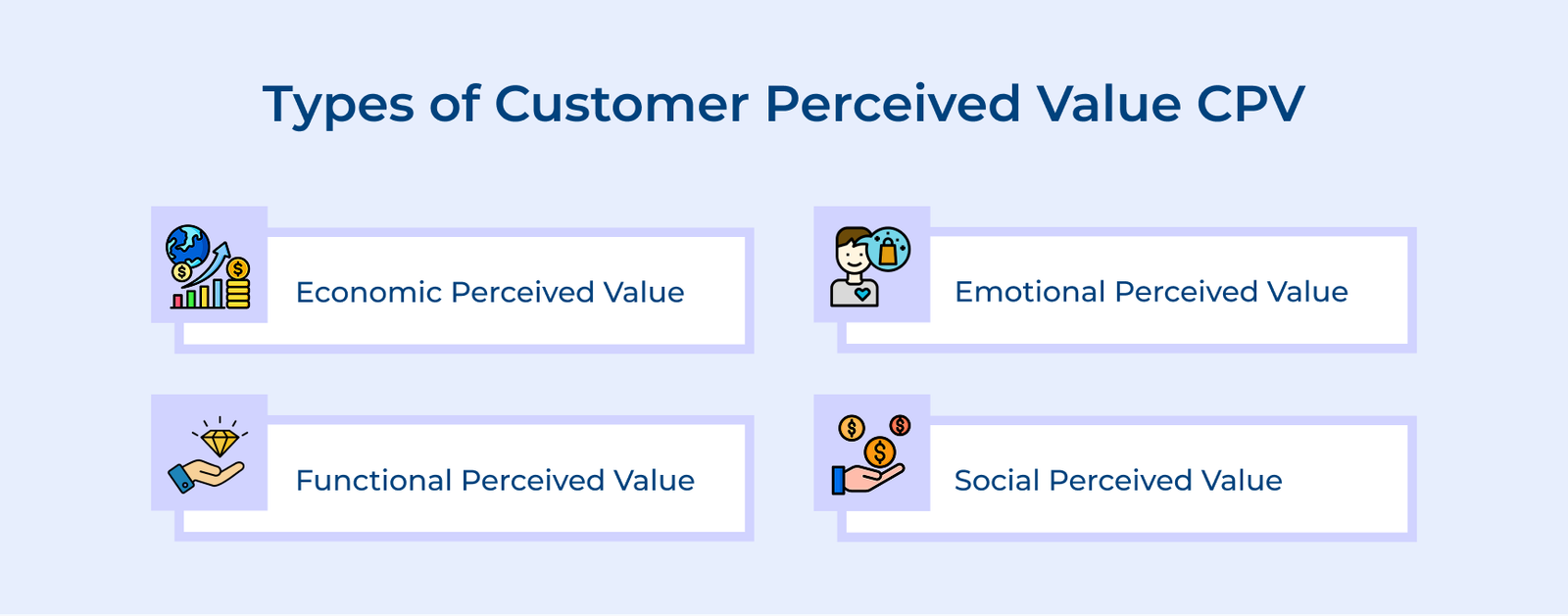
Economic perceived value measures how a customer evaluates if the price they paid matches the tangible results your product or service delivers. It is fragile because it reacts immediately to competitor pricing and market options.
Key ways:
Emotional perceived value captures the feeling a customer associates with using or receiving your product or service. It is hard for competitors to replicate and shows up in repeat purchases, brand attachment or advocacy.
Functional perceived value reflects how confidently a customer believes your product or service delivers the outcome it was purchased for. It is built on consistent results, not feature lists or marketing claims.
Best practices:
Social perceived value measures the worth a customer assigns based on how your product or service affects their identity or status in social or professional circles. It is especially powerful when usage is visible or signals something meaningful about the buyer.
Check out the six proven ways to increase customer perceived value and make your customers feel the benefits of your product far outweigh the cost.
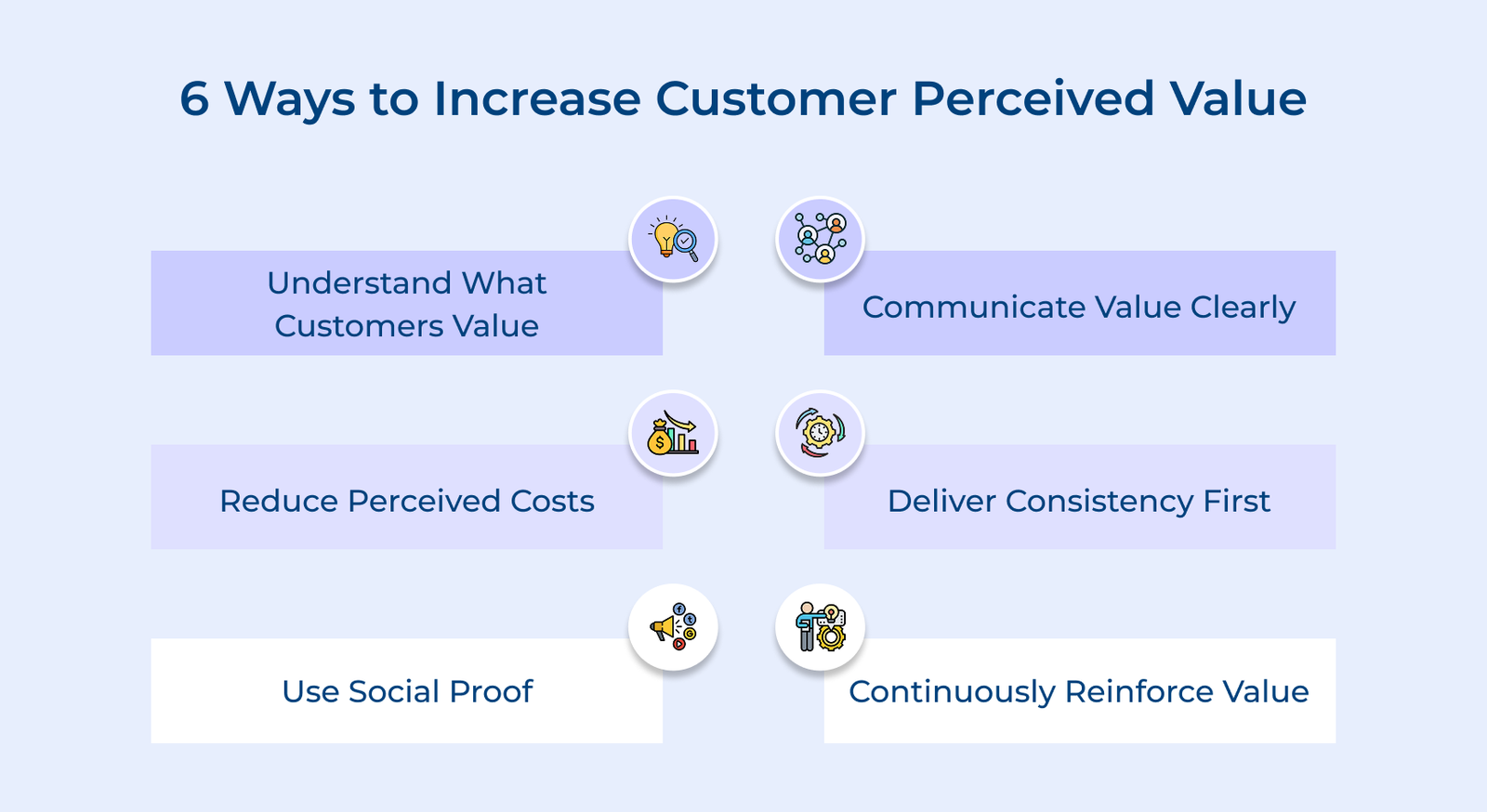
1. Understand What Your Customers Actually Value
Stop assuming and start asking. Many businesses focus on the wrong areas without confirming what matters to customers. When you align with real priorities, perceived value grows naturally without changing the product.
2. Communicate Your Value Clearly Across Every Touchpoint
A great product can underperform if customers don’t see the benefits. Every interaction, from your website to follow-up emails, should highlight the outcomes customers gain from choosing you.
3. Lower Perceived Costs Beyond Price
Perceived cost includes time, effort and frustration, not just money. Removing friction at every step increases perceived value and makes the customer experience feel effortless. It also signals that you respect your customers’ time, which strengthens trust and loyalty naturally.
4. Deliver Consistently before Chasing Innovation
Customers assign higher value to products that reliably deliver on their promise. Consistent performance builds trust that makes customers stop evaluating competitors because switching feels unnecessarily risky.
5. Use Social Proof to Validate Perceived Value Externally
Customers believe other customers more than what any brand claims about itself. Strategic placement of real results and testimonials at key decision points significantly elevates perceived value before purchase.
The following are the three brands that have built their entire market position around making customers feel they receive far more value than what they actually pay for.
Apple
Apple has built its customer perceived value around the idea that its products make users more capable, creative and professional in everything they do. Every detail, from packaging to software experience, strengthens that belief consistently across every interaction.
The result is a customer base that rarely compares Apple to competitors on price because the perceived value has already made the decision feel obvious and justified. The strong perception of value turns each purchase into a confident choice rather than a negotiation, keeping customers less sensitive to price changes.
Amazon Prime
Amazon Prime reshaped perceived cost by bundling fast delivery, entertainment and exclusive deals into a single annual membership. Customers stop questioning individual purchase costs because the membership itself creates a permanent perception of getting more than they spend.
The model has created one of the strongest loyalty structures in retail because customers feel losing Prime membership means losing consistent everyday value. It boosts engagement by making the membership feel like ongoing rewards, not just convenience.
Airbnb
Airbnb built its customer perceived value by turning travel into a local, authentic experience. Customers do not just book a place to stay, they buy the chance to live like a local anywhere in the world.
The experience-first perception has allowed Airbnb to command strong pricing because customers measure value in memories and moments rather than room specifications. The approach turns every stay into a story worth sharing, making customers willing to pay more for a unique and memorable experience.
Most businesses focus on building better products, yet the ones that consistently win understand that what customers believe about those products matters even more. Perceived value drives pricing power, loyalty and word-of-mouth growth all at once.
Every interaction with a customer either adds to or takes away from their perception of value. Businesses that improve their perception consistently create stronger long-term profitability and a market position competitors struggle to match.

Customers in eCommerce cannot touch or try your product before buying, so their decision relies entirely on perceived value. If your product page, reviews and delivery experience do not clearly signal strong value, customers will move on with a single click.
Improving customer perceived value in eCommerce starts with closing the gap between what your product page promises and what the customer actually receives at their doorstep. Clear product descriptions, authentic reviews, transparent pricing and a smooth return policy are the four areas that make the biggest impact.
Framing sets the context around your product and that context shapes how much value a customer believes they are getting. The same product at the same price can feel like a smart investment or an expensive purchase depending on how it is positioned.
The practical way to measure CPV is through the formula: CPV = Total Perceived Benefits minus Total Perceived Costs. Benefits include functional, emotional and social value. Costs cover money, time and effort. The wider the positive gap, the stronger your perceived value in the market.
Customer perceived value forms before and during the purchase, guiding the buying decision. Customer satisfaction is the judgement made after the experience, determining if the customer returns. Understanding the distinction is key to building retention strategies that actually work.
Grow Customer Relationships and stronger team collaboration with our range of products across the Conversational Engagement Suite.
Omnichannel Customer Support & Help Desk Software
AI Enabled Business Messaging and Chatbot Software
Sales Engagement & CRM Software
Call Center Software & Virtual Phone System
Product Marketing & Experience Platform
Customer Experience & Feedback Management Software

 A Guide on Relationship Marketing: Levels, Types & Examples
Scroll to top
A Guide on Relationship Marketing: Levels, Types & Examples
Scroll to top