1. Personalized Customer Welcome and Onboarding
The first few interactions set the tone for your entire relationship with a customer. A well-designed, personalized welcome experience makes customers feel seen and supported, right from the start. It also helps them get value from your product faster, which keeps them around longer.
You can start by sending welcome emails that reflect who the customer is and what they’re looking for. Use what you know about their goals and preferences to guide them through the setup process. Tools like product tours, how-to videos and even one-on-one check-ins with a success manager can help new customers get familiar with your product.
Pro tips:
- Use the signup process to gather key details. Understand their goals, preferences and pain points, which helps in delivering personalized onboarding experiences tailored to their specific needs.
- Break the onboarding journey into small steps and show customers how far they’ve come. Celebrate milestones with simple messages or small gestures. It keeps the momentum going and makes customers feel good about their progress.
2. Real-Time Support Through Live Chat
Real-time chat support gives customers a direct line to your team when they need help – no waiting, no guessing. It’s especially valuable in a world where people expect fast answers and smooth digital experiences. 41% of customers say they prefer real-time customer service via live chat over other methods.
The approach combines AI chatbots with human support to manage customer needs efficiently at all hours. Chatbots take care of basic questions and quick fixes. The more complex or personal issues are handed off to live agents who can step in with the right context and support.
Actionable tips:
- Use real conversations to expand its knowledge base and improve its accuracy over time.
- Support your human agents. Make sure they have full access to customer details, conversation history and tools to resolve issues quickly.
3. Proactive Customer Issue Resolution Strategy
The customer service initiative focuses on spotting and solving problems before they reach the customer. Keeping customers happy through prevention, not just reaction is essential. When done well, the approach cuts down on support tickets, reduces customer frustration and shows that the business is paying attention to act early.
Monitor early warning signs systematically
Businesses use tracking systems to watch for changes in how customers use products or services. It includes setting up alerts for unusual behavior, building response plans for known issues and using dashboards to flag patterns that might signal a bigger problem.
Build a preventive maintenance alert system
The initiative focuses on keeping things running smoothly. It includes automated alerts tied to product performance, routine maintenance reminders and clear steps for what to do when systems show signs of slowing down or breaking. It’s about staying ahead of breakdowns.
Develop automated issue detection processes
Teams create systems that can detect problems on their own, in real time. They build algorithms to scan customer interactions, set up workflows to trigger quick responses and define when and how issues should be escalated for human review or action.
4. Multichannel Customer Communication and Support
Multichannel customer communication is about meeting customers on the platform they already use like social media, email, chat or phone. The customer service initiative is essential because people expect smooth support no matter how they choose to reach out. A consistent approach across channels ensures customers get the same level of service every time.
Integrate social media support channels
The step starts by showing up where your customers are most active. It means creating support-specific accounts, training your team to handle both public and private messages effectively. Teams monitor mentions, comments and DMs to step in quickly when help is needed.
Create unified customer messaging platform
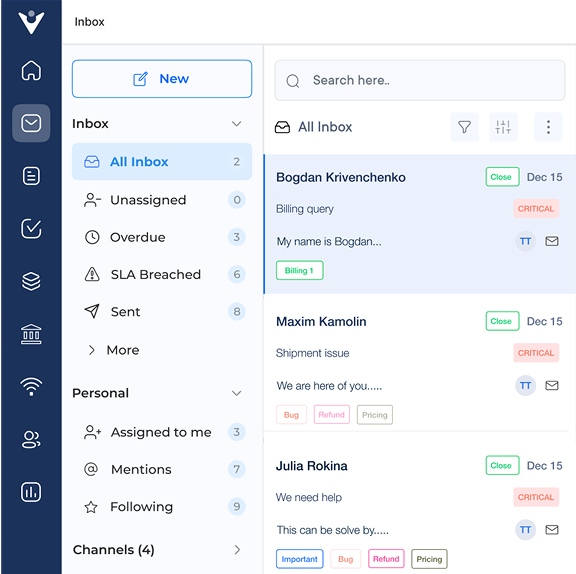
A central dashboard pulls all customer conversations across channels into one place. The setup helps agents follow the full conversation without missing context, even if a customer switches from chat to email. It keeps everything organized and helps ensure that no message slips through the cracks.
Establish cross-channel response consistency guidelines
Customers shouldn’t get different answers depending on the platform. The initiative focuses on building a clear playbook for tone, style and resolution standards. Support agents are trained to adjust their language to fit the platform, but always stick to the same facts and service level across the board.
5. Regular Customer Feedback Collection System
Regular feedback collection is a structured way to understand what customers are thinking, how they’re feeling and what they need. The customer service initiative matters because it helps businesses to spot what’s working, what’s not and where to make improvements. Without a consistent feedback system, companies risk overlooking important details that could lead to better service.
Key systems:
- Digital surveys and questionnaires: They are sent automatically after specific interactions. They gather focused feedback on how the service went and how satisfied the customer is with the product or support they received.
- Real-time interaction feedback: Right after a live chat or call, customers are asked to quickly rate the service or leave a short comment. It gives teams a snapshot of how the interaction felt in the moment.
- Focus group discussions: Businesses bring small groups of customers together to talk through their experiences and suggestions. The conversations often reveal deeper issues or ideas that don’t come up in standard surveys.
- Social media monitoring: Teams watch what customers are saying on social platforms—mentions, reviews and comments to spot issues early and understand how customers feel about the service in real-world conversations.
6. Customer Service Team Training Program
A comprehensive training program is the backbone of strong customer service. The customer service initiative matters because well-prepared teams deliver more reliable service, handle tough situations better and maintain quality in every interaction. Without structured training, teams often fall short of what customers expect and may struggle with difficult requests or unfamiliar scenarios.
Develop comprehensive skill development modules
The first step focuses on building clear and practical training materials that teach the core skills every service rep needs. Teams go through sessions on communication, problem-solving and in-depth product knowledge. The training includes real examples, role-playing and testing to make sure skills can be used in real conversations.
Create role-specific training certification paths
The initiative builds specialized training tracks for different positions on the team. Each track has clear steps, learning goals and check-ins to mark progress. Training is tailored to the needs of each role, from technical support to account management, so every team member gets the right tools for their job.
Establish a peer mentoring support system
Newer team members are paired with experienced colleagues who help them learn on the job. The mentors offer tips, give feedback during real calls or chats and share what’s worked for them. It’s a simple but effective way to build confidence and reinforce skills through daily support.
7. Self-Service Knowledge Base and Tutorials
A self-service knowledge base gives customers the tools to solve problems on their own while easing the load on support teams. The customer service initiative matters because it offers around-the-clock access to helpful resources, saves customers time and frees up support agents to focus on issues that need a human touch.
- Content organization and structure: Articles, tutorials and FAQs are arranged in a clear, easy-to-follow layout that mirrors how people naturally look for help. Topics are grouped into logical categories and the system points users to related articles to keep them moving toward a solution.
- Search functionality and navigation: The system uses smart search tools that understand everyday language and return useful results. It learns from how users search to improve over time and offers suggestions based on common issues, helping people find answers faster.
- Content creation and maintenance: Support teams regularly add, revise and refine content based on feedback. They use a mix of formats like plain text, videos, step-by-step walkthroughs so customers can learn in whatever way works best for them.
- User experience and accessibility: The platform is designed to be easy to use, whether someone is on a phone, tablet or desktop. It includes accessibility features for users with different needs and adjusts recommendations based on previous searches or behavior.
Keeping information up to date in a growing knowledge base takes ongoing effort. As services change, old content can become misleading or unhelpful, leading to confusion or more support requests. Regular reviews and updates are essential to make sure the system stays useful.
8. Customer Loyalty and Rewards Program
A customer loyalty program builds a simple system for recognizing and rewarding repeat customers while encouraging them to keep coming back. The customer service initiative is important because it helps businesses hold onto loyal customers, strengthen personal connections and turn satisfied buyers into regulars who recommend the business to others.
The program usually runs on a point-based or tier-based system where customers earn rewards for actions like purchases, referrals or visits. Teams use tracking software to monitor participation, link rewards to the sales system and automate how points are given out. The key is to match the rewards to what customers value and make sure redeeming them is easy.
Best practices:
- Keep point tracking and reward redemption easy by using a mobile app or digital card that updates automatically.
- Offer special experiences or early access to products for top-tier members so they feel genuinely appreciated.
9. Service Quality Monitoring and Metrics
Service quality monitoring provides clear, actionable data about how customer service is performing and where it needs to improve. The customer service initiative matters because it helps businesses maintain consistent standards, understand team strengths or weaknesses and make smart decisions about training.
The system runs through real-time monitoring tools that track key service metrics. Support teams use dashboards to follow performance indicators, set up automatic alerts for any service issues and generate detailed reports. Managers use the data to spot trends, coach staff and fix broken processes.
Key takeaways:
- Share key metrics with your team and recognize good performance to support a culture of steady improvement.
- Use AI tools to look for patterns in customer behavior and catch service problems early— before they get worse.
Customer Initiatives Examples
Below are some inspiring examples of how major brands have implemented customer service initiatives that transformed their business and customer relationships.
1. Amazon’s Hassle-Free Returns
Amazon changed the game by making product returns simple and stress-free. Their system includes automatic return approvals, instant refunds and flexible drop-off point options. Customers can also track every step of the return process through their account.
The setup makes people more willing to buy online, especially when unsure about a product. Knowing they can easily return an item builds trust and encourages more frequent purchases.
2. Zappos’ Customer Service Freedom
Zappos gives its support team full control over how it helps customers. There are no time limits on calls, no scripts and staff are free to offer gestures like handwritten notes or small gifts. They don’t need a manager’s approval to solve a problem.
The flexibility creates genuine, personal interactions. Customers remember the moments and often share their experiences, helping Zappos build long-term loyalty without relying on traditional marketing.
3. Starbucks’ Mobile App Experience
Starbucks built a mobile app that combines ordering, payment and rewards into one platform. Customers can customize drinks, find nearby stores and get recommendations. The app is regularly updated based on how people use it and what they ask for.
The approach keeps regulars coming back. They skip lines, get perks and feel like the brand understands their preferences. The app has become central to how Starbucks connects with its customers.
4. Ritz-Carlton’s Empowered Service
Ritz-Carlton trains every employee to notice guest needs and act on them. Staff can spend up to a set amount to solve problems without asking a manager. They also keep detailed records of guest preferences to deliver a more personalized experience.
The hands-on approach sets them apart in luxury hospitality. Guests return not just for the setting, but because they know the service will feel personal and thoughtful every time.
5. Apple’s Genius Bar Concept
Apple set up the Genius Bar inside its stores as a walk-in help desk for customers. Trained specialists offer tech support, quick fixes and product lessons all face-to-face and often at no charge. Appointments help manage wait times and users leave with their questions answered clearly.
The real-world support builds confidence. Customers feel supported not just during the sale, but throughout their use of the product. It’s one reason Apple’s customer satisfaction stays consistently high.
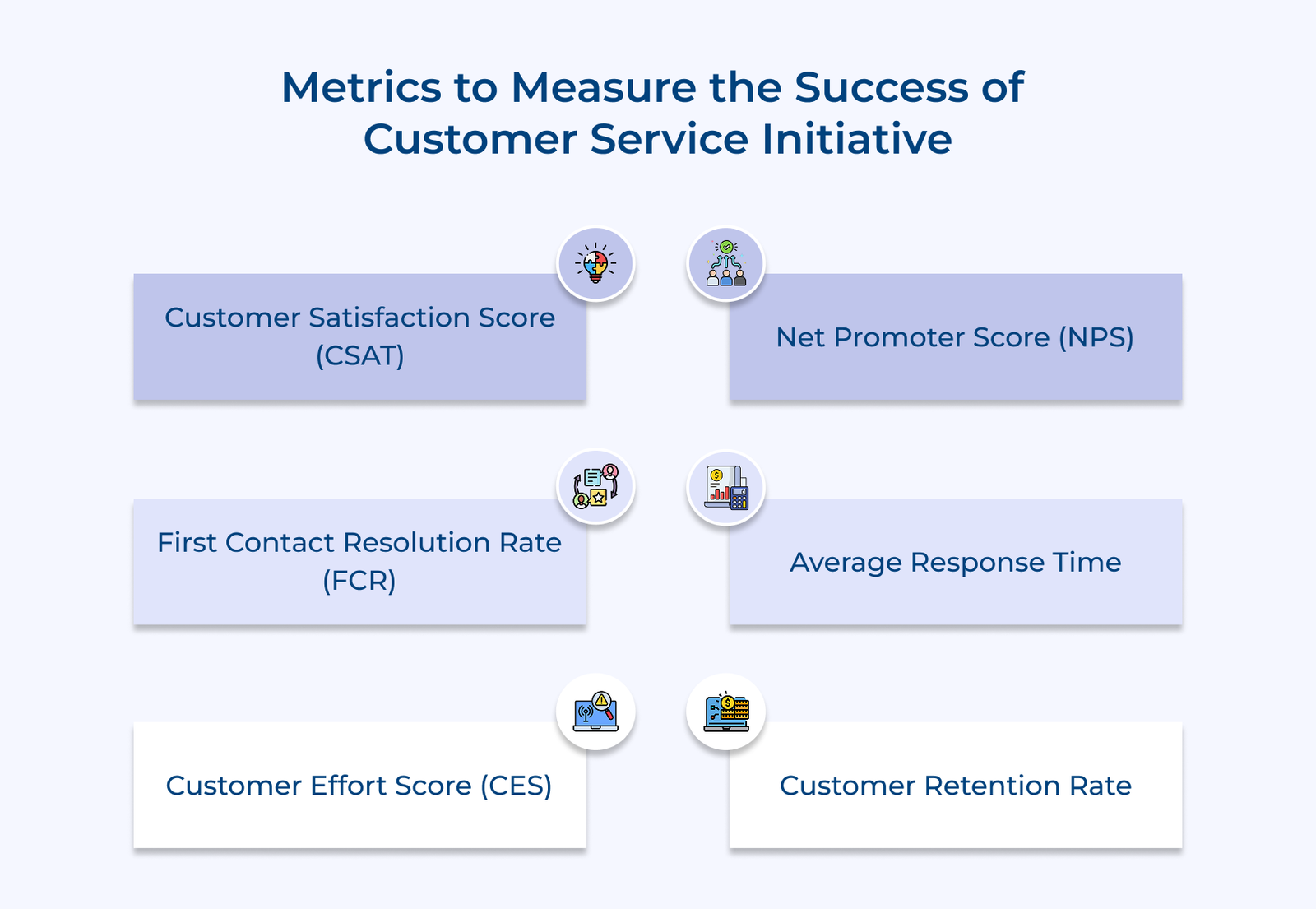
Metrics to Measure the Success of Customer Service Initiative
Check out how businesses can effectively measure the impact and success of their customer service initiatives through specific metrics.
Key questions:
- Do customers come back after interacting with our support team?
- How fast and how well are we solving customer problems?
- How many of our customers recommend us to others?
- How do customers feel about the service they received overall?
- Are we delivering good service without wasting time or money?