Transactional vs Relational NPS: A Detailed Guide in 2026
Explore the differences between transactional vs relational NPS. It will help you choose the right approach to gather actionable feedback and enhance customer experience.

Explore the differences between transactional vs relational NPS. It will help you choose the right approach to gather actionable feedback and enhance customer experience.
Knowing the difference of transactional vs relational NPS helps you collect feedback that actually reflects what customers feel. Many teams blur the line between the two and end up with data that’s either too narrow or too vague to act on.
Transactional NPS focuses on how customers feel after a specific interaction like a purchase or support call. Relational NPS, on the other hand, tracks how they feel about your brand over time.
When you use both together, you get a complete view of satisfaction and loyalty. Let us dive in to understand how each type works, when to use them and how combining both can sharpen your decision-making.
Net promoter score (NPS) refers to a simple way to measure how likely your customers are to recommend your business to others. The score is calculated by asking customers to rate their likelihood of recommending the company on a scale of 0-10.
Based on their responses, customers are categorized into three groups: promoters (9-10), who are loyal enthusiasts, Passives (7-8), who are satisfied but unenthusiastic and detractors (0-6), who are unhappy customers. The final NPS is determined by subtracting the percentage of detractors from the percentage of promoters.
NPS is useful because it offers a quick, reliable snapshot of how your customers feel about your business. A high score usually signals strong customer loyalty, something that’s often tied to growth and retention. It also gives you a clear way to track changes in customer sentiment and spot areas that need improvement.
Key types:
Transactional NPS (net promoter score) is a customer feedback metric that measures how a customer feels right after a specific interaction with your company, whether that’s a product purchase, a customer service call or a website visit. Unlike broader NPS surveys, which focus on the overall relationship, transactional NPS zeroes in on one moment in the customer journey.
The surveys are typically sent within 24–48 hours of the interaction to capture feedback while the experience is still fresh. It makes it easier to pinpoint what’s working and where things may have gone wrong. Transactional NPS offers a clear window into how specific processes or teams are performing.
Key principles:
Relational NPS (Net Promoter Score) is a broader metric that measures how customers feel about your company as a whole. It doesn’t focus on one interaction or moment. Instead, it reflects their overall experience and relationship with your brand over time.
Unlike transactional NPS, which focuses on specific touchpoints, relational NPS takes a broader look at overall customer loyalty and satisfaction. The surveys are typically sent at set intervals, like every quarter or year, to help track how customer sentiment changes as the relationship develops.
Key principles:
Let’s go through the key benefits of transactional NPS versus relational NPS and discover how to use the insights to elevate your customer engagement.
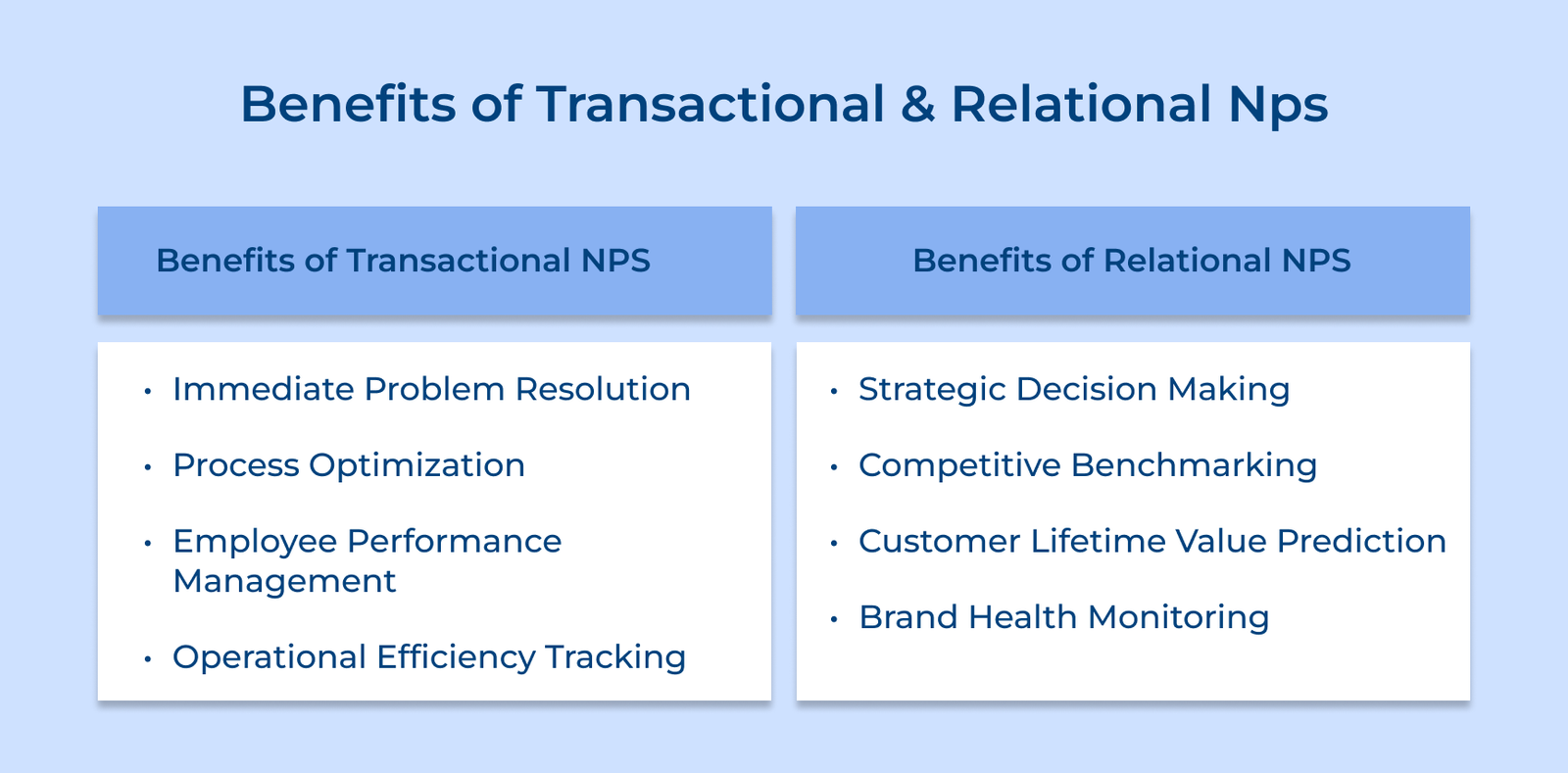
1. Immediate Problem Resolution
Transactional NPS helps catch issues right after they happen. When a customer gives feedback right after an interaction, teams can step in fast, often before the issue grows. The quick response not only prevents bigger problems but can also repair the customer relationship in real time.
2. Process Optimization
You can see exactly where things break down because feedback is tied to a specific moment, like a checkout or support call. It makes it easier to fine-tune workflows, adjust tools or change procedures where they’ll have the most impact.
3. Employee Performance Management
Every customer interaction is also a reflection of employee performance. Transactional NPS makes that connection clearer. It shows where people are doing well and where they need support.
4. Operational Efficiency Tracking
Transactional NPS lets you measure how customers react right away. It gives real-time feedback on what’s working and what’s not, so you can adjust quickly instead of waiting for quarterly results.
1. Strategic Decision Making
Relational NPS gives a big picture view of how customers feel about your company over time. The trends help leaders decide where to invest – products, services or support, based on what matters to customers.
2. Competitive Benchmarking
Tracking NPS consistently allows you to compare your scores with competitors and industry averages. It helps you see where you stand, what you’re doing well and where others might be pulling ahead.
3. Customer Lifetime Value Prediction
When you understand how strong your customer relationships are, you can spot early signs of churn. It makes it easier to focus on keeping the right customers and improving relationships that are starting to slip.
4. Brand Health Monitoring
Relational NPS reflects how customers view your company over time, not just after one interaction. It shows if their trust is growing or fading. Not just that, you get insights into how well your values and actions match what customers expect.
Below are the first fundamental differences: their timing and frequency of measurement. Let’s check them out in more detail.
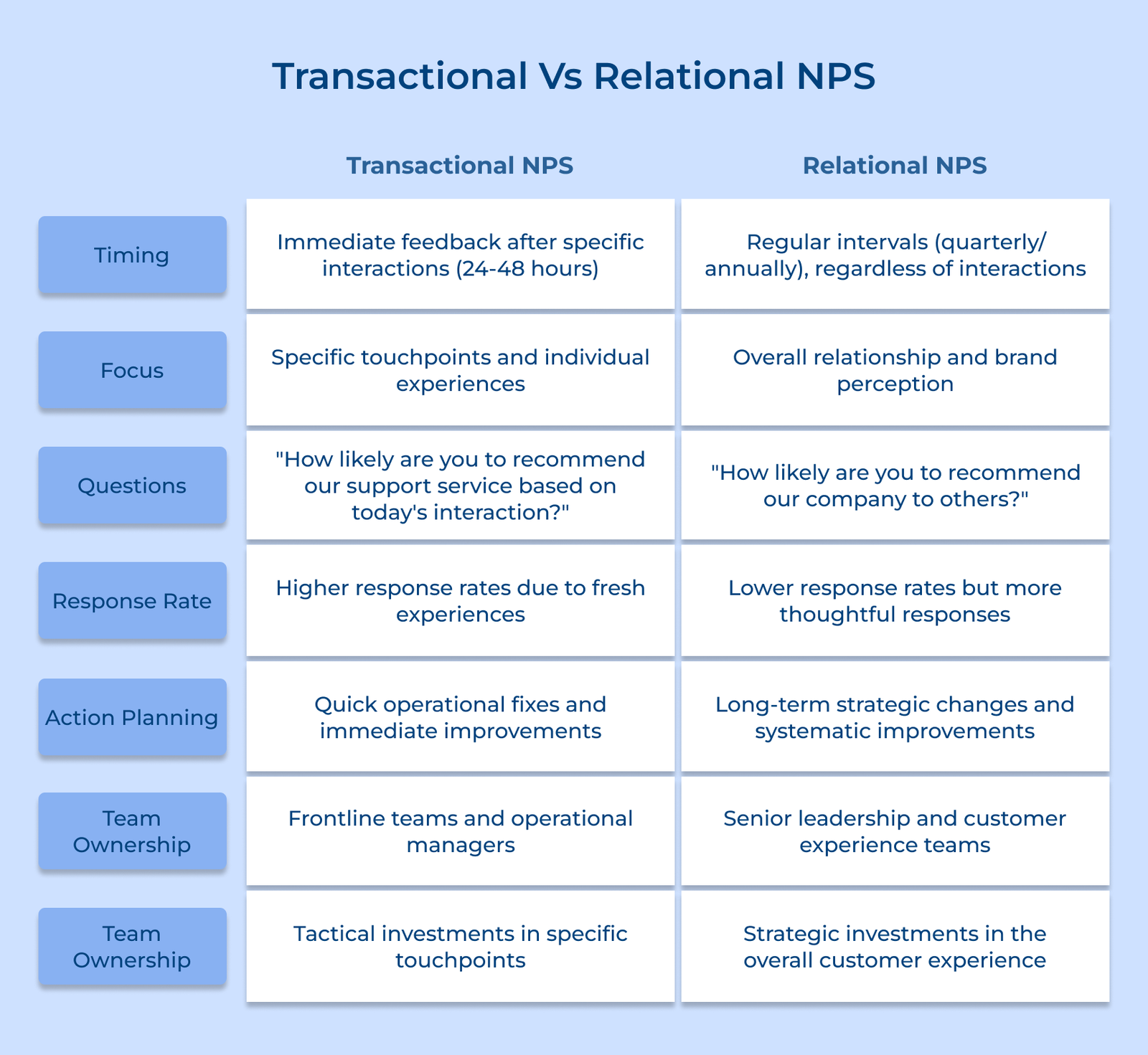
Transactional NPS is sent right after a specific interaction, like making a purchase, speaking to customer support or completing a service request. Since it’s triggered in real-time, it captures how customers feel in the moment, while the experience is still fresh. It helps businesses understand exactly what went well or what didn’t.
Relational NPS is sent at regular intervals, usually every few months, regardless of recent activity. It’s designed to track how customers feel about the company as a whole over time. The scheduled approach makes it easier to spot shifts in long-term loyalty and satisfaction.
Key takeaways:
Transactional NPS targets specific moments in the customer journey. Be it the feedback after a delivery, a purchase or a support call, it zeroes in on how customers felt about that one interaction. The goal is to understand and improve what happened at that particular step.
Relational NPS looks at the entire relationship between the customer and the company. It reflects how all interactions over time shape the customer’s overall opinion of the brand. It’s not tied to any single event but to the lasting impression the company leaves.
Pro tips:
Transactional NPS focuses on specific interactions and asks questions tied to a recent customer experience, such as:
Follow-up questions often dive into details like response time, resolution quality or staff behavior. It helps teams zero in on what worked and what didn’t at that specific moment.
Relational NPS poses broader relationship-focused questions like
Key takeaways:
Transactional NPS usually sees higher response rates because the survey follows a specific event, like a support call or purchase, while the experience is still fresh in the customer’s mind. Customers are more inclined to respond quickly with clear context and brief questions.
Relational NPS often has lower response rates since it asks customers to reflect on their overall relationship with a company, without a recent trigger. It takes more effort and may not feel as urgent. But when customers do respond, their feedback tends to be more thoughtful and detailed, offering richer insight into long-term loyalty.
Best practices:
Transactional NPS drives fast, hands-on action. If a customer flags a checkout issue or poor service interaction, teams can jump in, often within hours, to fix it. It creates a responsive feedback loop where problems are solved in real time and improvements can be measured right away.
Relational NPS supports long-term change. When customers raise broader concerns, like inconsistent service or declining product quality, companies need to step back, assess trends and build thoughtful strategies. The changes might take months, involving deeper shifts in operations, culture or product design.
Key takeaways:
Transactional NPS data focuses on real-time feedback tied to specific interactions, like a checkout experience or a support call. It’s typically tracked through automated dashboards because the data is immediate. When something goes wrong, the alerts go out instantly so teams can investigate and fix the issue without delay.
Relational NPS looks at the bigger picture. The analysis pulls together long-term feedback and combines it with other business metrics like customer lifetime value, etc. It’s often reviewed quarterly or annually as part of broader planning. The goal is to spot patterns that help explain how customer sentiment connects to overall business health.
Key takeaways:
Transactional NPS is usually handled by frontline teams and their direct managers. Basically, the people who interact with customers every day. It includes support staff, retail workers or anyone responsible for a specific service moment. Since the teams are close to the action, they can respond quickly to issues and make small changes on the spot to improve the customer experience.
Relational NPS is typically managed by senior leadership and customer experience teams. It covers the full customer journey, not just individual moments. Because of its broader scope, acting on relational NPS often requires input from multiple departments, like product, marketing and operations.
Best practices:
Transactional NPS tends to guide short-term budget adjustments and resource shifts aimed at fixing immediate problems. If feedback highlights delays in support or glitches on a website, teams can act quickly, redirecting staff, investing in better tools or providing targeted training to address the issue without a major overhaul.
Relational NPS informs bigger-picture decisions. It’s used to plan long-term improvements that affect the overall customer experience. It could include investing in new systems, reworking major processes or building long-term employee training programs. The changes usually require cross-department coordination and a clear business case before moving forward.
Key takeaways:
Below are the five essential best practices that will help you maximize the value of your relational NPS program.
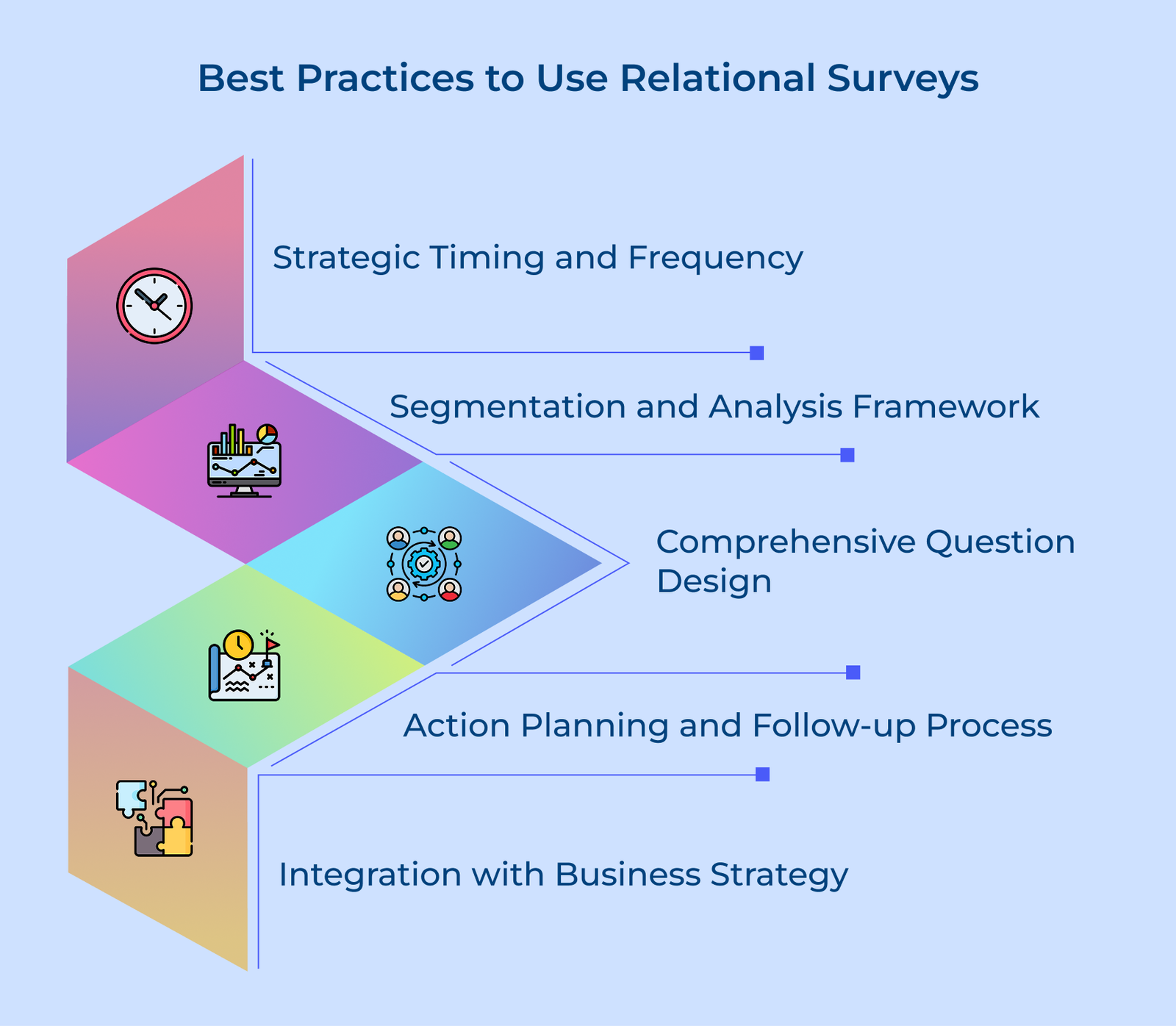
1. Strategic Timing and Frequency
Send relational NPS surveys on a regular schedule that fits your customer relationships. Quarterly surveys often work well for B2B. B2C businesses might find every six months more appropriate. Avoid sending surveys during busy periods when customers are unlikely to respond thoughtfully.
2. Comprehensive Question Design
Start with the core NPS question, then go deeper. Include questions about overall satisfaction, how customers see your brand and what matters most to them. Use open-ended questions to gather honest feedback about their experience over time. Focus on what drives loyalty, not just surface-level impressions.
3. Segmentation and Analysis Framework
Analyze responses by meaningful groups, like how long someone’s been a customer, where they’re located, or how big their account is. It helps you spot patterns that might be missed in a high-level view. Use the same breakdowns over time to track if things are improving for each group.
4. Action Planning and Follow-up Process
Have a clear plan for what happens after the feedback comes in. Assign teams to review the data, identify problems and follow through with changes. Hold regular check-ins to make sure action items don’t fall through the cracks. Let customers know what’s changed because of their input; it shows their voice matters.
5. Integration with Business Strategy
Use NPS insights to support key decisions—not just in customer service, but in product, marketing and company strategy. Bring the feedback into leadership discussions and track it alongside other business goals. It keeps the focus on long-term improvement, not just short-term fixes.
Below are the essential practices that will help you maximize the value of your transactional feedback program and drive meaningful improvements in customer experience.
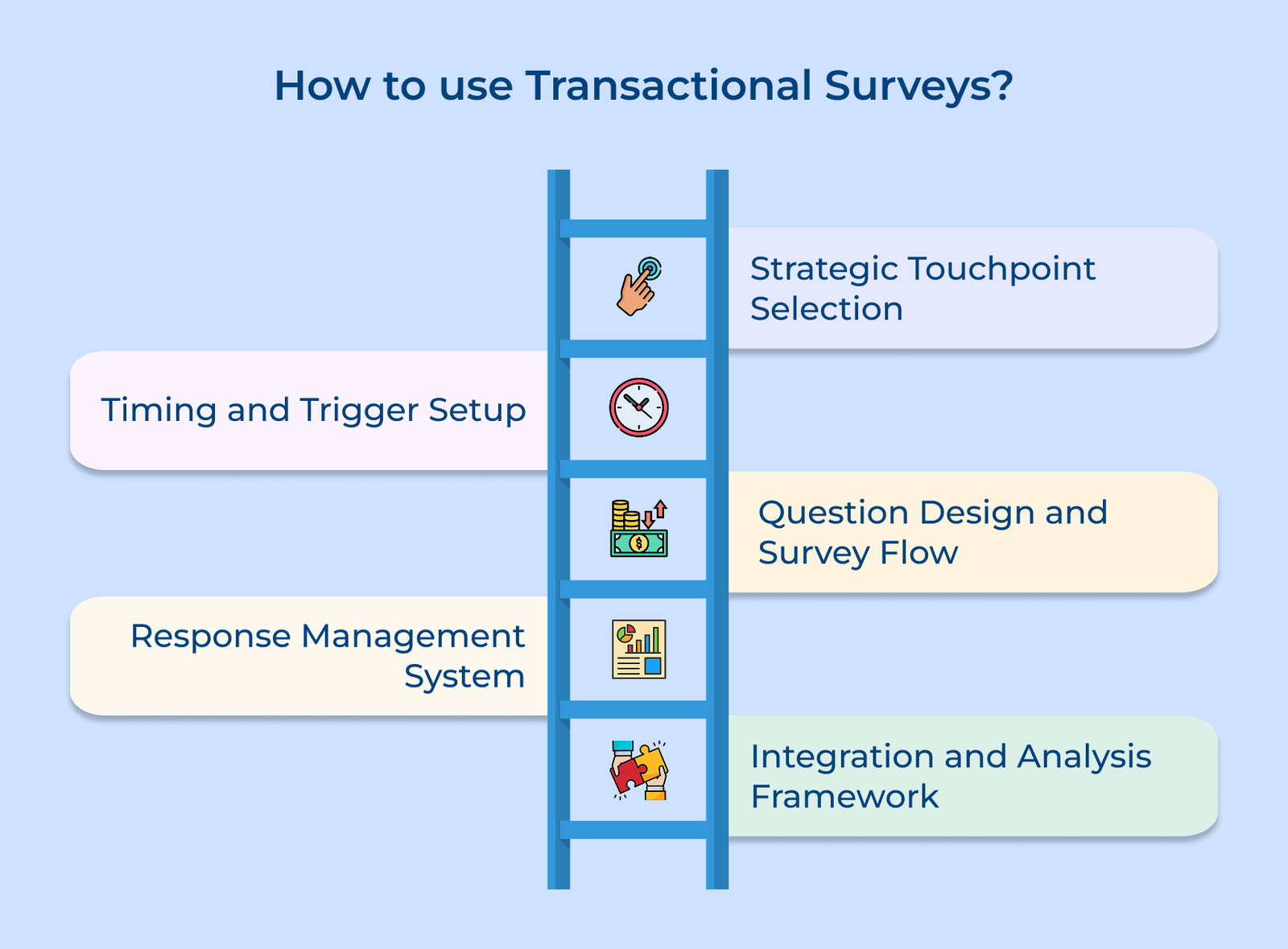
1. Strategic Touchpoint Selection
Start by pinpointing the key moments where feedback makes a real difference—think purchase completion, product delivery, support calls or account setup. Not every interaction needs a survey. Focus on the ones that shape overall customer satisfaction.
Rank the touchpoints by importance using factors like how often they happen, how much they impact the customer and how much room there is to improve. It helps focus your efforts and avoid over-surveying.
2. Timing and Trigger Setup
Send surveys when the experience is still fresh—ideally within 24 hours. Immediate feedback is best for some situations. Give customers time to use the product or reflect on the service for others.
Use smart rules to avoid survey fatigue. Don’t send too many requests to the same person too often and tailor timing based on recent interactions. Map out your customer journey to find the best timing for each type of touchpoint.
3. Question Design and Survey Flow
Design each survey to match the interaction. Start with a simple NPS question, then add 2–3 short, focused follow-ups. Keep language clear and specific to what just happened.
Make the survey dynamic: if someone gives a low score, ask what went wrong. If it’s a high score, ask what impressed them. It keeps responses relevant and gives you better insights.
4. Response Management System
Have a system in place to monitor incoming feedback and respond quickly. Set up alerts for low scores and route them to the right teams. Use automation to help, but don’t forget the human touch.
Respond to feedback, positive or negative. Acknowledge it, act on it and close the loop. Train your teams on how to handle different types of feedback and set clear expectations for how fast to follow up.
5. Integration and Analysis Framework
Don’t look at NPS data in a vacuum. Link it to other data, like wait times, delivery speed or account status to spot patterns. Use dashboards to see what’s happening in real time.
Review feedback regularly. Look for repeated issues, emerging trends and deeper causes. Use text analysis tools to make sense of open comments and combine that with your rating data. It helps prioritize what to fix and shows if your changes are working.
The following are the key factors that should guide your decision to ensure you implement the most effective feedback system for your organization.
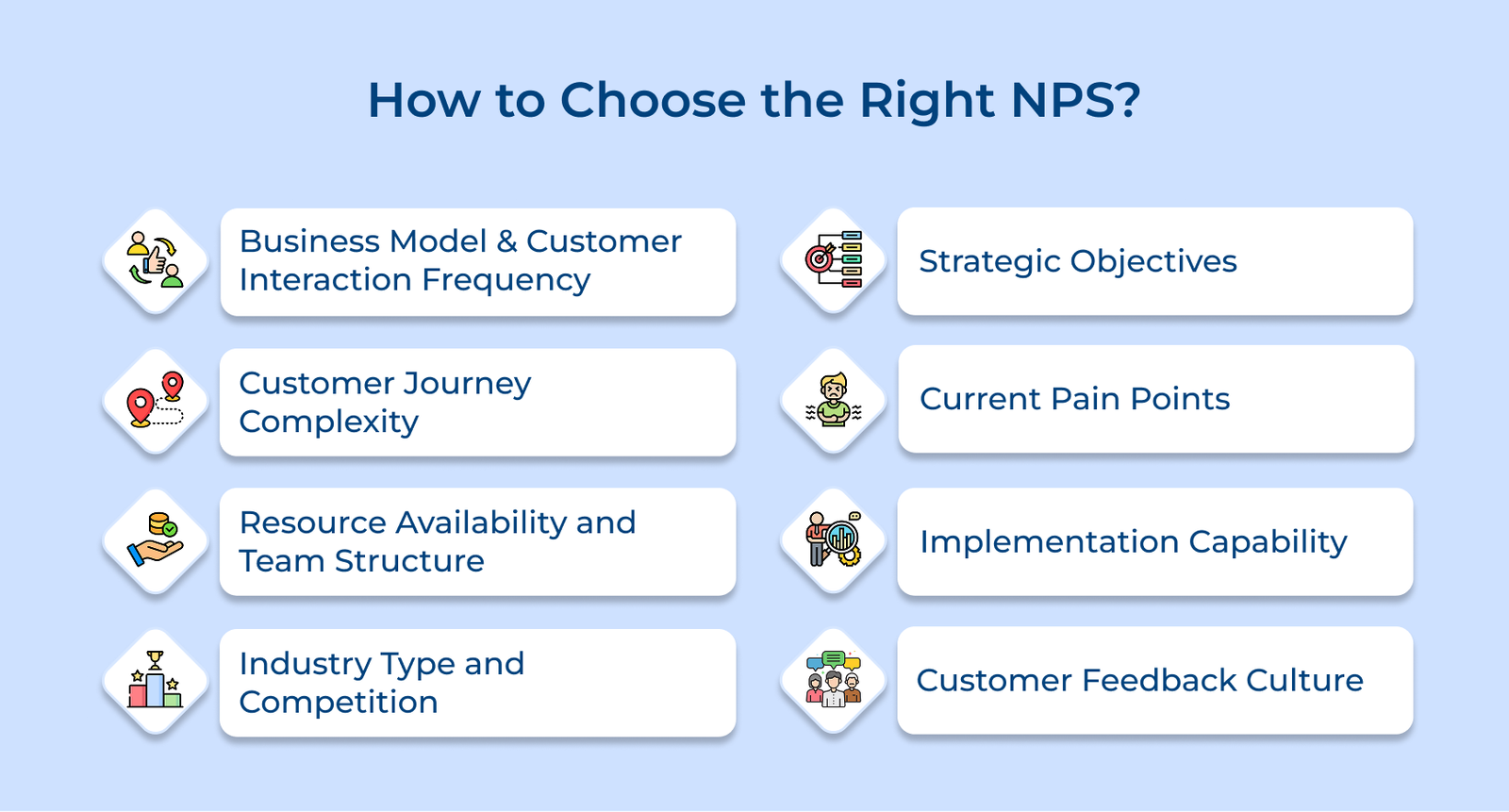
If your company deals with frequent customer interactions, like retail, food service or tech support, transactional NPS gives you fast, specific insights right after each touchpoint. It’s useful when every interaction can impact loyalty.
If your sales cycle is long or interactions are less frequent, such as in consulting or enterprise software, relational NPS is better suited to track the overall relationship over time.
Transactional NPS helps pinpoint where issues are happening along the way for companies with complex journeys, where customers interact with multiple teams or go through several steps. If your customer journey is simple and linear, relational NPS can still give a strong overview of how things are going.
Transactional NPS works best when you have teams ready to respond quickly to feedback. If you’re tight on resources or still building those processes, relational NPS might be more practical, it’s easier to manage and gives space for more strategic changes.
Transactional NPS helps you stay sharp by catching service problems early in competitive industries, like e-commerce, hospitality or telecom. Relational NPS helps you see the big picture and improve loyalty over time in industries built on long-term relationships, such as B2B services or healthcare.
If you’re dealing with churn, complaints or service gaps, transactional NPS helps you act quickly and fix specific issues. If the challenge is more about long-term retention or brand perception, relational NPS provides a better lens for seeing what’s working and what’s not.
If your teams are already good at handling and acting on quick feedback, transactional NPS builds on that strength. If you’re just starting to build a feedback loop or working on internal alignment, relational NPS offers a manageable entry point to grow your feedback processes over time.
Understanding the difference between transactional and relational NPS is essential for building a complete picture of your customers’ experience. Each plays a different role. Transactional NPS captures how customers feel about specific interactions, right after they happen. Relational NPS looks at the overall relationship and gives a broader sense of loyalty over time. The two approaches aren’t meant to compete.
Used together, they provide a more complete view. The most effective approach depends on your business model, customer journey and available resources. Some companies may benefit more from one than the other, but many will need both. The goal is the same either way: to better understand your customers and use that insight to improve their experience.

The two types of surveys can show very different results, even for the same customer. Relationship NPS reflects how customers feel about your company overall, so it tends to be more stable. Transactional NPS captures reactions to specific experiences and can swing more sharply, especially after something goes well or poorly. Think of it like: relationship NPS is your yearly checkup, while transactional NPS is your daily pulse reading.
Using both gives you a clearer picture. Transactional surveys help you understand what’s working (or not) at specific moments. Relationship surveys help you see the bigger picture—how all the individual experiences shape loyalty over time. Together, they help you catch immediate issues and track long-term progress.
Relationship surveys are usually sent out quarterly or once a year, depending on how often you interact with your customers. Transactional surveys should be timed close to the experience, immediately after a purchase, a service call or delivery. The goal is to gather timely feedback without overwhelming your customers, so pace them carefully.
Treat them differently. Transactional data should be reviewed in real time to spot specific problems or trends. It’s about quick action. Relationship data requires deeper analysis, looking at trends over time and connecting them with things like retention rates or revenue. Together, they can help you answer both the “what happened?” and “why does it matter?” questions.
Transactional feedback often leads to quick fixes— resolving an issue, improving a process, or following up with a specific customer. Relationship feedback tends to inform bigger decisions, like changes to your service model or updates to your product strategy. Both matter and both should be part of a regular feedback-to-action loop.
Be intentional. Don’t send surveys after every single interaction. Set limits on how often you ask any one customer for feedback. Use smart triggers to skip surveys for customers who recently responded or had low-stakes interactions. Keep your forms short and relevant. Respect their time and they’ll be more willing to share meaningful feedback.
Grow Customer Relationships and stronger team collaboration with our range of products across the Conversational Engagement Suite.
Omnichannel Customer Support & Help Desk Software
AI Enabled Business Messaging and Chatbot Software
Sales Engagement & CRM Software
Call Center Software & Virtual Phone System
Product Marketing & Experience Platform
Customer Experience & Feedback Management Software

 How to Choose a CRM System? A Complete Guide
Scroll to top
How to Choose a CRM System? A Complete Guide
Scroll to top