What is Customer Value: Types, Benefits & Challenges
Customer value is about delivering meaningful solutions that meet real needs. It drives loyalty, boosts retention and sets your business apart by focusing on what matters most to your audience.

Customer value is about delivering meaningful solutions that meet real needs. It drives loyalty, boosts retention and sets your business apart by focusing on what matters most to your audience.
Many businesses pour resources into marketing and sales but still struggle to keep customers. Despite offering good products or competitive prices, loyalty slips away. The issue often isn’t the product but a disconnection between what the business offers and what customers value.
Understanding real customer value has become more important than ever. It’s not about adding more features or slashing prices but about knowing what matters to your customers and delivering on it consistently. We will be covering what client value really is, why it matters, how to measure it and how to improve it in ways that strengthen trust.
Customer value refers to the balance between what someone gains from a solution and what they give up, usually money, time or effort. It’s the reason people choose one brand over another. When a business truly understands what its customers care about, it can deliver solutions that feel worth the tradeoff. It isn’t just about the product itself, but how it’s priced, how it’s delivered and how it fits into the customers’ real-world challenges or goals.
Value is proven when customers feel they’re getting more than they’ve paid for. The sense of return builds loyalty, trust and long-term relationships. Companies need to keep innovating because customer needs evolve and value isn’t fixed. The key is staying useful, honest and responsive over time.
Key principles:
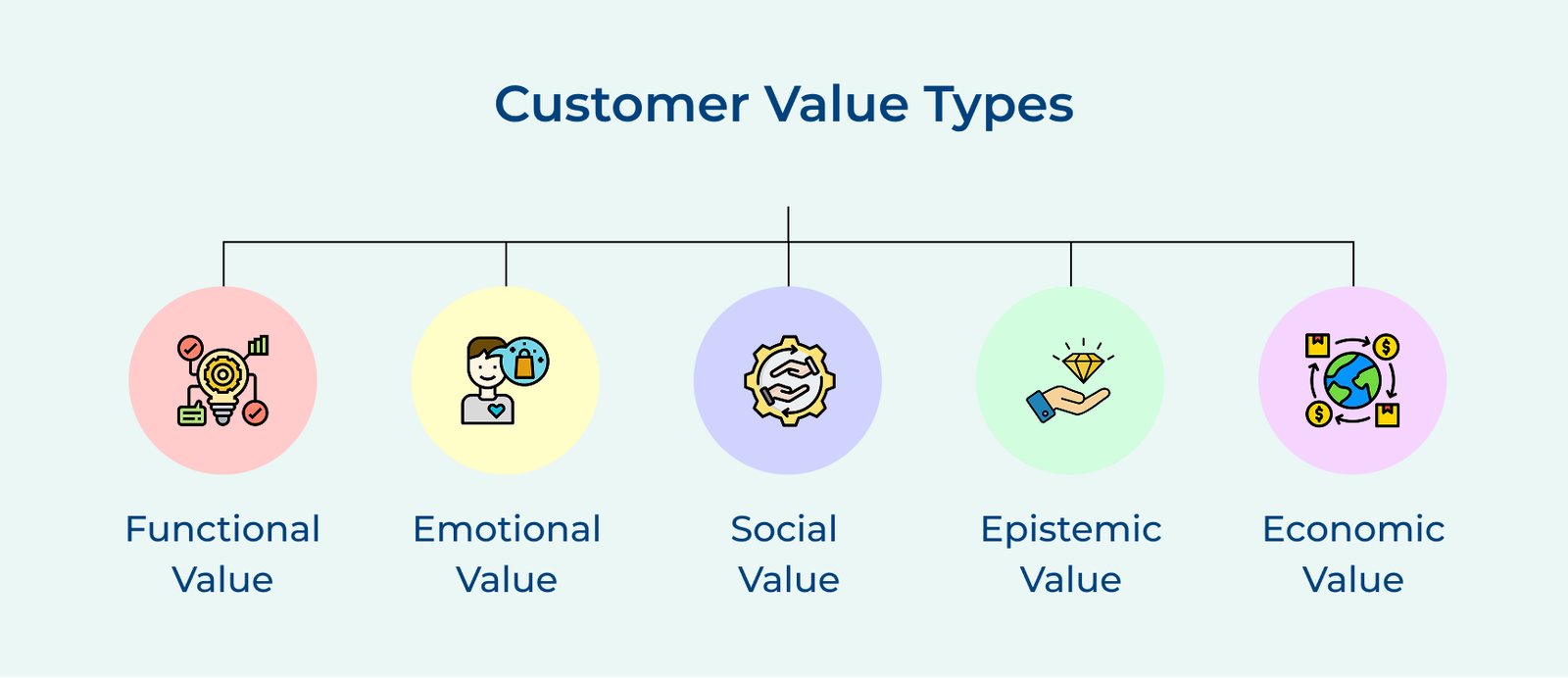
Let’s go through the different types of customer value to understand how businesses can meet diverse customer needs and build stronger relationships.
Functional Value
The value is all about how well something works. If your phone helps you check email quickly, takes sharp photos and runs smoothly, that’s functional value. It’s the reliability and usefulness that make life a little easier. When a product does what it’s supposed to, every time, that’s something people can depend on.
Emotional Value
Emotional value is the feeling you get when you use a product. It’s not just about what it does, but how it makes you feel. Driving a car you’ve always dreamed of or wearing clothes that feel like “you” creates emotional value. It connects with your identity and can make everyday experiences more meaningful.
Social Value
Social value shows up when a product helps you feel connected to others. Maybe it helps you keep in touch, share experiences or feel part of a group. Be it for a social app or a brand that’s popular in your circle, it plays a role in how you relate to people and how you’re seen by them.
Epistemic Value
Epistemic value is about learning something new or satisfying your curiosity. A product has epistemic value when it teaches you a skill, introduces a new idea, or lets you explore something unfamiliar. It’s that spark of interest that keeps you coming back to learn more.
Economic Value
When a product saves you time, money or effort, more than what you paid for it, it has economic value. It’s about feeling like you made a smart choice and got good use out of what you spent.
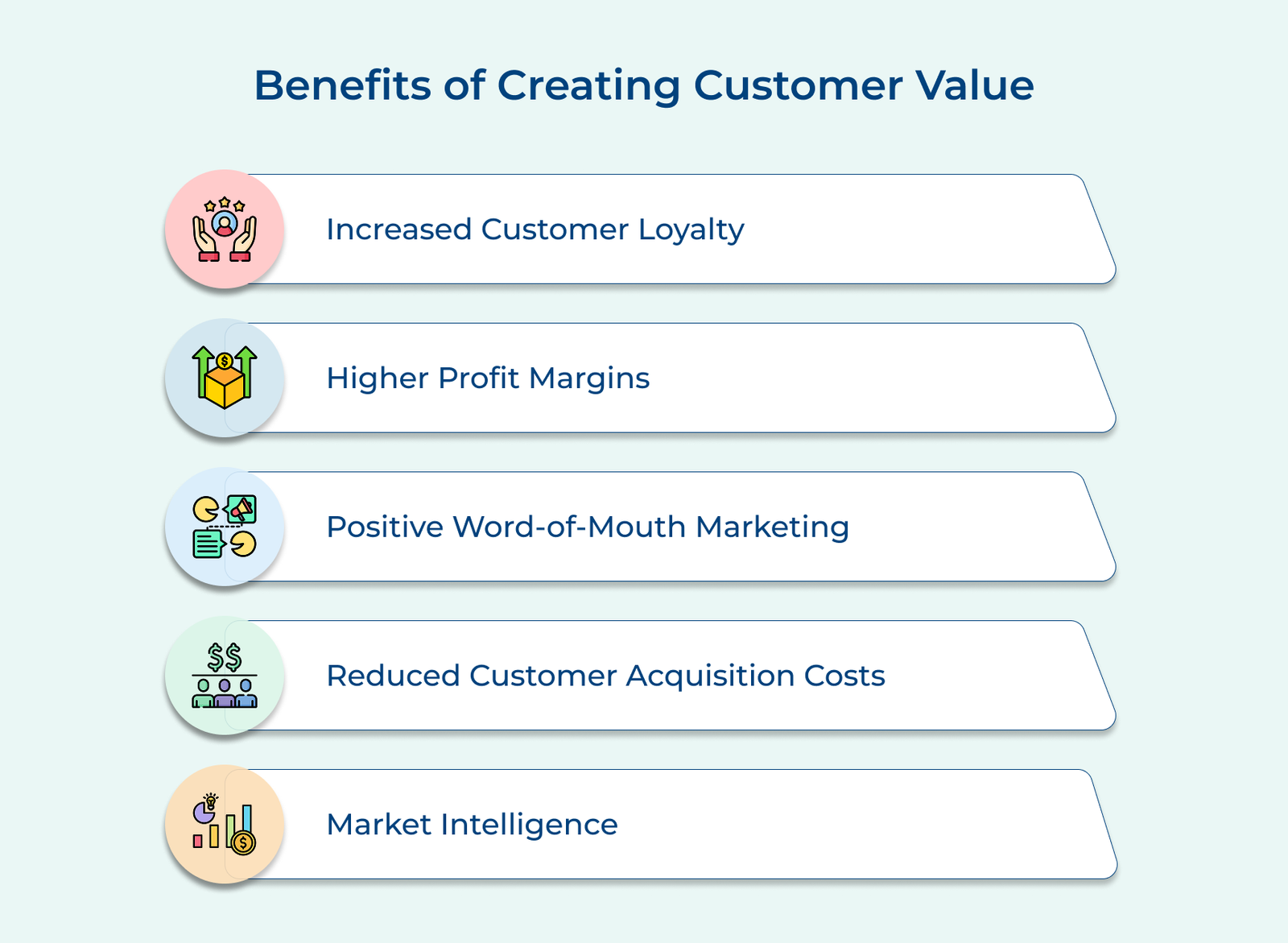
Check out the different ways a product or service can make a real impact – the customer value importance shows what truly matters to people beyond just features or price.
Increased Customer Loyalty
When people consistently get real value from a brand, they tend to stick with it. They build trust and emotional ties, which makes them more likely to come back, even if other options are available.
Higher Profit Margins
People are usually willing to pay a bit more if your product delivers more value. The extra breathing room in pricing means your business can earn more from each sale and have more to invest in making things even better.
Positive Word-of-Mouth Marketing
People talk about good experiences. When customers are happy, they naturally tell friends and family. The personal recommendations carry weight and bring in new customers who already trust what you offer.
Reduced Customer Acquisition Costs
Loyal customers stick around and often bring others with them. It means you don’t have to spend as much money or effort chasing new buyers, your current ones are doing part of the work for you.
Market Intelligence
Engaged customers often speak up. They’ll tell you what’s working and what’s not. Listening to them helps you understand what people want, so you can keep improving and stay relevant.
Below are the key parts of the customer value formula and how to calculate it, helping you understand what customers truly gain compared to what they give up.
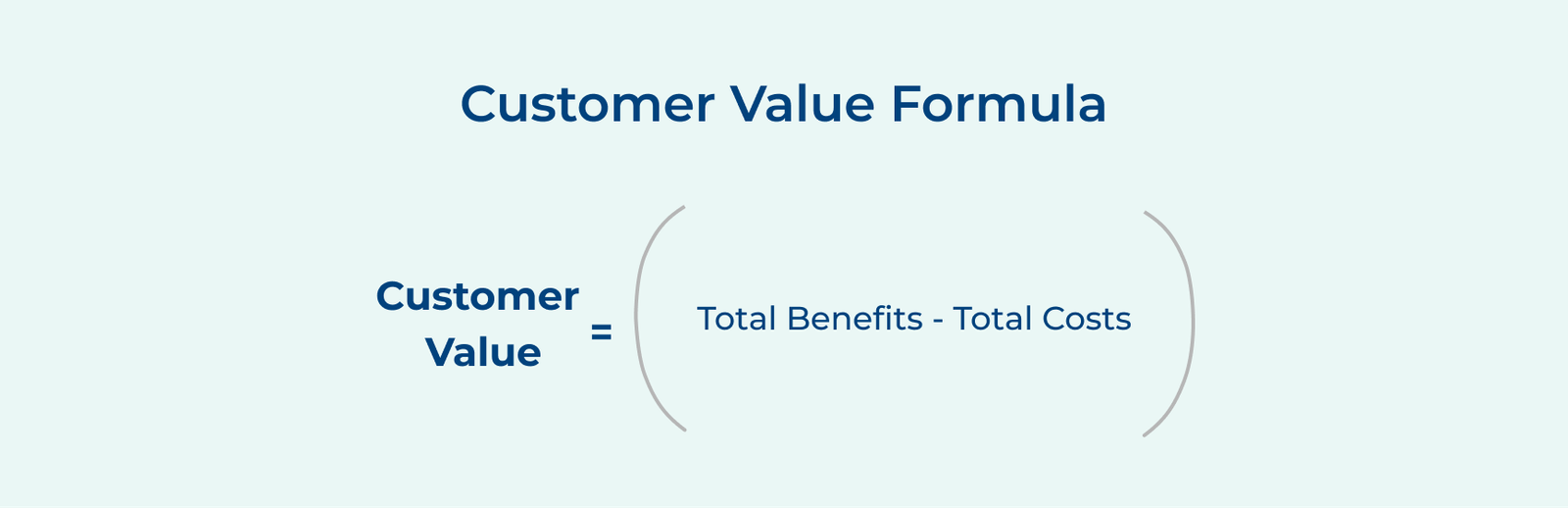
Customer Value = Total Benefits – Total Costs
A good rule of thumb is that customers should feel like they’re getting at least twice as much value as what they’re giving up. It’s a 2:1—benefits to costs. Top-performing companies often hit 3:1 or more.
While the numbers can vary depending on the industry, the key idea stays the same: the more the value outweighs the cost, the stronger and more sustainable your customer relationships will be.
1. Identify and List All Benefits
Start by writing down everything your product or service helps the customer with. Talk to actual users to find out what they really value. Include both the obvious stuff—like useful features and the less obvious, like saving time or making life easier. Try to put a dollar amount on each one based on what it’s worth to the customer.
2. Quantify Each Benefit
Turn identified benefits into monetary terms wherever possible. If a feature saves customers two hours per week, calculate the monetary value of that time savings. Use customer surveys and market research to establish reasonable monetary equivalents for intangible benefits like improved satisfaction.
3. Calculate Total Costs
Look at everything the customer has to give up to use your product. It includes the price but also the time spent learning how to use it, any extra fees or effort needed to keep it running. Think through the full customer journey from start to finish.
4. Analyze Value Over Time
Don’t just look at what the product offers today. Think about how value and costs shift over time. Maybe a tool becomes more useful the longer someone uses it, or a physical item wears out. Use basic financial tools like present value to factor in time.
5. Compare Against Alternatives
Take a look at what your competitors offer and run the same numbers. The comparison helps identify your competitive advantages and areas for improvement. Use the analysis to optimize your value proposition and pricing strategy accordingly.
Scenario: Business Software Subscription
Annual Benefits:
– Productivity improvement: $5000
– Time savings: $3000
– Error reduction: $2000
Total Benefits = $10000
Annual Costs:
– Subscription fee: $2400
– Training time: $500
– Implementation: $600
Total Costs = $3500
Customer Value = $10000 – $3500 = $6500 per year
The positive value indicates that customers receive $6500 worth of net benefits annually from using the software. The calculation helps justify the pricing strategy and demonstrates clear value to potential customers.
Let’s go through the key steps to measure customer value, so you can see what your customers gain compared to what they give up throughout their experience.
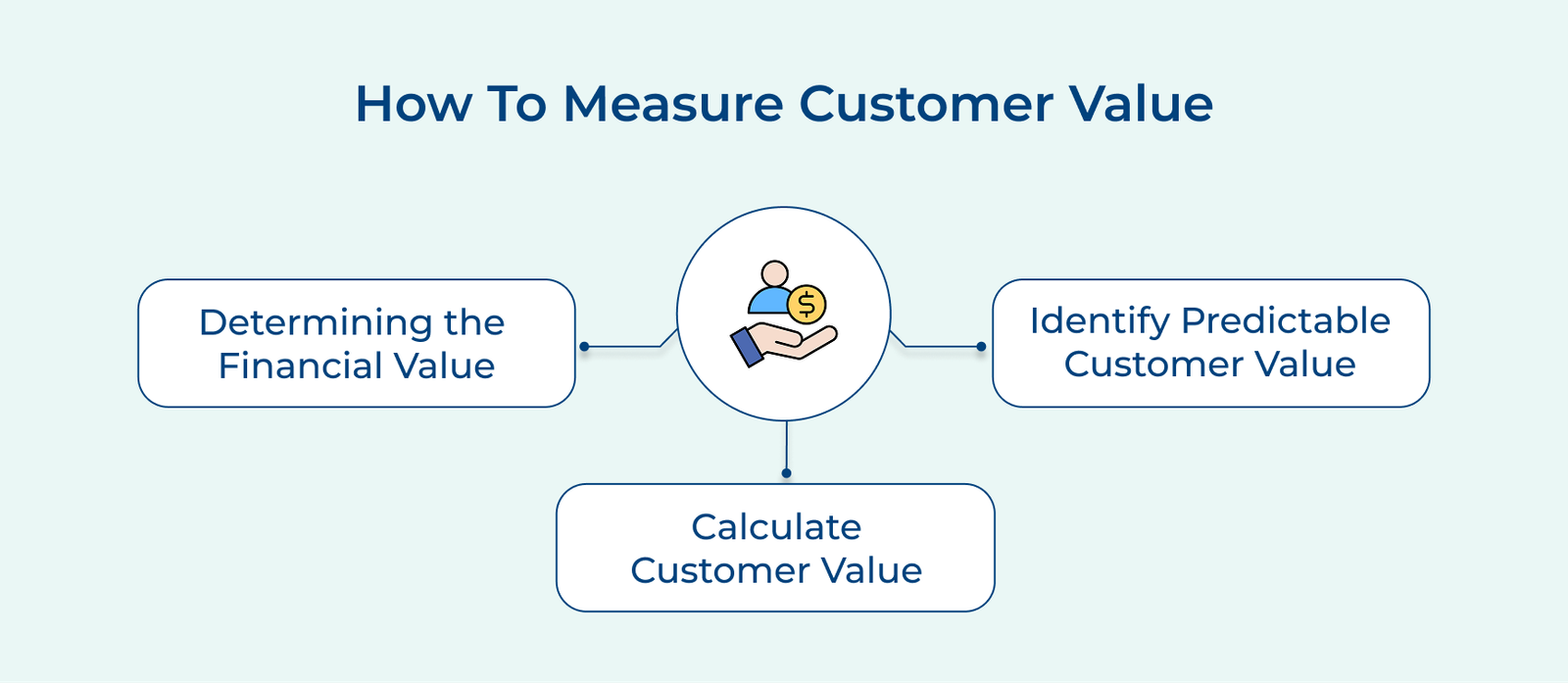
Customer Lifetime Value (CLV)
The metric shows how much money you can expect to earn from a single customer over the entire time they do business with you. Multiply how much they usually spend by how often they buy and then by how long they stay with you. It helps you see the long-term value of keeping a customer happy.
Average Order Value (AOV)
Average order value tells you how much customers typically spend each time they buy something. Just divide your total revenue by the number of orders over a set period. It gives you a sense of spending habits and where there’s room to encourage larger purchases.
Customer Acquisition Cost (CAC)
CAC measures the average cost of gaining a new customer. Take all your marketing as well as sales expenses and divide by the number of new customers during that time. It shows how much you’re spending to grow and whether that spending is paying off.
Revenue Churn Rate
The metric shows how much revenue you’ve lost from existing customers in a given time. Divide the lost revenue by the total revenue you started with. A lower number means more customers are sticking around and spending.
Net Promoter Score (NPS)
NPS measures how likely your customers are to recommend you to others. It’s based on a simple question and the score can range from -100 to +100. The higher the score, the more loyal your customers tend to be and the more likely they are to spread the word.
Customer Satisfaction Score (CSAT)
CSAT tells you how happy customers are after a specific interaction, like a purchase or support call. You ask them to rate their experience, usually on a scale from 1 to 5. High scores mean things are going well and customers are likely to stick around.
Customer Engagement Score
The score tracks how involved your customers are. It adds up things like how often they visit your site, use your product or reach out for support. Each activity gets a weight based on how meaningful it is. A higher score usually means the customer is getting real value and is more likely to stay.
Purchase Frequency Rate
The metric shows how often your customers come back to buy again. Divide the total number of purchases by the number of unique customers in a set time. A higher rate means people are returning, usually a sign they’re finding value.
Customer Profitability Score
The metric helps you see how much actual profit each customer brings in. Just subtract the total costs of serving them from the revenue they generate. It shows which customers are worth the most to your business and where you might be overspending.
Share of Wallet
The score tells you how much of a customer’s total spending in your product category is going to you. If they spend $100 on similar products and $40 of that is with you, your share is 40%. A higher share means they trust you more than your competitors.
Below are the best ways to improve customer value, ensuring you not only meet but exceed the needs of your clientele.
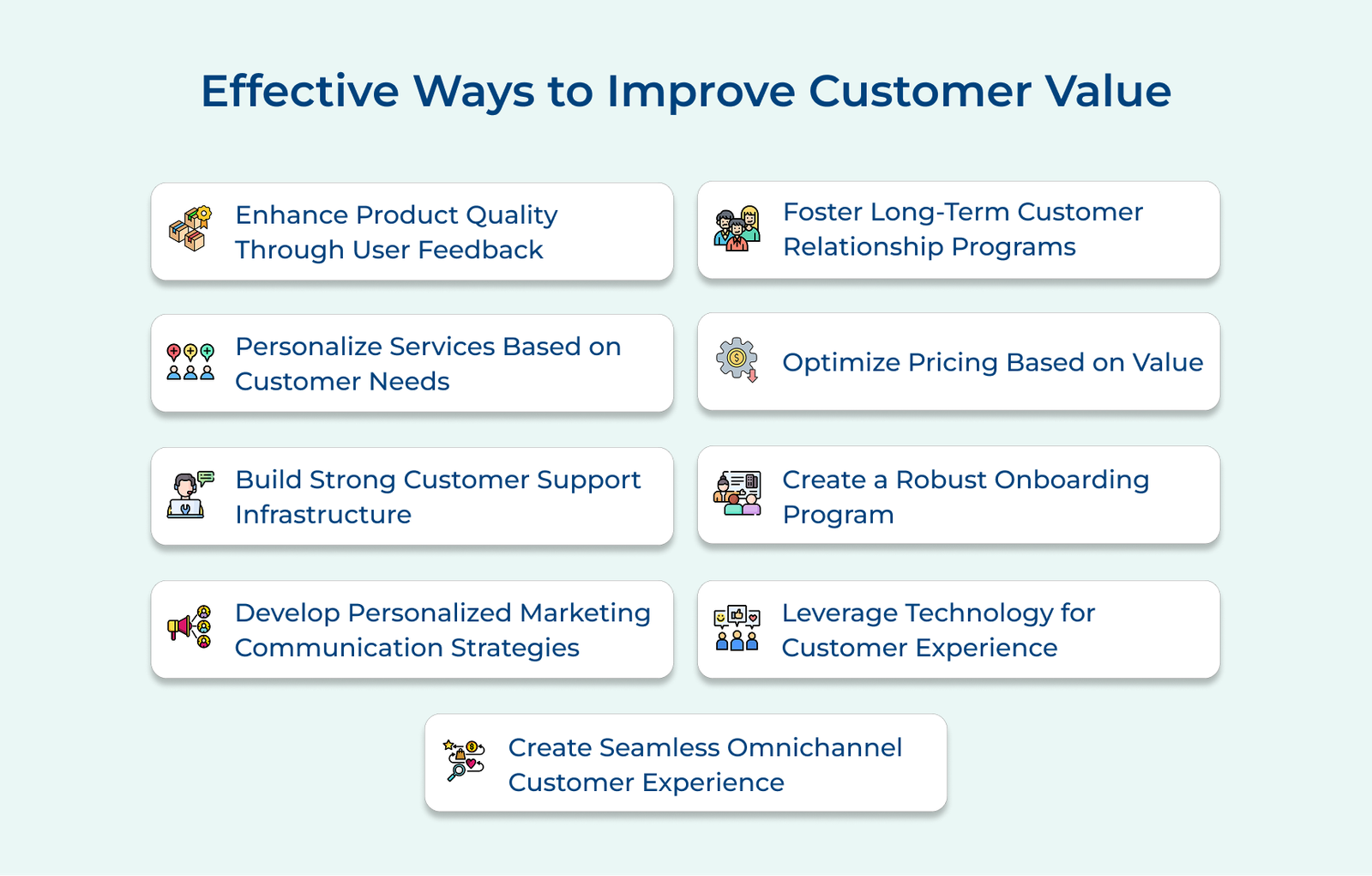
Improving product quality through user feedback means shaping your product based on real experiences, not assumptions. Listening carefully helps uncover problems and opportunities that internal teams might overlook. Collecting feedback systematically builds a strong foundation for meaningful improvements. Regular surveys gather both numbers and personal insights about how the product performs. Dedicated feedback channels give customers an easy way to share their thoughts and show that their voices matter.
A clear process for acting on feedback builds trust. It means analyzing input, weighing what’s practical to change and prioritizing updates that deliver the most value. Keeping customers informed about how their feedback is being used closes the loop and shows that their input leads to real action.
Pro tips:
Personalization service turns standard support into experiences that meet each customer’s specific needs. When services feel individually tailored, customers are more likely to stay engaged and loyal because they feel understood, not just served. 81% of consumers appreciate brands that tailor their experience to their needs.
Creating flexible service models allows you to adjust as customer needs evolve. Real-time feedback from customer interactions shows where services need fine-tuning. Regular reviews of service effectiveness ensure personalization efforts stay relevant and useful over time.
Actionable tips:
A strong support system is key to improving customer value. It ensures help is always available, no matter how or when customers need it. A reliable support structure builds trust and demonstrates your commitment to their success, well beyond just selling a product. Offering multiple support channels allows customers to choose their preferred method, whether it’s quick chat or a more in-depth phone call.
Equipping support teams with both empathy and technical skills creates a powerful service combination. Support staff understand customer frustrations and provide solutions effectively. Providing self-service resources, like a well-organized knowledge base, helps customers solve issues on their own and reduces wait times.
Best practices:
Personalized marketing communication focuses on delivering messages that truly matter to each customer. Instead of broad, generic outreach, it connects with individual needs and interests, making interactions more meaningful. Segmenting customers based on their behaviors and preferences helps create targeted messages that feel personal.
Opening two-way communication channels turns marketing into a conversation rather than a broadcast. It invites feedback, strengthens relationships and shows customers that their voices shape the experience. Consistent engagement through the channels helps you stay tuned to changing customer needs.
Key takeaways:
Creating a smooth omnichannel experience is now essential for delivering real customer value. People move easily between websites, apps and physical stores as well as they expect the same level of service. When you create a unified experience across platforms, it builds trust and makes customers feel recognized wherever they choose to interact.
Imagine a clothing retailer helping a customer shop seamlessly across platforms. A shopper browses dresses on their mobile app, saves a few favorites and then later continues browsing on their laptop. When they walk into the store, a sales associate can pull up their wishlist and suggest accessories that match. After purchase, if the customer needs support, the service team already has the full picture of their shopping journey.
Pro tips:
Businesses need relationship programs that do more than hand out loyalty points. Strong programs build emotional connections, offering customers real reasons to stay involved with your brand over time. When designed well, they turn everyday customers into true brand advocates. Meaningful rewards should reflect what your customers care about.
Going further, proactive customer success efforts show you’re invested in your customers’ goals. Regular check-ins, product usage reviews and personalized tips can help customers get more out of what they’ve already bought, preventing problems before they start.
Actionable tips:
Value-based pricing puts the focus where it matters most: on the real benefits customers get from your product or service. Instead of simply adding a markup to your costs, the approach ensures customers feel they’re paying a fair price for the value they receive. Understanding customer perception of value helps create pricing structures that work for both the business and customers.
The key is to tie pricing directly to outcomes, not just features. When customers can connect what they’re paying to the benefits they receive, they’re far more likely to feel satisfied and stick around. It’s important to monitor customer success over time and adjust pricing structures as needs evolve.
Best practices:
A strong onboarding program lays the groundwork for long-term customer success by helping people start using your product with confidence. A smooth start reduces early frustration, speeds up adoption and shows customers the value of their investment right away. The initial experience often determines whether a customer becomes a long-term advocate.
Tracking early success metrics during onboarding lets you see if customers are progressing toward their goals. Regular check-ins during onboarding help spot challenges early, giving you a chance to offer support before frustration sets in.
Key takeaways:
When applied thoughtfully, technology helps deliver more personalized, scalable service without losing efficiency. The right tools can anticipate customer needs, automate repetitive tasks and uncover deeper insights about how people use your product or service. AI-driven personalization allows businesses to offer tailored recommendations, dynamic content and even adaptive interfaces that adjust individual preferences.
Strong data analytics help businesses understand customer behavior in detail—what’s working, what’s not and where the next opportunity lies. Regularly analyzing the data leads to smarter decisions about product improvements, service upgrades and engagement strategies.
Pro tips:
Let’s go through the key challenges in measuring customer value and see why it’s often more complex than it first appears.
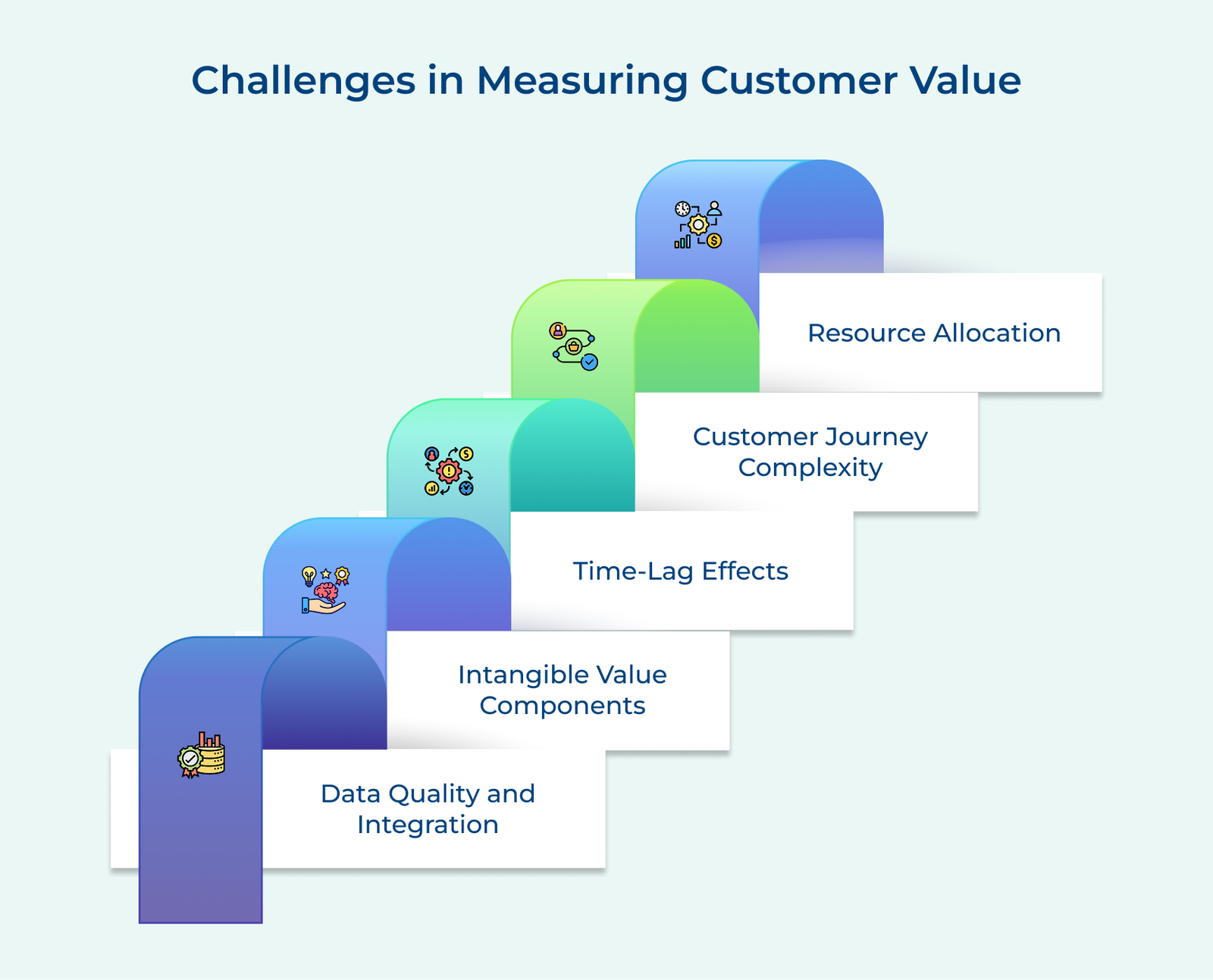
Customer data often lives across different departments and is collected through a range of touchpoints. The fragmentation makes it hard to build a clear, unified view of customer value. Manual errors, missing information and inconsistent formats only add to the challenge.
Use integrated data management tools that automatically collect and standardize data across all touchpoints. Set up clear protocols and validation checks to keep data accurate and consistent.
Not everything that matters can be easily measured. Emotional satisfaction, brand loyalty and relationship strength, often drive real customer value but don’t show up neatly in spreadsheets. Build scoring systems that mix hard numbers with softer insights. Regular surveys, customer interviews and behavior analysis can help capture the harder-to-measure elements.
The benefits of improving customer value don’t always appear right away. Early metrics might miss the bigger gains that show up months or even years later, making it tough to justify investments. Set up systems to track short-term wins and long-term progress. Use predictive analytics to forecast future gains and create milestone markers to measure along the way.
Modern customer journeys can stretch across websites, apps, social media and in-person experiences. Figuring out which interaction really made a difference can feel almost impossible. Use advanced attribution models and journey mapping tools to better understand the full path customers take. Cross-channel tracking gives a clearer picture of how each touchpoint contributes to overall value.
Measuring customer value in-depth takes time, money and people—all of which are often in short supply. Teams have to balance the need for better insights with the reality of limited resources. Start by focusing on a few key essential metrics that offer the biggest return. Expand your measurement efforts gradually, using scalable tools that can grow with your needs.
Improving customer value is essential for building sustainable business growth. Businesses can turn occasional buyers into loyal customers who drive long-term success by focusing on meaningful experiences, understanding real customer needs and consistently delivering more than expected.
As customer expectations continue to shift, companies must take a broader view of value creation. It means using technology wisely, personalizing interactions and maintaining strong relationships, while regularly adjusting how value is delivered. Businesses that master the approach are better positioned to lead their markets and maintain an edge over competitors.
Key takeaways:

Customer value comes from the balance between the benefits a product, service or experience provides and the costs the customer has to bear. Businesses create real value by first understanding what their customers truly need, then developing solutions that meet the needs effectively. Delivering the solutions efficiently and improving them based on customer feedback is key to building lasting value over time.
Measuring consumer value shows how well a business is meeting customer needs and helps guide better decisions. It offers real insights into customer satisfaction, loyalty and areas for growth. Businesses can stay in-tune with changing customer expectations and adjust their products or services to stay competitive by tracking value regularly.
Customers form their sense of value based on product quality, service experience, price and convenience. Personal experiences, past interactions and brand reputation all leave strong impressions. Competitor choices also shape how customers judge value. Beyond that, cultural background, social influences and individual preferences add another layer to how people decide what’s truly worth their time as well as money.
Businesses can raise customer value by focusing on better product quality, offering services that fit individual needs and providing strong, reliable support. Creating a smooth experience across all channels also plays a big role. Regularly gathering customer feedback, introducing thoughtful improvements and keeping pricing fair help businesses stay aligned with what customers really want. Ongoing employee training ensures that the level of service remains steady and dependable over time.
When customers consistently get real value from a brand, they are more likely to return and recommend it to others. Meeting and exceeding their expectations builds emotional connection. Over time, loyalty drives steady growth and helps the business stay strong in a competitive market.
Technology helps businesses better understand and meet customer needs. AI spot patterns, predict future demands and guide smarter decisions. Automation takes care of routine tasks, freeing teams to focus on real customer issues. Digital tools also make communication smoother and open new ways to connect with customers.
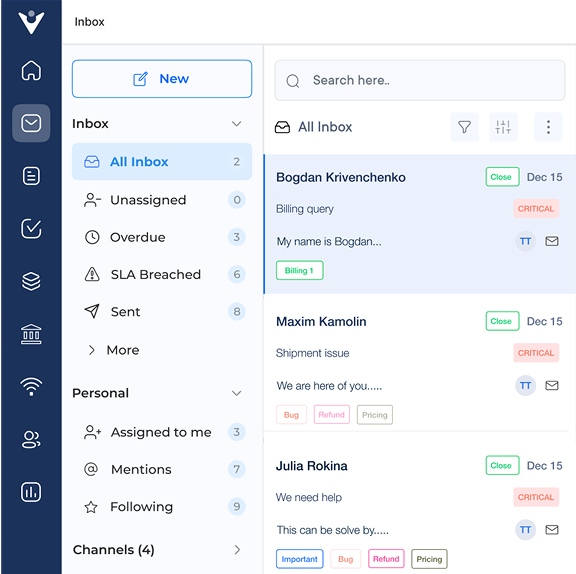
Grow Customer Relationships and stronger team collaboration with our range of products across the Conversational Engagement Suite.
Omnichannel Customer Support & Help Desk Software
AI Enabled Business Messaging and Chatbot Software
Sales Engagement & CRM Software
Call Center Software & Virtual Phone System
Product Marketing & Experience Platform
Customer Experience & Feedback Management Software

 10 Effective Ways of Prioritizing Customer Needs in 2026
Scroll to top
10 Effective Ways of Prioritizing Customer Needs in 2026
Scroll to top