8 Lead Scoring Best Practices for Businesses in 2026
Learn about the key lead scoring best practices, helping businesses prioritize prospects and improve sales efficiency. It boosts conversion rates through data-driven relationship management.
Learn about the key lead scoring best practices, helping businesses prioritize prospects and improve sales efficiency. It boosts conversion rates through data-driven relationship management.
Your sales team struggles with identifying which prospects deserve immediate attention while qualified leads slip through the cracks. When there’s no proper lead prioritization, you’re wasting valuable time on contacts who will never buy.
Every day, your competitors close deals with prospects you could have converted if you had focused your efforts correctly. Your marketing generates hundreds of leads, but your sales team can’t distinguish between tire-kickers and serious buyers.
Implementing proven lead scoring best practices transforms your sales process by automatically identifying your hottest prospects. Implementing lead scoring can improve conversion rates by 20%. Let’s dive in to understand how you can close more deals by directing your team’s energy toward leads with genuine purchase intent.
Lead scoring best practices refer to methods for evaluating and ranking potential customers based on their likelihood to purchase. Sales teams can focus on the opportunities most likely to convert by assigning numerical values to prospects according to their actions and characteristics.
Lead scoring tracks behaviors like email opens, website visits and content downloads, alongside demographic factors such as company size or job title. Each activity earns points based on its link to actual sales success. The total score highlights high-value prospects, allowing sales to prioritize meaningful conversations over chasing every lead. Marketing also gains insights into which campaigns drive real engagement.
Key objectives:
Let’s go through the specific advantages for understanding how lead scoring transforms your business operations.
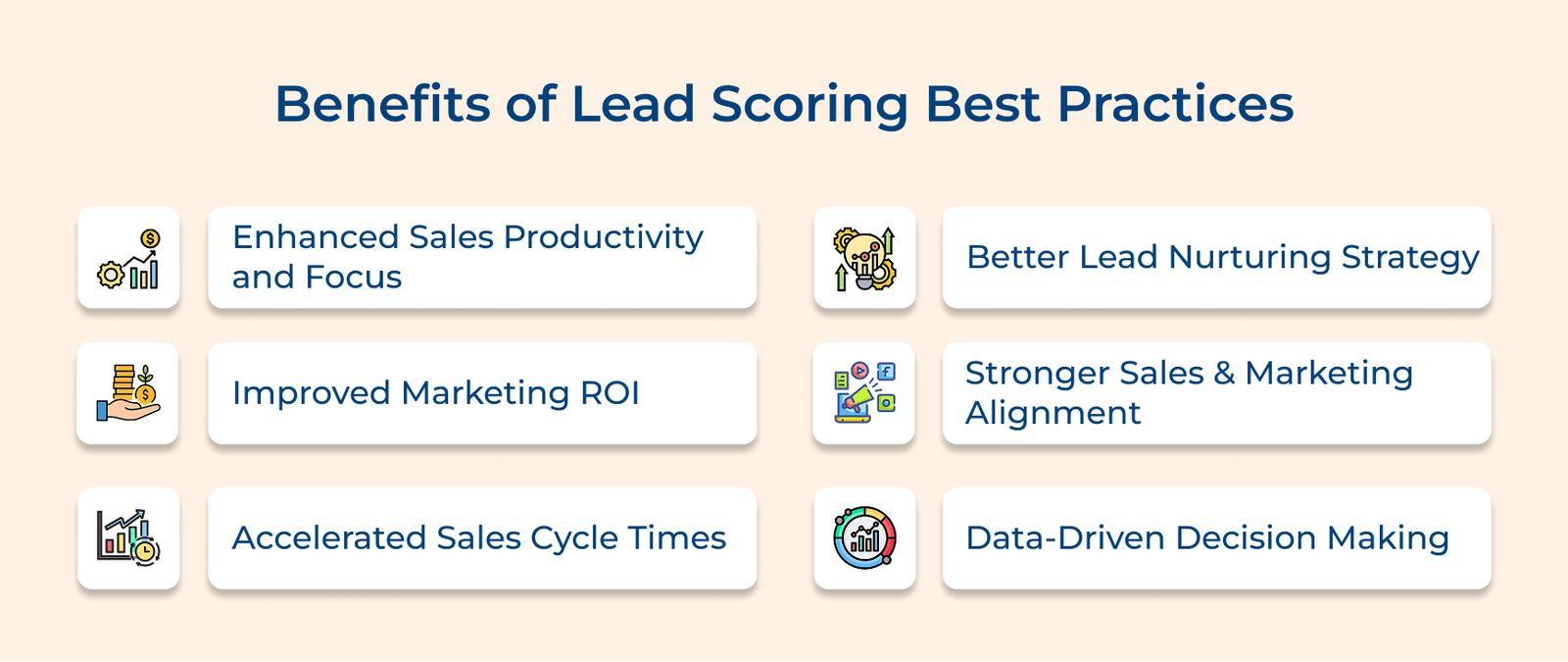
Enhanced Sales Productivity and Focus
Lead scoring removes guesswork by guiding sales reps to the prospects most likely to convert. Your team spends time building relationships with serious buyers rather than chasing uninterested contacts, increasing the number of meaningful conversations each day.
Improved Marketing Return on Investment
Marketing gains insight into which campaigns produce high-quality leads versus mere volume. Resources can be focused on strategies that attract genuinely interested prospects, ensuring efforts drive measurable impact.
Accelerated Sales Cycle Times
High-scoring leads move through the funnel more quickly, having already shown strong buying signals. Sales reps can skip early qualification steps and dive directly into solution discussions, shortening the time from first contact to closed deal.
Smarter Lead Nurturing
Lower-scoring leads receive targeted educational content to build readiness over time. Behavior-driven automation ensures prospects get relevant information, converting more leads that might otherwise be overlooked.
Stronger Sales and Marketing Alignment
Both teams work from the same definition of lead quality, reducing friction and finger-pointing when deals don’t close. Regular scoring reviews create opportunities for collaborative discussions about ideal customer profiles. The alignment improves overall revenue team performance and culture.
Below are the best practices for lead scoring that will help you elevate the quality of your sales leads, ensuring your team’s efforts are efficient and effective.
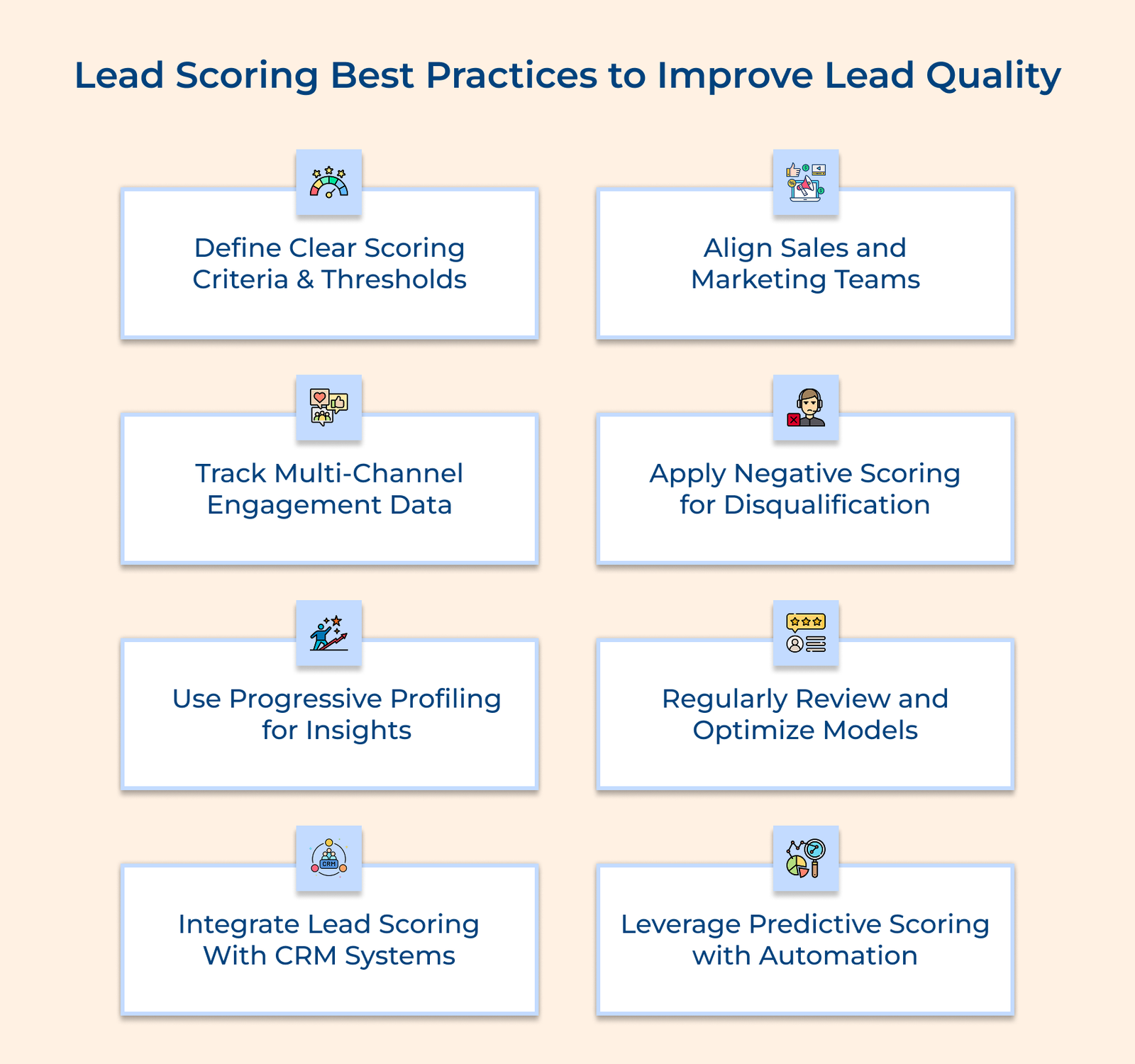
Clear scoring criteria assign specific points to prospect characteristics and behaviors that indicate readiness to buy. Without defined thresholds, sales teams risk spending time on unqualified leads while overlooking real opportunities.
Key questions:
The questions force you to examine your actual customer data rather than making assumptions about what should work. They help you identify patterns that correlate with successful sales outcomes.
You can practically define clear scoring criteria by analyzing your closed-won deals from the past year. Look for common patterns in company size, job titles and engagement behaviors. Assign point values based on how strongly each factor correlates with actual purchases.
Alignment between sales and marketing ensures both teams agree on what makes a lead qualified, reducing friction, saving resources and improving conversion rates. Misaligned expectations often lead to wasted effort and missed opportunities.
Key methods:
Consider a software company where marketing generated hundreds of leads monthly, but sales complained about the quality. After implementing shared scoring criteria and regular alignment meetings, their conversion rate increased by 40% within three months.
Tracking prospect behavior is crucial because it reveals genuine buying intent through real actions. Relying on single interactions provides limited insight, while multiple data points create a complete engagement profile.
Multiple behavioral data points help you identify prospects who demonstrate consistent interest across various touchpoints and content types. The comprehensive view separates serious buyers from casual browsers who might engage once but lack genuine purchase intent.
Pro tips:
Negative scoring removes points for characteristics that indicate poor fit, preventing your sales team from pursuing unlikely prospects. The practice improves lead quality by filtering out contacts who lack authority, budget or genuine need.
Key considerations:
Remember that negative scoring should complement positive scoring rather than creating overly restrictive qualification criteria. The goal is to improve lead quality while maintaining sufficient volume for your sales team to achieve their targets.
Progressive profiling collects prospect information step-by-step instead of overwhelming visitors with long forms upfront. The approach raises form completion rates while gradually building detailed lead profiles that improve scoring accuracy.
Collect information in stages
Start by asking for basic details like name and email. Request information such as company size, budget or role in later requests. It keeps forms short, reduces drop-offs and steadily builds richer profiles.
Build profiles over time
Each interaction adds valuable data points to your prospect records, creating detailed behavioral and demographic profiles. Track content use, engagement and needs across touchpoints to understand each prospect’s buying journey.
Improve scoring accuracy
Progressive profiling reveals qualification details that improve scoring decisions beyond basic contact information. Knowing a prospect’s role, budget, authority and timeline helps assign accurate scores.
Lead scoring isn’t a one-time setup. Regular reviews keep your criteria aligned with changing markets and buyer behavior. Without updates, the model can become outdated, causing missed opportunities and wasted effort on poor-fit leads.
Key questions:
Asking questions helps identify gaps between scoring predictions and actual outcomes. Optimization means adjusting point values based on conversion data and sales feedback to improve scoring accuracy. Analyze which leads convert versus those that stagnate, then modify your scoring weights accordingly to predict future buying behavior better.
Integrating lead scoring into your CRM ensures sales teams see up-to-date scores directly in their workflow. Without integration, reps must juggle multiple systems, reducing efficiency and limiting the value of scoring insights.
Use cases:
The main challenge involves data synchronization between your marketing automation platform and CRM system, which can create scoring delays or inaccuracies. Overcome it by establishing regular data validation processes and using native integrations rather than third-party connectors whenever possible.
Predictive lead scoring uses machine learning to analyze past data and highlight prospects most likely to convert. Unlike manual scoring, it uncovers hidden patterns and adjusts automatically as buyer behavior changes.
Key ways:
Consider that a B2B software company found that prospects downloading whitepapers on Tuesdays converted 30% more often. Predictive scoring weighted this behavior higher, raising overall lead quality.
Below are the major brands that demonstrate how thoughtful lead scoring implementation transforms business operations and drives measurable growth.
Amazon: Behavioral Intelligence at Scale
Amazon leverages comprehensive browsing patterns and purchase history to score potential Prime membership candidates or high-value product purchasers. Their system tracks behaviors like time on product pages and abandoned carts across millions of touchpoints.
The sophisticated scoring approach enables Amazon to deliver personalized recommendations that feel almost telepathic to customers. The result is dramatically improved conversion rates and customer lifetime value through precisely timed marketing interventions.
Nike: Scoring Through Engagement
Nike’s lead scoring focuses heavily on app engagement metrics and social media interactions to identify passionate brand advocates. They track workout frequency through Nike Training Club and purchase patterns across seasonal product launches to score prospects.
Nike transforms casual browsers into loyal community members by identifying engagement signals that predict long-term brand commitment. The approach builds stronger emotional connections that translate into consistent revenue from repeat customers.
Puma: Targeting Lifestyle and Demographics
Puma combines demographic data with lifestyle indicators like music preferences and social media activity to score leads interested in their fashion-forward athletic wear. Their system identifies trendsetters and early adopters who influence wider purchasing decisions.
The lifestyle-focused scoring helps Puma reach influential customers who drive organic word-of-mouth marketing within their communities. The brand builds authentic relationships with people who naturally amplify their message to relevant audiences.
Zappos: Customer Service Excellence Indicators
Zappos’ scores are based on their responsiveness to customer service interactions and feedback engagement patterns. They track how prospects respond to their famous customer care initiatives and measure interaction quality rather than just frequency.
Zappos builds relationships with people who become long-term advocates by identifying customers who value exceptional service experiences. The carefully scored prospects appreciate the brand’s service philosophy and generate positive reviews that attract similar customers.
Below are the proven platforms that help businesses automate lead qualification and improve conversion rates through advanced scoring capabilities.
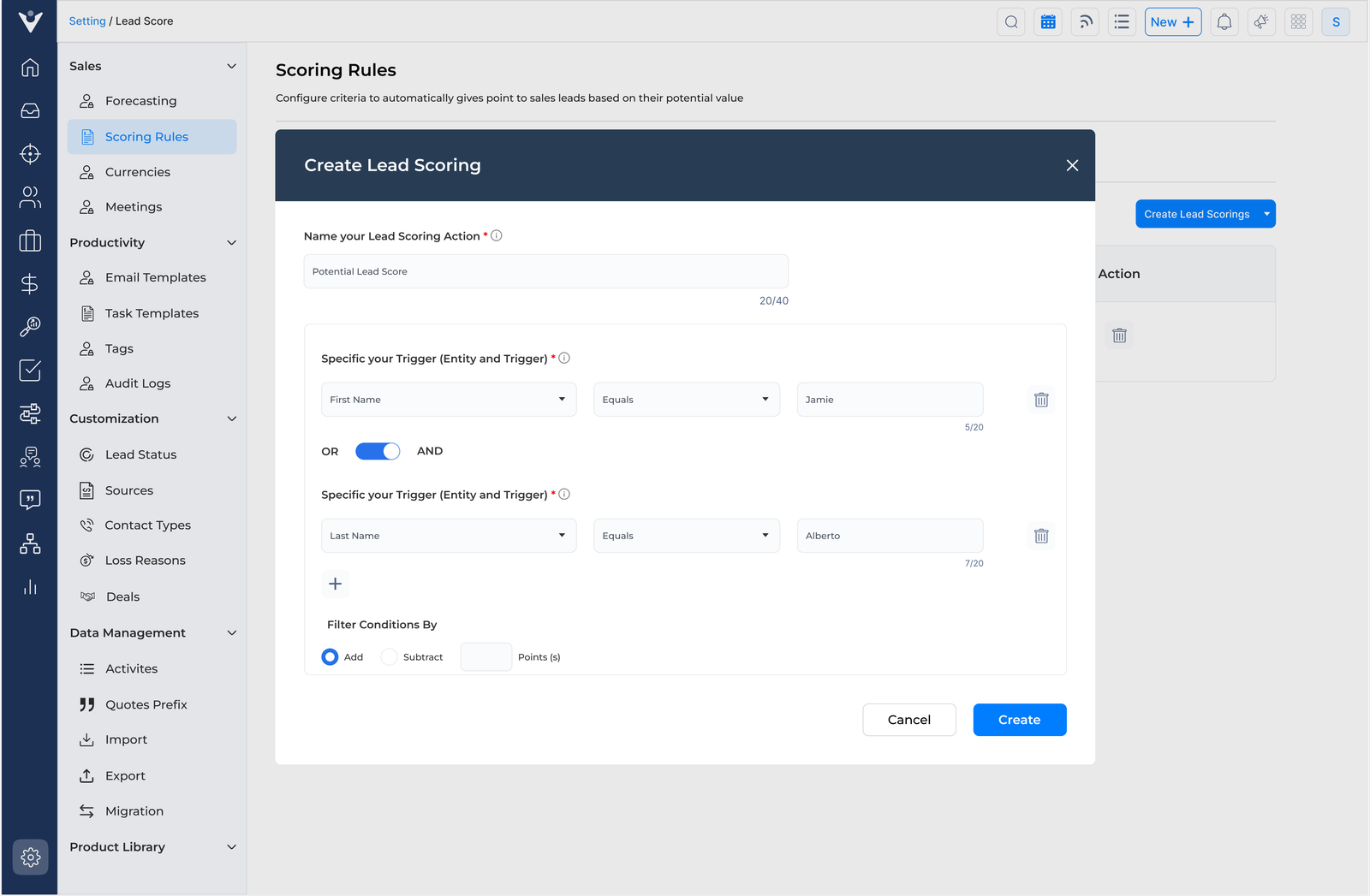
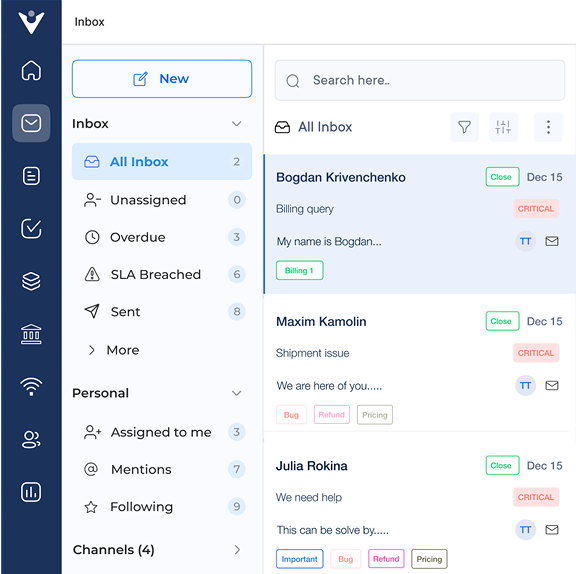
Veemo Sales offers a straightforward CRM with built-in lead scoring to help small and medium businesses manage their sales more effectively. It combines a clear visual pipeline with automatic lead qualification so teams can focus on the most promising prospects.
Key features:
Pardot offers detailed lead scoring with customizable rules and negative scoring capabilities for enterprise-level businesses. It connects directly with Salesforce CRM, showing scores inside contact records and triggering automated follow-ups based on engagement.
Marketo uses machine learning to spot behavioral patterns and predict which leads are most likely to convert. It supports complex scoring models that mix demographic, behavioral and firmographic data, backed by detailed analytics to refine the system over time.
ActiveCampaign blends email automation with simple lead scoring for small and mid-sized businesses. It tracks email opens, clicks, website visits and social engagement while letting teams set scoring rules to fit their needs.
Zoho CRM comes with built-in scoring that weighs both demographic details and prospect activity. Scores are calculated automatically, but sales teams can adjust the criteria to match their specific qualification and conversion patterns.
Lead scoring best practices transform your sales process from random prospecting into a strategic system that consistently identifies your most promising opportunities. When implemented thoughtfully, the proven methods create predictable revenue growth through focused effort and improved team alignment.
The key is to treat lead scoring as something you refine over time, not a one-time setup. The most effective teams adjust their models based on real results while keeping the system simple enough for both sales and marketing to use with confidence.

Start by studying your existing customers to see what your best buyers have in common. Build simple criteria around demographics and behaviors. You must use a 0–100 point scale to keep things straightforward. Test your model against past sales data before rolling it out fully.
Focus first on factors that show the strongest correlation with actual purchases in your business, such as company size or specific website behaviors. Weight demographic factors account for thirty percent and behavioral signals at seventy percent of your total score. Regularly review conversion data to adjust the priorities based on real results.
Avoid making your scoring model overly complex with too many variables that confuse rather than clarify prospect quality. Avoid setting scores once and never updating them. Never base scores on guesswork; always use actual customer data.
Define what a qualified lead looks like together. Hold regular check-ins to review how well the system is working and adjust based on sales feedback. Make sure everyone understands what different scores mean and how to act on them.
Prioritize behavioral data like email engagement and website activity because the signals indicate active interest in your solutions. Combine it with demographic information, such as job title and company revenue, that match your ideal customer profile. Focus on data points you can consistently collect and measure rather than sporadic information that creates incomplete scoring.
Grow Customer Relationships and stronger team collaboration with our range of products across the Conversational Engagement Suite.
Omnichannel Customer Support & Help Desk Software
AI Enabled Business Messaging and Chatbot Software
Sales Engagement & CRM Software
Call Center Software & Virtual Phone System
Product Marketing & Experience Platform
Customer Experience & Feedback Management Software
 Real-time Customer Feedback: When to Ask for It & How?
Scroll to top