Outage Communication: Benefits, Steps & Best Practices
Check out the different ways of outage communication, including why it matters and key steps to follow. Explore best practices to maintain customer trust and reduce confusion.

Check out the different ways of outage communication, including why it matters and key steps to follow. Explore best practices to maintain customer trust and reduce confusion.
When your service goes down, customers feel frustrated and abandoned without clear information about what happened or when normal operations will resume. Poor communication during outages damages trust and drives customers toward competitors who demonstrate better crisis management.
Every minute of silence during an outage multiplies customer anxiety as they wonder if their data is safe, how long disruptions will last and if your company can handle their business needs reliably during future incidents.
Effective outage communication transforms crisis moments into trust-building opportunities through transparent, timely updates that keep customers informed and demonstrate your commitment to their success even when technology fails unexpectedly.
Customer outage communication refers to the process of clearly and promptly informing people when your service isn’t working. It’s about keeping customers informed when things break, not leaving them in the dark. It includes sharing timely updates on what’s wrong and when things will be fixed. Done well, it can turn frustration into reassurance and show customers you value their trust.
As soon as an outage hits, your team should act fast. Identify who’s affected and send updates through channels like email, SMS, or your status page. Don’t wait for complaints; get ahead of the confusion. Keep the message simple: what happened, what’s being done and when it’ll be resolved.
Key objectives:
Check out the key benefits of good outage communication and see how keeping customers informed during service disruptions can strengthen trust.
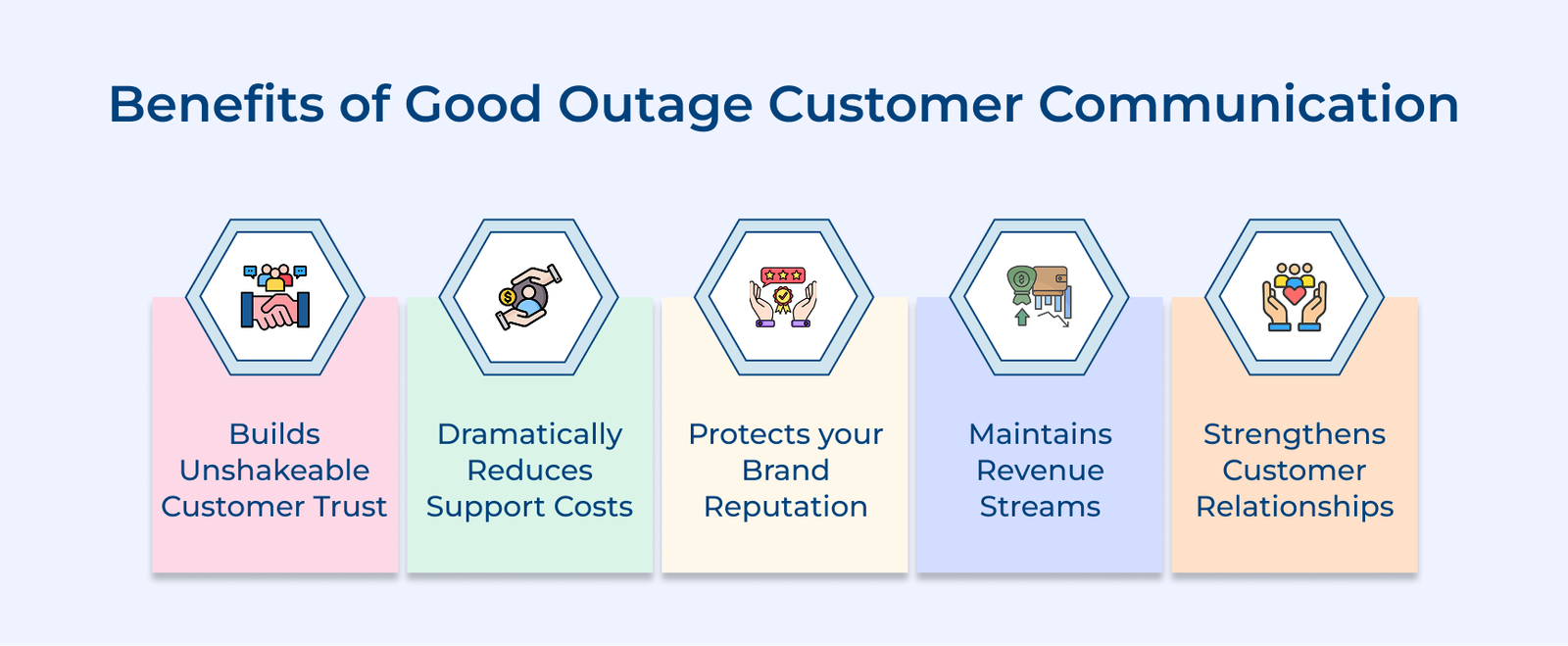
Builds Unshakeable Customer Trust
Being upfront about what’s broken shows customers you’re honest and reliable. People respect companies that own up to mistakes instead of hiding them.
Dramatically Reduces Support Costs
Proactive communication prevents the flood of angry calls and emails that typically follow service disruptions. Your support team can focus on solving problems rather than repeatedly explaining what went wrong to frustrated customers.
Protects Your Brand Reputation
A calm, clear message beats an online backlash. Timely updates stop confusion from turning into public complaints that damage your brand for the long haul.
Maintains Revenue Streams
When customers know what happened and when to expect a fix, they’re less likely to cancel. A little clarity goes a long way toward keeping subscriptions and sales stable.
Strengthens Customer Relationships
Outages become opportunities to demonstrate how much you care about customer experience. When you handle communication well, customers often become more loyal than they were before the problem occurred.
Below are the steps that outline the necessary strategies to effectively communicate during outages.
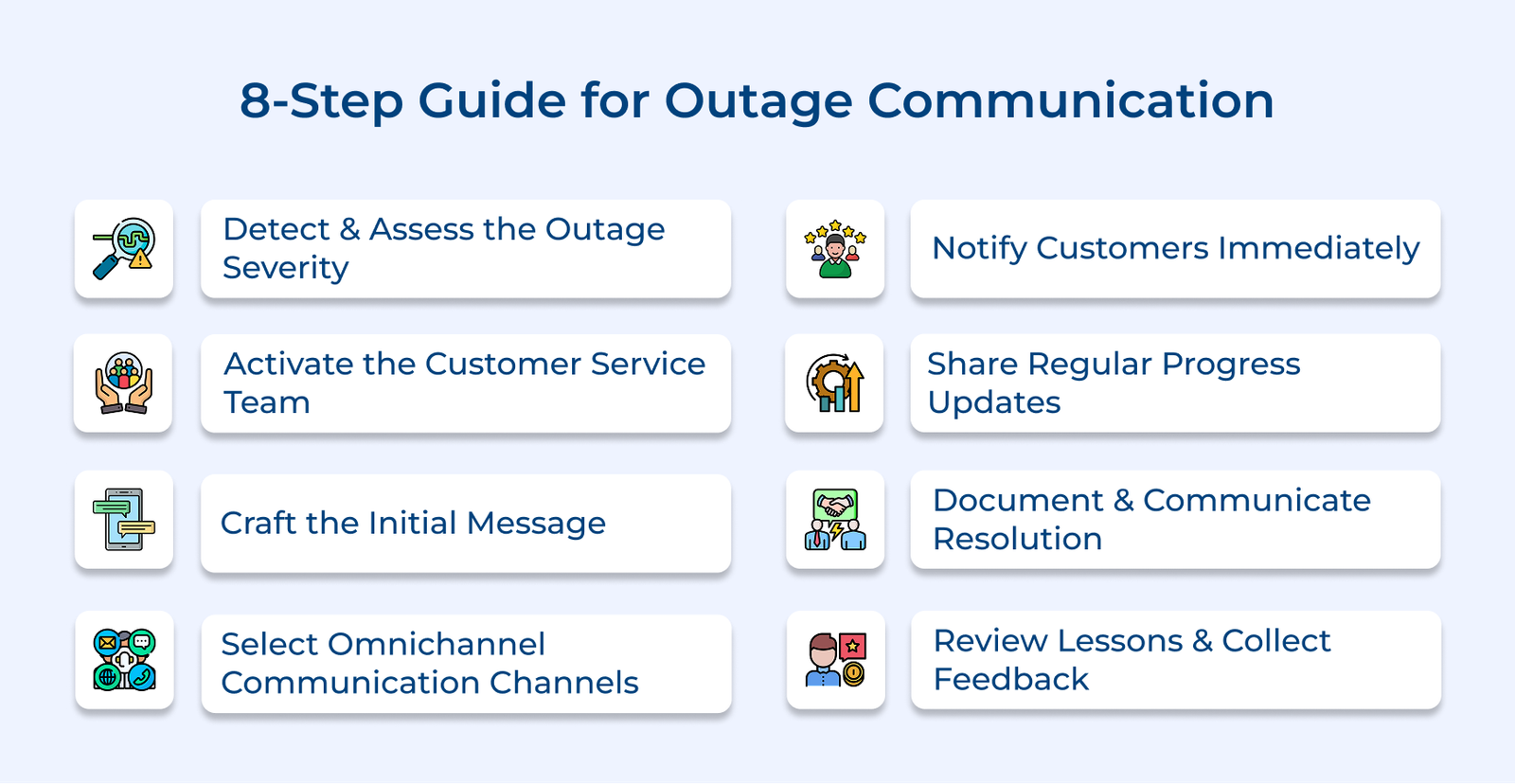
The first step in handling an outage is knowing when something breaks and how serious it is. The faster you catch the problem, the easier it is to stop it from turning into a bigger mess that hurts your customers and your business.
Key questions:
The questions help you understand the true scope of your crisis rather than just treating symptoms. Proper analysis ensures you communicate with the right customers about the right problems at the right time.
Why does analysis matter so much for communication? Knowing what broke and who’s affected helps you send messages that speak to the right concerns. Nobody wants generic updates about problems that don’t affect their operations.
Team activation is about quickly getting the right people together to manage customer communication clearly during an outage. Without coordination, your response turns messy and inconsistent.
Alert Designated Communication Stakeholders Immediately
Your communication stakeholders include everyone who needs to know about the outage before customers do. The group typically includes customer service managers, technical support leads and executive team members who make decisions about compensation or public statements.
Assign Specific Roles for Messaging and Customer Contact
Role assignment prevents confusion about who handles what during high-pressure situations. One person should write customer messages, while another manages social media responses and a third handles phone calls from major accounts.
Establish Internal Communication Channels for Updates
Internal channels ensure your team stays synchronized as the situation develops and new information becomes available. Use dedicated chat rooms or conference calls so everyone receives the same updates simultaneously, rather than playing telephone.
Your first message during an outage shapes how customers experience the entire disruption. If it’s vague or late, people feel ignored. But if it’s clear and timely, it reassures them that you’re in control.
Key factors:
Imagine telling a friend that dinner plans changed because your car broke down. You’d explain what happened when you expected to arrive and what you’re doing to fix it. Customer outage messages follow the same honest, straightforward approach.
During an outage, even the best-written message won’t help if your customers never see it. That’s why choosing the right communication channels is just as important as what you say. A solid channel strategy ensures your updates reach people quickly, clearly and through the platforms they trust. Survey your customers regularly about their communication preferences and track which channels generate the highest response rates during normal operations.
Key channels:
Backup methods become essential when your primary communication systems experience failures during the same incident. Your email servers might crash during a major outage, leaving you unable to send notifications through your usual channels. Essential backup communication methods include:
Considering multiple touchpoints for maximum reach means using several channels simultaneously to ensure comprehensive customer coverage. Let’s assume that you might send an SMS alert, followed by a detailed email explanation and a social media post for customers who follow your accounts.
The moment you confirm an outage, time starts working against you. Letting customers know within the first 15 minutes can make the difference between confusion and clarity. A quick, honest message shows you’re on it, saving customers from wasted effort and reducing support overload.
The step transforms potential customer frustration into appreciation by showing respect for their time and operations. Customers who receive prompt notifications can adjust their work plans rather than repeatedly attempting to access unavailable services.
Pro tips:
Progress updates keep customers in the loop during an outage fresh information about repair efforts every thirty to sixty minutes throughout the outage. Consistent updates ease customer anxiety and reassure them that the issue is being handled.
Key approaches:
Documentation of an outage isn’t just about record-keeping; it’s how you learn and get better. When something breaks, the goal isn’t just to fix it, but to understand what happened, how your team responded and how things can improve next time. Good documentation turns a stressful event into a practical guide for handling future incidents with more confidence and clarity.
Key questions:
The questions help you create accurate documentation rather than relying on memory during post-incident analysis. Complete answers ensure you capture both technical details and customer experience insights for future improvement efforts.
Think about creating a story that explains the journey from problem discovery to complete resolution. You want to capture the timeline of events, technical root causes, customer impact levels and communication effectiveness so future teams can learn from this experience. Hold a post-outage review, not to blame anyone, but to learn. The honest, blame-free discussions strengthen your team and prepare you for next time.
Follow-up communication is your chance to reconnect with customers after things are back to normal, not just to say the issue is fixed, but to show you care about how it affected them. The step isn’t about wrapping things up; it’s about learning, listening and earning back trust.
Key questions:
Customer feedback becomes the foundation for improving your outage communication strategy and building stronger relationships with your user base. The insights expose gaps between what your team sees and what customers experience.
Best practices:
Check out the practices that will elevate your outage communication from basic updates to exceptional customer experience management..
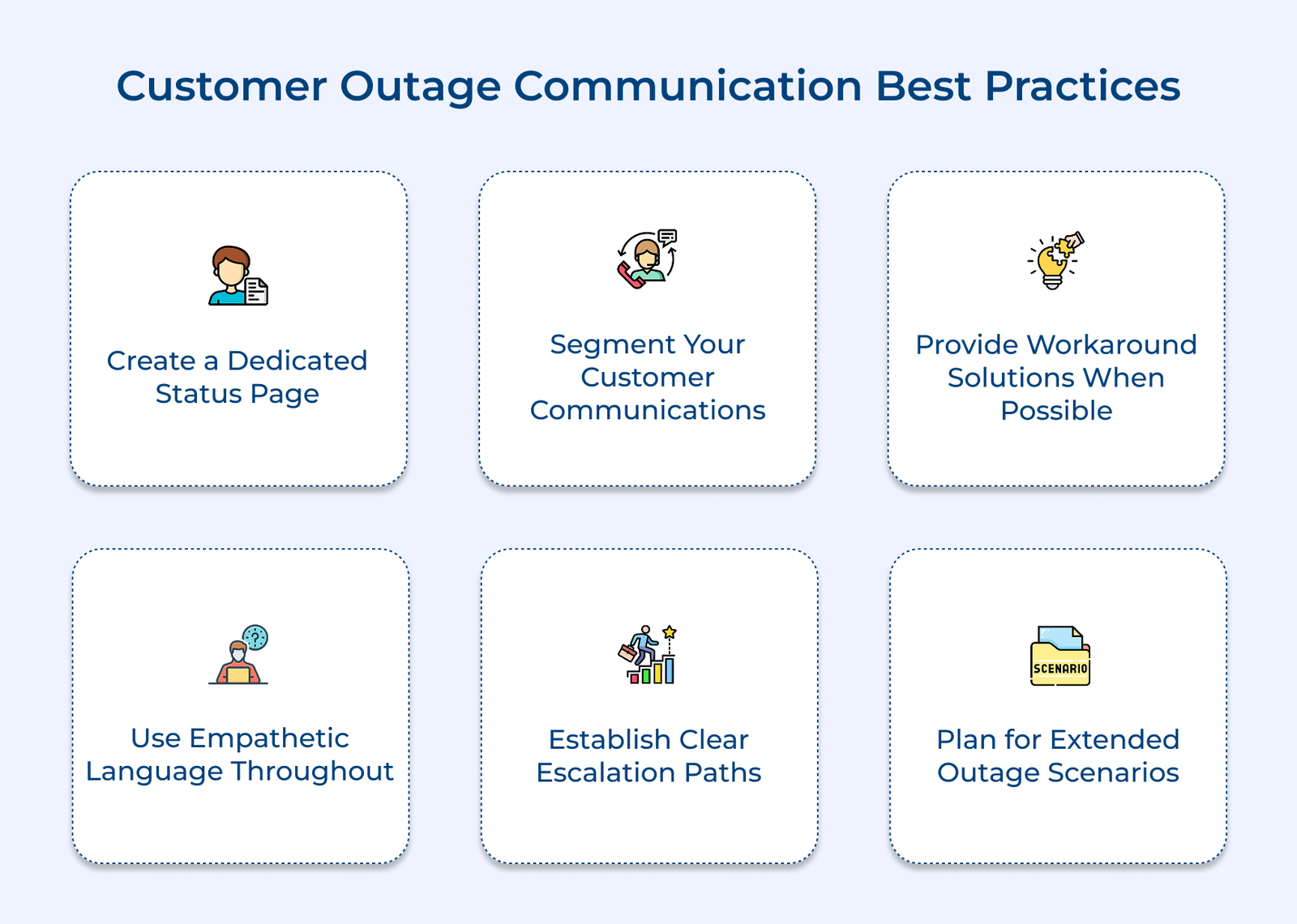
A status page is your go-to page where customers can quickly check if your services are up and running with no support tickets or long hold times needed. It cuts confusion by offering a clear, consistent source of truth about system performance and known issues.
Key questions:
Your status page becomes particularly valuable during major incidents when your support team is overwhelmed with repair work. Customers can get updates independently rather than waiting on hold or sending emails that might not receive immediate responses during crises.
Customer segmentation means giving people the right information, not just more of it. A small business using basic tools doesn’t need the same level of detail as an enterprise relying on your platform for critical operations.
You avoid overwhelming users with irrelevant updates by tailoring messages to each group. Casual users just want to know when things will work again. Enterprise teams need specifics about what broke, what’s fixed and what to expect next.
Workarounds give customers a way to keep moving while you fix the real issue. They’re not about patching things up for show; they’re about helping people get their jobs done when your service isn’t working as it should.
Key types:
Effective workarounds require a deep understanding of customer workflows and common use cases for your service. The best workarounds address the specific business needs that customers are trying to accomplish rather than just providing generic technical alternatives.
Empathetic communication means showing customers you understand how disruptive an outage is not just to systems, but to their work, deadlines and responsibilities. It’s not just a technical glitch, it’s a missed meeting, a stalled project or lost time. Your language should reflect that.
Be direct, respectful and human. Acknowledge the frustration, and reassure them you’re on it. Customers don’t need spin; they need to feel heard and know someone is working hard to fix what’s broken.
Escalation paths make sure that customers with urgent problems don’t get stuck waiting in line. Instead of sitting in standard support queues, they get direct access to someone who can actually make decisions and help quickly.
Key points:
Effective escalation prevents high-value customers from feeling abandoned during critical moments when their business operations depend on your service. The pathways also help your support team focus on resolution rather than repeatedly explaining the same status information.
Extended outage planning prepares your communication strategy for incidents that last several hours or days rather than quick fixes. The situations require different messaging approaches because customer patience and business tolerance change significantly as disruptions continue over time.
The situations demand clear, evolving communication that helps customers plan their next steps. Rather than repeat the same updates, focus on recovery timelines, workarounds and what’s being prioritized. It’s not just about fixing the issue; it’s about helping people manage through it.
The following are the key challenges of outage communication. Let’s check them out in more detail.
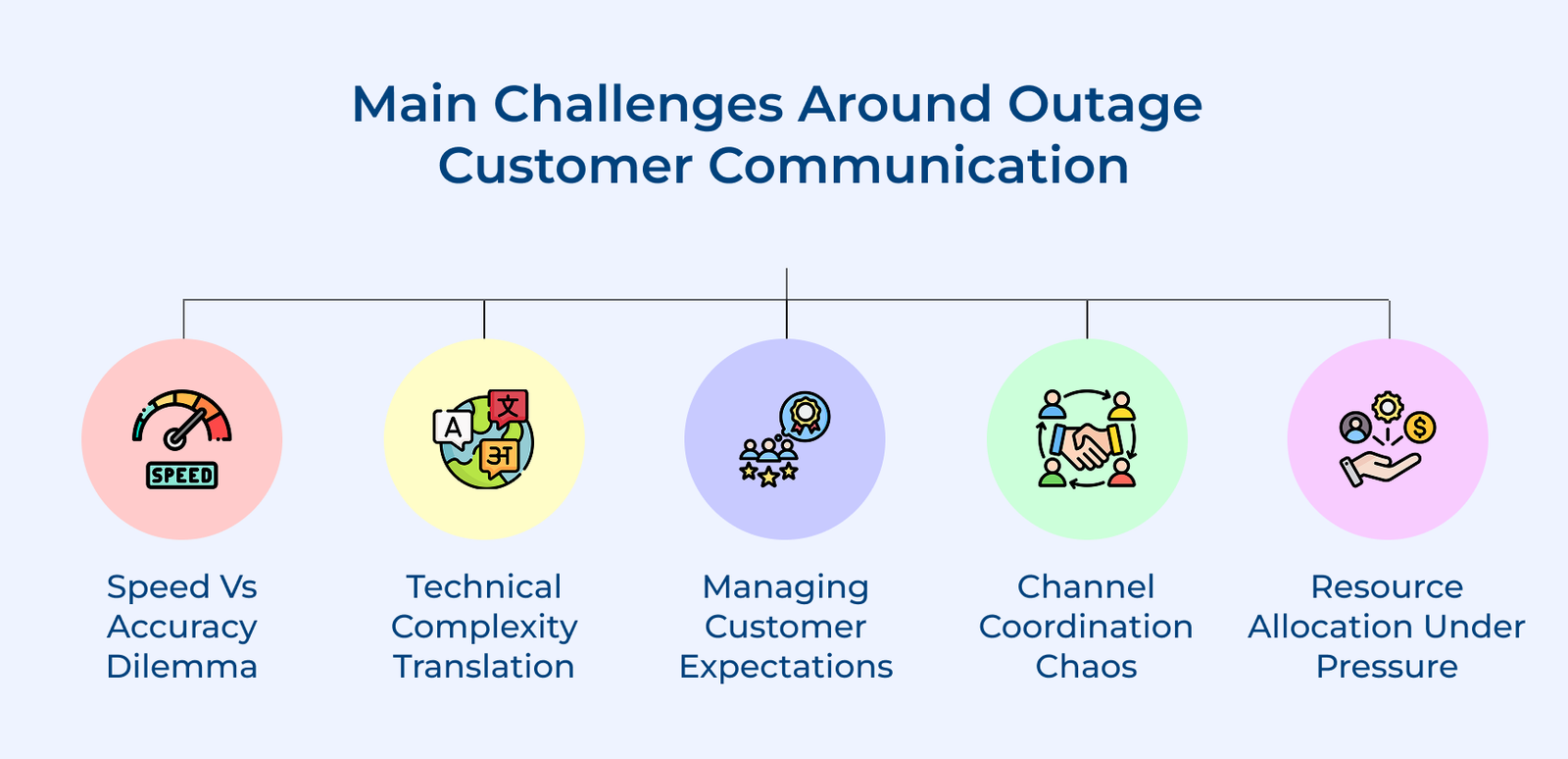
Speed vs Accuracy Dilemma
Companies struggle between sending quick updates with incomplete information and waiting for complete details that arrive too late. Customers want to hear from you immediately, but they also expect accurate timelines that often take hours to uncover.
Technical Complexity Translation
Engineering teams understand system failures in technical terms that mean nothing to customers who just need the service to work. The challenge involves translating complex infrastructure problems into clear explanations without overwhelming customers.
Managing Customer Expectations
During troubleshooting, it’s tempting to promise a quick fix. But outages often drag on because problems go deeper than expected. Saying “we’re not sure yet” may not sound great, but it’s more honest than guessing wrong.
Channel Coordination Chaos
When different teams post updates on social media, email or chat, the result can be chaos. One channel says one thing, another says something else and customers are left wondering which one to trust.
Resource Allocation Under Pressure
Outages demand that technical teams focus on repairs while communication teams need their input for updates. It creates tension between fixing problems quickly and keeping customers informed.
Implementation steps:
Below are the cases that demonstrate how major companies handle outage communication challenges and the lasting business impact of their response strategies.
Netflix: The Great Streaming Silence
During a major primetime outage, Netflix went quiet, no social media posts, no quick alerts while users filled Twitter with complaints and confusion. Hours passed before the company quietly acknowledged the issue in its help center. The narrative, by then, had already slipped out of their hands.
The delayed communication response damaged Netflix’s reputation for reliability during a time when streaming competition was intensifying rapidly. Some customers started checking out other platforms, not because of the outage itself, but because they felt ignored.
Amazon AWS: The Detailed Technical Approach
Amazon Web Services shares detailed outage updates, including root causes and step-by-step fixes, on its status dashboard. They provide frequent updates with details on affected services, regions and estimated recovery times.
The transparent approach strengthened customer trust among technical decision-makers who needed detailed information to communicate with their own stakeholders effectively. Clear, honest updates helped AWS retain customer trust and stay ahead despite major outages.
Spotify: The Social Media Savvy Response
Spotify doesn’t just tweet during outages, it chats. Be it replying directly to complaints or posting light humor that acknowledges the frustration, Spotify stays present and human. Updates are consistent, tone is on-brand and people feel heard.
Instead of damage control, their social media presence often turns outages into a moment of connection. Users don’t just forgive the glitch, they share the posts, laugh with the brand and stick around. It’s communication that builds loyalty, not just manages crises.
Good outage communication doesn’t just limit damage; it builds trust when it matters most. Clear, timely updates show customers you understand the impact on their work and take their experience seriously.
The key is preparation, not improvisation. Teams that plan, communicate honestly and treat customers like people, not just users, often find that a well-handled outage strengthens relationships more than a smooth day ever could.

Keep it fast, clear and consistent. Send your first message within 15 minutes. Use plain language and explain what’s going on. Update every 30 to 60 minutes and make sure every channel shares the same message. Don’t overpromise; set timelines based on what your technical team can realistically deliver.
Business stakeholders need detailed communication that addresses operational impact beyond basic service updates. Create separate internal streams that include financial impact assessments and customer churn risk analysis. Provide stakeholders with consistent talking points they can use when discussing the incident with their teams. It ensures everyone maintains unified messaging about the situation.
Within 15 minutes of confirming the issue. Even if you don’t have all the details yet, a quick heads-up shows you’re on it and prevents customers from wasting time on broken systems. Silence causes more frustration than partial information.
Every outage communication needs four essential elements: a clear description of affected services, the current resolution status, the estimated restoration timeline and contact information for urgent needs. Avoid confusing technical details, but provide enough context so customers understand operational impact. Include specific next steps and when customers can expect updates.
Acknowledge them quickly. Be honest. Don’t argue. Show that you understand the real-world problems the outage is causing. Escalate serious issues, especially from key accounts and if appropriate, offer compensation tied to the actual business impact.
Grow Customer Relationships and stronger team collaboration with our range of products across the Conversational Engagement Suite.
Omnichannel Customer Support & Help Desk Software
AI Enabled Business Messaging and Chatbot Software
Sales Engagement & CRM Software
Call Center Software & Virtual Phone System
Product Marketing & Experience Platform
Customer Experience & Feedback Management Software

 Knowledge Base Audit: What is it & How to Run it?
Scroll to top
Knowledge Base Audit: What is it & How to Run it?
Scroll to top