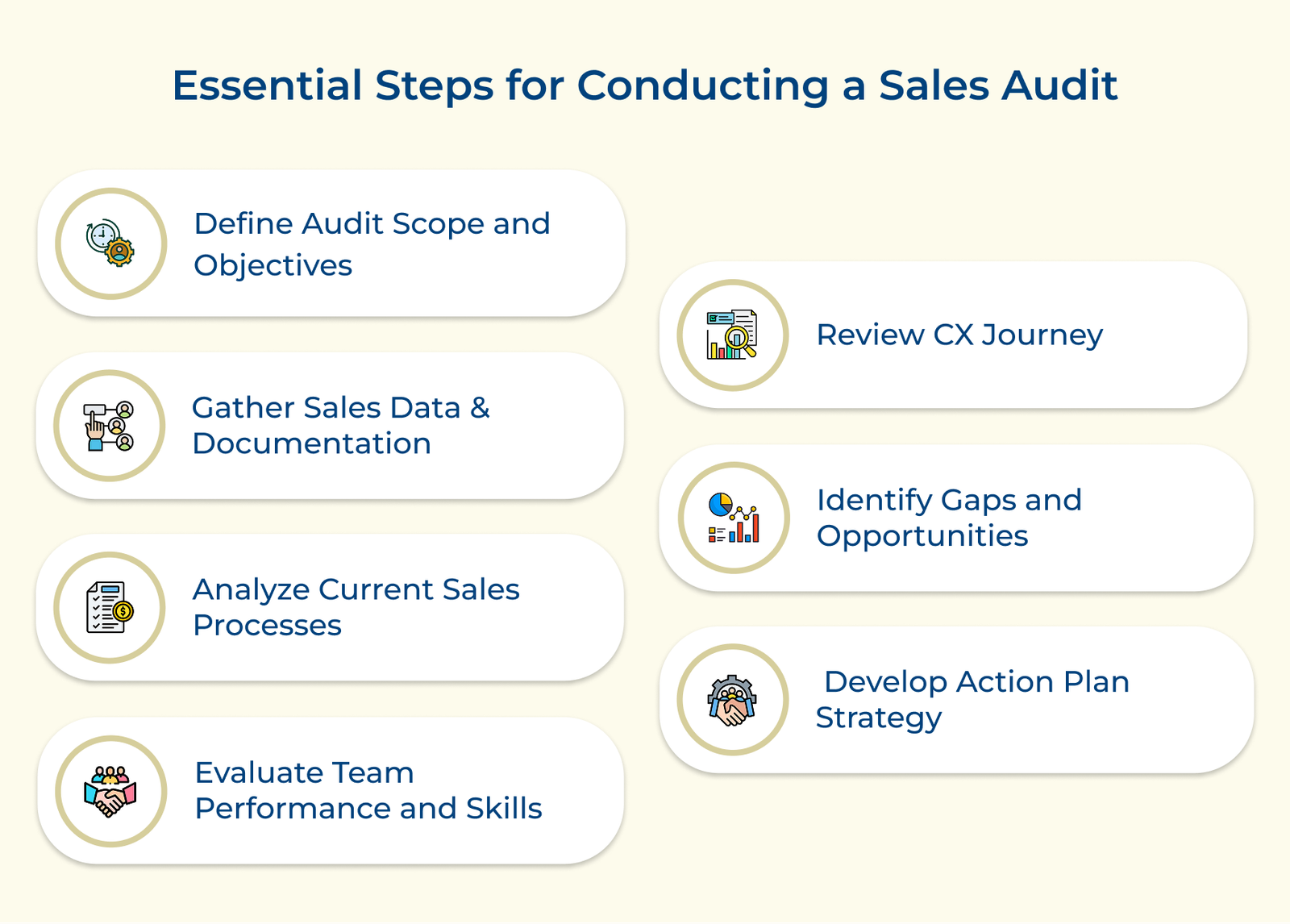
1. Define Audit Scope and Objectives
Defining the scope and objectives of your sales audit is the critical first step in ensuring a focused process. The phase sets the foundation by outlining clear, measurable goals that guide your entire audit. Without a well-defined scope, your audit risks losing direction and wasting valuable resources.
Start by identifying KPIs that align with your business objectives such as conversion rates, average deal size and sales cycle length. Create a detailed project timeline with specific milestones. You’ll need to assess available resources like team members, tools and budget. Factor in potential challenges, allowing for extra time for unforeseen delays or additional data needs.
Pro tips:
- Form a steering committee with members from sales, marketing and customer success to ensure a well-rounded perspective.
- Use the SMART framework (Specific, Measurable, Achievable, Relevant, Time-bound) for clear, actionable objectives.
2. Gather Sales Data and Documentation
Data gathering is the foundation of your sales audit analysis, providing valuable insights into past performance, current processes and customer interactions. Proper data collection ensures accurate analysis and actionable recommendations. Begin by collecting historical sales data such as revenue trends, win rates and pipeline metrics. The review reveals patterns and performance trends.
Evaluate your sales tech stack including CRM tools, sales enablement platforms and automation systems. Simultaneously, gather customer feedback via surveys, interviews and interaction logs to assess the effectiveness of your sales approach.
Actionable tips:
- Create a standardized data collection template to ensure consistency across teams and periods.
- Implement version control for documents to maintain data integrity and easily track updates.
3. Analyze Current Sales Processes
Process analysis evaluates the efficiency of your sales operations, uncovering how well your team converts leads and identifying bottlenecks. A deep dive into the area can optimize your sales funnel and boost conversion rates.
Start by mapping each step of your sales process, from initial contact to deal closure. Analyze how leads move through your pipeline. It involves analyzing conversion rates, time spent in each stage and drop-off points. It helps optimize resource allocation and refine sales forecasting.
Best practices:
- Use tools like Mermaid or Lucidchart to create visual process maps for better clarity and analysis.
- Conduct timing studies on repetitive tasks to spot automation and process improvement opportunities.
4. Evaluate Team Performance and Skills
Team evaluation sheds light on your sales force’s strengths and areas for growth. The assessment empowers you to enhance team performance by identifying skill gaps and training needs. Start by assessing each team member’s skills using competency frameworks.
Evaluate the effectiveness of existing training by tracking metrics like ramp-up time, post-training performance and skill retention. Correlating the metrics with conversion rates helps identify which training strategies drive success.
Pro tips:
- Encourage peer-to-peer learning sessions where top performers share best practices and successful sales insights.
- Use skills matrices for each role to ensure targeted development and clear career paths.
5. Review Customer Experience Journey
A customer experience review offers valuable insights into how prospects and clients engage with your sales process, highlighting friction points. It helps refine your sales approach and better meet customer needs. Start by documenting every customer touchpoint, from initial awareness to post-purchase interactions.
Analyze feedback through surveys, interviews and social media to gauge satisfaction levels. Real-time customer satisfaction metrics help track NPS and customer retention rates. It led them to implement a unified product database for consistency.
Actionable tips:
- Create separate journey maps for different customer segments to identify unique needs and pain points.
- Conduct regular mystery shopping to experience your sales process firsthand and uncover areas for improvement.
6. Identify Gaps and Opportunities
Gap analysis identifies growth opportunities by highlighting the disparity between current performance and desired outcomes. The step pinpoints specific actions needed for sales optimization.
The process includes benchmarking against industry standards along with documenting workflow inefficiencies, bottlenecks and system limitations. An IT services company discovered that its proposal creation process was 40% slower than the industry standard. They implemented an automated proposal system. As a result, their turnaround time decreased by 60%, significantly improving efficiency.
Best practices:
- Use a prioritization matrix to rank gaps by impact and implementation complexity.
- Create a competitive intelligence dashboard to track and compare your performance against industry leaders.
7. Develop an Action Plan Strategy
Action plan development turns audit insights into actionable strategies that deliver measurable results. The crucial step ensures that audit findings lead to tangible improvements and sustainable growth across your sales operations.
Start by crafting detailed, business-aligned recommendations based on audit findings. It should be specific, actionable and directly linked to key business goals. Create an implementation framework with clear timelines, responsibilities and progress monitoring.
Pro tips:
- Use project management tools to create a visual roadmap that helps stakeholders track the implementation process.
- Set up a feedback loop to quickly adjust the plan based on early results and team input.
Real-World Sales Audit Examples
Check out how top global brands use sales audits to stay ahead of the competition and drive ongoing improvements in their sales operations.
Amazon: Data-Driven Sales Excellence
Amazon leverages continuous sales audits through advanced analytics, monitoring seller performance, marketplace trends and customer behavior in real time. The data-driven approach has optimized seller quality, boosted customer satisfaction and refined pricing strategies, solidifying Amazon’s dominance in global e-commerce.
Apple: Premium Experience Optimization
Apple conducts thorough sales reviews across both retail stores and online platforms. They focus on customer experience, product presentation and staff performance. Their rigorous process ensures premium brand positioning with mystery shopping, regular assessments and detailed interaction analysis.
Nike: Omnichannel Sales Excellence
Nike’s sales review strategy centers on their omnichannel presence, evaluating direct-to-consumer platforms, retail partnerships and digital marketplace performance. Their audits emphasize inventory management customer engagement and brand consistency. The detailed strategy has strengthened its market position.
Zappos: Customer-Centric Audit Model
Zappos’ customer-centric sales review focuses on service quality, return processes and satisfaction metrics. Their audit includes a detailed analysis of customer interactions, call quality and service responsiveness. Their customer-focused audit strategy has enhanced their service reputation.
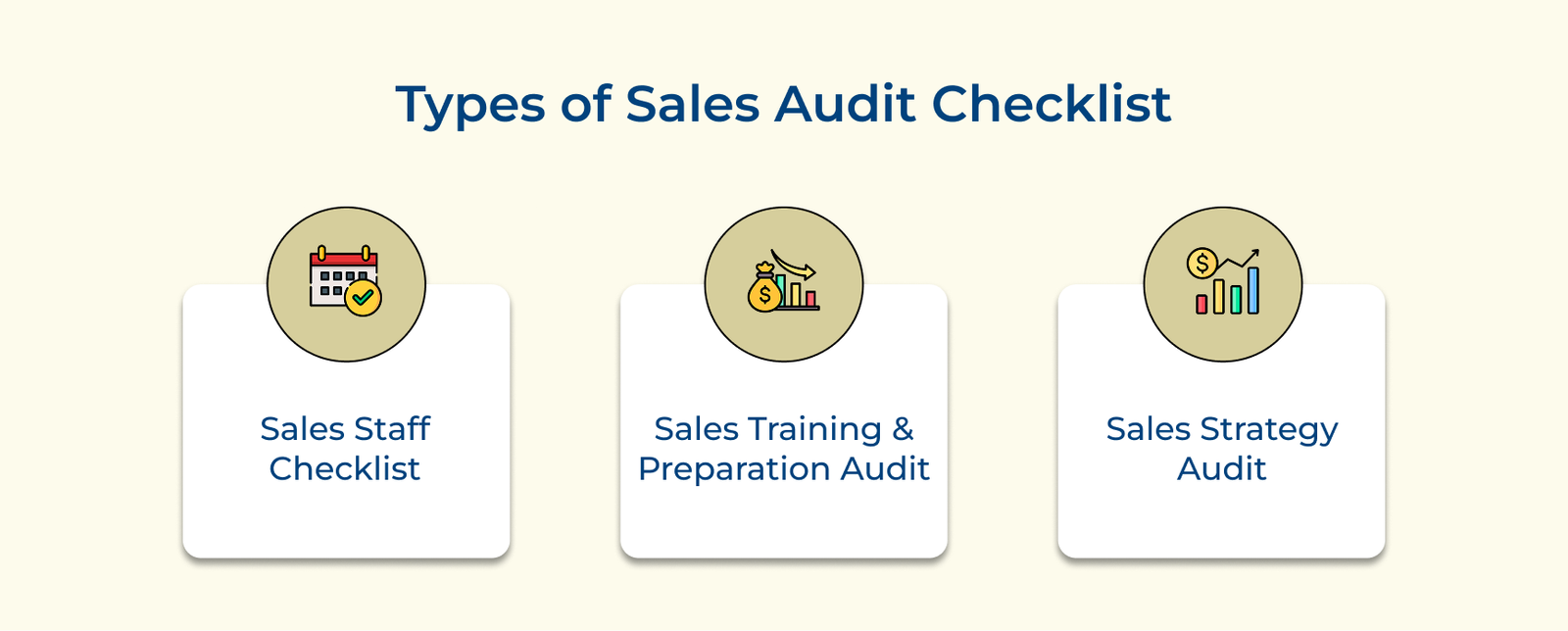
Sales Audit Checklist: Key Questions for Comprehensive Evaluation
Check out the key questions that help organizations assess their sales effectiveness across different dimensions.