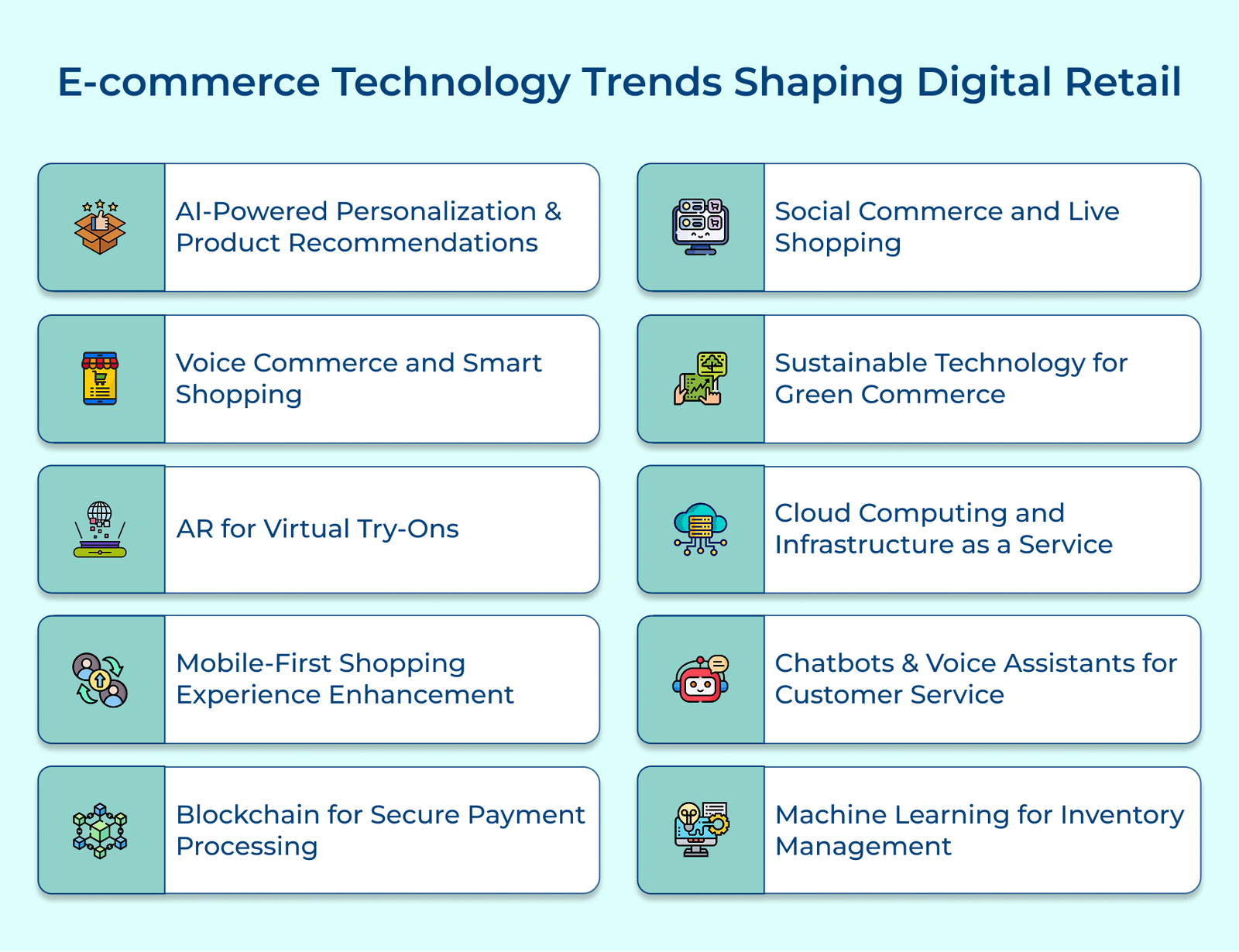
1. AI-Powered Personalization and Product Recommendations
AI-powered personalization is transforming e-commerce by offering tailored shopping experiences. It provides relevant product recommendations and dynamic pricing, by analyzing customer data. Dynamic pricing systems use AI to adjust prices based on demand, competitor pricing and inventory levels. Let’s assume that a fashion retailer might raise winter coat prices during cold spells and offer discounts on summer apparel during the off-season.
Advanced AI also analyzes browsing patterns and purchase history to create detailed customer profiles. It enables personalized recommendations and targeted marketing similar to how streaming services suggest content based on viewing history.
Pro tips:
- Use A/B testing to refine personalization algorithms for better recommendations.
- Balance personalization with privacy by being transparent about data collection and giving customers control over their preferences.
2. Voice Commerce and Smart Shopping
Voice commerce is revolutionizing shopping by enabling hands-free ordering and integration with smart home devices, making it easier and more accessible for customers. Voice-activated systems let customers create shopping lists and place orders with simple commands, while automatically reordering frequently purchased items through smart devices.
Natural language processing enhances the experience by understanding context and complex product searches. Customers can ask specific queries, like “comfortable running shoes for marathon training” and receive personalized recommendations.
Actionable tips:
- Design voice commands that mimic natural speech to boost user adoption.
- Use voice authentication and order confirmation to prevent accidental purchases while maintaining convenience.
3. Augmented Reality for Virtual Try-on
Augmented reality is transforming online shopping by bridging the gap between digital and physical retail. It allows customers to visualize products in their space or on themselves before purchasing, boosting confidence and reducing return rates. Virtual fitting rooms use AR to let customers try on clothing and accessories digitally, offering real-time visualization for a perfect fit.
Interactive product visualization lets customers place furniture and decor in their homes through mobile devices, ensuring accurate size. Home improvement stores offer AR apps to visualize paint colors or appliances in real spaces.
Best practices:
- Ensure seamless AR functionality across devices and screen sizes for broader accessibility.
- Collect user feedback within AR experiences to improve accuracy and satisfaction.
4. Mobile-First Shopping Experience Enhancement Apps
Mobile-first shopping apps are designed to enhance the smartphone shopping experience, focusing on speed, convenience and seamless checkout to reduce cart abandonment. One-click checkout securely stores customer info, enabling quick purchases. Progressive web apps ensure fast loading and smooth performance, even with slow internet connections.
Mobile payment integration supports digital wallets and contactless methods, prioritizing security through encrypted transactions. Fashion retailers often integrate Apple Pay and Google Wallet, allowing customers to instantly purchase trending items via social media.
Pro tips:
- Use mobile analytics to optimize the customer journey across devices.
- Regularly test app performance under various network conditions to ensure smooth functionality.
5. Blockchain for Secure Payment Processing
Blockchain technology boosts e-commerce security by decentralizing transaction verification and encrypting data storage. It ensures transparency in payments, protects customer information and reduces fraud risks. Smart contracts automate transaction verification, eliminating intermediaries and speeding up processing while maintaining top security.
Cryptocurrency integration and decentralized data protection create a robust security framework for e-commerce platforms. The systems utilize advanced encryption protocols to safeguard customer information while enabling seamless cross-border transactions. The decentralized nature of blockchain enhances security by eliminating single points of failure.
Actionable tips:
- Train staff to manage blockchain-based payment systems and security protocols effectively.
- Conduct regular security audits and updates to ensure optimal blockchain performance.
6. Social Commerce and Live Shopping
Social commerce merges shopping with social media, offering immersive experiences that drive sales through authentic interactions and real-time engagement. Live product demos and auctions blend entertainment with commerce. The interactive sessions enable direct communication between brands and customers.
Social media shopping enhances authenticity by leveraging user-generated content, allowing seamless purchasing while maintaining the natural flow of social interactions. It creates a more engaging, trustworthy shopping environment.
Pro tips:
- Balance promotional content with user-generated material in a consistent content calendar to keep engagement high.
- Invest in quality streaming equipment and reliable internet to deliver professional live shopping experiences.
7. Sustainable Tech for Green Commerce
Sustainable technology in e-commerce helps businesses reduce their environmental footprint while catering to eco-conscious consumers. It enables optimized operations and transparent sustainability practices that resonate with green shoppers.
Eco-friendly packaging and sustainable supplier verification enhance environmental responsibility by ensuring waste reduction and verifying suppliers’ green credentials, all while maintaining operational efficiency.
Actionable tips:
- Establish clear sustainability metrics and reporting to track progress or show commitments to stakeholders.
- Conduct regular sustainability audits to uncover new opportunities for reducing environmental impact.
8. Cloud Computing and Infrastructure as a Service (IaaS)
Cloud computing revolutionizes e-commerce by offering scalable, flexible solutions for digital retail. It helps businesses handle peak traffic, optimize resources and reduce operational costs. Scalable hosting ensures consistent performance during high-demand periods, automatically adjusting resources based on traffic patterns to maintain website speed during sales events.
Multi-region data synchronization and automated backups create a solid foundation for global expansion. The solutions ensure data consistency and business continuity with robust disaster recovery protocols, enabling smooth market expansion.
Best practices:
- Set clear performance benchmarks and monitoring systems to optimize cloud resource usage.
- Implement strong data governance policies to ensure compliance with regional regulations and boost efficiency.
9. Chatbots and Voice Assistants for Customer Service
Automated customer service solutions revolutionize e-commerce support by offering instant, efficient assistance, reducing costs and ensuring consistent service across all touchpoints. Using advanced natural language processing, the systems provide quick answers to common questions and escalate complex issues to human agents when needed, maintaining personalized, high-quality interactions.
More than 67% of consumers worldwide have used a chatbot for customer support in the past year. Multi-language support and predictive issue resolution enhance service by anticipating customer needs based on data and behavior. AI-driven analytics help identify pain points and optimize support strategies.
Pro tips:
- Regularly update chatbot knowledge with new product info and FAQs to improve response accuracy.
- Establish clear escalation protocols for smooth transitions between automated and human support.
10. Machine Learning for Inventory Management
Machine learning transforms inventory management by leveraging predictive analytics to optimize stock levels and minimize costs while meeting customer demand. Demand forecasting systems analyze past sales data and market trends to predict future inventory needs. The systems factor in variables like seasonality and market conditions to make precise ordering recommendations, ensuring optimal stock levels.
Real-time stock optimization and supply chain anomaly detection help businesses stay ahead by identifying potential disruptions early, allowing swift adjustments to changing market conditions.
Actionable tips:
- Set clear KPIs to measure the success of machine learning in inventory management.
- Develop contingency plans for supply chain disruptions flagged by anomaly detection systems.
E-commerce Technology Examples
Check out the latest e-commerce technology examples that are transforming online shopping and streamlining operations through innovative tools.