40+ Essential Sales Statistics For Businesses in 2026
Sales statistics highlight key trends, performance benchmarks and buyer behavior insights. It helps teams measure results, spot gaps and make informed decisions to improve revenue outcomes.

Sales statistics highlight key trends, performance benchmarks and buyer behavior insights. It helps teams measure results, spot gaps and make informed decisions to improve revenue outcomes.
There are tons of sales teams that put in all their effort, yet they keep missing the targets while seeing their competitors close one deal after another. The difference often feels confusing and frustrating when hard work does not translate into results.
Top-performing sales teams do not rely on just luck or natural talent. They rely on clear patterns backed by real data. Sales statistics across industries shows which are the actions that consistently lead to better conversations, stronger pipelines and more closed deals. Use these insights as your playbook to identify what’s holding your team back and what changes will move the needle on revenue.
Sales statistics refer to data-driven insights that reveal trends and patterns across the sales industry. The figures come from surveys and research studies conducted among sales professionals and organizations. They tell us what percentage of salespeople are hitting quotas.
Unlike individual sales metrics that track your own team’s performance, the statistics show you the bigger picture of what’s happening in sales worldwide. Sales stats serve as benchmarks that help you understand where your organization stands compared to others in your industry.
Key benefits:
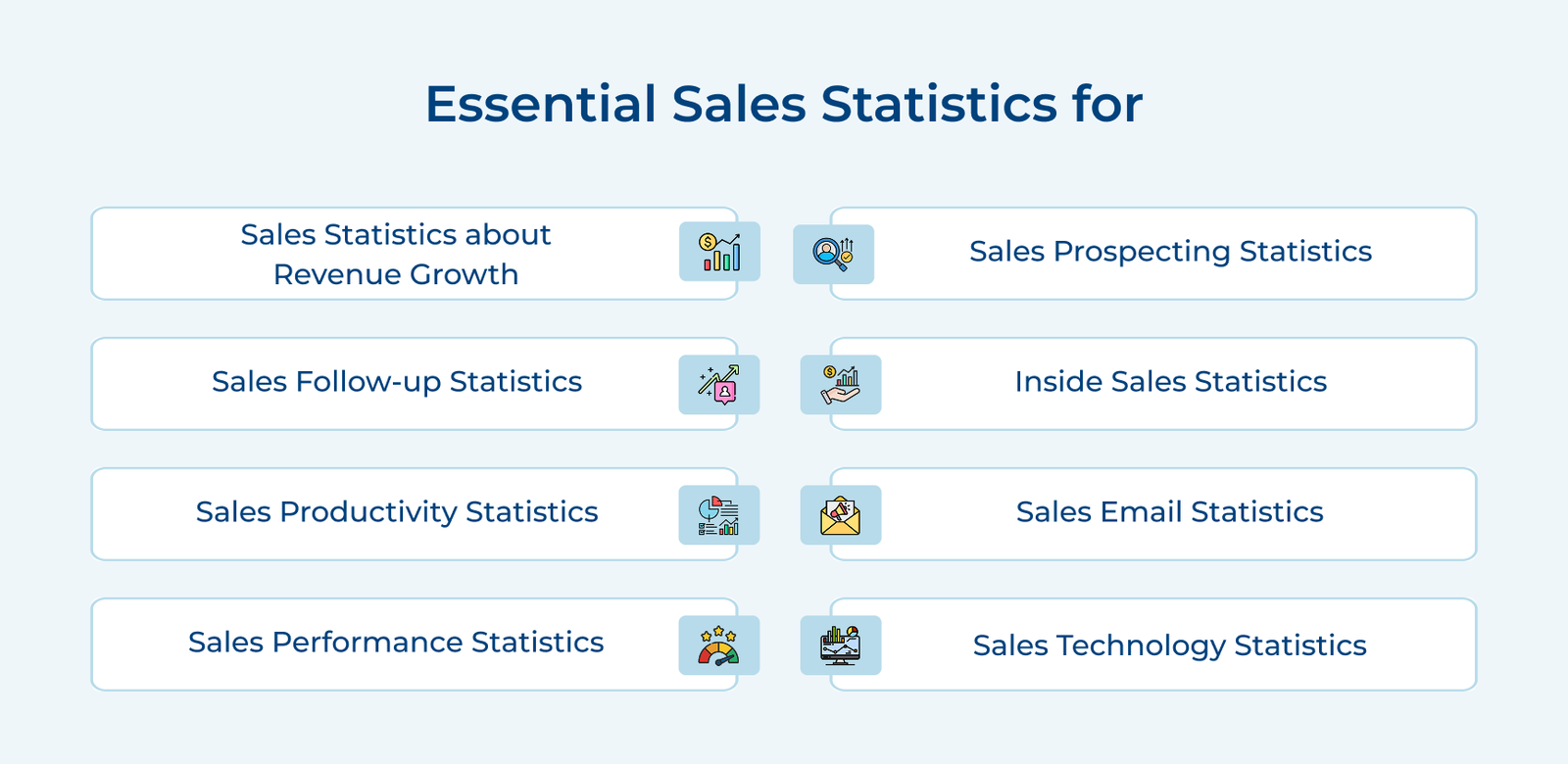
Let’s go through the essential sales stats that will guide your planning and decision-making processes.
1. 79% of sales leaders report revenue growth over the past year
The statistic shows that most sales organizations are experiencing positive momentum despite economic uncertainties. It signals that buyers are still spending and that B2B sales strategies are adapting effectively to market conditions. If your revenue isn’t climbing, the benchmark suggests you might need to revisit your approach or identify what’s holding your team back.
2. 78% of sales leaders report growth in new customer acquisition over the past year
Growth shows up strongly in new business, not just existing accounts. Prospecting efforts are working, and teams are adding fresh opportunities alongside revenue gains instead of relying only on upsells.
3. 71% of prospects prefer independent research over talking to a rep
Modern buyers want to educate themselves before engaging with sales teams. The shift means your content and online presence need to answer questions before prospects even reach out. Sales reps who understand it prefer to be helpful resources rather than pushy closers when prospects finally make contact.
4. 37% of sales reps generate the most leads from phone calls during cold outreach
Digital channels keep growing, yet phone calls still deliver real results for many reps. Strong targeting and preparation make cold calling effective. Live conversations grab attention faster than messages lost in crowded inboxes.
5. 69% of cold emails sender say results declined year over year due to stricter spam filters and growing fatigue with generic AI content
The inbox has become a battlefield where generic outreach gets buried instantly. AI-generated emails that lack personalization are training prospects to ignore anything that feels automated or mass-produced. Sales teams need to craft genuinely personalized messages that demonstrate real research and relevance to stand out.
6. 81% of revenue leaders say their team’s deals are more complex than ever
Buying decisions now include more people and take longer than before. Sales teams need to understand internal dynamics and align multiple stakeholders. Quick decisions are rare as buyers scrutinize risks and approvals more carefully.
7. 60% of customers reject an offer four times before buying
Persistence closes deals because buyers need time to process concerns and feel confident in moving forward. Each “no” brings you closer to understanding what’s truly blocking the purchase. Sales professionals who quit early miss opportunities that were always within reach but required patient nurturing.
8. 80% of successful sales take five or more follow-up sales calls
Most deals need several conversations before trust forms. The gap separates average reps from top performers. Thoughtful follow-ups work because each touch adds clarity or insight instead of empty check-ins.
9. The ideal number of follow-ups for optimal results in a B2B outreach campaign is two emails
There’s a sweet spot between persistence and pestering when it comes to email sequences. Two follow-ups give you enough chances to catch someone at the right time without overwhelming their inbox. The finding helps you allocate your energy efficiently rather than burning out on endless sequences that don’t convert.
10. Three-email cold outreach campaigns achieve the highest reply rates at around 9%
Three-touch email campaigns strike the right balance between visibility and restraint. The 9% reply rate proves that thoughtful multi-touch sequences outperform both single blasts and aggressive campaigns. The benchmark helps you judge how your email approach stacks up.
11. 44% of salespeople give up after a single follow-up attempt
Nearly half of sales professionals quit right when the real opportunity begins to develop. The premature abandonment means many deals are lost, not because they were unwinnable but because the seller stopped trying. The gap between the statistics and the previous ones shows exactly where top performers separate themselves from the pack.
12. 62% of sales professionals say their organizations are more risk-averse in 2023 than in 2022
Economic uncertainty has made both buyers and sellers more conservative in their approach to deals or strategies. The risk-averse mindset affects everything from discount approvals to willingness to try new sales methodologies. Organizations playing it too safe might be missing opportunities that bolder competitors are seizing.
13. 28% of sales professionals cite long sales cycles as the main reason prospects drop out of deals
Long buying cycles drain momentum and invite doubt. Each extra step creates another chance to walk away or look elsewhere. Shorter, clearer processes keep decisions moving and deals alive.
14. 52% of sales reps use sales enablement content and 79% say it plays a key role in closing deals
Many sales reps acknowledge the value of enablement resources, yet far fewer actually use them. Teams that leverage case studies or battle cards handle objections confidently and build buyer trust, showing untapped potential in underused tools.
15. Administrative tasks take up an hour of sales representatives’ time daily
One hour per day equals more than 250 hours per year that could be spent actually selling. Data entry and reporting requirements are stealing significant chunks of productive selling time from your team. Organizations that can reduce the burden through automation or process improvement gain a substantial competitive advantage in rep productivity.
16. Sales reps spend only 28% of their week actually selling
The majority of a salesperson’s time gets consumed by meetings and internal tasks rather than revenue-generating activities. Companies that can reclaim even 10% of this lost time for actual selling will see significant improvements in output and quota attainment.
17. Automating lead management can boost revenue by 10% or more within six to nine months
Automation removes the friction that causes leads to fall through the cracks during handoffs and follow-ups. When your system handles routing and reminders, reps can focus their energy on high-value conversations instead of administrative coordination.
18. Sales teams that use AI tools report 50% higher productivity compared to those that don’t
Artificial intelligence helps reps prioritize leads and automate routine tasks that previously ate up valuable selling time. Early adopters are building advantages that will be difficult for competitors to overcome without similar technology investments.
19. Top sales teams are 2.3 times more likely to leverage analytics and insights extensively
High-performing sales teams rely on data, not just intuition, to guide forecasting and manage the pipeline. The correlation between analytics usage and performance suggests that gut feeling alone is no longer sufficient in modern sales environments.
20. B2B services see an average open rate of 39.48%
Nearly 40% of recipients are at least curious enough to see what your email contains. The benchmark helps you measure if your subject lines are performing above or below industry standards.
21. 83% saw performance improvements from subject line personalization and live content
Generic batch-and-blast emails are leaving money on the table when personalization drives such significant improvement. Live content like real-time pricing or event countdowns creates urgency that static emails simply cannot match.
22. SaaS companies average a 1.91% click-through rate
Fewer than 2% of email recipients respond to your outreach. It highlights the importance of consistent follow-ups and a well-planned outreach cadence. Reaching out thoughtfully and persistently increases the chances of turning initial touches into meaningful conversations.
23. Emails sent on Tuesday have the highest open rates at 18.2
Tuesday hits the sweet spot when people are settled into their week but not yet overwhelmed with midweek chaos. The simple scheduling change requires zero additional effort but can meaningfully improve your campaign performance.
24. Only 24.3% of salespeople exceeded their quota last year
Three out of four sales reps are missing their targets, which suggests either unrealistic goal-setting or significant performance gaps. The statistic should prompt leaders to examine if the quotas are achievable and whether the reps have the training they need.
25. Teams with formal coaching achieve 91.2% of quotas, compared to 84.7% for teams without structured coaching
Structured coaching delivers a measurable 6.5-point improvement in quota achievement across the entire team. The gap between coached and uncoached teams proves that talent alone isn’t enough without deliberate feedback.
26. 73% of sales leaders say collaboration between sales and marketing has improved over the past year
Silos between the traditionally separate departments are finally breaking down as organizations recognize the need for alignment. When sales and marketing work together rather than blaming each other, the entire revenue engine performs more efficiently.
27. High-performing sales organizations are 1.5 times more likely to provide ongoing training
Top sales teams treat skill development as a continuous process rather than a one-time onboarding event. Regular training keeps reps sharp on new methodologies and helps them adapt to changing buyer behaviors.
28. Sales teams using CRM systems see a 29% increase in sales
Customer relationship management systems give sales teams clear visibility into every deal, follow-up and customer interaction. Organized pipelines reduce missed opportunities and improve accountability. Teams that rely on memory or scattered spreadsheets lack the same clarity and control over their revenue process.
29. 65% of sales reps say they can’t find content to send to prospects
Your team might have great resources somewhere, but they’re buried where nobody can access them quickly. Fixing searchability and organization delivers immediate improvements without creating any new assets.
30. 90% of sales leaders believe technology is critical to their sales strategy
Technology now plays a central role in how sales teams operate, track performance and engage prospects. Digital tools support smarter targeting, faster follow-up and clearer reporting. Teams that avoid adopting the right systems struggle to keep pace with competitors who rely on data and automation to drive results.
Below are the sales statistics about data and AI that highlight how technology is shaping modern sales performance.
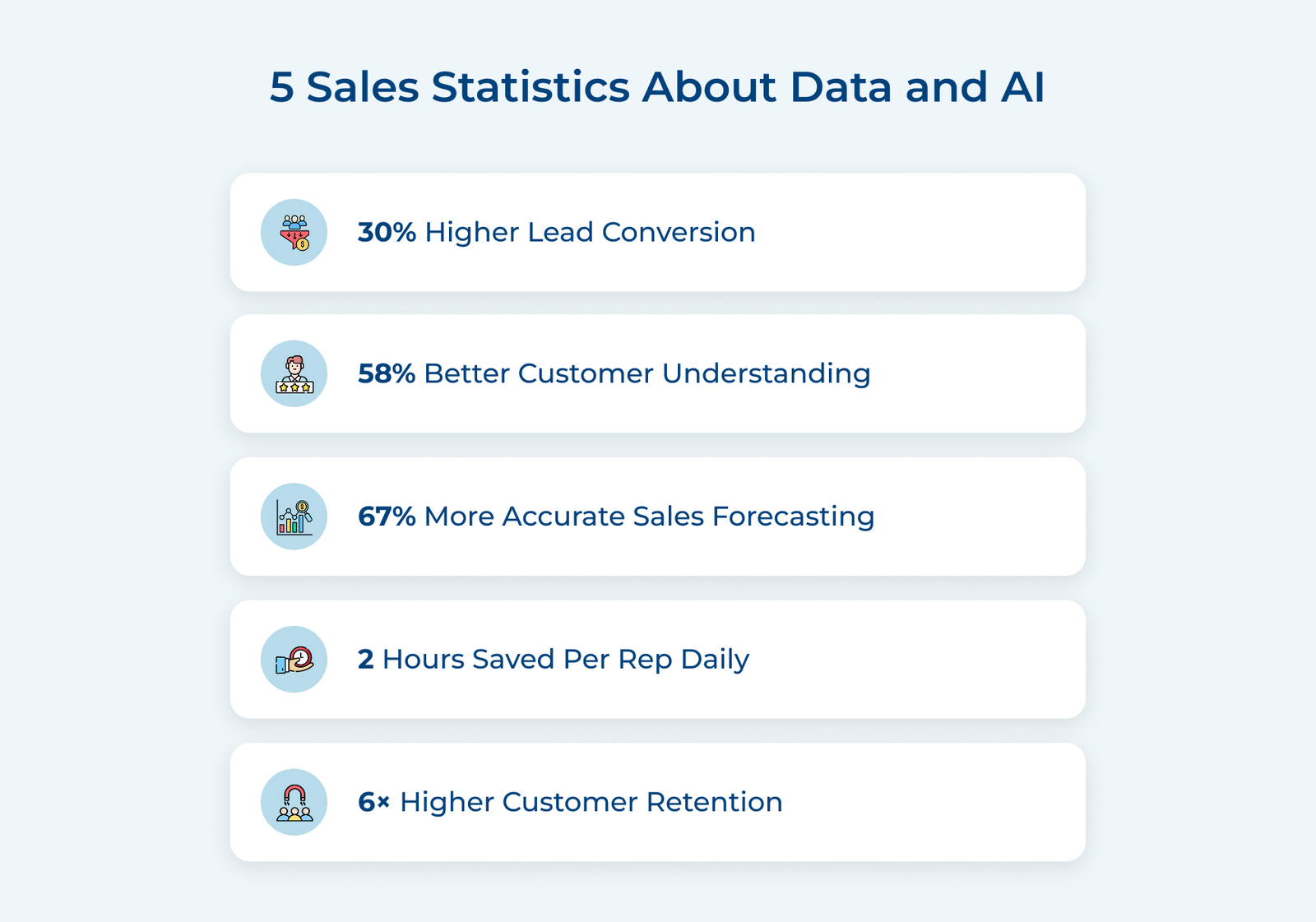
31. AI-powered sales tools can increase lead conversion rates by 30
Artificial intelligence identifies which prospects are most likely to buy and helps reps prioritize their outreach accordingly. The targeted approach prevents wasted effort on low-intent leads and concentrates energy where it matters most for revenue generation.
32. 58% of sales professionals say AI helps them better understand customer needs
AI analyzes customer interactions and highlights patterns that are difficult to spot manually. Sales reps gain clearer insight into common concerns, preferences and buying signals. Better visibility into behavior allows teams to anticipate objections and adjust conversations with more confidence.
33. 67% of sales teams report improved forecasting accuracy after implementing AI tools
AI removes human bias and wishful thinking from pipeline predictions by analyzing historical patterns objectively. Better forecasts mean leadership can make smarter decisions about hiring and resource allocation with confidence in the numbers.
34. Sales reps using AI-powered email assistants save an average of 2 hours per day.
AI email assistants generate drafts and suggest replies based on previous conversations. Reps spend less time writing routine messages and more time speaking with prospects. Extra hours each day create more opportunities to move deals forward.
35. Organizations leveraging data-driven insights are 6 times more likely to retain customers year-over-year.
Customer data highlights usage patterns, engagement trends and early warning signs of churn. Teams can deliver personalized experiences that keep clients engaged rather than treating everyone with generic approaches.
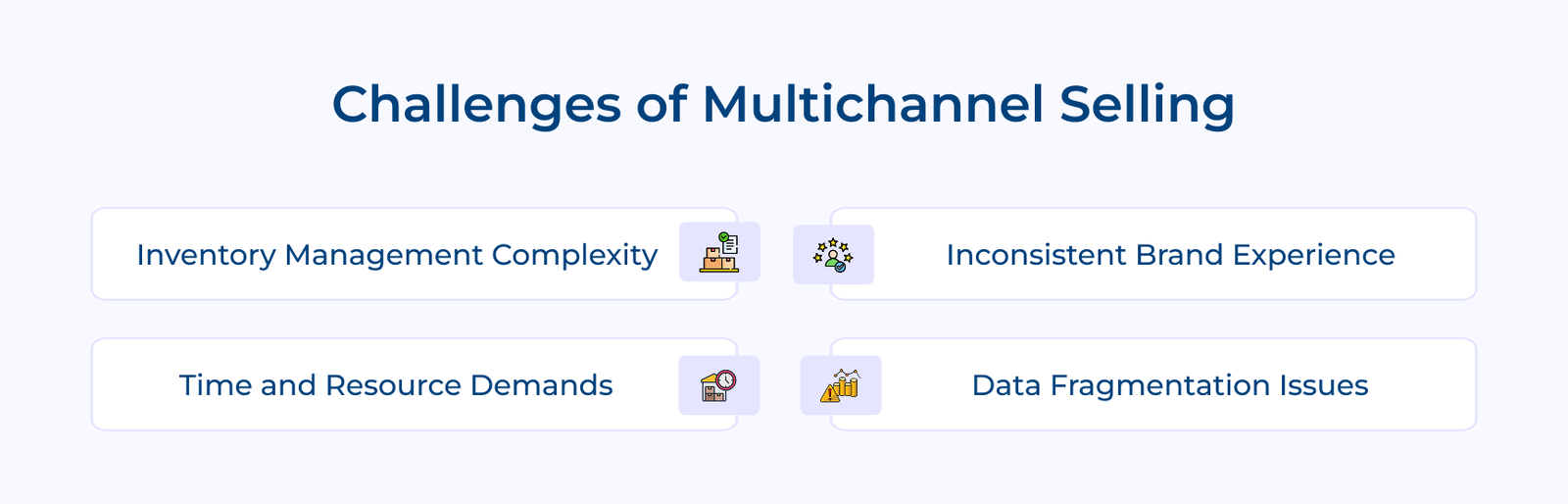
The following are the sales statistics about challenges that reveal the common obstacles teams face and where improvements are needed to strengthen performance.
36. 14% of sales professionals say that the biggest issue with sales prospecting is setting up appointments
Securing time on a prospect’s calendar often proves harder than starting the conversation. Reps can overcome it by offering multiple scheduling options and clearly communicating the specific value prospects will gain from the meeting.
37. 81% of sales teams never bother to review or correct their processes
Many teams stick to the same routine without checking if those routines still produce results. Regular win-loss analysis or quarterly process reviews help teams identify what’s broken and implement improvements before small problems become major revenue leaks.
38. 65% of B2B companies fail to use lead nurturing
Many businesses stop engaging after the first interaction and allow interested prospects to lose momentum. Consistent follow-up keeps conversations active until buyers are ready to decide. Simple nurture sequences with helpful insights and timely check-ins maintain visibility without adding heavy manual workload for sales teams.
39. 40% of salespeople say prospecting is the most challenging part of the sales process
Identifying qualified leads who show real interest requires patience and precision. Investing in better targeting through ideal customer profiles and intent data reduces time wasted on dead-end conversations with poor-fit prospects.
40. 50% of sales time is wasted on unproductive prospecting
Half of all prospecting effort goes toward leads that will never convert, no matter how good the pitch is. Better lead scoring and qualification frameworks help reps focus only on opportunities that match your ideal customer profile and show genuine buying signals.
Sales statistics provide clarity about performance, gaps and areas that deserve attention. They highlight patterns that may not be obvious during daily operations. Teams can use the numbers to compare results, spot weaknesses and start meaningful discussions about improvement.
Strong sales organizations turn insights into action. Data guides adjustments in training, outreach, technology adoption and process refinement. Consistent evaluation and steady improvement move teams closer to top-level performance over time.

AI will automate research and administrative tasks so reps can spend more time building relationships. Teams that adopt AI tools early will gain productivity advantages that become harder for competitors to overcome as the technology gap widens.
80% of successful sales require five or more follow-ups. 44% of salespeople stop after one attempt. 60% of customers say no multiple times before agreeing to buy. Consistent outreach clearly increases close rates
Referred customers show 16% higher lifetime value and close 70% faster than non-referred leads. Only 11% of salespeople ask for referrals, even though 91% of customers say they would provide one if requested.
The five core techniques include solution selling, where you address specific pain points and consultative selling, which focuses on asking questions before pitching. Other approaches are social selling through relationship building and challenger selling, which reframes how prospects think about their problems.
CRM systems record emails, calls and meeting notes in one place. Automated reminders schedule the next touchpoint. Structured cadence tools organize follow-up sequences and track response rates so teams know which outreach attempts perform best.
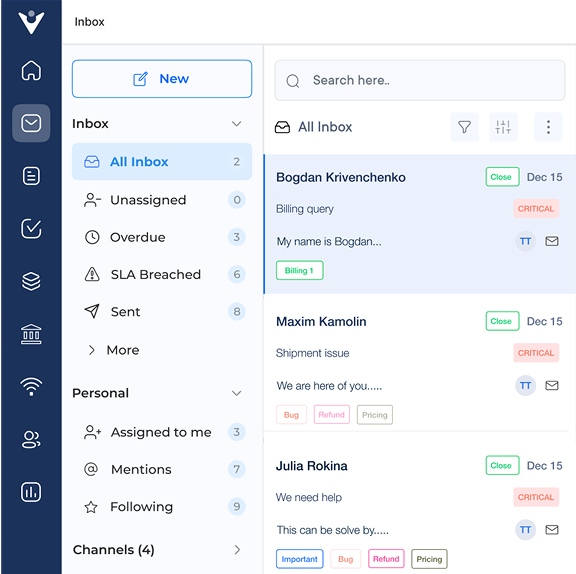
Grow Customer Relationships and stronger team collaboration with our range of products across the Conversational Engagement Suite.
Omnichannel Customer Support & Help Desk Software
AI Enabled Business Messaging and Chatbot Software
Sales Engagement & CRM Software
Call Center Software & Virtual Phone System
Product Marketing & Experience Platform
Customer Experience & Feedback Management Software
 Customer Requirements Guide: Types, Best Practices & Examples
Scroll to top
Customer Requirements Guide: Types, Best Practices & Examples
Scroll to top