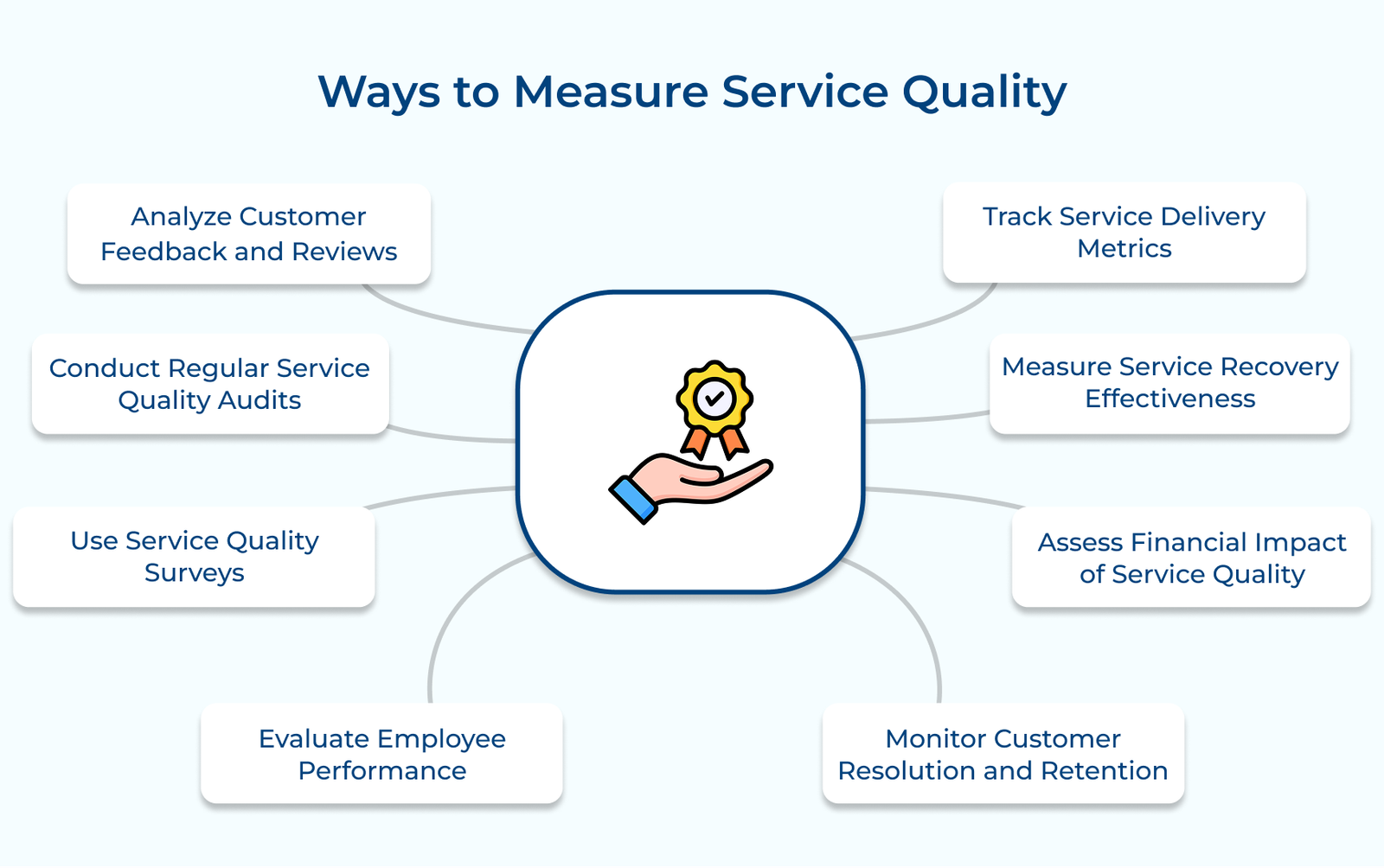
1. Analyze Customer Feedback and Review Data
Customer feedback analysis is a practical way to understand how people experience your service. Instead of guessing what works and what doesn’t, you listen directly to the people using your service . You have to let their voices guide your next steps. It’s like keeping an open line of honest conversation that helps you see what needs fixing and what deserves more focus.
Organizations can collect feedback through surveys, interviews, social media comments or online reviews. The goal isn’t just to collect opinions but to find patterns in what people are saying, what they liked, what bothered them and where they got stuck.
Pro tips:
- Set up a structured feedback collection system that captures both quantitative ratings and qualitative comments. It should include multiple channels like email surveys, post-service feedback forms and social media monitoring to ensure you’re gathering detailed customer insights.
- Implement real-time feedback analysis tools that can quickly identify emerging service issues and trends.
2. Implement Regular Service Quality Audits
Regular service quality audits work like a check-up for your service operations. They help you step back and see whether things are actually working the way they’re supposed to. The audits aren’t just about catching mistakes, they’re about spotting what can be done better, making sure teams stick to what’s been promised and keeping the whole system running smoothly.
Conduct systematic service assessments
Service assessments involve regular evaluations of service delivery processes through predefined criteria and checklists. It includes reviewing customer interactions, internal processes and staff performance. It’s not about finding faults, but understanding how current practices stack up against your standards and where small changes can lead to big improvements.
Document process compliance rates
Process compliance monitoring checks whether teams are actually following the service processes that have been put in place. Tracking compliance helps spot where consistency is slipping. Documenting it over time also shows whether improvements are sticking or if bad habits are creeping back in.
Review quality control results
Quality control reviews focus on what the customer receives. You can identify patterns like recurring issues or areas where quality is strong and use that insight to fine-tune how service is delivered day to day by analyzing these outcomes regularly.
3. Service Quality Surveys and Questionnaires
Surveys and questionnaires are simple, structured tools that let you hear directly from your customers. Instead of guessing how well your service is working, you ask clearly. They give you a snapshot of what your customers experience and where you can improve.
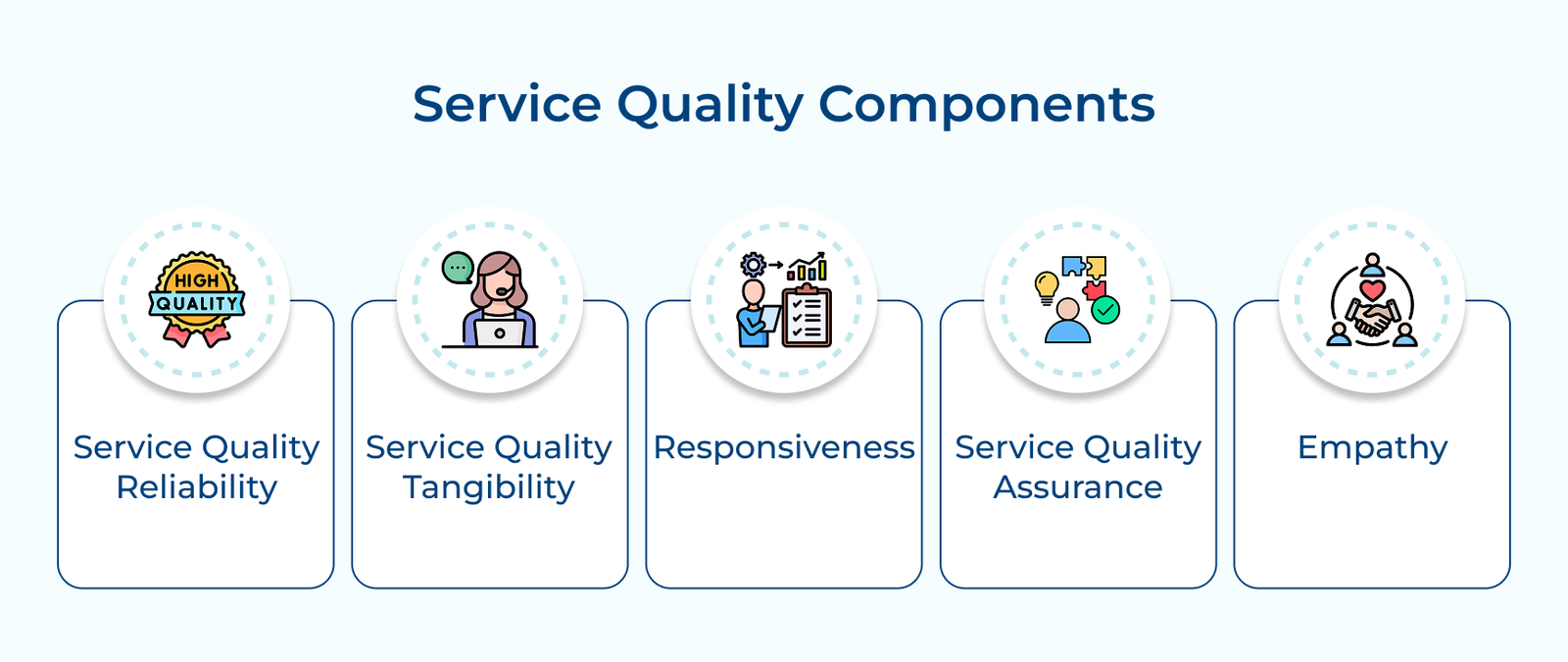
Key factors:
- Reliability: “Does our service consistently meet your expectations?” The question checks whether customers can count on you to deliver what you promised, every time.
- Tangibility: “How would you rate the appearance of our facilities?” It asks about what customers see—your space, your staff, your materials and how professional everything looks.
- Responsiveness: “How quickly did our staff address your concerns?” A good test of whether your team reacts quickly and effectively when customers need help.
- Assurance: “Do you feel confident in our staff’s knowledge?” It tells you if your team comes across as capable, informed and trustworthy.
- Empathy: “Does our service feel personalized to your needs?” A measure of how well you understand and respond to each customer as an individual.
The biggest challenge with surveys is that people get tired of filling them out. When that happens, you get half-hearted answers or no response at all. Keep your surveys short, ask clear questions and avoid overloading your customers with requests.
4. Evaluate Employee Performance Through Observation
Watching how employees interact with customers gives you a clear view of how well your service standards are being carried out on the front line. It’s not about catching mistakes—it’s about understanding what’s working, what’s not and where support can be improved.
Structure employee behavior reviews
Routine performance checks help evaluate how staff members handle customer needs, follow service steps and solve problems on the spot. The reviews are done using set criteria so that each employee is evaluated fairly and consistently.
Track customer interaction quality
Quality tracking involves scoring real conversations between employees and customers. You’re looking at how the employee communicates, how well they listen and how effectively they respond—without losing sight of your service goals.
Measure service standards compliance
The focus is on whether your team is sticking to the playbook. Consistent reviews help pinpoint areas where more training is needed or where the process itself may need fixing.
5. Track Quantitative Service Delivery Metrics
Numbers can tell you a lot about how your service is performing. Quantitative metrics take the guesswork out of improvement by turning everyday operations into clear, actionable data. When tracked properly, the numbers show you where you’re doing well and where there’s room to tighten things up.
Key metrics:
- Service volume and capacity: The metric tracks how many customers you serve and how many you can serve. It’s a basic but powerful way to make sure your team and resources are lined up with actual demand. If you know your busiest hours, you can staff accordingly and keep service flowing smoothly.
- Queue management efficiency: Long lines and wait times frustrate customers. The metric looks at how quickly people are served and how long they spend waiting. You can fine-tune processes to keep things moving and reduce unnecessary delays with the information.
- Resource utilization rates: The focus is on how well your people, equipment and space are being used. Underused staff or tools might mean wasted resources, while overused ones can lead to burnout or breakdowns.
- Service error and accuracy rates: Mistakes cost time, money and customer trust. Tracking how often errors happen and how accurate service delivery is helps identify problem areas before they grow. It also highlights teams or practices that are working well.
6. Assess Service Recovery Effectiveness Rates
Every service has its off days. What sets a reliable organization apart from the rest is how it handles things when they go wrong. Service recovery effectiveness focuses on exactly that – how well you respond, fix the problem and earn back the customer’s trust.
Track service recovery duration
Timing matters. Measuring how long it takes from the moment a problem is reported to when it’s fully resolved tells you a lot about your process efficiency. Identifying delays helps you streamline the recovery process and respond faster next time.
Evaluate post-recovery customer satisfaction
Fixing a problem isn’t just about resolution—it’s about how the customer feels afterwards. Post-recovery feedback tells you whether your solution made things better. Follow-up surveys, calls or interviews can show if the customer feels heard, respected and valued again.
Monitor compensation effectiveness results
Not all apologies carry the same weight. Some customers appreciate a quick refund, others value a personal call or a future discount. You can tailor recovery efforts to what works and avoid making things worse with a generic response by keeping track of which types of compensation lead to positive outcomes.
7. Analyze Service Quality Financial Impact
Improving service quality isn’t just about keeping customers happy—it also affects the bottom line. Financial impact analysis helps connect the dots between better service and business performance, showing how service efforts pay off in real numbers.
Calculate quality investment benefits
When organizations invest in better training, tools or service processes, they need to know if it’s worth it. Tracking the returns, such as more repeat business, better customer retention or increased referrals, shows whether those improvements are driving growth. The analysis helps justify future investments by showing what’s working.
Monitor quality-related cost changes
Good service can reduce costs in quiet but meaningful ways. Fewer mistakes mean fewer refunds and less time spent fixing problems. More satisfied customers can also lower marketing costs, since it’s cheaper to retain than to replace.
Track revenue impact patterns
Improved service often leads to stronger sales. Customers who are treated well tend to buy more, return more often and share their experiences. Organizations can see the real financial value of quality improvements by watching how customer behavior changes after service upgrades, like an increase in purchase frequency or average spend.
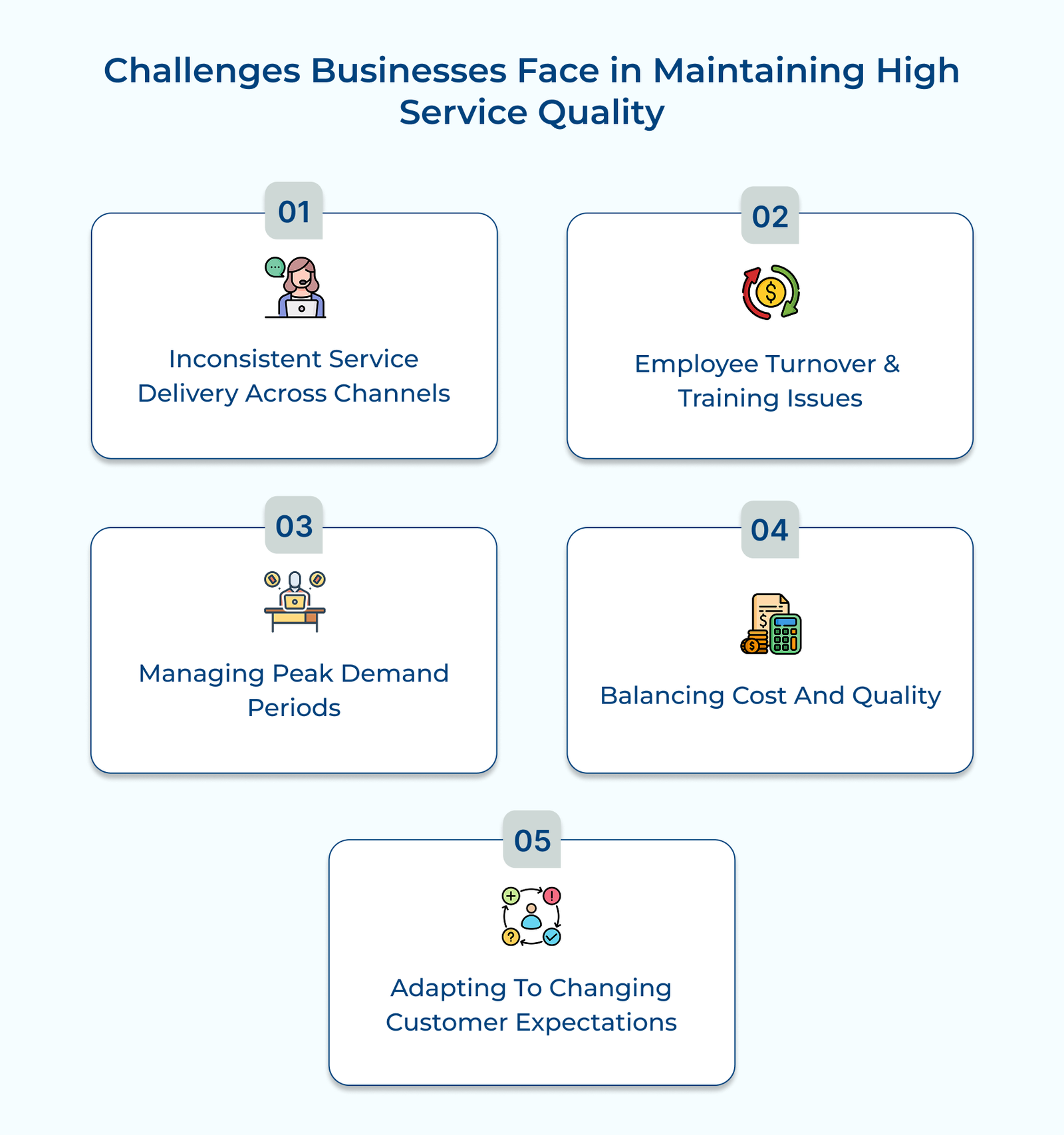
Common Challenges Businesses Face in Maintaining High Service Quality
Below are the most prevalent obstacles businesses face and offer insights on how to effectively navigate these challenges to ensure service excellence.