What is Solution Selling? Benefits, Steps & Examples
Learn what solution selling is, how it works and the steps to apply it effectively. Discover benefits and examples that help sales teams solve customer problems effectively.
Learn what solution selling is, how it works and the steps to apply it effectively. Discover benefits and examples that help sales teams solve customer problems effectively.
The moment a sales conversation turns to features, the buyer mentally steps back and starts calculating exit costs. It happens faster than most of your reps can even notice.
We’ve seen that the buyers today complete a significant portion of their research independently before they ever speak to a vendor. B2B buyers are nearly 70% through their buyer’s journey before ever contacting your organization. It means they arrive informed, skeptical and acutely sensitive to being pitched at rather than heard.
That gap between what the sales reps lead with and what buyers actually need is where deals quietly collapse. Solution selling addresses that gap directly. It restructures the conversation around the buyer’s situation first – what the problem is, why it exists and what resolving it actually means for the business. How? Let’s find out!
Solution selling refers to a way of approaching where the focus stays on the customer’s problem from the start. The goal is to understand what they are dealing with before talking about any product. Conversations feel more like problem-solving than pitching. The product only comes into the picture as a way to solve something specific, not as a generic offering.
Product selling revolves around features and specifications. The salesperson explains what the product does and hopes it connects with the buyer’s needs. The interaction is usually quick and transactional, with most of the talking done by the seller.
Solution sales take a different route. You start by asking questions and digging into the customer’s business challenges. The conversation centers on their goals and obstacles. Your product becomes secondary to the outcome they’re trying to achieve.
Key objectives:
Let’s go through the key benefits and disadvantages of solution selling, so you can understand where it works best.
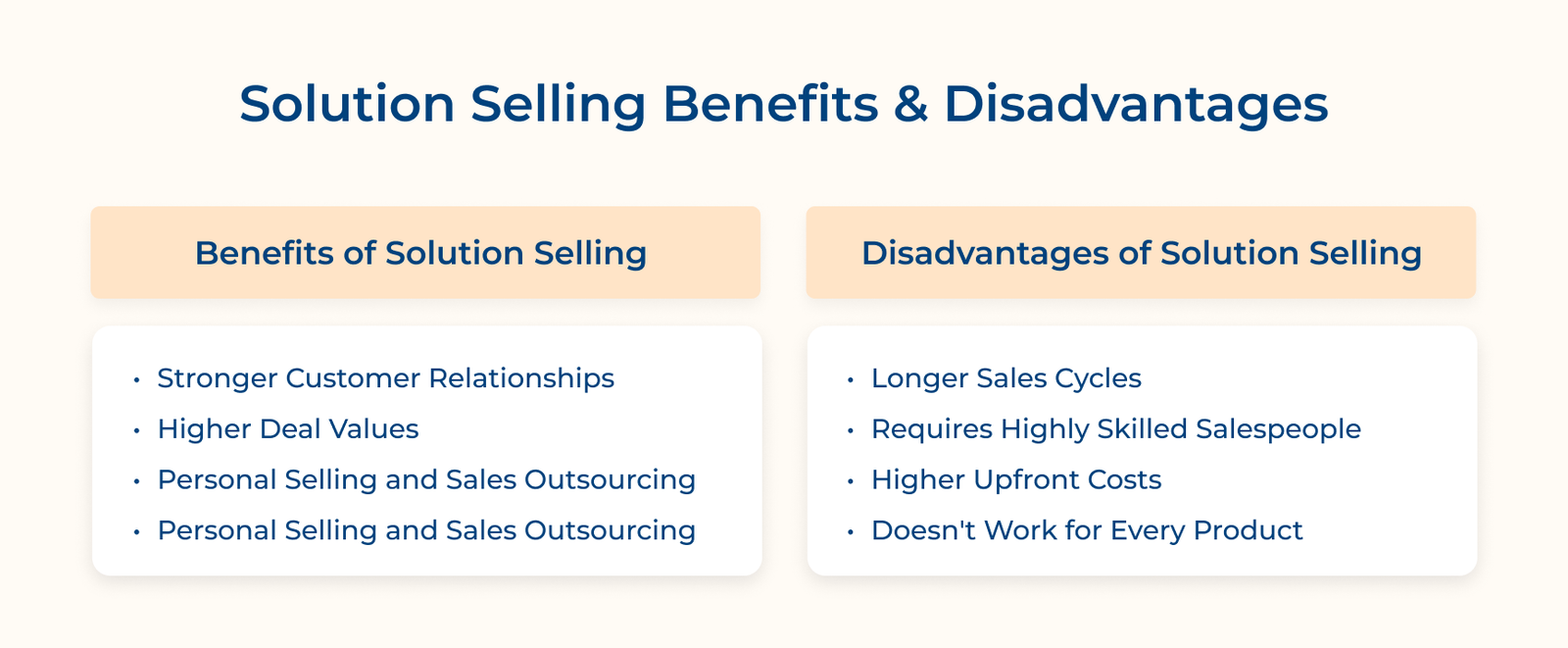
Stronger Customer Relationships
You stop feeling like just another salesperson when the focus stays on solving real problems. Customers open up more and share what is actually going on. The shift builds trust and trust turns into relationships that continue well beyond a single deal.
Higher Deal Values
Customers are more comfortable investing when they see a clear link between your solution and their problem. The conversation moves away from price and toward impact. That naturally leads to better deal sizes and more confident buying decisions.
Longer Customer Retention
Clients stay when they feel understood. Time spent learning how their business works makes your role more valuable over time. Switching to a cheaper option feels risky when they know you already understand their challenges.
Why Does it Matter for Customer Experience?
The entire buying experience starts to feel different. Customers are not sitting through a one-sided pitch. They are part of a conversation that helps them think clearly about their situation. That makes the process easier, more useful, and far less frustrating.
Longer Sales Cycles
Understanding a customer’s situation takes time. Multiple conversations are often needed to get the full picture. Deals move more slowly compared to quick, transactional sales, especially early on.
Requires Highly Skilled Salespeople
The approach depends heavily on how well the salesperson listens and thinks. Strong communication and business understanding are essential. Building the skills takes time, effort, and consistent sales training.
Higher Upfront Costs
All that research and customization isn’t cheap. You’ll spend more resources on each prospect. Some deals won’t close despite your investment of time and effort.
Doesn’t Work for Every Product
Not every purchase needs deep discussion. Simple or low involvement products are usually bought quickly. A detailed approach can feel unnecessary when the customer already knows what they want.
Here are the key steps to effective solution based selling that will unlock new potential in your sales strategy and client interaction.
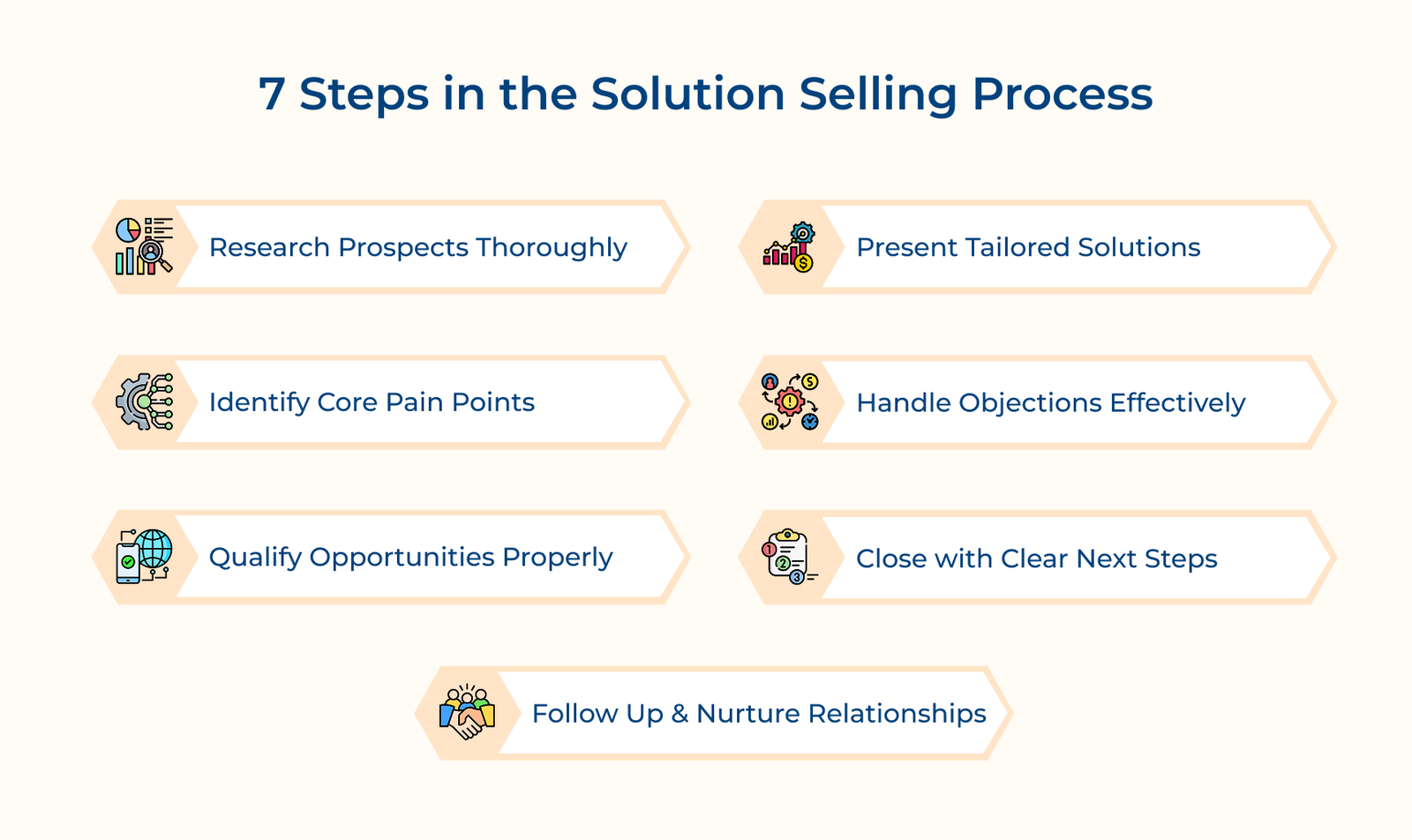
Good conversations start before the first call. Walking in without context leads to surface-level questions that waste time. A bit of preparation helps you understand their situation and makes the interaction more relevant from the start.
Key methods:
Let’s assume that you’re selling marketing automation software to a retail company. Your research reveals they just opened five new stores last quarter. You can now frame your conversation around managing campaigns across multiple locations instead of generic marketing benefits.
So, how much research is enough before reaching out? Know enough to ask thoughtful, specific questions. Around 30 minutes of focused research works well for a high-value prospect.
The step focuses on understanding what is actually causing trouble in your prospect’s day-to-day work. Most people do not share their biggest challenges right away. The real issues come out only when the conversation goes a level deeper.
Open-ended questions encourage prospects to share detailed information rather than yes-or-no answers. The questions reveal context and emotions behind their challenges.
Key questions:
The step is about deciding if the deal is worth your time and effort. Not every prospect is a good fit and chasing the wrong ones can drain your sales pipeline. Clear qualifications help you stay focused on opportunities that have a real chance of closing.
Assess their Budget and Timeline
You need to know if they have money allocated and when they plan to make a decision. Ask directly about budget ranges and purchasing timelines. Don’t be shy about the questions because misalignment here kills deals later.
Identify Key Decision Makers Involved
Deals rarely depend on one person. Understand who is involved in the final decision and who influences it. Missing a key stakeholder can slow things down or block progress completely.
Determine their Buying Process Steps
Each company follows its own path from interest to approval. Learn how decisions move internally, what approvals are needed and how long each step takes. It helps you stay prepared and avoid last-minute surprises.
The step turns your generic product pitch into a customized solution addressing their specific challenges. A generic pitch rarely lands because it feels disconnected. People pay attention when they can clearly see how something applies to their situation.
Key ways:
Customizing each conversation does take more effort. The effort usually pays off in better engagement and fewer wasted meetings, since the discussion feels relevant from the start.
Objections are a normal part of any solution selling conversation. People need clarity and reassurance before making a decision, especially when the stakes are high. The way you respond in these moments often decides if the deal moves forward or loses momentum.
Think of objections as a chance to understand things better. A concern usually points to something that is still unclear or unresolved. Ask a few follow-up questions to get to the real issue, then respond with clear and relevant answers that connect back to their situation.
Pro tips:
The step is about making sure the conversation leads somewhere concrete. Deals often slow down when there is no clarity on what happens next. A clear path forward keeps both sides aligned and moves things ahead with purpose.
Key factors:
Closing does not need to feel forced. Recap what has already been discussed and suggest the next logical steps. The conversation stays focused on helping them move forward with a solution that fits their situation.
The work does not end once the deal is signed. Real value shows up after implementation begins. Staying involved helps you make sure the solution actually delivers what was promised and keeps the relationship strong over time.
Ensure Smooth Onboarding and Delivery
Stay connected during the early stages of implementation. Work closely with the delivery team and step in quickly if something feels off. A strong start builds confidence and reinforces the trust created during the sales process.
Check in on Results Regularly
Schedule simple check-ins to understand how things are working. Talk about results, challenges and any gaps that need attention. The conversations show that you are invested in their progress, not just the sale.
Identify Upsell and Expansion Opportunities
Pay attention to new needs as their business evolves. Existing customers often share more openly, which makes it easier to spot where you can help next. Growth conversations feel natural when they come from a place of understanding their situation.
Below we’ll go through the real-world examples that will help you understand how solution selling transforms sales conversations.
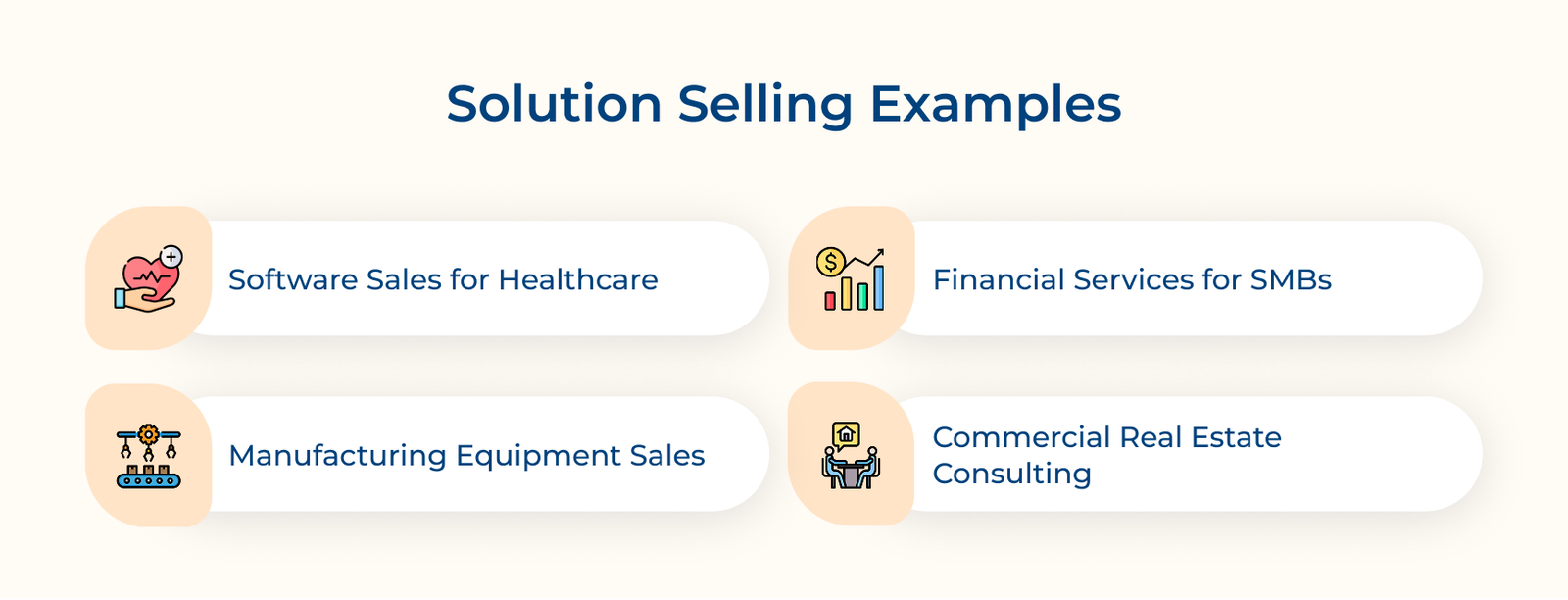
Software Sales for Healthcare
A software provider learns that a hospital is losing money due to missed appointments. The conversation shifts from features to fixing that gap. An automated reminder system with confirmation helps reduce no shows and keeps schedules full.
Manufacturing Equipment Sales
An equipment seller finds that a factory is dealing with breakdowns and delays. The focus moves away from replacing machines. Predictive maintenance is introduced to prevent issues early and keep production running smoothly.
Financial Services for Small Business
A banker notices a retail owner spending hours reconciling payments across platforms. The discussion centers on saving time and reducing manual effort. A unified payment system that connects with accounting tools simplifies the entire process.
Commercial Real Estate Consulting
A broker speaks with a growing tech company unsure about long-term commitments. The need is flexibility, not just space. Flexible office options with room to expand give them what they need now without locking them in too early.
Below are the five proven techniques that successful salespeople use to guide prospects toward the right decisions.
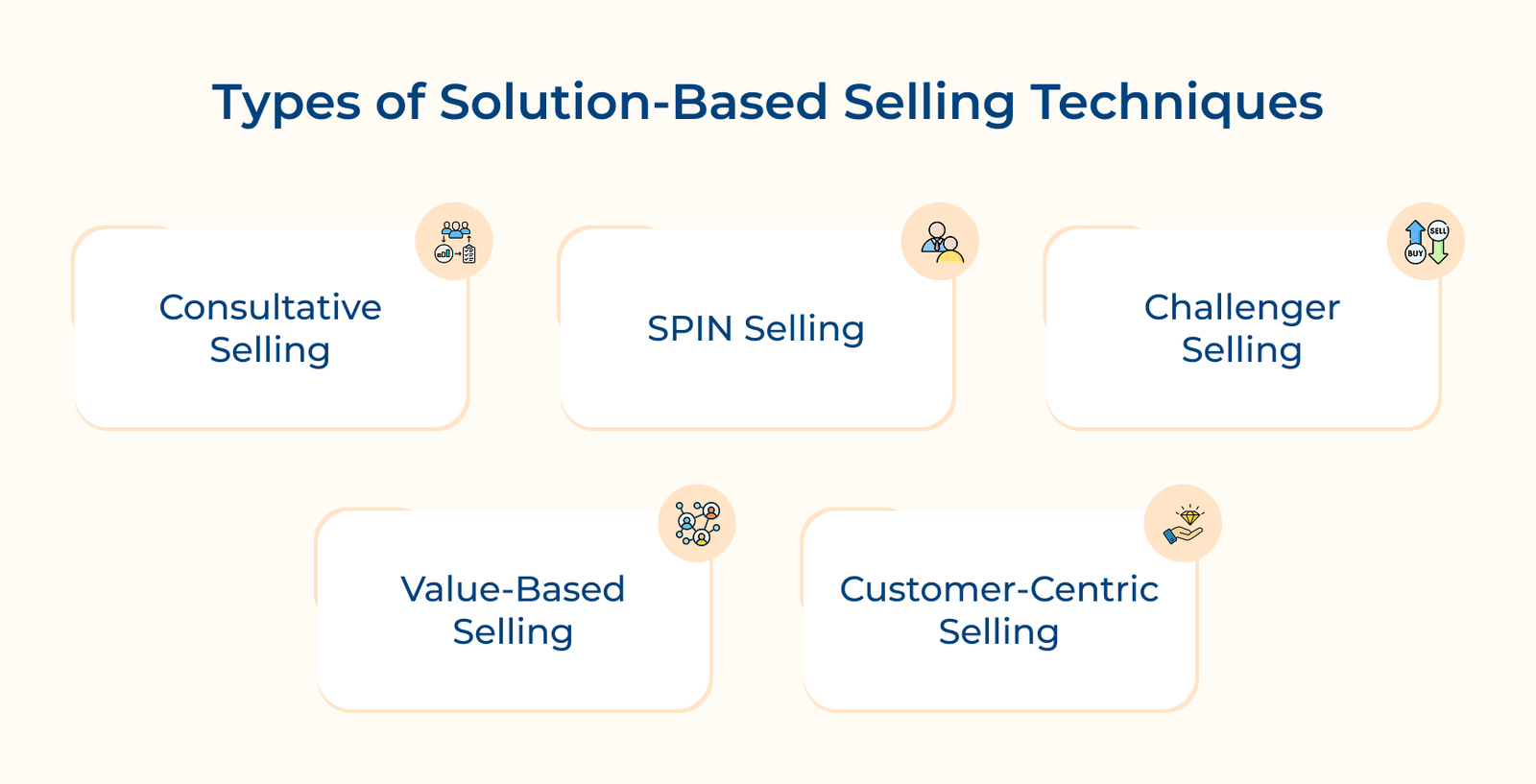
Consultative Selling
The approach shifts your role from selling to advising. Conversations revolve around understanding the situation and offering thoughtful input. The focus stays on helping them make better decisions, not pushing a product.
SPIN Selling
SPIN stands for Situation, Problem, Implication and Need-Payoff questions that guide discovery conversations systematically. You start with their current situation and gradually build awareness of the consequences they haven’t considered. The structured approach helps prospects realize the urgency of solving their problems.
Challenger Selling
The technique involves offering a new way of looking at their situation. You bring insights they may not have considered and help them rethink their approach. The conversation pushes them to see gaps and take action.
Value-based Selling
Here, you focus exclusively on quantifying the financial impact your solution delivers to their bottom line. Every conversation centers on ROI and measurable business value rather than features or capabilities. Pricing discussions become easier when value is clearly demonstrated upfront.
Customer-centric Selling
The approach aligns with how the buyer prefers to move forward. You adapt to their pace, their questions and their decision process. The experience feels smoother because it fits their way of working.
Solution based selling changes how you connect with people. The focus moves away from pushing a product and toward understanding what someone is trying to fix or improve. Conversations feel more natural and trust builds more easily when the discussion starts with their situation.
The seven-step process gives you a clear path from research to long-term relationships. Remember that handling objections and following up after the sale are just as important as closing. When you consistently focus on solving customer problems, higher deal values and stronger loyalty naturally follow.

Solution selling works best when the problem is not simple and needs a thoughtful approach. High-value deals benefit the most since understanding the situation clearly can set you apart. Quick, low-involvement purchases usually do not need this level of depth.
Solution selling is important because it builds stronger customer relationships and justifies premium pricing through demonstrated value. Buyers today research independently and expect salespeople to act as trusted advisors who understand their business. The approach differentiates you from competitors who only talk about features and specifications.
Start by researching the prospect to understand their context. Move into identifying their key challenges. Qualify the opportunity based on fit and readiness. Present a solution that connects clearly to their needs and agree on the next steps.
Product selling revolves around explaining features and hoping they connect. Solution selling starts with the problem and builds the conversation around it. One feels quick and transactional, the other feels more thoughtful and focused on outcomes.
The focus stays on how the software helps solve a specific problem. Conversations revolve around saving time, reducing effort or improving results. Features matter, but only in the context of what they change for the customer.

Grow Customer Relationships and stronger team collaboration with our range of products across the Conversational Engagement Suite.
Omnichannel Customer Support & Help Desk Software
AI Enabled Business Messaging and Chatbot Software
Sales Engagement & CRM Software
Call Center Software & Virtual Phone System
Product Marketing & Experience Platform
Customer Experience & Feedback Management Software
 What is Inbox Zero? Benefits, Steps and Strategies
Scroll to top
What is Inbox Zero? Benefits, Steps and Strategies
Scroll to top