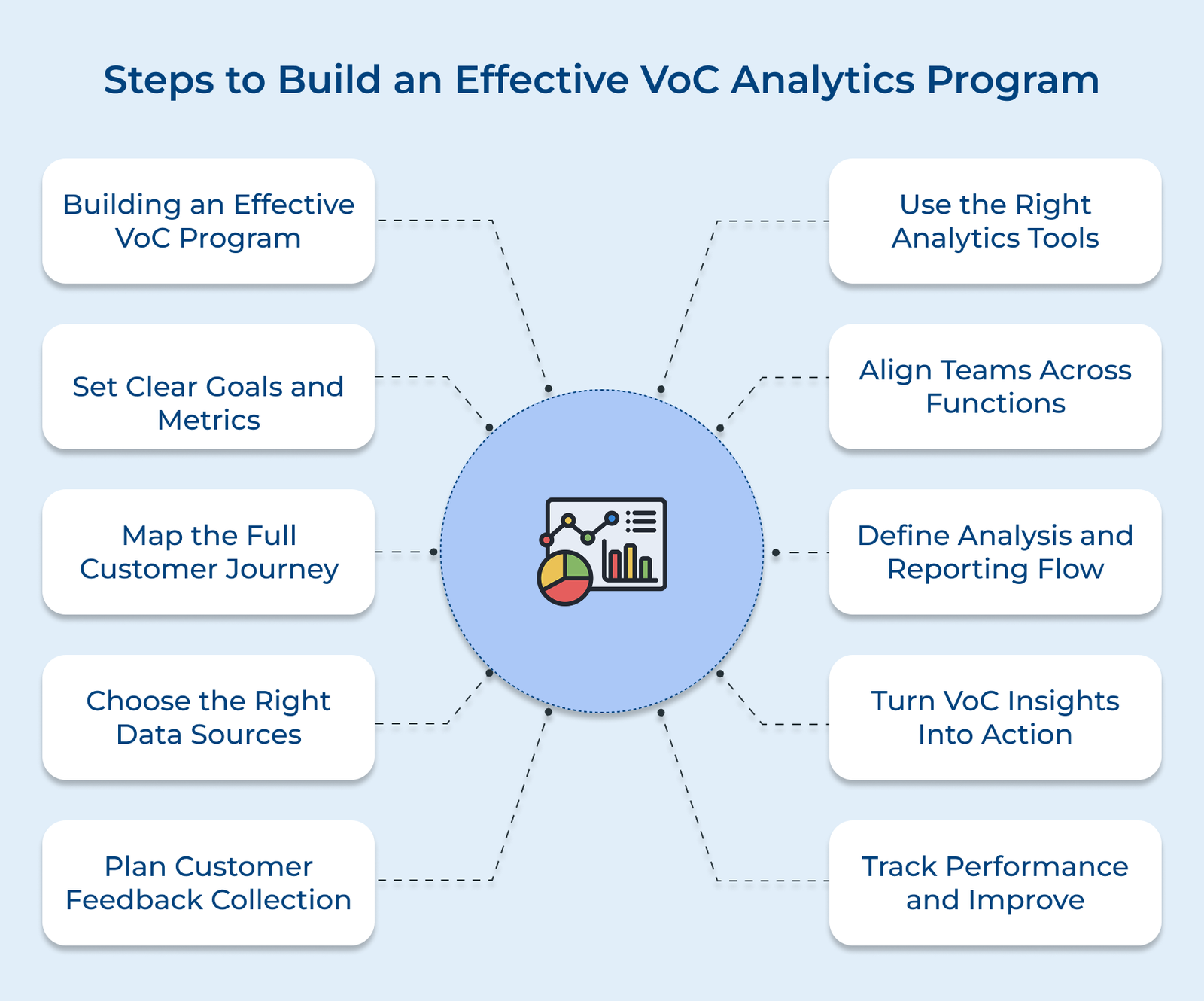
1. Define Clear Objectives and Success Metrics
Start by setting clear, practical goals for your VOC analytics program. The first step keeps your efforts focused and ensures you’re gathering feedback that helps your business improve. Without clear direction, it’s easy to end up with a pile of data and no idea what to do with it.
Tie your goals to real problems or opportunities—maybe it’s figuring out why customers leave, improving your onboarding process or getting better insight into product feedback. The more specific you are, the easier it is to turn customer input into real change.
Pro tips:
- Bring your team together to discuss where customer insights could make the biggest difference.
- Revisit your goals every quarter to make sure they still match your business needs.
2. Map Customer Journey Across All Touchpoints
Journey mapping shows how customers experience your business from start to finish—where they visit, who they talk to and what they feel along the way. The clear, step-by-step view helps you spot where to collect meaningful feedback and where things might be falling through the cracks.
Begin by charting every interaction, from first contact all the way through support after a purchase. Include both online and in-person touchpoints. Try to understand what the customer is trying to achieve at each step and how that step makes them feel—frustrated, confused, satisfied or delighted.
Actionable tips:
- Sit in with sales and support teams to see real interactions unfold.
- Review recorded calls to hear exactly where customers are getting stuck or frustrated.
3. Select Appropriate Data Collection Methods
Choosing how you collect customer feedback is just as important as the feedback itself. If you use the wrong methods, you risk gathering incomplete or irrelevant information that leads to poor decisions. Good data collection starts with understanding where and how your customers prefer to talk.
Look at your audience’s habits and choose a mix of tools that match like surveys, interviews, review sites or social media. Each method captures different types of feedback and gives you a fuller picture of what customers are experiencing.
Best practices:
- Test your collection methods with a small group before rolling them out widely.
- Work with frontline teams to find moments where asking for feedback feels natural and low-pressure.
4. Create Customer Feedback Collection Strategy
A thoughtful feedback strategy helps you collect useful insights without annoying your customers. It’s about asking the right questions at the right time, using channels your audience is comfortable with. Done well, it keeps response rates steady and avoids overwhelming people with too many requests.
Start by crafting questions that directly clearly connect to your goals. Keep them simple, focused and relevant to the customer’s recent experience. Use both rating style questions for quick data and open-ended ones to hear the customer in their own words.
Key takeaways:
- Rotate feedback requests across different groups to keep responses fresh and balanced.
- Use short check-ins regularly and save the deeper dives for when you need them.
5. Implement Right Analytics Tools and Technology
Choosing the right tools to run your VOC analytics program is key to making it work well day to day. The right setup helps you gather, process and understand feedback efficiently while keeping everything secure. The wrong tools can slow you down and make it harder to act on what customers are telling you.
Look for platforms that fit your specific needs and scale. Look for tools that can handle your data load, provide the right kind of analysis and grow with you. Make sure they’re easy for your team to use and come with solid support if something breaks or needs tweaking.
Pro tips:
- Pick tools that let you slice and present data in ways that make sense for different teams.
- Check your systems regularly to make sure everything’s flowing and working as expected.
6. Build a Cross-functional Team for Implementation
When building a VOC analytics program, successful implementation requires a cross-functional team that knows your customers and understands how your business works. When the right people are involved, feedback turns into action and real improvements follow.
Start by defining clear roles: data analysts to find patterns in the numbers, frontline staff to share what they’re hearing from customers and decision-makers who can push changes forward. Everyone on the team should know exactly how they contribute to listening, learning and responding to customer needs.
Actionable tips:
- Choose a VOC point person in each department to keep things moving.
- Hold monthly team check-ins to share what’s working and where customer insights are making a difference.
7. Establish Data Analysis and Reporting Process
A solid analysis and reporting process turns customer feedback into useful direction for your business. Without a clear system in place, even large volumes of feedback can end up sitting unused. The goal isn’t just to collect opinions but to understand what they mean and what to do next.
Start by creating simple, repeatable ways to spot trends, dig into root causes and tie feedback to specific business outcomes. Use consistent templates so teams interpret data the same way across the board. It keeps insights focused and easy to act on.
Best practices:
- Base your analysis on what customers are trying to achieve, not just what they say
- Create a shared space where teams can view insights, updates and progress in one place.
8. Design an Action Plan from VOC Insights
An action plan is where feedback turns into real fixes. Without one, customer insights are just notes on a slide deck. The step is about taking what people are telling you and doing something meaningful with it, like a mechanic not just spotting the problem but fixing the engine.
Let’s assume a software company keeps hearing that its checkout is confusing. A solid action plan might include trimming unnecessary form fields, adding clearer error messages and rolling out the redesign in stages. Assign tasks, set deadlines and make it clear who owns what
Key takeaways:
- Line up your tasks in order of what depends on what, so nothing gets stuck.
- Rate each idea by how much it helps customers vs. how hard it is to do, then start with the high-impact, low-effort wins.
9. Monitor Progress and Optimize Program
The last step in building a voice of customer insights program is about keeping it sharp. It’s not a set-it-and-forget-it system because, without regular check-ins, even the most thoughtful setup can fall behind as customer expectations can shift.
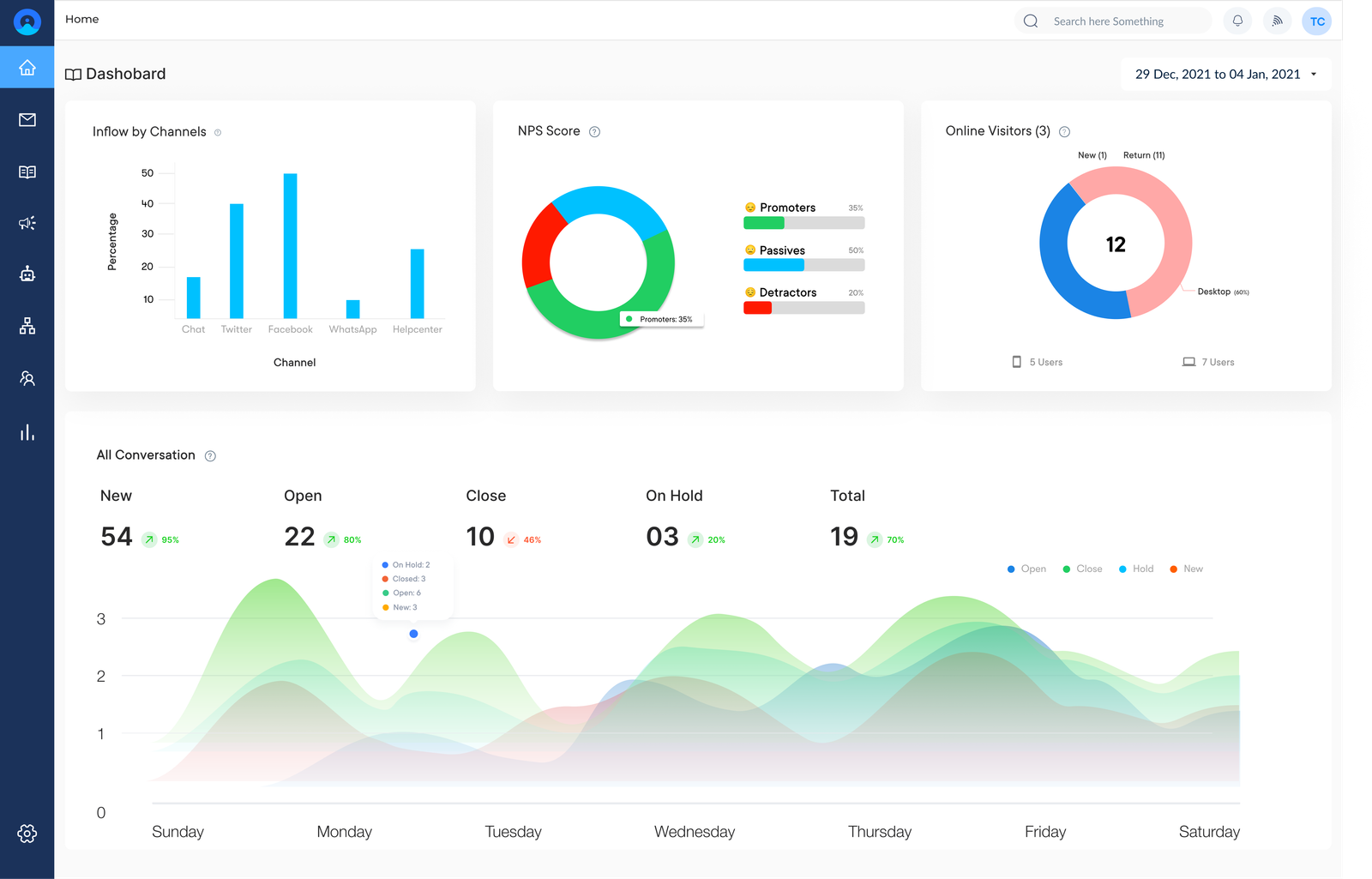
Put simple tracking tools in place to see how well changes based on feedback are working. Watch how the adjustments affect satisfaction and behavior. Dashboards help spot trends and alerts can flag when something’s going off track before it becomes a bigger issue.
Best practices:
- Hold monthly reviews to catch what needs tweaking.
- Keep a running list of wins and what didn’t work to guide future improvements.
Key Metrics Used in VOC Analysis
Below are the essential metrics that can transform your VOC analysis and enhance your overall business strategy. Let’s check them out.