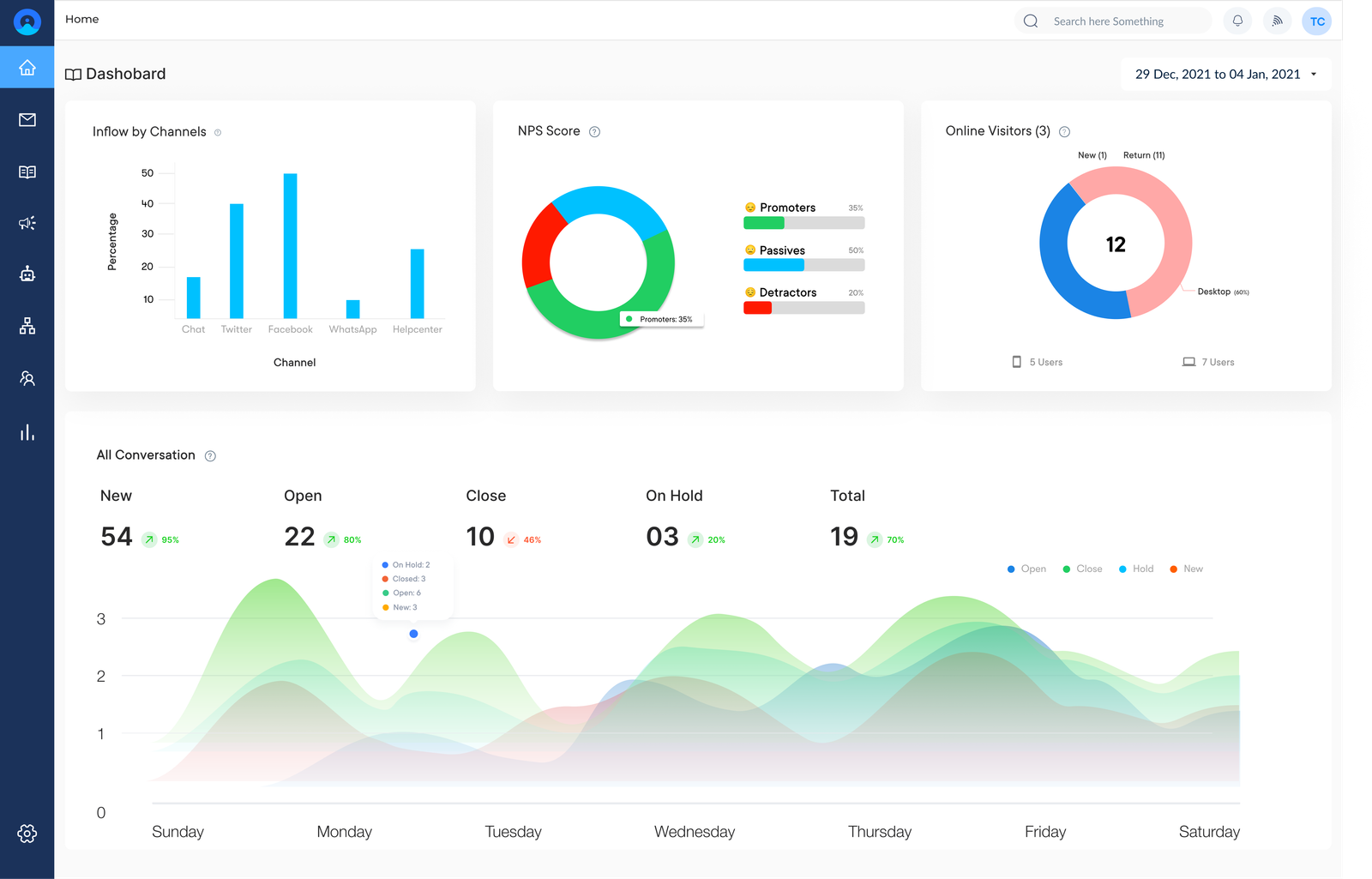
Omni24 is a versatile digital engagement platform that unifies live chat, email ticketing, social media messaging and AI-powered chatbots into a single, streamlined interface. It provides in-depth analytics, helping businesses track customer interactions, evaluate agent performance and refine their support strategy across all digital channels.
What sets Omni24 apart is its seamless integration of automated and human-driven interactions, all backed by real-time data. Its advanced reporting and segmentation tools empower businesses to make informed decisions, personalize customer experiences and adapt to evolving user needs.
Key features:
- Custom analytics dashboards: Gain instant insights into performance metrics and customer satisfaction trends across all communication channels.
- Advanced visitor segmentation: Engage customers more effectively with behavior-based targeting and historical interaction insights.
- Real-time monitoring: Track visitor activity live and use AI-driven suggestions to proactively assist users.
- Comprehensive interaction history: Provide agents with full context of past customer interactions for a more personalized and efficient support experience.
Pricing: The Standard Plan is priced at $29 per user per month, providing essential features for effective communication and support. The more advanced needs are more suited for the Pro Plan, which is available at $149 per user per month, offering additional tools and capabilities. Visit their pricing page for further details.
3. Mixpanel
Mixpanel is a powerful product analytics platform that helps businesses gain deep insights into user behavior. It tracks interactions across web and mobile applications, delivering real-time data that teams can use to improve their products.
What makes Mixpanel stand out is its event-based tracking system, which allows teams to analyze user journeys in detail. Businesses can pinpoint where users drop off, identify patterns in engagement and make data-backed improvements with advanced funnel analysis, cohort tracking as well as retention metrics.
4. Hotjar
Hotjar provides a clear window into user behavior by combining visual analytics with direct user feedback. Teams can see exactly how users navigate their websites and applications through heatmaps, session recordings as well as scroll maps, uncovering friction points.
Hotjar is particularly effective for its blend of behavioral tracking and real-time user insights. The platform also offers feedback polls and surveys that trigger based on user interactions. The combination allows teams to not only observe what users are doing but also understand why, helping them make informed, user-driven improvements.
5. UXCam
UXCam is built for mobile-first analytics, giving app development teams a deep understanding of user interactions, gestures and navigation flows. Teams can spot usability issues and refine the experience for smoother interactions with detailed insights into how users engage with an app.
What sets UXCam apart is its ability to capture the subtle details of mobile behavior. Features like touch heatmaps, gesture tracking and automatic crash recordings help teams identify frustration points. Teams can quickly diagnose and fix issues with session replays showing exactly what users experience, leading to a more seamless app experience.
Example of User Experience Analytics
Below are five notable companies that have transformed their digital presence and business outcomes through strategic UX analytics implementation.
Netflix
Netflix meticulously tracks how users browse, watch and interact with content, analyzing everything from search patterns to where viewers pause or stop watching. The data powers their recommendation engine, ensuring users receive personalized suggestions based on their unique viewing habits and device preferences.
Netflix has redefined how people discover and engage with content by continuously refining its approach. Their data-driven personalization keeps users immersed in shows and movies they’re most likely to enjoy, transforming Netflix from just a streaming service into a seamless, intuitive entertainment experience.
Amazon
Amazon carefully analyzes user browsing habits, search behavior and purchase history to understand how customers explore products, read reviews and make buying decisions. The data shapes their search algorithms and recommendation engine, making product discovery seamless.
Amazon has built an efficient, user-centric platform by continuously refining the shopping experience. Personalized recommendations and a frictionless checkout process keep customers engaged, boosting satisfaction.
Spotify
Spotify closely examines listening habits, playlist creation and user interactions to understand how people discover, share as well as engage with music. They track everything from song skips to repeat plays, using the data to refine recommendations and enhance the listening experience.
Spotify has revolutionized music discovery by leveraging the insights. Its ability to deliver highly personalized playlists keeps users engaged, enhances deep connections with the platform and cements its place as a leader in music streaming.
Airbnb
Airbnb analyzes user search habits, booking patterns and interactions with property listings to understand how travelers choose accommodation. They track how users filter results, read reviews and communicate with hosts, using the data to refine search functionality.
Airbnb has transformed the way people find and book stays by continuously improving the user experience. Their data-driven approach makes it easier for travelers to discover the perfect property while helping hosts showcase their listings more effectively.
Uber
Uber closely analyzes how users interact with their app, from entering a destination to completing a ride. They track how users select ride options, navigate pricing details and communicate with drivers, using the data to refine the booking process.
Uber has made ride-sharing faster and more intuitive by continuously optimizing the experience. Their data-driven improvements ensure a seamless journey for riders while helping drivers connect with passengers more efficiently.
Common Challenges in UX Analytics
Let’s go through the common challenges in UX analytics, from data overload to interpreting user behavior accurately. Overcoming the obstacles is key to extracting meaningful insights.