Sales Onboarding Guide: Key Steps, Best Practices & Examples
Explore the best practices for effective sales onboarding. Get insights to streamline the process, improve team performance and ensure new hires are equipped for success from day one.

Explore the best practices for effective sales onboarding. Get insights to streamline the process, improve team performance and ensure new hires are equipped for success from day one.
Businesses often face challenges in effectively onboarding new sales reps, including high turnover, long ramp-up times and inconsistent performance. The issues often arise from poorly structured onboarding processes. A well-designed sales onboarding program addresses the challenges by providing a clear, systematic approach to training and development. Companies with a structured onboarding process see new hires ramp up faster by up to 50%.
The guide highlights some key steps for creating a successful sales training plan that transforms new hires into high-performing team members. Organizations can establish a repeatable, effective process that builds the skills, confidence and success of their sales professionals by following the strategies.
Sales onboarding refers to a structured process that prepares new sales reps for success by integrating them into the organization. The comprehensive program includes training, education, and acclimatization activities to ensure new hires become productive and well-versed in the company’s products.
The process starts with foundational training on company overviews, product knowledge and sales processes. The sales reps then progress through hands-on training with the CRM, role-playing and shadowing experienced team members. As they advance, they focus on prospecting, objection handling and closing techniques, with regular assessments to track progress.
Key goals:
Here are the key benefits of an effective sales onboarding program to help new sales hires ramp up quickly, build strong customer relationships and confidently navigate the sales process.
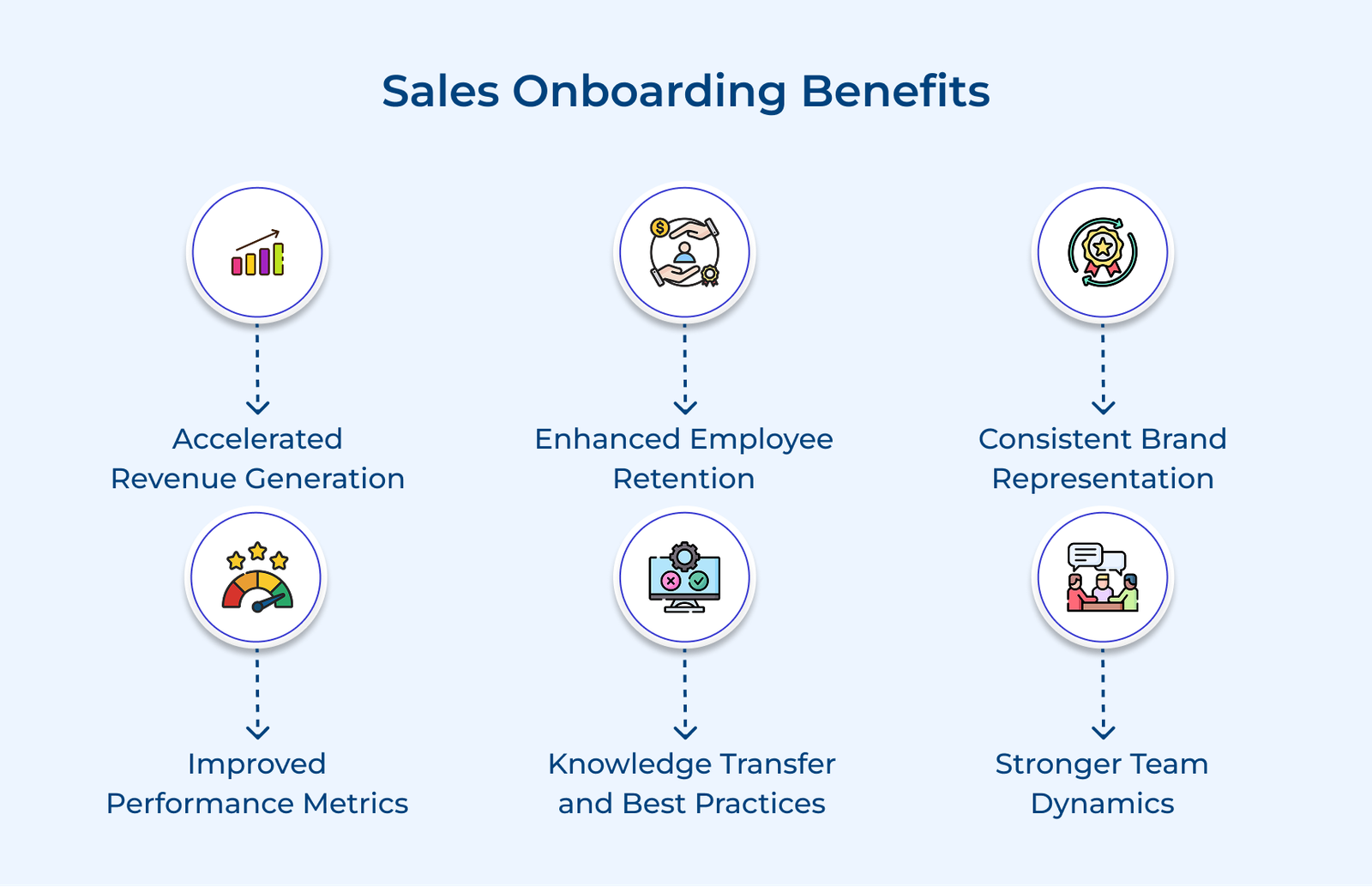
1. Accelerated Revenue Generation
A well-designed onboarding program accelerates new sales reps’ path to meeting quotas. Organizations empower new hires to contribute to revenue goals faster by offering in-depth product knowledge and sales techniques from the start.
2. Enhanced Employee Retention
Effective onboarding programs enhance long-term employee retention by showing the company’s commitment to success. When sales reps feel supported and equipped, they’re more likely to stay, helping businesses to ensure team stability.
3. Consistent Brand Representation
Systematic onboarding ensures sales reps consistently communicate the same message and value proposition. The alignment strengthens brand identity, builds customer trust and upholds professional standards across all customer interactions.
4. Improved Performance Metrics
Thorough onboarding boosts performance in key sales metrics, like conversion rates, deal sizes and customer satisfaction. 70% of top performers credit a strong onboarding experience for their success. Well-trained reps make fewer mistakes, handle objections better and close deals more efficiently.
5. Knowledge Transfer and Best Practices
Onboarding enables the transfer of institutional knowledge and effective sales strategies from seasoned team members to new sales hires. The approach preserves valuable insights, shortens learning curves and ensures consistent performance across the sales team.
6. Stronger Team Dynamics
A structured onboarding process seamlessly integrates new hires into sales teams, enhancing mentorship, collaboration and peer learning. The supportive culture drives collective success and sparks innovation in sales strategies.
Following are seven essential steps to help you craft a tailored onboarding experience that will equip your sales team for success. Let’s check them in details below:
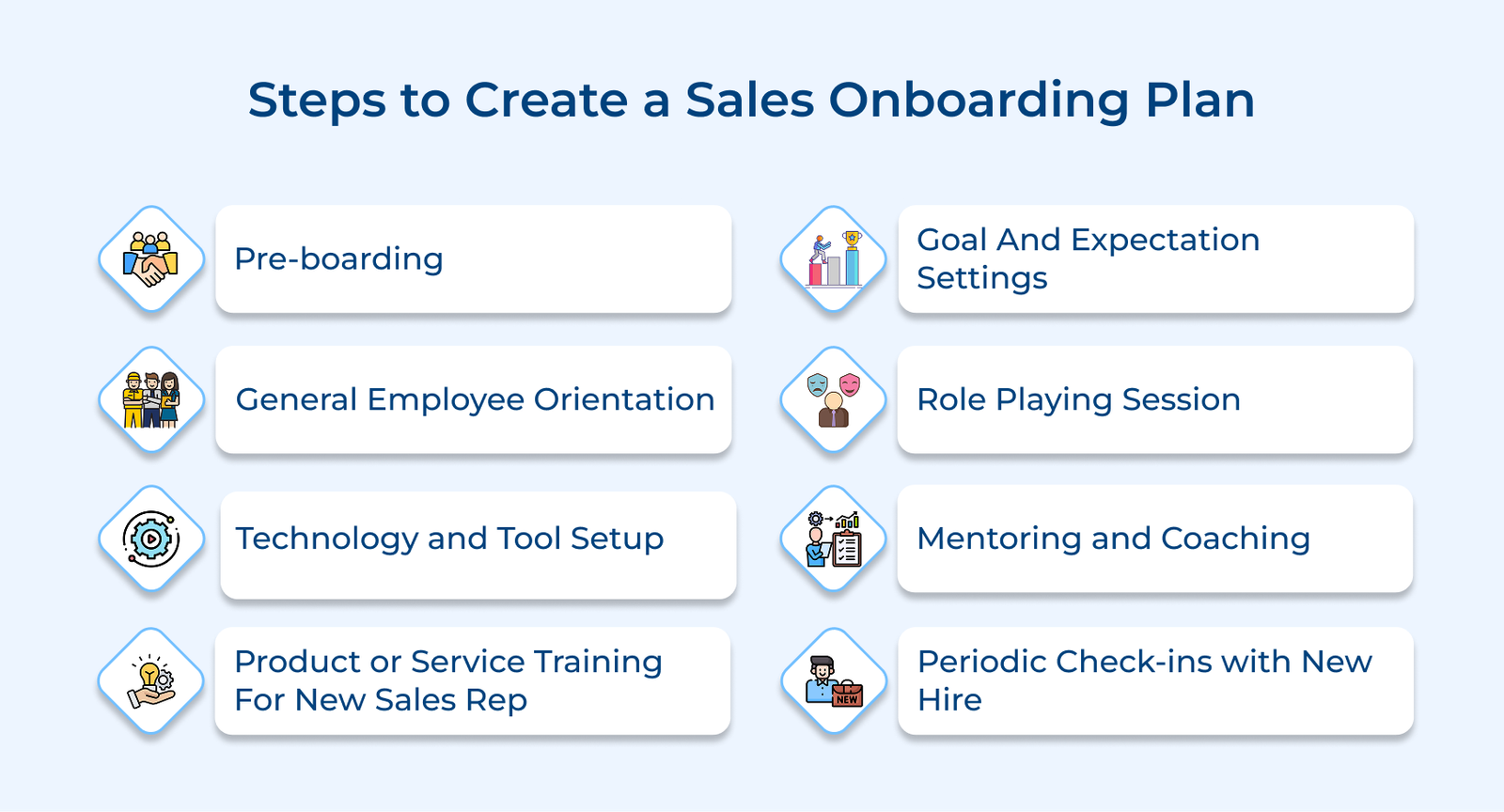
Pre-boarding sets the stage for a new sales rep’s success before day one. It includes preparing documentation, setting up access credentials and organizing welcome materials to ensure a smooth transition. It showcases organizational preparedness, reduces first-day anxiety and makes new sales hires feel valued, boosting their confidence.
Organizations can implement pre-boarding by creating a checklist covering welcome packages, system setup and initial training scheduling. HR, IT and sales management should collaborate to ensure all resources are ready for the new hire.
Pro tips:
The step blends company orientation with hands-on technology training. New hires learn about the company’s structure, culture and core values while gaining practical experience with the tools they’ll use daily. The approach is key for helping sales reps understand both their role and the technical aspects, minimizing frustrations and allowing them to focus on their sales duties.
Organizations should design a program that alternates between company orientation and technology training. It should include facility tours, introductions to key stakeholders and CRM or sales enablement tool workshops.
Actionable tips:
Product and service training is crucial for sales success, providing representatives with in-depth knowledge of product features, benefits and applications. The training ensures they can confidently discuss offerings, address customer needs and demonstrate value. Sales reps can effectively handle technical questions, overcome objections and tailor solutions to customer pain points with thorough product knowledge.
Businesses should offer a multi-faceted approach, including interactive sessions, hands-on demos and real-world application exercises. Training should progress from basic product knowledge to advanced features and focus on connecting benefits to customer needs.
Best practices:
Goal and expectation setting provides a clear roadmap for new sales representatives, outlining measurable objectives and performance standards. A structured approach helps new sales hires understand how their performance will be evaluated and provides concrete goals that align with both individual success and organizational growth.
Organizations should implement goal setting through collaborative sessions between sales managers and new hires. The meetings should establish both short-term and long-term objectives while creating detailed action plans. The process includes defining key performance indicators, setting milestones and scheduling regular progress reviews.
Pro tips:
Role-playing sessions offer new sales representatives a safe space to practice skills in simulated customer interactions. The sessions cover common sales scenarios, objection handling and negotiation strategies, providing instant feedback for improvement. They are essential for refining approaches, boosting confidence and preparing reps for real-world situations without risking customer relationships.
Creating realistic scenarios based on typical customer interactions and industry challenges is paramount for businesses to progress from basic conversations to complex negotiations. Constructive feedback from managers, peers and experienced sales team members should be included in each session.
Actionable tips:
Mentoring and coaching provide essential support by pairing new sales reps with experienced team members for personalized guidance. The relationship accelerates development, offering practical insights, strategic advice and real-world selling techniques. A structured mentoring program reduces the learning curve and builds confidence while helping new hires navigate the organization.
Organizations should match mentors with new hires based on compatibility in experience, personality and sales styles. The program should include regular check-ins, shadowing and collaborative selling opportunities, with feedback sessions to track progress.
Best practices:
Periodic check-ins provide a structured approach for tracking new sales reps’ progress and offering continuous support. The reviews create time to address challenges, celebrate wins and adjust development plans as needed, ensuring small obstacles don’t escalate. Regular check-ins enhance consistent communication, demonstrate commitment to employee success and provide valuable feedback to refine the onboarding process.
Businesses should schedule check-ins that evolve from frequent initial meetings to regular reviews. Each session should follow an agenda focused on performance, skill development and goal achievement with flexibility for emerging needs. Documenting meetings helps track progress and identify areas for additional support.
Pro tips:
Let’s go through some missteps you should avoid to ensure your new sales team members not only survive but thrive in their roles.
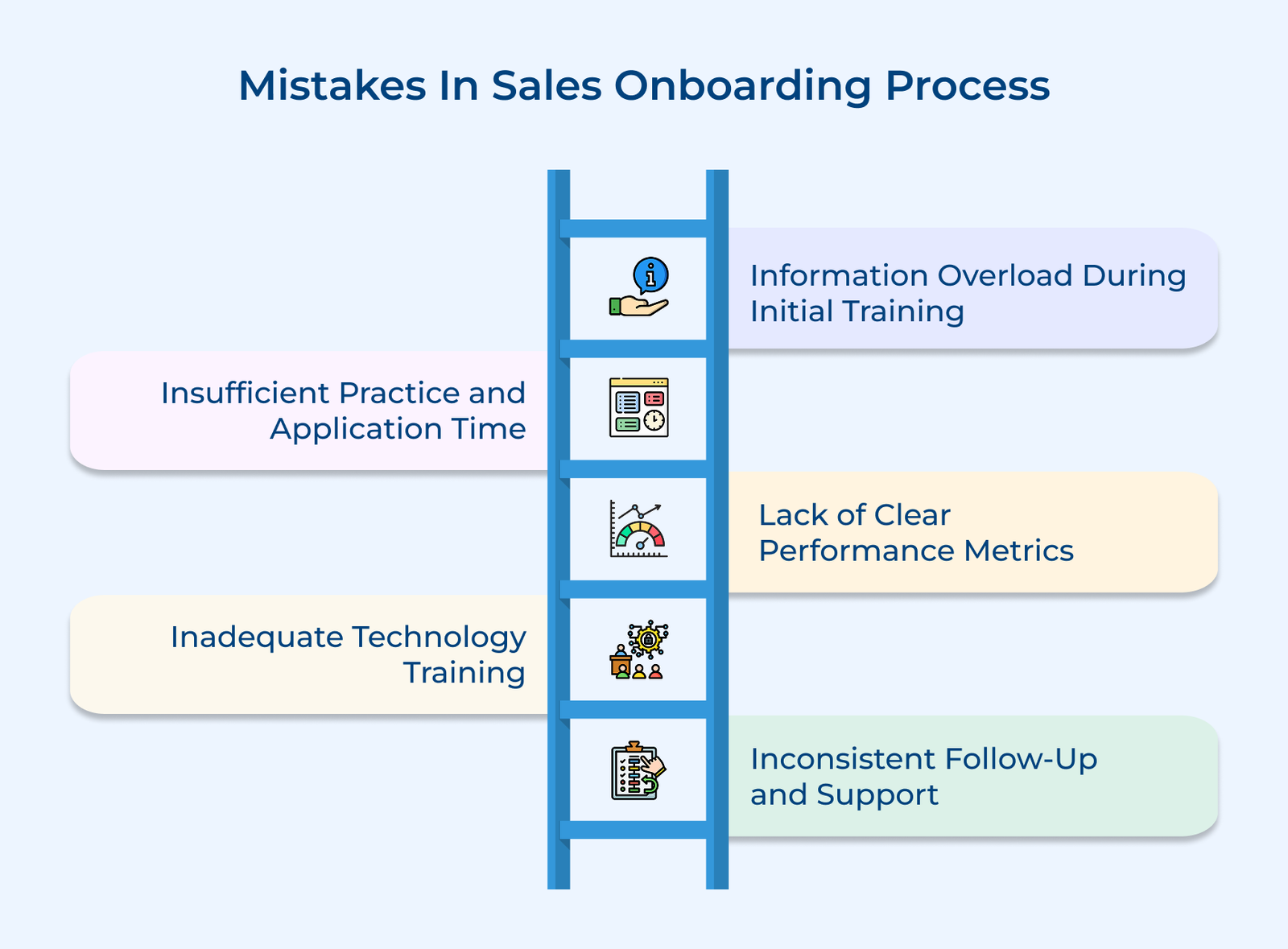
1. Information Overload During Initial Training
Organizations often cram extensive product knowledge, company info and sales methodologies into the first few days of onboarding, leading to poor retention. A progressive learning schedule ensures better long-term retention and reduces overwhelm.
2. Insufficient Practice and Application Time
Many onboarding programs prioritize theory over practice, leaving new reps struggling to apply their knowledge to real sales situations. It is crucial to include role-playing and supervised customer interactions for effective learning.
3. Lack of Clear Performance Metrics
Many organizations overlook setting clear, measurable goals for new sales reps, leaving them uncertain about performance expectations and progress. The lack of direction can hinder motivation and alignment.
4. Inadequate Technology Training
Rushing system training or relying on trial and error leads to inefficiency, poor data management and reduced productivity. Thorough technology training is essential for onboarding success.
5. Inconsistent Follow-Up and Support
Organizations often focus onboarding efforts upfront but neglect ongoing support, leaving new hires feeling abandoned when challenges arise. Consistent check-ins and mentorship are key to sustained success.
Check out some best practices to transform your sales onboarding into a powerful tool for success, ensuring your new hires hit their targets.
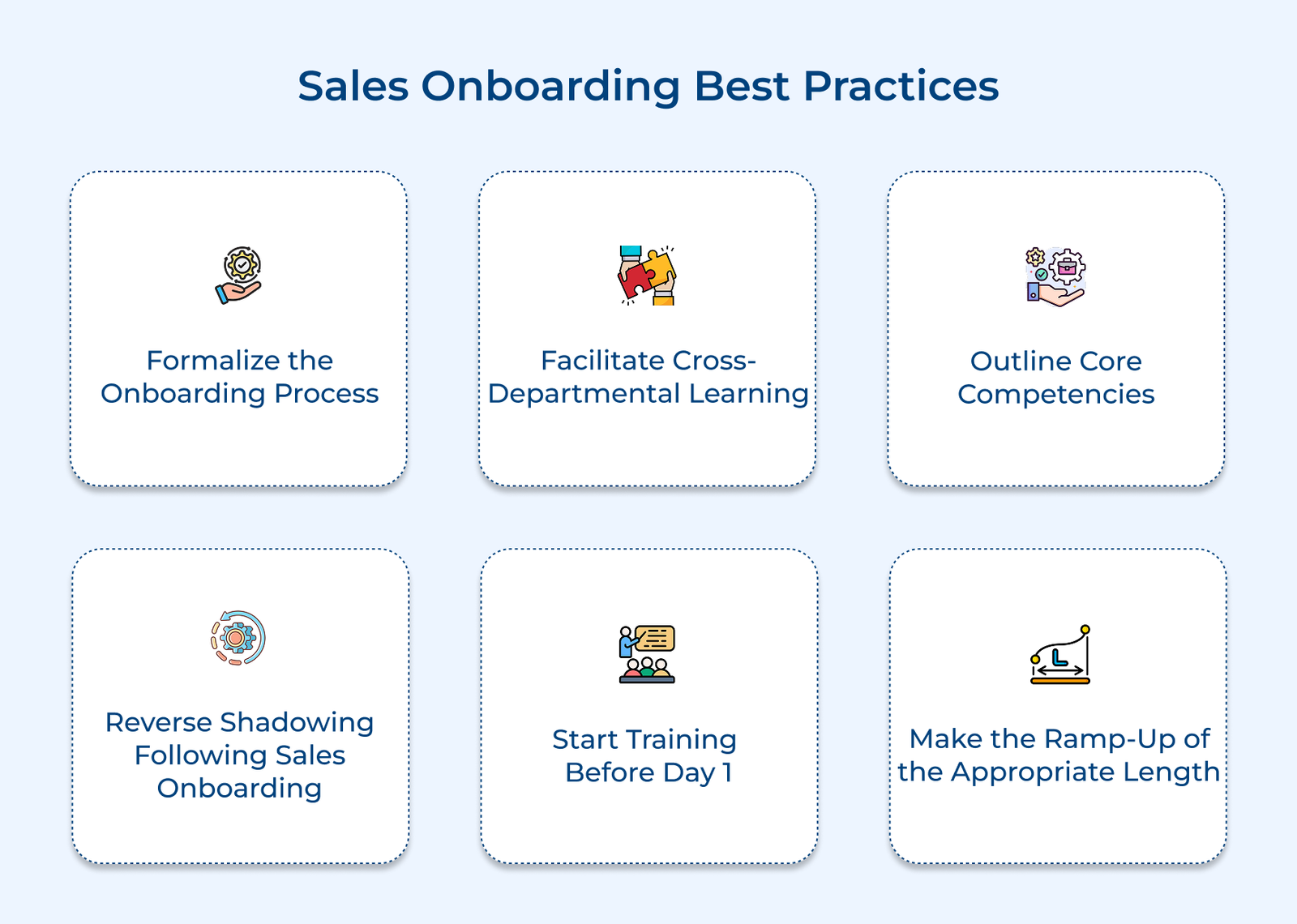
A formalized onboarding process offers a structured framework that guarantees consistent training delivery and clear expectations for all involved. The approach guides new hires through each stage of their development, with documented procedures, standardized materials and well-defined milestones.
Tracking mechanisms are integrated to monitor progress, spot potential gaps and evaluate training effectiveness. The data-driven strategy allows for continuous improvement to the onboarding program while maintaining accountability at all levels.
Cross-departmental exposure helps new sales representatives gain a well-rounded understanding of how each team contributes to the customer experience. They develop a deeper insight into the company’s value delivery system by learning about product development, customer support and implementation processes.
The collaborative approach enhances relationship-building across departments, creating a support network that new hires can rely on throughout their careers. Regular interaction with different teams enhances problem-solving skills and equips sales reps to provide more effective solutions for customers.
Defining key skills and knowledge requirements creates a clear roadmap for sales representative development. The competency framework includes product knowledge, sales methodologies, technical expertise and essential behavioral traits, all critical for success.
A structured approach ensures targeted training and sets clear performance evaluation criteria. Regular assessments of the competencies help pinpoint areas for improvement while celebrating milestones and achievements.
After initial training, new representatives can gain valuable insights by observing experienced team members in action. Observational learning reinforces formal training and demonstrates practical applications of their skills in real customer interactions.
As part of the development process, reverse shadowing allows experienced team members to observe and provide feedback to new hires. The gradual progression builds confidence while ensuring new representatives effectively apply the skills and methodologies they’ve learned.
Pre-boarding engages new hires before their official start date, laying the foundation for a successful onboarding experience. Early access to training materials, company info and basic product knowledge allows representatives to begin learning proactively.
The proactive approach reduces anxiety and accelerates the integration process, showcasing the organization’s commitment to employee success. Pre-boarding materials should strike a balance by providing essential information without overwhelming new hires.
Setting realistic timelines for skill development and performance expectations acknowledges the challenges of the sales role. A well-paced ramp-up period allows new hires enough time for knowledge absorption, hands-on practice and confidence building.
Organizations ensure new representatives thoroughly master essential skills while preventing burnout by avoiding rushed timelines. Regular assessments during the phase enable adjustments to the timeline based on individual progress and learning needs.
Following are the key milestones and activities for a successful 30-60-90-day sales onboarding plan, designed to ensure smooth integration.
During the first phase, new sales representatives focus on company fundamentals and sales processes, emphasizing knowledge acquisition. They learn about company culture, product offerings and tools while shadowing experienced team members.
Key activities:
The second month transitions new representatives applying their knowledge through supervised customer interactions, handling parts of sales calls, writing proposals and managing their pipeline with mentor guidance. The phase boosts confidence through hands-on experience.
Primary activities:
Representatives transition to independent sales activities in the final month, with continued support as needed. The phase emphasizes pipeline management, customer relations and meeting initial sales targets while taking full ownership of their territories.
Key activities:
Check out the essential features of sales onboarding software designed to enhance new hire success, ensuring a seamless onboarding experience.
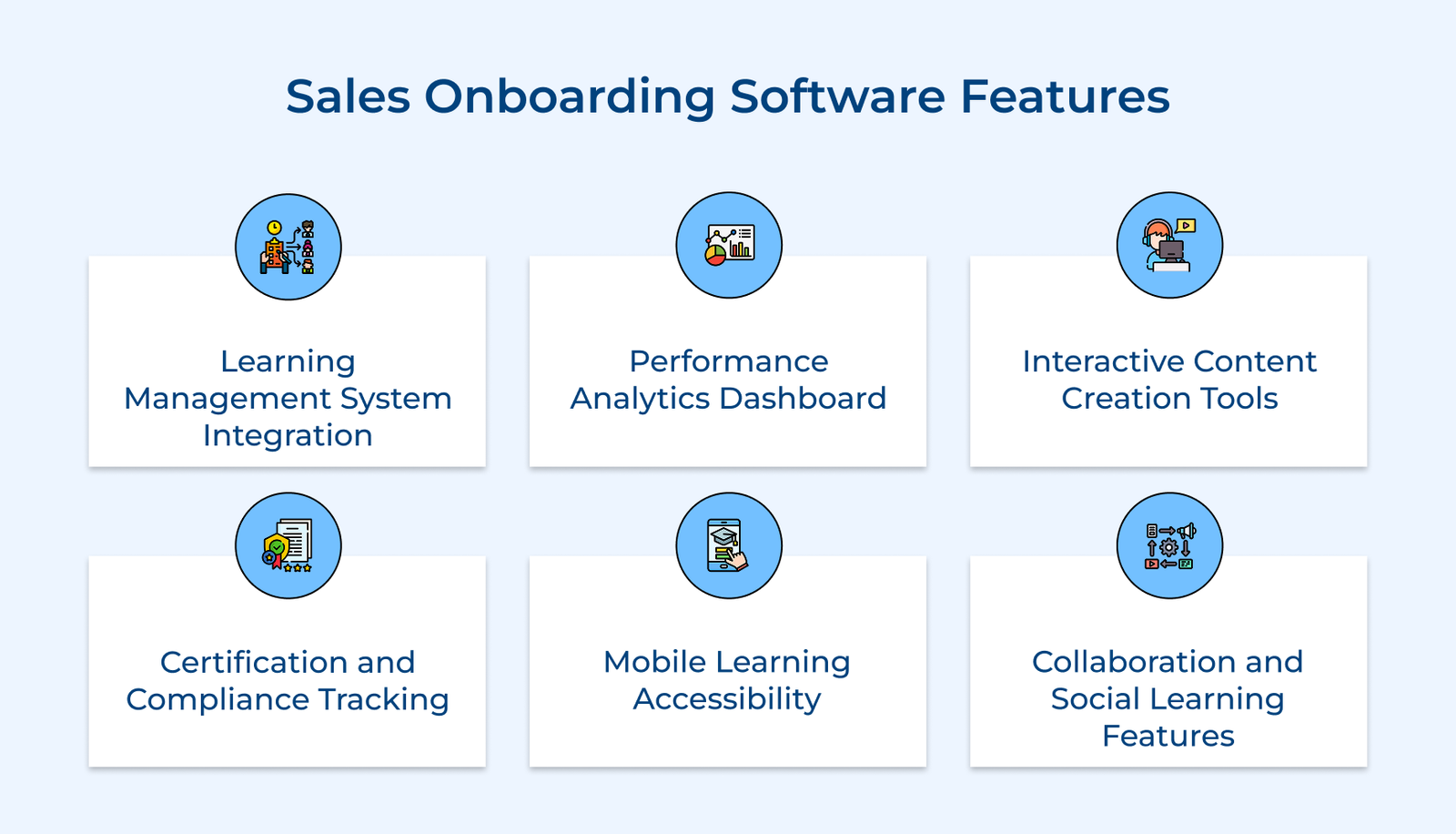
1. Learning Management System Integration
The platform centralizes training materials such as videos, interactive modules and assessments. The integration enables systematic content delivery while tracking completion rates and comprehension with built-in progress monitoring features.
2. Performance Analytics Dashboard
Advanced analytics track progress using customizable metrics and reporting features. The dashboard offers real-time insights into learning completion, assessment scores and skill development, enabling data-driven decisions for training improvements.
3. Interactive Content Creation Tools
Authoring tools allow organizations to create interactive training content such as simulations, quizzes and presentations. The features support diverse learning formats, ensuring consistent messaging and quick updates for product or market changes.
4. Mobile Learning Accessibility
Cross-platform access allows representatives to engage with training materials on mobile devices, offering flexible learning. Progress syncs across devices and offline access ensures content is always available.
5. Collaboration and Social Learning Features
Integrated communication tools enhance peer learning and mentorship via discussion forums, virtual coaching and knowledge sharing. The features enhance collaboration and strengthen team relationships throughout onboarding.
Let’s go through the key factors to consider when selecting the right sales onboarding platform, ensuring it aligns with your team’s needs.
Key questions:
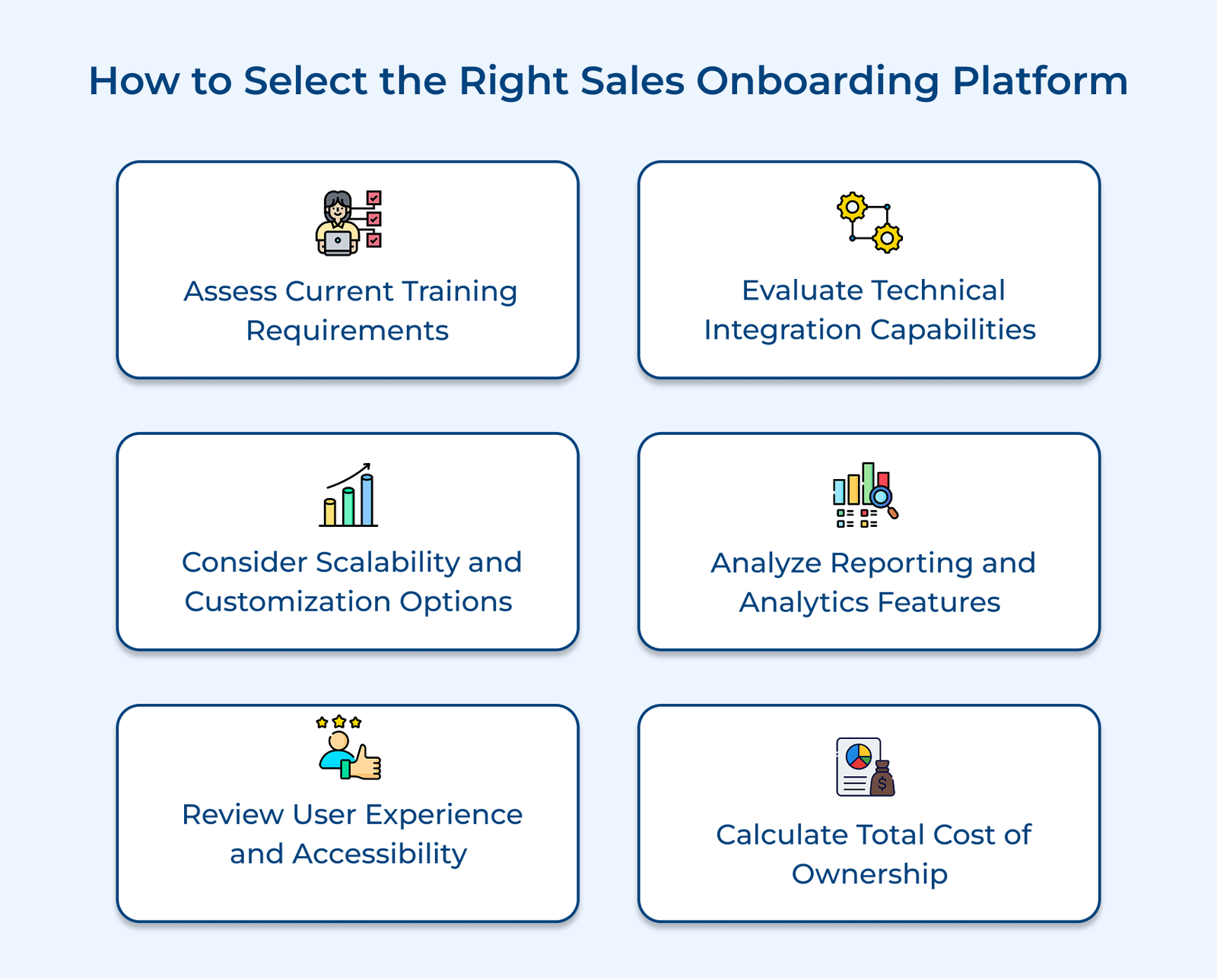
Analyze current onboarding processes to pinpoint gaps and inefficiencies. Define requirements for content delivery, assessments and progress tracking. Gather feedback from sales managers and reps on current training challenges.
Evaluate the software’s compatibility with existing CRMs, LMS and communication tools. Check API capabilities, data security and authentication needs. Consider technical support for both implementation and ongoing use.
Assess the platform’s scalability for growing user numbers and content. Evaluate customization options for learning paths, assessments and reporting. Ensure flexibility to update training as products and market conditions change.
Evaluate the platform’s interface, ease of navigation and mobile access. Consider the learning curve for both administrators and users, along with available training resources for platform adoption.
Conduct a detailed cost analysis covering implementation, user licenses, customization and ongoing maintenance. Factor in expenses for content creation, support and upgrades. Assess the vendor’s pricing and contract terms.
Below are the four examples of successful sales onboarding programs, showcasing innovative approaches that can enhance the training of new sales reps.
Nike
Nike’s sales onboarding program focuses on deep product knowledge and brand storytelling. New hires immerse in Nike’s heritage, design philosophy and innovation through a mix of traditional learning as well as hands-on experiences.
The approach has bolstered Nike’s market position by creating a knowledgeable sales team that confidently conveys the brand’s value. The result is stronger customer relationships, increased brand loyalty and consistent sales growth.
Apple
Apple’s sales onboarding transforms new hires into brand ambassadors by focusing on customer experience, technical expertise and problem-solving. The program trains reps to guide customers through product discovery, aligning with Apple’s consultative sales approach.
The customer-centric model has boosted Apple’s retail success, creating a unique shopping experience. Representatives consistently deliver exceptional interactions, improving customer satisfaction, enhancing brand advocacy and driving sustained revenue growth.
Amazon
Amazon’s sales onboarding uses data-driven insights and tech-enabled platforms. The program focuses on understanding customer behavior, utilizing analytics and mastering its extensive product range. Representatives learn to use predictive analytics to anticipate customer needs and optimize sales strategies.
The technology-focused approach boosts Amazon’s competitive edge by enhancing sales efficiency. Representatives make better decisions, target customers more effectively and drive higher productivity, strengthening relationships across diverse market segments.
Dell Technologies
Dell Technologies offers a multi-tiered sales training program focused on solutions and market expertise. Reps receive intensive training in hardware, software and IT infrastructure strategies. The program combines virtual learning modules, hands-on experience and mentorship.
The structured approach has bolstered Dell’s position in the enterprise market by developing technically skilled reps who can craft tailored technology solutions. As a result, they achieve stronger account penetration and build lasting relationships with IT decision-makers across industries.
Check out the key metrics to measure the success of sales onboarding initiatives, helping you track progress and ensure your new hires are set up for success.
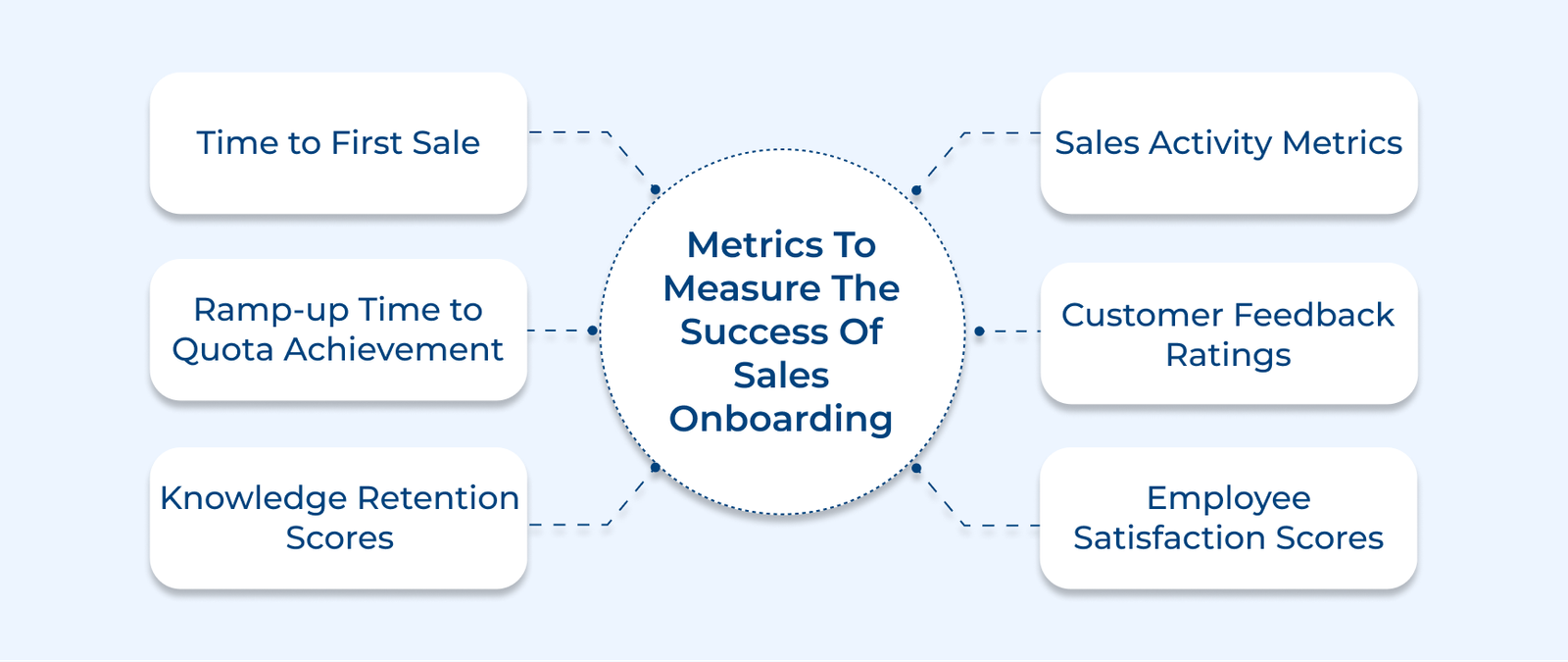
1. Time to First Sale
The metric tracks the time from a representative’s start date to their first closed deal. It helps organizations evaluate the effectiveness of onboarding and identify obstacles to early sales success.
2. Ramp-up Time to Quota Achievement
Tracking how long it takes new representatives to consistently meet sales quotas reveals the effectiveness of onboarding. The metric helps assess the speed of skill development and real-world knowledge application.
3. Knowledge Retention Scores
Regular assessments gauge how well representatives retain product knowledge, sales techniques and company processes. The scores reveal training effectiveness and pinpoint areas that need further attention or reinforcement.
4. Sales Activity Metrics
Tracking key activities like prospecting calls, customer meetings and proposal submissions helps evaluate how effectively new representatives implement learned behaviors. The metric provides early indicators of success before revenue results appear.
5. Customer Feedback Ratings
Collecting customer feedback on interactions with new representatives helps assess the effectiveness of engagement training. It provides insights into the quality of customer interactions and solution presentation skills.
6. Employee Satisfaction Scores
Surveys gauging new representatives’ satisfaction with onboarding and job readiness highlight program strengths. The metric correlates with long-term retention and performance success.
Effective sales onboarding is a vital investment in organizational success, equipping new representatives with the knowledge, skills and confidence needed for rapid productivity. A well-structured program ensures consistent delivery across customer interactions and enhances lasting relationships.
Organizations create a competitive edge by implementing comprehensive strategies with clear metrics and ongoing improvements. It results in a capable, confident sales team that drives revenue growth and maintains high customer engagement standards, setting a foundation for long-term success.

Sales onboarding is a structured program that transforms new sales hires into productive team members. The process encompasses product knowledge training, understanding of sales methodologies, familiarization with company processes and practical selling skills development. It begins with orientation and extends through the entire journey of becoming a fully functioning sales representative who can independently generate revenue.
The 4 C’s framework consists of Culture, Customer, Company, and Competency. Culture involves immersing new hires in organizational values and team dynamics. The customer focuses on understanding buyer personas and their journey. The customer zeroes in on buyer personas, while the company lays the groundwork with internal processes and product expertise.
A successful sales onboarding program integrates several crucial elements such as comprehensive product training, hands-on practice with sales tools and CRM systems. It helps businesses understand the sales pipeline, customer interaction scenarios and clear performance metrics. It should include mentorship opportunities, regular feedback sessions and progressive milestones that build confidence systematically.
While basic onboarding might take 30-90 days, complete sales proficiency usually requires 6-12 months. The duration varies based on product complexity, market sophistication and sales cycle length. The process should be structured in phases, starting with essential knowledge and gradually advancing to more complex skills, with clear benchmarks for progress assessment throughout.
Technology serves as a crucial enabler in modern sales onboarding through learning management systems, virtual reality training simulations and AI-powered practice scenarios. Digital platforms facilitate self-paced learning, track progress and provide interactive content. CRM training tools, video conferencing for remote coaching and analytics help identify areas needing additional focus.

Grow Customer Relationships and stronger team collaboration with our range of products across the Conversational Engagement Suite.
Omnichannel Customer Support & Help Desk Software
AI Enabled Business Messaging and Chatbot Software
Sales Engagement & CRM Software
Call Center Software & Virtual Phone System
Product Marketing & Experience Platform
Customer Experience & Feedback Management Software

 Voicebot vs Chatbot: What’s the Difference Between Them?
Scroll to top
Voicebot vs Chatbot: What’s the Difference Between Them?
Scroll to top