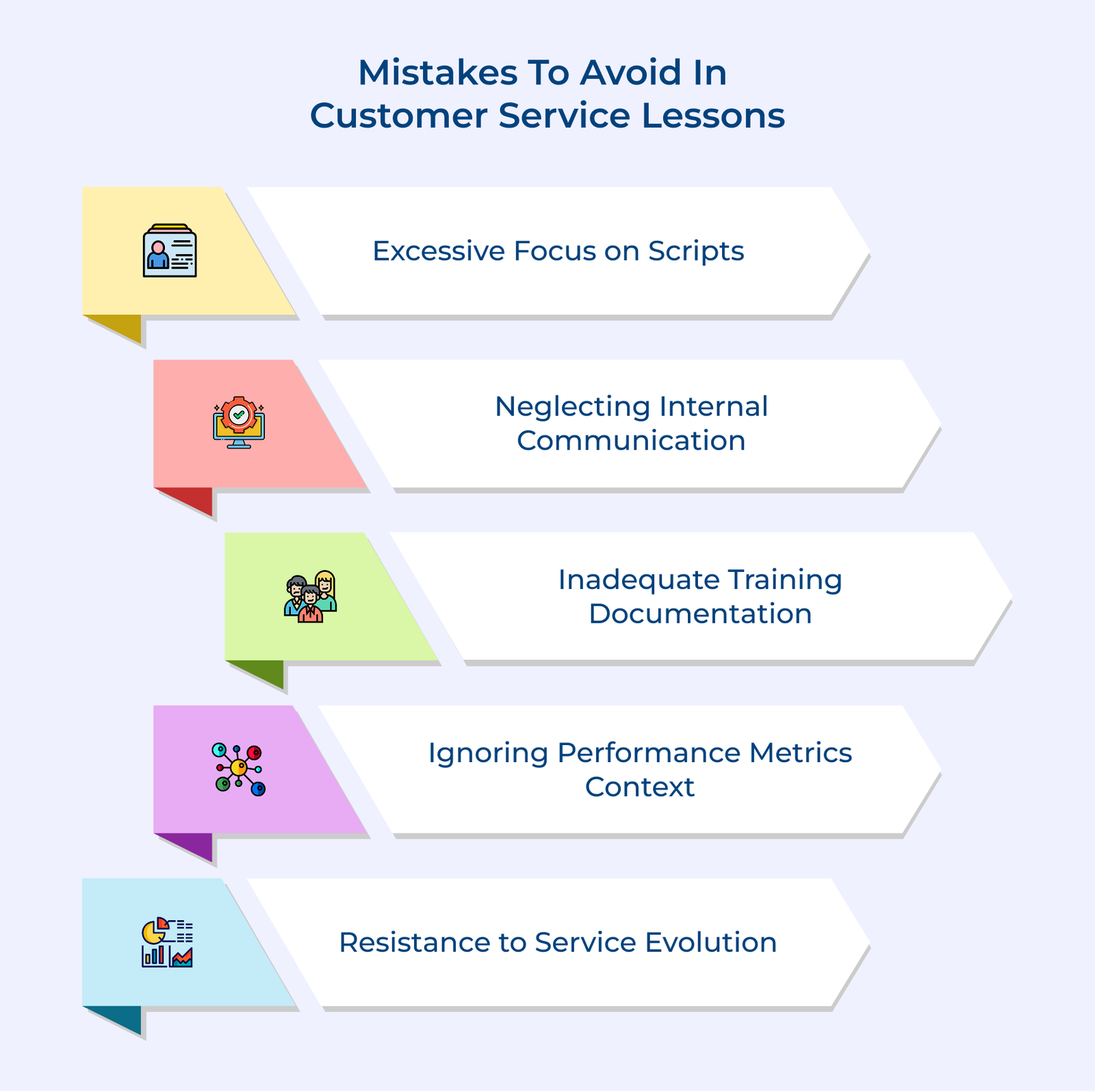
Excessive Focus on Scripts
Customer support teams often rely too much on scripted responses, making interactions feel impersonal and robotic. It limits representatives’ ability to address unique situations and build genuine connections with customers.
Develop flexible conversation guidelines that allow reps to speak naturally while covering key points. Train reps in adaptive communication techniques and encourage personalization within clear parameters.
Neglecting Internal Communication
Many organizations overlook the need for strong communication between customer service teams and other departments. The disconnect leads to information gaps, delays and inconsistent experiences. Representatives often miss crucial updates on products, policies or ongoing issues.
Establish structured communication protocols that ensure regular information sharing across departments. Create centralized knowledge bases and hold regular cross-functional meetings to keep everyone aligned on customer service initiatives.
Inadequate Training Documentation
Many organizations neglect to maintain up-to-date training materials, leading to inconsistent service, knowledge gaps and onboarding challenges. Essential information can remain undocumented or outdated.
Develop and regularly update comprehensive training materials that cover all customer service aspects. Implement a review process to keep documentation current and aligned with best practices.
Ignoring Performance Metrics Context
Teams often prioritize quantitative metrics, overlooking the broader context of customer interactions. The focus on numbers can lead to rushed services, premature case closures and reduced quality as speed takes precedence over effectiveness.
Implement balanced performance evaluations that weigh both quantitative and qualitative aspects. Develop metrics that assess customer satisfaction, resolution quality and long-term relationship building.
Resistance to Service Evolution
Organizations often cling to outdated service approaches, failing to adapt to evolving customer preferences and technological advancements. The resistance to change results in service delivery that falls short of modern expectations, putting the organization at a competitive disadvantage.
Implement regular service reviews to evaluate and update strategies. Actively gather customer feedback on preferred communication channels and service methods, staying flexible to adapt to evolving needs.
Examples of Companies Applying Customer Service Lessons
Below are some examples of brands successfully applying customer service lessons. These examples highlight strategies that enhance customer experiences.
Amazon’s Customer-Centric Approach
Amazon applies customer service lessons through its “customer obsession” philosophy, focusing on anticipating needs via data analysis and ensuring consistent communication across channels. Representatives are empowered to prioritize customer satisfaction, even at the cost of short-term profits.
The customer-first approach has made Amazon a leader in service excellence. Their proactive problem-solving and commitment to convenience have enhanced exceptional customer loyalty, setting a high standard that others in retail now strive to match.
Zappos’ Empathy-First Strategy
Zappos transformed customer service by focusing on emotional connections during extended interactions. Representatives receive in-depth training in empathetic communication and are encouraged to spend as much time as needed with customers, free from call time metrics.
The approach has positioned Zappos as a leader in customer experience. Their dedication to building genuine relationships has enhanced a loyal customer who values personalized service and often becomes passionate brand advocates.
Ritz-Carlton’s Personalization Excellence
Ritz-Carlton empowers employees to craft personalized guest experiences through a service philosophy that emphasizes autonomy. Staff maintain detailed guest preference profiles and have the authority, along with a dedicated budget, to resolve issues without needing management approval.
The commitment to personalization has made Ritz-Carlton the gold standard in hospitality. Their approach enhances unparalleled customer loyalty and has solidified the brand as a symbol of premium service quality.
Southwest Airlines’ Tension Management
Southwest Airlines excels at managing customer tension during travel disruptions by focusing on transparent communication and proactive problem-solving. Representatives are trained to diffuse difficult situations with humor and authenticity, ensuring a positive experience.
The approach has allowed Southwest to maintain strong customer relationships, even amidst industry challenges. The airline has built remarkable customer loyalty by turning potential negatives into positive experiences.
Apple’s Consistent Communication Strategy
Apple ensures exceptional service quality through an integrated support system across retail stores, online channels and phone support. Representatives receive thorough training to deliver consistent messaging and solutions, no matter the communication channel.
The streamlined approach has strengthened Apple’s market position. Their reliable, consistent support experience plays a key factor in customer retention and drives adoption of their product ecosystem.
Transform Your Business With Exceptional Customer Service Lessons.
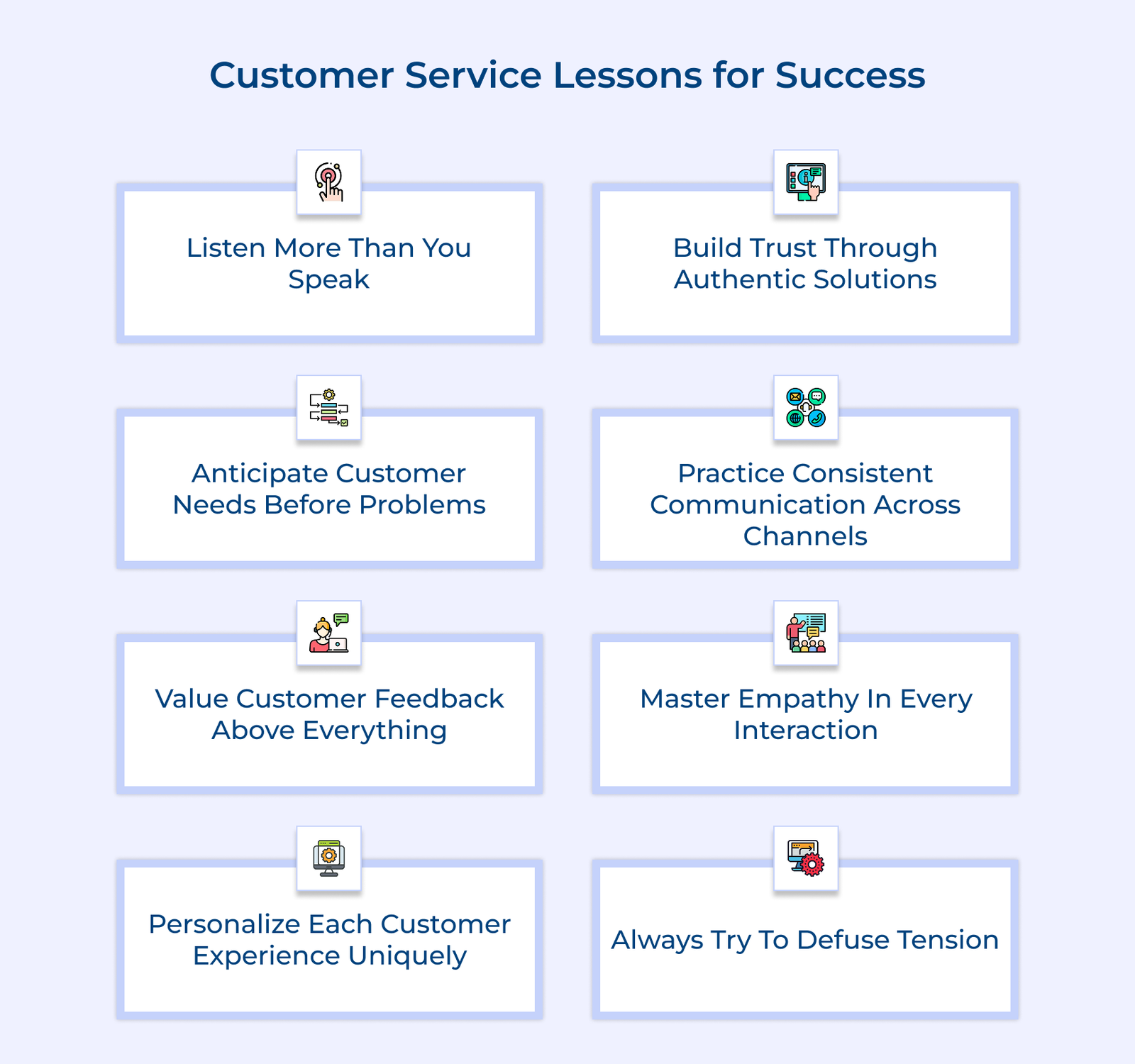
Exceptional customer service is a transformative force. Organizations can create lasting competitive advantages by focusing on active listening, trust-building, proactive solutions and personalized experiences. The core principles help businesses forge stronger customer relationships and drive operational excellence through continuous service improvement.
The benefits of strong customer service extend far beyond immediate satisfaction. Companies that prioritize service excellence often see an improved brand reputation, increased loyalty and sustainable growth. Businesses can ensure long-term success by making customer service a core strategy and consistently refining service delivery.