1. Listen Actively With Empathy And Patience
Active listening means fully engaging with customers, understanding their needs and responding thoughtfully. Service reps create a space for open, judgment-free dialogue by giving customers undivided attention and asking insightful questions.
The human touch enhances trust, making customers feel valued and heard. When they feel truly understood, they’re more likely to share their concerns and embrace solutions, turning a simple interaction into a meaningful, lasting connection.
Actionable tips:
- Use the “Echo Technique” – repeat key points in your own words to confirm understanding and show active engagement.
- Apply the “Three-Second Rule” – pause for three seconds after a customer finishes speaking to ensure they’ve fully expressed themselves and demonstrate patience.
2. Personalize Responses Based on Customer History
Personalization goes beyond generic responses by tailoring interactions to each customer’s history, preferences and past encounters. Service reps can offer customized solutions and relevant recommendations that reflect the customer’s unique relationship with the company by leveraging CRM data.
The human touch enhances deeper connections, showing customers they’re not just another ticket number but a valued person. When agents reference past interactions or preferences, it creates a sense of continuity and recognition, making customers feel understood.
Pro tips:
- Create detailed customer profiles that include preferences, past issues and successful resolution approaches, accessible to all service representatives.
- Create personalized greeting scripts that mention recent purchases or interactions to instantly build rapport and make customers feel recognized.
3. Train For Emotional Intelligence
Emotional intelligence training equips representatives with the skills to respond to both their own emotions and customers’ feelings. It includes learning to read subtle cues, manage difficult conversations calmly and adjust their approach based on the customer’s emotional state. The training covers a range of scenarios, from diffusing frustration to celebrating successes with customers.
The skill is key to human touch, as it allows representatives to connect emotionally, not just procedurally. They create more authentic, satisfying experiences by navigating the emotional dynamics of interactions, making customers feel heard and valued rather than just processed.
Best practices:
- Hold regular role-playing sessions to practice managing emotionally charged situations with empathy and professionalism.
- Use emotional intelligence assessments to tailor coaching based on individual strengths and areas for growth.
4. Enhance Face-to-Face And Voice Interactions
Face-to-face and voice interactions are key opportunities for building human connection in customer service. Training reps in body language, tone and non-verbal cues helps convey warmth. Creating comfortable in-person environments and ensuring high-quality voice calls also enhance the connections.
Direct interactions are vital for the human touch as they allow reps to quickly adapt based on customer feedback. Reading facial expressions or hearing voice inflections enables more intuitive, responsive communication, enhancing stronger, more personalized relationships.
Actionable tips:
- Provide comprehensive training on body language and voice modulation to convey warmth.
- Host regular video training sessions to enhance and perfect non-verbal communication skills.
5. Implement The “One Face” Approach
The “One Face” approach gives customers a single point of contact throughout their service journey, ensuring a seamless experience. The representative handles the issue from start to finish, coordinating with other teams as needed behind the scenes.
The approach strengthens the human touch by eliminating the need to repeat information and offering a dedicated advocate. It enhances a personal, cohesive experience that makes customers feel valued, not just like another ticket in the system.
Best practices:
- Assign dedicated account reps for complex or ongoing issues to ensure continuity and personalized support.
- Create an efficient internal communication system that enables the primary contact to seamlessly collaborate with other departments.
6. Show Genuine Interest In Customer Concerns
Showing genuine interest means going beyond polite exchanges to truly understand customers’ needs and goals. It includes asking insightful questions, recalling personal details from past interactions and following up to ensure satisfaction. Representatives should engage in authentic conversations while maintaining professionalism.
The approach is key to the human touch, turning routine service into meaningful connections that build trust and rapport. When customers sense that representatives care about their success, it strengthens emotional ties and enhances long-term loyalty to the brand.
How to implement:
- Train reps to ask open-ended questions that invite customers to share more about their needs.
- Set up a follow-up system that includes personalized check-ins to ensure satisfaction and strengthen relationships after resolution.
7. Humanize Digital Communications
Humanizing digital communications means adding personality and warmth to written messages while staying professional. It could include using friendly language, personalizing automated responses and featuring representative names or photos.
As many customer interactions are today online, making the exchanges feel personal helps maintain a human connection even when automation is involved.
Actionable tips:
- Develop guidelines for incorporating casual, yet professional language and personal touches in digital interactions.
- Add representative photos or brief bios to email signatures and online profiles to personalize communications.
8. Create Seamless Transitions Between Automated And Human Support
Seamless transitions between automation and human support are key to preserving service quality. Systems should be designed to recognize when human intervention is needed and transfer customers smoothly, with their context intact.
The approach strengthens the human touch by ensuring technology enhances, rather than disrupts, personal interactions. When done right, customers appreciate the efficiency of automation while feeling valued by the personalized attention they receive.
Best practices:
- Set clear triggers for when automation should hand off to human support based on customer needs or issue complexity.
- Ensure systems automatically pass relevant customer details to representatives during transitions for a seamless experience.
9. Develop Personal Connection Protocols
Personal connection protocols guide representatives in building rapport while maintaining professionalism. It includes how to reference personal details, express empathy without losing focus on solutions and share relevant anecdotes when appropriate.
Such protocols are key to the human touch, ensuring representatives enhance authentic connections while upholding boundaries and consistency in every customer interaction.
How to implement:
- Establish guidelines for sharing personal details and building rapport while maintaining professionalism.
- Create templates to document and refer to personal information in future interactions, ensuring consistency.
10. Express Authentic Gratitude For Customer Loyalty
Genuine appreciation for customer loyalty goes beyond simple “thank you” messages. It involves recognizing milestones, sending personalized notes and giving special attention to long-term customers’ needs.
Businesses enhance deeper emotional connections with customers by expressing authentic gratitude, ensuring they don’t feel overlooked. The human touch not only strengthens relationships but also encourages continued loyalty, turning customers into long-term advocates.
Actionable tips:
- Develop a system to track customer milestones and deliver personalized recognition for key achievements.
- Train representatives to spot and celebrate actions that reflect customer loyalty.
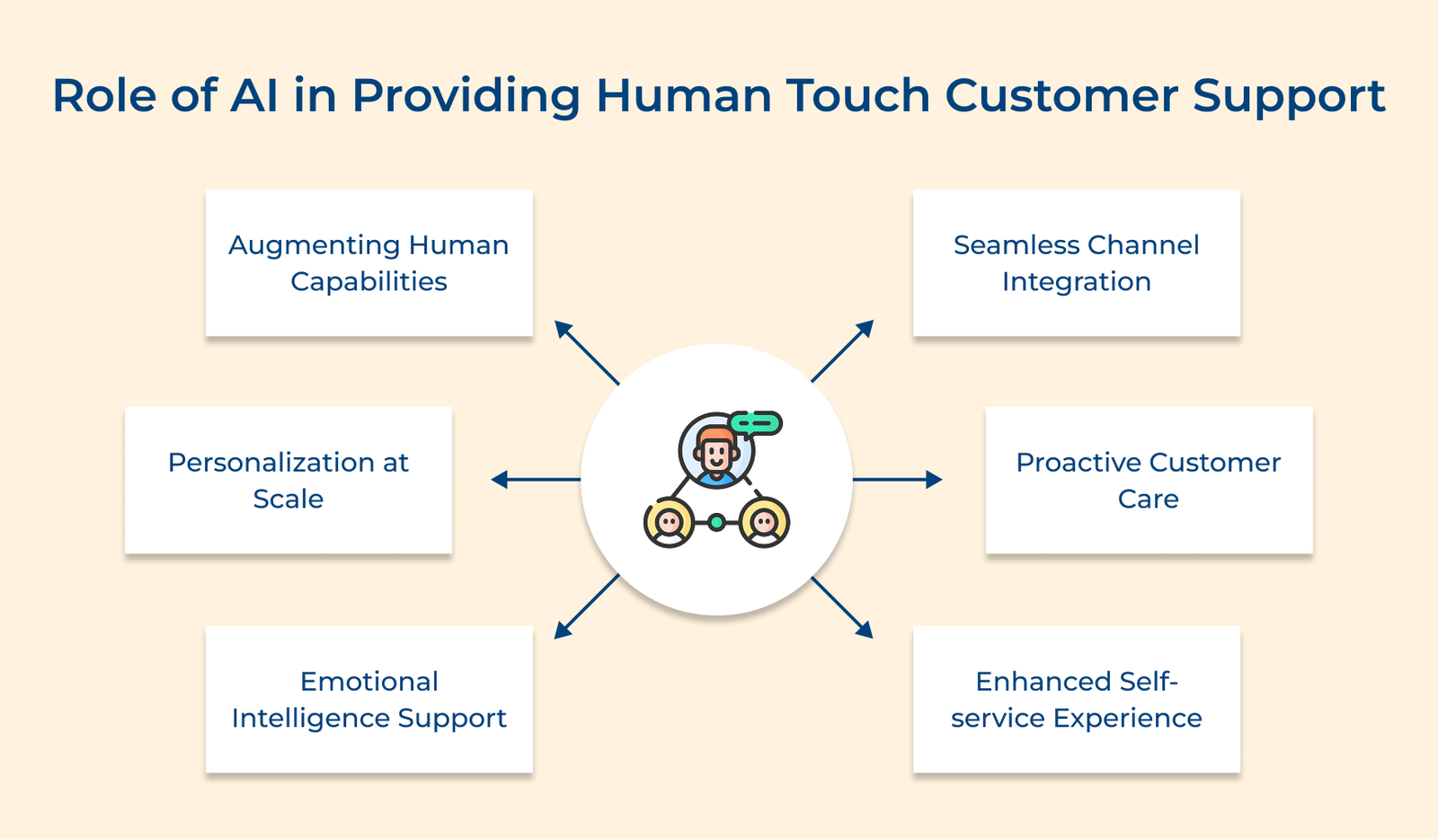
Role of AI and Automation in Providing Human Touch in Customer Support
Let us understand the role of AI and automation in enhancing, not replacing, the human touch in customer support.