How to Measure Service Quality? Best Practices, Tips & Metrics
Learn how to measure service quality using key metrics. Check out the best practices and actionable tips to enhance customer satisfaction.

Learn how to measure service quality using key metrics. Check out the best practices and actionable tips to enhance customer satisfaction.
Measuring service quality is a growing challenge as customer expectations continue to rise. As many businesses struggle to evaluate their performance accurately it leads to dissatisfied customers and missed opportunities.
Basic feedback forms and occasional surveys no longer provide the full picture. Modern customers interact with brands across multiple channels and expect to get smooth, personalized service at every step. Businesses need smarter, more holistic ways to measure quality to thrive in the markets. Let’s understand how businesses can move beyond surface-level insights and build stronger, more loyal customer relationships.
Service quality refers to the gap between customer expectations and their actual experiences. It involves both the technical delivery of the service and how customers perceive their entire interaction with the provider. Shaped by multiple dimensions, service quality begins with understanding customer expectations, influenced by past experiences, personal needs and word-of-mouth.
Businesses then design services aimed at meeting or exceeding the expectations, with each touchpoint, from initial contact to post-service follow-up. Tools like SERVQUAL assess the gap between expected and perceived service across key dimensions. It helps organizations identify areas for improvement and refine service delivery.
Key objectives:
Let’s go through six significant benefits that demonstrate why tracking service quality metrics is crucial for business success.
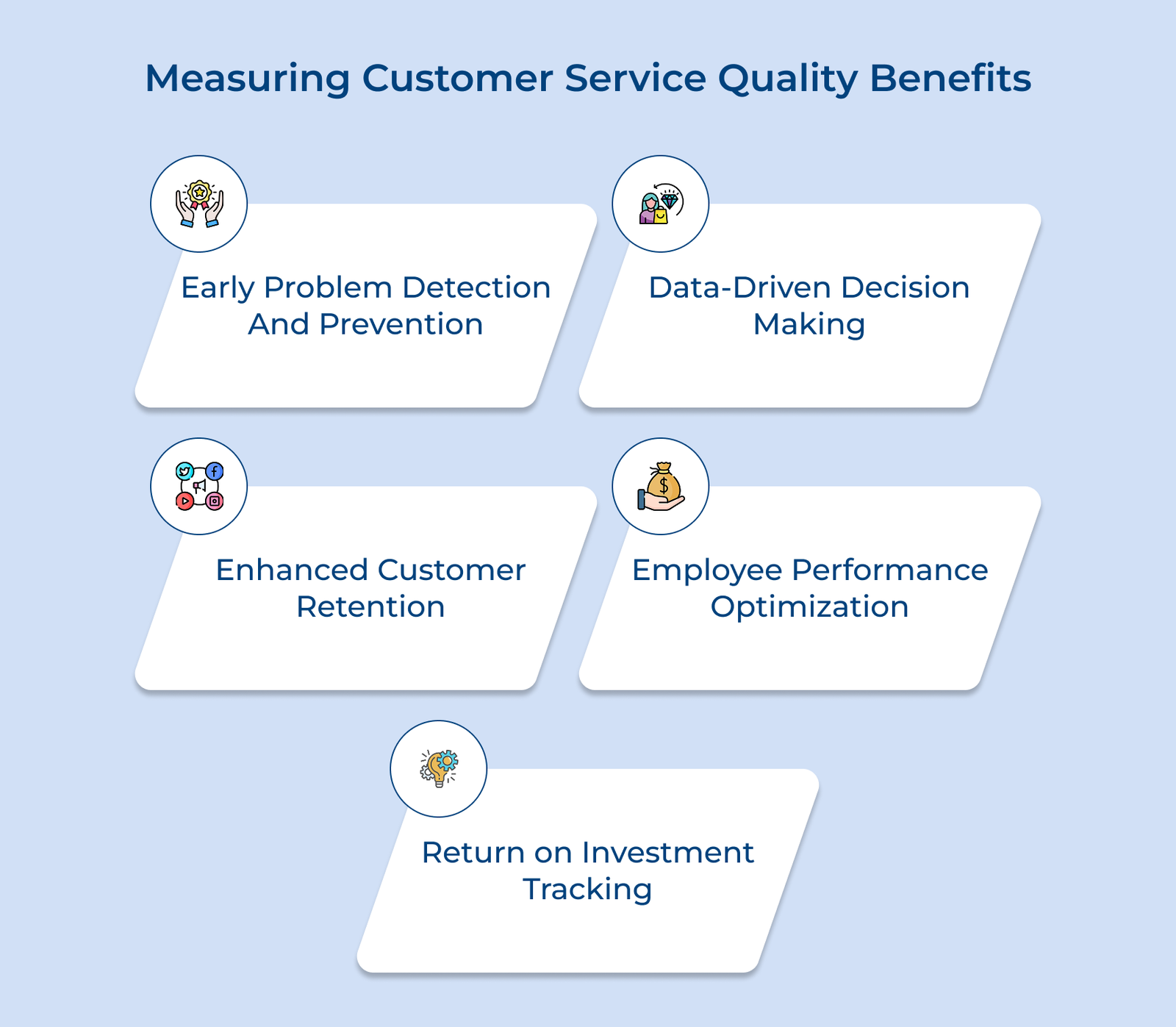
1. Early Problem Detection and Prevention
Service quality measurement serves as an early warning system for your organization. You can identify potential issues before they escalate by tracking key performance indicators and customer feedback trends. The proactive approach allows you to address concerns quickly and uphold high service standards.
2. Data-Driven Decision Making
Measuring service quality turns subjective customer experiences into actionable data. The valuable insight enables your management team to make informed decisions on resource allocation, training and process improvements based on real performance metrics, not assumptions.
3. Enhanced Customer Retention
Regular service quality assessments reveal what drives customer loyalty. You can pinpoint the key service elements that matter and focus on enhancing them to enhance lasting relationships by analyzing satisfaction trends.
4. Employee Performance Optimization
Service quality metrics set clear performance standards for your team. They help identify top performers, celebrate achievements and guide targeted training to address skill gaps among your staff.
5. Return on Investment Tracking
Quality measurement systems help quantify the financial impact of your service efforts. You can showcase the value of customer service investments and justify further resources for enhancement projects by linking service improvements to business outcomes.
Below are the five vital dimensions of service quality, uncovering how they can transform your service approach into one that truly delights and retains customers.
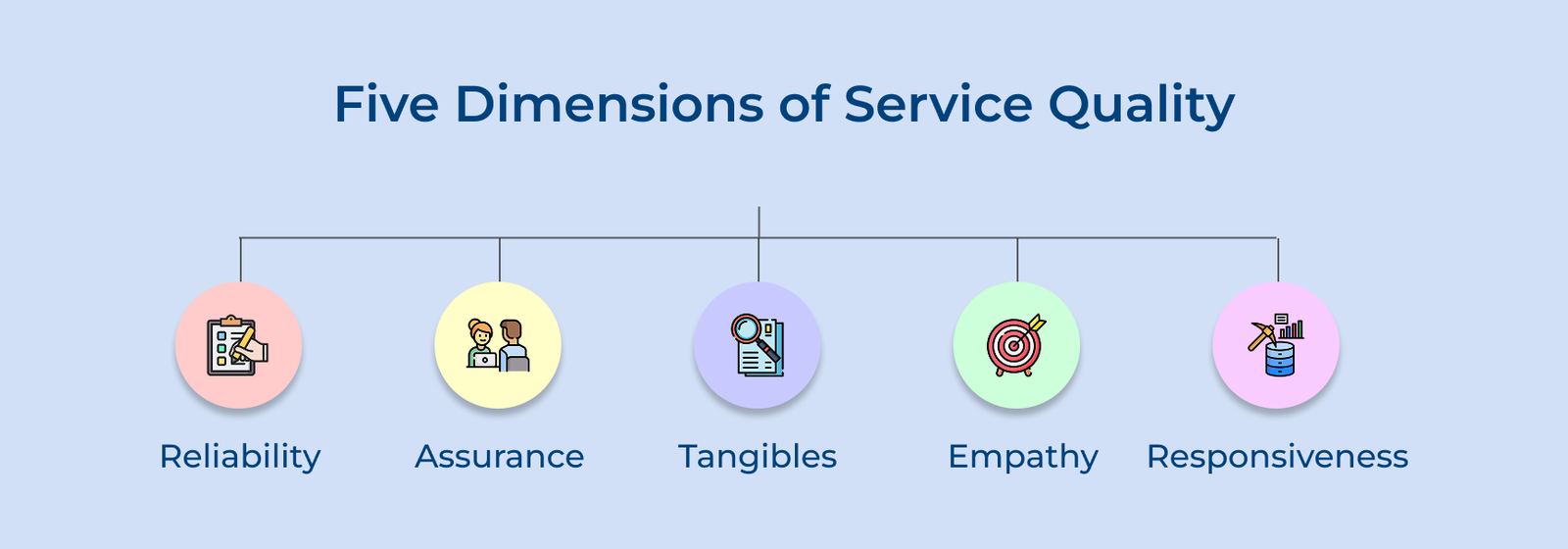
Reliability is the foundation of service quality, reflecting an organization’s ability to consistently deliver on promises with accuracy. It builds trust by meeting customer expectations every time.
Key indicators and attributes:
Reliability is measured by consistent service delivery, accuracy and fulfilling commitments. It’s about getting things right the first time, including maintaining service standards, meeting deadlines and handling transactions correctly.
Ways to improve:
Assurance reflects the knowledge, courtesy and competence of your employees. It’s about how well your staff conveys credibility and makes customers feel secure.
Key indicators:
Assurance is shown through professional behavior, technical expertise, clear communication and courteous interactions. It includes staff qualifications, security measures, confidentiality and the overall impression of competence conveyed by employees.
Implementation tips:
Tangibles refer to the physical elements customers encounter when experiencing your service, such as facilities, equipment, staff appearance and communication materials. The elements shape first impressions and set service expectations.
Key indicators:
Tangibles include the visual appeal, cleanliness and condition of facilities, as well as staff appearance, equipment and communication materials. The physical cues help customers assess service quality before receiving it.
Ways to improve:
Empathy is about providing personalized, caring attention that makes customers feel understood, valued and important. It focuses on addressing specific needs, emotions and circumstances through tailored service experiences.
Key indicators:
Empathy is shown through personalized attention, active listening and a genuine concern for customer needs. Key traits include flexibility in service delivery, remembering customer preferences and showing sincere interest in resolving problems.
How to improve:
Responsiveness reflects an organization’s readiness to provide prompt service and assistance. It includes how quickly staff responds to requests, handles complaints and adapts to changing customer needs, directly affecting customer satisfaction.
Key indicators:
Response time to inquiries, speed of service and staff availability are key indicators. Strong responsiveness is shown by adjusting the service pace to customer needs, minimizing wait times and offering real-time updates.
Ways to Improve:
Let us understand how to measure service quality through impactful techniques and metrics to ensure you exceed customer expectations every time.
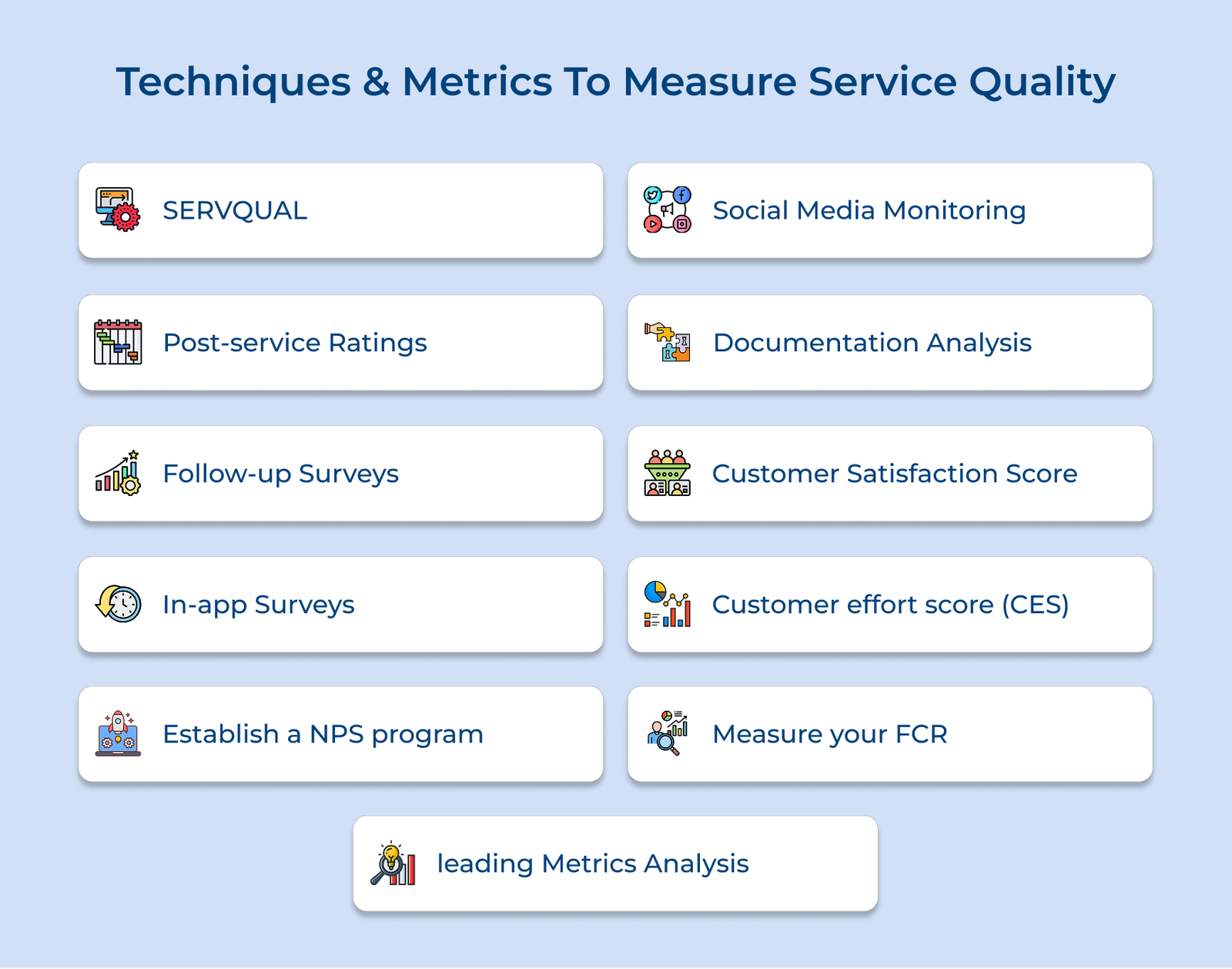
SERVQUAL is a comprehensive framework that measures the gap between customer expectations and actual service delivery. The approach helps organizations pinpoint areas where service falls short and make targeted improvements across key service dimensions.
Gap analysis forms the foundation of SERVQUAL by evaluating the difference between customer expectations across five key dimensions: reliability, assurance, tangibles, empathy and responsiveness. Organizations can identify specific opportunities for enhancement by assessing the areas. The quality dimension scoring system provides a clear, data-driven picture of service strengths and weaknesses, helping businesses prioritize improvement efforts.
Pro tips:
Post-service ratings offer immediate feedback, helping organizations assess service quality right after customer interactions. Real-time feedback is vital for quickly identifying and addressing issues before they affect other customers.
Feedback is collected through various channels such as email, SMS or on-site surveys. The timing of the ratings, right after the service experiences, leads to more accurate and detailed insights into specific service aspects. The interaction quality assessment focuses on evaluating staff performance, service efficiency and problem-resolution effectiveness.
Actionable tips:
Follow-up surveys are a strategic tool for gathering detailed feedback after customers have fully experienced your service outcomes. The delayed feedback is valuable as it allows customers to reflect on the entire service experience, providing insights into its lasting impact.
The surveys measure long-term satisfaction, exploring if initial solutions remained effective and how the service experience influenced customer relationships with your brand. The structured approach helps identify patterns in satisfaction levels and areas for improvement. Solution effectiveness reviews focus on evaluating the long-term impact of service resolutions.
Key takeaways:
In-app surveys are real-time feedback tools integrated within digital platforms, providing immediate insights into user experiences. It allows organizations to quickly identify technical issues or user interface problems as they arise. Real-time feedback captures user sentiment during specific interactions, helping pinpoint pain points, confusion or technical difficulties.
Technical performance monitoring through in-app surveys highlights how well the application meets user needs and expectations. Organizations can pinpoint moments of satisfaction or difficulty by tracking feedback during specific interactions.
Key takeaways:
Net Promoter Score (NPS) measures customer advocacy by assessing their likelihood to recommend your services. The powerful metric predicts business growth by identifying promoters, passives and detractors while revealing the emotional connection customers have with your brand.
Customer advocacy tracking captures how eagerly customers recommend your services using a simple scoring system. Segmenting customers based on their scores allows you to develop targeted strategies to boost satisfaction and loyalty. Referral likelihood scoring helps predict future growth potential, offering insights into the strength of customer relationships and opportunities to turn satisfied customers into brand advocates.
Pro tips:
Social media monitoring is your digital ear to the ground, capturing real-time customer feedback, mentions and discussions about your brand across platforms. The insight helps track public perception and emerging issues which helps businesses to respond quickly to customer concerns. Sentiment analysis reveals how customers feel about your brand through social media interactions.
Organizations can assess brand health as well as pinpoint areas for improvement by analyzing tone, context and content. Response time tracking measures how quickly your team addresses inquiries on social media. Social media brand perception assessment provides unfiltered insights into how customers view your organization. It helps identify potential issues before they escalate and compare your service quality with competitors.
Actionable tips:
Customer satisfaction score (CSAT) directly measures how satisfied customers are with specific interactions or overall experiences. The simple metric helps organizations gauge customer reactions in real-time and track satisfaction trends across service touchpoints.
The overall satisfaction rating provides insight into how well they meet customer expectations across different service dimensions. Analyzing channel performance allows you to compare satisfaction across various delivery methods, identifying strengths and areas for improvement.
Pro tips:
The first contact resolution (FCR) ratio measures the percentage of customer issues resolved during their first interaction with your service team. The key metric impacts both customer satisfaction and operational efficiency, reflecting how well your team can resolve problems without follow-ups.
Response effectiveness focuses on the quality of solutions provided during the first contact. Tracking repeat interactions helps identify issues that often require multiple touchpoints, offering opportunities to enhance first-response solutions and overall service efficiency.
Key takeaways:
Leading metrics analysis acts as an early warning system, spotting emerging trends before they become major issues or opportunities. The proactive approach allows organizations to anticipate shifts in customer needs, service requirements and market conditions, enabling them to adjust strategies ahead of time.
Future trend prediction forecasts upcoming changes in customer behavior and service demands by analyzing current data patterns. Observing factors like seasonal trends, evolving preferences and new service requests helps organizations prepare for challenges. Early warning identification focuses on detecting subtle signals of potential issues or opportunities.
Best practices:
Following are seven practical tips that can help enhance your service delivery and create more meaningful customer experiences.
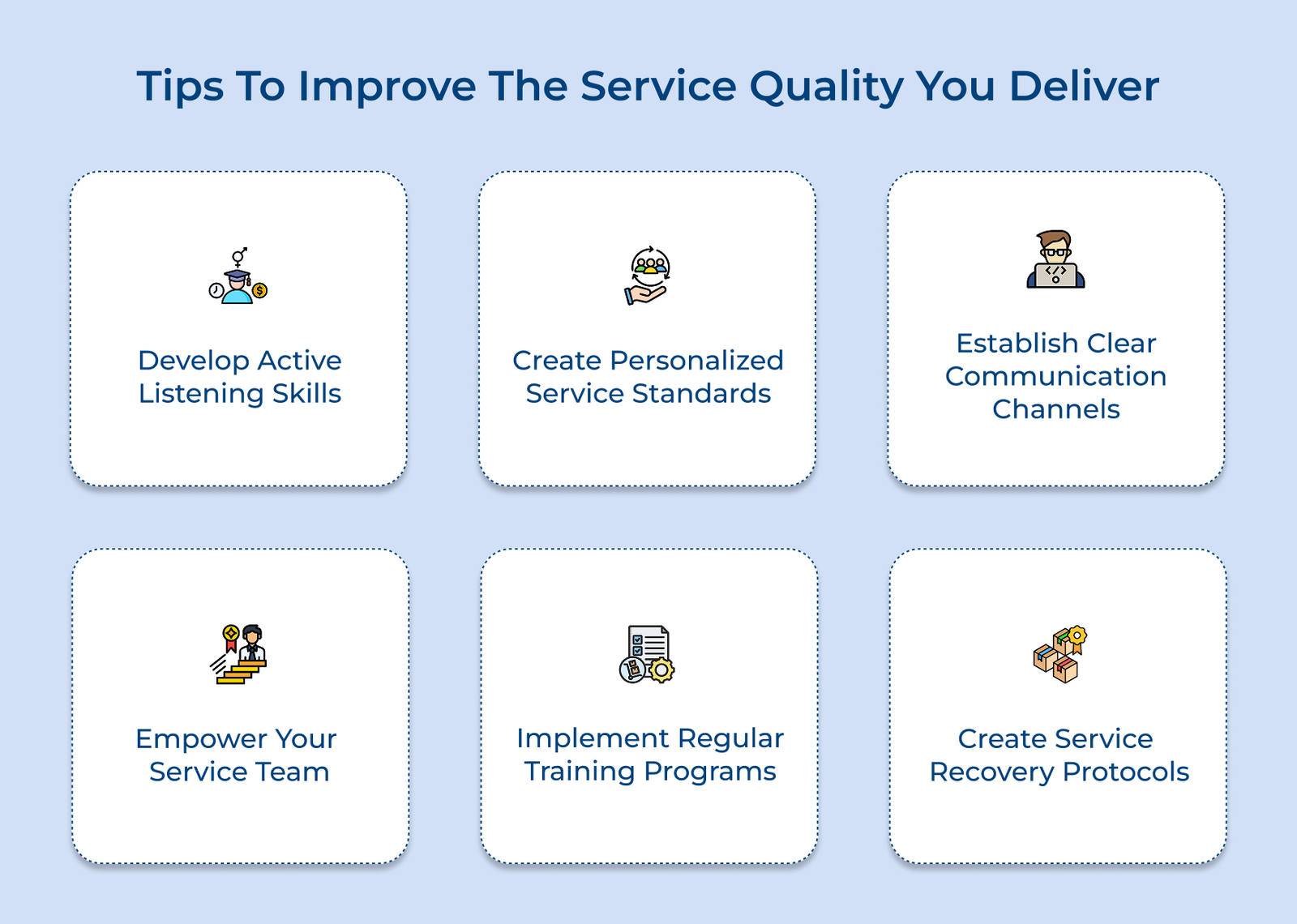
1. Develop Active Listening Skills
Train your service team to truly engage with customers by practicing active listening. Encourage them to focus on understanding the customer’s needs, not just waiting to respond. Use techniques like paraphrasing concerns and asking clarifying questions to show customers their input matters.
2. Create Personalized Service Standards
Empower your team to move beyond generic scripts by creating flexible guidelines that enable personalized interactions. Encourage staff to remember customer preferences, use names and reference past conversations. The personal approach enhances stronger connections and shows customers you truly value their unique needs.
3. Establish Clear Communication Channels
Offer a variety of communication options to match customer preferences, ensuring consistent service quality across all channels. Train your team to communicate, concisely and professionally, adapting to each platform—from email to social media while leveraging its unique strengths.
4. Empower Your Service Team
Empower front-line staff to resolve customer issues quickly by giving them the authority to make decisions within clear guidelines. Support their judgment to ensure faster resolutions and boost customer satisfaction.
5. Implement Regular Training Programs
Create ongoing training programs that keep your team up-to-date on product knowledge, industry trends and service best practices. Include role-playing, real-world scenarios and feedback sessions to ensure continuous learning.
6. Create Service Recovery Protocols
Create clear procedures for handling service failures and complaints. Train your team to acknowledge issues with empathy, take ownership and follow through with solutions. Set guidelines for compensation or goodwill gestures to restore customer trust when needed.
Following are the significant challenges organizations face when measuring service quality and providing practical solutions for each issue.
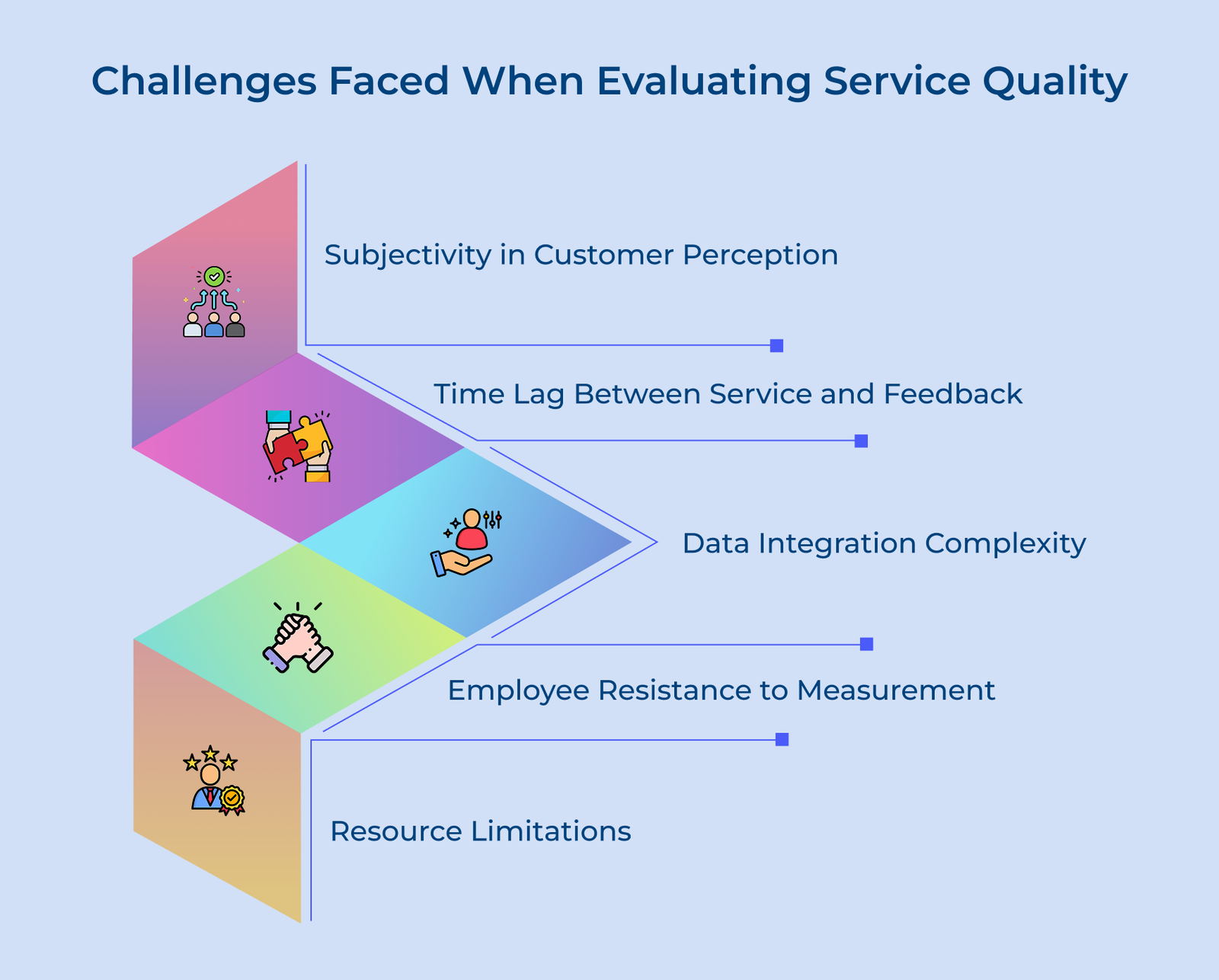
Service quality perception differs widely among customers due to their unique experiences, expectations and cultural backgrounds. What one customer deems excellent service may feel only satisfactory to another, making it challenging to set consistent standards that truly reflect overall service quality.
Adopt a multi-dimensional measurement approach that merges quantitative metrics with qualitative insights. Establish standardized evaluation criteria while leaving room for personalized customer feedback and train evaluators to consider varying perspectives when assessing service quality.
A delay between service delivery and feedback collection can impact the accuracy of responses, as customers may forget key details or have shifting perceptions over time. It results in incomplete or inaccurate feedback.
Create a tiered feedback system that captures immediate reactions through quick post-service surveys, while also gathering deeper insights via follow-up assessments. Leverage technology to enable real-time feedback collection and implement ongoing feedback throughout the customer journey for a more accurate and comprehensive view.
Organizations often face challenges in integrating data from various service quality measurement tools and channels. Different departments may use separate systems, making it hard to form a unified view of service quality across the company.
Invest in integrated service quality management platforms that consolidate data from multiple sources. Standardize reporting formats, ensure regular data synchronization and establish clear protocols for data sharing across departments.
Service staff often perceive quality measurements as tools for criticism. It can create resistance and lead to altered behavior during evaluations or reluctance to engage fully in the measurement process.
Enhance a positive measurement culture by emphasizing growth over punishment. Involve employees in defining measurement criteria, regularly share success stories and provide constructive feedback. Use data to highlight improvements and identify opportunities for further training.
Quality measurement often demands substantial time, staff and financial resources, which can be challenging for organizations to maintain while balancing operational needs. It can result in incomplete or inconsistent assessment.
Focus on key metrics that have the most significant business and customer impact. Automate routine measurement processes and use technology to streamline data collection. Develop efficient workflows that seamlessly integrate quality measurement into daily operations.
Let’s go through some examples of different industries that measure customer service quality and the measurements that impacted their business success.
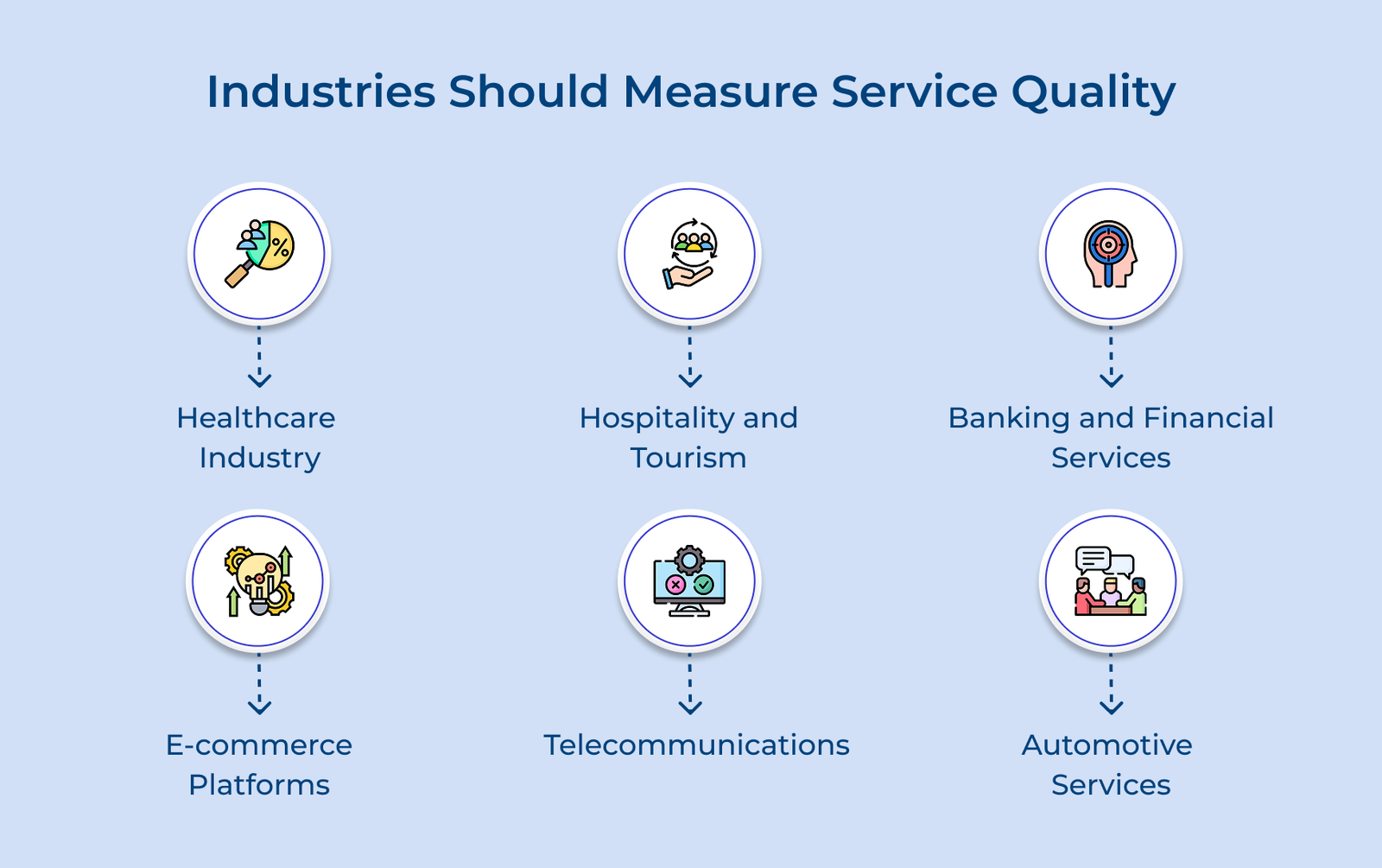
Healthcare providers measure quality service through patient satisfaction surveys, appointment wait times and follow-up care effectiveness. They track metrics like scheduling efficiency, communication clarity and the patient experience. The evaluations encompass both clinical outcomes and service delivery.
The impact goes beyond immediate satisfaction, influencing patient retention, referrals and the facility’s reputation. A cycle emerges where improved service enhances health outcomes, which in turn strengthens the provider’s market position.
Hotels and tourism businesses assess service quality through guest satisfaction ratings, room cleanliness scores and response times to requests. They track metrics at key touchpoints such as check-in, room service and facility maintenance, with mystery guest programs offering deeper insights.
The measurements have a direct impact on booking rates and revenue. Properties with high service ratings can charge premium prices, attract repeat guests and generate positive word-of-mouth, giving them a strong competitive edge in the crowded hospitality market.
Banks measure service quality through transaction accuracy, response times to customer inquiries and problem resolution effectiveness. Key metrics also include mobile app performance, branch efficiency, financial advisor satisfaction and security measures.
Effective quality measurements enhance customer trust and loyalty. Strong service leads to higher account retention, increased deposits and greater adoption of additional products, strengthening customer relationships.
Online retailers evaluate service quality through website performance, order accuracy and delivery times. They also track customer support response, shopping cart abandonment and post-purchase satisfaction, with user experience being a key factor in service quality.
The metrics directly affect customer retention and average order values. Improved service quality reduces cart abandonment, boosts repeat purchases and encourages customer advocacy, driving sustainable growth.
Telecom providers measure service quality through network reliability, customer support resolution times and installation efficiency. They track call quality, first-call resolution rates and customer effort scores across various channels, with technical support effectiveness being a key focus.
The metrics impact customer churn and service upgrades. Strong performance enhances longer customer relationships, drives service adoption and reduces price sensitivity, helping providers maintain stable revenue.
Auto service centers assess quality through repair accuracy, timeliness and customer satisfaction with explanations. They track metrics like appointment availability, vehicle cleanliness upon return and follow-up communication, combining technical performance with customer service.
The measurements impact customer loyalty and service compliance. High service quality strengthens manufacturer relationships, boosts service revenue and enhances community reputation, driving sustainable long-term growth for automotive businesses.
Measuring service quality through comprehensive feedback is key to driving meaningful improvements. Organizations can pinpoint areas for enhancement and create targeted strategies for positive change by systematically analyzing customer experiences. It’s crucial to connect insights directly to operational improvements, with clear processes for reviewing feedback, identifying patterns and implementing changes.
Success in service quality improvement relies on a continuous cycle of measurement, analysis and action. Organizations can build a culture of continuous improvement, consistently elevating service standards and strengthening customer relationships by viewing service quality measurement as an ongoing journey.

Measuring service quality means systematically collecting customer feedback through surveys, forms and direct observations. Businesses track key performance indicators and analyze feedback patterns to identify service gaps, measure progress as well as make informed decisions for improvement.
Organizations use a mix of measurement tools, such as SERVQUAL surveys, customer satisfaction scores and Net Promoter Scores, to gather both quantitative as well as qualitative insights. Modern businesses also integrate digital analytics, social media monitoring and real-time feedback to build a comprehensive measurement framework.
Service quality measurement should be ongoing, capturing feedback at different intervals. Some metrics, like post-interaction surveys, gather immediate insights, while others, such as loyalty assessments are collected periodically. The key is balancing immediate feedback with long-term trends in customer satisfaction.
Small businesses can begin with simple yet effective tools like post-service feedback cards, short surveys and social media monitoring to gather actionable insights without stretching resources. As the business grows, more advanced measurement tools can be gradually introduced.
Employee feedback offers valuable insights into service challenges, operational bottlenecks and improvement opportunities. Staff often spot patterns in customer behavior and service issues before they show up in formal measurements, helping to refine measurement systems.
Accurate service quality measurement relies on validated tools, consistent evaluation criteria and feedback from diverse customer segments. Organizations should cross-reference methods, verify data quality and regularly update measurement systems to stay aligned with evolving customer expectations.

Grow Customer Relationships and stronger team collaboration with our range of products across the Conversational Engagement Suite.
Omnichannel Customer Support & Help Desk Software
AI Enabled Business Messaging and Chatbot Software
Sales Engagement & CRM Software
Call Center Software & Virtual Phone System
Product Marketing & Experience Platform
Customer Experience & Feedback Management Software

 How to Create B2B Sales Strategies: 11 Effective Ways
Scroll to top
How to Create B2B Sales Strategies: 11 Effective Ways
Scroll to top