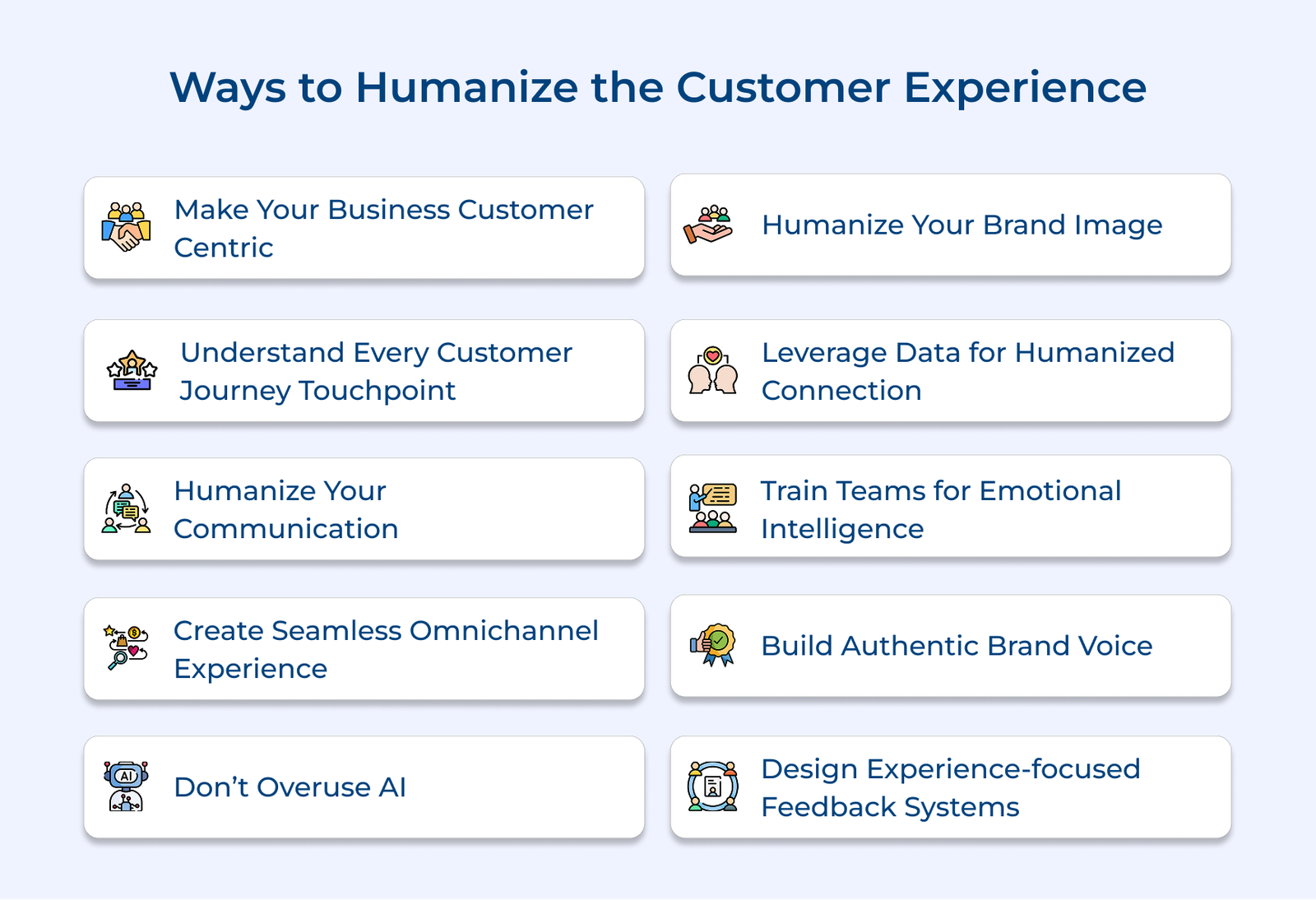
1. Make Your Business Customer-centric
Customer centricity means putting customers’ needs at the core of every decision, shifting focus from short-term profits to creating lasting value. Businesses build stronger relationships and sustainable growth by prioritizing customer satisfaction.
Start by collecting customer feedback through surveys and interviews to identify pain points. Use the insights to enhance products and services that truly solve problems. Build internal processes that prioritize customer needs and empower employees to make customer-first decisions.
Best practices:
- Establish a customer advisory board to provide feedback on initiatives and shape your product roadmap.
- Implement a customer success dashboard for all employees to track the impact of their work on satisfaction.
2. Understand Every Touchpoint of Your Customer Journey
Understanding customer touchpoints means mapping every interaction customers have with your brand. The holistic view helps identify gaps and opportunities to enhance service delivery, ensuring consistent experiences.
Create detailed customer journey maps that highlight interactions from awareness to post-purchase. Use tools to track behavior across channels and gather feedback at each touchpoint to improve the experience.
Pro tips:
- Conduct regular touchpoint audits to ensure quality and alignment with customer expectations.
- Implement real-time monitoring for critical touchpoints to quickly address any issues affecting customer experience.
3. Humanize Your Communication — Less a Bot
Digital communication can often feel impersonal, creating a disconnect between brands and customers. Humanizing communication bridges the gap by using natural language and showcasing personality, making customers feel heard.
Begin by reviewing all automated messages, including emails and chatbot responses. Replace generic templates with conversational language that reflects your brand’s personality. Train your customer service teams to write empathetic, natural responses, incorporating personal touches like using the customer’s name and referencing specific situations.
Actionable tips:
- Develop a style guide to ensure a consistent, natural tone across all channels, avoiding robotic language and jargon.
- Create flexible response templates to guide personalization while maintaining efficiency.
4. Create a Seamless Omnichannel Experience
An omnichannel experience connects all customer interactions across platforms and devices, creating a seamless journey. Modern customers expect to transition smoothly between channels without repeating themselves, making the approach essential.
Start by integrating customer-facing platforms for smooth data flow and tracking. Create a central database that consolidates all customer interactions. Make sure your team can access complete histories to understand when a customer moves from social media to email or phone.
Best practices:
- Implement a universal ID system that tracks customer preferences and history across all channels.
- Design mobile-first experiences that sync perfectly with desktop versions, allowing customers to switch devices seamlessly.
5. Don’t Overuse Artificial Intelligence (AI)
AI is a powerful tool for customer service, but it shouldn’t replace human interaction completely. Striking the right balance between automation and personal touch ensures efficiency without losing the emotional connection customers value.
Evaluate your customer journey to pinpoint where human interaction is most beneficial. Use AI for routine tasks, but ensure seamless escalation to human agents for complex or emotional issues. Set clear guidelines for when AI should hand off conversations to humans and train your team to handle the transitions smoothly.
Key takeaways:
- Implement escalation triggers to route complex or sensitive issues to human agents.
- Regularly review AI interactions to identify frustration points and adjust to improve customer experience.
6. Humanize Your Brand Image
A humanized brand image enhances emotional connections with customers, making your company feel more relatable and personal. You break down the corporate barrier and build lasting relationships by showcasing the people behind your brand. Share behind-the-scenes content, celebrate team achievements and highlight your company culture through social media.
Let’s assume that “Morning Brew”, a local coffee shop chain, introduces weekly social media spotlights on baristas. They can share personal stories like Sarah creating a special drink for a regular or Mike remembering each customer’s order. The stories will make customers feel like part of the Morning Brew family.
Pro tips:
- Highlight team members’ unique stories and passions to humanize your brand.
- Turn company milestones into stories that spotlight the people behind them.
7. Leverage Data for Humanized Connection
Using customer data thoughtfully creates meaningful, personalized experiences that turn cold data into warm connections. It helps businesses anticipate needs and provide relevant solutions without feeling intrusive. Analyze customer interaction data to understand preferences and behavior patterns. Use the insights to offer personalized recommendations and proactive solutions, while being transparent about data usage.
We will take the example of an online bookstore “ReadCorner” here. Say they noticed a person has finished reading all of Jane Austen’s novels. Instead of sending a generic promo, they reach out with a thoughtful email suggesting other classic authors like the Brontë sisters and George Eliot.
Key takeaways:
- Combine data insights with human intuition for more meaningful interactions.
- Monitor customer comfort with personalization and adjust based on their feedback.
8. Train Teams for Emotional Intelligence
Emotional intelligence training equips teams to recognize and respond effectively to customer emotions during interactions. It enhances interactions and turns challenges into positive experiences.
Start with training programs that focus on detecting emotional cues in both written and verbal communication. Use practice scenarios covering various emotions, from excitement to frustration. Equip teams with strategies to manage their emotions during difficult situations and offer regular coaching for continuous improvement.
Actionable tips:
- Encourage peer-to-peer learning, allowing team members to successful emotional intelligence strategies.
- Reward exceptional emotional intelligence in customer interactions, rather than just speed metrics.
9. Build an Authentic Brand Voice
An authentic brand voice enhances consistency and trust in all customer communications. It aligns with your company’s core values and creates genuine connections. Your brand voice becomes the bridge between your company’s identity and your customers’ expectations.
Establish clear voice guidelines that reflect your brand’s personality and values. Provide examples for adapting voice across various situations while staying authentic. Equip your team with tools for consistency and review regularly to ensure it remains relatable.
Best practices:
- Share successful customer interactions that showcase the brand voice to inspire the team.
- Host monthly storytelling sessions to help teams practice and maintain a consistent voice across scenarios.
10. Design Experience-focused Feedback Systems
Traditional feedback systems often rely on numbers, missing the emotional aspects of customer experiences. An experience-focused approach captures personal stories and emotions, providing deeper insights.
Swap rating scales for open-ended questions that encourage customers to share their stories. Create channels that make expressing thoughts easy and train teams to ask follow-up questions for deeper insights.
Key takeaways:
- Hold quarterly feedback review sessions to listen to customer stories, not just metrics.
- Turn feedback into action by showing how customer suggestions led to impactful improvements.
Humanize CX Examples
Let’s go through some inspiring examples of companies that have successfully humanized their customer experience, transforming traditional interactions into meaningful connections.
Nike’s Personal Training Approach
Nike has redefined athletic retail by enhancing personal connections through their training apps and in-store experiences. Instead of simply selling shoes, their staff guides customers based on individual fitness goals and challenges, creating a feel of conversing with a knowledgeable friend.
The personalized approach has transformed Nike from a sportswear brand into a trusted fitness partner. It has helped them boost brand loyalty and increase customer lifetime value.
Starbucks’ Community Building
Starbucks creates a welcoming “third place” between home and work by offering personalized service as well as engaging with local communities. Baristas remember customers’ names and preferences, while stores actively support neighborhood events.
The community-focused approach has enhanced deep emotional connections. It makes customers choose Starbucks not just for coffee, but for the experience of being recognized and valued, driving strong brand loyalty.
Airbnb’s Host-Guest Connection
Airbnb humanizes travel by enhancing meaningful connections between hosts and guests. Personalized welcome messages, local recommendations and authentic interactions make travelers feel at home, not just in a hotel.
The emphasis on human connection has transformed travel accommodation. Many guests choose Airbnb for its personal touch, driving strong growth despite rising competition.
Amazon’s Proactive Problem Solving
Amazon prioritizes customer convenience with proactive support and swift problem resolution. Their service team has the authority to resolve issues on the spot, often anticipating concerns before customers reach out.
The customer-first approach has earned exceptional trust, making shoppers confident that any issues will be handled quickly and fairly. It has boosted repeat purchases and enhanced loyalty.
Zappos’ Emotional Connection
Zappos empowers its customer service team to build genuine emotional connections, with no time limits or scripts. Representatives can spend hours with a customer and are encouraged to send personal notes or surprises for special occasions.
The focus on authentic connection has cultivated a unique brand personality that customers adore. Word-of-mouth spreads their exceptional service, attracting new customers who value real human interaction.
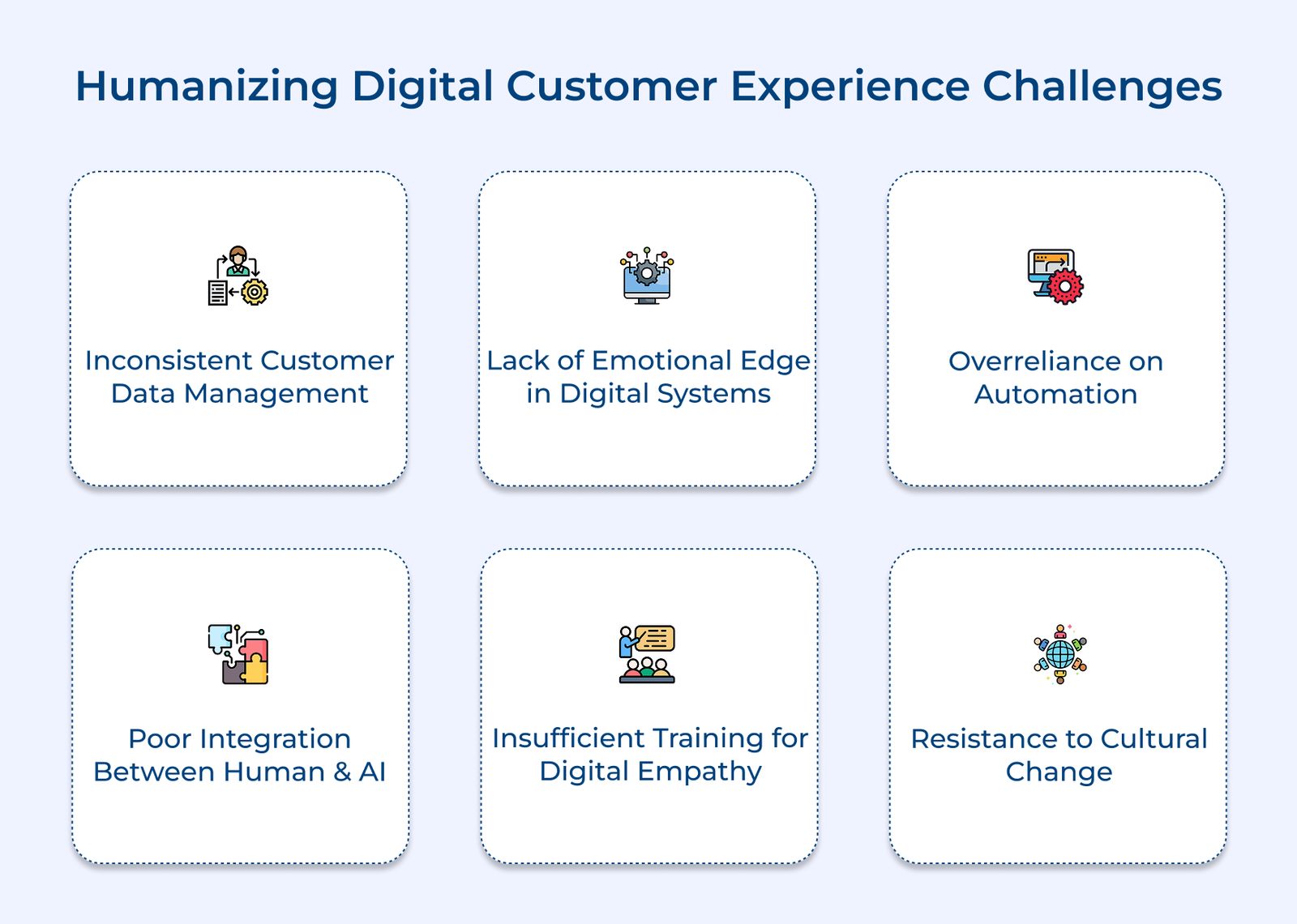
Challenges Faced when Humanizing Digital Customer Experience
Check out the key challenges businesses face when trying to humanize CX and how to overcome them effectively.