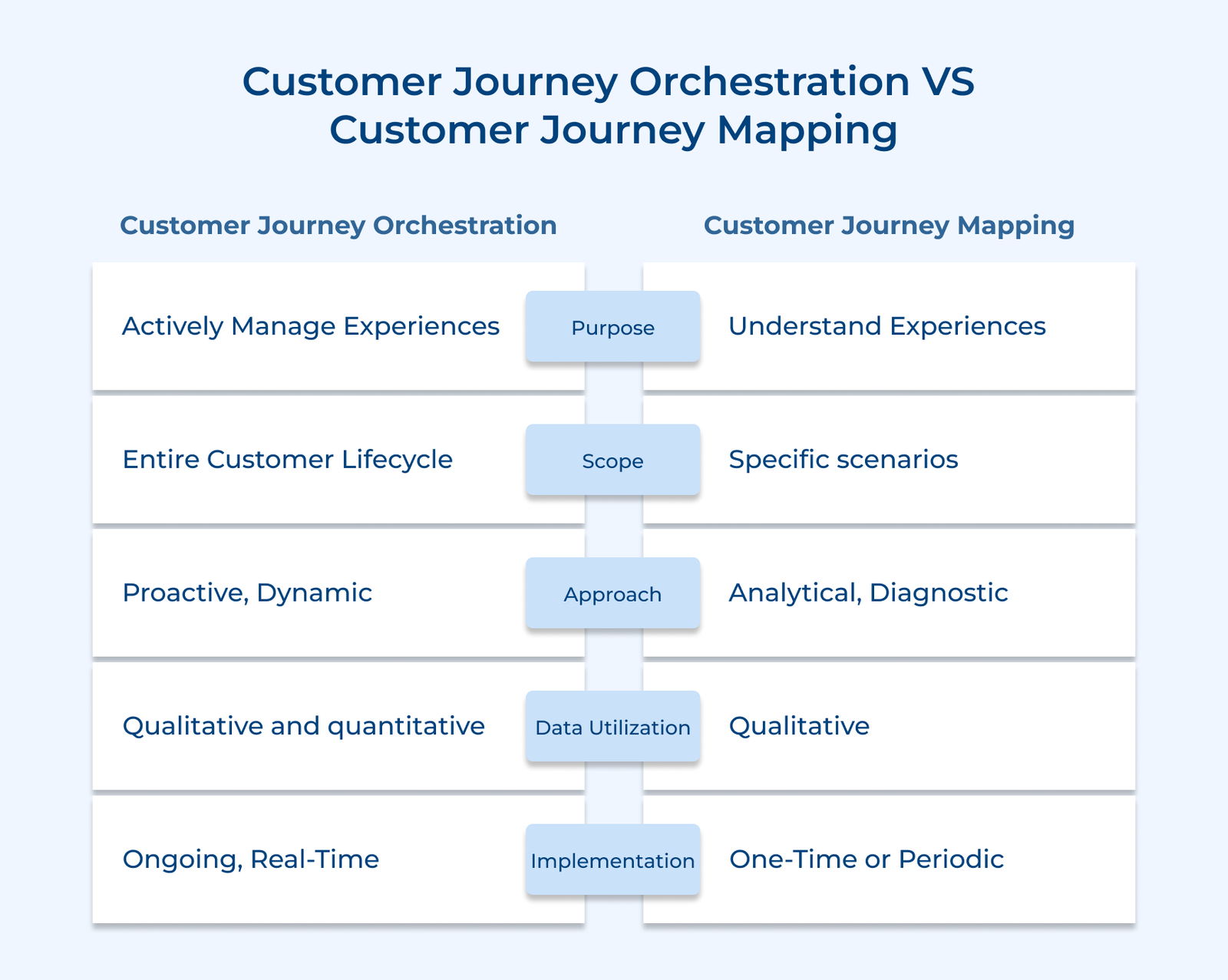
1. Purpose: Customer journey mapping aims to document the various stages, touchpoints and pain points that customers encounter throughout their interactions with a business. Customer journey orchestration focuses on actively delivering seamless, personalized and consistent experiences across those touchpoints.
2. Scope: Customer journey mapping typically focuses on a specific customer scenario or interaction, such as making a purchase or resolving a support issue. Consumer journey orchestration encompasses the entire customer lifecycle, from initial awareness to post-purchase engagement and retention.
3. Approach: Customer journey mapping is an analytical and diagnostic tool, providing insights into the current state of the customer experience. Customer journey orchestration is a proactive approach that involves orchestrating experiences in real time based on customer behavior, preferences and data.
4. Data utilization: Customer journey mapping relies on qualitative data, such as customer feedback, interviews and observations, to understand the customer’s perspective. Customer journey orchestration leverages both qualitative and quantitative data, including customer behavior data, analytics and predictive modeling, to deliver personalized experiences at scale.
5. Implementation: Customer journey mapping is typically a one-time or periodic exercise, providing a snapshot of the customer experience. Consumer journey orchestration requires ongoing monitoring, optimization and adaptation, as well as the integration of various technologies to enable real-time data engagement.
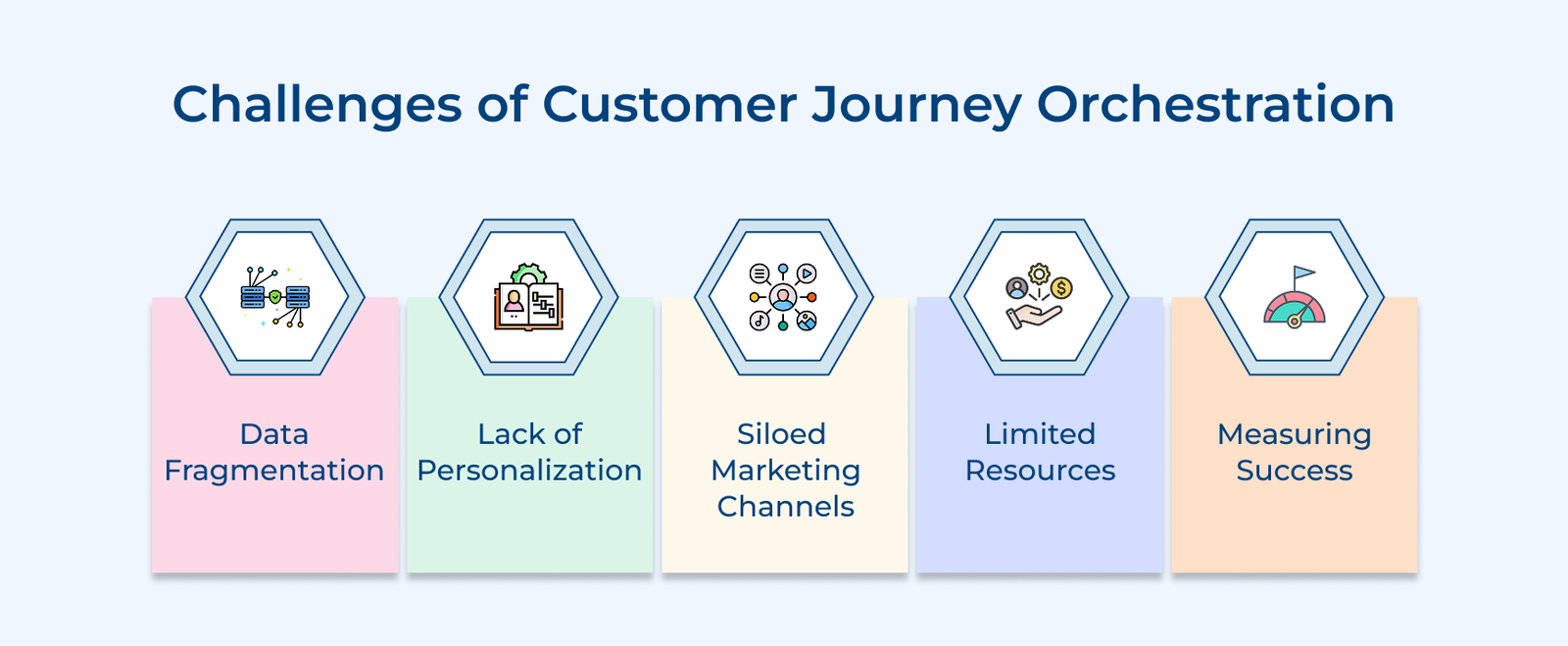
Challenges in Customer Journey Orchestration
Customer journey orchestration promises a seamless and personalized experience, but implementing it isn’t without hurdles. Let’s take a closer look at the common obstacles and how to navigate them.