How to Create a Sales Roadmap: 9 Effective Steps
A sales roadmap outlines a strategic plan to align teams, set goals and drive growth. Businesses can stay focused, prioritize efforts and achieve consistent sales success over time.

A sales roadmap outlines a strategic plan to align teams, set goals and drive growth. Businesses can stay focused, prioritize efforts and achieve consistent sales success over time.
Hitting sales targets consistently is a challenge for many businesses. Without a clear plan, sales teams often waste time chasing the wrong leads or working at cross-purposes. That’s where a sales roadmap comes in to give your team structure, focus and direction.
A good roadmap aligns sales efforts with business goals, streamlines processes and helps everyone stay on track. But it’s not just about making a plan – it’s about making the right plan. That means understanding your market, knowing your team’s strengths and being honest about what needs to improve. We will be breaking down the practical steps to build a roadmap that moves your team from reacting to leads to driving results.
A sales roadmap refers to a strategic plan that outlines your organization’s sales goals, tactics, and milestones over a set period. Think of it as a GPS for your sales journey – it helps you see where you want to go and the key steps to get there. The document keeps everyone aligned on common revenue goals and how to achieve them.
The roadmap works by breaking high-level objectives into actionable steps with clear timelines. Let’s assume that if the goal is a 30% revenue increase in a year, the roadmap might detail quarterly targets, resource needs, market expansion, product launches and necessary sales improvements.
Key use cases:
Let’s go through five key benefits of the sales roadmap that makes it an indispensable tool for modern businesses looking to scale their sales operations effectively.
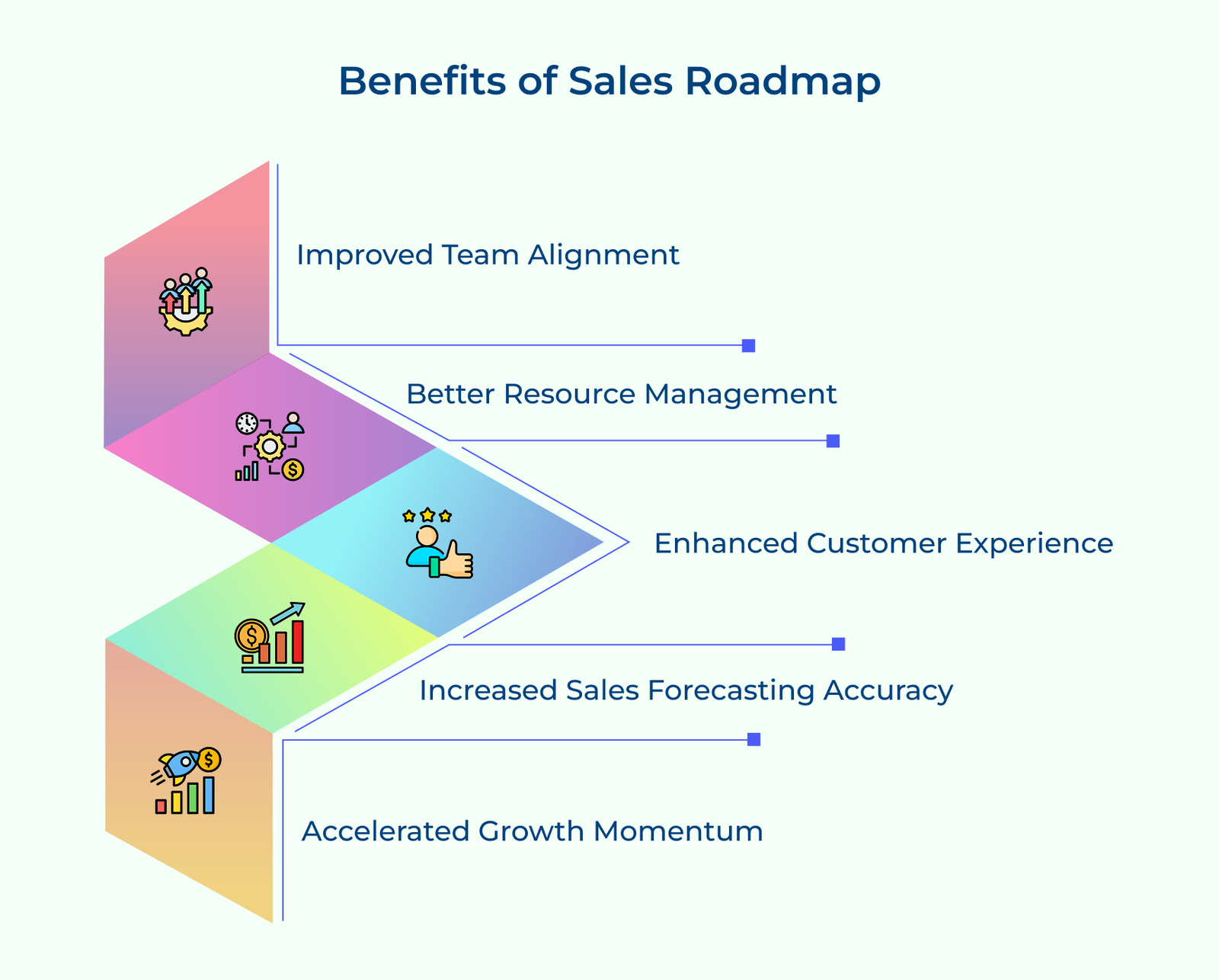
1. Improved Team Alignment
Your sales roadmap serves as a clear guide that keeps everyone aligned and focused. It ensures that teams across marketing, sales and product development understand their roles in the bigger picture as well as work together more effectively toward common revenue goals.
2. Better Resource Management
A well-defined sales roadmap allows for better planning of staffing and budget needs. Leaders can proactively anticipate resources, ensuring teams are equipped with the tools and training necessary to succeed.
3. Increased Sales Forecasting Accuracy
A clear roadmap draws on past data and future projections to improve forecasting accuracy. Sales managers can set achievable targets and track progress, leading to more dependable revenue predictions.
4. Enhanced Customer Experience
A sales roadmap helps teams pinpoint where customers interact with the brand and where they may face challenges. Businesses can tailor their sales strategy to better meet customer needs by understanding the moments. It leads to stronger, more relevant connections at each stage of the buying process.
5. Accelerated Growth Momentum
A clear sales roadmap lays out a path for consistent growth by breaking big goals into smaller, manageable steps. It helps teams stay focused and track their progress, while also allowing them to celebrate the smaller victories that keep momentum going. The roadmap also keeps everyone on the same page, making it easier to move forward together.
Below we have broken down the core components every sales roadmap should include and why each one matters.
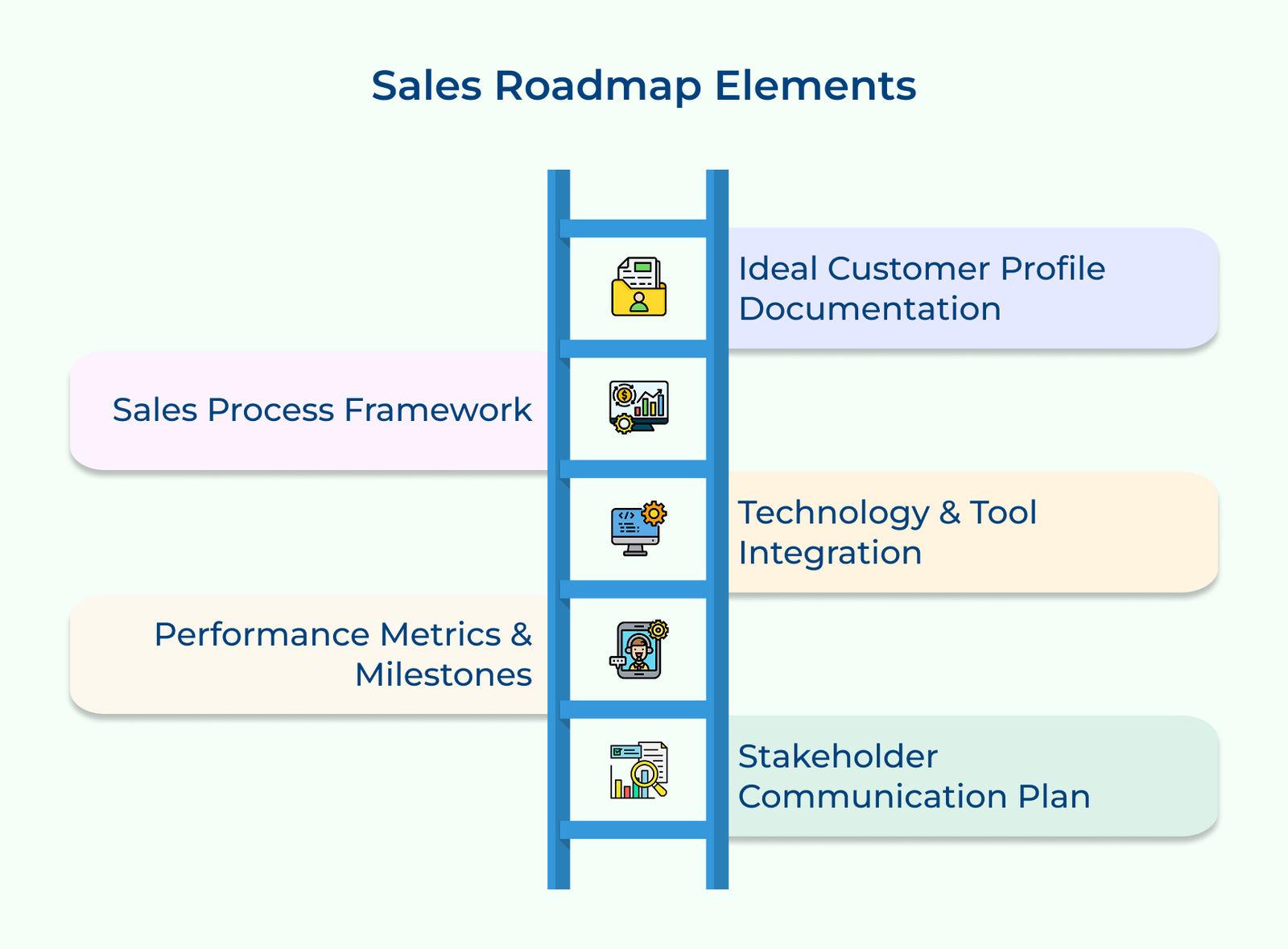
Your B2B sales roadmap should begin with a solid understanding of your target accounts and the people making decisions. It means knowing the size of the companies you’re targeting, the industries they operate in and the challenges they face. A clear picture of your ideal customer helps your team focus on prospects who truly need what you offer, making your efforts more effective and efficient.
The framework covers every stage of the B2B buying journey, from identifying prospects to post-sale follow-up. It defines the key actions, roles and expected outcomes at each stage, ensuring all teams are aligned across the process.
Modern B2B sales need the right tools to manage complex deals. Your roadmap should show how CRM systems, sales tools and communication platforms work together. It makes it easy for teams to track opportunities and keep everything on track through longer sales cycles.
Your roadmap should have clear markers to track progress in the B2B sales. Set KPIs for lead quality, sales cycle length and deal size. Each milestone should tie back to bigger goals and offer valuable insights to adjust your sales strategy.
A clear plan for engaging with multiple decision-makers is key. Your approach should include regular communication, tailored content for each stage and ways to address the concerns of different stakeholders. It ensures consistent messaging and smooth progress through the B2B sales process.
The following are the essential steps to help you craft a strategic sales roadmap that propels your business forward.
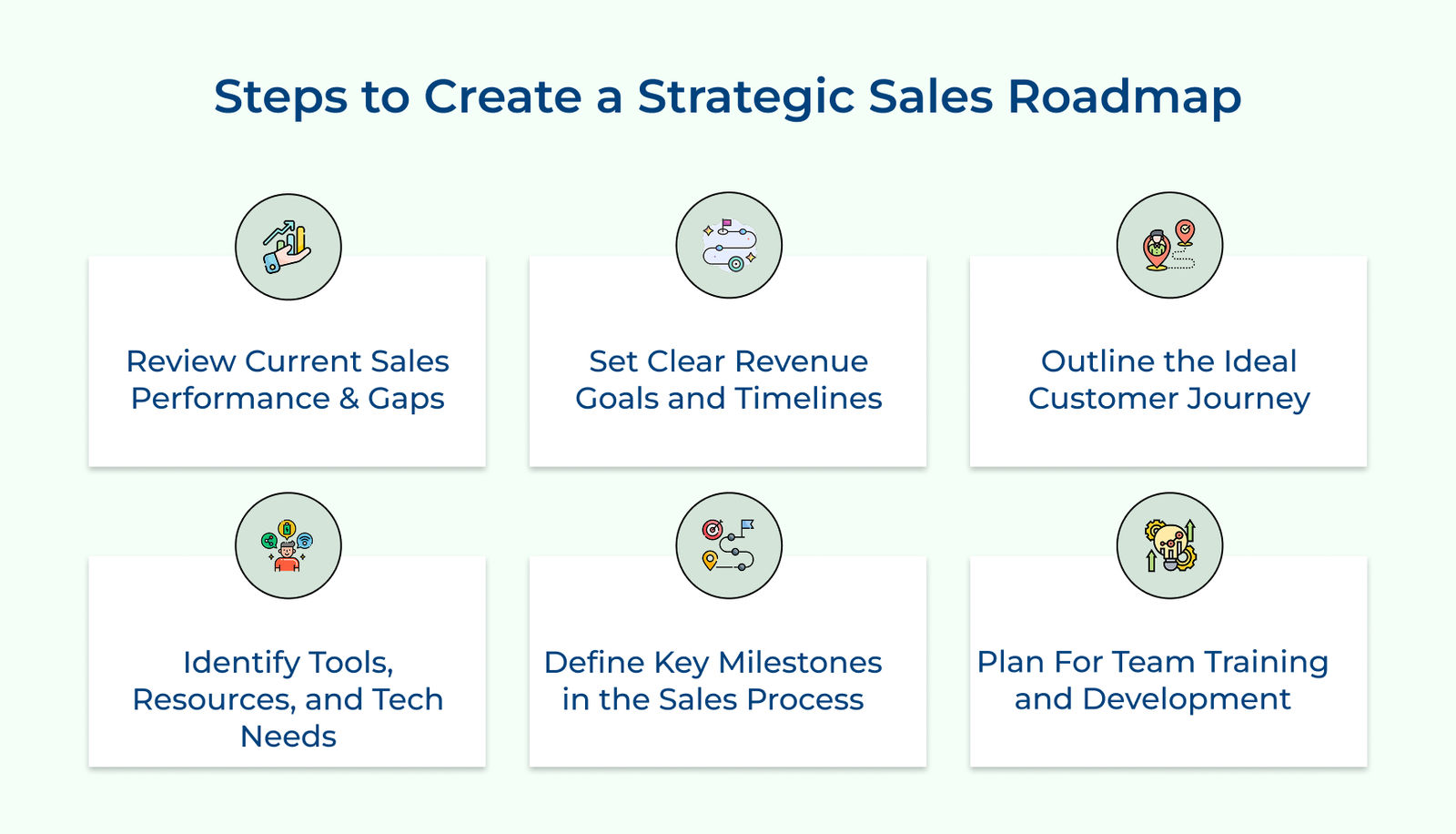
Understanding your current sales performance is the first step in planning for the future. You can see what’s working and where improvements are needed by reviewing historical data. It helps you make informed, data-driven decisions for your strategy. Start by analyzing past sales to identify trends in customer behavior and sales cycles.
Let’s assume that a B2B software company finds that sales peak in Q4 but drop in summer. Next, dig into the sales pipeline and gather customer feedback to find any bottlenecks. You might discover that deals stall at the proposal stage or that slow response times are hurting conversions.
Pro tips:
Setting clear revenue targets gives your sales team a clear direction and motivation. The goals track progress and ensure everyone knows how their work contributes to the overall success of the company. Breaking down annual targets into smaller, quarterly milestones makes big goals easier to manage and follow.
Your implementation plan should also consider market conditions and your team’s capacity. It includes accounting for seasonal changes and factoring in ramp-up periods when launching new products or entering new markets.
Actionable tips:
Understanding and mapping your customer journey is key to B2B sales success. The process helps you align your sales efforts with how buyers move through their decision-making, ensuring consistent engagement along the way. Start by documenting every interaction between your potential customers, from early awareness touchpoints like social media and content downloads, all the way to final contract negotiations.
The touchpoints often involve multiple teams and decision-makers across the organization. Next, define the key decision-making stages and identify what drives movement between them. A clear B2B roadmap highlights actions that show when a buyer is ready to move forward, while also recognizing potential obstacles that could slow things down.
Best practices:
Resource and technology planning is crucial for an effective B2B sales roadmap. It ensures your sales team has the right tools and support to carry out their strategies efficiently to meet business goals. Start by evaluating your current tech stack to see how well your existing tools support your sales process.
Once you’ve identified what’s missing, consider what additional tools could enhance your sales efforts, such as forecasting software, proposal automation or advanced analytics. The final step is to create a detailed budget that accounts for both immediate needs and future growth, including costs for training as well as system integration.
Key takeaways:
A clear and structured sales process with well-defined milestones is key to your B2B sales roadmap. It ensures consistency in how deals move forward and offers a reliable way to track progress through your sales pipeline. The stage-gate review process acts as a quality check, making sure each stage of the buyer’s journey meets certain criteria before advancing.
Implementing tracking mechanisms allows you to monitor deal progression and spot potential issues early. It means creating regular checkpoints where sales managers can review the status of deals, assess their quality and offer support. The tracking system should include both quantitative metrics like deal size and qualitative factors like customer engagement to provide a complete view of each deal’s health.
Pro tips:
Training and development are key to executing your B2B sales roadmap successfully. A solid training strategy ensures your sales team has the right skills and knowledge to meet goals while staying flexible in a changing market. Start by conducting a skill gap analysis, assessing each team member’s current abilities against what’s needed for effective B2B selling.
Create structured training programs and hands-on opportunities. Regular sessions should focus on specific skills, while mentorship programs connect experienced salespeople with newer team members. Given the fast pace of the B2B environment, your training plan should also include updates on market trends, competitor activity and shifting customer needs.
Actionable tips:
Setting clear performance metrics is essential to your sales roadmap’s success. The measurements help track progress, identify areas for improvement and keep your team focused on actions that drive results. Leading indicators, like prospect engagement, proposal submissions and pipeline velocity serve as early signals for future performance.
When creating performance scorecards, include both individual and team metrics. Balance hard numbers, like conversion rates with qualitative assessments of sales behaviors and customer relationships. Regular feedback loops ensure the metrics remain relevant and help sales teams see how their daily efforts contribute to larger business goals.
Best practices:
A strong communication framework is the backbone of your sales roadmap. When departments work together smoothly, it strengthens the sales process and keeps everyone aligned toward shared revenue goals. Establish clear guidelines for how teams exchange important sales data. Your framework should define what information needs to be shared, when it should be shared and the best communication channels for each type of update.
Structured alignment meetings offer a dedicated space for cross-team collaboration and strategy refinement. The meetings bring together sales, marketing, product development and customer success teams to solve problems. The systems you set up should make it easy for teams to share insights, access key documents and track joint initiatives that affect the sales process.
Pro tips:
A regular review and adjustment process ensures your sales roadmap stays relevant. Frequent evaluation cycles help you identify what’s working, adjust to market shifts and keep your strategy aligned with changing business goals. Monthly performance reviews offer a chance to tackle immediate challenges and celebrate wins.
Quarterly strategy assessments take a wider view, evaluating the effectiveness of your sales roadmap. During the sessions, you’ll look at market conditions, competitive landscapes and if your strategies are hitting the mark. It’s also the time to incorporate continuous improvement based on feedback from both your sales team and customers.
Actionable tips:
Let’s go through the main challenges companies face and discover practical strategies to overcome them.
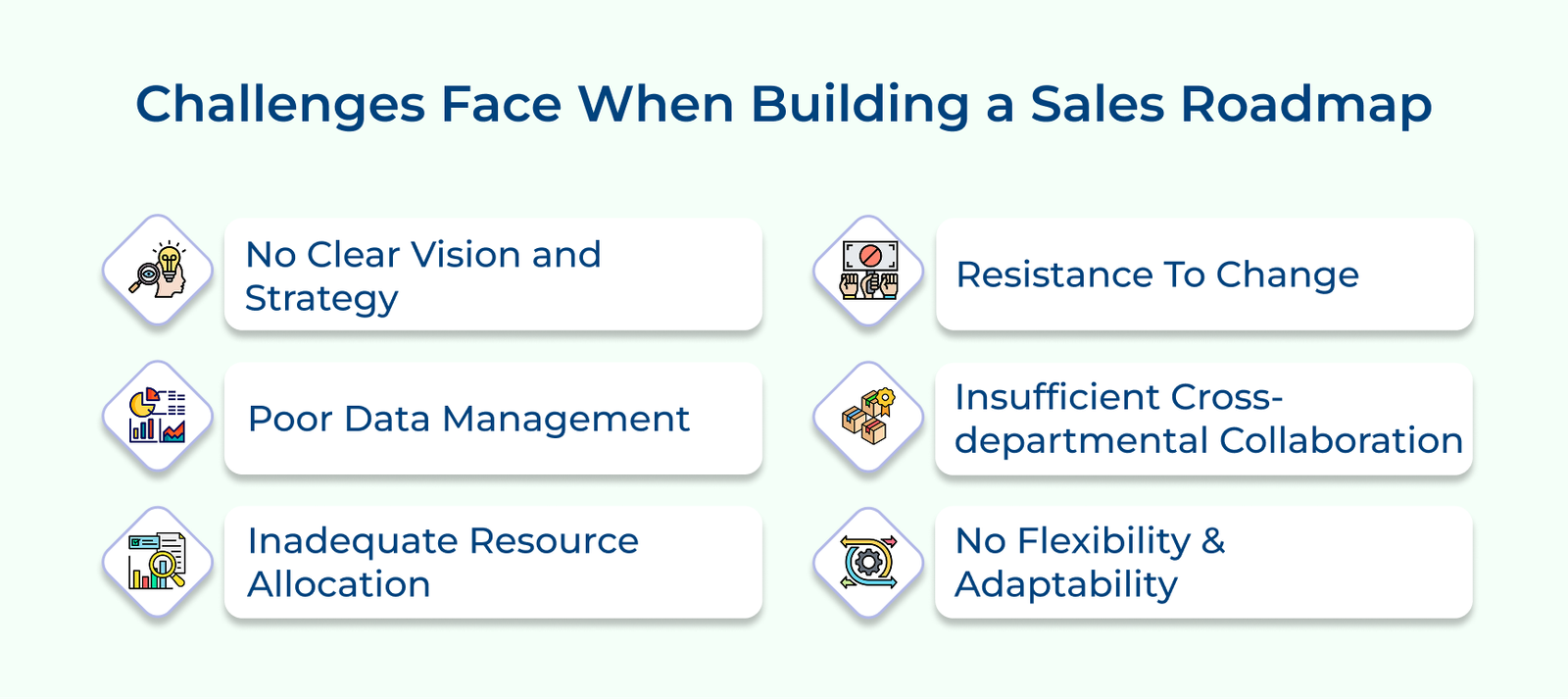
Without a clear vision for the future of their sales, organizations often find themselves working in silos, with sales teams disconnected from broader business goals. The lack of direction results in scattered efforts, wasted resources and poor sales performance. Adding to the challenge, without well-defined metrics and KPIs, tracking progress becomes difficult, making it harder to adjust or improve.
Many companies struggle to make the most of their data because of disconnected systems and inconsistent data collection. Sales teams often can’t access reliable historical data, which makes spotting trends and making informed decisions challenging. Without standardized data processes, forecasting and planning becomes difficult, leading to incomplete or inaccurate insights.
Businesses often struggle with uneven resource allocation across sales efforts. Some areas face shortages while others are underused. The imbalance creates bottlenecks in the sales process and limits the company’s ability to scale quickly when opportunities come up.
Team members often stick to old sales methods, even when they’re not working. The resistance to change slows down the adoption of new strategies and tools that could boost sales. When key stakeholders aren’t on board, it adds extra hurdles to successfully executing the sales roadmap.
Organizations often struggle with poor communication between sales, marketing and other departments. The lack of coordination leads to mixed messaging, wasted effort and missed opportunities. Without shared goals, teams work in silos, causing friction and reducing effectiveness.
Companies often struggle to adjust their roadmaps when market conditions change or new challenges arise. Rigid planning makes it difficult to pivot quickly, leaving organizations vulnerable to competition and shifting customer needs. The inability to adapt results in missed opportunities and lost market share.
Implementation ways:
Check out some leading brands that have implemented strategic sales roadmaps to drive growth and enhance customer experience.
Amazon
Amazon’s sales roadmap centers on creating a smooth omnichannel experience, blending online and physical retail spaces. They personalize shopping experiences and predict future buying trends by using data analytics to understand customer behavior. The roadmap focuses on expanding its Prime ecosystem and boosting its B2B offerings through Amazon Business.
The approach has had a significant impact, driving customer loyalty and expanding their market reach. Amazon has been able to uncover new market opportunities and fine-tune product recommendations by leveraging data. It offers a more tailored shopping experience that keeps customers coming back.
Nike
Nike’s sales roadmap focuses on their Direct-to-Consumer (DTC) strategy through Nike Direct. They’ve developed a robust digital ecosystem, including their website, SNKRS app and Nike Training Club. A key part of their approach is offering exclusive product releases and personalized experiences through their membership program.
The strategy has transformed their connection with customers, enhancing direct engagement. Nike has gained valuable insights into customer preferences by integrating digital and physical retail, allowing it to better meet consumer needs.
Puma
Puma’s sales roadmap takes a balanced approach, combining wholesale partnerships with direct-to-consumer channels. They’ve heavily invested in digital infrastructure while keeping strong ties with key retail partners. A major focus is on sustainable product lines and collaborations with cultural influencers.
The strategy has helped Puma strengthen its market position, especially among younger consumers. Puma has opened new revenue streams while boosting its brand value in the competitive sportswear market by prioritizing sustainability and cultural relevance.
A well-defined sales roadmap helps your team stay focused, organized and aligned. It breaks down the sales process into clear steps, showing who’s responsible for what and how each action contributes to larger goals. More than just a plan, it’s a practical tool that keeps your team on track as priorities shift or market conditions change.
When regularly updated with real data, your roadmap becomes a reliable guide for making better decisions, identifying gaps, and adjusting courses when needed. It’s not just about planning but it’s about staying adaptable without losing sight of long-term goals.

A sales roadmap helps teams connect with customers by providing a clear, structured approach to addressing their needs. It allows sales teams to identify pain points, offer tailored solutions and nurture relationships at every step. The roadmap makes the buying decision feel easier and more confident for prospects by ensuring consistent value throughout the customer journey.
A sales roadmap is a detailed plan that lays out your organization’s sales goals, target markets and key initiatives for a set period. It links everyday sales activities to larger business objectives, defines how resources are used and sets clear success metrics. Think of it as a GPS for your sales team, directing every decision and action toward the desired outcomes.
A sales forecast roadmap is a data-backed projection of future sales, based on past performance, market trends and pipeline analysis. It helps organizations predict revenue, plan resources and spot potential challenges or opportunities. The tool supports proactive decision-making, ensuring healthy cash flow with more accurate revenue predictions.
Creating a sales roadmap starts with understanding where you stand and setting clear goals. Begin by gathering input from key stakeholders, analyzing market conditions and identifying your target customers. Next, set specific milestones, assign resources and outline actionable steps. Include measurable metrics to track progress and plan regular check-ins to make adjustments as needed.
A solid sales roadmap should outline clear goals, target market segments and the strategies needed to reach them. It should also include resource needs, key milestones and performance metrics. Plan for risks, with steps to address potential challenges and define specific actions for each phase of the sales process. Ensure to include the tools, technologies and training required to support the team along the way.
A sales roadmap should be regularly reviewed and updated to stay on track. Hold monthly check-ins to assess progress and make small adjustments. You can also have quarterly reviews to ensure alignment with strategy and yearly comprehensive updates. Changes in the market, customer feedback and performance data should prompt further updates to keep the roadmap relevant.
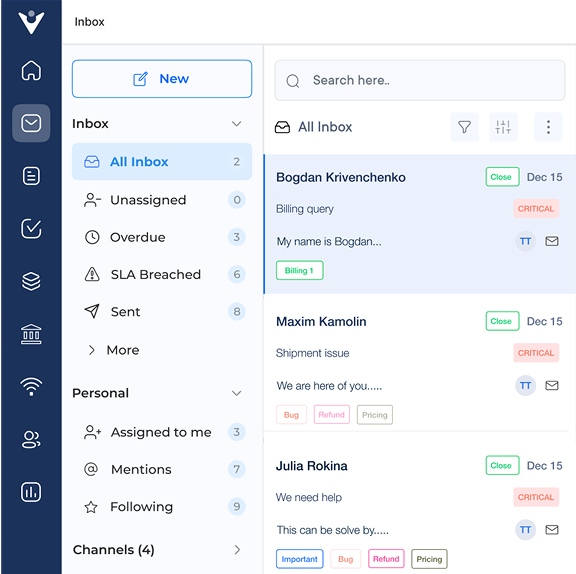
Grow Customer Relationships and stronger team collaboration with our range of products across the Conversational Engagement Suite.
Omnichannel Customer Support & Help Desk Software
AI Enabled Business Messaging and Chatbot Software
Sales Engagement & CRM Software
Call Center Software & Virtual Phone System
Product Marketing & Experience Platform
Customer Experience & Feedback Management Software

 What is Closed Loop Feedback? Meaning & Best Practices
Scroll to top
What is Closed Loop Feedback? Meaning & Best Practices
Scroll to top