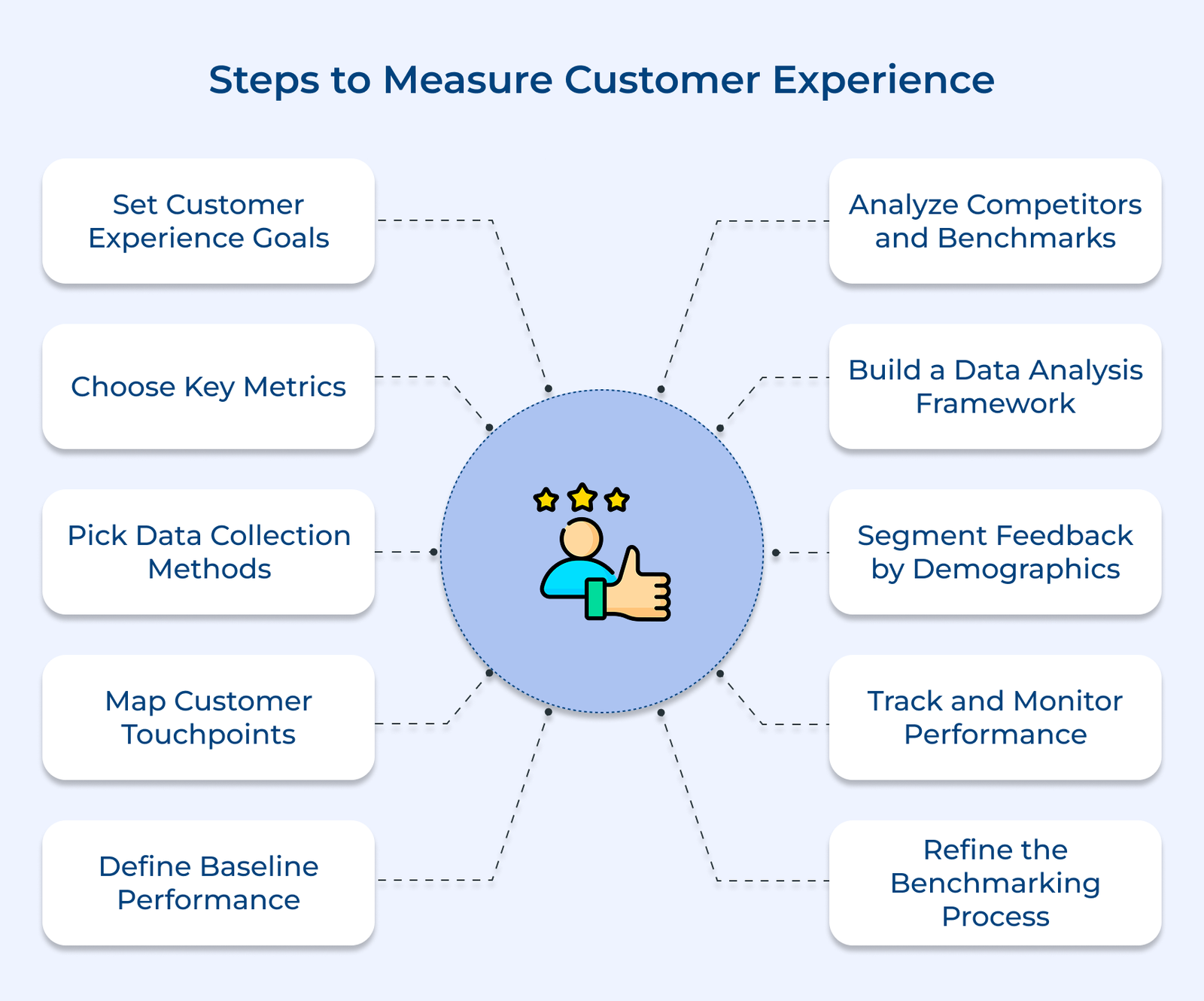
1. Define Clear Customer Experience Objectives
Defining clear customer experience objectives is the foundation of a strong benchmarking program. It ensures that your efforts align with broader business goals and gives your team a clear direction. Start by reviewing your business strategy to make sure customer experience initiatives support key objectives.
Set specific, measurable targets for customer satisfaction, with clear timeframes and benchmarks to track progress. It will help keep your team focused while challenging them to improve. Ensure your targets are realistic yet ambitious, pushing for growth without setting up your team for failure.
Pro tips:
- Review past customer feedback to identify patterns and set achievable objectives based on real insights.
- Don’t just look at your competition–innovative customer experience ideas can come from industries entirely different from your own.
2. Identify Essential Metrics For Measurement
Choosing the right metrics is essential for meaningful benchmarking. Instead of tracking everything, focus on what reflects customer experience and business performance. Start with core indicators like Net Promoter Score and Customer Satisfaction Index, which help you measure loyalty over time.
Include operational metrics such as response times, resolution rates or first-contact resolution. It highlights how well your teams are functioning and points to specific areas for improvement. When paired with satisfaction data, they offer a complete picture of what customers experience and how efficiently your organization delivers on expectations.
Actionable tips:
- Combine both leading and lagging indicators. It gives you a fuller view of current performance and future risks.
- Don’t ignore emotion—adding sentiment analysis to your metrics helps capture how customers feel, not just what they do.
3. Select Appropriate Data Collection Methods
Choosing the right data collection methods is key to understanding the full picture of your customer experience. A good feedback system captures both numbers and narrative across various channels. Design your surveys to be short and targeted so customers don’t burn out. Use a mix of multiple-choice questions for quick analysis and open-ended ones to uncover the “why” behind the numbers.
Beyond surveys, tap into digital experience behavior by tracking how customers interact with your website or app. It gives you real-time clues about where they struggle or succeed. Don’t forget qualitative methods like interviews or focus groups—they offer depth that raw data can’t. When used together, the approaches help you make more informed, customer-centric decisions.
Best practices:
- Use mystery shopping to spot blind spots in your service that typical feedback might miss.
- Form a customer advisory board that meets regularly to share honest, in-depth feedback from a user’s perspective.
4. Map Customer Journey Touchpoints Systematically
Journey mapping is about seeing your business from the customer’s point of view. It lays out every interaction, big or small that someone might have with your brand, whether it’s browsing your website, asking a question or making a return. Start by documenting all of the moments and include indirect influences like word-of-mouth or online reviews.
Once mapped out, focus on the moments that really shape how customers feel—checkout frustrations, delayed support or smooth handoffs between channels. They are the moments that tip the scale between a one-time purchase and loyal customers. Visual tools like flowcharts can help track how people shift between touchpoints and highlight where the experience needs attention.
Key takeaways:
- Go through your entire customer journey regularly—you’ll learn more in an hour of hands-on experience than from a stack of reports.
- Collect and share real customer stories with your team—it helps ground decisions in real-world experiences.
5. Establish Baseline Performance Measurement Criteria
Establishing baseline performance is your starting line—it tells you where you are before you start making changes. Dig into your existing data across key customer experience metrics. Look for patterns in satisfaction scores, response times and service levels. It helps you understand your normal operating range and reveals areas that need attention.
Look beyond your own numbers. Compare them to what’s typical in your industry so you can set realistic goals. If you’re ahead of the curve, raise the bar. If you’re behind, be honest about the gap and focus on closing it step by step. Use your own data to define internal benchmarks that challenge your team but are still within reach.
Pro tips:
- Note any unusual events that might affect your baseline measurements during the initial assessment period.
- Talk to frontline staff as they often know the “why” behind the numbers and can flag issues that metrics alone might miss.
6. Analyze Competitive Landscape and Benchmarks
Competitive analysis gives you context. It shows how your customer experience stacks up against others in your space—and where you have room to stand out. Start by researching what your competitors offer, how they serve customers and what people are saying about them. Look at reviews, FAQs, return policies and how they handle complaints.
Scan your industry for emerging trends and smart ideas that are raising the bar. Comparing your performance to the benchmarks helps you set sharper goals and spot practices worth adopting or avoiding. It’s not about copying others, it’s about understanding the landscape so your improvements are grounded in real-world expectations.
Actionable tips:
- Join industry groups or forums to get behind-the-scenes insights and hear how peers are approaching customer experience.
- Keep an eye on social media chatter about your competitors—what frustrates or delights their customers can guide your own strategy.
7. Create a Comprehensive Data Analysis Framework
A solid data analysis setup is what turns your customer experience tracking from a pile of numbers into something useful. It’s not just about collecting data but it’s about making sense of it. Your framework should be able to work with both structured feedback and unstructured input.
Create simple, consistent reporting formats so teams across the business can understand what the data is saying. The goal is to draw a straight line from how customers feel to how the business performs. Show how certain experiences impact loyalty or revenue. When your analysis connects experience with outcomes, people start to pay attention.
Best practices:
- Host regular “insight-sharing” sessions so different teams can highlight findings that others may have missed.
- Use visuals—charts, journey maps or storyboards to help tell the story behind the data in a way that clicks.
8. Implement Tracking and Monitoring Systems
Strong tracking and monitoring systems are the backbone of any effective CX benchmarking effort. Without them, it’s easy to miss shifts in performance until they’ve already caused damage. Start by setting up tools that track key experience metrics in real-time—things like response times, resolution rates or satisfaction scores.
Alongside real-time monitoring, build a regular rhythm for reviewing the data more deeply. Automate reports so they’re sent to each team in a format that makes sense for them—no clutter, just the information they need to make decisions. Sharing the insights consistently keeps everyone on the same page and allows small problems to be spotted before they become major ones.
Key takeaways:
- Use color cues in dashboards to help teams interpret data at a glance.
- Let team members rotate through monitoring roles—it keeps the process fresh and helps them spot things others might overlook.
9. Review and Refine Benchmarking Process
The last step in customer experience benchmarking is all about improving how you benchmark. Even the best systems can become outdated if they don’t evolve with your business and customer expectations. Make it a habit to review your benchmarking approach regularly—check if it’s too complicated, missing key touchpoints or just not giving teams the insights they need.
Keep an eye on what’s happening outside your organization. As tools or even the customer habits shift, your benchmarks and methods should, too. Updating how you analyze things based on real-world learning and fresh industry practices keeps your approach useful.
Pro tips:
- Hold quarterly “what’s missing” sessions to uncover blind spots in how you track customer experience.
- Build a small team dedicated to exploring new ways to measure and improve customer feedback systems.
Metrics That Should Be Considered in CX Benchmarking
Let’s go through the six essential metrics that organizations should track to gain detailed insights into their customer experience effectiveness.