What is Frontline Customer Service & How to Improve It?
Frontline customer service is the first point of contact between businesses and customers. Learn about its importance, key skills and strategies to enhance customer satisfaction.

Frontline customer service is the first point of contact between businesses and customers. Learn about its importance, key skills and strategies to enhance customer satisfaction.
Poor customer service doesn’t just frustrate customers, it erodes trust, hurts retention and directly impacts revenue. Inconsistent support and underprepared teams often create more problems than they solve.
Every bad experience has a ripple effect. It shows up in negative reviews, lost sales and customers turning to competitors who offer better treatment. Fixing this starts with strong frontline customer service. When staff are trained to listen, respond clearly and handle issues with confidence, even tough situations become opportunities to strengthen customer relationships.
Frontline customer service refers to the first human connection most people have with a company. Whether it’s in-person, over the phone, through email, live chat or on social media, they are the team members who help customers solve problems, answer questions and shape their first impression of your business.
The process usually starts when a customer reaches out with a question or issue. A good support rep listens carefully, asks the right questions and works to solve the problem right there. If the issue is more complex, they loop in the right team, but they stay in touch with the customer, making sure nothing falls through the cracks. The work takes clear thinking, patience and a solid grasp of your products and policies.
Key principles:
Let’s go through the key benefits of frontline customer service to understand how strong first-line support can strengthen overall business performance.
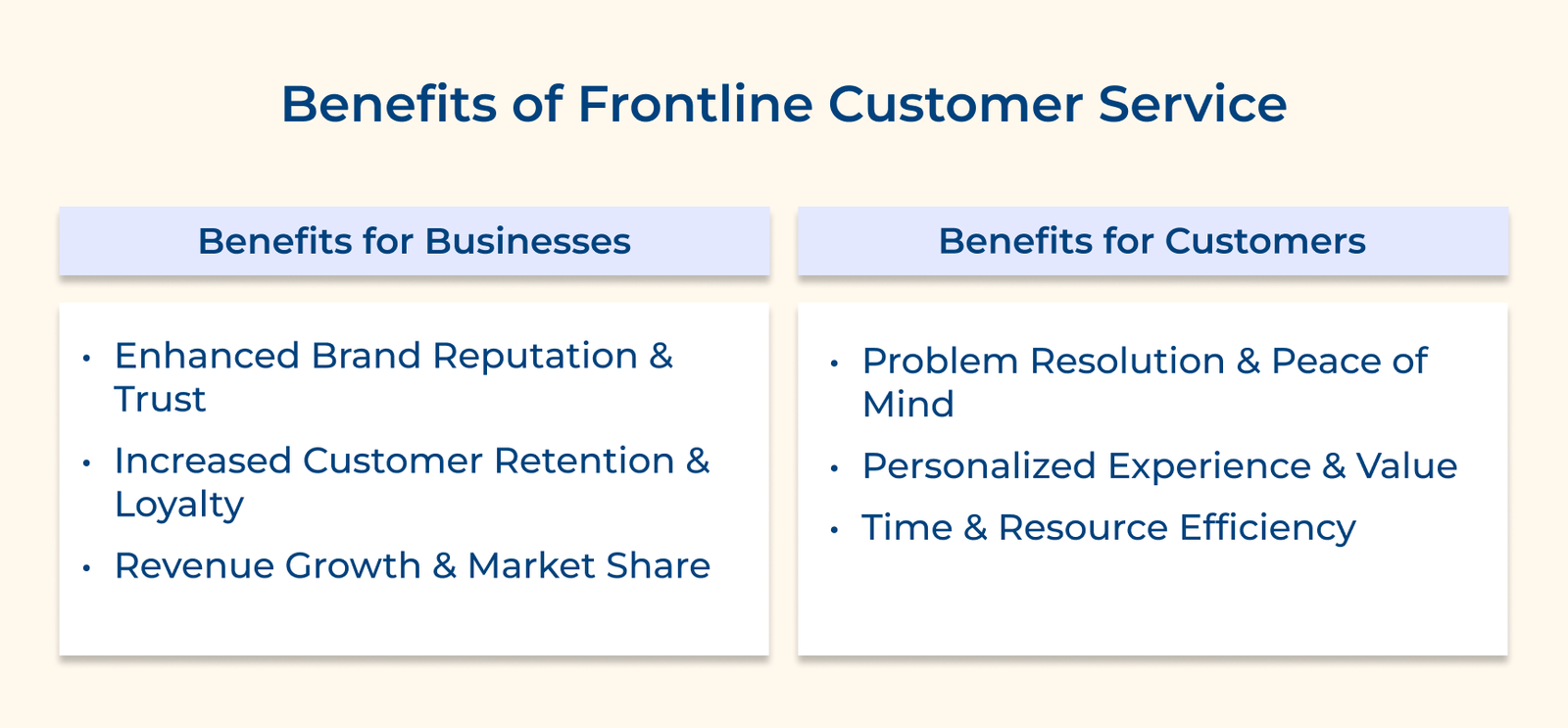
Enhanced Brand Reputation and Trust
Consistently excellent customer service builds a strong, positive brand image. Satisfied customers become brand advocates, sharing their positive experiences with others, helping to strengthen trust and reputation through word-of-mouth.
Increased Customer Retention and Loyalty
Exceptional service creates loyal customers who are more likely to return, make repeat purchases and develop an emotional connection with your brand. The loyalty not only reduces acquisition costs but also boosts customer lifetime value.
Revenue Growth and Market Share
Great customer service leads to higher revenue, as satisfied customers are more willing to spend, embrace upselling and recommend your business to others. The positive experiences help your company expand its market share naturally.
Problem Resolution and Peace of Mind
Top-notch frontline service swiftly resolves customer issues, easing frustration and restoring confidence. Customers feel assured that when problems arise, they have a reliable support system, leading to increased satisfaction and trust.
Personalized Experience and Value
Excellent frontline service offers a personalized touch, making customers feel heard and valued. Service reps who understand individual needs can deliver tailored solutions and meaningful recommendations, enriching the entire customer journey.
Time and Resource Efficiency
Effective customer service saves time by delivering fast, accurate solutions through the customer’s preferred channels. It minimizes the need for multiple contacts and allows customers to focus on what matters most, rather than spending time on problem-solving.
Below are the must-have skills that frontline customer support employees need to thrive in a rapidly changing environment and deliver an unforgettable customer experience.
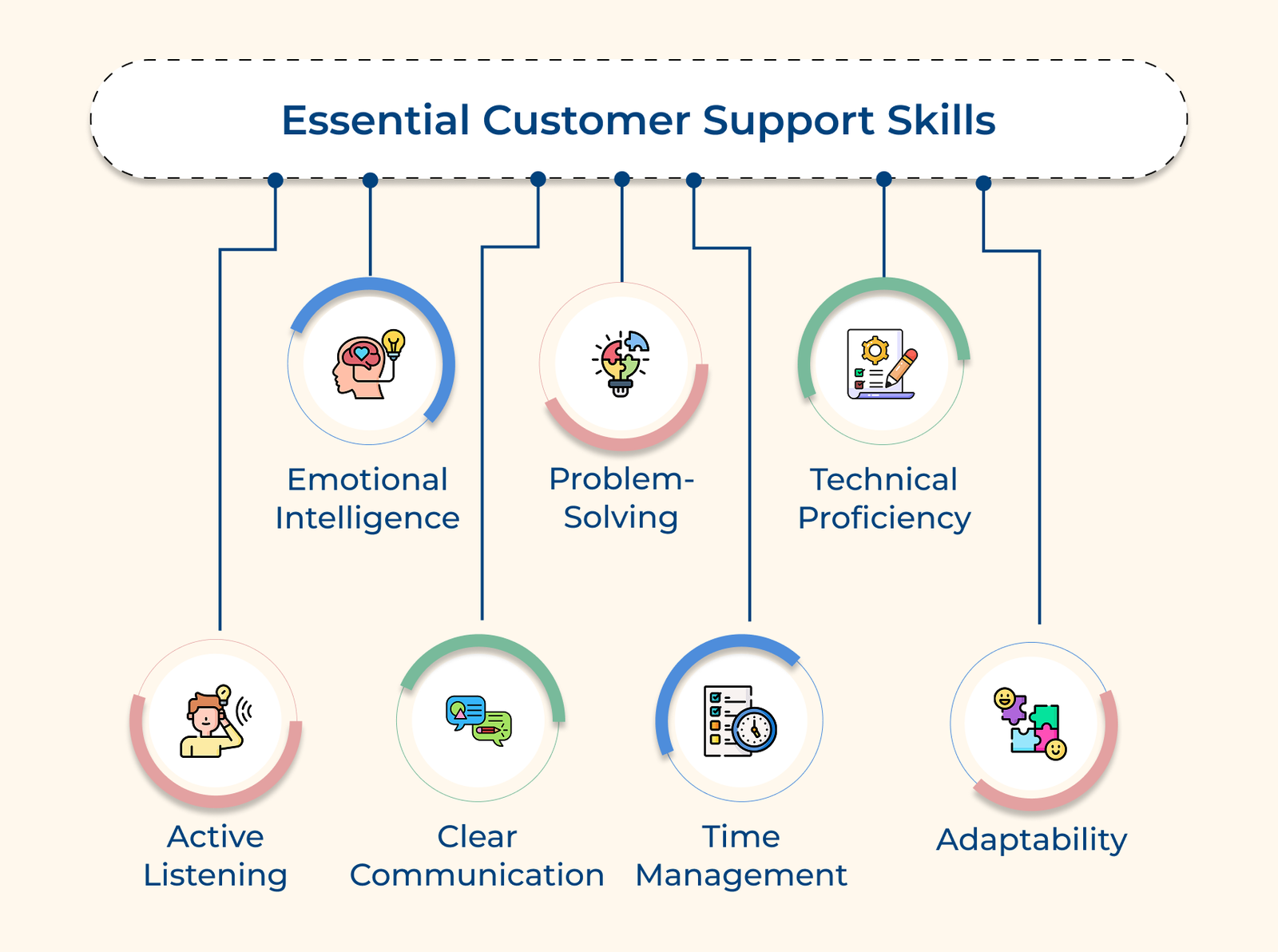
Frontline representatives must master the art of truly listening, focusing entirely on what the customer is saying without interruption. The skill helps uncover the full scope of the issue, often revealing hidden concerns and enabling relevant, tailored solutions.
Recognizing and understanding customer emotions is key to great service. Service reps can turn frustration into satisfaction by staying calm and empathetic, especially in tough situations.
A clear service representative knows how to explain complex issues simply. They ensure conversations are productive by avoiding jargon and adapting their language to suit the customer’s level of understanding.
Effective service reps quickly identify the root of the problem and find creative, efficient solutions. Their ability to think critically within company guidelines ensures customer satisfaction while maintaining business priorities.
Balancing multiple interactions with customers efficiently is crucial. Prioritizing urgent matters while ensuring each customer feels heard and attended to allow service reps to maintain high performance without sacrificing quality.
Representatives must be skilled with the technology they use, from CRM systems to communication tools. It enables them to quickly access customer data and keep interactions running smoothly.
The ability to adjust to new situations, whether it’s a change in policy or unexpected system issues, is essential. Adaptable reps maintain composure in any scenario, ensuring customers always receive consistent, high-quality service.
The following are some actionable steps to effectively train your frontline customer support team, ensuring they are well-prepared to deliver exceptional customer experiences.
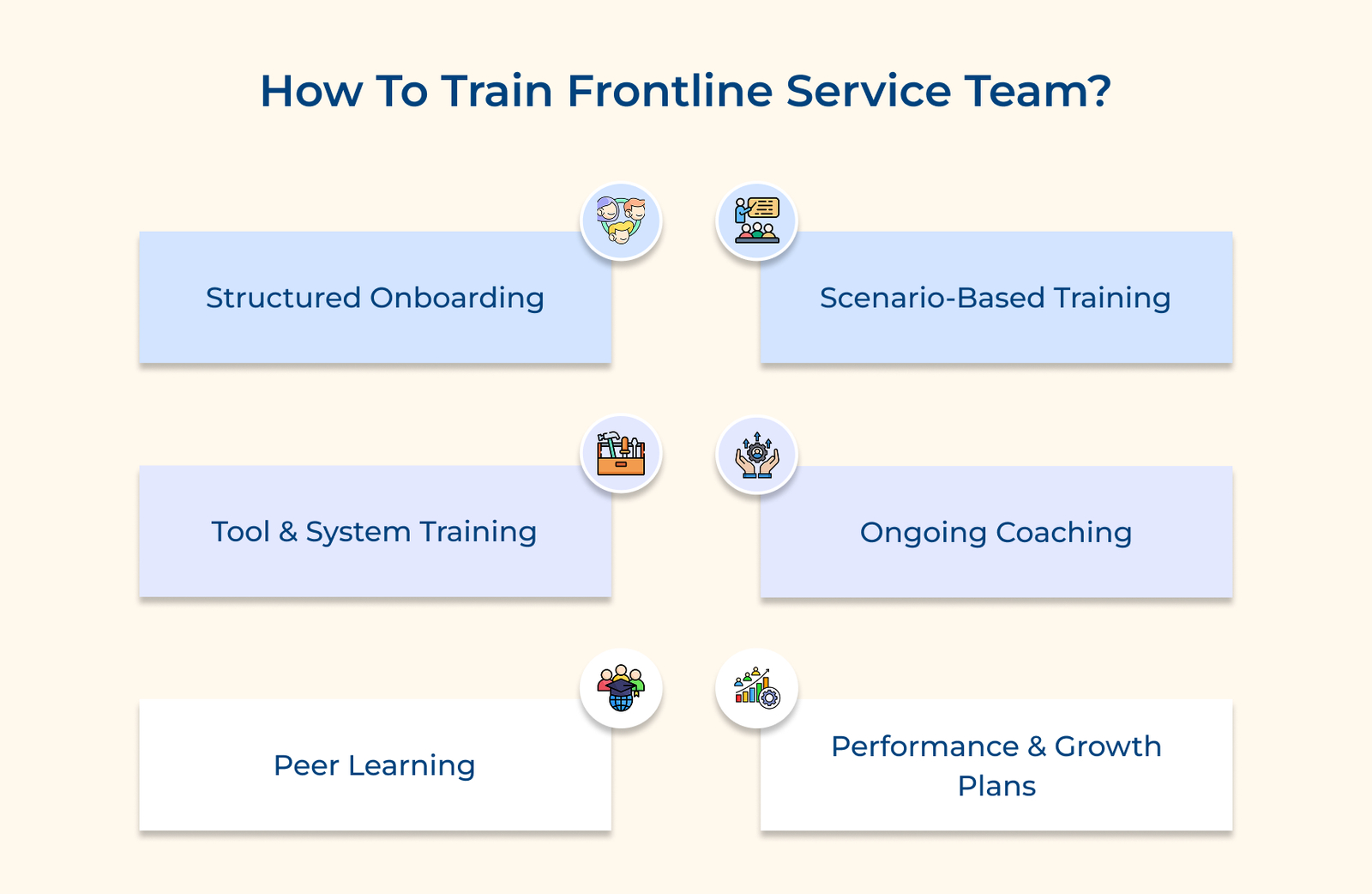
Structured Onboarding Program
The onboarding process should provide a deep dive into the company’s culture, products and customer service values. It’s not just about tasks, it’s about understanding the bigger picture and why the role matters. New hires should engage with the company history, core values and see firsthand how customer service impacts business success.
Real-world Scenario Training
Training should focus on real customer scenarios, giving employees the chance to role-play and tackle common challenges. Simulations allow employees to practice applying service protocols in a safe environment, building confidence for actual interactions.
Technology and Systems Training
Service reps need hands-on training with the tools they’ll use daily, from CRM systems to communication platforms. Familiarity with the systems lets them focus on the customer rather than wrestling with technology.
Regular updates and refresher courses ensure they stay current with new features or system changes. Troubleshooting common issues should also be covered so they can handle problems independently when possible.
Continuous Feedback and Coaching
Ongoing feedback is crucial for growth. Supervisors should observe interactions and offer constructive guidance, helping employees refine their approach. Regular one-on-one sessions create space for personalized development, allowing employees to voice challenges and suggest improvements.
Peer Learning Programs
Pairing experienced employees with newer team members enhances mentorship and knowledge sharing. Mentors can offer practical advice based on their experiences, helping newer agents navigate customer interactions with confidence.
Performance Measurement and Development Plans
Clear performance metrics are essential for tracking service quality and identifying growth areas. Regular performance reviews should evaluate both quantitative metrics and the more nuanced aspects of customer interactions. The reviews help create personalized development plans that align with both individual aspirations and company needs.
Below are eight effective strategies that can dramatically improve your frontline interactions and leave a lasting impression on your customers.
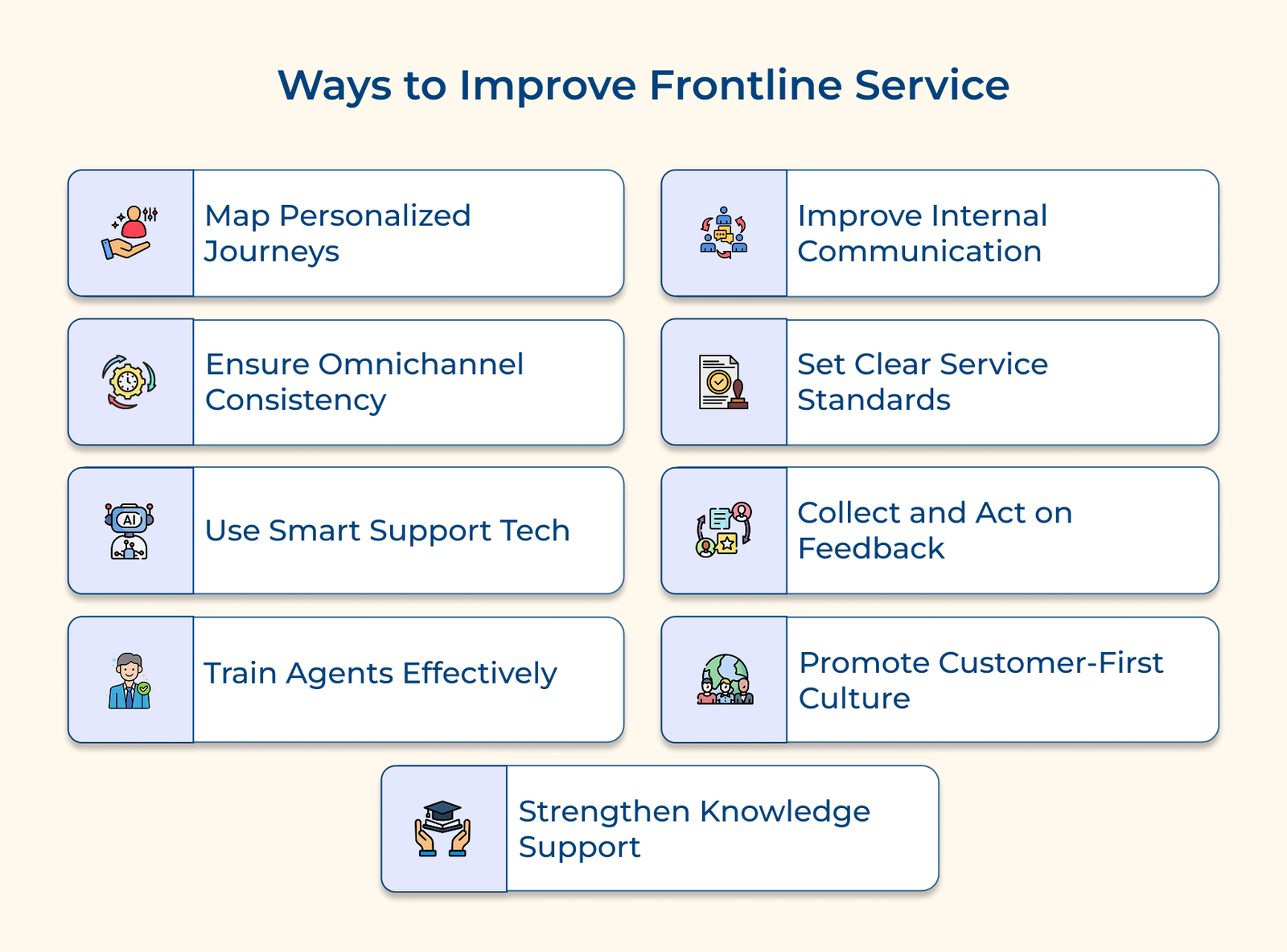
Customer journey mapping shows how people interact with your service team across different steps, from asking a question to resolving an issue. You can see where things work well and where they don’t by laying out each touchpoint. The mapping helps you spot what’s frustrating your customers and where you can improve their experience.
The process starts by identifying every moment a customer contacts your business, whether it’s through chat, phone, email or social media. Then you look closely at what the customer is doing, thinking and feeling at each point. It helps your team understand what customers need and where small changes can make a big difference in how supported they feel.
Pro tips:
An omnichannel service strategy makes sure customers get consistent, helpful support no matter how they reach out–whether it’s through email, chat, phone or social media. It removes the common frustration of having to repeat details and creates a smoother, more connected experience.
The key is to link all your communication tools so support teams can see customers’ full history like past conversations, preferences, and any ongoing issues. Support feels more personal and less like starting from scratch every time with the available context.
Actionable tips:
Modern frontline customer service depends on the right tools, not just to move faster, but to work smarter. Good technology helps teams automate the repetitive stuff, solve problems quicker and still keep the human touch where it counts.
AI tools can take care of simple questions and help route trickier issues to the people best equipped to handle them. It frees up your team to focus on conversations that need a personal touch, like solving tough problems or calming frustrated customers.
Best practices:
Good frontline training doesn’t just hand out scripts but it helps agents think on their feet. Agents gain the confidence to handle a wide range of customer interactions calmly by focusing on real-life situations and practical soft skills.
Role-play is especially effective. It gives agents a chance to work through tricky scenarios before they face them in real life. Whether it’s dealing with an upset customer or walking someone through a complicated issue, practicing with realistic situations builds the kind of instinct you can’t get from a handbook.
Key takeaways:
Clear, quick communication behind the scenes is what makes strong frontline service possible. When support teams can easily talk to each other, share updates and flag bigger problems, customers get faster, more accurate help.
Let’s assume that a customer reaches out about a glitch in a new feature. The frontline agent recognizes it’s not an isolated issue and follows the right steps to alert the product team. Meanwhile, they check the internal chat and find that other agents have been sharing a quick workaround. Later, during a regular team meeting, the product team joins to explain the long-term fix and now everyone’s on the same page.
Pro tips:
Clear service standards help frontline teams know what “good” looks like and how to deliver it every time. They take the guesswork out of daily interactions and set a consistent bar for quality.
Start by choosing metrics that reflect what matters most to your customers, like how quickly they get help, whether their issue is resolved the first time and how they feel about the support they received. When agents understand the benchmarks, they’re better equipped to deliver reliable, thoughtful service.
Actionable tips:
Great customer service doesn’t end with solving a problem—it continues by listening to what customers think about the experience. A strong feedback system helps teams learn what’s going well, spot areas that need fixing and make sure real customer voices guide continuous improvement efforts.
Simple, timely surveys sent right after an interaction, like resolving a billing issue, can offer immediate insights into what the customer felt. Asking clear, specific questions about helpfulness, clarity and outcome makes it easier to track patterns.
Best practices:
A strong customer-focused culture doesn’t rely on slogans but it’s built through everyday actions. When support teams genuinely care about solving problems and helping people, great service becomes second nature. It’s not something extra, but it’s how the job gets done.
One way to strengthen the mindset is by recognizing real moments of excellent service. Celebrate the agent who patiently walked a confused customer through a complex issue or the one who caught a mistake before it became a bigger problem. Sharing the stories helps everyone learn from each other and keeps the focus on the customer.
Key takeaways:
Frontline support works best when agents don’t have to guess. A reliable knowledge base gives them the facts they need fast. Whether it’s a policy update or a technical fix, clear, organized information means fewer delays, fewer mistakes and fewer frustrated customers.
Let’s consider that a customer wants to know how a new update works. Instead of scrambling for details, the agent types a keyword into the internal system and pulls up a plain-language guide, recent support cases and a how-to visual—all in one place. The customer gets a quick, confident answer and the agent stays focused.
Pro tips:
Below are the notable examples of companies that have transformed their customer service approach to create memorable experiences and build stronger customer relationships.
Amazon
Amazon gives its frontline agents the freedom to act fast. If something goes wrong–a late package, a damaged item—agents can issue refunds or send replacements right away, no need to wait for approval. They are trained to solve problems, not read from a script. The no-hassle support builds trust. Customers know if there’s a problem, it’ll be handled quickly and that confidence keeps them coming back.
Apple
Apple’s Genius Bar turned tech support into something people want to use. The staff isn’t just trained to fix devices—they’re trained to explain things clearly and patiently. Customers walk away not just with their issue solved, but with a better grasp of how their device works. It’s support that teaches, not just troubleshoots and that helps customers feel more confident using Apple products long-term.
Ritz-Carlton
Any employee at the Ritz-Carlton—housekeeper, front desk, waiter can spend up to $2,000 to fix a guest’s issue on the spot. Their extensive training program, called “Gold Standards,” ensures every staff member understands and delivers the brand’s exceptional service philosophy through personalized interactions. The commitment to service excellence has established Ritz-Carlton as the benchmark for luxury hospitality.
Zappos
Zappos doesn’t time its customer service calls. Agents are encouraged to be themselves and build a real connection. Whether that’s about chatting about a favorite show or helping find the perfect shoes, every interaction is personal. The human approach turns routine orders into memorable stories. Customers don’t just remember great service—they share it.
Nordstrom
Nordstrom empowers its staff to do what’s right for the customer—even if that means walking across the store to find the right size or taking back a return with no receipt. Personal shoppers go a step further, learning what each customer likes and helping them find what fits literally. It’s not about making one sale. It’s about earning trust that brings people back.
Delivering a great customer experience starts at the front line. The way service teams handle everyday interactions often sets one company apart from another. When businesses invest in well-trained teams, clear processes and the right tools, they create customer experiences that stick, for the right reasons.
Success in frontline customer support requires a balanced approach that combines human touch with technological efficiency. Companies can create service experiences that not only meet customer expectations but consistently exceed them by focusing on personalized interactions, continuous team development and data-driven insights.
Key takeaways:

Frontline customer service employees are often the first and sometimes only point of contact customers have with a company. They answer questions, solve problems, process orders and share product details through phone calls, emails, chats or face-to-face conversations. They need a solid understanding of the products or services and the ability to communicate clearly. Their work plays a key role in shaping how customers feel about the company.
Frontline customer support plays a critical role in shaping how people feel about a company. The interactions often represent the only human contact customers have with an organization, making them crucial moments that can either strengthen or damage customer relationships. Good support not only keeps people coming back but also gives companies real feedback they can use to improve.
Frontline customer service teams are essential for any organization that wants to stay competitive. They’re often the first to hear what customers like, what frustrates them and what they need. The teams build trust and keep customers coming back by solving problems quickly. They also provide firsthand insights that help the organization improve what it offers and how it delivers it.
Organizations look at practical indicators like how quickly issues get resolved, how often problems are fixed on the first try and whether customers stick around. They also pay attention to what customers say in surveys, how each interaction plays out and how individual team members perform. It helps spot areas that need work and highlight the ones that are doing things right.
Modern tools make frontline service faster and more responsive. AI assistants handle simple questions, routing systems send issues to the right people and well-organized customer data helps agents respond more personally. The systems also make it easier to track what’s working and where things could improve.

Grow Customer Relationships and stronger team collaboration with our range of products across the Conversational Engagement Suite.
Omnichannel Customer Support & Help Desk Software
AI Enabled Business Messaging and Chatbot Software
Sales Engagement & CRM Software
Call Center Software & Virtual Phone System
Product Marketing & Experience Platform
Customer Experience & Feedback Management Software

 How to Improve NPS? 13 Effective Ways for Businesses in 2026
Scroll to top
How to Improve NPS? 13 Effective Ways for Businesses in 2026
Scroll to top