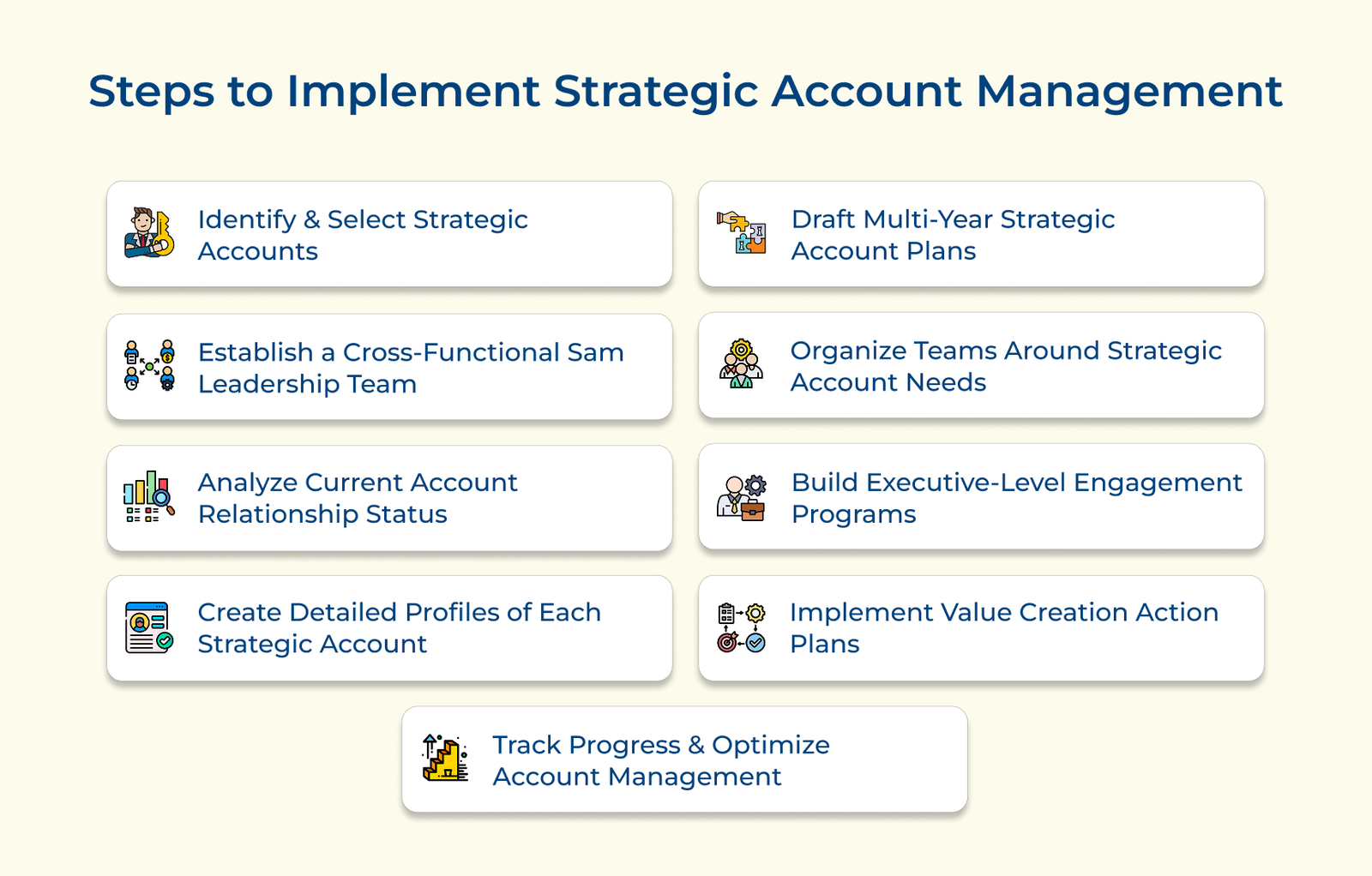
1. Identify and Select Strategic Accounts
Choosing the right strategic accounts is the first step for any effective SAM program. It lets you focus your time and resources on the accounts with the strongest potential. It not only supports mutual growth but also ensures your efforts are used where they matter most.
The selection process starts by creating a scoring system that looks at both how an account is performing now and what it could become in the future. Your criteria should consider parameters like revenue and profitability along with what it could be in the future.
Pro Tips:
- Look beyond immediate revenue numbers to spot accounts showing strong innovation mindsets and collaborative cultures. The traits often indicate better long-term partnership potential.
- Involve your internal stakeholders in account selection through brief alignment workshops. It helps gain buy-in and uncover valuable insights about account potential.
2. Establish Cross-Functional SAM Leadership Team
A dedicated cross-functional leadership team serves as the driving force behind your SAM program. The team combines different perspectives and skills to carry out account strategies that work and deliver results.
Start by identifying leaders who bring both functional expertise and strategic thinking capabilities to the team. The team should include people from sales, marketing and operations who understand both what the client needs and what your company can deliver.
Pro Tips:
- Structure your team meetings around specific account challenges and opportunities rather than general updates. It keeps the focus on strategic problem-solving.
- Match team members’ expertise with account industries to leverage deeper sector knowledge in strategy development.
3. Analyze Current Account Relationship Status
Knowing where you stand with your strategic account gives you a solid starting point for planning. It helps you see what’s working, what needs improvement and how you compare to your competitors.
Begin your analysis by mapping all existing connections between your company and the account. It includes identifying key contacts, documenting past successes and understanding the relationships at different levels.
Pro Tips:
- Schedule informal coffee chats with account stakeholders to gather honest feedback about relationship strengths and issues. The casual talks often reveal insights that formal meetings miss.
- Map your competitors’ relationships within the account using LinkedIn connections and industry events as information sources. It helps identify relationship gaps you need to fill.
4. Create Detailed Profiles of Strategic Accounts
Extensive account profiles serve as your strategic playbook for each key customer. These documents collect key data about the goals, issues and keep everything up to date. It enables more informed decision-making and targeted value creation.
Begin by diving into each account’s goals, market standing and issues. It means reviewing the annual reports, statements and knowing their key initiatives. Your aim is to get a clear sense of what influences their decisions.
Pro Tips:
- Set up Google Alerts for your strategic accounts to stay updated on their latest news developments and market movements. It helps you spot opportunities early.
- Shadow your account’s customer service team for a day to gain ground-level knowledge of their operational challenges and daily problems.
5. Draft Multi-Year Strategic Account Plans
Multi-year strategic account management plans give you a roadmap for building key customer relationships. They align your resources with the account’s long-term goals, ensuring you continue delivering value over time.
The first task involves setting clear and measurable growth targets that align with both parties’ objectives. A tech company might plan to move a manufacturing client from basic software licenses to a complete IoT solution over three years with clear milestones for adoption.
Pro Tips:
- Run quarterly “future-casting” sessions with your account team to anticipate potential market shifts and adjust plans accordingly.
- Build a visual roadmap using timeline software to help stakeholders grasp the long-term vision at a glance.
6. Organize Teams Around Strategic Account Needs
Strategic accounts need dedicated teams focused on addressing their specific needs and issues. The organizational alignment ensures faster response, better solution and more effective resource utilization.
Begin by matching your team member’s skills and expertise with the account’s specific requirements next to industry challenges. It could involve pairing technical experts with clients undergoing digital transformations or specialists for complex manufacturing accounts.
Pro Tips:
- Rotate team members through different account responsibilities every few months to build broader understanding and prevent silos.
- Host monthly “account insight” lunches where team members share success stories and problem-solving approaches.
7. Build Executive-Level Engagement Programs
Executive engagement creates strong high-level relationships that protect and grow the partnership. The programs help align both organizations while creating new opportunities and making it easier to solve problems quickly.
Begin by setting up regular meetings that focus on real value instead of day to day operations. The meeting should align with business planning cycles. It should give both parties a chance to share their goals and problems.
Pro Tips:
- Arrange executive meetings around major industry events where leaders are already gathering to maximize participation.
- Take notes on executives’ personal interests and communication styles to tailor interactions more effectively.
8. Implement Value Creation Action Plans
Value creation action plans turn ideas into results by laying out specific actions that benefit both companies. The plans help show the partnership’s value while building deeper collaboration and innovation.
Start with focused projects that tackle your account’s biggest problems. If a manufacturing client is dealing with high costs, help by setting up a maintenance system using your IoT sensors. It’s a practical solution that matches your strengths to their needs and delivers clear results.
Pro Tips:
- Spotlight success stories from your value creation initiatives at industry events to boost your account’s reputation and strengthen the partnership.
- Start small with pilot programs in one department before rolling out larger initiatives. This helps prove value and build internal champions.
9. Track Progress and Optimize Account Management
Regular tracking and optimization ensure your strategic account management process stays on course, delivering the intended results. Measuring performance shows you what’s going well, what needs to change and what needs improvement.
Your quarterly review should look at both numbers and the bigger picture. In addition to revenue and profit, it’s important to track how much the client is using your solutions. Also, how engaged they are and how joint projects are moving forward. Software companies might track revenue, API integration, user adoption and the number of custom solutions.
Pro Tips:
- Plot your account’s engagement levels on a heat map to visually identify departments or regions needing attention. It helps prioritize your optimization efforts.
- Design “listening tours” where account team members gather informal feedback from different levels of the customer to spot early warning signs or opportunities.
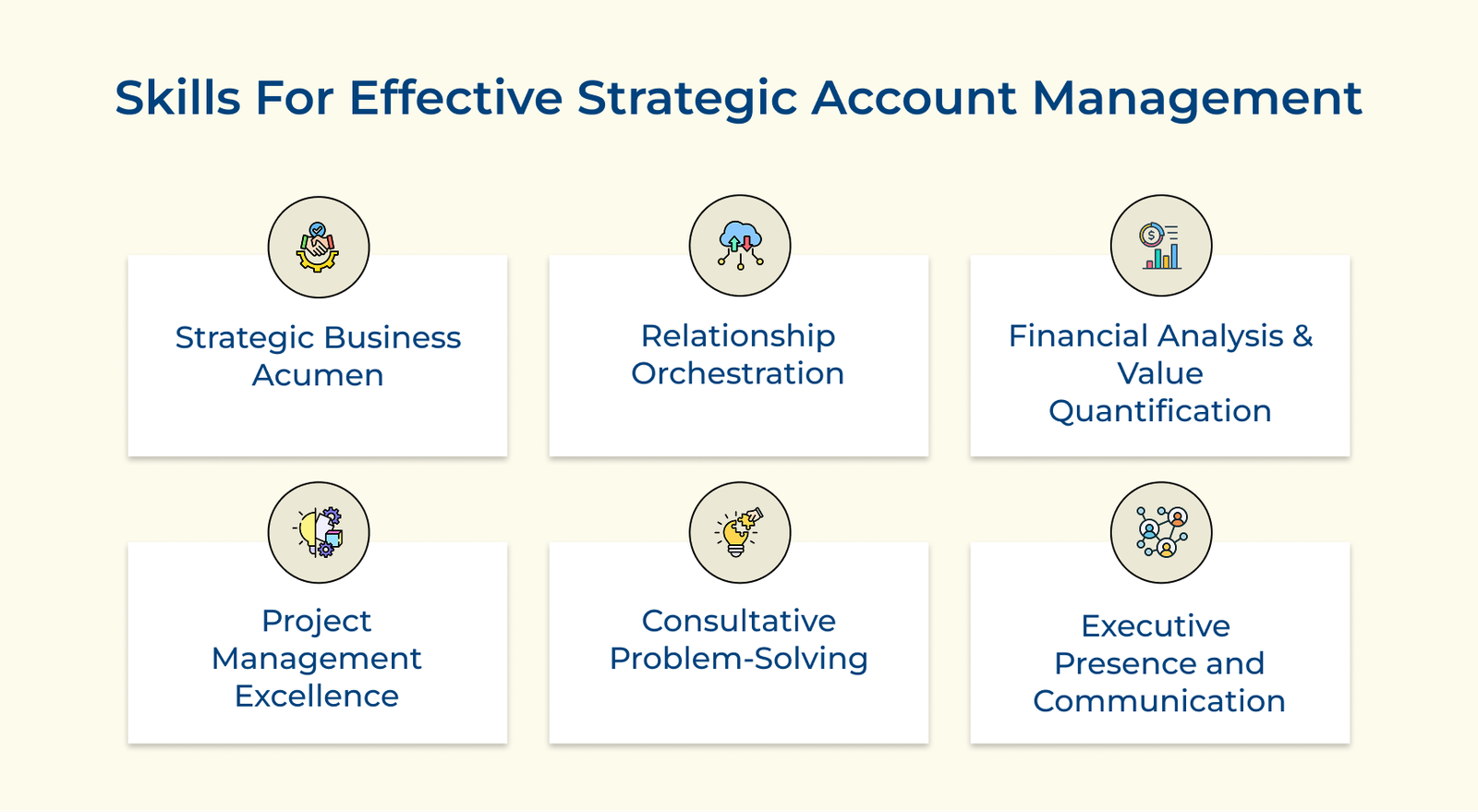
Key Skills For Effective Strategic Account Management
Let’s delve into the key skills that every account manager must develop to facilitate strong partnerships and ensure mutual growth.