9 Key Pillars of Customer Service Every Business Must Master
Explore the breakdown of the key pillars of customer service. Learn how each one helps build trust, improve experiences and strengthen customer loyalty.

Explore the breakdown of the key pillars of customer service. Learn how each one helps build trust, improve experiences and strengthen customer loyalty.
Customers expect quick responses, clear communication and the same level of service no matter how they reach you. When those expectations aren’t met, the result is simple. People leave, and trust is hard to win back. More than 70% of clients make purchase decisions based on the quality of customer service.
The challenge with customer service isn’t spotting what’s broken. It’s knowing how to fix it. A structured approach helps. When you focus on the core pillars of customer service, you set the foundation for stronger interactions at every step. Together, they form a practical framework that turns everyday service into a tool for building trust, earning loyalty and turning issues into opportunities to strengthen relationships. Let’s look at how each one works in real life and why they matter!
The pillars of customer service refer to a few essential principles that guide how the customer service teams interact with people every day. The pillars create a clear, practical framework that helps businesses offer reliable, respectful and thoughtful service.
No matter if the person is reaching out on social media, by phone, or in a store, the experience should feel equally helpful and human. An excellent customer service isn’t about flashy promises; it’s about showing up consistently and doing the basics well, every time.
Key principles:
Let’s go through the key benefits that organizations gain when they prioritize delivering outstanding customer experiences.
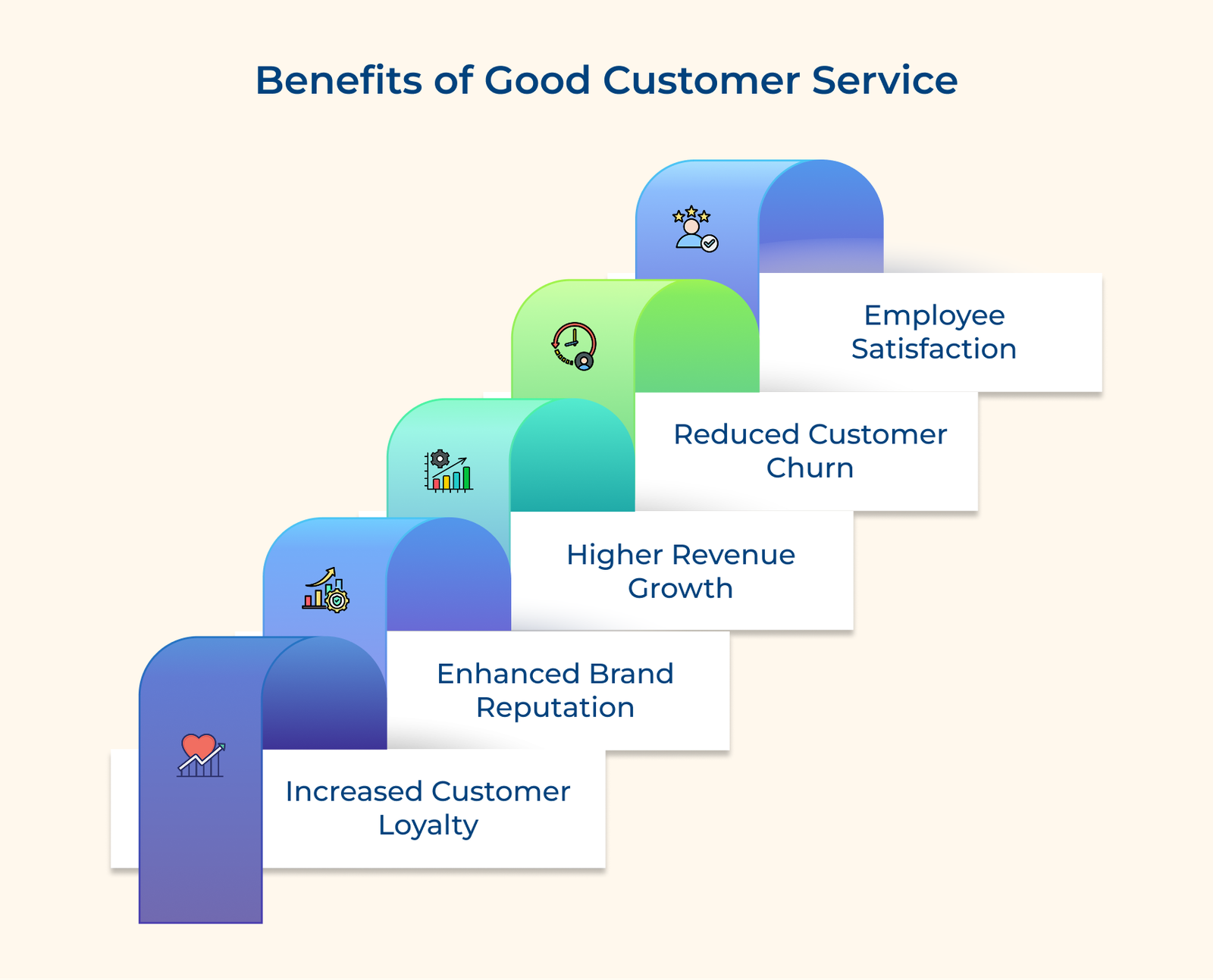
1. Increased Customer Loyalty
Good service creates more than just repeat customers it builds trust. When people feel genuinely helped and respected, they come back. Over time, the positive moments stack up and they’re less likely to look elsewhere.
2. Enhanced Brand Reputation
People talk about great service. 60% of customers are more likely to recommend a company that provides human customer service. When customers feel taken care of, they naturally tell friends, family or even post online. The honest recommendation is powerful and it’s earned, not bought.
3. Higher Revenue Growth
Customers who trust you are more likely to buy again, try something new or upgrade. When they know you’ve got their back, they’re more open to exploring what else you offer.
4. Reduced Customer Churn
Many customers leave quietly after a bad experience. Solid service gives you a chance to fix problems before they walk away. It means less time and money spent trying to replace them later.
5. Employee Satisfaction
When employees see that their efforts matter and that customers appreciate them, they care more. A workplace where people feel proud of what they do often leads to even better service.
Check out the key pillars of customer service that every business should embrace, ensuring that each customer leaves feeling valued and heard.
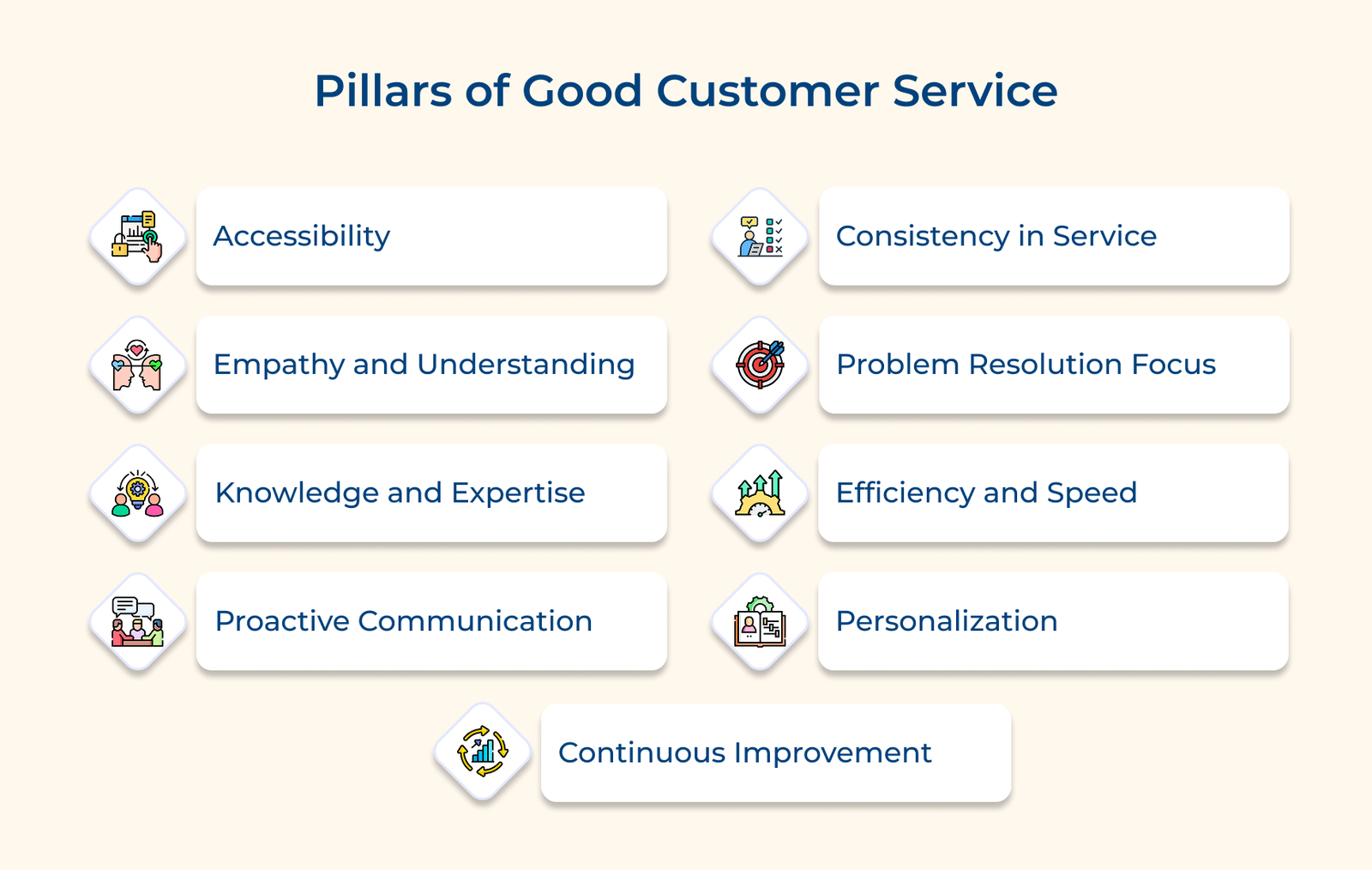
Accessibility in customer service means being available where and when your customers need you. It’s not just about having multiple channels, it’s about making it easy for people to reach out in the way that suits them best. It might be 3 AM or a quick lunch break, but customers should always have a clear path to support. The channels should actually work when people need them.
Keep hold times short, offer realistic wait-time estimates and give people options like callbacks. Not everyone wants the same type of support. Some want a fast answer in chat, others prefer a detailed email. Meeting people where they’re comfortable shows that you respect their time and how they prefer to communicate.
Pro tips:
Empathy is what turns basic support into a real human connection. It’s not just about solving problems, it’s about making customers feel understood and respected. 96% of consumers view empathy as important in customer support interactions. Empathy means listening closely, reading between the lines and responding in a way that shows you’re genuinely there to help.
Every customer comes with a different story. There’s no one-size-fits-all script. Taking the time to respond with care, without judgments or assumptions, builds trust and makes difficult conversations easier. Customers walk away not just with a solution, but with the sense that they were truly heard.
Actionable tips:
Knowledge and expertise are what make good support actually useful. Customers don’t just want a friendly voice, they want real answers. It means your team needs to deeply understand your products or services, inside and out. When reps know the details like how things work, where they break or how to fix them. They can explain clearly, troubleshoot quickly and steer conversations in the right direction.
Staying sharp isn’t a one-time thing. Regular training keeps everyone up to speed with product updates, new tools and common issues. A solid knowledge base also helps reps get accurate answers fast, especially during tricky conversations. When expertise becomes second nature, service becomes smoother and more confident.
Best practices:
Proactive communication is about reaching out before your customers feel the need to. Instead of waiting for problems to pop up, you take the first step by keeping people in the loop, preventing confusion and showing that you’re paying attention.
The best support teams watch for patterns, maybe it’s a common stumbling block for new users or a seasonal issue that flares up every year. Either way, a quick note, tip or check-in can go a long way. When customers feel like you’re already looking out for them, it changes the whole relationship.
Key takeaways:
Consistency in customer service means your support feels reliable no matter when or where a customer reaches out. Whether it’s a phone call at noon, a chat message at midnight or a tweet on the weekend, the tone, quality and helpfulness should feel the same. Customers shouldn’t have to cross their fingers and hope for a good experience–they should know what to expect every time.
Teams need shared guidelines for handling common situations, responding in a simple tone and following up in the same timely way. It’s about creating smooth, steady service that reflects your brand, even when different people or tools are involved.
Pro tips:
Problem resolution is where customer service earns its stripes. It’s the moment a frustrated customer reaches out and how you handle it can either make or break their trust in your brand. Great support doesn’t just fix what’s broken; it turns a negative into a chance to show you’re dependable, capable and genuinely care about getting things right.
Teams need clear steps to understand what went wrong, gather all the right details and find a solution that sticks, not just a band-aid. There should be a plan in place to escalate the issue to the right people without the customer having to repeat themselves for tougher problems. When support flows smoothly, customers feel heard, helped and reassured.
Actionable tips:
Efficiency in customer service means solving problems fast without cutting corners. It’s about making every interaction smooth and purposeful, so customers get the help they need without jumping through hoops. Imagine a customer returning a faulty item: instead of bouncing between departments, the rep pulls up the order, processes the return and arranges a replacement, all in one go.
Support teams need systems that cut out wasted steps and focus on what matters. Fast responses show respect for the customer’s time and well-designed workflows let teams do more without burning out. The goal isn’t just speed but getting things done right the first time.
Best practices:
Personalization turns everyday support into something memorable. When service feels tailored, like the rep knows who you are and what you need, it builds trust. Customers shouldn’t have to repeat themselves every time they reach out. 70% of shoppers feel more valued when their experiences are personalized.
Great support also means adjusting your tone and approach to fit the person you’re helping. Some customers want details and explanations, others just want a quick fix. Picking up on the cues and responding in a way that fits builds better connections.
Key takeaways:
Continuous improvement is about regularly stepping back to see what’s working, what’s not and how to get better. It starts with listening through surveys, reviews, social media and even casual feedback. Look at the hard numbers like response times and satisfaction scores, but also pay attention to what people are actually saying. The mix gives you a full view of how you really feel on the customer’s end.
Don’t stop at the stats. Dig into why some interactions leave customers happy and others don’t. Use that to adjust training, rethink processes and fix real issues, not just surface-level ones. The goal is progress that customers actually notice.
Best practices:
Below are some leading brands that implemented customer service pillars to create exceptional experiences that drive business growth and customer loyalty.
1. Zappos
Zappos built its business around one simple idea: make customers genuinely happy. Their support team isn’t tied to call time limits, scripts or rigid rules. Instead, they’re trusted to do what’s right, whatever that means, solving a problem, sending a surprise gift or just staying on the line to help someone through a tricky return. It’s customer service with a human face, built on real conversations and thoughtful help.
The support doesn’t just fix issues, it sticks with people. Zappos has earned a reputation as a company that truly cares and customers return the favor with loyalty that money can’t buy. They’ve turned everyday interactions into the heart of their brand by treating support as a relationship, rather than a transaction.
2. Ritz-Carlton
Every staff member at Ritz-Carlton is trusted to act in the moment to solve guest problems, even if it means spending money to make things right, without needing a manager. They pay close attention to guest preferences, tracking everything from favorite drinks to room temperature, so that each stay feels effortless and tailored from the start.
The hands-on, detail-driven approach isn’t about luxury for show. It’s about making guests feel genuinely cared for. The feeling keeps people coming back and willing to pay a premium. It’s not just service, it’s personal and it’s what sets Ritz-Carlton apart in a crowded hospitality world.
3. Amazon
Amazon’s approach to customer service is built around removing friction. Features like one-click ordering, no-questions-asked returns and fast refunds aren’t just convenient. They show respect for the customer’s time. They listen closely to feedback and regularly tweak the experience to make shopping smoother.
The consistency has earned them more than just sales, it’s built long-term loyalty. When customers know a company will make things right quickly, they’re more likely to come back and try something new. It is how Amazon keeps people coming back for more.
4. Apple
The Genius Bar offers hands-on help without the hassle. Customers can walk in, get advice, learn how to use their devices better or troubleshoot tricky problems – all from trained staff who know their stuff and speak like real people, not robots.
The support gives people confidence in their purchase. It’s not just about fixing problems, it’s about knowing someone’s there when you need them. Trust is a big reason people stick with Apple year after year.
5. Nordstrom
Nordstrom gives its employees the freedom to put the customer first, even if it means bending a few rules. The focus is on making people feel genuinely cared for, from easy returns with no hassle to personal shoppers who remember your style and preferences.
The trust and attention keep customers coming up. Nordstrom stands out by treating service not as a department, but as the core of how they do business.
Check out the common hurdles that businesses encounter in their quest to maintain stellar customer service pillars, equipping you with insight to overcome them.
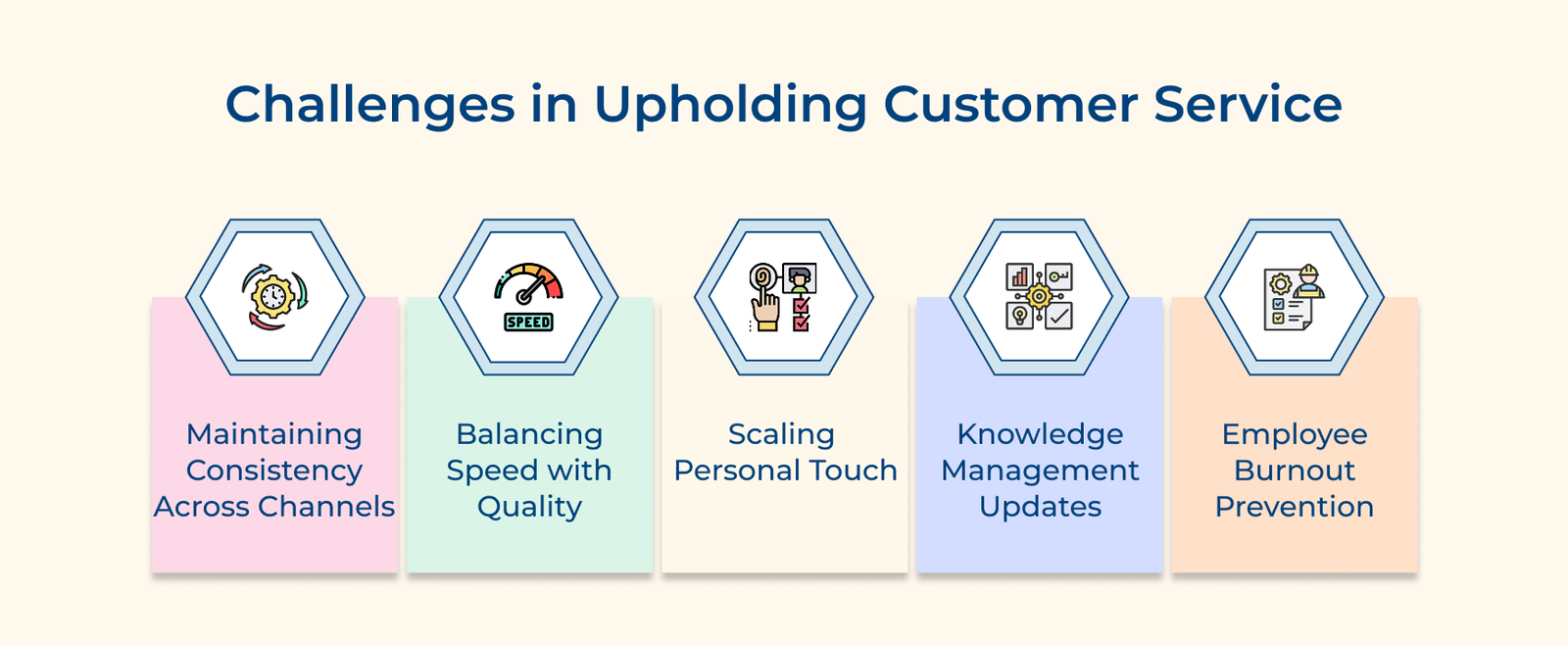
1. Maintaining Consistency Across Channels
Customers expect the same quality of help whether they reach out by phone, email or chat. Without the right structure, teams can end up giving different answers to the same problem.
Create clear playbooks for how to handle common questions and issues. Use a single system where all customer history is stored, so any rep can pick up where the last one left off. Regular training across all channels helps keep responses steady and dependable.
2. Balancing Speed with Quality
Rushing to meet response time goals often leads to shallow answers and missed details. It frustrates customers and creates more work when issues aren’t fully resolved the first time.
Set more balanced goals like rewarding fast replies and thorough problem-solving. Use a triage system: let reps knock out quick fixes fast and take their time with complex cases. Give them space to slow down when it matters.
3. Scaling Personal Touch
As customer bases expand, delivering truly personal service gets harder. It becomes tough to remember past conversations, track preferences or offer thoughtful solutions with more interactions to manage.
The fix isn’t just more tools but using the right ones well. A reliable CRM can keep track of past interactions and customer behavior so support teams don’t start from scratch each time. Reps can use the info to make conversations more relevant with solid training. Grouping customers by needs or habits also helps teams offer support that actually fits.
4. Knowledge Management Updates
Mistakes are bound to happen if your team’s working off outdated info. Product updates, policy changes and new features can easily get lost in the shuffle.
Maintain a central, searchable knowledge hub with real-time updates. Make training a routine, not a one-off. Encourage reps to flag unclear or missing info so it can be fixed fast.
5. Employee Burnout Prevention
Customer service can often be emotionally draining, especially when tough cases pile up. Without support, even great reps can lose their motivation.
Rotate responsibilities to break up repetitive or high-stress tasks. Offer real tools for managing stress, not just pizza on Fridays. Publicly recognize thoughtful, helpful service, not just hitting numbers.
Explore how different sectors adapt the pillars to meet their unique customer needs, challenging operational requirements.
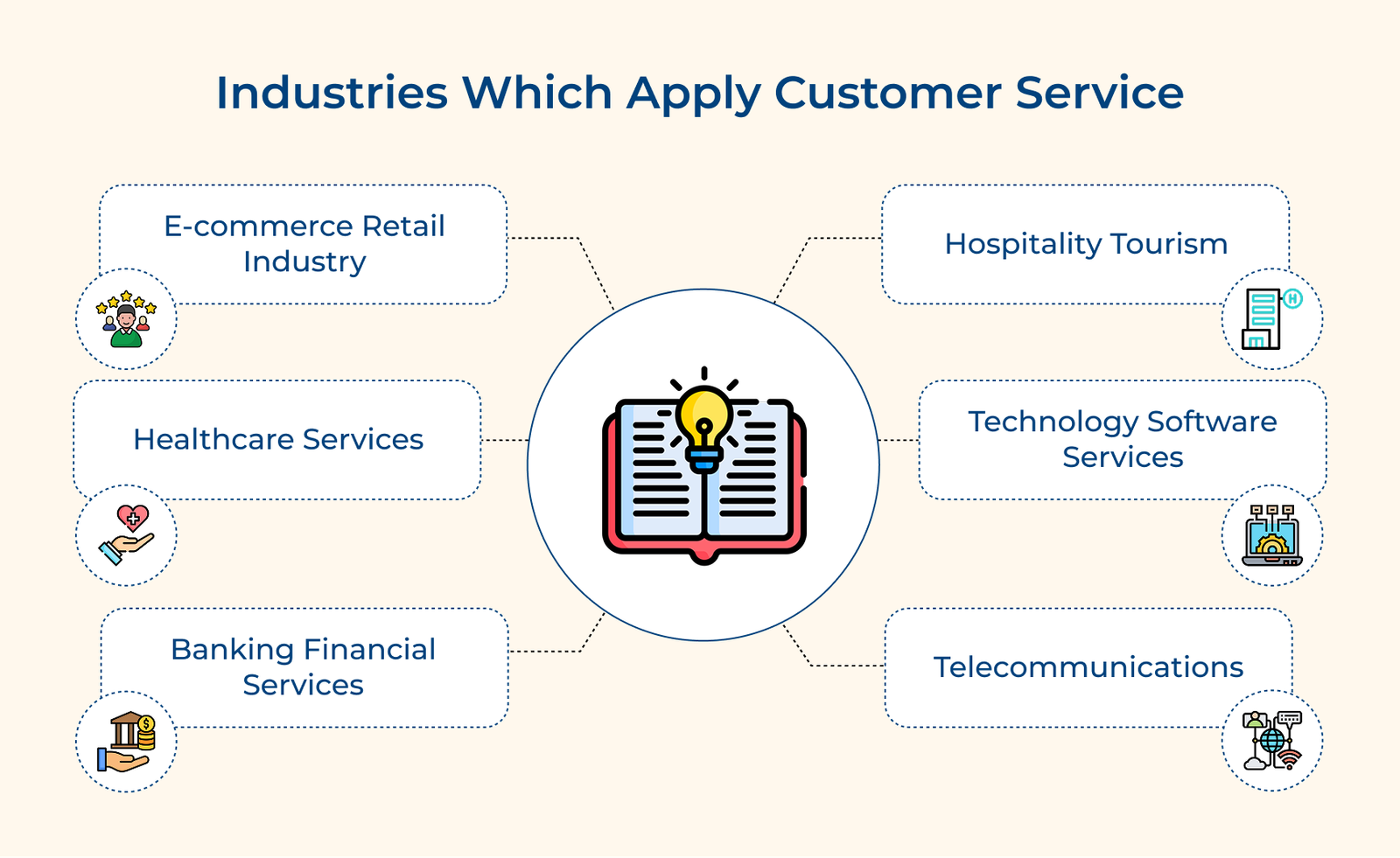
The businesses rely on fast, accessible support. The focus is on resolving shipping issues, product questions and order problems without delay. Customers are kept in the loop with proactive updates on deliveries or delays. Personal touches come through targeted offers and recommendations based on purchase history.
Empathy and privacy are essential because of the sensitive nature of healthcare. Support involves clear explanations of treatments, appointment scheduling and access to specialists, while respecting confidentiality at every step. Patient portals, telehealth visits and reminders help keep care consistent.
Service centers on secure access, fraud prevention and clear answers. Customers can reach support through secure apps, phone lines or in-branch visits. Personalized advice is based on financial history and goals, not generic pitches. Quick problem-solving is paired with strong safeguards.
The experience starts long before check-in. Hotels as well as travel providers track guest preferences and personalise everything, from pillow choices to activity suggestions. When something goes wrong, they’re expected to fix it fast, without guests needing to ask twice. Mobile check-ins, concierge services and small thoughtful touches make visits feel effortless.
Support here is all about solving problems fast and keeping things running. Customers get step-by-step help via tutorials, forums or live agents. Complex issues get routed to specialized teams. Companies keep their help docs current and make sure users aren’t left in the dark with constant updates.
The providers focus on network reliability and fast problem resolution. Automated alerts keep customers informed during outages. Self-service tools help with troubleshooting, but technical teams step in when things get complicated. Ongoing performance monitoring and customer feedback are used to stay ahead of recurring issues.
The pillars of customer service form a practical framework for turning everyday support into consistently great experiences. When done right, they help businesses build real relationships based on trust, reliability and respect. Each pillar plays a pivotal role in making service more helpful, more human and more responsive to what customers actually need.
Great service doesn’t happen by accident. It takes ongoing effort like training the team, using the right tools and making sure support processes work smoothly behind the scenes. But the payoff is worth it: loyal customers, positive word of mouth and stronger relationships that hold up even when challenges arise.

Customer service rests on core principles like accessibility, empathy, knowledge, proactive communication, consistency, problem-solving, efficiency, personalization and continuous improvement. Each one plays a clear role, whether it’s being easy to reach, listening closely or resolving issues quickly. Together, they form a reliable support system that helps customers feel understood and well cared for. When done right, the elements reinforce one another, creating experiences that build lasting trust and keep people coming back.
Effective communication means being clear, timely and thoughtful in every interaction. It starts with listening closely to what the customer needs, then responding with straightforward updates and honest explanations especially when things get complicated. The message should always be easy to understand and delivered with care no matter the channel.
Empathy turns everyday service into something more human by helping support teams truly understand what customers are feeling. It means recognizing when someone’s frustrated, celebrating small wins with them and offering help that goes beyond just solving a problem. When customers feel understood—not just assisted, they’re more likely to trust the people helping them and stick around long after the issue is resolved.
Consistency in customer service means treating every customer with the same level of care, no matter the channel or time of day. It comes from clear processes, well-trained teams and tools that keep everyone on the same page. Updated knowledge bases and regular check-ins help teams stay aligned while still allowing room to adapt when situations call for it. It’s about creating a dependable experience customers can count on every time they reach out.
Solid product knowledge allows service teams to solve problems quickly, explain things clearly and help customers get the most out of what they’ve bought. When representatives truly understand the product, they can offer practical advice, suggest useful alternatives and prevent small issues from becoming bigger ones. Ongoing training ensures they stay sharp as products evolve, so support always stays helpful and reliable.
Measuring effectiveness means looking at both the numbers like how fast and how often issues get resolved and the real stories behind them through customer feedback. Regularly reviewing the mix helps spot what’s working, what needs fixing and where to focus next. The key is to tie the insights back to each part of the service experience while keeping an eye on how they affect overall customer satisfaction.
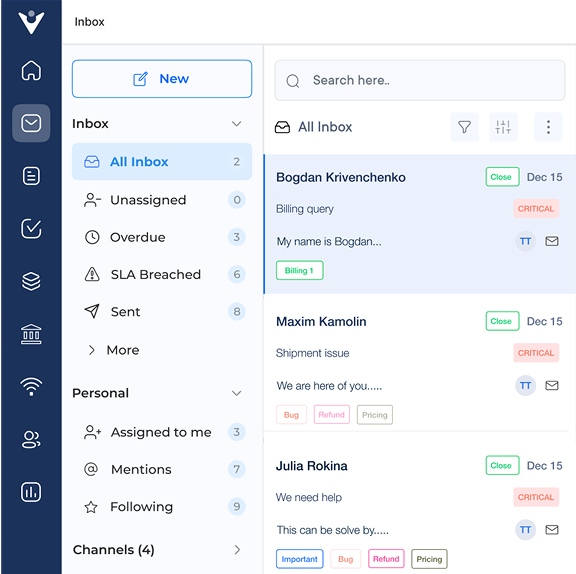
Grow Customer Relationships and stronger team collaboration with our range of products across the Conversational Engagement Suite.
Omnichannel Customer Support & Help Desk Software
AI Enabled Business Messaging and Chatbot Software
Sales Engagement & CRM Software
Call Center Software & Virtual Phone System
Product Marketing & Experience Platform
Customer Experience & Feedback Management Software

 How to Create SaaS Sales Process? Stages, Best Practices & More
Scroll to top
How to Create SaaS Sales Process? Stages, Best Practices & More
Scroll to top