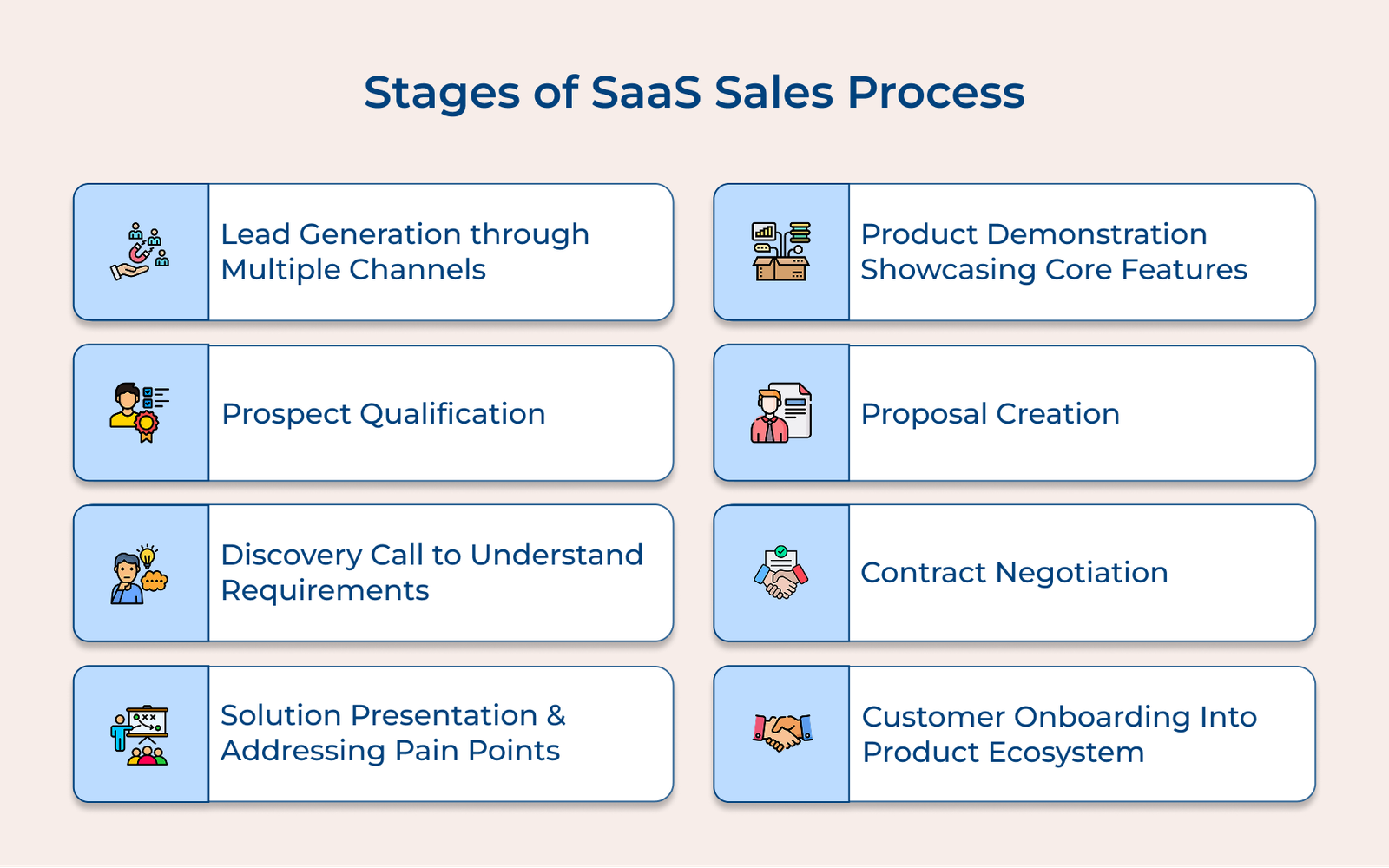
Stage 1: Lead Generation through Multiple Marketing Channels
Lead generation is the foundational stage of the SaaS sales process that focuses on attracting potential customers to your product. The stage is important because it creates steady sales pipelines of interested prospects. Without effective lead generation, your sales team will struggle to find opportunities to convert into customers.
-
Content Creation Strategy
The journey starts with creating valuable content that resonates with your target audience. It involves creating informative blogs, hosting educational webinars and sharing practical insights on social media to increase learning. The key is to address your potential customers’ issues through content that showcases your expertise and builds trust.
Implementing strong SEO strategies helps you capture prospects actively searching for solutions like yours. It involves optimizing your website content, understanding search intent and creating landing pages that convert visitors into leads. The focus should be on attracting high-intent traffic that’s more likely to convert.
Email marketing campaigns serve as a direct line to your target audience segments. To nurture leads, you should create personalized email sequences for relevant content. It is based on their industry challenges. The approach helps maintain engagement throughout the sales cycle while moving prospects closer to a purchasing decision.
Stage 2: Prospect Qualification
Prospect qualification is a detailed process of scanning potential customers to determine if they’re a good fit for your SaaS solution. The critical stage prevents your sales team from wasting time on leads that might not convert. A good qualification helps you spend your time and effort on people who are most likely to become long-term customers.
-
Research Company Size And Their Tech Stack To Assess Fit
The qualification process begins with thorough research into each prospect’s business profile. It means checking things like the size of their company, the problems they face and the tools they’re already using. Understanding these elements helps determine if your solution aligns with their technical capabilities and business requirements.
-
Score Leads Based On Engagement Levels Across Website
Lead scoring involves tracking how prospects connect with your content and website. You need to track their activities as whitepaper downloads and page visits, to know their interest. Behavioral data helps prioritize leads based on their likelihood to purchase, which enables more efficient resource allocation.
-
Conduct Initial Screening Calls To Verify Decision-Making Authority
Initial screening calls serve as your first direct contact with potential customers. During these calls, you can find out if they are the decision makers. Try to understand their budget limits and confirm their time to start. The step helps filter out prospects who lack purchasing authority or aren’t ready to make a decision.
Stage 3: Discovery Call to Understand Requirements
Discovery call marks your first in-depth conversation with a qualified prospect to deeply understand their business, needs and challenges. The stage sets the foundation for your entire sales process by gathering detailed data about the prospect’s situation. Discovery calls provide value through your presentation.
-
Explore Current Business Challenges Along With Pain Points
The stage will help you understand what’s not working in their current processes. The conversation centers on finding out what problems are getting in the way of their day-to-day work and slowing them down. Your goal is to uncover the underlying problems that your SaaS solution could potentially solve.
-
Document Specific Use Cases, Technical Requirements
The part involves carefully documenting how the prospect currently handles their processes. You’ll gather information about their existing workflows, identify integration needs and note any technical constraints. The detailed knowledge ensures that your solution can meet their specific technical requirements and use cases.
-
Map Out Success Metrics, Implementation Timeline Expectations
Mapping out will help you work with the prospect to define what success looks like for them. The discussion centers around establishing clear, measurable goals and understanding their expected timeline for implementation. It helps set realistic expectations and creates a framework for measuring the success of your solution.
Stage 4: Solution Presentation
The solution presentation stage is where you demonstrate how your SaaS product specifically addresses the challenges uncovered during discovery. The pivotal moment transforms theoretical discussions into practical solutions. Clear, focused presentations help people see how your product can solve their problems and make a real difference in their work.
-
Customize Presentation To Match Identified Pain Points
Create a tailored presentation that directly connects your solution to the prospect’s specific challenges. Each slide and talking point should resonate with their unique situation. The focus remains on showing how your product solves their problems rather than presenting features.
-
Outline Roi Calculations, Expected Business Impact
The presentation concludes by showing real numbers that demonstrate the value of your solution. You’ll present detailed ROI calculations that account for both cost savings and potential revenue gains. The data-driven approach helps prospects justify the investment to their stakeholders.
Stage 5: Product Demonstration
The product demonstration stage transforms abstract discussions into a tangible reality by showing your SaaS solution in action. The critical phase helps prospects visualize how your product will work within their specific business context. A good demo shows how the product works in real situations, making it easier for people to decide if it’s right for them.
-
Prepare Personalized Demo Environment With Client Data
Creating a personalized demo environment starts with configuring your product using the prospect’s real data or industry-specific examples. You’ll customize the interface to reflect their workflow and terminology. Personalizing the approach lets people clearly see how the solution would work in their daily routines, without having to guess or fill in the gaps.
-
Focus On Features Solving Their Problems
During the demonstration, you’ll prioritize showing features that directly address the issues identified in earlier discussions. Each feature demonstration connects back to a specific challenge or goal the prospect mentioned. A focused demo avoids overwhelming the prospect and keeps their attention by showing only what matters to them.
-
Address Technical Questions and Integration Requirements
The demo session includes dedicated time for addressing technical concerns and integration possibilities. You’ll explain how your solution works with their existing tech stack, explore customization options and discuss security requirements. The technical deep dive helps build confidence in your product’s ability to function smoothly within their environment.
Stage 6: Proposal Creation
The proposal creation stage transforms all previous discussions into a formal business document that outlines your solution’s value proposition. The critical document serves as a comprehensive blueprint for the potential partnership. A well-crafted proposal helps stakeholders understand the investment and expected outcomes. They feel at ease, providing them with the documentation they need for internal approval processes.
-
Prepare Detailed Pricing Structure And Package Recommendations
Your proposal begins with clear pricing information designed for the prospect’s specific needs. You’ll show different package options that align with their budget while ensuring they get the features they need. The pricing structure should be transparent, including any potential add-ons that might come into play as they increase their usage.
-
Include Implementation Timeline, Support Details
The implementation section maps out a realistic timeline for getting their team up and running with your solution. You’ll segment them in each phase of the implementation process and specify the support that is available to them. It includes the training sessions, technical support availability and dedicated customer success resources they’ll have access to.
Stage 7: Contract Negotiation
Contract negotiation represents the bridge between agreement and commitment. The stage requires a good balance between protecting your company’s interests and meeting the customer’s needs. Good negotiation builds trust and sets clear expectations for a long relationship while ensuring both parties feel confident about moving forward.
-
Perform Pare Work And Service Level Agreements
The process starts with a detailed review of all contract terms, where both parties discuss and clarify their understanding. You’ll see service agreements, clarify uptime commitments and outline support to ensure both parties have a mutual understanding of performance standards. A thorough review prevents misunderstandings that could cause issues later and ensures everyone understands their obligations.
-
Finalize Implementation Requirements, Timelines
The final step involves confirming all technical and operational details needed for successful implementation. You’ll document specific customization requirements, integration needs and timeline commitments. It creates a clear roadmap for the onboarding phase and helps prevent any surprises during implementation.
Stage 8: Closing and Customer Onboarding
The closing and customer onboarding stage marks the transition from prospect to active customer. The critical phase sets the foundation for your long-term relationship and directly influences customer satisfaction. The onboarding process ensures customers realize value from your solution while building confidence in their decision to partner with you.
-
Create Detailed Implementation Project Plan
The onboarding journey begins with developing a detailed implementation roadmap tailored to your customer’s specific needs and goals. It involves breaking down the entire process into manageable phases, establishing milestones and identifying stakeholders from both teams. The project plan keeps everyone on the same page, helps things stay on track and spots problems before they happen.
-
Set Up User Accounts, Configure Initial Settings
The technical phase focuses on preparing your solution for actual use within the customer’s environment. You’ll team up with them to set up the platform to match how they work, decide who can do what and adjust the features to fit their process. The careful setup ensures that when users first log in, they find a familiar environment.
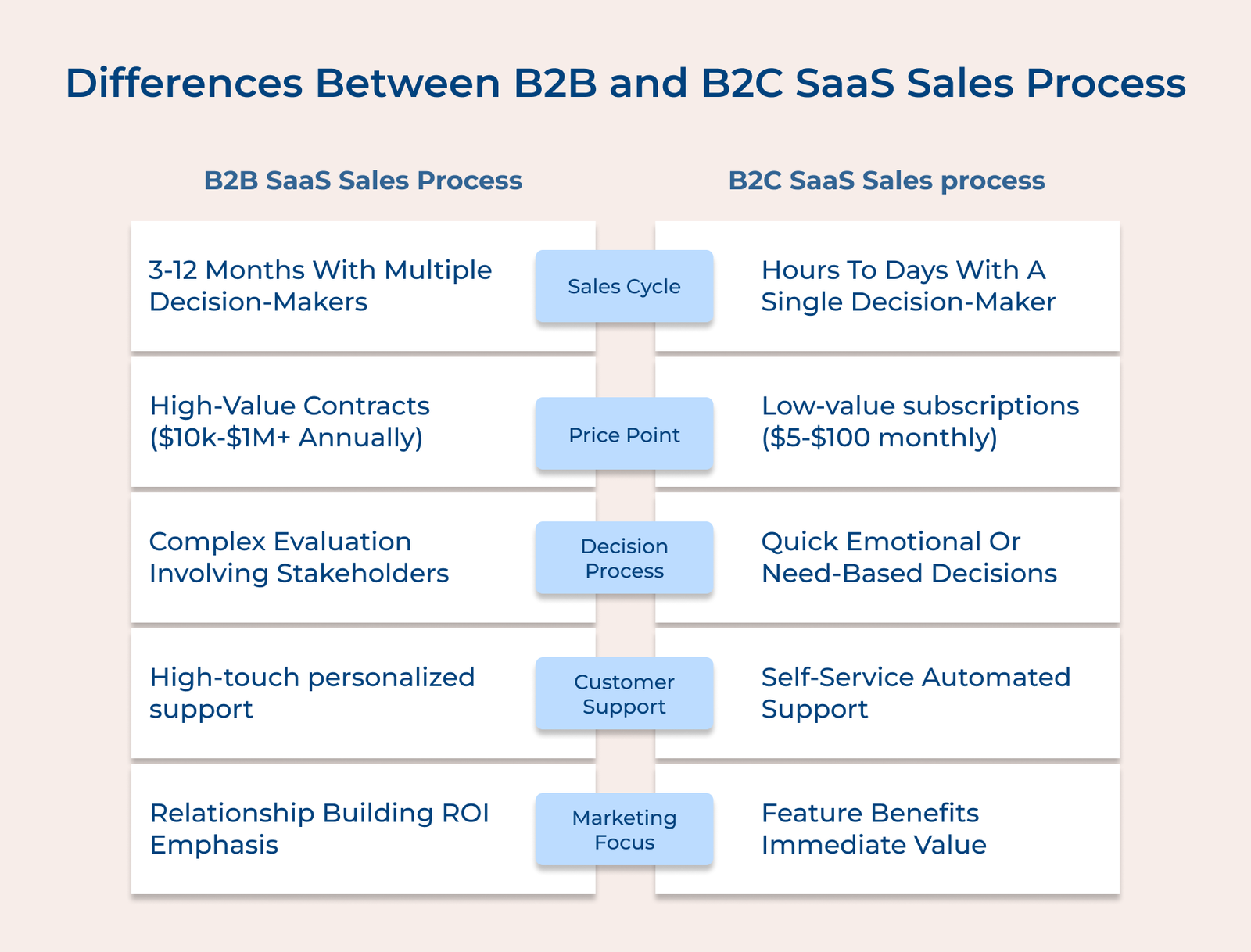
Differences Between B2B and B2C SaaS Sales Process
Below are the key differences in both tabular and detailed formats to gain a comprehensive understanding.