Customer Service Oriented: Characteristics, Tips & Examples
Being customer service oriented means prioritizing customer needs in every interaction. its benefits, shares real examples and offers actionable tips to strengthen your service mindset.

Being customer service oriented means prioritizing customer needs in every interaction. its benefits, shares real examples and offers actionable tips to strengthen your service mindset.
Businesses try hard to stand out, yet most end up blending into the same crowd. Products get copied, features get matched and prices turn into a never-ending race to the bottom. Discount after discount and still no real loyalty. Customer expectations keep climbing because people are exposed to smart, thoughtful service from the best brands. Once they taste that level of care from one company, they expect it everywhere, including from you. It is why more than 85% of buyers say they are ready to pay more for a better experience.
Plenty of teams still treat customer service like a back-office chore instead of a genuine business edge. That mindset holds them back. Being customer service oriented gives you something competitors can’t grab overnight- trust, consistency and loyalty. It starts with a culture built around serving people well at every level, from front-line conversations to big-picture decisions. The ideas ahead show how to build an organization where great service isn’t a task on a checklist, it’s simply how the business works.
Customer service oriented refers to more than just being polite or responsive, it’s about making the customer’s experience the foundation of everything you do. It’s a mindset rooted in empathy, curiosity and accountability. Service-oriented professionals actively listen to what customers are saying, ask the right questions and adapt their approach to each unique situation.
The approach turns everyday service into something more meaningful: a relationship built on trust and reliability. It’s not just about solving today’s issue, it’s about making customers feel heard, respected and supported enough to return tomorrow.
Key levels:
Let’s go through the crucial reasons why being customer service oriented should be at the forefront of your business strategy.
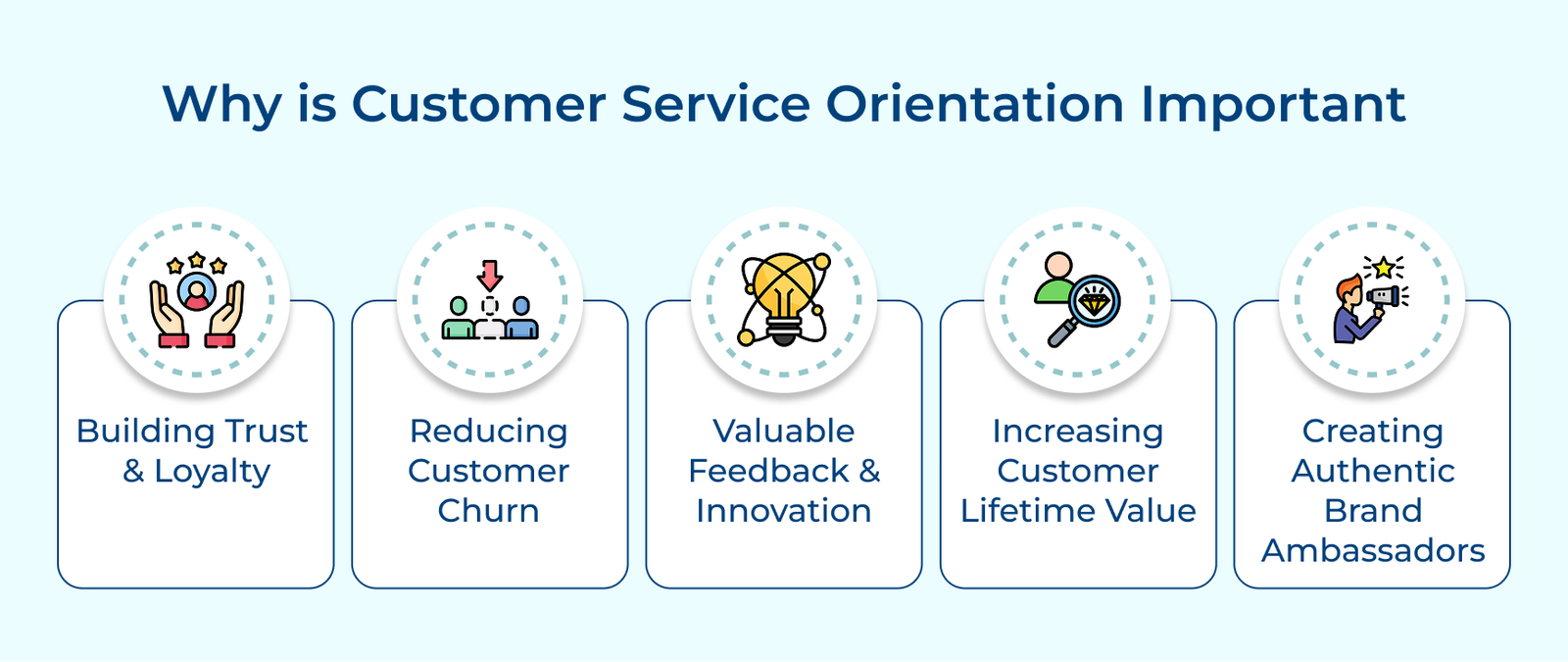
Building Trust and Loyalty
Customers return to businesses they trust. When your team consistently listens, responds thoughtfully and treats people with respect, customers don’t just feel helped, they feel valued. The emotional connection builds long-term loyalty and turns one-time buyers into regulars who recommend you to others.
Reducing Customer Churn
Keeping customers is far cheaper than constantly chasing new ones. Most people leave not because of price but because they feel ignored or poorly treated. When you show customers they matter by listening, responding quickly and treating them with respect, they’re far more likely to stay.
Valuable Feedback and Innovation
Every question, complaint or suggestion from a customer is a chance to learn. Companies must pay close attention to them as they help in spotting patterns, uncovering blind spots and being more customer service oriented. The insights often lead to changes that matter to your customers because they come straight from their experiences, not guesswork.
Increasing Customer Lifetime Value
When people feel cared for, they stick around and spend more. They come back more often, try new products and don’t mind paying a little more because they trust your service. Over time, it adds up to a higher average spend and stronger customer relationships that benefit your business in the long run.
Creating Authentic Brand Ambassadors
Happy customers talk. They tell friends, post reviews and share stories that money can’t buy. People trust them more than ads because the stories are real. A strong service experience doesn’t just solve problems; instead, it turns customers into advocates who grow your business for you.
Check out the key characteristics that define a successful customer service oriented team and how they can propel your organization to new heights.
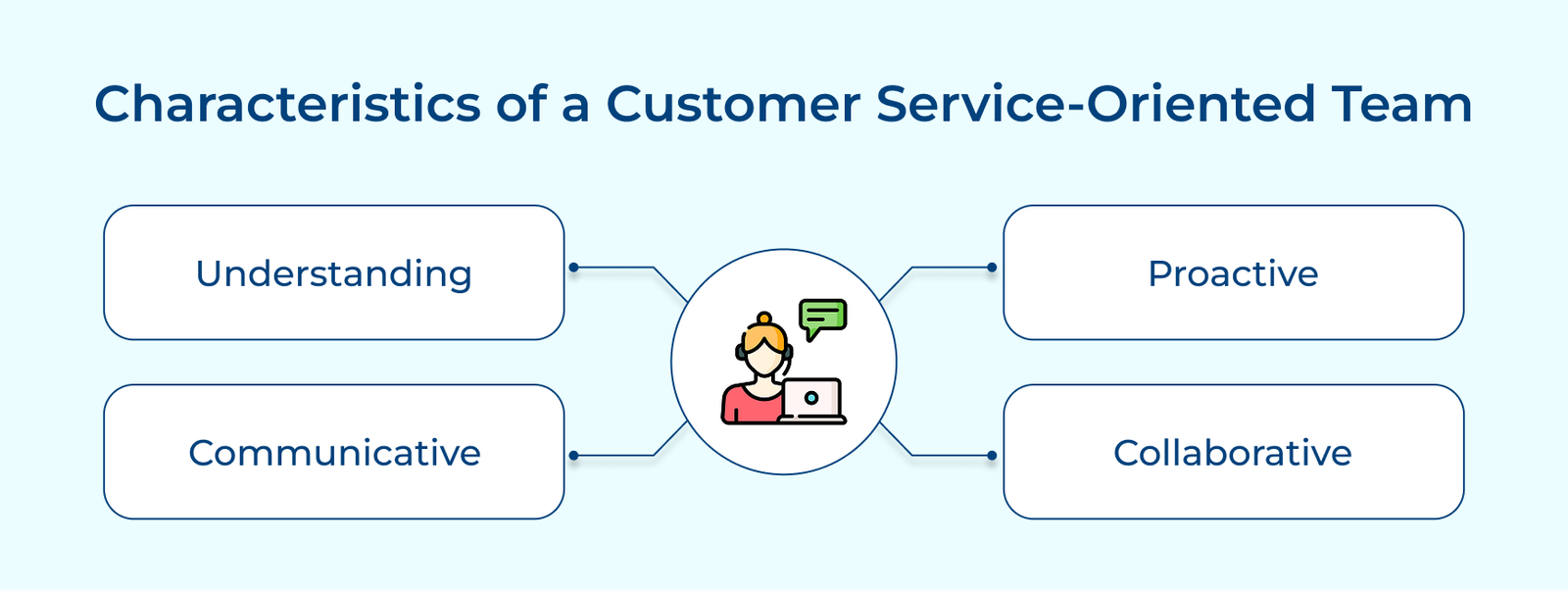
Great service starts with empathy. The teams don’t just hear what customers say; they pay attention to tone, hesitation and emotion. They pick up on frustration, confusion or gratitude, even when it’s unspoken. The deeper understanding helps them respond in ways that feel personal, not canned.
Instead of waiting for things to go wrong, strong service teams spot potential issues early. They follow up after support calls, check in before problems grow and find small ways to make the experience smoother. The initiative shows customers that someone’s looking out for them, not just putting out fires.
No one likes being left in the dark. The teams explain things in plain language, tailor their style to fit each customer and keep people updated. Be it about solving a problem or setting expectations, they make sure customers always know what’s going on and feel heard every step of the way.
Great service doesn’t come from one person. It comes from a group that supports each other. The teams share what they know, back each other up and focus on solving problems together. They don’t worry about who gets credit; they care about giving the customer the best possible experience.
Below are transformative tips that will inspire your team to put customers at the heart of your business, elevating the experience and ensuring sustained loyalty.
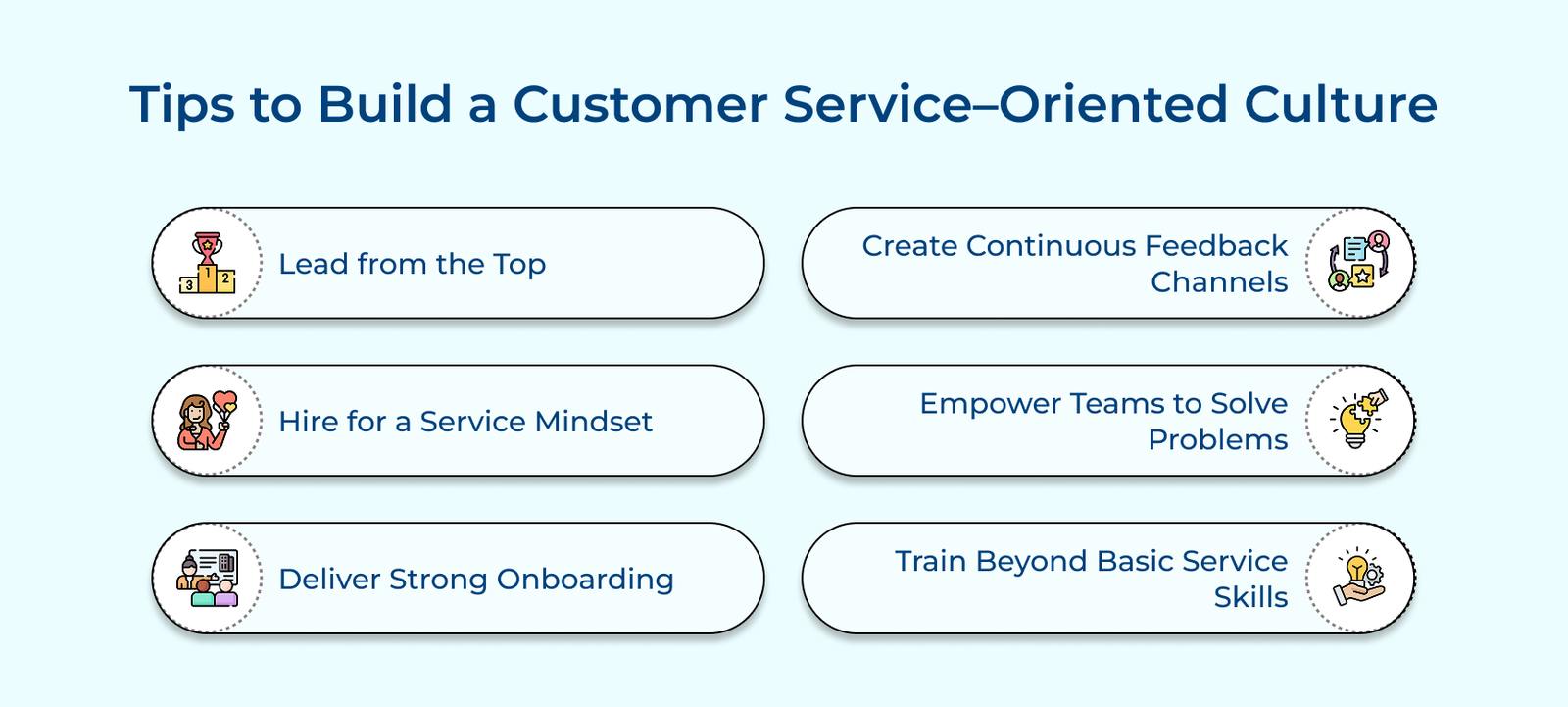
When executives show customer service oriented thinking in their decisions, it signals to all employees that service isn’t just a department but a company-wide priority that deserves serious attention. Leaders can integrate customer perspectives into strategic planning and create policies that prioritize customer outcomes over short-term profits.
Executives establish service as a core value rather than a peripheral concern by consistently asking, “How does it impact our customers?” New hires, including executives at Zappos, start their journey on the phones with customers. It isn’t symbolic. It’s designed to make sure everyone, no matter their role, understands what customers go through. It’s one of the clearest ways leadership can show they’re serious about service.
Pro tips:
Great customer service starts with the right kind of people. You can teach someone how to use your systems or follow procedures, but you can’t teach someone to genuinely care. It’s why it’s critical to hire people who already show empathy, patience and a real interest in helping others. The traits create the kind of service culture that’s hard to fake and even harder to build after the fact.
Key skills:
The way you onboard new employees shapes how well they’ll serve customers, now and in the future. If a service is treated as an afterthought during training, it’s likely to be treated the same way on the job. If customer care is front and center from day one, new hires will carry the customer service oriented mindset into everything they do.
Immerse in Customer Experiences
New employees should experience your business from the customer’s perspective within their first week. It might include making purchases, using your products, contacting support or completing the entire customer journey to develop genuine empathy for pain points and moments of delight that shape customer perceptions of your brand.
Pair with Service-oriented Mentors
Pair new team members with mentors who consistently go above and beyond for customers. They can walk new hires through real scenarios, explain customer expectations and offer support as they settle in. The guidance grounds the training in a real-world context and keeps service values from feeling abstract.
Include Early Customer Interactions
Don’t wait weeks to introduce customer contact. Even something simple, like listening in on calls, helping reply to basic inquiries or sitting in on a feedback session, makes a big difference. The sooner new hires see the impact of their role on real customers, the more invested they’ll become.
If you’re not asking customers how you’re doing and listening, you’re guessing. Over time, the guesses turn into blind spots. A solid feedback system keeps your view of service rooted in reality, not assumptions. It helps you spot small issues before they turn into big ones and ensures that improvements match what customers want, not what the company thinks they want.
Feedback isn’t just for your customer service teams; it should reach every corner of the business. When everyone, from frontline staff to executives, has visibility into what customers are saying, it creates shared accountability and a stronger push for meaningful improvements.
Customer service improves dramatically when employees are trusted to act, not just follow a script. When customer support teams have the authority to solve problems on the spot, customers get quicker help and staff feel more confident in their roles. It’s a win for everyone.
Imagine a regional airline hit a breaking point during long weather delays and decided to rethink how its team worked at the gate. Gate agents were given the freedom to rebook passengers right there instead of chasing approvals or waiting on hold. The shift changed the whole mood. Complaints fell significantly and the crew on the ground finally felt they could step in when it counted.
Excellent service isn’t just about following procedures; it’s about connecting with people, solving real problems and staying calm under pressure. It takes more than basic training. Teams need ongoing support that helps them grow both personally and professionally. The goal isn’t perfect phrasing, it’s authentic, capable and thoughtful service.
Great service doesn’t come from a single training session. It comes from regular practice, open feedback and chances to learn from those who’ve seen it all. Give your team time to shadow experienced reps, revisit key skills and talk through tough calls. It’s how you build real confidence and real service excellence.
Check out the significant risks associated with neglecting the adaptation of customer service orientation and how the oversights can be detrimental to your company’s growth.
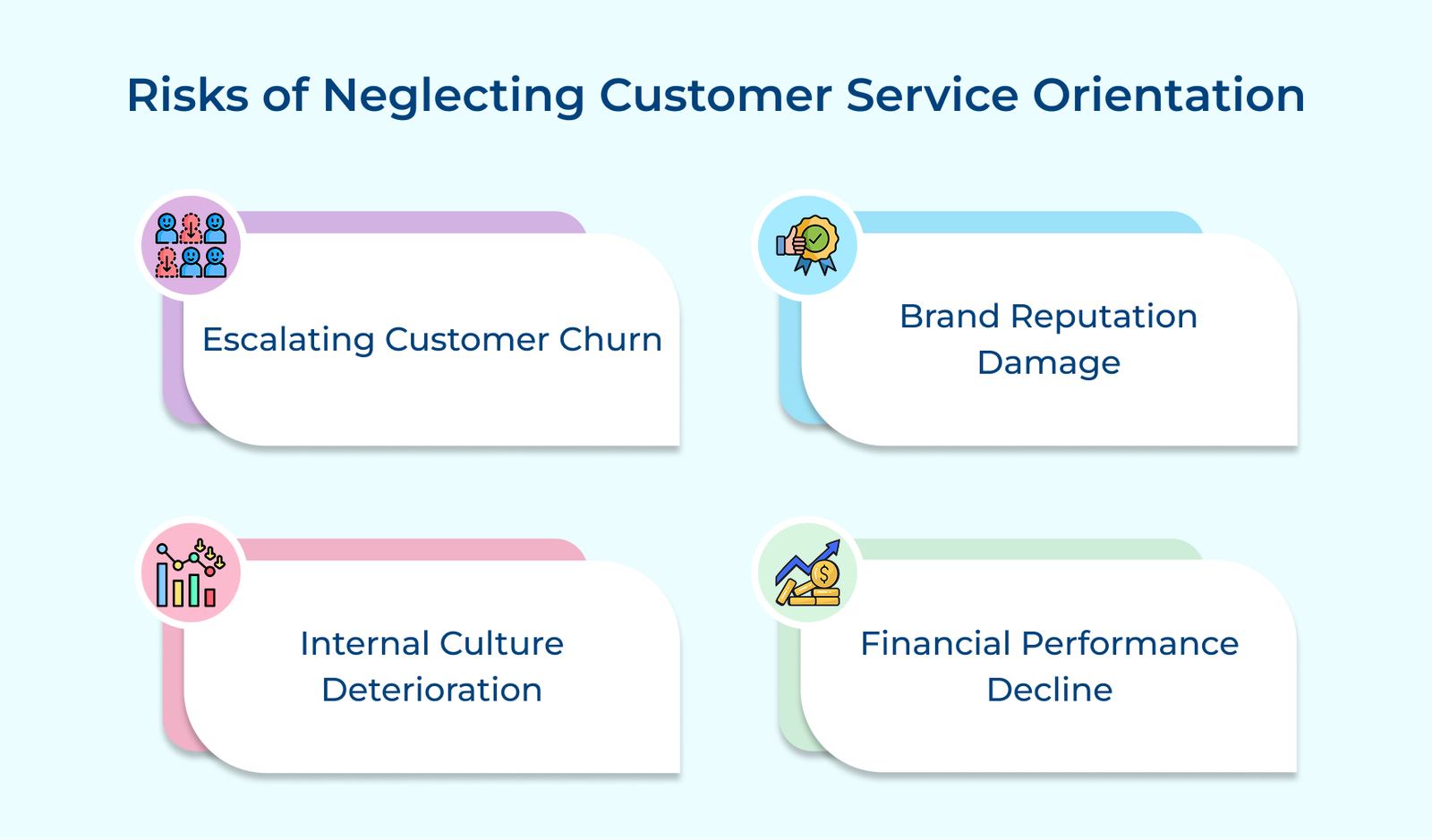
When service feels cold or mechanical, even loyal customers start to fade out. They rarely complain, they just stop responding, stop buying and eventually find someone else who treats them like they matter.
Hold regular check-ins with customers, not just surveys. Have real conversations about how their needs are changing and how they’re experiencing your product or service. The touchpoints often reveal early signs of trouble and give you a chance to repair relationships before they’re gone for good.
A single poor service moment can echo across the internet. A bad review, a frustrated tweet or a viral post can shape how thousands of potential customers see your brand, often before they’ve even tried your product.
Use social listening tools to catch issues early. Respond quickly and publicly when something goes wrong, not with canned apologies but with clear explanations of what you’re doing to fix it. The way you recover from a mistake often matters more than the mistake itself.
When service stops being a company-wide priority, departments drift into silos. People focus on protecting their turf instead of solving problems. Morale drops, finger-pointing rises and employees lose sight of the bigger picture.
Form cross-functional teams focused on improving the customer experience. When people from support, product, marketing and operations work together on shared goals, they develop a better understanding of how everything connects.
Customer churn, shrinking referrals and price sensitivity are all warning signs that your service is falling short. The financial hit doesn’t stop there; new customer acquisition costs rise when happy customers stop spreading the word.
Track customer experience the same way you track sales, such as link satisfaction, loyalty and referrals directly to financial outcomes like lifetime value or retention. It helps teams see how good service drives real results and justifies investing in what keeps customers around.
Check out some standout instances of customer service orientation that can inspire businesses to elevate their service and create lasting bonds with their customers.
Zappos
Zappos built its entire company around treating customers exceptionally well. Their service reps aren’t held to call time limits. If helping someone takes an hour, so be it. Their 365-day return policy and surprise shipping upgrades aren’t flashy perks, they’re quiet ways of saying, “We’ve got you”. They hire people who genuinely like helping others.
The deep customer care helped Zappos grow through word-of-mouth, not just marketing. People told their friends, not because they were asked to, but because the service felt worth sharing. Amazon noticed and acquired the company but let them keep doing things their way, knowing the Zappos culture was the value.
Ritz-Carlton
Every employee at Ritz-Carlton, from housekeeping to management, can spend up to $2,000 to fix a guest’s problem without asking permission. Teams meet daily to share guest stories and preferences, so they’re ready with small touches before the guest even asks. It resulted in personalized service that often feels effortless, even magical.
Guests come back because they feel seen and cared for. Even during tough times, Ritz-Carlton maintains high occupancy because people and businesses trust that the experience will be exceptional every time.
Nordstrom
Nordstrom keeps it simple. Their employee handbook has on -rule: “Use good judgment in all situations.” The radical simplicity empowers employees to do whatever they believe necessary to satisfy customers.
Their commission-free sales approach removes incentives that might prioritize immediate sales over customer relationships, while their generous return policy shows profound trust in their customers’ intentions, signaling that relationships matter more than individual transactions.
Southwest Airlines
Southwest takes care of its people first, believing happy employees lead to happy passengers. They hire for attitude over resume, valuing humor and empathy. Flight attendants are known for adding personality to routine announcements and policies like no change fees reflect a basic respect for passengers’ plans.
The approach has made Southwest a rare success in a turbulent industry. While other airlines struggle with complaints or turnover, Southwest sees strong employee loyalty, consistent profits and repeat customers who recommend them without being asked.
USAA
USAA was built with military families in mind. Many of their employees are veterans or spouses who understand the lifestyle firsthand. Instead of just offering support when asked, reps are trained to anticipate what military families will need before they even realize it, like setting up remote banking before deployment or offering tailored financial advice after a move.
The deep understanding has earned them generations of loyal members. Word spreads naturally within the military community, not through ads, but through trust. Their customer knowledge also fuels smart innovation that competitors often miss because they simply don’t live the lives their users do.
A client-service mindset reshapes a company because it brings real human connection back into the picture. Empathy, clear communication and calm problem-solving turn into everyday habits instead of things people remember only when something goes wrong. That’s when service stops feeling like damage control and starts becoming a genuine advantage.
The shift takes committed leadership, smart hiring and training that actually prepares people to help customers instead of boxing them in. Teams work better when they feel trusted and supported. The payoff shows up in more than a bump in satisfaction scores. Companies build loyalty that feels earned, attract customers at lower cost and create workplaces where people feel their work matters to someone’s day.

When your organization puts customer needs at the center, you create lasting relationships, not just one-time sales. The focus builds trust, keeps customers coming back and makes them more likely to recommend you to others. It’s not just good for business; it also gives employees a greater sense of purpose by showing them the real impact of their work.
Start by caring enough to listen closely. Pay attention without jumping to conclusions. Put yourself in your customer’s shoes, use your product or service and ask yourself where the experience could be better. Don’t shy away from feedback, even when it’s uncomfortable; it often shows you where real improvements lie. Notice how it feels to genuinely help someone; it’s often the best motivation.
You need both people skills and practical problem-solving. It means empathy, clear communication, creative thinking and patience. It also takes emotional awareness, knowing when someone’s upset even if they don’t say it and resilience, so tough moments don’t wear you down.
Effective measurement combines quantitative and qualitative approaches. Track traditional metrics like NPS and customer effort score alongside behavioral indicators such as repeat purchase rates. Conduct journey mapping to identify key interaction points and their emotional impact. Gather qualitative feedback through interviews that explore emotional responses to service experiences. Analyze complaint patterns to identify systemic issues rather than just resolving individual cases.
Customer service is what happens when someone reaches out for help. Customer service orientation is what happens every day, even when no one’s watching. It’s a mindset that shapes your policies, your product design and your everyday decisions. One is reactive, the other is proactive and that’s where lasting customer loyalty begins.
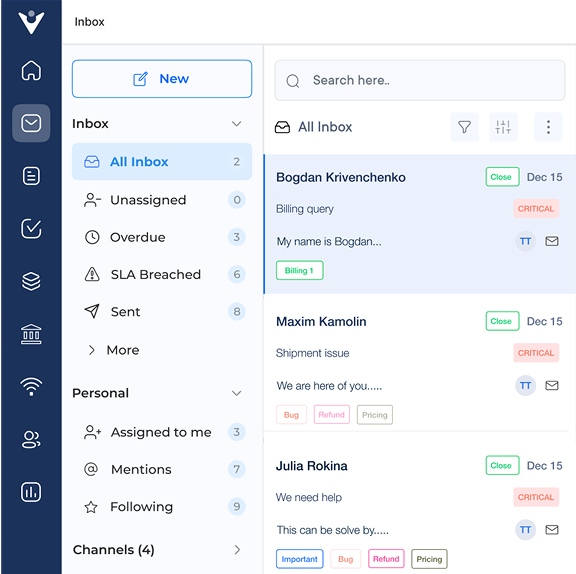
Grow Customer Relationships and stronger team collaboration with our range of products across the Conversational Engagement Suite.
Omnichannel Customer Support & Help Desk Software
AI Enabled Business Messaging and Chatbot Software
Sales Engagement & CRM Software
Call Center Software & Virtual Phone System
Product Marketing & Experience Platform
Customer Experience & Feedback Management Software

 How to Create Targeted Messages? 7 Key Strategies
Scroll to top
How to Create Targeted Messages? 7 Key Strategies
Scroll to top