What is Sales Opportunity? Stages, Benefits & Strategies
The blog explains what is a sales opportunity and outlines its key stages. It highlights its business value and shares practical strategies to improve your chances of closing deals.

The blog explains what is a sales opportunity and outlines its key stages. It highlights its business value and shares practical strategies to improve your chances of closing deals.
Many sales teams hit a point where things stop moving. The pipeline feels thin, the same leads keep circling back and targets start slipping even though the effort is still there. That hits morale hard and makes every deal feel heavier than it should.
The real sales opportunity issue usually sits beneath the surface. Tactics that once delivered results lose their bite. Cold calls feel flat, bulk emails go ignored and old pitch decks don’t match how buyers think today. People walk into conversations armed with more information. Competitors move quickly. Decisions drag on longer and involve more voices.
Here’s the thing. You don’t need to rebuild your entire system to turn things around. Small, smart shifts can create real movement. Clear data helps you spot the right prospects faster. A thoughtful outreach plan helps you connect in ways that feel relevant instead of forced.
A sales opportunity refers to a qualified prospect with a recognized need or problem that your product or service can address, along with the potential authority and budget to make a purchase decision. It’s the critical middle stage in the sales pipeline where initial interest turns into a concrete possibility for a transaction, requiring strategic nurturing and targeted engagement to move toward closure.
Sales opportunities begin once a lead crosses key qualification thresholds: they’ve expressed a relevant need, match your ideal buyer profile and are in a position to act. Sales professionals then investigate deeper to understand the prospect’s specific challenges, goals and decision-making process to determine if there’s a genuine fit.
Each stage of the pipeline demands different actions: discovery, validation, proposals and negotiation. Opportunities move forward not just because time passes, but because milestones are met. Good sales teams track deal size, probability and timing—but great ones also stay alert to shifts in prospect behavior.
Key principles:
The following are five key characteristics that define the high-quality sales opportunity that deserve your attention and resources.

1. Clear Need or Pain Point
Opportunities don’t begin with interest, they begin with urgency. If a prospect openly recognizes a specific problem your product can solve, you’ve got something to work with. When they shift from “tell me what you do” to “here’s what we’re dealing with,” the conversation moves from pitching to problem-solving.
2. Budget Authority and Availability
No matter how promising the deal looks, it stalls without a clear budget and someone who can spend it. Go beyond “we have a budget” and ask how spending decisions are made, when the budget is refreshed or who signs off. A great fit without funding isn’t a real opportunity, yet.
3. Timeline Alignment
Good opportunities have a clock ticking. You need to understand not just if they want to move forward, but when and why. Look for internal drivers, like product launches, contract renewals and upcoming audits. If your delivery schedule and their deadline are in sync, you’re in business.
4. Solution Fit and Value Recognition
You’re not just a vendor on a list. A qualified opportunity happens when the buyer sees how your solution fits their environment better than others. Look for signs: they ask implementation questions, compare your product with real needs and aren’t focused solely on price.
5. Mutual Investment in the Process
When prospects are serious, they act like it. They respond quickly, bring in teammates, share internal documents and give you honest feedback. They are signs they’re not just evaluating, they’re preparing. If you’re the only one driving the process, the opportunity probably isn’t real.
Check out the distinct stages of a sales opportunity, shedding light on how effectively navigating each phase can enhance your sales strategy and result in higher conversions.

The qualification stage is where you figure out who’s serious and who’s just browsing. Sales teams look at the prospect’s actual needs, check if those needs match what their solution can deliver and confirm that the buyer has both the budget and the authority to move things forward.
They also look at the timeline to see if the deal makes sense to pursue right now. These pieces form the core of popular qualification methods like BANT and MEDDIC.
The goal of the stage isn’t to sell but to qualify. If the prospect’s situation aligns with your solution and they have the budget to act, you’ve got a real opportunity. It’s your green light to move forward with focused, time-worthy effort.
Discovery is where you stop talking and start digging. Your job here is to understand how the prospect’s business works, not just what they tell you in a pitch call. You’re looking beyond surface-level needs to uncover what’s slowing them down, what outcomes matter most and what roadblocks might stall a purchase later.
The stage isn’t about selling. It’s about learning enough to offer something truly relevant later. Done well, discovery earns trust, clarifies the buying path and sets you up to craft a proposal that’s not generic but exactly what they need.
After discovery, it’s time to turn what you’ve learned into something concrete: a solution that solves the prospect’s problems, not just something pulled from a brochure. You don’t do it alone. It’s a team effort between sales, product experts and anyone else who understands how your offer can be shaped to fit the real-world issues your prospect is facing.
More than anything, the stage is about showing the prospect you’ve been listening to and proving you understand their business well enough to help without making their life more complicated. Invite their feedback as you build the solution. The more you co-create it, the less resistance you’ll face later.
The proposal stage is where your idea finally takes shape on paper. This is where you spell out the value, the plan to make it work, and the costs tied to it. The goal is simple: turn earlier conversations into a clear offer the client can say yes to.
The stage also asks you to show why your approach makes more sense than the other options on the table and to address the concerns you know might show up. It’s the moment your solution moves from a good conversation to a real commitment.
Closure isn’t just about signing a contract—it’s about turning verbal agreement into real action. The stage requires careful coordination of administrative processes, stakeholder approvals and legal reviews while maintaining the momentum established through earlier engagement.
Successful closure extends beyond mere contract signing to include proper transition to implementation teams, establishment of success metrics and a foundation for long-term relationship development.
Below are the essential benefits of sales opportunity management and how embracing the system can lead to increased sales performance.
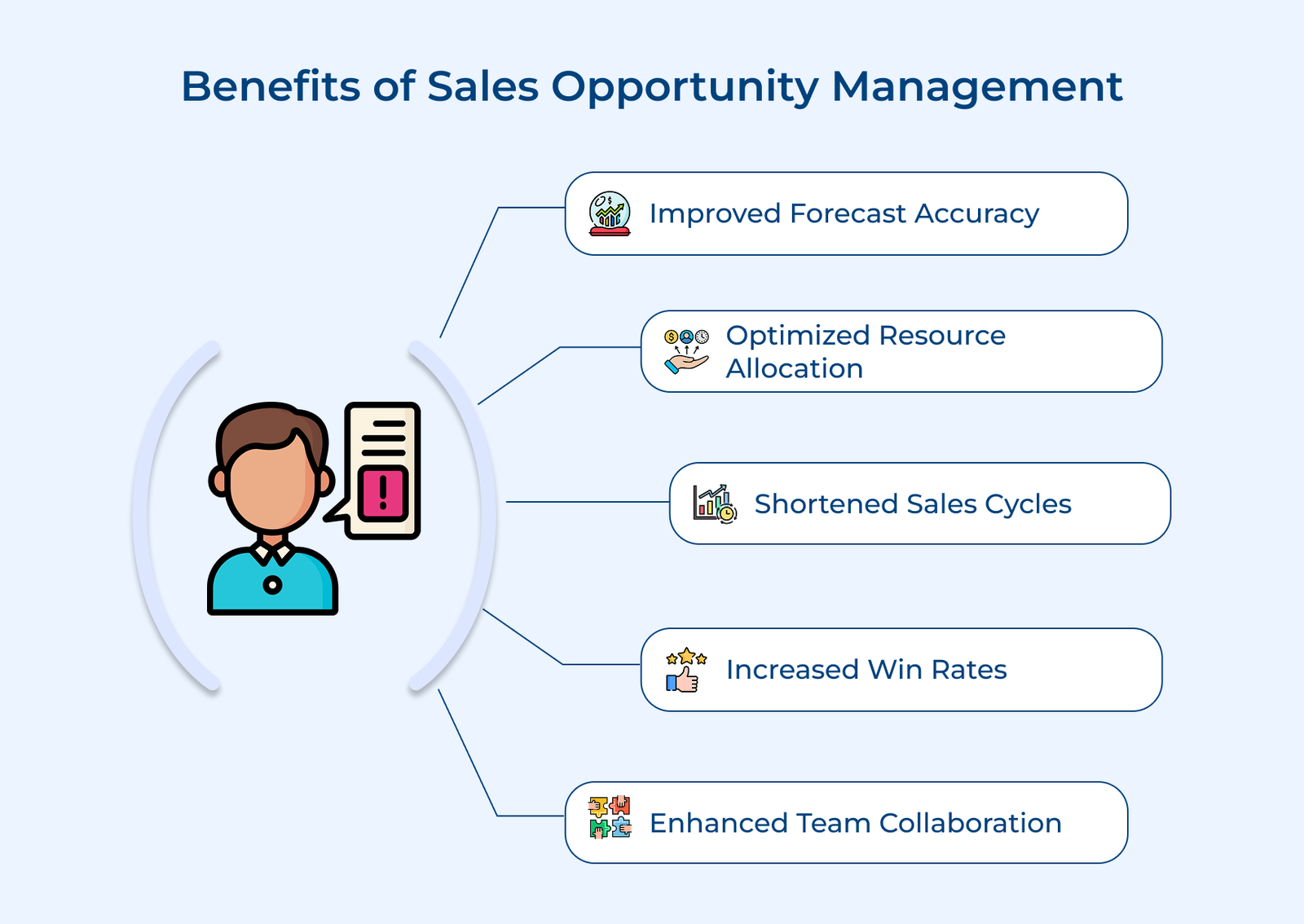
1. Improved Forecast Accuracy
Instead of guessing, you can rely on real data. Forecasts become far more realistic by tracking where each deal stands and applying conversion rates from past performance. It helps your leadership team plan for revenue, resources and staffing with greater confidence.
2. Optimized Resource Allocation
You can focus time and energy where it counts with visibility into which opportunities are most promising. Reps work on deals they’re more likely to close. Managers can offer targeted support. Everyone avoids chasing low-probability leads that drain time but rarely convert.
3. Shortened Sales Cycles
When you manage opportunities systematically, it’s easier to spot what slows deals down. Be it the pricing delays or unclear decision makers, you can address roadblocks faster. It keeps momentum high and shortens the time from first call to signing a contract.
4. Increased Win Rates
Stronger qualification at the start and better follow-through along the way leads to more wins. When teams stick to a clear process, apply consistent criteria and tailor follow-ups based on buyer signals, they naturally close more deals with less wasted effort.
5. Enhanced Team Collaboration
Opportunity tracking gives everyone, from marketing to product to finance, a clear view of what’s happening in the pipeline. The shared understanding helps teams work together more effectively and ensures deals don’t fall through the cracks due to miscommunication.
Below are the effective strategies to help you identify and seize new sales opportunities, so you can thrive.

Your current customers hold more opportunities than most sales teams realize. Instead of always chasing new leads, you can mine value insights from your own success stories to guide smarter, more efficient prospecting.
Identify Success Customer Patterns
Look closely at your top-performing accounts. The real-world traits define your actual ideal customer profile, not just the one on paper. Use the data to focus outreach on similar companies where you’re more likely to win and deliver real value.
Request Targeted Similar Referrals
Don’t settle for generic referrals. Create a process that encourages customers to connect you with peers at companies facing the same problems you helped them solve. The warm introductions carry credibility that cold outreach can’t match and often open doors to decision-makers faster.
Analyze Data for Expansion
Your customers’ product usage tells a story. Track what they use most, where they hesitate and how engagement changes over time. Spotting patterns lets you suggest new features or services before they even ask.
Social platforms aren’t just for brand promotion, they’re full of real, unfiltered conversations from people trying to solve real problems. The public signals can help you identify prospects early, build relevance and start genuine, problem-solving conversations.
Monitor Industry Trending Conversations
Follow hashtags, forums and groups where your target buyers talk shop. The raw discussions often reveal pain points and language you won’t find in surveys or sales calls. Use it to understand what problems matter most and how your prospects describe them in their own words.
Track Prospect Content Engagement
When someone consistently likes, comments on or shares your posts, it’s a signal. Look beyond vanity metrics, see which prospects interact with content related to your solution’s core value. It shows what topics resonate and helps you tailor follow-up in a way that feels relevant, not random.
Identify Public Forum Pains
Scan question boards, comment threads and community posts for common frustrations. People rarely vent publicly without wanting help. The complaints are early-stage buying signals. Instead of selling, start by offering perspective. Credibility grows faster when you show up with useful input, not a pitch.
Your competitors’ flaws aren’t just a problem for them, they’re an opening for you. You can target prospects who feel overlooked and show up with a better option by understanding where they fall short. Dig into competitor product gaps, support complaints, pricing frustration or weak features that show up in reviews or user forums.
Let’s assume that a software company discovers through review analysis that its competitor’s enterprise solution lacks robust reporting features that larger customers desperately need. They create immediate interest based on addressing a known pain point by highlighting the specific capabilities in their sales outreach to enterprise prospects.
Industry events aren’t just networking mixers—they’re concentrated environments filled with decision-makers looking for new ideas, tools and partnerships. A single event can yield more qualified leads than weeks of cold outreach with the right approach.
Maximizing event opportunities requires planning to identify speaking slots that position you as a thought leader, researching attendee lists to prioritize high-value conversations and developing specific qualifying questions that efficiently identify genuine opportunities during brief event interactions.
Actionable tips:
Lead scoring replaces guesswork with a structured system for spotting real opportunities. Instead of relying on gut instinct, you use data to decide who’s ready for outreach and who still needs time.
A well-tuned lead scoring model gives sales teams a ranked list of high-potential prospects and gives marketing real feedback on what content or campaigns are actually moving the needle.
A strong strategic partnership gives you more than just introductions, it gives you contextual trust. When you align with companies already embedded in your customer’s world, opportunity identification becomes easier, faster and more targeted.
Identify Complementary Solution Providers
Look for businesses solving problems next to yours, not the same ones. The companies serve your ideal customers but don’t compete with you. Their solutions often surface needs that your product naturally solves.
Co-create Shared Value Propositions
Customers don’t want five disconnected tools, they want one solution that fits together. Work with your partners to co-create messaging and bundled offerings that explain how both your products work better together. When customers see a clear benefit from the partnership, your partner has more reason to introduce you and you both win.
Below are the core practices that help sales organizations identify which opportunities deserve attention and how to move them efficiently through your pipeline.
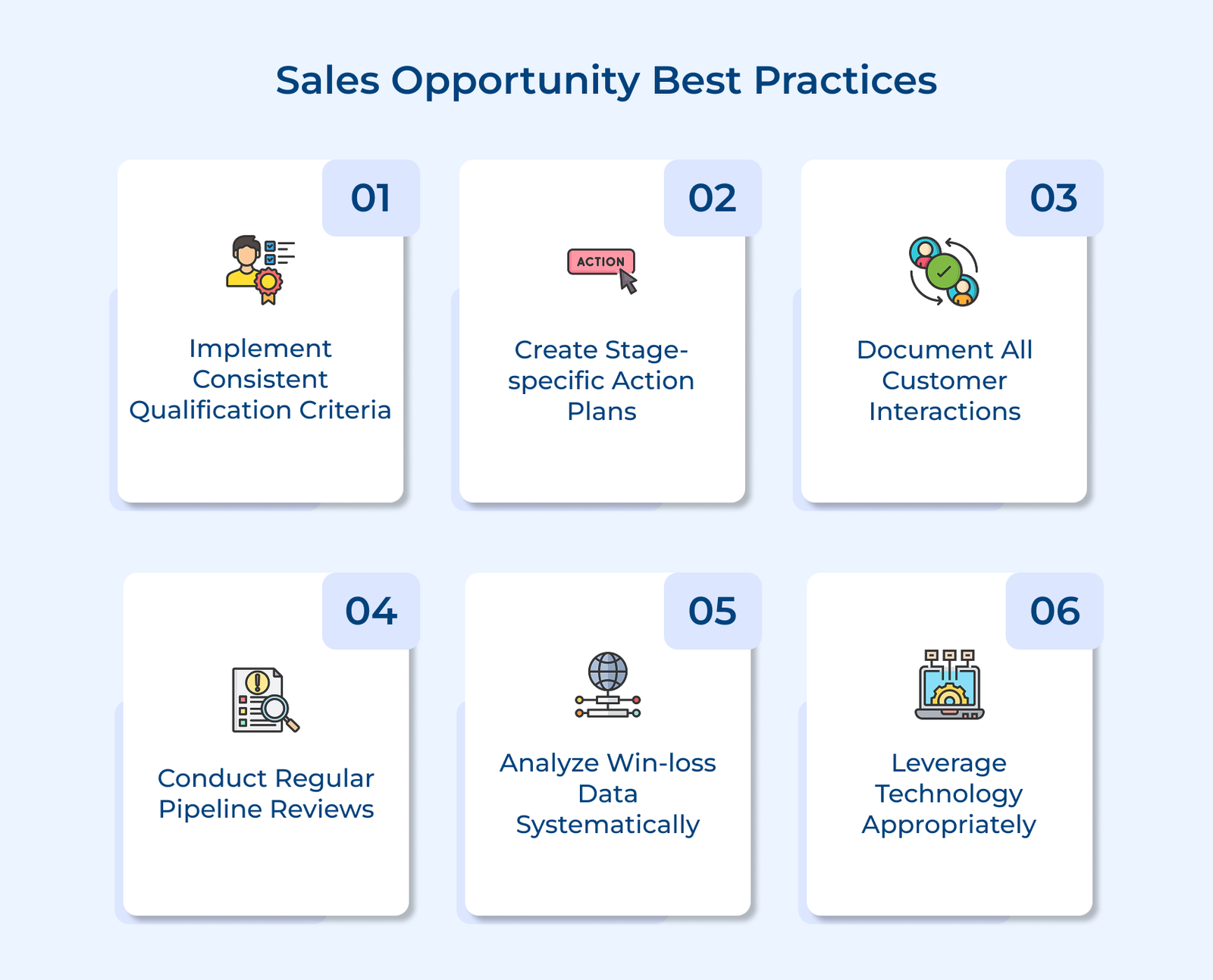
1. Implement Consistent Qualification Criteria
Stop wasting time on leads that will never convert. Set a consistent bar for what counts as a real opportunity using practical frameworks like BANT or MEDDIC. It keeps everyone aligned and prevents wishful thinking from turning into bloated pipelines.
2. Create Stage-specific Action Plans
Don’t let deals drift. Assign specific tasks and milestones to each pipeline stage. Consider that: no demo without confirmed budget, no proposal without executive contact. It gives reps direction and keeps deals moving with purpose.
3. Document All Customer Interactions
Always document key customer information, not just vague summaries. Log pain points, decision-makers, objections and buying criteria. If a rep hands off the deal or leaves the team, you won’t lose context or momentum.
4. Conduct Regular Pipeline Reviews
Your pipeline review shouldn’t be a numbers check. Dig into why deals are progressing or stalling. Identify patterns like repeated objections or timeline slip-ups. The conversations reveal coaching needs and process gaps, not just forecasts.
5. Analyze Win-loss Data Systematically
After a deal closes, won or lost, ask why. Go beyond surface reasons like “bad timing” or “too expensive.” Look for recurring trends in buyer feedback, competitor wins or misalignment between your pitch and their priorities.
6. Leverage Technology Appropriately
A good CRM helps you work smarter, not slower. Configure it to capture key opportunity data without forcing reps to do hours of admin. Automation, prompts and clear fields can improve visibility without creating busywork.
Effective sales opportunity management is the difference between chasing leads and closing real business. When you take a structured approach to identifying, qualifying and advancing opportunities, you move from reactive selling to a repeatable process that turns interest into outcomes. It’s not about flooding your pipeline, it’s about filling it with deals that have real potential.
Top-performing sales teams treat opportunity management as a strategic practice, not just a CRM routine. They focus on aligning with how buyers make decisions and use that understanding to guide conversations, solve real problems and build long-term trust. It results in fewer dead ends, better close rates and stronger customer relationships.
Key takeaways:

Sales opportunities generally fall into several categories: new business opportunities with first-time customers; expansion opportunities within existing accounts through upselling or cross-selling; renewal opportunities when contracts approach expiration; competitive displacement opportunities where you replace an incumbent vendor; and strategic opportunities that align with specific growth initiatives or market entry plans. Each type requires different qualification approaches and sales strategies.
A lead is someone who’s shown early interest, usually just contact info plus a signal like a download or event visit. A sales opportunity is further along: you’ve confirmed they have a real need, the right budget, decision authority, and a buying timeline. Leads are about potential. Opportunities are about action.
Start by asking does the prospect actually faces a problem your product can solve. Once that’s clear, you look at who controls the budget and if the person you’re speaking with has real authority. Decision-makers need to be active in the process rather than sitting in the background. Another thing to keep an eye on is any competing solution already in play, even if it’s something they’re managing internally. BANT, MEDDIC and GPCT help you gather this intel in a structured way without turning the call into an interrogation.
The most revealing metrics for opportunity management include: conversion rates between pipeline stages, average sales cycle length, win rate percentage, opportunity aging within stages, average deal size, forecast accuracy compared to actual results, ratio of qualified opportunities to total opportunities and opportunity-to-win ratio by lead source. Together, the metrics illuminate both effectiveness and efficiency in converting opportunities to revenue.
Effective opportunity prioritization combines several factors: deal size potential relative to sales effort required, close probability based on qualification strength, strategic value beyond immediate revenue, alignment with ideal customer profile, competitive positioning strength, and timeline urgency. The best prioritization models weigh the factors based on your specific business objectives rather than focusing solely on deal size, creating balanced resource allocation across your opportunity portfolio.
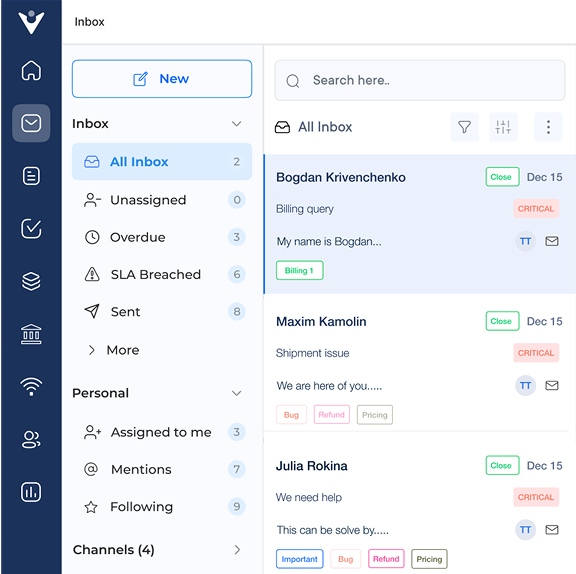
Grow Customer Relationships and stronger team collaboration with our range of products across the Conversational Engagement Suite.
Omnichannel Customer Support & Help Desk Software
AI Enabled Business Messaging and Chatbot Software
Sales Engagement & CRM Software
Call Center Software & Virtual Phone System
Product Marketing & Experience Platform
Customer Experience & Feedback Management Software

 Customer Service Oriented: Characteristics, Tips & Examples
Scroll to top
Customer Service Oriented: Characteristics, Tips & Examples
Scroll to top