B2B vs B2C Sales: Differences and Similarities
Learn about the core differences between B2B vs B2C sales. Explore each’s target audiences, decision-making processes and sales cycles, helping businesses refine their strategies for each model.
Learn about the core differences between B2B vs B2C sales. Explore each’s target audiences, decision-making processes and sales cycles, helping businesses refine their strategies for each model.
Trying to sell the same way to businesses and consumers? That’s where many go wrong. B2B and B2C buyers think, act and decide very differently. Using a one-size-fits-all strategy often leads to mixed messages, slow sales and missed opportunities. You need to understand the core differences between selling to companies and selling to individuals.
The guide breaks down eight key ways B2B and B2C sales diverge, helping you speak to the right people, through the right channels, at the right time. No matter if you’re closing complex business deals or appealing to everyday shoppers, knowing the differences will make your sales approach smarter.
B2B sales refer to the process of one business selling to another. Unlike selling to individual consumers, the deals take time, involve more money and usually require multiple decision-makers. The focus is on building lasting relationships that deliver clear results.
B2B sales starts by identifying companies that need what you offer. Sales teams then use targeted outreach and thoughtful conversations to show how their solution fits the client’s specific business problems. Success depends on trust, expertise and the ability to solve real challenges, not just making a pitch.
Key objectives:
Let’s go through the reasons why a B2B sales process is important, helping businesses close complex deals with confidence.
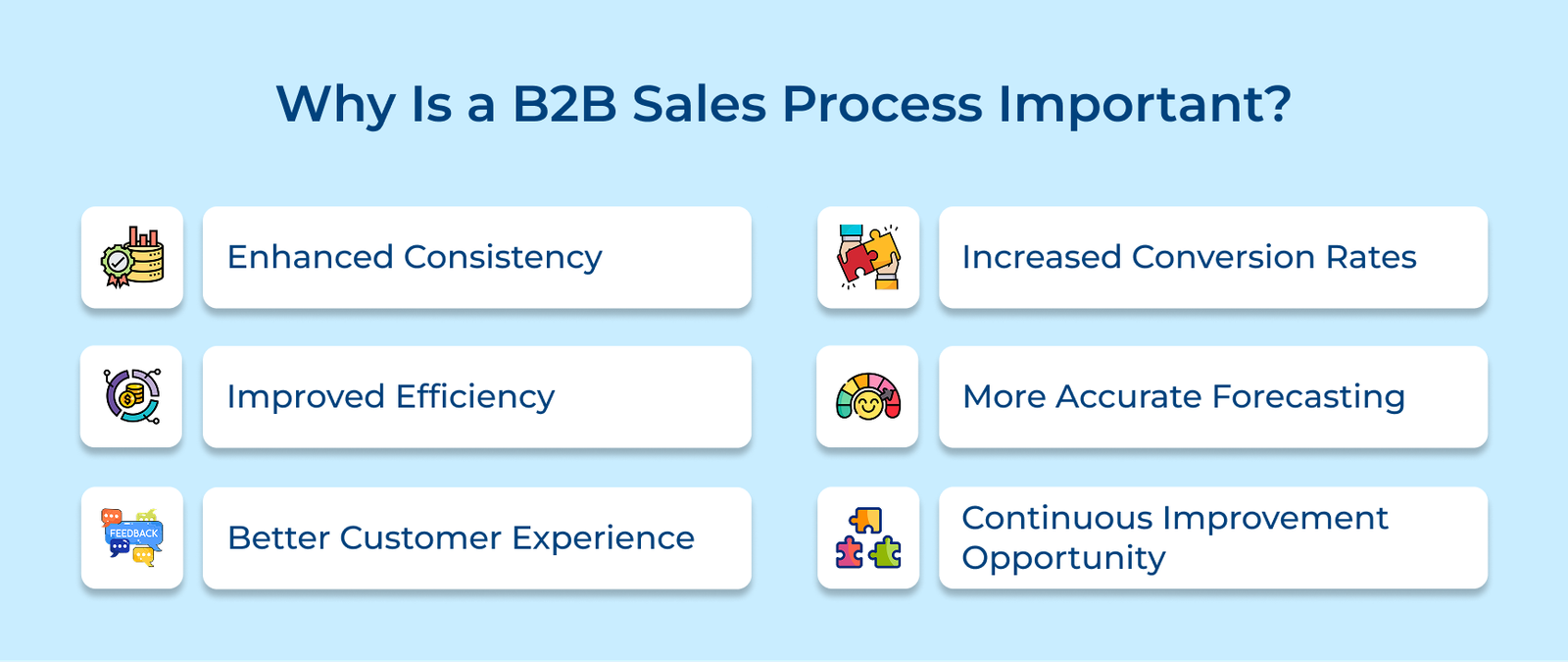
Enhanced Consistency
When everyone follows the same sales steps, every prospect gets a reliable, quality experience no matter who handles their account. It also makes it easier to train new hires and share what works across the team.
Improved Efficiency
A defined process cuts down on guesswork and repetition. Reps can focus their time where it matters, talking to prospects, not figuring out what to do next.
Better Customer Experience
Understanding where a buyer is in their journey lets your team offer the right help at the right time. The timely support not only feels good, it also builds real trust.
Increased Conversion Rates
When teams repeat what works and drop what doesn’t, more leads become customers. A clear process reveals what’s helping and what’s not so your efforts are always pointed in the right direction.
More Accurate Forecasting
Organizations gain visibility into their sales pipeline and can predict future revenue with greater precision with a standardized process. The predictability helps with resource allocation, inventory management and strategic planning across the entire business.
Continuous Improvement Opportunity
A structured process lets you spot weak points and make small fixes that lead to big gains. You’re not locked in, you’re improving with every deal, every month, every market shift.
B2C sales is when a company sells directly to individual buyers rather than other businesses. The sales focus on personal needs and often involve quick decisions driven by emotion, convenience or impulse. Transactions tend to be faster, simpler and lower in cost compared to B2B sales.
The B2C journey starts by attracting attention usually through ads, social media or product displays that connect with what people want or need in their daily lives. The goal is to guide buyers smoothly through the process, from interest to purchase and create a positive experience that brings them back.
Key principles:
Check out the key reasons a B2C sales process matters and make sure every customer interaction feels effective.
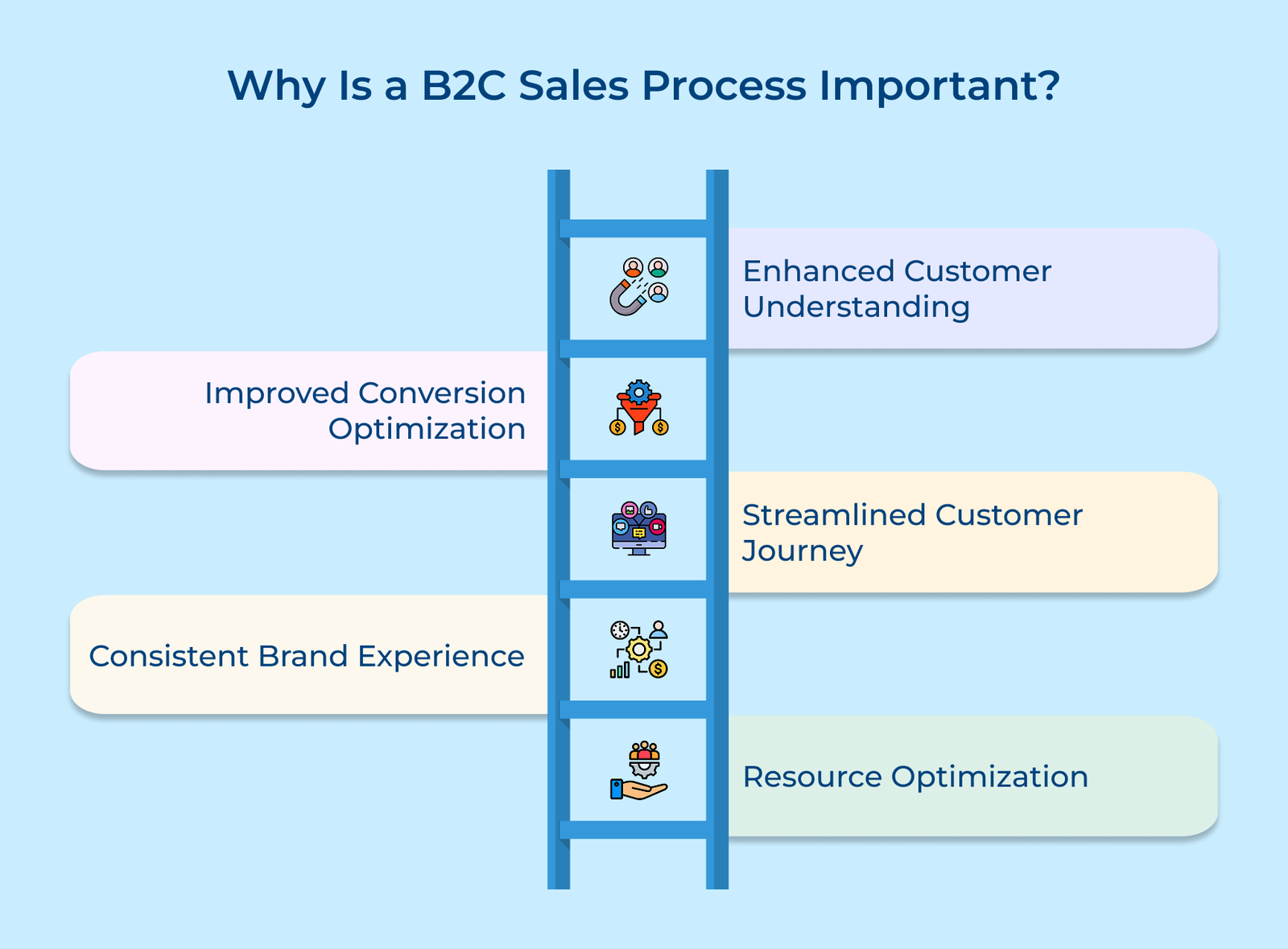
Enhanced Customer Understanding
A clear sales process helps you gather useful information at every step. Over time, it builds a fuller picture of who your customers are, what they want, what frustrates them and how they tend to shop. You can offer exactly what they need, when they need it.
Improved Conversion Optimization
When your sales process follows defined steps, you can identify exactly where potential customers hesitate or drop off. The precision allows you to experiment with specific improvements rather than guessing what might work.
Streamlined Customer Journey
A well-planned process makes it easier for people to buy from you. When the path from browsing to checkout feels simple and logical, more people follow through. The ease leaves a better impression and makes them more likely to come back.
Consistent Brand Experience
When every part of the buying journey reflects the same tone and quality, be it online, in-store or through support, it builds trust. People know what to expect and that consistency makes them more comfortable choosing your brand again.
Resource Optimization
A structured approach prevents wasted efforts by directing your team’s energy toward activities with proven impact. You allocate budgets more effectively and focus on high-yield customer segments by establishing clear priorities based on process data.
Understanding the differences between B2B and B2C sales is important for the teams to adjust their approach, expectations and messaging to match how buyers actually make decisions in each model.
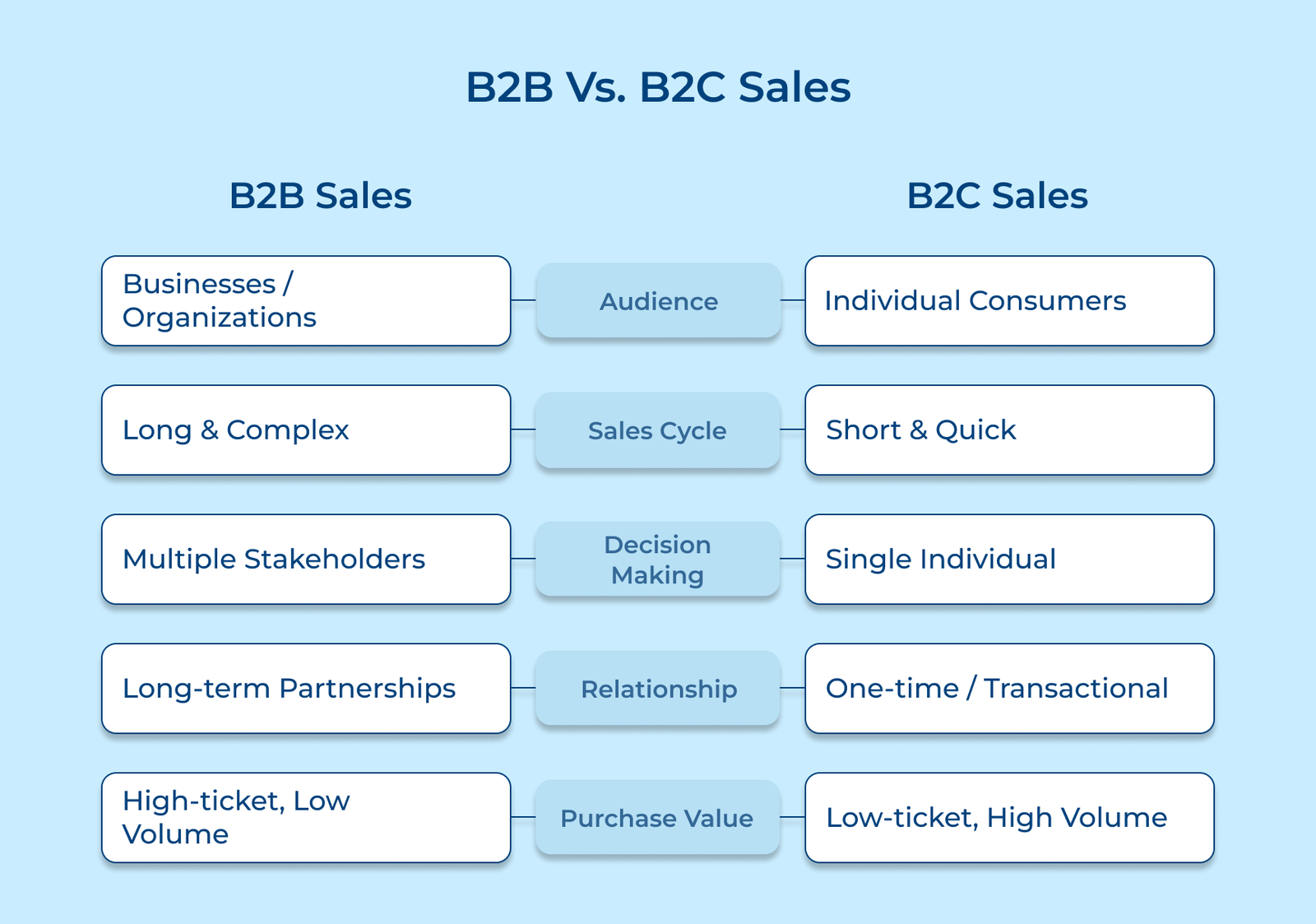
B2B purchasing decisions rarely rest with just one person. Instead, multiple people, each with their concerns, shape the final outcome. You often navigate layers, like managers spark interest, IT or legal check details, finance reviews costs and executives give final approval. Each step can introduce delays or derail progress if not handled carefully.
Key questions:
When selling enterprise software to a manufacturing company, the conversation rarely starts with the final decision-maker. It often begins with an operations manager who sees the day-to-day value and becomes your internal champion. From there, the discussion moves to the IT team to address system compatibility, then to finance to evaluate return on investment, and finally to the C-suite, where the final approval happens.
B2C sales are simpler. The buyer is often one person or at most a household, making a decision based on need, preference or emotion. The process is quicker, with fewer steps and little internal debate.
B2B relationships are built for the long haul. A single deal often marks the start of an ongoing partnership that can evolve and expand over the years. Trust grows through consistent delivery and shared goals.
Consider a commercial cleaning company. Landing one office contract might lead to servicing multiple locations, annual renewals and becoming a core part of the client’s operations.
B2C relationships revolve around quicker interactions. While repeat customers matter, each purchase is usually standalone. The focus is on delivering a good experience that keeps the buyer coming back.
Pro tips:
B2B value propositions are grounded in logic and measurable results. Buyers want clear answers to how your solution improves efficiency, cuts costs or delivers solid ROI. The message needs to align with business goals and hold up under financial scrutiny.
Picture a freight company selling to retailers that goes beyond claiming fast delivery. They spell out how smarter route planning cuts shipping costs by 15% and reduces delays, numbers that land straight on the profit and loss statement.
B2C value propositions speak to personal needs and emotions, comfort, convenience, self-image or joy. While cost still plays a role, buyers are often more influenced by how a product makes them feel than by numbers or logic.
B2B transactions often come with higher price tags and longer commitments, which makes every deal worth the effort. Sales teams may spend months on a single account because winning it can bring significant revenue.
Imagine a telecom company going after a hotel chain. Landing the deal isn’t a simple sign-and-go. It means rolling out systems across hundreds of properties, coordinating teams on the ground, and managing a contract worth millions. This kind of sale lives or dies on careful planning, real conversations, and tight execution.
B2C sales usually involve lower-cost purchases made by individual customers. Instead of investing deeply in a handful of relationships, companies rely on selling to large numbers of people. It shapes how they price, promote and support their products, focusing on efficiency rather than deep, ongoing engagement.
B2B sales cycles often stretch across months or even years, shaped by complex evaluations and high investment stakes. Success depends on steady, strategic engagement through every stage of the decision process.
Picture a company that sells industrial machinery. The first conversation usually starts with clear specifications. Then come site visits to see the machines in action, followed by detailed discussions on pricing and terms. The process often ends with hands-on training so the buyer’s team knows exactly how to use what they’ve invested in.
B2C sales cycles move quickly often in minutes or days as individual consumers make snap decisions based on convenience or emotion. The focus shifts from long-term nurturing to capturing attention and guiding buyers through a smooth, immediate purchase.
Actionable tips:
B2B buyers look for content that helps them make informed, defensive decisions. They want facts, side-by-side comparisons, case studies, detailed documentation and guidance on implementation. A finance director shopping for accounting software, for example, isn’t swayed by slogans. They’ll dig into white papers, watch tailored demos and seek input from peers before making a recommendation.
B2C customers want clarity and connection. They prefer quick, relatable content that shows how a product fits into their life. A good review, a helpful video, or a catchy value message can be enough to sway their choice.
B2B pricing is rarely one-size-fits-all. It often depends on the client’s needs, how many users, which features and what kind of support or training is required. Let’s consider that a software company might offer a tailored proposal with options for add-ons, discounts for larger teams and negotiable terms based on long-term value. The process is less about fixed prices and more about finding a fit that works for both sides.
B2C pricing is usually fixed and upfront. Shoppers want clarity; they expect to see a price, compare it with others and make a quick decision without back-and-forth. Occasional sales or loyalty perks may apply, but haggling isn’t part of the deal.
Key takeaways:
B2B post-sale relationships don’t end at the contract. They involve regular check-ins, personalized support and a long-term focus on helping the client get the most out of what they’ve bought. Let’s assume that a project management software company may assign an account manager to monitor usage, hold quarterly calls, offer training and recommend relevant features.
B2C post-sale efforts are more standardized. Support teams handle questions or returns, while marketing nudges customers toward their next purchase. While helpful, the interactions don’t typically require the same depth or ongoing attention.
Key takeaways:
Below are key similarities that help great professionals adapt between B2B vs B2C sales without starting from scratch.
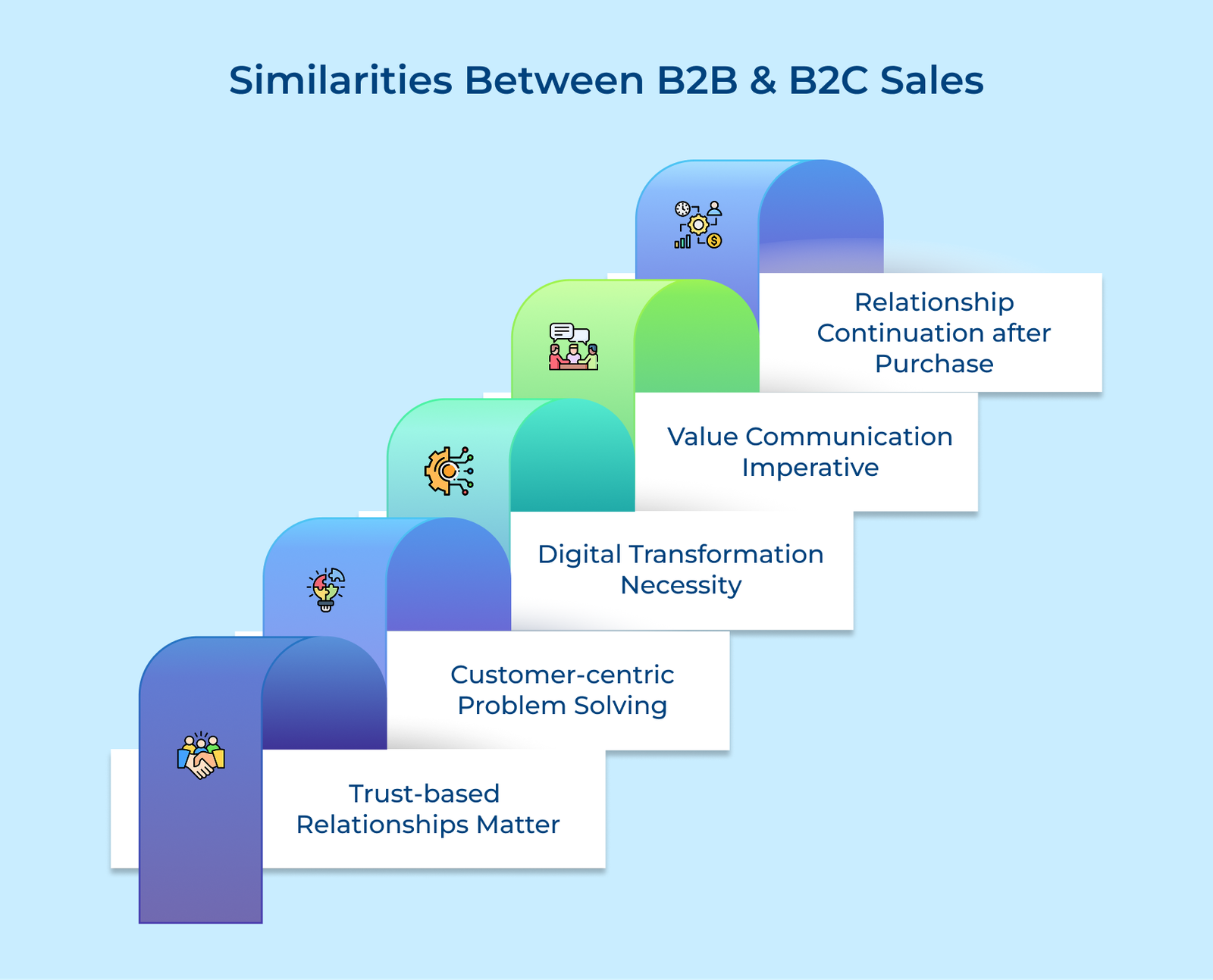
1. Trust-based Relationships Matter
Selling to a company or a single shopper comes down to the same thing. People don’t buy without trust. Sales take shape through clear, honest conversations that make buyers feel confident about their choice.
2. Customer-centric Problem Solving
Good sales always begin with listening. If you don’t understand what your customer needs, you’re just pitching. The goal is to offer real solutions to real problems.
3. Digital Transformation Necessity
Both B2B and B2C sales processes have embraced digital channels and tools to reach customers more effectively. A strong online presence is now essential for reaching both business and individual buyers.
4. Value Communication Imperative
All sales require clearly articulating why an offering matters to the specific customer. No matter if you’re talking about return on investment or everyday convenience, you have to show why it matters to them.
5. Relationship Continuation after Purchase
A sale isn’t the end; it’s the beginning of how customers judge you. Ongoing support and consistent delivery are what turn first-time buyers into loyal ones.
These sales tips break down what actually works in B2B and B2C, so you can adjust your approach instead of using the same playbook for both.
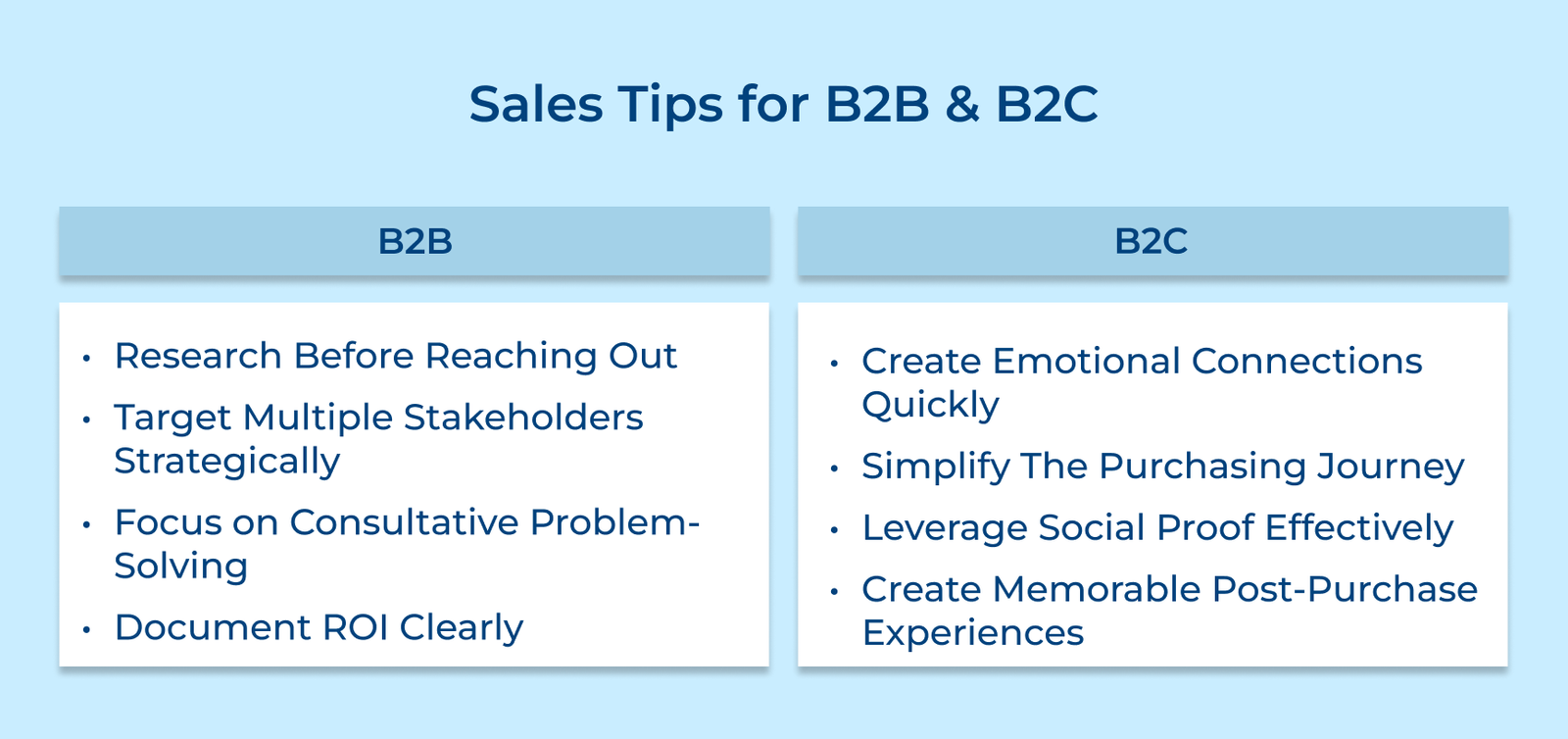
1. Research Before Reaching Out
Know the company, its structure and the issues it faces before making contact. Specific insights beat generic pitches every time.
2. Target Multiple Stakeholders Strategically
Map out all key players involved in the decision. Tailor your message to match what each person, like technical, financial or executive, needs to hear.
3. Focus on Consultative Problem-solving
Ask smart questions. Listen more than you talk. Show you understand the problem before offering your product as the solution.
4. Document ROI Clearly
Back up your claims with hard data. Show exactly how your solution saves time, cuts costs or boosts revenue and make it easy to understand.
1. Create Emotional Connections Quickly
Connect with emotion right away. Show how your product fits into someone’s life or solves something they care about with real stories, not slogans.
2. Simplify the Purchasing Journey
Don’t make people work to buy. Cut the clutter, fewer clicks, fewer forms, fewer decisions. The easier it is, the more likely they’ll buy.
3. Leverage Social Proof Effectively
Put honest reviews and real user content front and center. People trust people, not brands. Let your customers speak for you.
4. Create Memorable Post-purchase Experiences
Follow up with a thoughtful touch, not just a receipt. A good unboxing or check-in shows you care, keeping customers coming back without needing to chase them.
Good salespeople know that B2B and B2C require different approaches, but the core goal stays the same. It’s largely driven by solving real problems for real people. The best sales professionals don’t rely on one playbook. They adjust.
They know when to lead with facts and when to listen to feelings. They ask the right questions, speak the right language and meet people where they are, be it a boardroom or a shopping cart. It’s not about selling differently, it’s about selling thoughtfully.

Profitability depends on what you’re selling, how well you sell it and who you’re selling to. B2B often means fewer deals but bigger contracts. B2C usually brings more customers but smaller purchases. One isn’t better than the other; it’s about what fits your product, team and market.
Know who you’re talking to well. Research your prospects and tailor your pitch for each decision-maker. Don’t just sell a product, solve a business problem. Offer numbers that prove your value and help buyers understand why you’re worth their time.
Both are about solving problems and building trust. You still need to understand what matters to the person buying, be it a company or an individual. A strong message, helpful content and a good experience after the sale matter in both cases.
Neither. B2C is faster and less complex, but you need to grab attention in crowded spaces. B2B gives you fewer leads but bigger rewards and longer, more involved conversations. What feels “easier” depends on your skills, resources and the kind of work you enjoy.
Yes, if they adapt. B2C moves quicker, leans more on emotion and reaches wider audiences. B2B habits like long pitches or deep personalization don’t always translate. Flexibility is key. The core skills still matter; you just need to shift how you use them.
The optimal focus depends on your product’s nature, company resources and market opportunities. Single-model focus creates efficiency through specialized processes and consistent messaging. Dual approaches can maximize market reach but require separate teams and strategies to address different buying behaviors. Think about your team’s strengths, your customer base and what kind of growth you can realistically manage.
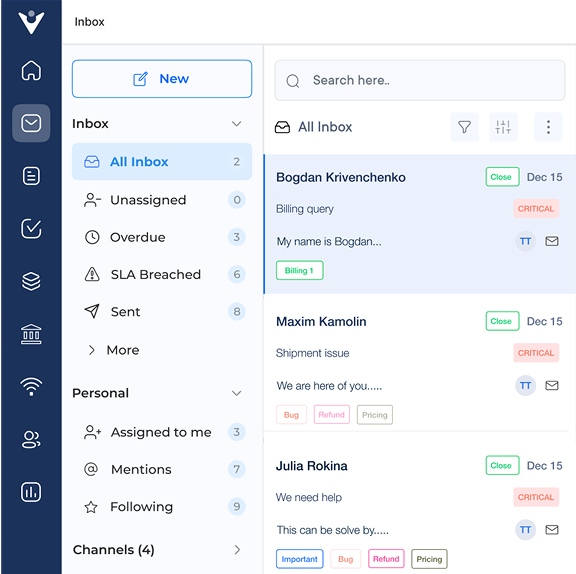
Grow Customer Relationships and stronger team collaboration with our range of products across the Conversational Engagement Suite.
Omnichannel Customer Support & Help Desk Software
AI Enabled Business Messaging and Chatbot Software
Sales Engagement & CRM Software
Call Center Software & Virtual Phone System
Product Marketing & Experience Platform
Customer Experience & Feedback Management Software
 SLA Management Guide: Best Practices & Challenges
Scroll to top
SLA Management Guide: Best Practices & Challenges
Scroll to top