The Future of Sales: Emerging Trends & the Real Impact of AI
The future of sales is driven by digital transformation, data-driven insights and evolving customer expectations. Explore how businesses should adapt to build lasting relationships.

The future of sales is driven by digital transformation, data-driven insights and evolving customer expectations. Explore how businesses should adapt to build lasting relationships.
Sales teams across industries are running into a hard truth. Old-school sales methods no longer match how modern buyers think, research, or buy. This shift is reshaping the future of sales in real time. 65% of sales leaders are already struggling to adapt strategic plans in the face of sudden change.
Ignoring trends like remote selling, automation and data-driven decision-making comes at a cost. Sales reps feel buried under too much information, while buyers move toward self-service paths that skip traditional sales interactions altogether. The gap between how sales teams sell and how customers want to buy keeps growing.
The guide breaks down how artificial intelligence and emerging technologies turn these challenges into real opportunities. You will learn how future-ready sales strategies fit changing buyer behavior without losing the human judgment and trust that still matter in the future of sales.
The future of sales refers to a shift from old-style relationship selling to a model built on technology and deeper customer understanding. Instead of simply pitching products, sales teams will use AI to guide buyers through complex choices, acting more as advisors than traditional sellers.
The change will reshape how companies grow revenue and connect with customers. It will influence hiring, training and even customer support, as businesses move toward more consultative, customer-centered approaches.
Key objectives:
Let’s go through the benefits of aligning your business with the future of sales, from improved customer experiences to stronger growth.
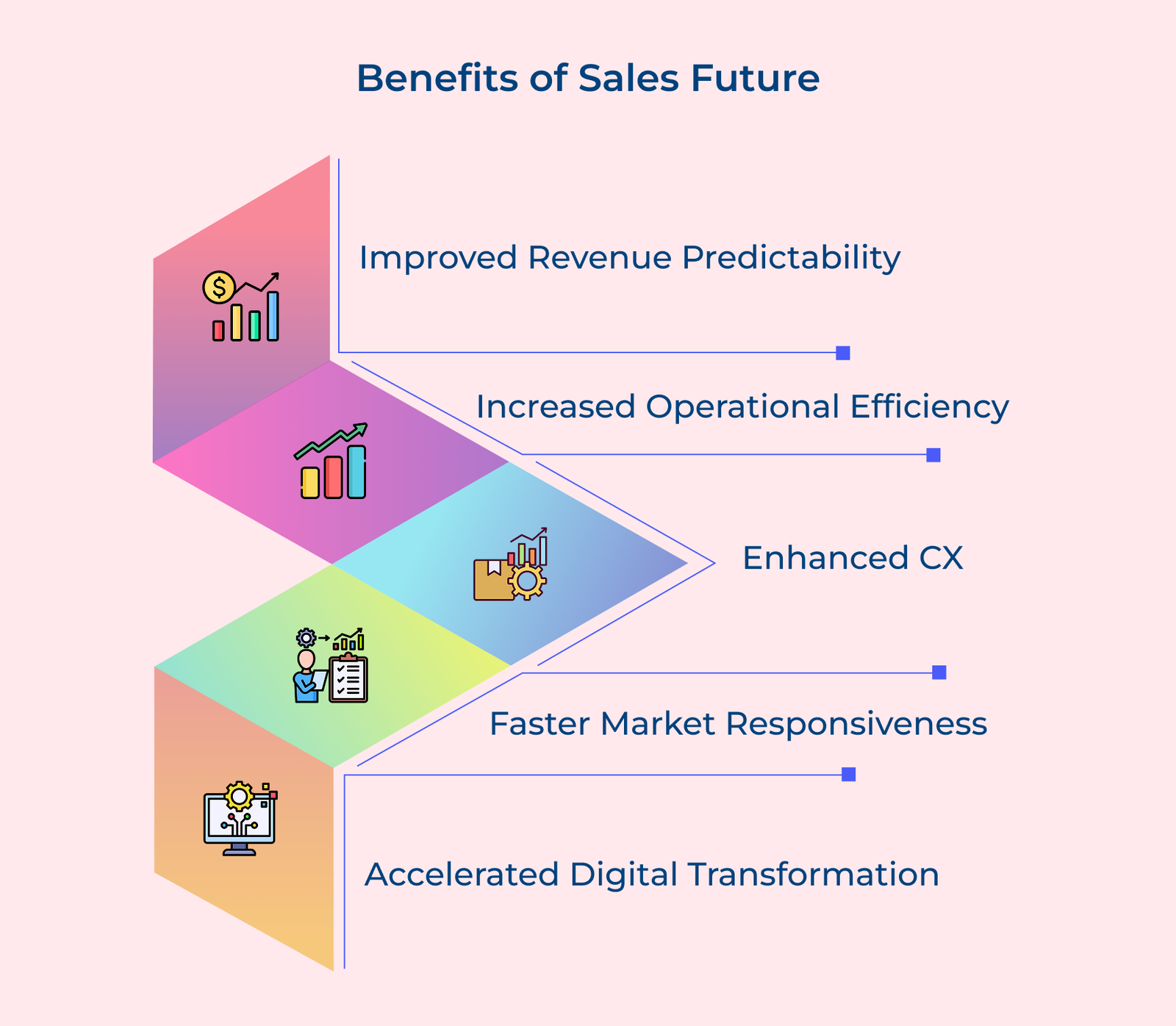
1. Enhanced Customer Experience
Alignment ensures consistent messaging across every touchpoint, from marketing to support. Customers enjoy unified interactions, be it online or in person, building trust and minimizing confusion throughout the buying journey.
2. Improved Revenue Predictability
Data-driven sales processes provide clearer forecasting capabilities when supported by aligned business operations. Finance teams can better predict cash flow while operations can anticipate demand patterns. The visibility helps leadership make more informed strategic decisions about resource allocation.
3. Increased Operational Efficiency
Breaking down silos accelerates sales cycles and reduces friction. Marketing delivers higher-quality leads, customer success provides actionable feedback and coordinated teams make faster, more informed decisions.
4. Faster Market Responsiveness
Aligned teams respond quickly to changing conditions. Product teams get immediate customer feedback, sales teams learn about new features early and the organization can pivot effectively in competitive markets.
5. Accelerated Digital Transformation
Sales alignment encourages the adoption of integrated technologies, creating momentum for broader digital initiatives. Teams work more efficiently, enhance customer experiences and drive company-wide modernization.
Check out the top trends that are poised to redefine the future of sales, offering insightful strategies to not only keep pace with the evolving market but also to thrive in it.
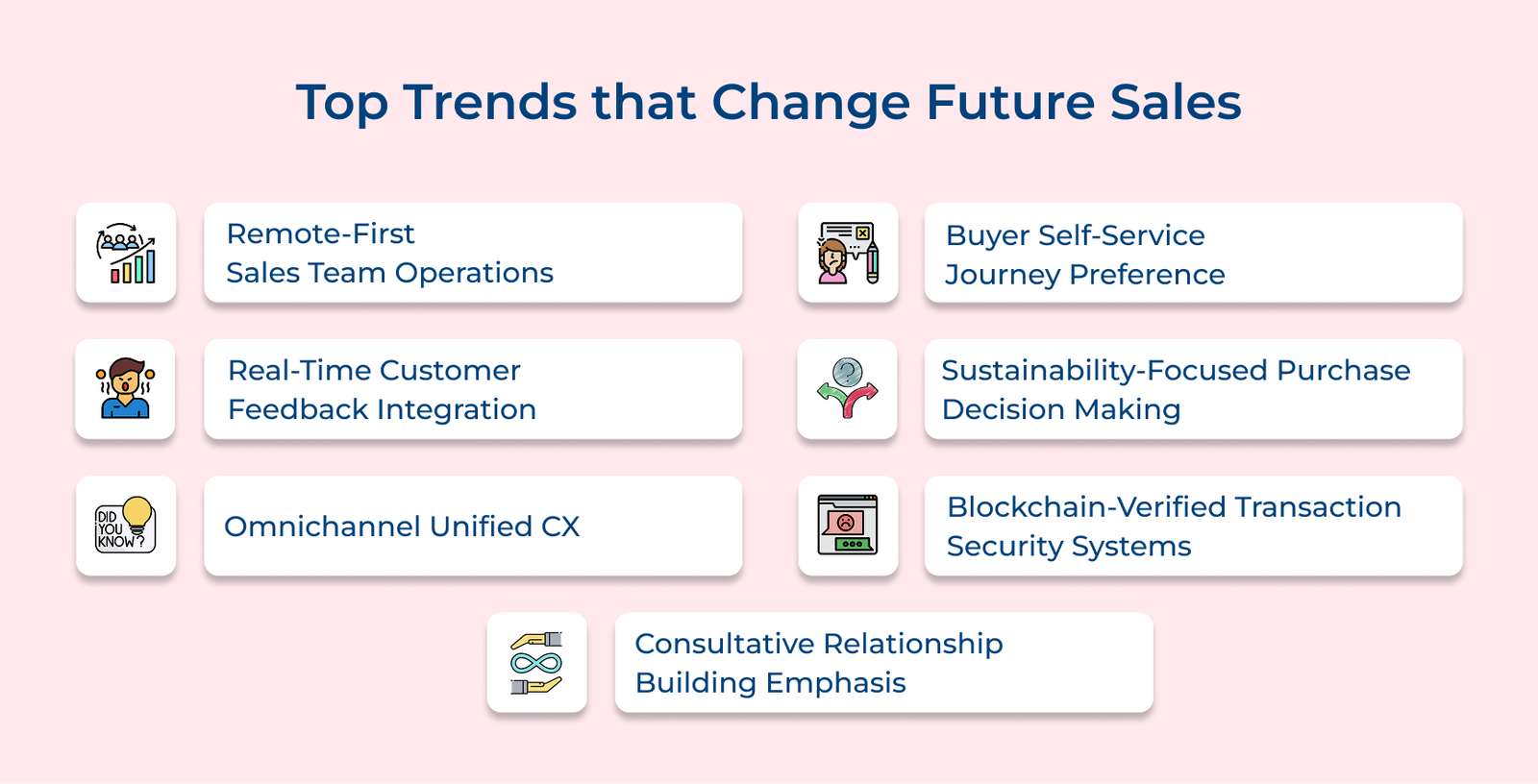
Remote-first sales means teams work primarily from distributed locations instead of central offices. This shift is shaping the future of sales by removing geographical barriers, opening access to global talent, and reducing day-to-day operating costs.
Key ways:
Consider a software company where sales representatives on different continents collaborate seamlessly on deals. They share leads through cloud platforms and conduct virtual demos for clients worldwide without travel expenses or time delays.
Modern buyers prefer to research and evaluate products independently before speaking with sales. It will be all about giving customers control over their purchasing timeline and information-gathering process.
Key ways:
Real-time feedback is about capturing and understanding customer responses as they happen during sales conversations and after a purchase. When the feedback gets ignored, teams miss clear signals, lose chances to improve and slowly weaken customer relationships.
The technology works by connecting feedback collection systems directly with sales processes and customer relationship management platforms. Sales teams get instant customer satisfaction alerts and can resolve issues before they grow.
Actionable tips:
Modern buyers increasingly consider environmental impact and corporate responsibility when choosing products or services. Companies that understand the shift can build trust, loyalty and long-term relationships with environmentally conscious customers.
Key questions:
The questions help sales teams determine if sustainability drives real competitive advantage or just meets basic customer expectations. Sustainability will impact the sales future by building trust, loyalty and attracting customers who value long-term partnerships over short-term savings.
An omnichannel approach ensures seamless interactions across every touchpoint, giving customers consistent information and service regardless of platform. Modern buyers move between devices and channels, expecting continuity at every step of their journey.
Key channels:
A customer may start researching a product on their smartphone during lunch and later continue on a laptop at home. Their previous interactions, preferences and context are immediately available, creating a smooth, uninterrupted experience.
Blockchain-verified transaction security systems use distributed ledger technology to create tamper-proof records of sales transactions and supply chain activities. The technology is vital for future sales, facilitating trust through transparent, verifiable transactions.
Transparent Supply Chain Tracking
Blockchain technology allows customers to trace product origins from manufacturing through delivery by scanning simple codes. The transparency builds consumer confidence and enables companies to demonstrate an authentic commitment to ethical sourcing practices.
Smart Contract Automation
Smart contracts automatically execute sales agreements when predetermined conditions are met without requiring manual intervention. Digital contracts cut processing time and prevent disputes by automatically triggering payments or deliveries.
Cryptocurrency Payments
Cryptocurrency payment options expand market reach to tech-savvy customers while reducing transaction fees and processing delays. The payment method appeals to international buyers, avoiding banking hassles and currency conversion.
Consultative selling turns salespeople into trusted advisors who address customer challenges with tailored solutions. The approach reflects what the future of sales will be, as buyers now seek guidance and expertise over basic product pitches.
Consultative selling positions reps as experts who ask questions to uncover customer pain points and goals. Representatives then collaborate with prospects to design customized solutions that address specific needs rather than offering generic product demonstrations.
Key takeaways:
Cross-functional collaboration brings together marketing, customer success, product and technical teams to create a coordinated sales approach. It is increasingly important as complex B2B purchases require diverse expertise and seamless touchpoints across long buying cycles.
Use cases:
Consider that a software company, marketing generates webinar leads, sales provides personalized demos and customer success guides implementations. Each team adds expertise to deliver a seamless, informed buying experience.
Below are the key ways AI is reshaping the sales domain, offering efficiency, accuracy and a competitive edge that businesses cannot afford to overlook.
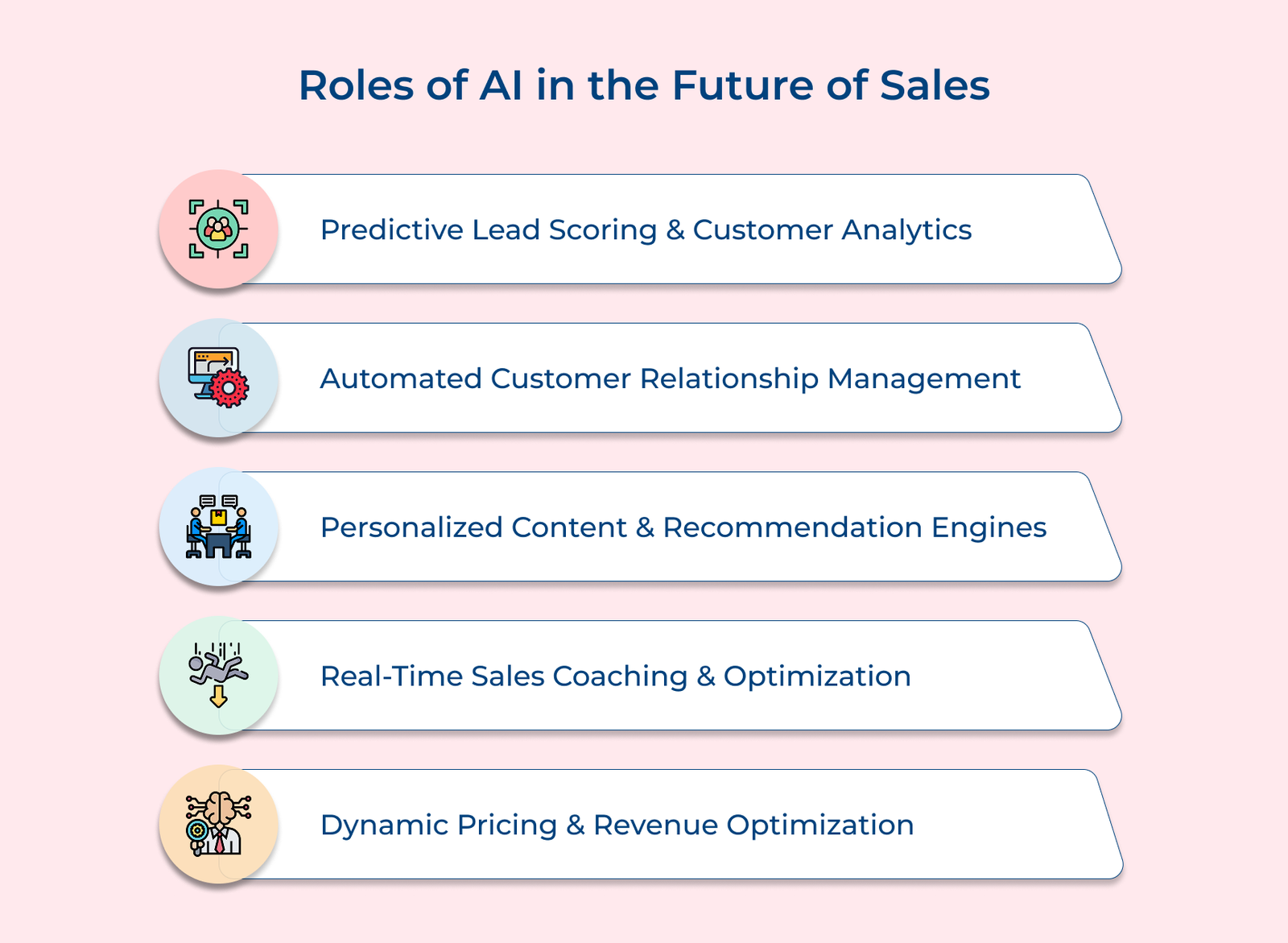
AI analyzes vast datasets to identify which prospects are most likely to convert based on behavioral patterns and historical data. It examines website activity, email engagement and demographics to score leads, helping sales teams prioritize effectively.
AI systems automatically update customer records, schedule follow-up activities and track interaction history without manual data entry requirements. The automation prevents lost leads and lets sales reps focus on meaningful customer conversations.
AI creates customized sales materials and product recommendations tailored to each prospect’s interests as well as their purchase history. It analyzes customer preferences to suggest solutions and create personalized emails for each buyer persona.
AI listens to sales calls and provides immediate feedback on conversation quality, objection handling, and closing techniques. The coaching helps reps improve continuously and replicate successful conversation patterns across the team.
AI algorithms adjust pricing strategies based on market conditions, competitor analysis and customer willingness to pay indicators. The technology optimizes pricing for each deal, considering urgency, budget and market conditions to maximize revenue.
Check out the industries that will experience the most profound changes in sales and how they can embrace innovation to succeed in a competitive market.
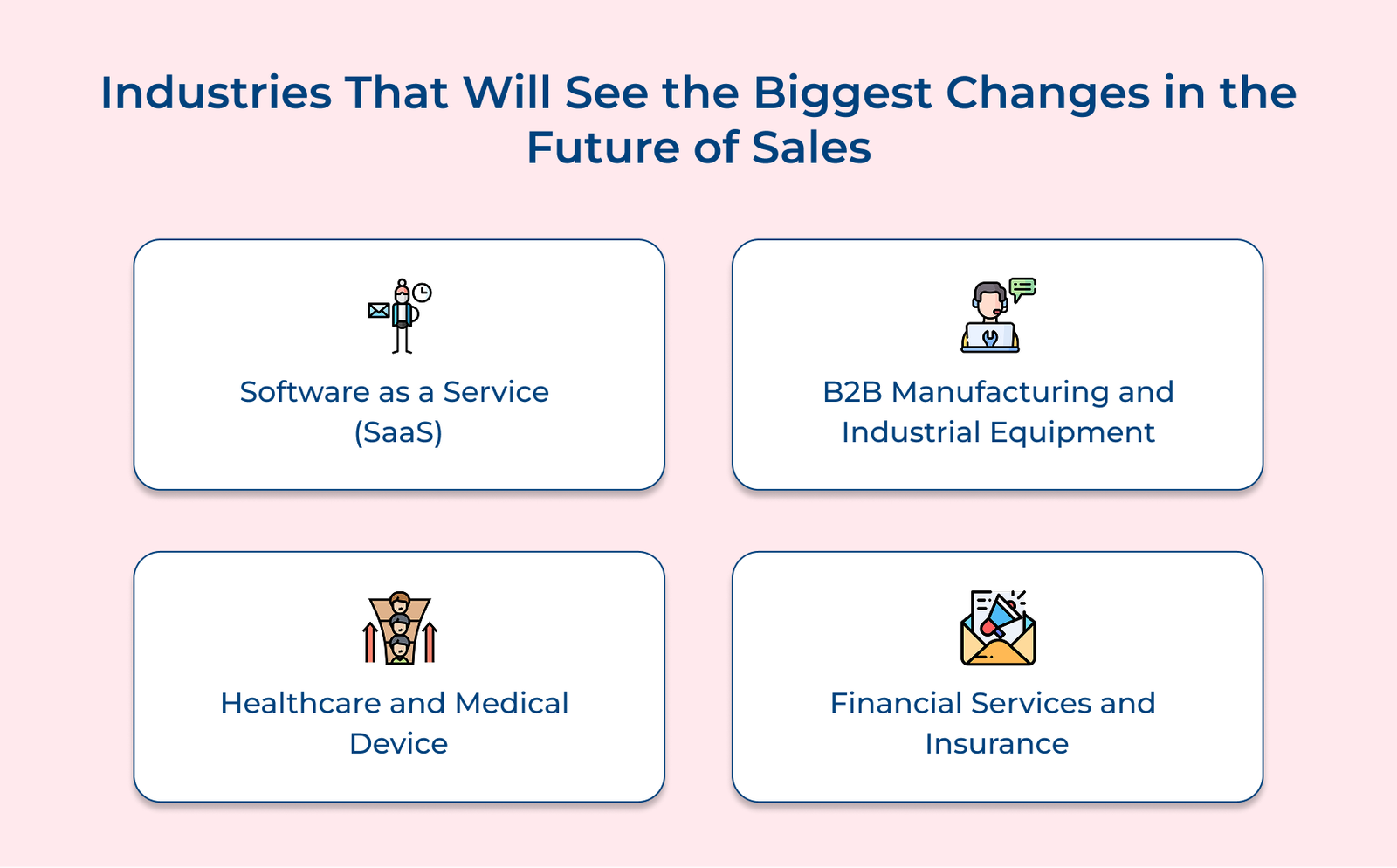
1. Software as a Service (SaaS)
SaaS sales are shifting to product-led growth. Customers favor free trials or self-service onboarding over lengthy presentations and complex procurement processes.
2. B2B Manufacturing and Industrial Equipment
B2B manufacturing sales are shifting from relationship-based to data-driven, as buyers demand performance metrics and ROI insights. In-person meetings or trade shows are being replaced by virtual demos and remote diagnostics, shortening sales cycles.
3. Healthcare and Medical Device
Telemedicine is changing how professionals evaluate and purchase equipment or pharmaceuticals. Reps now manage virtual consultations or remote training while adhering to strict digital privacy and documentation rules.
4. Financial Services and Insurance
Financial services sales are shifting as customers demand instant approvals and digital-first experiences over lengthy paperwork or in-person meetings. Insurance agents along with the financial advisors must adapt to robo-advisors and automation while maintaining a human touch.
The future of sales is about technology enhancing human capabilities, not replacing them. Sales professionals will act as strategic advisors, using data analytics and automation to deliver personalized experiences that facilitate lasting relationships.
Success requires embracing the tools while keeping empathy and trust at the center of interactions. Organizations that align operations with these evolving sales practices gain a competitive edge through better customer satisfaction and more predictable revenue.

Technology will transform sales by automating routine tasks and providing deeper customer insights through advanced analytics or machine learning algorithms. Sales reps will focus on relationships as technology handles lead scoring, scheduling and personalized content.
Data analytics will enable sales teams to predict customer behavior patterns and identify the most promising prospects before competitors even recognize opportunities. It enables smarter resource allocation and highly targeted messaging tailored to each buyer persona.
Remote selling will advance with VR demos and AR showcases, delivering immersive buying experiences from anywhere. Sales reps will use digital tools and video conferencing to maintain global relationships.
Sales teams will struggle with information overload as customers become more informed and expect deeper expertise from sales representatives during conversations. The main challenge is balancing buyer self-service with providing consultative guidance and insights that automation can’t deliver.
Social selling is vital as buyers research vendors via networks and peer recommendations before contacting sales reps. Sales reps must maintain authentic online profiles and share industry insights to attract prospects.

Grow Customer Relationships and stronger team collaboration with our range of products across the Conversational Engagement Suite.
Omnichannel Customer Support & Help Desk Software
AI Enabled Business Messaging and Chatbot Software
Sales Engagement & CRM Software
Call Center Software & Virtual Phone System
Product Marketing & Experience Platform
Customer Experience & Feedback Management Software

 What is CRM Analytics? Benefits, Types and Challenges
Scroll to top
What is CRM Analytics? Benefits, Types and Challenges
Scroll to top