What is Business Communication? Types, Importance & Steps
Check out the basics of business communication and its different types. Learn about its importance in the workplace and see how you can improve communication across teams.

Check out the basics of business communication and its different types. Learn about its importance in the workplace and see how you can improve communication across teams.
Many organizations struggle with scattered messages, overflowing information and teams that aren’t on the same page. The result: missed deadlines, poor decisions and lost productivity. What sets smooth-running companies apart is clear, effective communication. 64% of the leaders surveyed believed that effective communication has increased their team’s productivity.
Creating simple, structured systems and using the right tools does it all! The information flows naturally, people stay aligned and decisions happen faster. This guide breaks down business communication – what it is, why it matters and how to improve it. You’ll learn the main types of communication, the challenges teams face, and practical steps to make it work.
Business communication refers to the exchange of information within and beyond a company to keep operations running smoothly. It’s what allows teams to coordinate, leaders to make decisions and customers to stay informed.
Corporate communication works through a multi-layered system. One person sends a message with a clear intent, maybe to update the team on a project, change a policy or discuss terms with a client. The message travels through a chosen method like an email, meeting or phone call – until it reaches the intended person or group.
Key principles:
Let’s go through the key benefits that highlight why effective communication is essential for modern businesses to thrive.
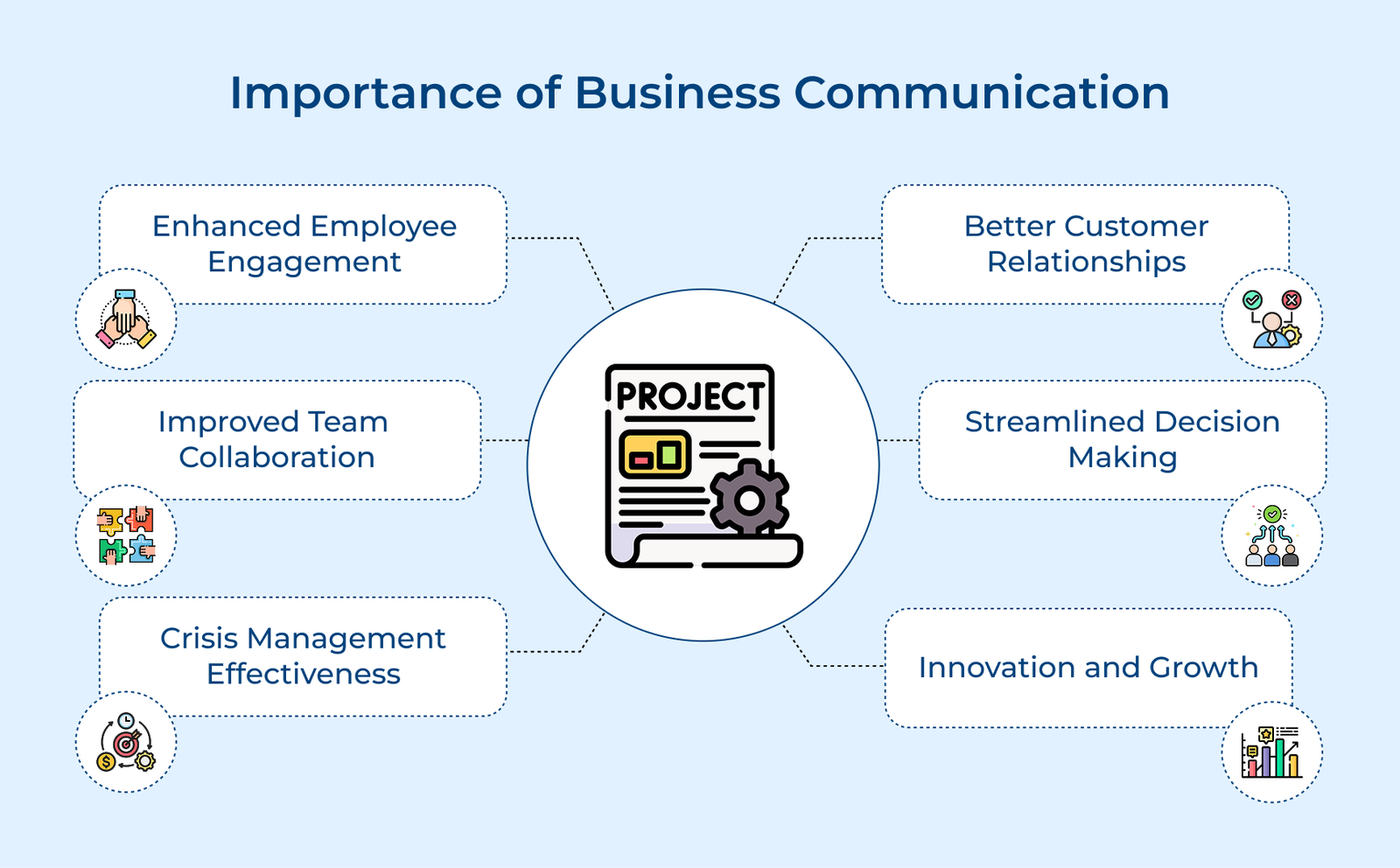
Enhanced Employee Engagement
When people know their voices are heard, they’re more likely to stay involved. Clear, honest communication builds trust between leaders and teams. Employees who feel informed are more motivated, take more initiative and are less likely to leave.
Better Customer Relationships
Good communication isn’t just about talking, it’s about listening. You get better at spotting what they need and solving problems fast by keeping an open line with your customers across platforms. The attentiveness leads to stronger loyalty over time.
Improved Team Collaboration
Communication connects departments that often work in isolation. When teams share information clearly, it becomes easier to collaborate, avoid duplicate work and get aligned on shared goals.
Streamlined Decision Making
Leaders make better calls when they have input from different parts of the organization. Strong communication surfaces useful insights and uncovers issues early, helping decisions get made with more context.
Crisis Management Effectiveness
When things go wrong, clear communication becomes essential. Be it the employees, customers or partners, people want to know what’s happening. Timely, transparent updates help manage expectations and preserve trust.
Innovation and Growth
People are more likely to share ideas when the environment is open and respectful. A culture built on honest communication allows creativity to take root and small ideas often turn into big changes when they’re shared freely.
Below are the types of business communication, each vital for navigating the complexities of the workplace and ensuring that your message is not just heard but truly understood.
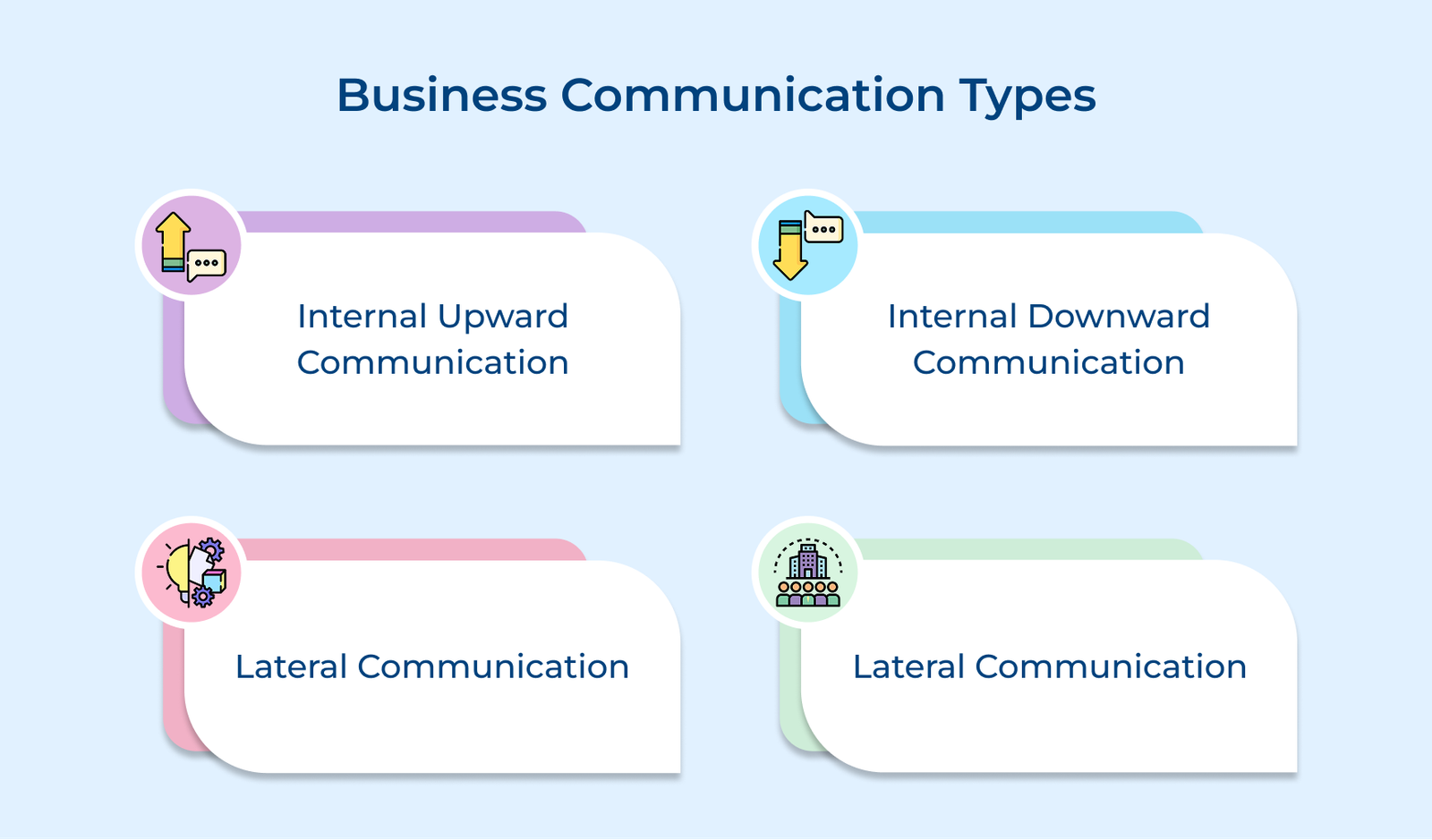
The communication flows from employees to management. It gives leaders direct insight into everyday operations, challenges and ideas from the ground level. When upward communication works well, employees feel heard and organizations benefit from practical feedback that might not surface otherwise.
Common examples include employee surveys, feedback during meetings, performance updates or suggestion boxes. But it can be hard to get honest input if people fear pushback or if management isn’t open to hearing criticism. Building a culture where input is welcomed, not punished, is key to making upward communication meaningful.
Downward communication travels from top management to lower-level employees, conveying organizational decisions, policies and expectations. The communication channel ensures everyone understands their roles, responsibilities and the company’s strategic direction.
Company-wide emails, training manuals, policy updates or executive presentations are common forms. But without a two-way exchange, it can feel like talking with employees rather than with them. Downward communication needs to be clear, respectful and open to follow-up questions or concerns.
Also known as horizontal communication, it happens between people on the same level like colleagues from different departments working on a project. It’s essential for teamwork, coordination and day-to-day problem-solving.
The benefit is speed—teams can resolve issues directly without waiting for top-down approval. But without some structure, it can become chaotic or sideline important procedures. Good lateral communication depends on clear boundaries, mutual respect and shared goals. Examples include project updates, cross-team chats and planning sessions.
External communication connects the organization with outside stakeholders, including customers, vendors, media and the public. It’s essential for building relationships, managing reputation and keeping your place in the market.
The communication is effective when the message is clear, consistent and respectful of the audience. But managing tone and accuracy across multiple channels takes effort. Examples include customer support emails, marketing campaigns, press briefings, social media posts and vendor correspondence.
Here are the main differences and how business communication and communication services work together to keep operations running smoothly.
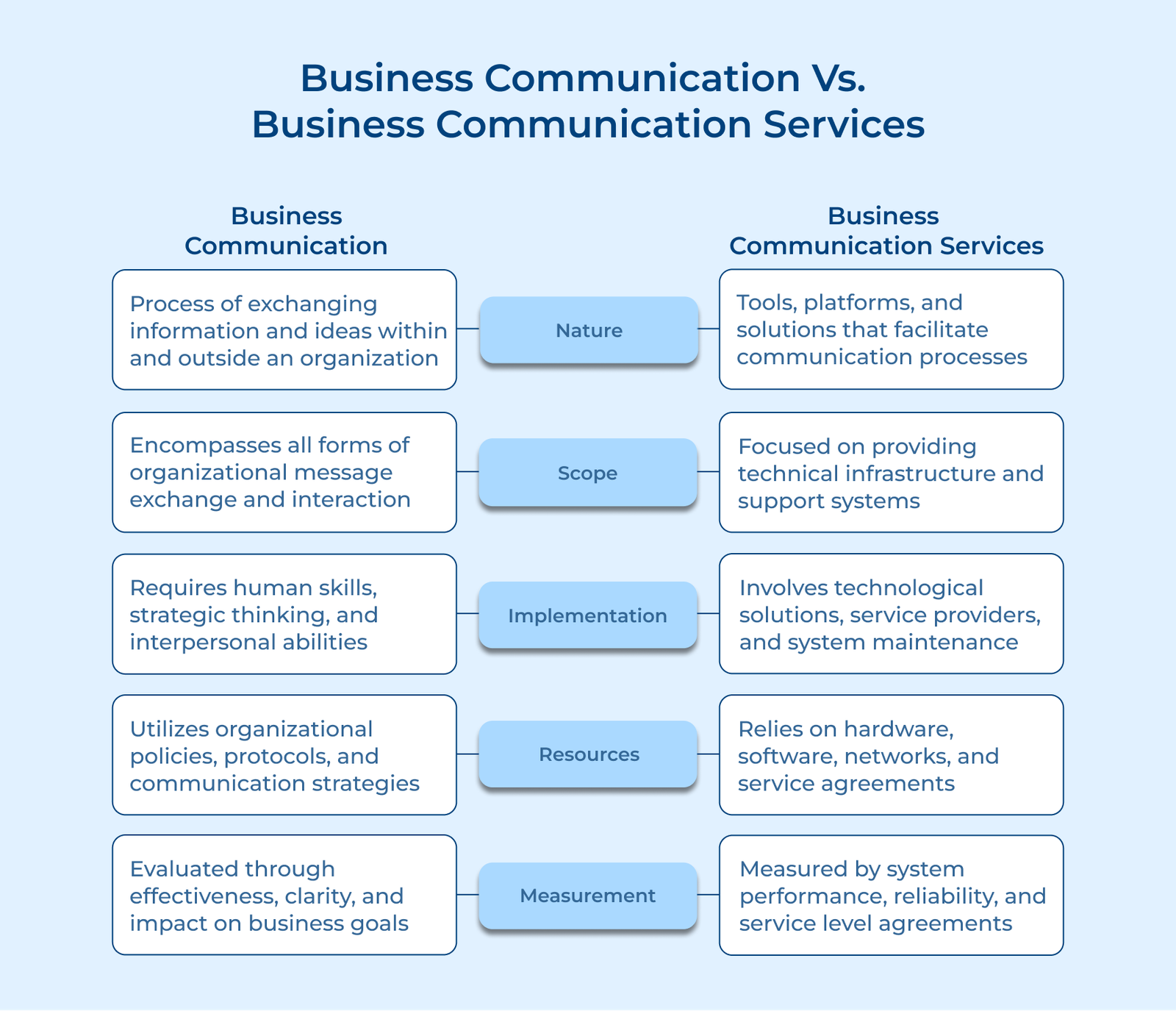
Purpose and Function
Business communication is about how people share information within an organization. It’s not just what’s said but how it’s said. The goal is a clear understanding between teams, departments and individuals. It means paying attention to tone, clarity and how ideas are presented to keep work moving.
Corporate communication services refer to the tools that help communication happen. Think email systems, video calls, chat platforms or project software. They are the technical supports that make daily communication possible.
Implementation Approach
Organizations need a plan for business communication to work. It includes training employees on how to listen effectively and making sure there are clear standards for how messages are crafted.
Setting up communication services is more about tech choices. It involves selecting tools, managing vendors, ensuring everything runs securely and helping employees get the most out of what’s available.
Resource Requirements
Strong corporate communication depends on people on their ability to express themselves, understand others and navigate workplace dynamics. Organizations need to invest in training and support to build these skills over time.
Communication services rely on tech infrastructure. It means networks, software, hardware, licenses and ongoing maintenance. It needs both financial investment and technical oversight to stay up.
Measurement and Evaluation
Business communication effectiveness is measured through qualitative indicators like message clarity, employee engagement and achievement of communication objectives. Success is often evaluated through feedback surveys, communication audits and assessment of business outcomes.
Corporate communication services are evaluated through quantitative metrics, including system uptime, service reliability and technical performance indicators. Success is measured through service level agreements, response times and system availability statistics.
Control and Flexibility
Business communication is flexible. It can change tone, style and format depending on the audience. Teams can shift their approach as needed.
Communication services work within fixed limits. While they can be configured, they’re still bound by what the technology allows and what’s agreed in vendor contracts or IT policies.
Check out the essential steps to help you set up an effective business communication process that enhances clarity and boosts overall performance.
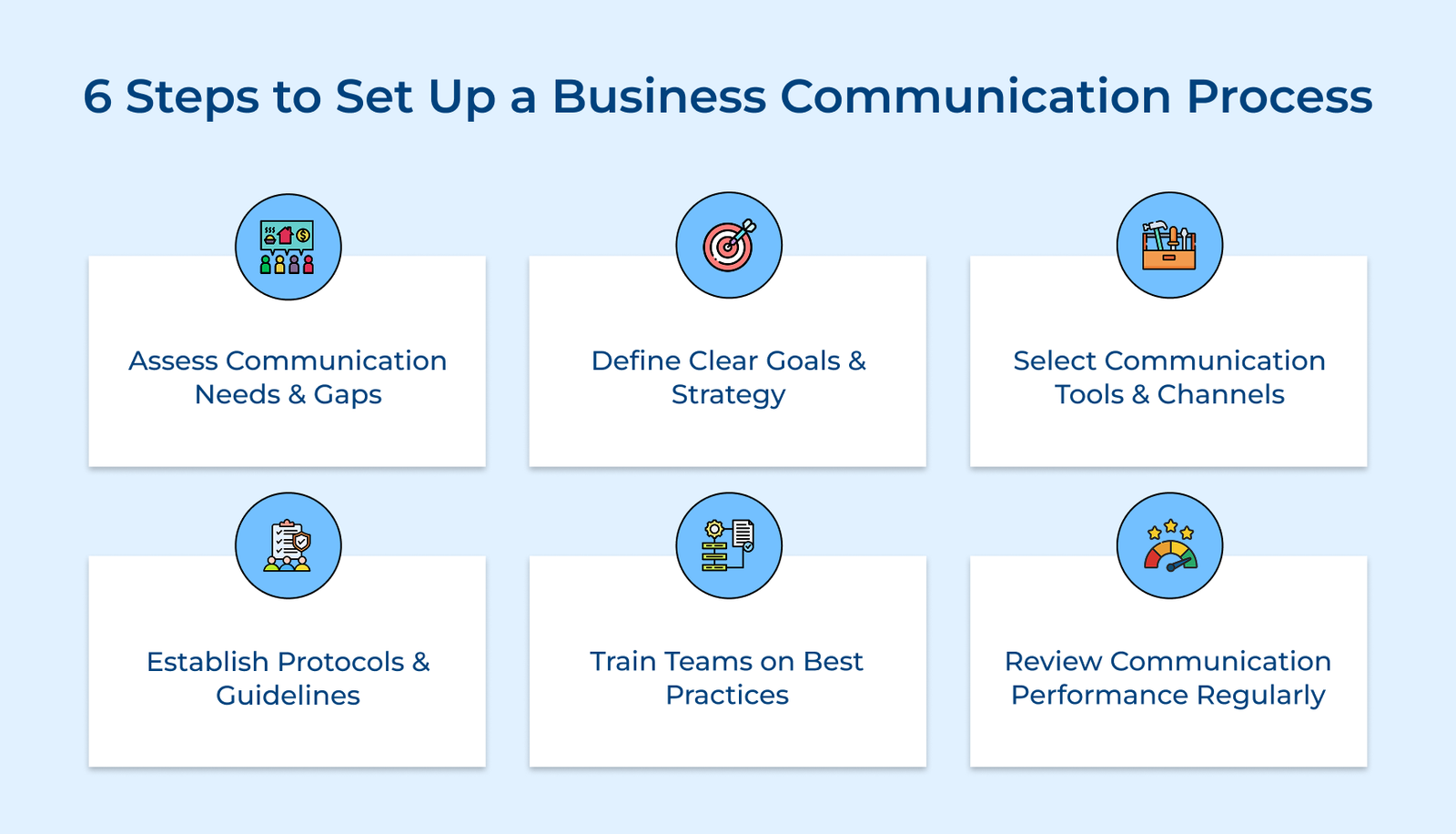
Start by taking a clear, honest look at how communication currently works in your organization and where it doesn’t. The step isn’t about pointing fingers. It’s about mapping out the real flow of information so you can spot where things stall, get lost or lead to confusion.
Key areas:
Don’t stop at tools and processes. Pay attention to team dynamics, workplace habits and how comfortable people are speaking up or asking for clarity. You’re not just trying to install a better system, you’re trying to support real people working together.
Once you understand how your organization currently communicates, the next step is to decide what you want to change and how you’ll get there. It means turning vague frustrations into specific, achievable goals. Start by setting practical objectives that support your larger business priorities. Pin down what matters most, then shape your communication strategy around it.
Key elements:
Make sure your strategy accounts for how different people work. Some may prefer written updates, others quick video calls. Some teams may be spread across time zones. A strong plan respects the differences while keeping communication consistent and easy to follow.
Selecting the right communication tools starts with understanding how your team works–what they need to say, when they need to say it and how they prefer to stay connected. It’s not just about picking the most popular apps, it’s about choosing tools that support how your people get things done.
Aim for a simple, balanced setup. You don’t need a tool for everything; you need the right mix. It might mean using messaging apps for quick updates, video calls for discussions, shared docs for collaboration and project boards to keep track of tasks. The goal is to reduce friction, not add more. Too many tools can slow everyone down. Choose what’s necessary and make sure it all fits together well.
Creating clear protocols and guidelines keeps everyone on the same page. It’s about setting shared expectations so people know how to communicate and what good communication looks like in your organization.
Start by spelling out when to use each channel. Include basic response time expectations so no one’s left wondering when they’ll hear back. Set some ground rules for tone and formatting. It doesn’t need to be rigid, just consistent enough to keep messages clear and professional. Think of it as giving people a helpful structure, not limiting how they communicate.
Effective training means giving people the tools and the confidence to communicate clearly across the organization. It’s not just about knowing how to use the software. It’s about understanding when to use it, how to say things clearly and how to listen just as well.
Key areas:
Learning doesn’t stop after the first session. Ongoing refreshers, coaching from peers and support from managers keep the momentum going as well as help new team members get up to speed faster.
Regular performance reviews let you see what’s working and what isn’t when it comes to communication. They’re not about ticking boxes, they’re about keeping your system honest and useful. You’re looking for gaps, slowdowns, confusion or anything that might be getting in the way of clear, consistent interaction.
Start with clear methods for tracking how communication flows. It could mean reviewing how fast issues get resolved, checking if people are using the right tools or asking teams how easy it is to get the information they need.
Below are the practical tips to enhance your communication skills and create a more efficient workplace.
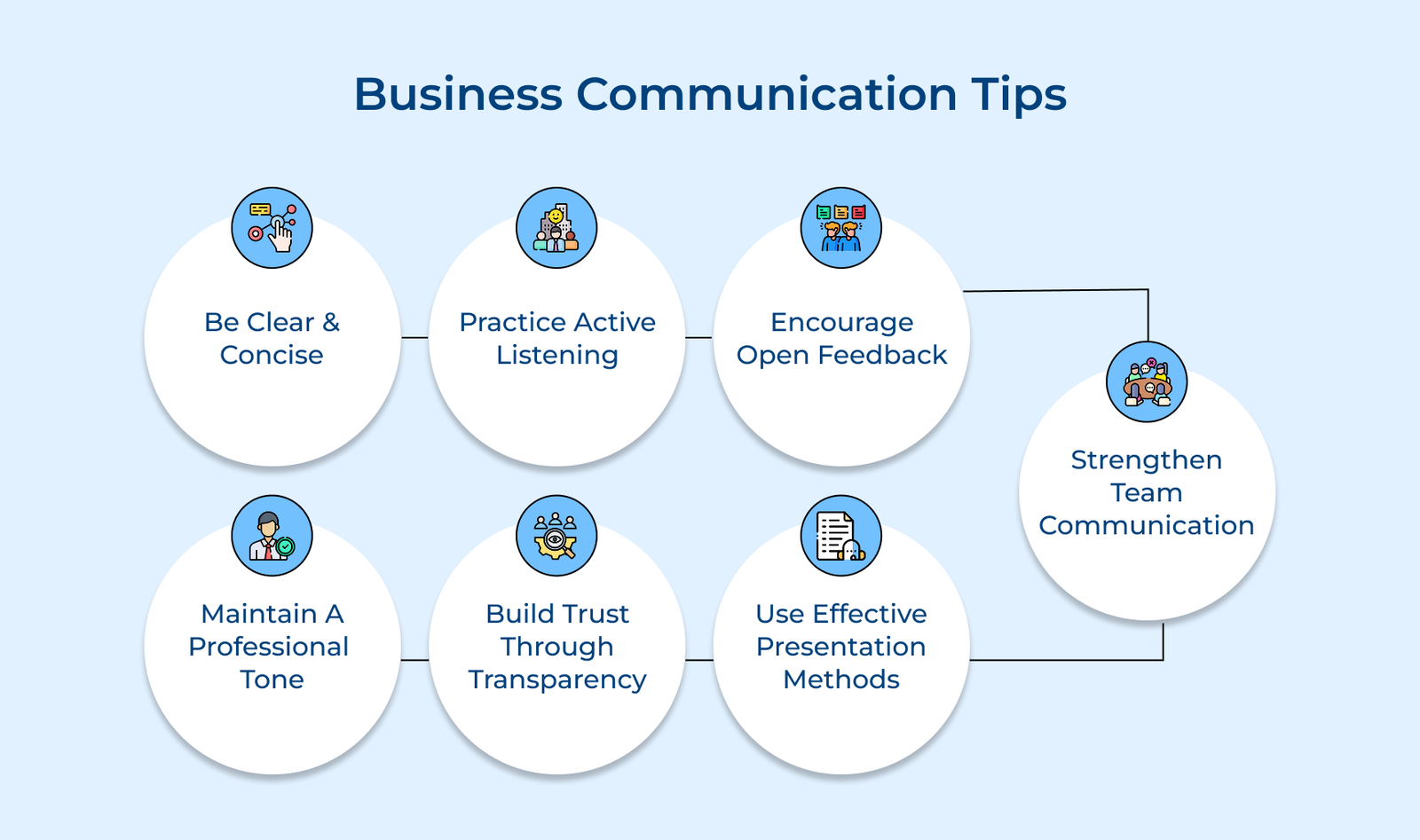
Clear and concise communication forms the foundation of effective business messaging. The approach respects everyone’s time while ensuring messages achieve their intended impact. Organizations can improve their business communication clarity and conciseness through the practices:
Active listening goes beyond simply hearing words – it’s about paying full attention, understanding the message and responding with care. The skill is critical in the workplace. It helps avoid misunderstandings, builds trust, and ensures that important details aren’t overlooked in meetings or conversations.
Different roles in an organization apply active listening in unique ways to enhance communication. Managers use it during reviews and one-on-ones to truly understand their team’s feedback or concerns. Team members practice it during project discussions to grasp task requirements clearly.
Key tips:
Open dialogue and honest feedback help teams work more effectively together. When people feel safe to speak up, share concerns or suggest improvements, it leads to stronger teamwork, better decisions and a more supportive work environment. Transparent communication isn’t just about passing down instructions; it’s about creating a two-way exchange where everyone has a voice.
One common challenge is that some team members may be reluctant to give honest feedback, especially if they’ve had bad experiences in the past or come from cultures where direct communication isn’t the norm. Patience and consistency are key. Over time, trust grows when people see that their input is heard and respected.
Team communication activities are essential for strengthening relationships and improving the flow of information across an organization. When done right, they build trust, encourage openness and help people work together more effectively.
Organize regular team-building sessions
Informal team activities like problem-solving games, group discussions or small collaborative tasks give people a chance to practice communicating in a low-pressure setting. The exercises help teams learn each other’s styles, build rapport and form natural habits for sharing ideas.
Facilitate cross-department project work
When people from different teams work together on shared projects, they bring diverse perspectives and communication challenges. The situations require everyone to listen more carefully, explain their ideas clearly and adjust how they work with others. Over time, the collaboration helps break down silos and makes communication across the organization smoother.
Create informal learning environments
Casual spaces like lunch-and-learn events or open discussion sessions give people room to share what they know without the formality of structured meetings. The environments invite curiosity, promote connection and help build confidence in asking questions, no matter someone’s role or level.
Being able to present information in multiple ways ensures your message lands clearly, no matter the setting or audience. When speaking to a team, leadership, or clients, adapting your delivery helps maintain attention.
Adapt content for audience types
Charts, diagrams, photos or short videos can help explain complex ideas more clearly than words alone. Don’t overload your presentation; each visual should highlight a key point and make it easier to remember.
Include various media for impact
Incorporating different media types like visuals, infographics or interactive elements enhances message retention. Each element should serve a specific purpose in supporting your main message and helping the audience grasp key concepts more easily.
Practice dynamic delivery techniques
Mastering delivery techniques involves understanding pace, tone and body language. Regular practice helps develop confidence in different presentation situations, while feedback from colleagues helps refine your approach.
Transparent communication lays the groundwork for trust in any organization. When leaders and team members share information openly, it creates a culture of respect. People feel more connected and teams work better together.
Trust-driven communication is especially important during uncertain times. When organizations are honest, listen to concerns and keep everyone informed, it reduces confusion. People feel included and are more likely to speak up.
Key strategies:
A consistent, professional tone in communication reinforces an organization’s values and builds trust with stakeholders. It ensures clarity, prevents misunderstandings and presents the organization as thoughtful across all interactions.
When tone remains steady, messages become easier to interpret and align more closely with organizational expectations. While different channels may require slight adjustments in style, the underlying tone should always reflect professionalism and respect.
Key strategies:
Let us go through the various business communication channels and how to leverage them effectively to drive success for your organization.
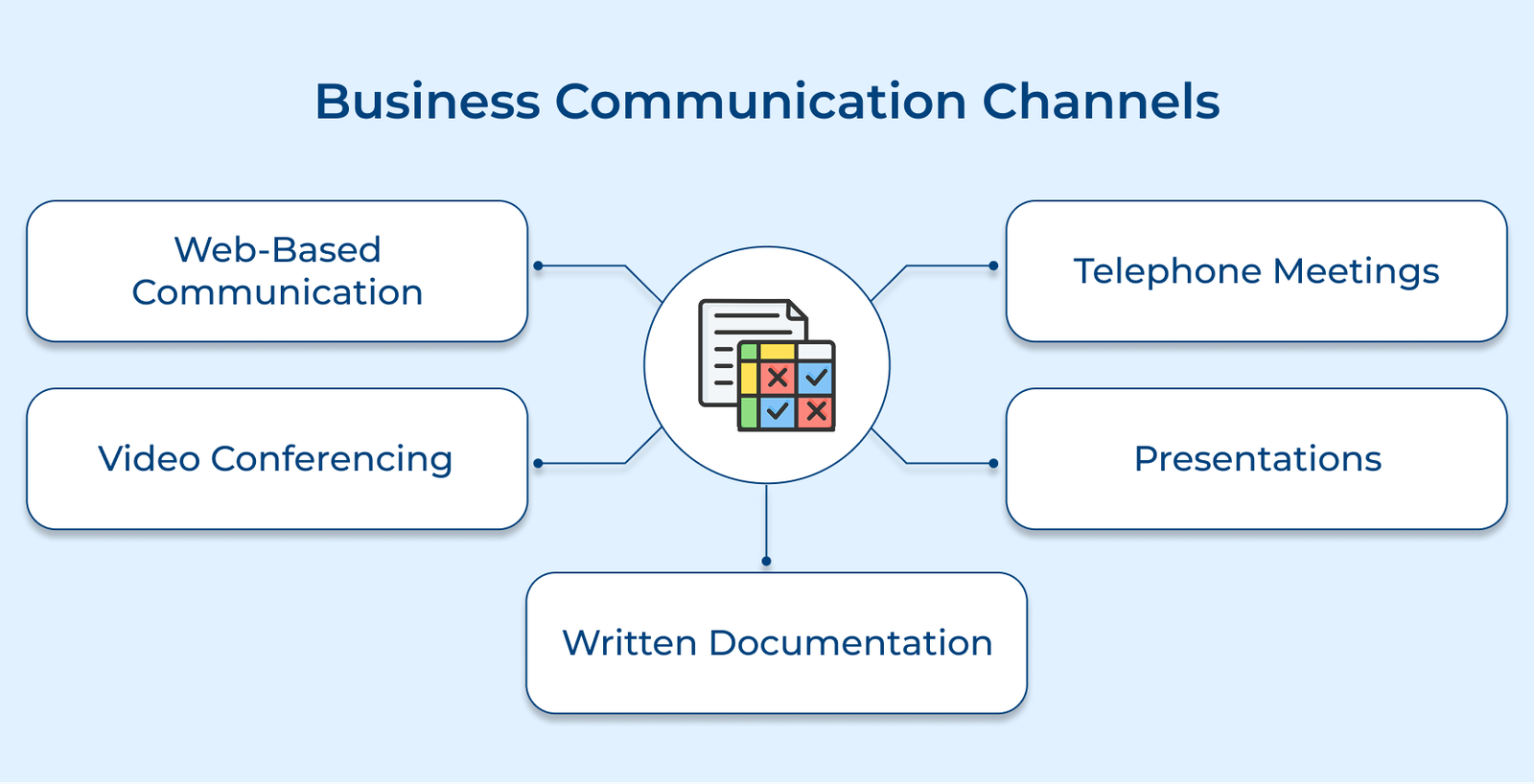
Web-based Communication
Digital tools like email, instant messaging and online collaboration platforms are central to modern business communication. They enable fast information exchange, easy file sharing and keep records of conversations for future reference. The tools are particularly useful for teams working across time zones, as they support asynchronous communication that doesn’t rely on immediate responses.
Telephone Meetings
Voice calls continue to play an important role in business communication. They offer real-time conversation, help clarify complex topics quickly and build stronger connections through tone. Telephone meetings are especially effective for sensitive discussions that benefit from a personal touch but don’t require video.
Video Conferencing
Platforms like Zoom and Microsoft Teams bring teams together virtually, allowing participants to read facial expressions, observe body language and collaborate using screen sharing. Video calls offer a more personal way to discuss issues, share progress and maintain team connection, especially for remote or hybrid work environments.
Presentations
Presentations are a clear way to share ideas and information with a group. They combine spoken content with visuals to explain ideas clearly and keep audiences engaged. Presentations are often used for project updates, training sessions or introducing strategic plans.
Written Documentation
Reports, memos and formal documents provide a clear, lasting record of key information. The written materials support consistency, reduce misunderstandings and offer a reliable reference for decisions, policies or procedures. They help ensure that critical details are accessible long after the conversation ends.
Below are the significant problems that well-structured business communication strategies can help resolve.
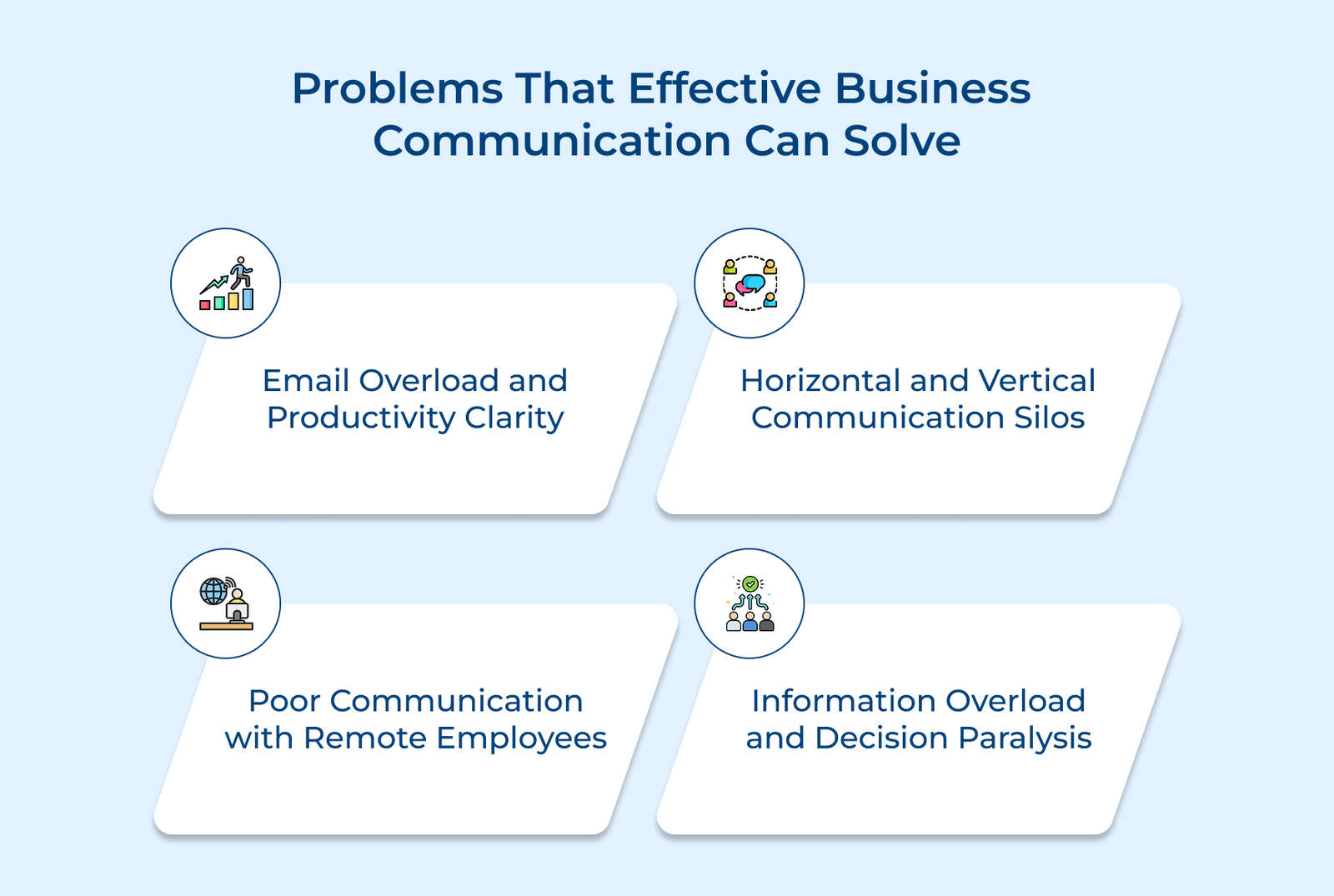
Clear communication systems help reduce the time employees spend sorting through emails. When organizations set guidelines for what messages are urgent and which can be shared through other channels, teams avoid unnecessary back-and-forth. The approach frees up time for focused work and helps prevent burnout from constant email checking.
Strong internal communication isn’t just about passing messages; it’s about making sure information flows where it’s needed. When companies create clear lines of communication both across departments (horizontal) and between different levels of the organization (vertical), teams collaborate more easily.
Remote workers need more than just tools, they need consistent, reliable communication. Regular check-ins, clear expectations and structured virtual interactions help remote employees stay connected to the team. The support ensures they can contribute effectively and stay in sync with what’s happening across the organization.
Too much information can slow down decision-making. Companies can help employees focus on what matters by organizing how updates and data are shared. A clear framework for sharing essential details without overwhelming people leads to quicker decisions and fewer misunderstandings.
Below are three companies that have transformed their operations and achieved significant results through strategic communication practices.
Microsoft teams evolution
Microsoft used its own Teams platform to shape how employees communicate across the organization. The company created a living test environment for new features by encouraging staff to use Teams channels for project updates, idea sharing and cross-functional collaboration.
The approach results in better tools, clearer communication across departments and stronger alignment between employees as well as leadership. Microsoft’s use of Teams reflects a practical approach to improving both product and workplace communication.
Starbucks partner communication
Starbucks created a mobile-first communication system that connects baristas and store managers directly with corporate teams. Store employees can share feedback and suggestions through a dedicated app, helping leadership stay in touch with what’s happening on the ground.
The setup has shortened the feedback loop between store operations and decision-makers, allowing the company to respond more quickly to issues. It’s improved how the company supports its staff and has made it easier to make small changes that have a big impact on daily operations.
Slack’s internal communication framework
Slack has built a clear set of internal communication guidelines for using its own tool. Teams follow consistent practices, like how to name channels, what types of messages go where and how quickly to respond so everyone stays on the same page. The habits are documented and shared internally to help new teams ramp up quickly.
The system keeps communication organized without getting in the way. It supports fast decision-making while helping the company scale. Slack’s internal structure mirrors the values of the product itself: clarity, flexibility and simplicity.
Effective business communication is essential to organizational success. When companies use clear strategies, choose the right channels and maintain a professional tone, they create an environment where information moves smoothly. It helps teams work better together, make informed decisions and reach their goals more efficiently.
Strong communication isn’t just about sharing facts, it’s about building trust, strengthening relationships and creating a workplace where people feel informed. Organizations lay the groundwork for long-term success that influences not only daily operations but also the work culture by developing practical communication systems.

The communication services your business needs depend on your organization’s size, structure and workflow patterns. Start by assessing your team’s daily communication requirements, like real-time collaboration, document sharing and client interactions. Consider factors such as remote work needs, team distribution and security requirements. A mix of tools typically works best, including messaging platforms, video conferencing solutions and project management systems.
Clear communication helps teams avoid confusion, work faster and stay focused on the right goals. It builds trust among employees and keeps projects on track. When people know what’s expected, they can do their jobs better and that leads to stronger results across the board.
Start by reviewing how your team currently communicates and where things break down. Choose tools that match your needs, like messaging for quick updates, email for formal communication or video calls for meetings. Roll things out gradually and make sure everyone is trained on how to use them. Keep the system simple and consistent so it becomes second nature.
Simplify how information moves through your team. Define who needs to know what and when. Use templates for repeated messages and automate routine updates where it makes sense. Regularly check in with your team to see what’s working and what’s not. Make sure everyone understands how to choose the right method, it’s a quick chat, an email or a meeting.

Grow Customer Relationships and stronger team collaboration with our range of products across the Conversational Engagement Suite.
Omnichannel Customer Support & Help Desk Software
AI Enabled Business Messaging and Chatbot Software
Sales Engagement & CRM Software
Call Center Software & Virtual Phone System
Product Marketing & Experience Platform
Customer Experience & Feedback Management Software

 Sales Pipeline Review: Importance, Steps & Challenges
Scroll to top
Sales Pipeline Review: Importance, Steps & Challenges
Scroll to top