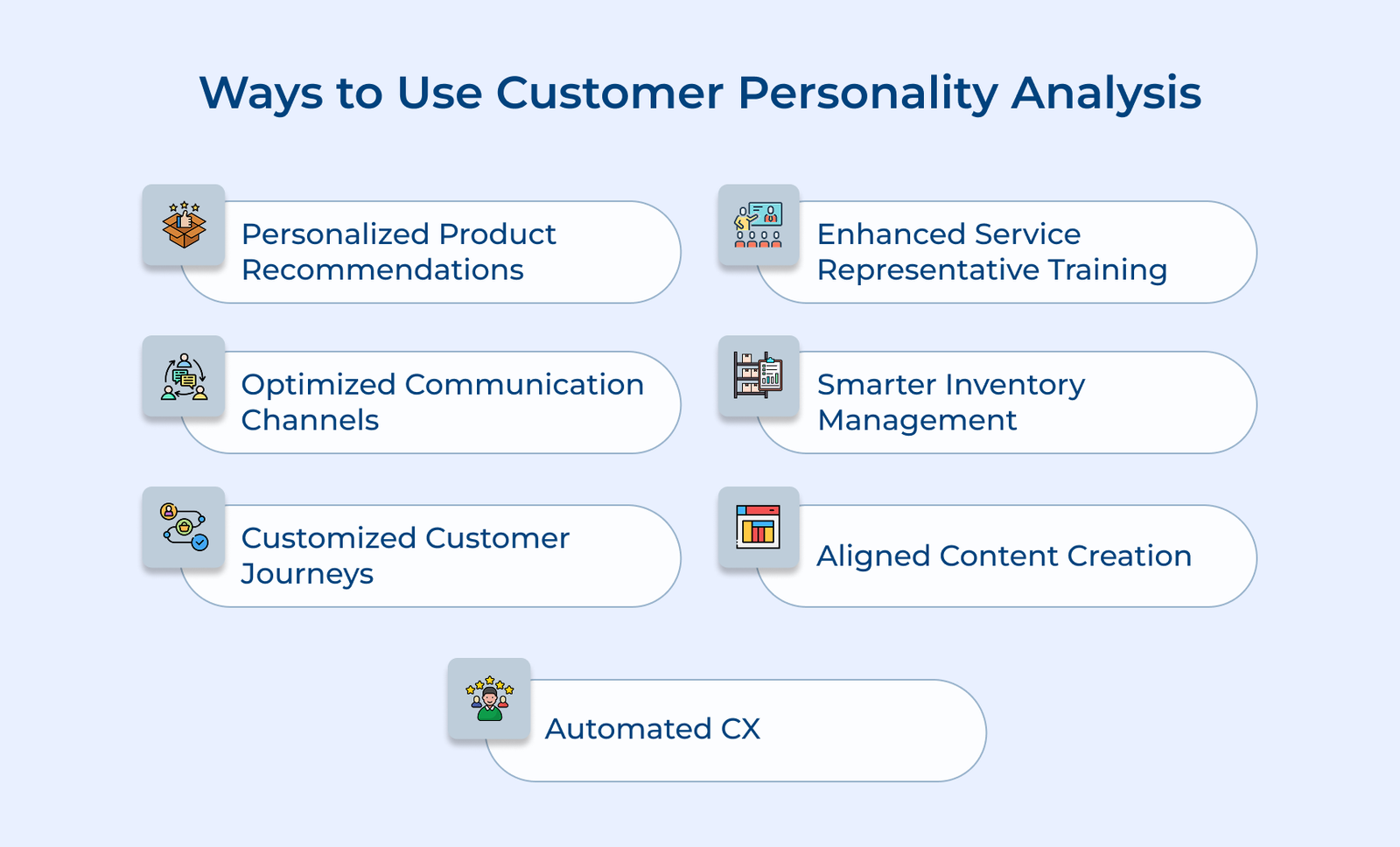
1. Personalized Product Recommendations Engine Development
A personalized product recommendation engine uses customer personality insights to suggest items that reflect individual preferences and behavior patterns. Instead of relying only on past purchases, it looks at the underlying reasons behind customer choices.
Companies build the engines by analyzing a mix of browsing habits, buying history and personality traits. Let’s assume that a bookstore might recommend challenging nonfiction to detail-oriented readers, while offering vibrant cookbooks or art guides to more visually driven, creative types.
Pro tips:
- Use a mix of real-time behavior and historical data to make sure the recommendations change as customer preferences shift. It helps keep suggestions fresh and more in tune with current interests or seasonal habits.
- Run A/B tests to see how people with different personalities respond to various types of recommendations like lists, carousels or bundles. It allows businesses to fine-tune how products are presented and improve how well the engine works over time.
2. Communication Channel Strategy Optimization
Communication channel strategy optimization means choosing the right ways to reach different customer personality types based on how they prefer to communicate. Not everyone wants to receive information the same way, some prefer a quick message, while others want details they can take time to read.
The approach starts by linking personality types with preferred channels. A detail-focused customer might want clear, in-depth emails. Someone more social or spontaneous might respond better to mobile app notifications or short text updates. Timing also matters as some people engage right away, while others prefer fewer, more spaced-out messages.
Actionable tips:
- Build a shared communication calendar that coordinates messages across all platforms. Keep the voice consistent but adjust the style depending on the customer type.
- Write channel-specific content guidelines that explain how to shape tone, length and structure depending on both the platform as well as the customer’s personality.
3. Customer Journey Path Customization
Customer journey path customization means shaping the website experience to fit different personality types. It recognizes that not all customers explore or make decisions the same way. Businesses can make the experience feel more natural by adjusting the journey to match how someone thinks and acts.
Creating personalized navigation systems
A flexible navigation setup adapts to how different users prefer to browse. Analytical visitors might see in-depth product specs right away, while spontaneous shoppers get simplified views with strong visuals or quick summaries. As customers interact with the site, the system adjusts to better fit their browsing habits over time.
Building targeted conversion processes
Each type of buyer needs a different path to complete a purchase. Those who like to weigh options will want side-by-side comparisons and detailed descriptions. Others who decide quickly will prefer fewer steps and more emotionally driven messages. Matching the structure of the funnel to the personality keeps the experience smooth and focused.
Implementing smart content delivery
The website adapts instantly to each visitor’s actions. As someone browses, the layout, product details, and even button text adjust to match their behavior. With every visit, the system learns more, fine-tuning what’s shown to create a smoother, more relevant experience.
4. Service Representative Training Enhancement
Service representative training enhancement focuses on giving support teams the tools to understand and respond to different personality types. It’s about helping reps recognize who they’re speaking to and adjust how they communicate, so the interaction feels more natural to the customer.
Creating personality response guidelines
Service teams are trained to spot personality clues in how customers speak or write, like tone, word choice, or how quickly they get to the point. Reps learn how to shift their tone, speed and level of detail depending on what the customer seems to prefer. It makes conversations smoother and more effective.
Developing communication template systems
Template systems give reps a starting point for responses based on different personality types. They aren’t rigid scripts but flexible outlines that reps can adapt based on how the conversation is going. The goal is to stay consistent while still making the response feel personal.
Building detection tool integration
Real-time tools can analyze patterns in customer communication as the interaction happens. The tools suggest personality insights to the rep, helping them adjust their style on the spot. The system also learns over time by studying which approaches work best in different situations.
5. Inventory Management Process Integration
Inventory management process integration combines personality insights with stock planning to keep the right products available for the right customers. It’s about matching supply with what different types of customers actually want so shelves aren’t overcrowded with items that won’t sell and popular products don’t run out. The approach helps businesses stay better prepared and more responsive.
- Predictive analytics systems look at past buying behavior across personality segments to forecast demand more accurately. Businesses can plan ahead and avoid guessing what to stock by seeing how different types of customers buy over time.
- Personality-based inventory allocation models distribute products across stores based on the kinds of customers who usually shop there. A store with more traditional shoppers might get more timeless pieces, while locations with trend-driven shoppers stock newer, bolder styles.
- Dynamic reordering systems adjust how much of a product is reordered depending on how different personality types react to availability. If one group tends to stop buying when their favorites are out of stock, the system raises reorder alerts sooner for those items.
- Real-time inventory tracking systems keep tabs on current stock levels and flag when personality-preferred items are running low. It helps keep important products available when they’re needed most.
6. Content Creation Strategy Alignment
Content creation strategy alignment involves shaping content to fit the way different personality types think and engage. It works on the idea that people don’t all absorb information the same way. Businesses can make communication more natural by matching content style and format to personality preferences.
Developing strategic content themes
Content is planned around how different types of customers prefer to learn and explore topics. Analytical personalities get detailed guides and deep dives, while visual thinkers prefer videos or infographics. The goal is to make sure each group finds something that feels made for them.
Creating multi-format content systems
Each piece of content is repurposed into several formats to suit different personalities. Let’s consider that a new product launch might come with a technical breakdown for logical minds, a quick video for visual types and an interactive tool for those who like to try things out.
Building smart delivery methods
The system looks at personality data to decide the best time and format to deliver content. Someone who prefers to read in the morning gets a detailed article in their inbox, while evening scrollers get shorter, easier-to-skim content. The system keeps learning from what works and adjusts over time.
7. Customer Experience Automation Design
Customer experience automation design creates personalized automated interactions based on customer personality insights. The approach helps businesses provide consistent personalized service at scale. The strategy ensures that automated touchpoints feel as personal and relevant as human interactions while maintaining efficiency.
Designing smart chatbot systems
Chatbots are programmed to recognize and respond to different personality types through language analysis. Technical personalities receive precise, detailed responses, while social personalities get friendly, conversational interactions. The system adapts its communication style based on customer cues.
Creating personality-based service flows
Each customer has a unique approach to problem-solving. Some want quick solutions with minimal steps. Others want to understand every detail. The service process adjusts accordingly, offering short, action-driven paths to one customer and detailed guides to another.
Implementing predictive support tools
Automated systems learn from past interactions to predict what each customer might need next. Someone who usually solves issues on their own might get a help article before they even ask. Others, who prefer speaking to a person, are offered a human agent right away. The system gets better over time by learning from what works.
Example of Customer Personality Analysis
Check out the examples of customer personality analysis given below to understand how they can be applied to enhance consumer engagement.
1. Netflix
Netflix tracks how people watch, what they choose, when they watch it and how long they stay with certain shows. But they don’t stop at genres. They look at what people watch to understand them, from those who enjoy familiar shows to those who like dramas or action-packed stories. It shapes not only what Netflix recommends but also how it organizes the platform for different users.
2. Amazon
Amazon watches how people shop, from how they browse and compare items to how they respond to deals. The patterns reveal how different personality types make decisions. A practical buyer might focus on specs and reviews, while an impulsive shopper moves faster through checkout. Amazon uses the insight to adjust what each customer sees and how it’s presented, making the process smoother for everyone.
3. Starbucks
Starbucks tracks how customers order, what they customize and which rewards they use through its app as well as the loyalty program. The details say a lot about who’s in a rush, who likes routine and who enjoys trying new things. Starbucks uses it to tailor experiences as some stores emphasize speed and convenience, while others lean into the relaxed, social vibe.
4. Sephora
Sephora studies how shoppers explore beauty products, whether they rely on staff advice, follow tutorials or prefer self-directed browsing. It helps them understand who likes detailed explanations, who prefers visuals and who’s more likely to experiment. They use the insight to adjust everything from sample offers to how they recommend products online and in-store.
5. Nike
Nike gathers data from its apps and membership program to understand how people shop. Some users chase performance goals and compete in challenges, while others focus on staying active and healthy. Nike uses the differences to shape how they design products, suggest workouts and build community features, making sure each type of user stays engaged in their way.
Challenges Faced when Performing Customer Personality Analysis
Below are the challenges businesses encounter when implementing client personality analysis and their potential solutions.