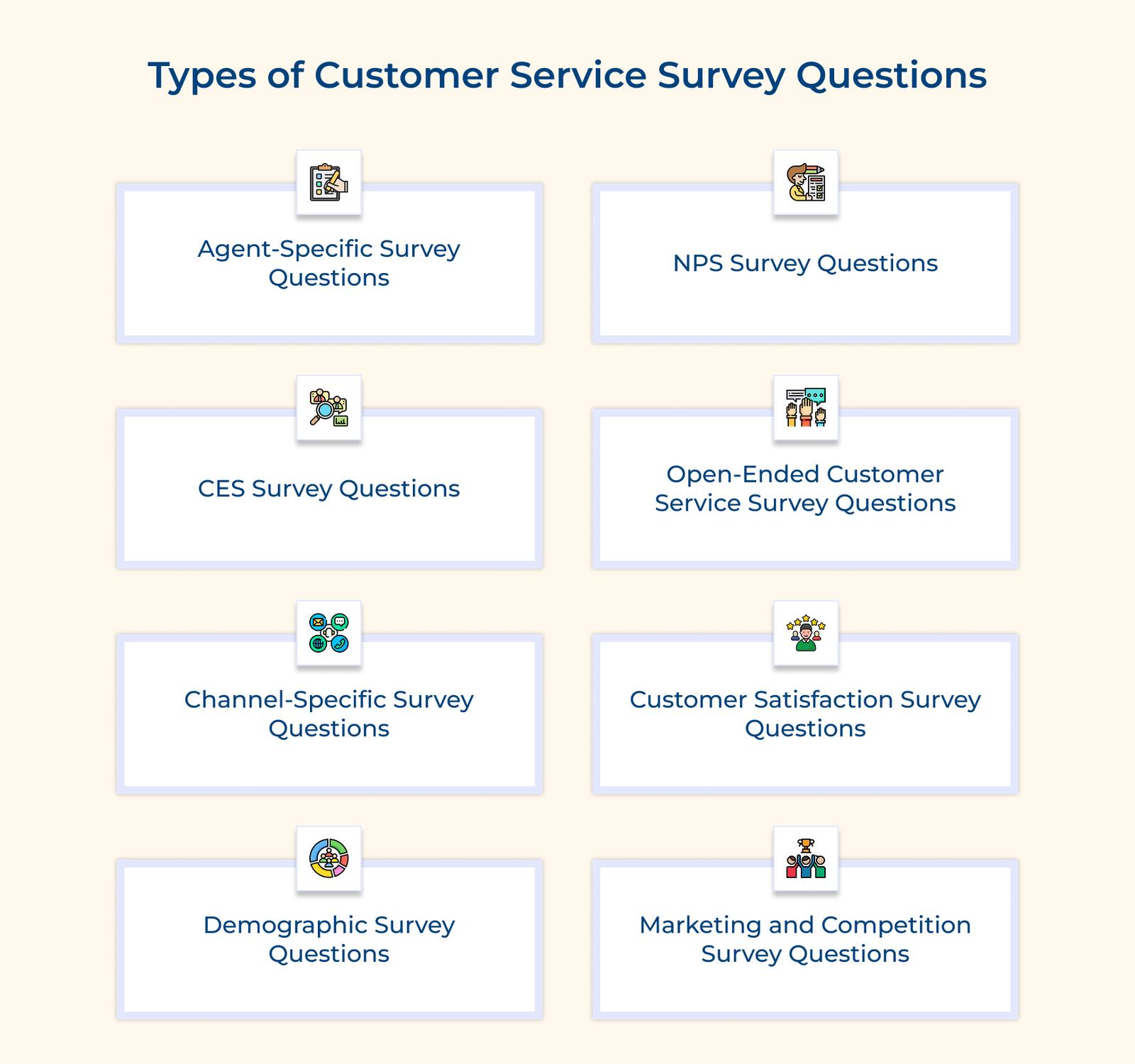
1. Agent-Specific Survey Questions
Agent-specific questions assess individual performance, professionalism and effectiveness during customer interactions. They evaluate key aspects like knowledge, communication, problem-solving and overall demeanor.
The questions are vital for identifying training needs, recognizing top performers and ensuring consistent service quality. They provide actionable insights for employee development, helping maintain high standards while pinpointing areas for improvement.
Example Questions:
1. “How knowledgeable was [Agent Name] about our products/services?”
The question evaluates the agent’s product knowledge and ability to provide accurate information. It helps identify if further training is needed or if the agent is effectively communicating updates, ensuring they can handle inquiries confidently without escalation.
2. “Did [Agent Name] solve your issue promptly?”
The query measures the agent’s efficiency and problem-solving skills, highlighting if issues are resolved quickly or if time management is a challenge. The feedback helps refine service protocols and identify any bottlenecks in the resolution process.
3. “How well did [Agent Name] communicate throughout your interaction?”
The question evaluates the agent’s communication, clarity and professionalism, ensuring they maintain the right tone. Feedback guides training and helps establish best practices for customer interactions.
4. “Would you want to work with [Agent Name] again for future support?”
The question measures satisfaction with the agent and their ability to build rapport, revealing whether they leave a positive, lasting impression on customers. The answers help identify agents who excel at building customer relationships and those who might need additional coaching.
5. “How empathetic was [Agent Name] to your situation?”
The question evaluates the agent’s emotional intelligence to connect with customers, measuring how well they understand and respond to customer emotions. The feedback guides training on soft skills and emotional intelligence, crucial for handling sensitive customer situations.
2. NPS (Net Promoter Score) Survey Questions
NPS questions measure customer loyalty and the likelihood of recommending products or services. Using a 0-10 scale, respondents are categorized as Promoters (9-10), Passives (7-8) or Detractors (0-6), yielding an overall NPS score.
NPS is a key indicator of business growth, offering a standardized metric to track performance across industries and time. It helps businesses gauge satisfied customers and pinpoint areas for improvement.
Example Questions:
1. “On a scale of 0-10, how likely are you to recommend our company to friends or colleagues?”
The core NPS question gauges customer satisfaction and loyalty by asking how likely customers are to recommend the company. Responses help calculate the NPS score and track shifts in customer sentiment over time.
2. “What is the primary reason for your score?”
The follow-up question uncovers the reasons behind the NPS rating, offering valuable context and actionable insights. It highlights key drivers of satisfaction and areas for improvement.
3. “What could we do to improve your experience with us?”
The question focuses on areas for improvement, particularly from detractors and passives, gathering actionable feedback to enhance service. It uncovers customer pain points and potential solutions.
4. “What features or services do you value most about our company?”
The question highlights the key aspects of your business that promoters value most, revealing what drives customer loyalty and satisfaction. The feedback helps reinforce successful practices and highlight competitive advantages.
5. “How long have you been our customer?”
The question explores the link between customer tenure and loyalty, revealing how satisfaction evolves. It helps identify key stages in the customer lifecycle that impact loyalty.
3. CES (Customer Effort Score) Survey Questions
Customer Effort Score (CES) measures how much effort customers need to resolve issues or use products/services. Using a numbered scale, it gauges the ease of interaction and resolution.
CES highlights friction points in the customer journey, predicting loyalty and repeat business. Lower effort equals higher satisfaction and retention, making it essential for optimizing service.
Example Questions:
1. “On a scale of 1-7, how easy was it to get your issue resolved today?”
The core CES question gauges the effort required during the service interaction, providing a key measure of service accessibility and efficiency. Responses help track service optimization efforts and identify areas where processes can be streamlined.
2. “How many interactions did it take to resolve your issue?”
The question measures the number of touchpoints required to resolve an issue, highlighting inefficiencies and areas for streamlining the service process. The data helps optimize service paths and reduce unnecessary customer contacts.
3. “Were you able to find the information you needed easily on our website/app?”
The query evaluates the effectiveness of self-service options, helping determine if digital resources are efficiently meeting customer needs. Feedback guides improvements in digital interface design and content organization.
4. “Did you have to repeat your information to multiple representatives?”
The question reveals communication gaps between departments or agents, assessing internal process efficiency and information sharing. Responses highlight areas for better system integration or process improvements.
5. “How much time did you spend trying to resolve your issue?”
The question measures the actual time customers invest, quantifying the impact of service interactions on their time. Data helps set appropriate service level agreements and response time goals.
4. Open-Ended Customer Satisfied Survey Questions
Open-ended questions invite customers to share detailed feedback in their own words, offering insights into their experiences, suggestions and concerns without being restricted by preset options.
The questions uncover nuanced feedback, providing valuable qualitative data to better understand customer sentiment and identify new opportunities for improvement.
Example Questions:
1. “What aspect of our service could we improve to better serve you?”
The open-ended question encourages customers to share improvement suggestions, revealing pain points that might be overlooked in structured questions. Responses often reveal unexpected areas for improvement and innovative solution ideas.
2. “Please describe your recent experience with our company in detail.”
The question gathers detailed feedback on customer interactions, offering context-rich insights into the entire customer journey. The detailed responses help identify patterns in customer experiences and expectations.
3. “What made you choose our product/service over competitors?”
The query uncovers key differentiators from the customer’s viewpoint, highlighting what makes your offering most appealing. Responses help refine value propositions and enhance marketing messages.
4. “If you could change one thing about our service, what would it be?”
The question directs customer feedback to their top priority, helping prioritize improvements based on what matters most to them. Responses highlight the most impactful areas for immediate improvement.
5. “What additional products or services would you like us to offer?”
The query collects ideas for product and service expansion, identifying market opportunities or unmet customer needs. Feedback informs product development and growth strategies.
5. Channel-Specific Survey Questions
Channel-specific questions assess customer experiences across various platforms (phone, email, chat, social media, in-person), evaluating service effectiveness and consistency.
Understanding channel performance helps optimize resources, improve training and ensure consistent quality across all touchpoints, guiding investment in channel development.
Example Questions:
1. “How satisfied were you with our [channel name] support service?”
The question measures satisfaction with specific channels, helping compare their effectiveness and identify areas for improvement. Responses guide channel-specific improvements and resource allocation decisions.
2. “Was this channel your preferred method of contacting us?”
The query reveals customer channel preferences and expectations, helping determine if they’re using channels by choice or necessity. Data helps optimize channel availability and accessibility based on customer preferences.
3. “How would you rate the response time on the channel?”
The question measures service speed across different channels, helping set and track service level agreements. Feedback guides staffing and response time improvements for each platform.
4. “Did you need to switch to another channel to resolve your issue?”
The question identifies friction points across channels, revealing if they’re fulfilling their intended roles. Responses highlight areas for improvement or better integration.
5. “How easy was it to navigate our [channel name] support system?”
The query evaluates channel usability and accessibility, pinpointing areas for interface or process improvements. Feedback drives user experience enhancements across each service channel.
6. Customer Satisfaction Survey (CSAT) Questions
CSAT questions measure immediate satisfaction with interactions, products or services using rating scales and follow-up questions for context.
CSAT scores deliver direct feedback on customer experiences, track satisfaction trends and provide quick insights into service quality, highlighting both issues as well as successes.
Example Questions:
1. “How satisfied were you with your overall experience today?”
The core CSAT question gauges immediate satisfaction with the entire interaction, offering a quick snapshot of service quality. Responses help track general satisfaction trends and identify service variations.
2. “Did our service meet your expectations?”
The question compares the service delivered with customer expectations, helping determine if it meets their needs and standards. Feedback helps adjust service standards and training programs appropriately.
3. “How satisfied were you with the quality of our product/service?”
The query focuses on satisfaction with product/service quality, helping separate product issues from service delivery concerns. Responses inform product improvements and quality control efforts.
4. “Was your issue resolved to your satisfaction?”
The query measures how effectively issues are resolved, highlighting gaps between service delivery and customer needs. The data helps improve first-contact resolution rates and service effectiveness.
5. “Would you use our service again based on the experience?”
The question measures how satisfaction influences future behavior, helping predict customer retention and repeat business. Responses reveal experiences that could lead to customer churn.
7. Demographic Survey Questions
Demographic questions gather key customer information, such as age, location, income and profession, to help segment your audience.
The data enables targeted service improvements, identifies market segments and supports personalized delivery. It also provides context for survey responses and uncovers patterns in customer behavior.
Example Questions:
1. “Which age group do you belong to?”
The question reveals the age distribution of your customers, helping identify age-related patterns in service preferences and satisfaction. Data guides age-appropriate service adaptations and marketing strategies.
2. “What is your primary industry/profession?”
The question uncovers the professional characteristics of your customer base, helping you understand industry-specific needs. Responses guide the development of tailored solutions and services.
3. “In which geographic region are you located?”
The query reveals the geographical distribution of your customers, supporting regional service planning, resource allocation and location-specific improvements or expansion efforts.
4. “How frequently do you use our product/service?”
The usage-based question segments customers by engagement level, helping you understand relationship intensity and customer value. Responses guide loyalty programs and engagement strategies.
5. “What is your preferred language for communication?”
The question identifies language preferences, guiding multilingual service delivery and communication strategies. The data helps optimize language support and translation services.
8. Marketing And Competition Survey Questions
Marketing questions assess brand awareness, competitive positioning and marketing effectiveness, helping you understand customer perceptions with your brand.
The insights refine marketing strategies, highlight competitive advantages and guide resource allocation to strengthen market positioning.
Example Questions:
1. “How did you first hear about our company/product?”
The question tracks the impact of various marketing channels, helping identify which efforts are most effective in driving customer acquisition. The responses help optimize marketing budget allocation and channel selection for maximum impact.
2. “What other brands did you consider before choosing us?”
The query identifies key competitors and the factors influencing customer decisions, revealing alternative options they consider. Feedback provides valuable insights into the competitive landscape and opportunities for better positioning.
3. “What makes our product/service unique compared to competitors?”
The question highlights perceived competitive advantages from the customer’s perspective, helping identify key differentiators that resonate with them. Responses guide messaging strategy and help reinforce unique value propositions.
4. “How would you rate our prices compared to similar products/services?”
The question evaluates price positioning and value perception, helping determine if your pricing aligns with customer expectations. The data informs pricing strategies and how you communicate value.
5. “Which of our marketing messages resonated most with you?”
The question measures the impact of specific marketing messages and campaigns, revealing which ones drive customer engagement. Feedback helps refine marketing messages and campaign strategies.
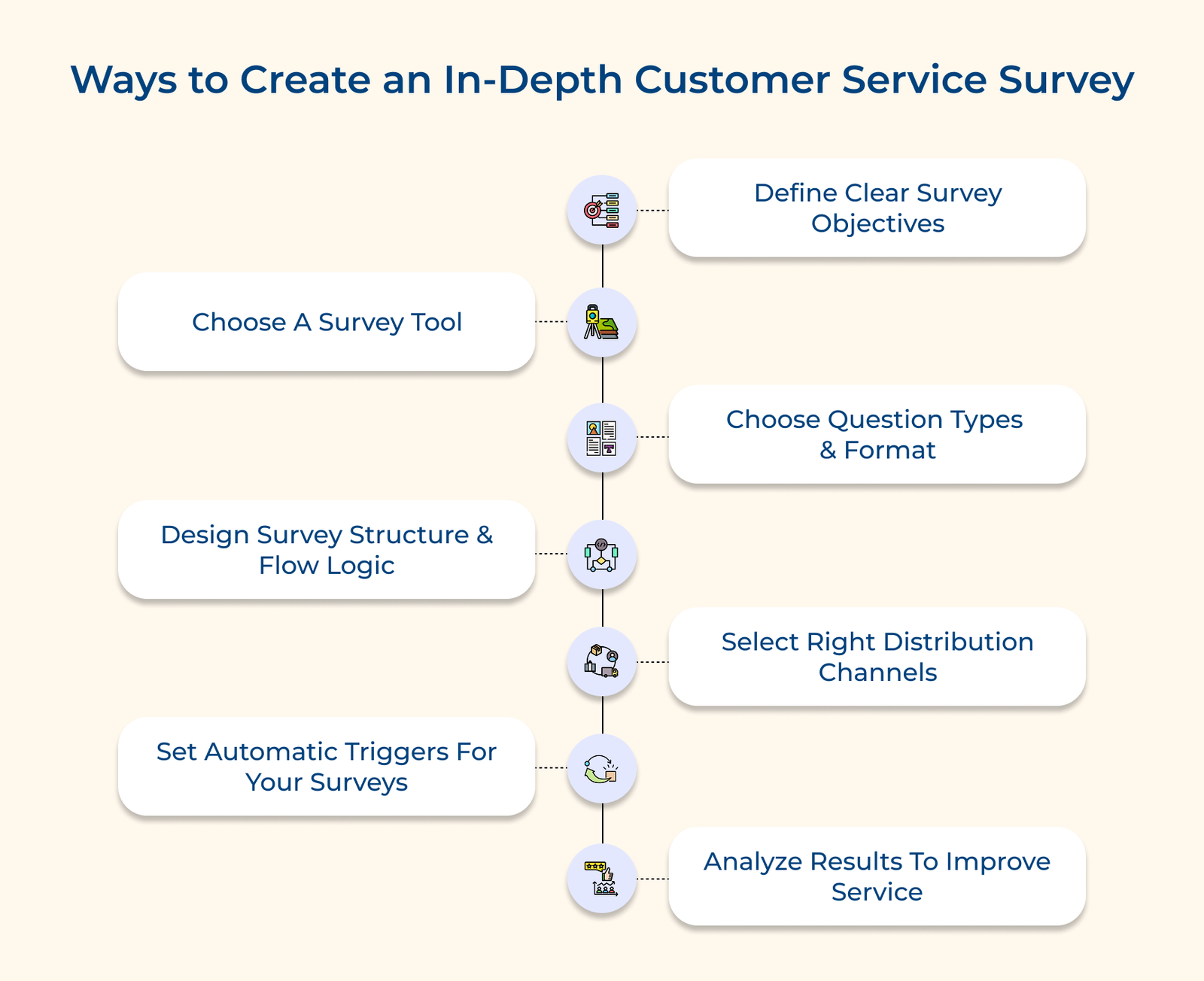
How do you Create an In-Depth Customer Service Survey?
Let’s go though the essential steps you need to take to create an in-depth customer satisfaction service survey that yields meaningful results.