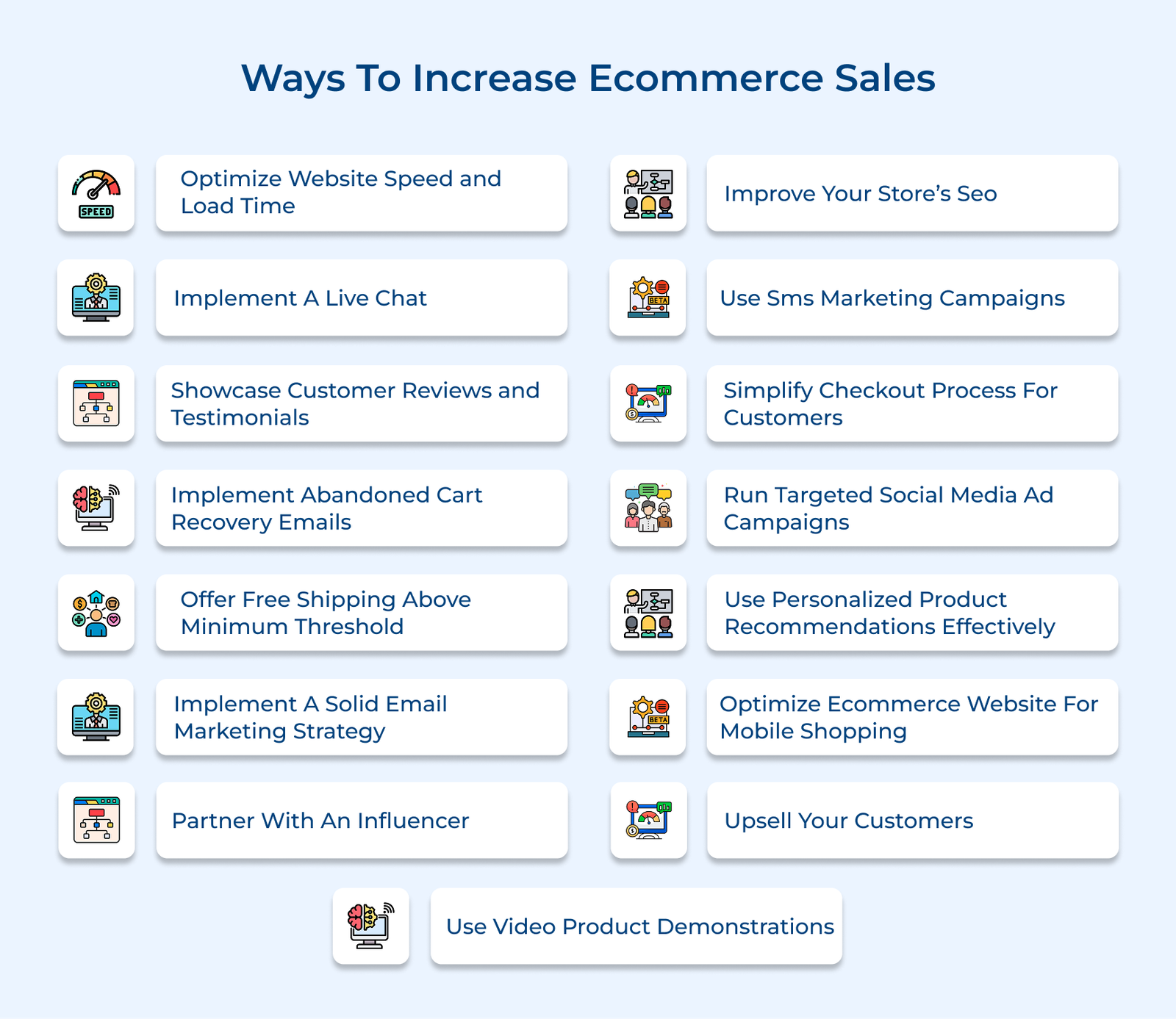
1. Optimize Website Speed and Load Time
Website speed is crucial for ecommerce success, directly affecting user experience, conversion rates, bounce rates and SEO rankings. Optimizing images through compression and minimizing code are key steps. High-quality images can slow down loading times, so compressing them without losing visual quality is essential.
Minifying CSS, JavaScript and HTML reduces file sizes, boosting load speed. Choosing a reliable hosting service ensures consistent uptime and handles traffic spikes. Browser caching speeds up page loads by storing data on visitors’ devices, reducing server requests.
Actionable tips:
- Use tools like GTmetrix or Google PageSpeed Insights to track your website’s performance and pinpoint areas for speed improvement.
- Implement a Content Delivery Network (CDN) to distribute static content across global servers, reducing load times for visitors worldwide.
2. Implement a Live Chat
Live chat leads to a 48% increase in revenue per chat hour and a 40% increase in conversion rate. The quick response helps reduce hesitation and guide customers through their purchase journey. Proactively using chat triggers can lower cart abandonment by addressing issues or last-minute questions during checkout, ensuring customers complete their purchases.
Let’s assume that a home appliance ecommerce store found that customers who used the live chat feature were 3x more likely to complete their purchase, particularly for high-value items needing technical clarification.
Pro tips:
- Train chat operators to strike the right balance between proactive support and avoiding intrusiveness, using smart triggers based on user behavior like page time or cart value.
- Build a detailed FAQ database to ensure consistent, accurate responses while keeping conversations personalized.
3. Showcase Customer Reviews and Testimonials
Customer reviews and testimonials are vital for building trust. Authentic feedback reduces hesitation and guides potential buyers in making informed decisions. Verified purchase reviews enhance transparency, while features like review badges and purchase dates add authenticity.
Photo and video reviews, paired with star ratings, offer valuable insights into product quality, size and usage. Visual content from real customers provides genuine perspectives, while star ratings give a quick clear assessment of product reliability.
Best practices:
- Set up an automated review request system that sends follow-up emails a few days after purchase, offering incentives like loyalty points or discounts for detailed reviews.
- Implement a moderation process to ensure all reviews are genuine, displaying both positive and negative feedback for transparency.
4. Implement Abandoned Cart Recovery Emails
Cart abandonment recovery emails are key to reclaiming lost sales. The targeted messages remind customers of forgotten items and prompt them to complete their purchases. Timing and persuasive content are crucial—send the first email within hours, followed by strategic reminders. Highlight the value proposition and create urgency with compelling product reminders.
Incorporate time-sensitive discounts and clear calls to action to boost conversions. Offers like limited-time discounts or free shipping encourage quick decisions, while prominent CTAs make it easy for customers to finalize their purchases.
Actionable tips:
- Experiment with various subject lines and email timing to find the best approach for your audience.
- Enhance recovery emails by including product images, cart contents and personalized recommendations to boost engagement.
5. Offer Free Shipping Above Minimum Threshold
Free shipping incentives are a powerful way to boost average order value. Customers are motivated to add more to their cart to qualify by setting strategic thresholds. Analyze margins to set a threshold that’s both profitable and attractive to find the right balance.
Clear communication and conversion tracking are essential for success. The free shipping offer should be visible throughout the shopping experience and tracking conversion rates helps optimize the threshold. Let’s consider that an online home goods store prominently displays “Free Shipping on Orders Over $75” and shows how much more customers need to spend, encouraging larger purchases.
Actionable tips:
- Set your free shipping threshold 15-30% above your average order value to encourage customers to add more items while maintaining profitability.
- Use a progress bar or message to show how close they are to qualifying, motivating them to spend more.
6. Implement a Solid Email Marketing Strategy
Email marketing is a powerful tool for eCommerce growth, enhancing customer relationships and driving repeat purchases with personalized messages. You can deliver more relevant content by segmenting your email list based on behavior, purchase history and preferences. Automated workflows nurture leads and keep customers engaged throughout their journey.
Optimize email performance with subject line testing and regular A/B tests on content, formats and timing. The data-driven strategy boosts open rates and engagement. Let’s assume that a pet supplies store segments its list by pet type, sending tailored product recommendations and tips that lead to higher engagement.
How to implement:
- Create a welcome email series for new subscribers that introduces your brand, highlights bestsellers and includes an exclusive offer to drive first-time purchases.
- Set up automated re-engagement campaigns for customers inactive for 3-6 months, featuring personalized product recommendations and special “we miss you” discounts to encourage them to return.
7. Partner with an Influencer
Influencer partnerships extend brand reach and build credibility by leveraging trusted voices. The collaborations connect your brand with engaged audiences and enhance authentic relationships. Ensure the audience aligns with your target demographic and that their content style reflects your brand values to choose the right influencers.
Track key metrics like engagement rates, audience demographics and past collaboration success to measure ROI. Enhance authentic partnerships by allowing influencers creative freedom while maintaining brand guidelines. The approach resonates more with audiences and drives genuine engagement.
Actionable tips:
- Begin with micro-influencers (10,000-50,000 followers) in your niche to experiment with collaboration styles and measure engagement before expanding to larger influencers.
- Provide clear collaboration briefs that set expectations while allowing influencers creative freedom to keep their content authentic.
8. Improve Your Store’s SEO
SEO delivers the highest ROI for e-commerce businesses, averaging between 200%-275%. Optimizing content helps your store rank higher in search results, attracting qualified traffic. Product description should be keyword-rich, offering valuable insights into features, benefits and specs. High quality not only boosts ranking but also increases conversion rates.
Beyond product descriptions, creating content like buying guides, how-to articles and category pages answers positions your brand as an authority. Let’s assume that an outdoor equipment store creates in-depth buying guides, ranking for informational searches and converting curious visitors into customers.
Pro tips:
- Regularly research long-tail keywords relevant to your products and create content that aligns with the user intent.
- Use schema markup for products, reviews and prices to improve your boost click-through rates.
9. Use SMS Marketing Campaigns
SMS marketing offers direct, instant communication with customers, boasting high open rates and quick responses. Timing and relevance are crucial for SMS campaign success. Send messages at the right time and segment your list for targeted content. Craft short, engaging messages that provide clear value and align with customer preferences.
Respecting customer privacy and staying compliant builds trust. Implement clear opt-in/opt-out processes and follow regulations on content to avoid spam complaints.
Actionable tips:
- Build an SMS VIP club offering exclusive deals and early access to sales, motivating customers to stay subscribed.
- Use SMS automation for order confirmations and shipping updates, adding value beyond just promotions.
10. Simplify Checkout Process
A smooth checkout process is key to converting browsers into buyers. Every extra step or form field increases cart abandonment. Simplify by reducing form fields, offering guest checkout and using social logins for faster completion. Guest checkout lets customers buy quickly without creating an account.
Progress indicators and clear error messages keep customers on track. Visual cues show where they are in the process, while error notifications help resolve issues quickly preventing frustration.
Best practices:
- Use auto-complete features to speed up checkout and reduce errors, ensuring accurate shipping details.
- Display trust badges and security indicators throughout the process to reassure customers about transaction safety.
11. Run Targeted Social Media Ad Campaigns
Social media advertising enables precise audience targeting and high engagement. Well-crafted campaigns can boost sales through personalized messaging and compelling visuals. Use demographic or behavioral data to define your target audience and test ad formats like carousels to see what resonates most.
Monitor performance closely by tracking metrics such as click-through rates, conversion costs and return on ad spend. Regular analysis allows you to optimize campaigns for better results and improved ROI.
Actionable tips:
- Create lookalike audiences based on your top customers to target new prospects with similar traits and buying potential.
- Launch retargeting campaigns with dynamic product ads featuring items visitors viewed but didn’t purchase, paired with tiered discount offers.
12. Use Personalized Product Recommendations
Personalization improves the customer experience and boosts average order value by recommending products based on individual behavior. Personalized product recommendations increase average order value (AOV) by 369% compared to generic recommendations. Analyzing browsing history and purchase patterns helps refine recommendation algorithms, tracking customer interactions to predict future interests.
Show related products based on past purchases and browsing history to increase cross-selling opportunities. AI and machine learning enhance recommendation accuracy, improving suggestions over time. Let’s consider that an online bookstore uses AI to suggest books based on reading and browsing history, increasing repeat purchases.
Pro tips:
- Add a “Frequently Bought Together” section on product pages showcasing complementary items based on actual purchase data.
- Send personalized email campaigns featuring recently viewed items and related recommendations tailored to browsing history.
13. Optimize for Mobile Shopping
Mobile optimization is crucial as more consumers shop via smartphones. A smooth mobile experience boosts conversion rates and customer satisfaction. Responsive design ensures a consistent experience across devices, with elements that automatically adjust to screen sizes. Navigation should be easy to use, with thumb-friendly buttons and clear menus.
Mobile checkout optimization prioritizes speed and convenience. Simplified forms, digital wallet integration and streamlined payment options enhance the mobile shopping experience. Regular device testing ensures functionality. Let’s assume that a clothing retailer improves mobile checkout with larger buttons, simplified forms and integration with Apple Pay/Google Pay integration, boosting mobile conversions.
Actionable tips:
- Add a sticky header with search and cart functions for easy access while scrolling on mobile pages.
- Use accordion-style product descriptions and specifications to keep content readable while saving screen space.
14. Upsell Your Customers
Strategic upselling boosts average order value and enhances customer satisfaction by offering premium or complementary products at the right moments. Analyze purchase patterns to identify logical product pairings and create bundles that offer better value while maintaining profitability.
Present upsell offers at key points in the customer journey, like after adding items to the cart or during checkout. Test different timings and placements for maximum impact. Let’s consider that a camera store effectively upsells memory cards, cases and lenses by showing compatible accessories during the purchase process.
Best practices:
- Create product bundles with a 10-15% discount compared to individual items, ensuring profitable margins.
- Follow up with post-purchase upsell emails offering complementary products and exclusive discounts based on recent purchases.
15. Use Video Product Demonstrations
Video content enhances product visualization and boosts customer confidence by clearly showcasing features or benefits. Effective demos should be concise, engaging and highlight key details with real-world examples.
Customer testimonials and tutorials further build trust. Including user-generated content and expert reviews strengthens credibility, while how-to videos improve post-purchase satisfaction. Let’s assume that a kitchen appliance retailer uses detailed videos to demonstrate product features, cooking capabilities and cleaning instructions, reducing return rates.
Actionable tips:
- Create short (30-60 second) product videos that highlight key features, optimized for both website and social media sharing.
- Add a video gallery on product pages featuring both professional demos and customer reviews for a complete visual experience.
Challenges Faced when implementing Ecommerce Sales Strategies
Implementing ecommerce sales strategies can be complex, often presenting numerous obstacles that can hinder growth. Understanding the challenges is crucial for developing effective solutions.