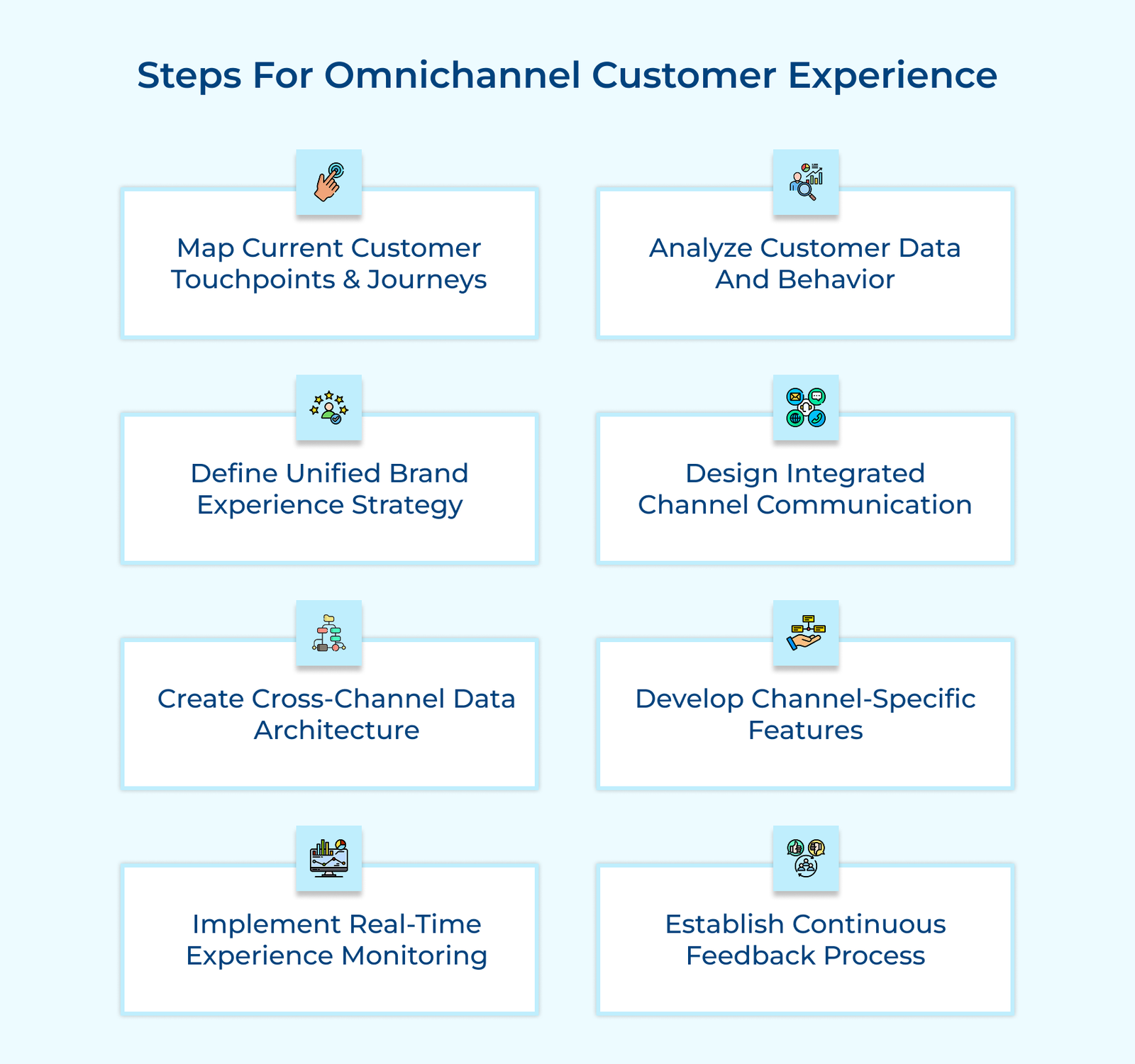
1. Map Current Customer Touchpoints and Journeys
Mapping customer touchpoints and journeys means stepping into your customer’s shoes and tracing every way they interact with your brand. The process reveals inconsistencies, gaps and opportunities to improve their experience. You can design a smoother, connected journey by seeing your business through their eyes.
Start by listing all possible touchpoints, including physical stores, websites, social media, customer service and marketing channels. Create a visual journey map that tracks how customers move between the points. Document their actions, emotions and needs to uncover areas for improvement.
Pro tips:
- Observe real customers as they interact with your brand to catch touchpoints and challenges you might not notice through traditional research.
- Analyze customer service logs and social media conversations to find unofficial touchpoints where customers look for help or information.
2. Analyze Customer Data and Behavior Patterns
Customer data analysis uncovers how people interact with your brand, what they prefer and where they struggle. You can craft more intuitive and personalized omnichannel experiences based on real evidence rather than guesswork by identifying patterns in behavior.
Collect data from website analytics, purchase history, customer service interactions and social media engagement. Pay attention to how customers move between channels, what frustrations they face and where they drop off. The insights highlight areas for improvement and innovation.
Actionable tips:
- Combine numbers with real customer feedback to understand not just what they do, but why they do it.
- Look for unexpected trends as hidden behaviors can reveal fresh opportunities to connect channels in smarter ways.
3. Define Unified Brand Experience Strategy
A unified brand experience ensures customers feel a seamless connection with your brand, no matter where or how they engage. No matter if it’s browsing social media, visiting a store or using a mobile app, every interaction should reinforce the same identity, quality and level of service. 40% of consumers will choose such a brand over the competitors.
Let’s assume that a retail brand syncs its mobile app with real-time store inventory, allowing customers to reserve items online and pick them up in-store, where staff greet them by name and have their order ready, seamlessly blending digital convenience with physical service.
Best practices:
- Map customer emotions throughout their journey to pinpoint moments where brand consistency matters most.
- Study competitor strategies, not to copy, but to find creative ways to make your brand stand out across all touchpoints.
4. Design an Integrated Channel Communication Framework
An integrated communication framework ensures that customers receive clear, consistent messaging across all touchpoints, eliminating confusion and frustration. It acts as a backbone of an omnichannel strategy, keeping channels and teams connected while ensuring smooth transitions between interactions.
Establish a centralized system that links all customer-facing channels and internal teams. Define protocols for updating content, sharing information and maintaining message consistency. Set clear guidelines on how different channels should collaborate during customer interactions to create a seamless experience.
Pro tips:
- Analyze customer transition points between channels to refine communication flow at key moments.
- Hold regular cross-channel team meetings to exchange insights, align messaging and ensure a unified approach.
5. Create Seamless Cross-Channel Data Architecture
A seamless cross-channel data architecture keeps customer information up-to-date and accessible across all touchpoints. The real-time synchronization prevents customers from repeating themselves and allows businesses to deliver more relevant experiences. Create a centralized customer data platform that gathers and unifies information from every channel.
Assume there’s a retailer that integrates online and in-store data so that when a customer visits a physical location, sales associates can access their recent browsing history. It allows staff to offer tailored recommendations and continue the digital experience in person.
Actionable tips:
- Follow the flow of customer data through your system to spot any disconnects or bottlenecks.
- Ask front-line employees about what customer insights would help them provide better service and make that data easily accessible.
6. Develop Channel-Specific Features and Capabilities
Channel-specific features enhance customer interactions by leveraging the unique strengths of each platform while keeping the overall experience seamless. The goal is to optimize every touchpoint, ensuring it serves its purpose effectively while staying connected to the broader journey.
Start by identifying what makes each channel distinct such as the convenience of mobile, the immediacy of social media or the hands-on engagement of in-store experiences. Design features that make the most of the strengths, such as mobile location services for personalized in-store offers or AI chatbots for quick social media responses. Every enhancement should feel natural and support the customer’s journey rather than create friction.
Best practices:
- Observe how customers naturally interact with each channel and refine the features they use most.
- Look beyond your industry for creative ways to optimize different platforms and introduce fresh ideas.
7. Implement Real-Time Customer Experience Monitoring
Real-time monitoring acts as the control center of your omnichannel experience, continuously tracking customer interactions, performance metrics and potential issues across all touchpoints. Teams can quickly address problems and fine-tune experiences with instant visibility into customer behaviors.
Establish a centralized dashboard that consolidates key data from all channels. Implement automated alerts for critical issues and define clear response protocols to ensure that customer experience challenges with swift action.
Actionable tips:
- Analyze trends in monitoring data to uncover hidden touchpoints and optimize cross-channel transitions.
- Customize dashboards for different teams, highlighting the metrics most relevant to their role in the customer journey.
8. Establish a Continuous Feedback and Improvement Process
The continuous improvement process keeps your omnichannel experience relevant by adapting to changing customer needs and expectations. Businesses can refine interactions, resolve pain points and uncover new opportunities to enhance the customer journey by actively acting on feedback.
Establish multiple feedback channels, such as surveys, customer interviews and social media listening. Implement a structured approach to analyzing feedback, identifying trends and making data-driven improvements. Regularly measure the impact of changes and fine-tune strategies accordingly.
Key takeaways:
- Treat customer complaints as insights. Share real examples of how feedback has led to meaningful improvements.
- Use a mix of instant feedback (like post-interaction surveys) and long-term trend analysis to get a complete picture of customer sentiment.
Technologies or Tools can Enhance Omnichannel Experience Design
Check out the key technologies and tools that can significantly enhance your omnichannel customer experience design.